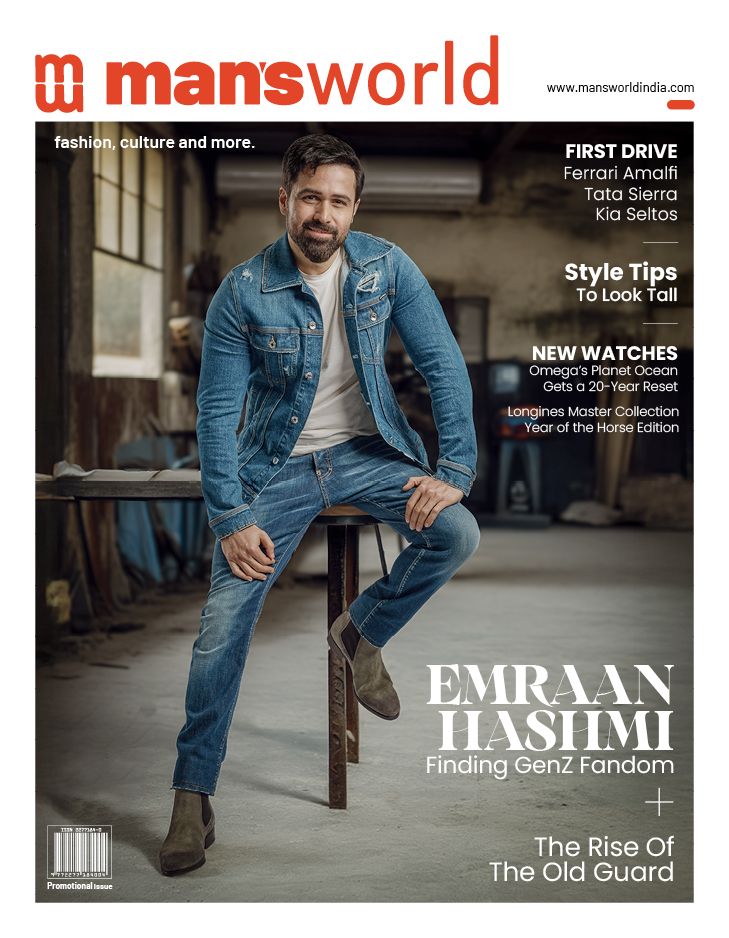

It is not every day that a cameo becomes the most viral moment of a movie or a show. But when Emraan Hashmi made an appearance as himself who gets recruited as an ‘intimacy coordinator’ in Aryan Khan’s directorial debut, The Ba***ds of Bollywood, the irony of the casting made the millennials chortle, and the man’s performance in the brief role made GenZs curious enough to go on and discover the legacy of the OG Serial Kisser online. “The show was in the voice of the GenZ, it speaks their language. So, even if they have not watched my movies, they seem to have suddenly woken up to my existence! It has created kind of an intrigue about me and my movies among them. And I get to know about all this through my son, who is 15 years now,” chuckles the actor. “Mostly through his friends actually,” he corrects himself adding that his son, just like him is rather reserved and has an understated reaction to most things. “He is totally like me,” says Hashmi. “He doesn’t get swayed; he is never awestruck. At the most he will come up with some criticism. But he has loved the show. All of them, him and his friends and classmates, have. Of course, they knew that I was an actor, but the show has suddenly gotten them interested in me! My actual feedback on the show is through them. But I am not sure if they are going back and watching the movies I did in my initial days…I hope not! But I am sure they are,” Hashmi breaks into laughter as we sit down for a tete-a-tete.
Beyond the viral moment, in 2025, Hashmi also re-established his mettle as a versatile actor with his turn in Haq. The courtroom drama saw Hashmi deliver a nuanced and restrained performance as the highly-educated and sophisticated Mohammad Abbas Khan who as the movie progresses, slowly reveals himself as an egoistic husband and a manipulative lawyer—he is not a regular one-note movie villain, but character whose motivations and actions are guided by his religious beliefs and its interpretations, which are deeply rooted in patriarchy and the need to assert control. He played the character with an understated brilliance imbuing it with just a dash of his quintessential suaveness, finding the right balance between the star and the actor. Then he brought back his full-blown gangster Emraan Hashmi swag playing an out-and-out stylish commercial movie villain, Omi Bhau, as he made his Telugu in the Pawan Kalyan-starrer superhit movie They Call Him OG (it crossed Rs 300 crore worldwide). His entry in the South industry as well as in the movie was a grand one for establishing his movie star aura.
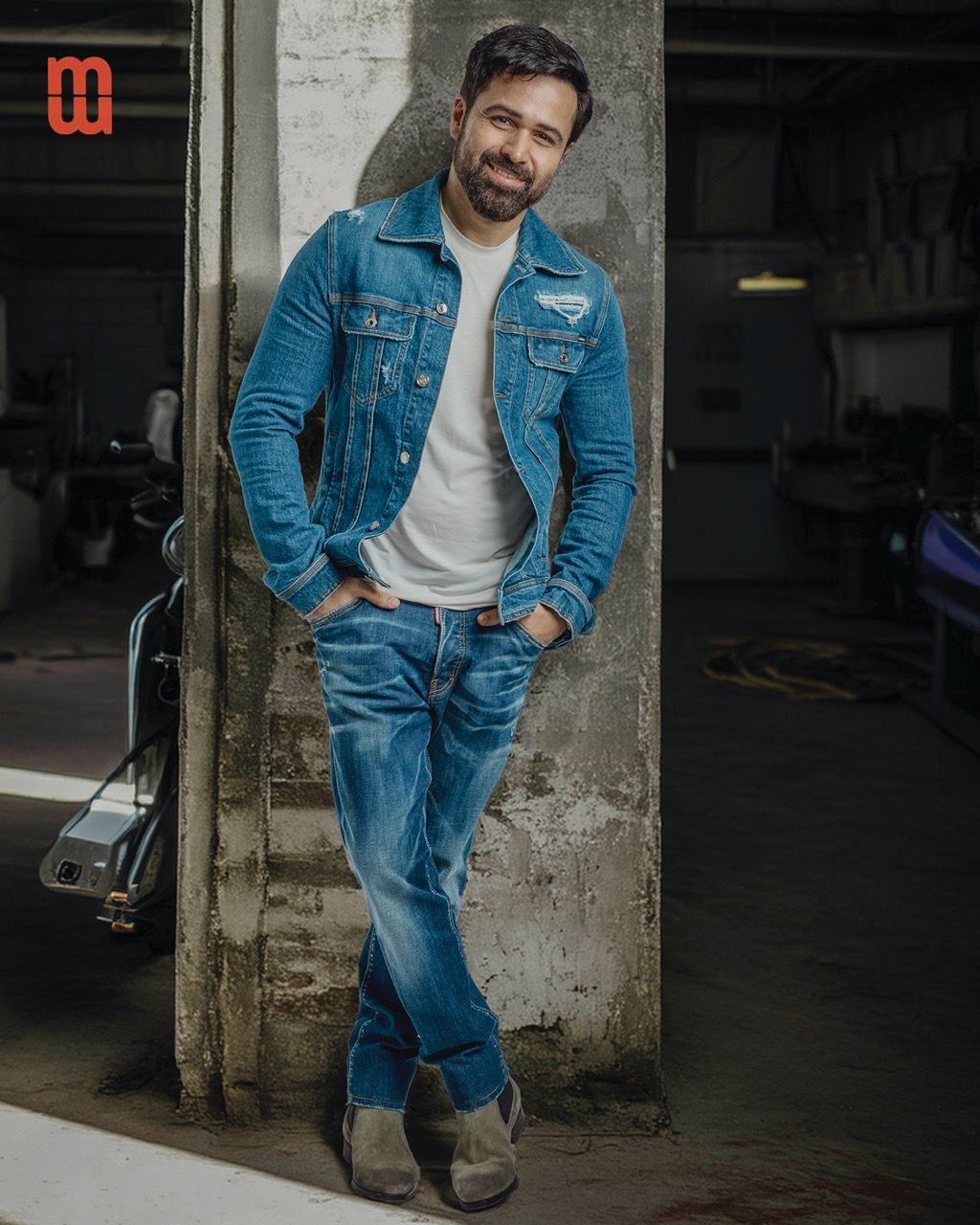
It is interesting to note that Hashmi has always preferred characters with a darker shade—even while playing the hero. In fact, he was instrumental in breaking the good boy image of the heroes in Bollywood. Even as the leading man he would be the one with questionable moral and a dubious reputation blurring the lines between the conventional protagonist and antagonist. “Right now, it is all about playing nuanced and layered characters all across the board. It is not only about stereotypical heroes who save the day. Heroes have become darker, and they are being liked. The tonality of the protagonist has evolved. But I always had a penchant for dark characters. I like the graph. I pick up characters that are not unidimensional; there is always a backdrop that justifies why they are the way they are,” he says adding that this has led him pick the roles of antagonists as well. “Heath Ledger’s Joker in The Dark Knight (2008) is my all-time favourite. Whenever I get the chance to play an interesting dark character, I take it. The characters I played in They Call Him OG and Tiger 3 both have the same tonality and tilt more towards an antagonist angle. When you have the protagonist as a Salman Khan or a Pawan Kalyan—who might be villains in someone else’s stories, but are heroes is theirs—the antagonists are more pronounced, although they still have their motivations which might justify their acts in their own story,” says Hashmi adding that he wants to take a break from the grey shades, “but never say never!” he quips.
But why don’t we ever see him doing an out-and-out comedy? His reactions to the Raghav Juyal antics in the famous Kaho Na Kaho scene in The Ba***ds of Bollywood give one a glimpse of his comic timing. “I had done one comedy long time back, it was called Ghanchakkar (2013) and was a moderate success. But I have been very discerning when it comes to comedies. I don’t find most of the comedies we make here funny—they are rather slapstick and over the top. Let’s say I am just waiting for a good, well-written script,” he says.
And it seems there is no dearth of good scripts coming the actor’s way now. The trailer of his upcoming crime series Taskaree: The Smuggler's Web has just dropped and it is looking great; The actor plays Arjun Meena, a customs superintendent. “It is about smuggling in international flights through air cargo. It is the world of customs officers. We have not seen that before. That gives me something different to do. And as actors, this is what we live for,” he says. The series, created by Neeraj Pandey and directed by Raghav Jairath, will premiere on January 14 on Netflix. Next up is Awarapan 2, the sequel to the 2007 cult classic under Vishesh Films. “I was holding off for the longest as a sequel needs to be worthy of the first one, and I was waiting for a good script. But Bilal [writer Bilal Siddiqi] got a great subject and once we read it, we decided to go ahead,” says the actor refusing to divulge more. Then there is Gunmaaster G9, which will see Hashmi reunite with Himesh Reshammiya. And then there is G2 (Goodachari 2), a big-budget Telugu spy thriller with Adivi Sesh, releasing on May 1, 2026. And all three are theatrical big theatrical releases. “A theatrical release is my first love,” quips Hashmi.
But with theatrical releasing not making the box office they used to, isn’t it a risk? Or has he cracked the formula for a box office success? “That’s the formula…to take risks!” says the 46-year-old actor, asserting that the only way forward is reinvention. “As going to theatres have become expensive and movies are now available on OTTs, the audience is not willing to spend money on stuff they have already seen. They are smarter now and old wine in a new bottle won’t do the trick anymore. Content, characters, performances, all need to be fresh. Storytelling itself has gone through quite an evolution in the last 10-15 years. With OTTs the audience tasted blood—they got what mainstream Bollywood was unable to give them. So, now, if we are to make movies for the theatres, we have to really up our ante. One thing is clear, if it's giving you a theatrical experience and has a story and characters that connect with the audience, then people are interested in watching it. Big screen spectacles work. Be it action or drama or comedy or horror, I think it is very clear, people want to celebrate in theatres. The community viewing is about celebration. Big-screen spectacles give that. Also, theatrical releases should be able to create a sense of urgency—the urgency to watch the movie. Otherwise, people will be like, okay, we'll watch it after four weeks on OTT,” opines Hashmi.
The Backstory
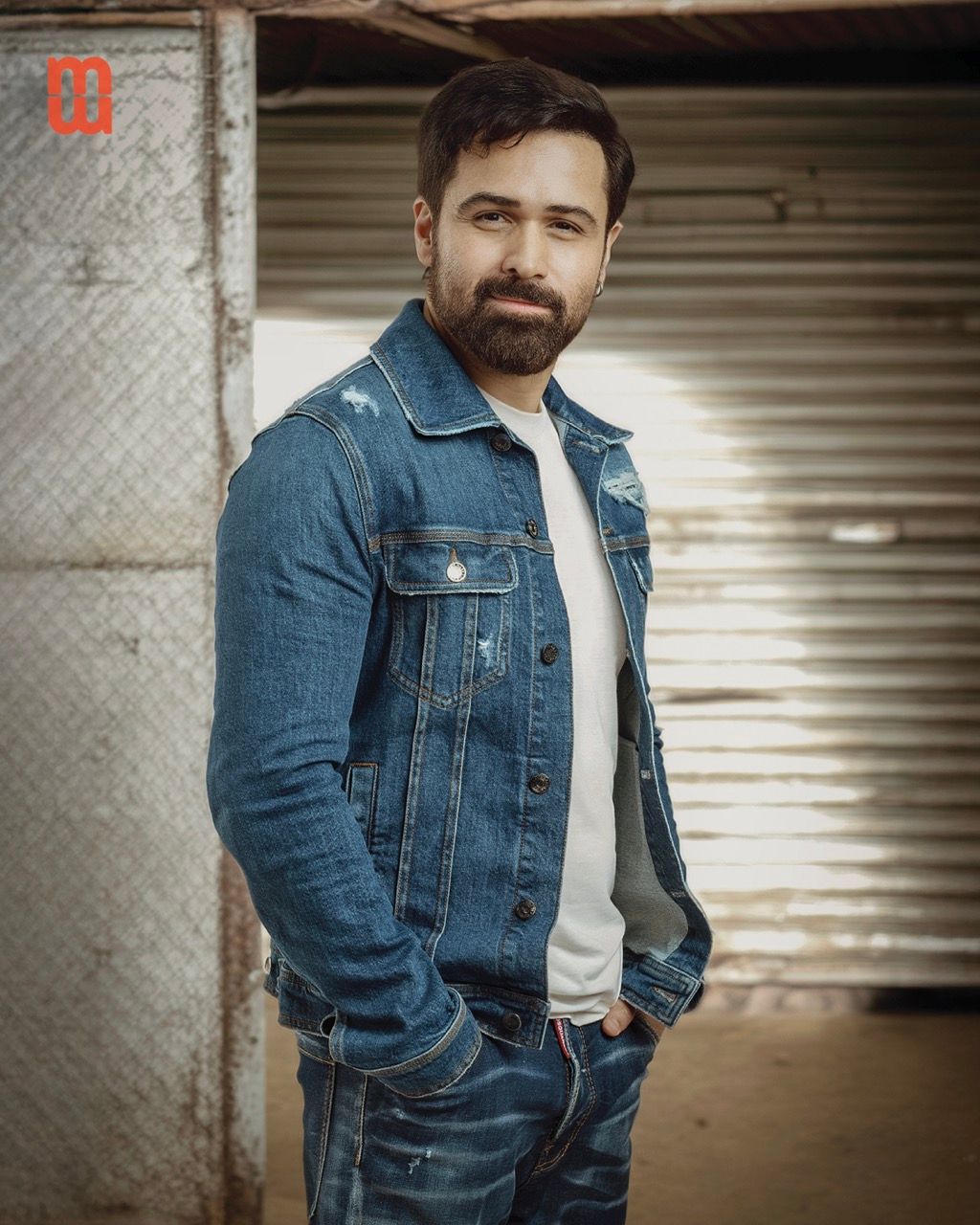
Emraan Hashmi is the grandson of popular actress of the 1940s-50s, Poornima or Meherbhano Mohammad Ali, whose sister Shirin Mohammed Ali is the mother of director and producer Mahesh Bhatt and producer Mukesh Bhatt. Through his aunt, Hashmi is also related to two other filmmakers—Mohit Suri and Dharmesh Darshan. Although one can’t deny the fact that he is an industry kid and maybe cinema is in his genes, he was not a typical filmy kid who was mimicking heroes in front of mirrors while growing up. “In fact, I am terrible at mimicking even now,” he quips. In fact, he insists that he had no intentions of becoming an actor. As the story goes, it was his uncle Mahesh Bhatt, who saw the potential in him and insisted he gave acting a shot. “I love cinema. I used to watch a lot of films and get emersed in that world. But I never thought of becoming an actor. In fact, even a year prior to getting into acting, it wasn’t something I was thinking about, let alone, wanting to get into. I had done a few plays in school and college and as a kid, when I was between the age of six and nine years, I had acted in around 15 or 20 advertisements. I was a cute kid, and someone ‘discovered’ me. My mother used to work at the famous Sea Rock Hotel in Bandra, Mumbai, and it was a place frequented by the who’s who of Bollywood. One director saw me there and cast me in an ad film. I was six years old, and it was an ad of Goodknight mosquito repellent. Then I did Rasna, Bournvita, etc. as a kid. So, I had some experience in acting, but it was not by choice.”
In fact, he was interested in visual effects. “I wanted to get into VFX in movies. I was doing a course in animation and graphics and wanted to go to the US to pursue that.” But luck had other plans. He got an offer to join the sets of 2002 horror film Raaz as an assistant director. Post that came the opportunity to act in a movie. “It was Footpath (2003). I made my acting debut, and the rest is history.” Indeed. Although the movie didn’t do great at the box office, Hashmi’s performance grabbed eyeballs. Film critic and trade analyst Taran Adarsh wrote: “Debutante Emraan Hashmi carries off the role without resorting to being loud. A complete natural, given the right roles, directors and films, the youngster can work wonders.”
“Even my family members were pretty shocked when they saw Footpath. I was a seriously shy person, and everyone was apprehensive about me managing to emote in front of the camera at a crowded movie set. The character [Raghu Srivastav] I was playing wasn’t easy either. But once I started playing him, it became like second nature,” reminisces Hashmi, pointing out that according to him acting can’t be taught. “You can hone your craft but you need to have the talent first. It is an inherent gift. I think I had it in my DNA as my grandmother was an actress. And almost everyone in my extended family is part of the industry.” Having said that, he also points out that he never had a filmy upbringing. “My grandmother left acting before I was born. So, we were not talking shop in the house while growing up. Yes, my uncle was directing films—I remember going to watch his movies at Ajanta Arts, which was just next to our house. We would come back and discuss those. So, a lot of my film knowledge comes from Bhattsaab.”
He had done just a 3-month formal acting course from Roshan Taneja before taking the plunge. “There is nothing that can be a substitute of being on a film set. You learn by doing it over and over—you make mistakes, you learn from those. I am almost 50 films old now and the actor I am today is the sum total of the experiences I had on the sets of all those movies,” he elaborates.
The Legacy
Although a millennial, like most GenZs, I too discovered Emraan Hashmi through his songs—more specifically, through Kaho Na Kaho. But it was not an emotional Raghav Juyal crooning it in The Ba***ds of Bollywood. Instead, it was through the cassette players of local music shops. The visuals of the songs were too risqué to be watched on TV back home let alone attempting to watch the movie in theatres, but the songs were addictive, and we would flock to our local cassette stores and surreptitiously request the owner to play it on loop. It was 2004 and songs of Murder, Kaho Na Kaho and Bheegey Hont Tere were not only a rage but had become anthems of sexual awakening among the youth and making out on the ledge of a skyscraper their newest (and rather dangerous) sexual fantasy.
Directed by Anurag Basu under the banner of Vishesh Films (a production house helmed by Hashmi’s uncles, Mukesh Bhatt and Mahesh Bhatt ), the erotic thriller was an uncredited remake of Richard Gere-Diane Lane starrer 2002 film Unfaithful (which itself was inspired by Claude Chabrol 1969 French film La Femme Infidèle), that made Emraan Hashmi, an overnight star while earning him the title of ‘serial kisser’—a tag that would establish his on-screen notoriety and become an integral part of his Bollywood legacy. Emraan Hashmi became the poster boy of bold cinema that pushed conventional boundaries with movies like Zeher (2005), Aashiq Banaya Apne (2005), Kalyug (2005), Gangster (2006) and Awarapan (2007). Apart from becoming a generation’s guilty pleasure, he gave the Bollywood anti-hero a ‘leading man’ upgrade; he redefined the “bad boy” archetype. The characters he played were often greedy, lustful, street smart, self-centred, and having a criminal bent of mind—far removed from the conventional, unidimensional Bollywood heroes. Yet these grey characters had a kind of vulnerability that stopped them from entering the ‘villain’ zone—it humanised them making them engaging and relatable to the masses. “I have always been a risk taker. I think differently and that reflects in the kind of films I do. From the very first film going forward I have not done the typical mainstream films—I have gone off the beaten path. I have taken up stuff that had not worked before and made those work. I don’t follow box-office trends; I steer clear from that herd mentality. If you tell me not to do something, that’s when my eyes light up…that’s exactly what I then take up,” he smiles.
What helped in making these movies instant hits were the chartbuster songs often composed by Himesh Reshammiya or Pritam and sung by KK. In fact, Emraan Hashmi movies were marked by two things—steamy scenes and a smoking hot music album. Interestingly, unlike conventional Bollywood heroes, he was seldom seen dancing to these yet owning them in a way only he could!
The fact that he created a niche for himself at a time when the three Khans of Bollywood were at their peak makes the viral line from The Ba***ds of Bollywood: “Akhaa Bollywood ek taraf aur Emraan Hashmi ek taraf” not entirely just rhetorical flourish.
Jannat (2008) solidified his status as a leading man following up with back-to-back hits between 2011 and 2012 with Murder 2 (2011), The Dirty Picture (2011), Jannat 2 (2012), and Raaz 3 (2012). It was also the time he moved beyond his ‘serial kisser’ stereotype and established himself as a versatile actor by taking up complex and nuanced characters in critically-acclaimed movies like Once Upon a Time in Mumbaai (2010), The Dirty Picture (2011), Shanghai (2013), and Ek Thi Daayan (2013). “Most of the commercial hits need a certain tonality. Many times, it is not appreciated by the critics and dismissed as mass films. It happened to my initial films—the bold romantic movies—the critics were not very kind to them although they were box office successes. I knew that I could, if given the right kind of opportunity, show my versatility as an actor. I just needed a producer and director to take that punt on me. And that eventually happened with Shanghai and Dirty Picture. With those I proved that I could do both kinds of cinema. When today I do a Haq, it is not a movie meant for everyone; it is for the gentry…a more ‘cerebral’ audience. I don’t expect it to get me a houseful board in front of a Gaiety Galaxy. You can’t put all movies in the same basket, but it is important that you do all kinds of cinema.”
Present Perfect
The actor in him finds more options to do just that today like never before. “The maturity of the audience and the evolution of cinema in the past 10-15 years is astounding. I could be having back-to-back successes back in the early 2000s. But was it really satiating my creative urge? No. It was just the same thing packaged differently. Yes, they were commercial spinners. But you come back home feeling empty. I was not doing movies that was making me step out of my comfort zone. And that's something I always wanted to do.”
But now, he is finally getting to do that. And he can’t be happier. “In Haq I play a character where I have to really work hard to understand the person. It is a character that is so distant from me and my personality that I have to put in the works as an actor. It is a character that throws a challenge to the actor in me,” he says adding however that the number of theatrical films that give such opportunities are not many—most have shifted to the OTTs. But he hardly complaining as he starts the year with one of Netflix’s biggest shows of 2026.
Credits -
Photographer: Mrunal Kalsekar
Hair - Arif from Hakims Aalim
Makeup - Sushant Shinde
Wardrobe - The Vainglorious


