“I was certainly looking for an answer of how to be, how to live,” Simon Callow once said of the uncertain years that led him towards acting. Callow, for the uninitiated, is one of Britain’s great theatrical polymaths: an actor, director and writer whose career stretches from originating the role of Mozart in Peter Shaffer’s Amadeus at the National Theatre to films including A Room with a View and Four Weddings and a Funeral. His 1984 memoir-manifesto, Being an Actor, became something of a classic, not because it romanticised the profession, but because it wrote candidly about the work, insecurity and strange personal demands beneath it. The whirlwind surrounding an actor’s life has since evolved in increasingly complicated ways. Yet its wit, humility and backstage candour have found a receptive reader in a young Indian actor born sixteen years after its first publication.
Naseeruddin Shah recommended the book to Vedang Raina when the two first met at Shah’s home. Imtiaz Ali had brought them together to speak about Kinu, the man they play 78 years apart in Main Vaapas Aaunga. Raina arrived having watched Shah’s masterclasses closely enough to quote fragments of his lectures back to him. Shah, surprised that someone from his generation knew them at all, suggested that he read Callow’s book. Raina did. During principal photography, despite having little to shoot with the older actor, he would seek out Shah’s schedule and turn up on set simply to watch him work.
It is difficult to imagine a more appropriate exchange at this point in Raina’s life. At 26, he is surrounded by people eager to provide an answer to who he is: actor, singer, style figure, heart-throb, next-generation leading man. Three films into his career, his image already appears remarkably complete. The person inside it, however, seems rather less interested in completion. He is still looking for an answer to ‘how to be, how to live.’
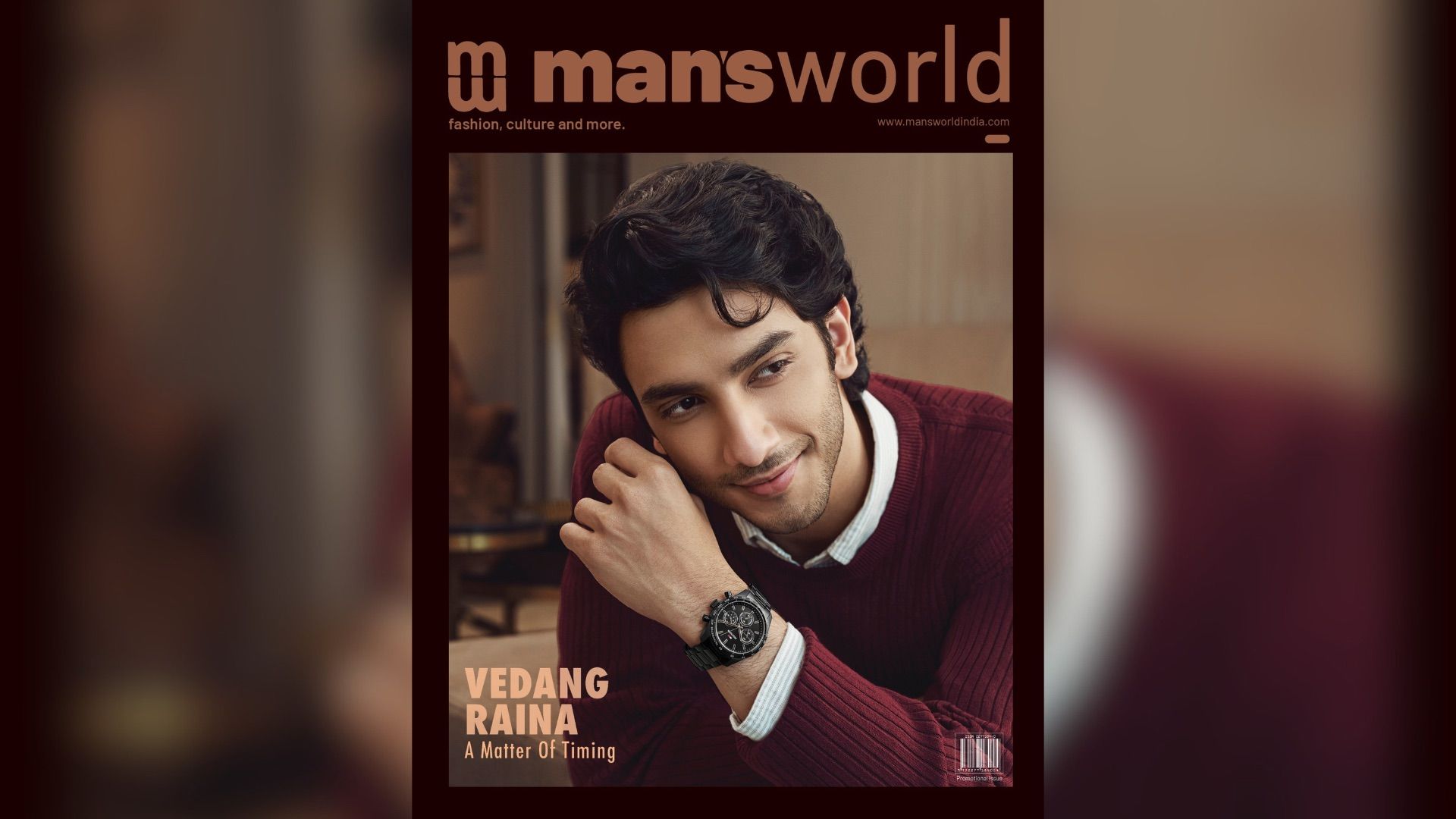
Hindi cinema, meanwhile, has been rather quicker to decide. With only three films behind him, Raina already occupies more cultural space than his filmography should logically allow. His face has travelled farther than his body of work, appearing across campaigns, magazine covers and red carpets with the frequency of someone far more established.
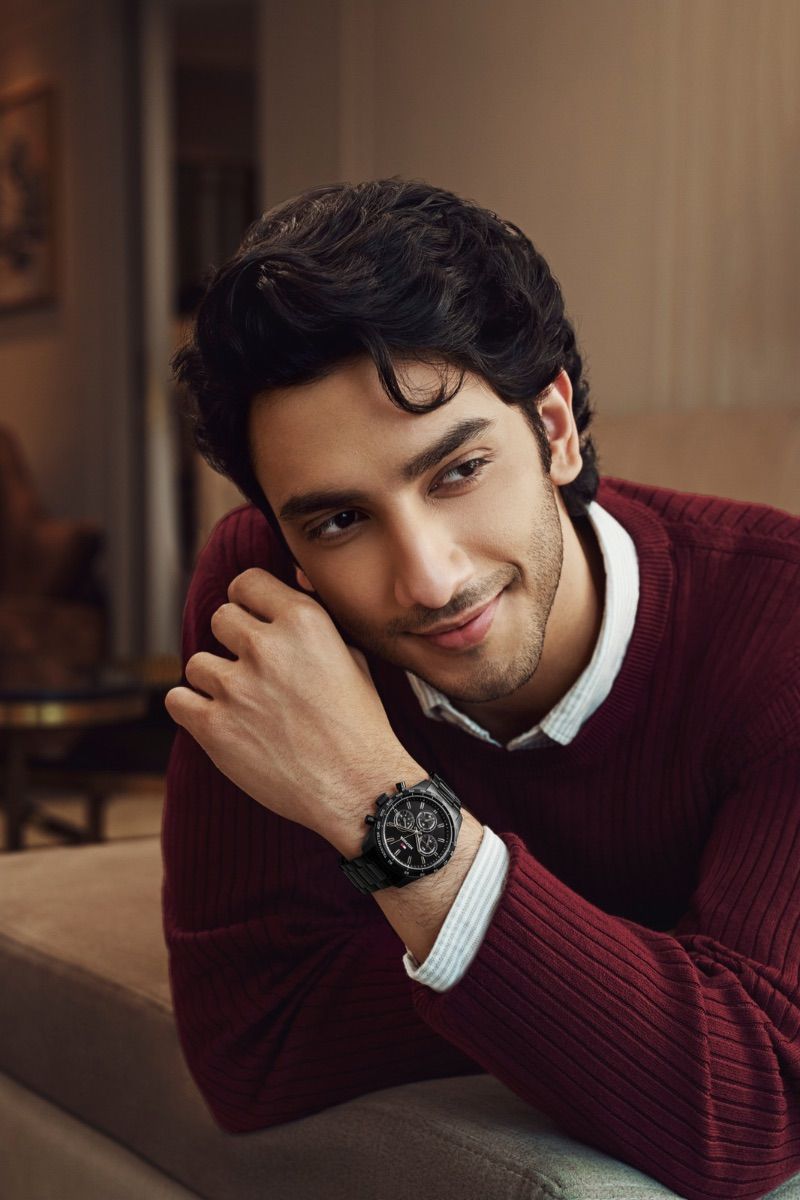
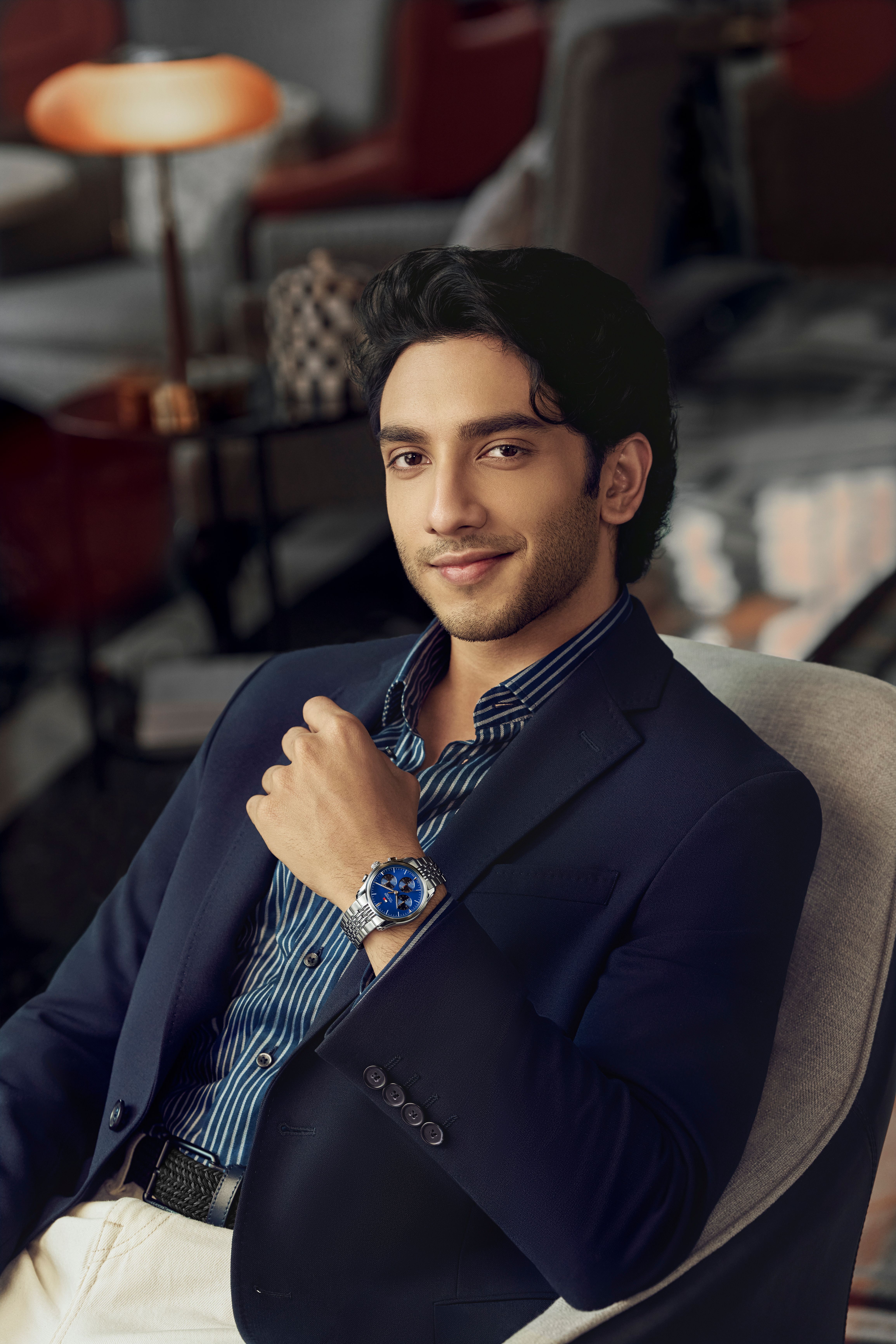
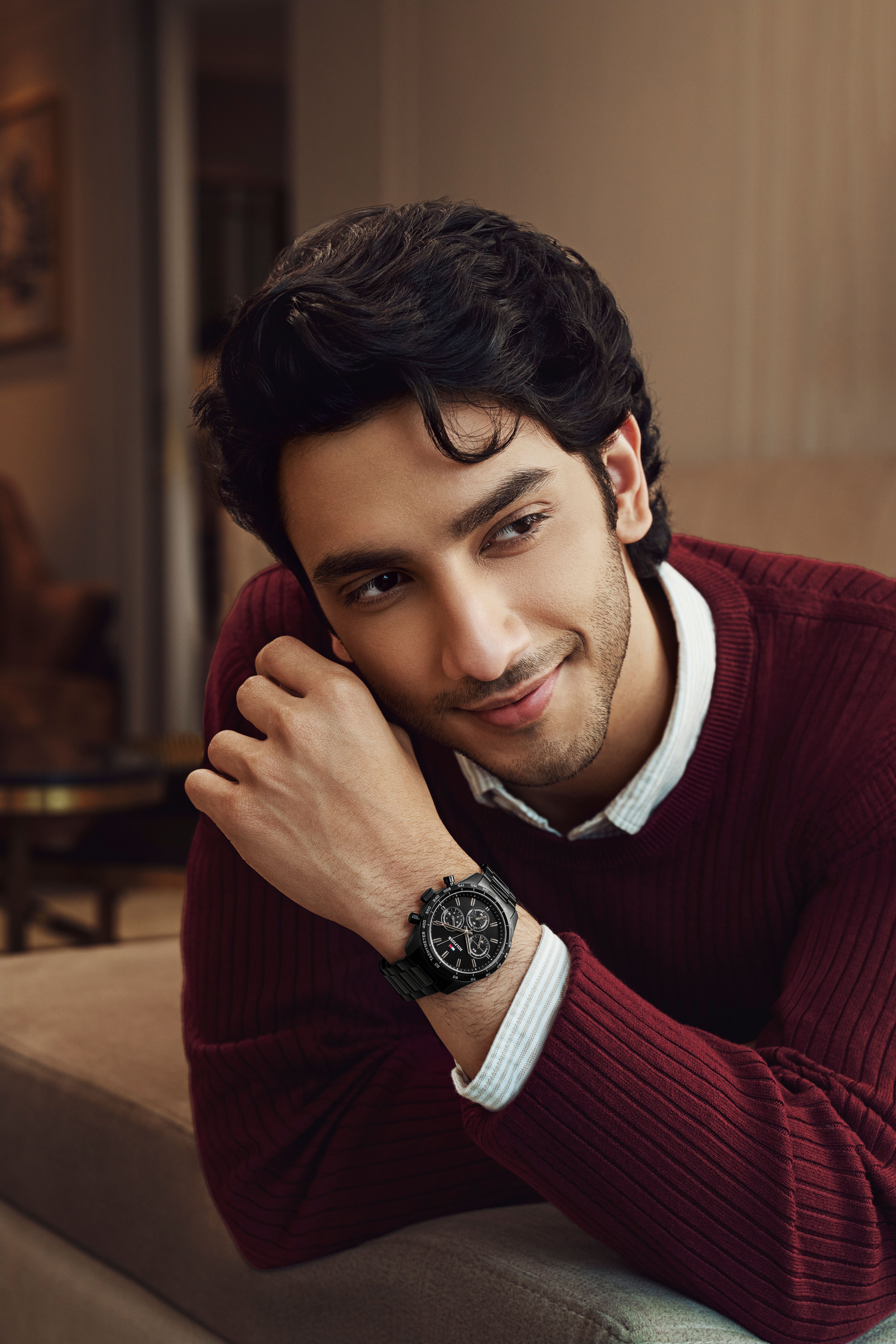
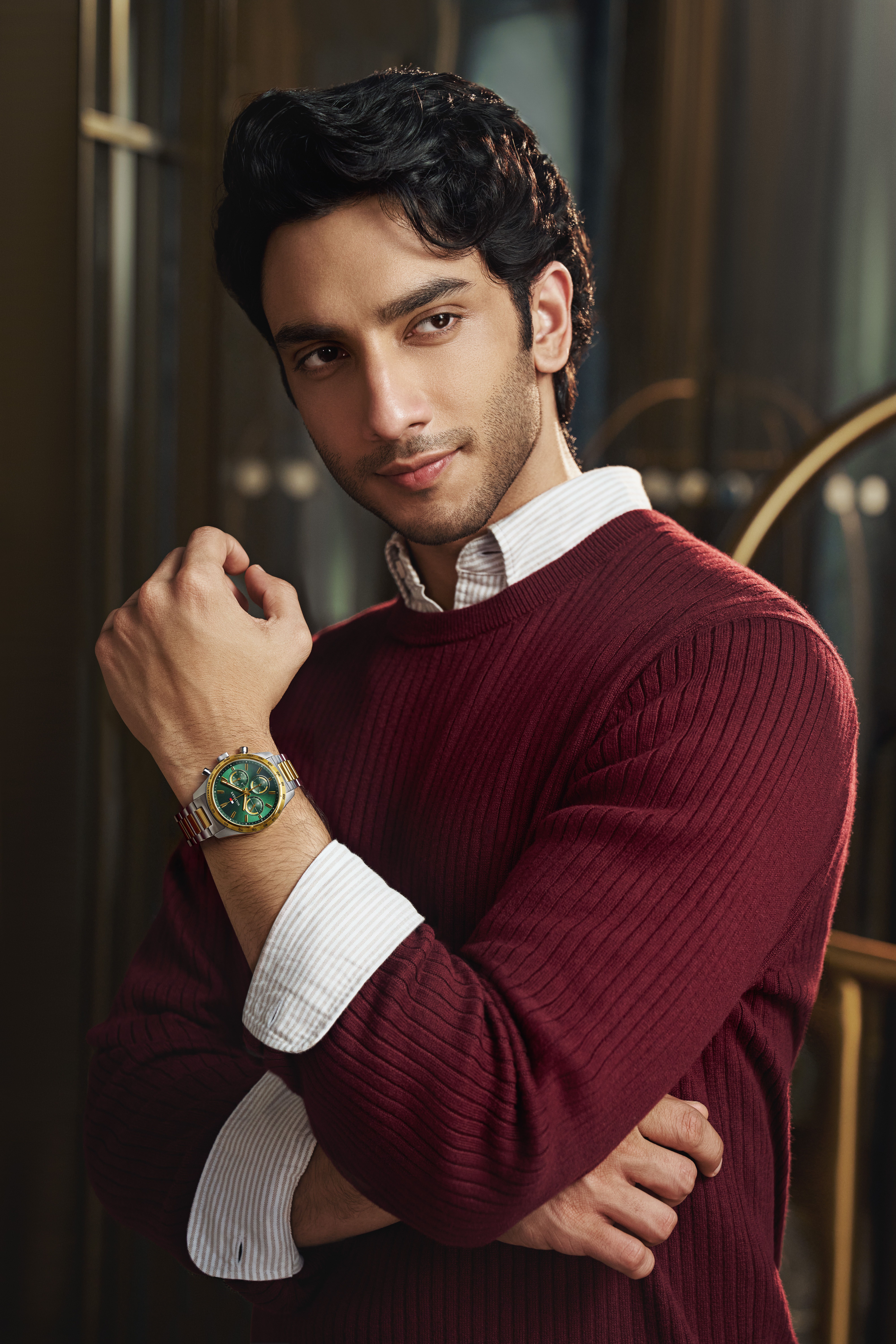
We encounter some of that machinery firsthand at Mumbai’s Fairmont, where Raina is midway through shooting Tommy Hilfiger Watches’ latest campaign. Over the course of the afternoon, he slips between breezy summer suits and academia-inflected fits, each paired with an eye-catching rotation of Tommy Hilfiger chronographs. The mood lands somewhere between college heartthrob and the French Riviera, although Raina himself seems considerably less constructed than the images being made around him. Between takes, he is casual and friendly, carrying himself with a slightly mischievous ease that makes the whole shoot appear rather effortless.
That ease is useful currency for a young actor entering the industry now. The speed at which Raina has built this multi-hyphenate image is partly a consequence of the moment in which he arrived. Young actors today are launched simultaneously across streaming platforms, fashion campaigns, social media, brand partnerships and the constant churn of entertainment coverage. A face can become familiar before a performer has accumulated enough screen time to become fully knowable.
The irony is that acting was not originally the clearest answer available to him. Music came first. Long before casting directors began placing him inside period worlds, Raina was singing, recording covers and considering whether that instinct might lead somewhere on its own. He studied business, contemplated postgraduate education and discovered acting through the repeated, often unglamorous process of auditioning.
Hindi cinema has always enjoyed rewriting its actors’ beginnings as destiny. The future star was supposedly performing for relatives at five, rehearsing acceptance speeches at 12 and merely waiting for the industry to catch up. Acting entered through a side door and then, rather abruptly, took over the building.
The Archies gave him a fully designed world in which several of his existing qualities could be made immediately useful. Zoya Akhtar’s Riverdale was built from music, choreography, colour and mid-century styling, a place where character was often communicated through movement and silhouette before dialogue had the chance to catch up. As Reggie Mantle, Raina was cast as the boy who already knew the effect he had on a room.
It was an astute introduction. Reggie’s appeal depended on polish, but also on the illusion that the polish required no effort. Raina had the musicality, physical ease and camera awareness to make that illusion convincing. More importantly, he emerged from a film burdened by unusually intense pre-release scrutiny with a public identity of his own.
That was no small achievement. The Archies had become a cultural argument long before it became a film. Its ensemble was discussed through the language of access, lineage and Bollywood’s continuing obsession with manufacturing the next generation from familiar surnames. Raina occupied a slightly different position within that conversation. He was part of the launch machinery, but not quite the most obvious target of it.
This gave him room to surprise. In a cast whose every gesture was being treated as evidence for or against a larger thesis about privilege, he arrived with fewer inherited expectations and a part well suited to his strengths. Critics and audiences may have disagreed sharply about the film, but Raina was repeatedly singled out as one of its more assured presences. He entered through an ensemble and emerged with the beginnings of an individual outline.
The industry moved quickly to fill that outline in. Once the face has been accepted as that of a prospective leading man, every subsequent role is read either as confirmation or deviation. The obvious move after Reggie would have been another part built around charm: a campus romance, a glossy coming-of-age film or some other project designed to extend the fantasy without disturbing it.
Instead, Raina chose Jigra. Vasan Bala’s prison drama placed him opposite Alia Bhatt but offered him none of the conventional privileges of the young Hindi-film hero. As Ankur, he was frightened, confined and fundamentally dependent on someone else to rescue him.
That made the casting more revealing than it first appeared. Reggie’s confidence had been external, social and carefully maintained. Ankur was stripped of those protections. His youthfulness no longer read as freshness or promise; it became the very thing that made his situation feel intolerable. The face so quickly packaged as an object of aspiration was now being used to communicate helplessness.
The film’s underwhelming commercial reception disrupted the clean ascent that had formed around him. Raina has since spoken openly about how deeply the failure affected him, particularly because of the faith he had placed in the project. It was perhaps the first serious reminder that visibility and momentum are not the same thing.
But Jigra also clarified something more useful than box-office success might have. Whatever the calculation behind the choice, the film did not protect the image his debut had created. His second role complicated it, allowing fear, fragility and dependence to occupy the space where swagger had previously lived.
His third film widens that movement considerably. In Main Vaapas Aaunga, Raina plays Kinu, a college student whose life is overtaken by Partition. Once again, he finds himself in the past, though this time history is not being used as a playground of music, clothes and design.
It is here that the first three roles begin to form a loose conversation. Reggie, Ankur and Kinu are very different boys, but all three stand at moments when the world they understand begins to change around them. One discovers that charm does not exempt him from emotional consequence. Another learns how little protection youth and decency offer against violence and power. The third watches history tear through the basic assumptions of home, belonging and return, leaving even that most durable of Imtiaz Ali concerns, love, at its mercy.
Raina’s filmography, though short, is already difficult to ignore. He has repeatedly been cast as a young man whose identity is unsettled by circumstances larger than himself, even as his own public identity has been assembled around him at astonishing speed. Perhaps that is why the Callow line lingers. Not because Vedang Raina appears lost, nor because his characters should be crudely confused with the person playing them. It lingers because his career has so far been shaped by competing possibilities: the music he first imagined pursuing, the actor he is learning to become, the public image that arrived before either had fully settled, and a filmography that keeps pulling one of Hindi cinema’s most contemporary young faces back into the past.
The industry may already be eager to resolve those contradictions. For now, Raina seems content to thrive within them.
You shared work credits with two Bollywood icons for Main Vaapas Aaunga. What was it like to work with Naseeruddin Shah and Imtiaz Ali in the same film?
Oh, it was an honour! To be in a film that Imtiaz sir is writing and directing is a dream for basically any actor in the industry, and I felt the same way. Somewhere, when you’re shooting a film, you lose that. You forget about the fact that you are actually working with Imtiaz sir, and then it just becomes about the work and the process. But yeah, it’s truly an honour, and I’m very grateful for it. Now I can look back at that experience and think, “Wow, that was something.”
Even with Naseer sir, we didn’t get to shoot too much together because of how the film ends, but I used to go on set just to watch him at work. He is a legend. I’m his biggest fan, and I’m the biggest fan of the work he’s done. To play the same character as him is something I wouldn’t have imagined in my wildest dreams. This is really a once-in-a-lifetime thing that’s happened to me, and I’m super grateful for that.
Is there a scene in the film that you feel really challenged you more than any other, and why did it stick with you so much?
Every scene is challenging in its own way, and I find everything that I do challenging. Every shot that I give is challenging. But maybe the most emotionally taxing ones were all the bits after the separation, after Kinu didn’t see Jiya anymore. Those bits where I was on the train and leaving Sargodha. There’s a scene where I’m trying to get out of the train to go back to Sargodha, and my father holds my arm and stops me. I think that’s the moment Kinu realises for the first time that there is a possibility he’s not going to go back. In his head, he had always convinced himself that this was a minor inconvenience and that, at some point, he would come back. But at that moment, I think it starts sinking in that he’s never going back. He’s not going to see his home. That scene was very special to me, and challenging.
This has by far been the most challenging film for me. Considering everything, this character is probably the furthest from who I am as a person. That’s why it was the most challenging. Jigra was also challenging in its own ways, but if I had to rate whatever I’ve done in just three projects, this was the one that demanded the most out of me.
How would you describe your personal style?
I always think of my style as very old-school. I keep saying that this film is set in the 1940s. My portions in the film are set in 1947, and that fashion is still so relevant today. I feel like my style is also quite inspired by the 1940s, ’50s and ’60s, which have come back in their own way. For example, I feel the ’80s, ’90s or early 2000s aren’t really that relevant right now. I’m sure they’ll come back at some point. But that old-school aesthetic, with well-tailored shirts, trousers, wide-legged trousers and good, well-tailored stuff, is probably mine.
That connection goes back to The Archies too, doesn’t it?
Yeah, exactly. Even The Archies was the same thing. That was also the ’60s. It was a period film, and even all of that stuff is so relevant. I would wear both of their wardrobes, Reggie’s and Kinu’s!
Is there one piece of clothing you would never throw away?
Probably one of the jackets that I have. I think I’ve been using one jacket for the past seven or eight years, and that one is really special to me. My uncle gave it to me, so yeah, I guess I can’t throw that away. It’s a brown leather jacket, very classy. Eight years ago, it was super oversized. Right now, it’s still oversized…but less so. I think I’ll continue to wear it forever.
What does your diet and training routine look like right now?
Oh, it’s so all over the place. When I’m on a mission to bulk or trying to pack on some weight, then it’s about my macros and everything in the diet. Honestly, I end up sticking to the same diet for maybe two or three months, and I actually don’t change it at all, apart from my cheat days once in a while. It’s just protein intake, lots of chicken, eggs, green vegetables and stuff like that when I’m on a bulk and trying to be clean. When I had to lose weight for this project, I tried fasting properly for the first time, which I’d never really done. Two days of absolutely no food—just electrolytes, water and black coffee.
Losing weight was actually so much more difficult than gaining it. For one, it’s like all your hard-earned work in the gym is completely going backwards. I had to play this 18 or 19-year-old boy who was this skinny kid. That is also emotionally challenging because you’re like, “Man, all the hard work is going away!” But more than that, when you’re starving or in a caloric deficit in general, you just feel so much worse. When I’m bulking, I can eat more than I want, but at least mentally it’s easier to focus. So that was hard.
You’ve spoken about wanting rom-coms to return. What kind would you like to make?
I would love to do a rom-com in which I maybe play a musician—I’m dying to play a musician! That’s a little thing I have because I do music myself as well, so I thought that would be a really interesting space to get into. And yeah, rom-coms really should come back. I think it’s a cool space, and I think there is a new shift with this new generation of actors coming in. I feel like we can bring that change and get those rom-coms back, the ones that we enjoyed watching when we were younger.


