

When Arjun Kapoor credits IV vitamin infusions for his energy levels, Kendall Jenner posts about her latest IV drip session or Salma Hayek swears by red-light therapy for her glowing skin, millions of followers take note. Suddenly, what was once the domain of elite athletes or experimental clinics becomes the next must-try wellness hack.
This is how fitness trends are born now—not in gyms or research labs, but in the carefully curated feeds of Instagram and TikTok, powered by algorithms that know exactly what will make you stop scrolling. You might dismiss your grandmother's ancient wisdom about morning walks and eating your vegetables, but a thirty-second reel from a popular influencer? That'll have you convinced to try ice baths at dawn or strap electrodes to your abs.
Each trend arrives with its own gospel, its own devoted following, and its own set of extraordinary claims. But here's the uncomfortable truth: not everything that goes viral is valid, and not every fitness revolution deserves that title. The line between legitimate scientific breakthrough and cleverly marketed fad has never been more blurred. So how do we separate signal from noise? Which trends actually move fitness science forward, and which are merely well-marketed distractions designed to separate you from your money? We've compiled a list of the most popular fitness trends of recent times and asked the experts to help us uncover the science—and the myth—behind them.
Trend 1: Cold-Water Immersion: Is Cold Plunging The Solution?

When celebrities like Chris Hemsworth and Hailey Bieber extol the virtues of dunking oneself in icy water, they are merely reiterating something that humans have been doing for centuries, at least since the days of Hippocrates, a Greek philosopher who first suggested that ice and snow could serve as an antidote to fatigue and stress. There's nothing new about this impulse to immerse oneself in frigid water, yet for a major part of history, it has never made it past the niche circle.
Today, it has become a sort of phenomenon, the basic foundation of the modern wellness culture. If these Instagram influencers that are flooding your feeds are to be believed, the benefits of cold-water Immersion are manifold: accelerated muscle recovery through reduced soreness and inflammation, enhanced circulation as the body marshals its resources to restore warmth, and a sharpened mental clarity accompanied by elevated mood. “The whole point of a sauna or cold plunge is to 'shock' your body into a response. There has been sufficient research that shows an improvement in the pliability of the arterial system,” says Ritesh Bawri, founder of nira balance, India’s first hyper-personalised, science-led health platform. Beyond Instagram and TikTok, however, the opinions are divided on its efficacy.
Health professionals have raised legitimate concerns about rapid cold exposure potentially causing vasoconstriction—the narrowing of blood vessels—which can trigger acute spikes in heart rate and blood pressure. Bawri also points out some caveats for those who attempt it without doing the proper homework. “Anyone with high blood pressure, arterial blockages, stents, a high pulse rate, or low heart rate variability (HRV) should carefully consider exposure to extreme cold,” says Bawri. “Cold increases blood circulation to help dissipate heat from the skin's surface. When this happens, blood pressure can rise. If you already have high blood pressure or arterial blockages, the high heat can worsen cardiovascular conditions,” he adds.
For those with such health considerations, Bawri recommends gradual temperature exposure that doesn't deviate dramatically from normal body temperature.
Trend 2: Intermittent Exercise: Is Microdosing The Future?
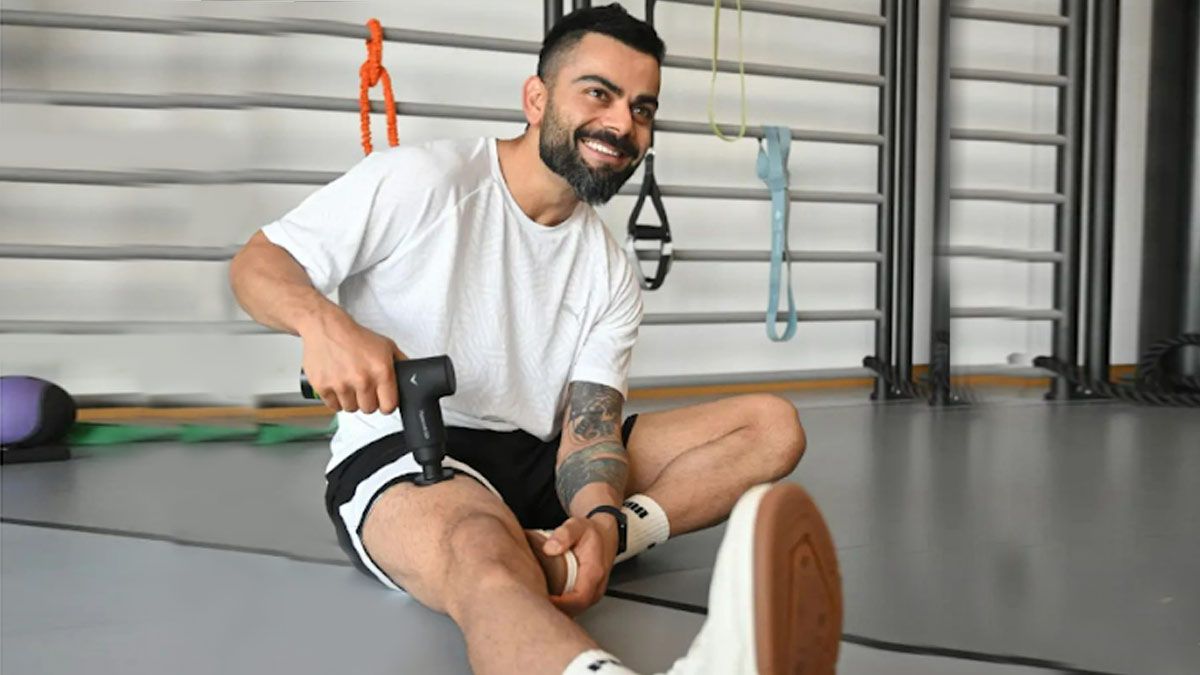
The term “microdosing” is no longer the reserve of new-age hipsters who would take small quantities of psychedelics to enhance productivity or emotional awareness. Even regular office-goers are now microdosing something, and it's not a substance but exercise. Since scarcity of time has afflicted modern lives, not everyone gets an hour daily to sweat it out in the gym. But they still want to break the spell of sedentary living, and for these people, intermittent exercise offers an alternative.
“Intermittent exercise means short, focused bursts of movement done through the day instead of one long workout,” explains Sohrab Khushrushahi, the lawyer-turned-fitness coach, who is also the founder of Sohfit, a Mumbai-based fitness and wellness company. “Think 3–6 bouts of 1–10 minutes: high-intensity interval training, bodyweight intervals, stair climbs.” Research indicates these mini sessions can improve VO₂ max—a key measure of cardiovascular fitness—along with insulin sensitivity and overall cardiometabolic health in untrained or time-pressed adults.
However, before abandoning your gym routine entirely, it's worth understanding the limitations. “They're an excellent entry point or supplement, not a replacement,” Khushrushahi cautions. “If you're trying to build muscle, move heavy weight, or perform in sport, you need longer, structured work with planned progression.” The distinction is crucial: intermittent exercise serves best as either an on-ramp to fitness for complete beginners or a practical supplement for those whose schedules simply cannot accommodate traditional workout blocks.
It's an appealing proposition for those who struggle with commitment but still harbour genuine intentions about maintaining their physical health. But Varun Suresh Kumar, a national-level badminton player turned sports scientist, opines that not many people can stick to this for a long period. “Sustaining this kind of fitness program is difficult, and most people drop this off once the novelty wears off. Because people who do this are preoccupied with finishing it sooner, so they can go on with their day,” says Kumar.
Moreover, Kumar cautions against the potentially serious risks this approach carries if one becomes overzealous, driven by adrenaline to push beyond one's actual capacity. “There has to be progressive overload,” Kumar emphasises. “You can't suddenly push your body beyond a certain threshold without consequences.” Rather than attempting to go from zero to 100 on day one, he advises gradually introducing the body to longer durations, higher intensities, or more complex movements. “It has to be a gradual process,” he warns. “Otherwise, the risk of both chronic and acute injuries becomes very high.”
Trend 3: Zone 2 Cardio: To Be Or Not To Be In The Zone

In a fitness world that has spent years glorifying the brutal and the breathless—HIIT classes that leave you gasping, bootcamps that test your limits, and workouts measured by how much you sweat—a counterintuitive trend has emerged: slow down if you want to live longer. The current interest in Zone 2 represents a broader shift in the fitness world, following what experts describe as a very strong emphasis on high-intensity exercise that has now swung back toward low-intensity training.
Kumar, who has trained Olympians like PV Sindhu, explains Zone 2 cardio as “a series of low-intensity training where you function at around 60-65 per cent of your maximum heart rate.” The easiest measure for determining whether you're in this zone is remarkably simple: can you hold a conversation properly, without any huffing and puffing, while exercising? The appeal goes beyond mere comfort. When you're working out at this moderate pace, something interesting happens: your body shifts into fat-burning mode while simultaneously building your mitochondria—think of them as tiny power plants inside your cells. Over time, this makes you metabolically more efficient. And here's what really matters for longevity: Zone 2 training builds a robust aerobic foundation, which research increasingly links to living not just longer, but healthier for longer.
Influencers have positioned this approach as an antidote to the punishing demands of high-intensity trends like HIIT or CrossFit, and it has gained wide acceptance among those seeking a more sustainable path to fitness.
However, Kumar offers a more nuanced perspective, cautioning that "it's more of a generalisation rather than a specific protocol that one should follow." His suggestion is not to fixate on whether you fit exactly into that particular range that defines Zone 2. "Because there are so many factors that determine whether the heart rate is fitting within that particular zone. It could be things like their current fitness level, their age, or maybe their recovery levels. All of these can cause fluctuations in a person's heart rate, and so it becomes very difficult for us to sum everything up into just a single number and say that this is the zone to be working out in," adds Kumar.
Trend 4: Hyrox Hype: Is Hybrid Training The Future?

The principle behind this is deceptively simple: each type of exercise distinctly rewards your body, so why not cherry-pick the best elements—strength, cardio, power, agility—and forge them into a single, comprehensive discipline that transforms you into an unstoppable force? This is the philosophy driving hybrid fitness events, a category that has evolved from niche training methodology into a global competitive movement. Think of CrossFit, which combines elements of strength training, cardiovascular exercise, and gymnastics, with a focus on high-intensity, constantly varied workouts. Or think of Hyrox, the fitness trend started by Olympic medallist Moritz Furste and entrepreneur Christian Toetzke, which has taken the world by storm. Hyrox sees athletes complete eight legs, each involving a one-kilometre run followed by a fitness exercise including ski machines, sledge pushes and pulls, burpee jumps, rowing, and kettlebell carries.
What unites these events is their emphasis on building substantial strength, explosive power, and enduring stamina. Hybrid training challenges the body on multiple fronts, creating a demanding, systemic stress that tests recovery as much as it tests work capacity. As Khushrushahi explains, “you'll improve muscular endurance and aerobic capacity, but peak strength and power may plateau if volume and sequencing aren't carefully managed.”
If you watch ultra-athletes tackle these events, you'll feel a surge of adrenaline and might even be tempted to try one yourself. But not every form of fitness is right for everyone. “The key is understanding what you want from your routine—not merely chasing a trend,” says Kumar. The high-intensity demands of CrossFit, for example, can induce respiratory muscle fatigue, as noted by a 2025 study in Physiologia, an international peer-reviewed physiology journal. “Certain activities that push your cardiovascular system to very high intensity without any prior experience can actually cause cardiological or cardiovascular issues that could be fatal. So, before engaging in any of these activities, building a strong foundation through basic strength and conditioning training is crucial,” advises Kumar.
Trend 5: Biohacking: Can You Pause Ageing?

For the uninitiated, biohacking involves the use of science, biology, and DIY experiments—everything from dietary interventions and supplementation to meticulously tracking the data of your body to enhance your performance and longevity. For many of us, our first encounter with biohacking came through Bryan Johnson, a tech entrepreneur who captured global attention not for building companies, but for pursuing perhaps humanity's most ancient obsession: immortality. Johnson's radical quest to arrest ageing has sparked a cultural ripple effect, and now, those with sufficient means are following suit, hoping to engineer their way out of biological decline.
No longer confined to the laboratories and garages of Silicon Valley, biohacking is gaining serious momentum across the world, where an emerging cohort of wellness enthusiasts is experimenting with everything from cryotherapy chambers and IV vitamin infusions to peptide therapies and continuous glucose monitors, all in an ambitious attempt to extend lifespan. Even simple measures like running 5km every day, or taking cold showers, come under the umbrella of biohacking, but these are simple and effective ways to enhance your physical fitness. The problem arises when a person, in the pursuit of living long, ends up making their body a DIY experimentation toolkit. “There are numerous cases of people reading something on social media or the internet and then experimenting. The body needs homeostatic balance. Anything in excess is as harmful as something in deficit. Therefore, it is easy to overload the body with protein, magnesium, and nootropics in an extremely harmful way,” notes Bawri.
But it's not merely the gullible who fall prey to these trends. Even the well-read, the sceptical, and those who habitually question before believing can find themselves seduced by unreasonable, unscientific methods. The rule of thumb, Kumar explains, is to “never trust something that has not been around for a while, pops up out of the blue and promises unrealistic timelines and results.” The ancient wisdom still holds: if it sounds too good to be true, it almost certainly is.


