It always feels a bit rich when luxury starts lecturing the rest of us about sustainability. Billionaires tweeting about climate change from private jets. Brands discovering “consciousness” just in time for fashion month. The intent might be there, but it often lands closer to performance than real change. We’ve been trained to see luxury as excess. More drama, more consumption, more noise. Anita Dongre has spent years quietly pushing against that idea.
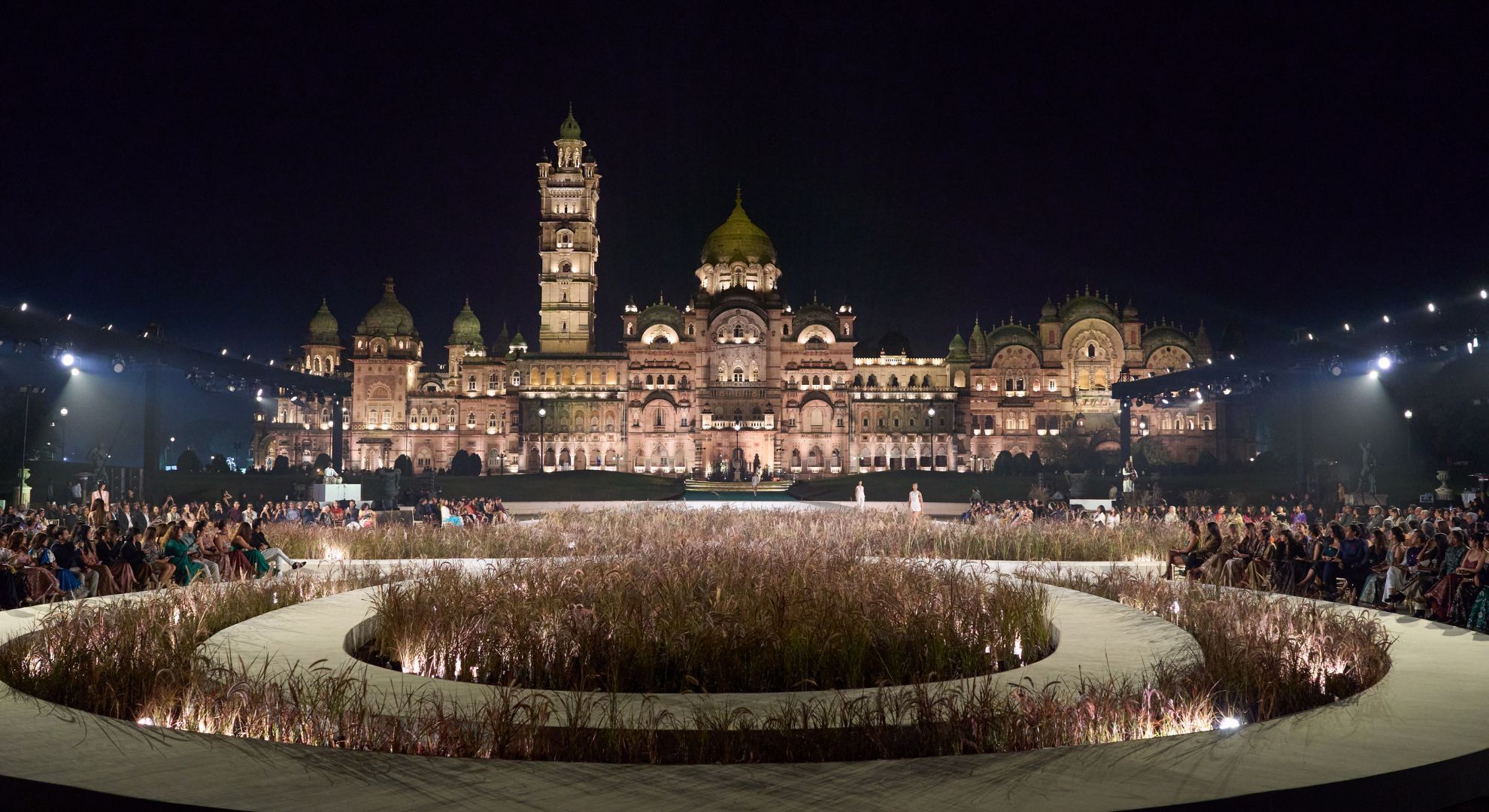
Her latest show, Rewild 2026, didn’t shout its message. It didn’t need to. Staged at the historic Lukshmi Vilas Palace in Vadodara, the second edition of Rewild unfolded with the confidence that comes from actually believing in what you’re doing. Co-hosted by Maharani Radhikaraje Gaekwad of Baroda, the setting carried its own quiet authority. A palace often described as four times the size of Buckingham Palace, steeped in legacy and stewardship, playing host to a conversation about the future of fashion.
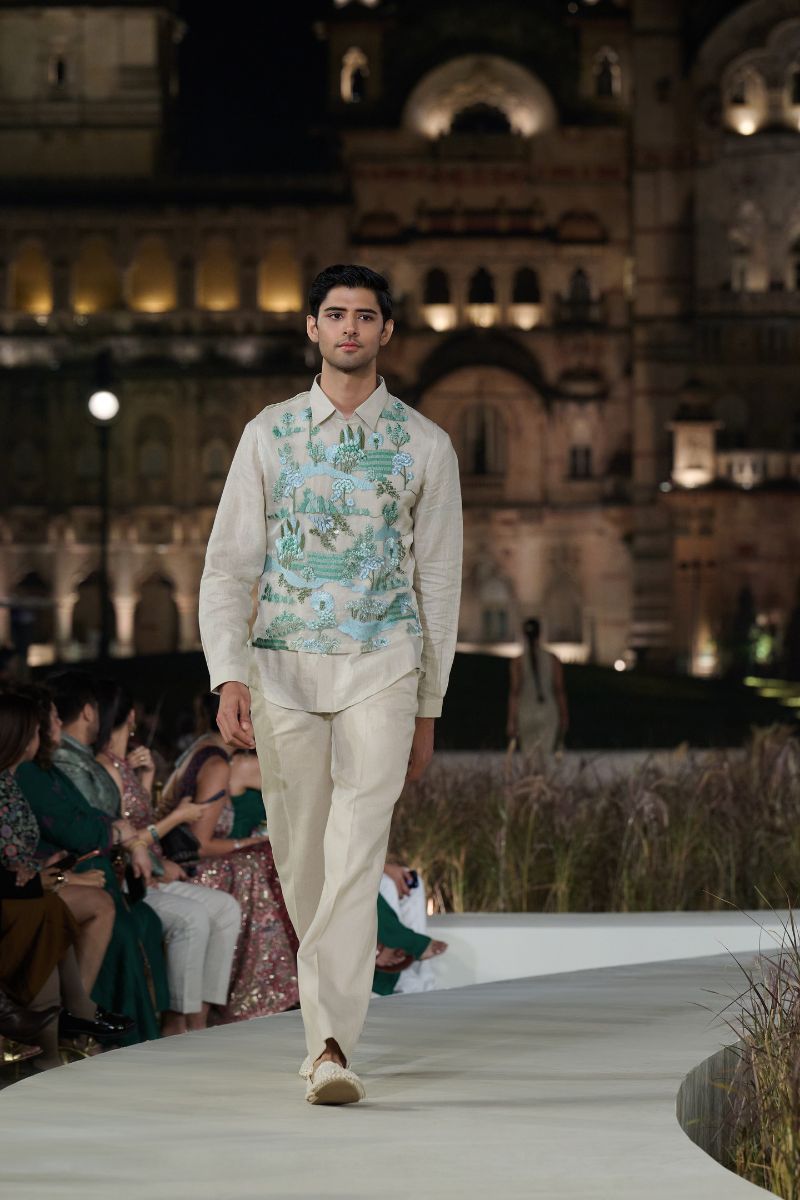
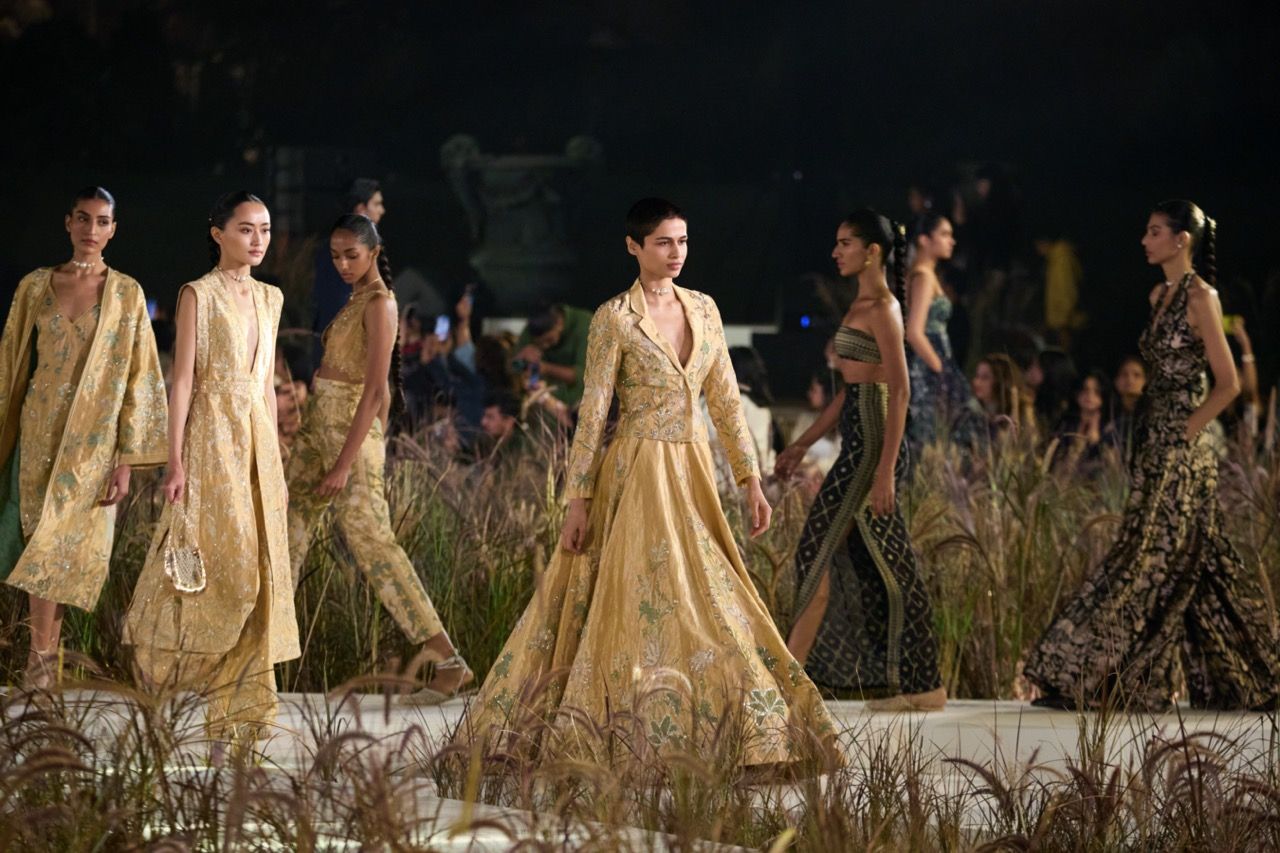
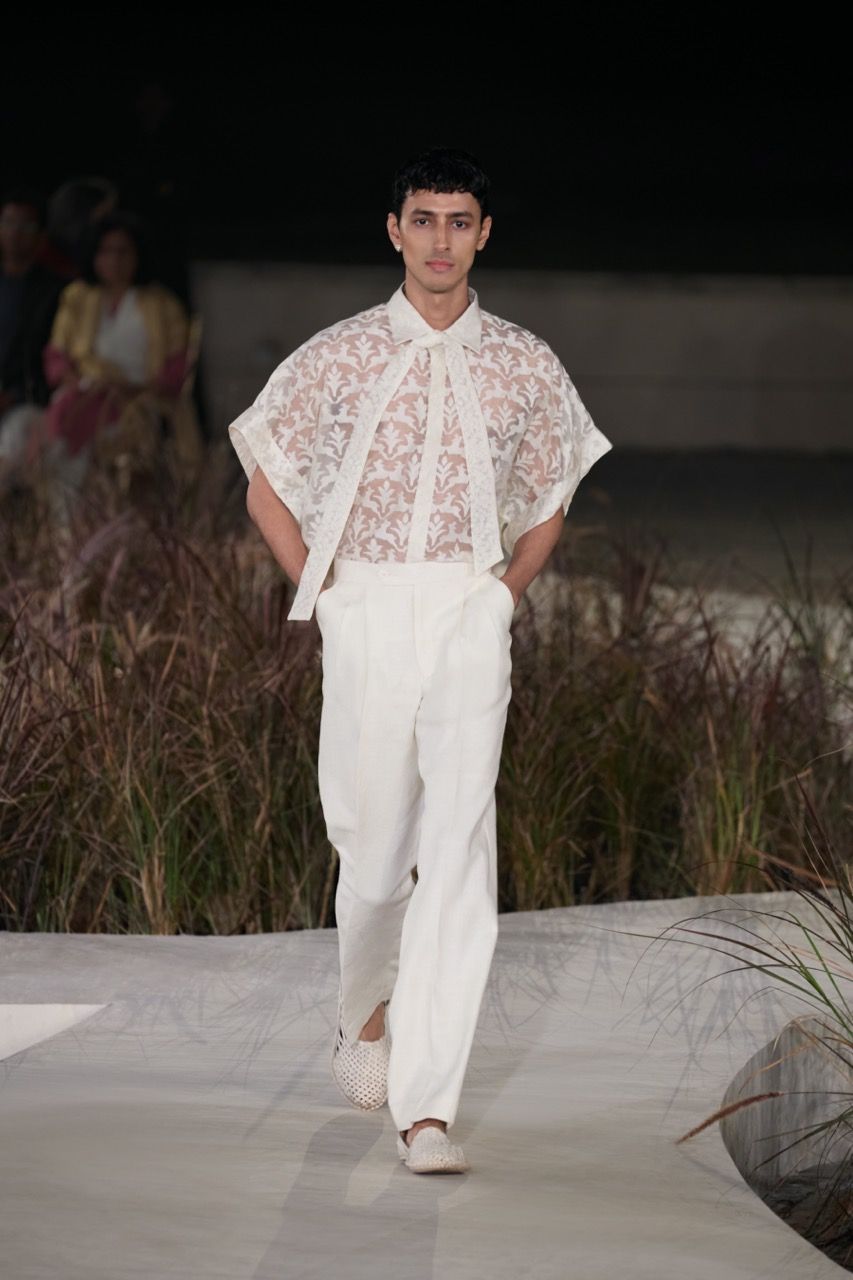
The clothes mirrored that restraint. At first glance, the palette stayed calm. Deep forest greens, midnight blues, warm ivories, soft yellows. Nothing clamouring for attention. But the longer you looked, the more it revealed itself. Forest-inspired embroidery that felt considered. Cutwork that was structural, not ornamental. Fringe that moved gently, instead of performing for the camera. It was luxury without theatrics, confident enough not to demand applause.
That philosophy became clearer when we sat down with Dongre to talk about craft, longevity, and what luxury really means today.
Let’s rewind a bit. What first made you believe fashion could be a serious, long-term vocation for you, rather than just a creative pursuit?
I was 19 when I first began my journey with design. Very early on, I realised that fashion could be both creative and purposeful. What drew me in wasn’t just design, but the entire ecosystem behind it. The artisans, the processes, the livelihoods it supports. I saw how fashion could preserve craft, create employment, and tell cultural stories in a way few other fields could.
That understanding shifted fashion for me from being just a creative pursuit to a long-term vocation. It became a way to build something meaningful and enduring, with creativity at its core but responsibility at its heart.
How do you modernise a craft without losing its soul, especially when working across price points and categories?
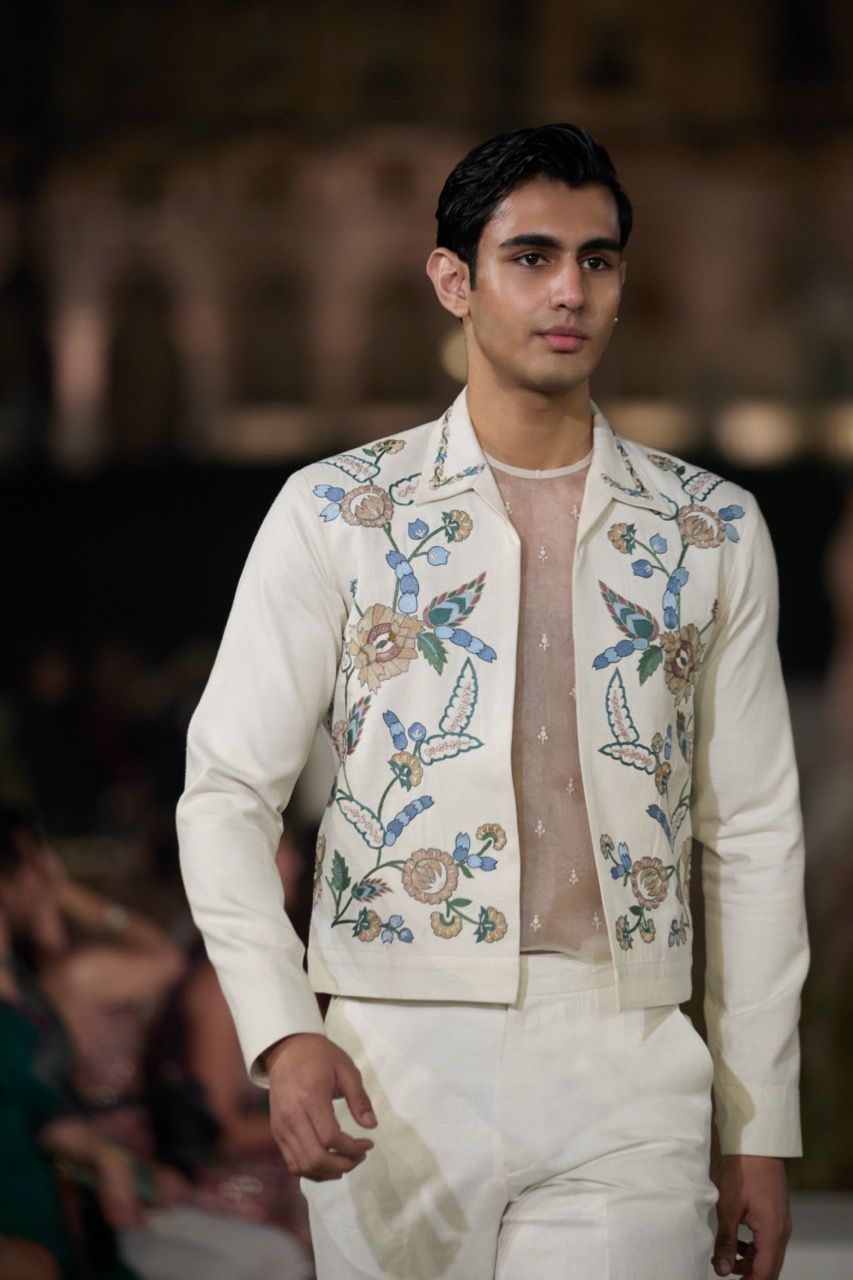
For me, modernising a craft is about placing it in a new context without compromising its origins. Take Pichhwai, for instance. What could have remained confined to decorative or devotional spaces now finds expression on garments, giving the craft new visibility and a wider audience. Zardozi appears on tailored jackets. Gota patti shows up on contemporary co-ord sets. The technique remains unchanged. Only the canvas evolves.
This allows age-old traditions to stay relevant, sustain their ecosystems, and find new patrons in a modern world.
When sourcing fabrics today, what are your top priorities? How do you balance sustainability, handloom, and scale?
We work closely with handloom clusters across the country, ensuring the fabrics we use are ethically made and support local artisans. Natural fibres remain central to our collections because they last longer, wear better, and age honestly. They’re comfortable, durable, and aligned with our philosophy of conscious design.
After decades in the industry, what does luxury truly mean to you today?
Luxury, for me, is longevity. It’s thoughtful, responsible, and emotionally meaningful. As Indian consumers become more informed, they’re valuing authenticity and intention as much as beauty. That shift has reshaped how luxury itself is defined.
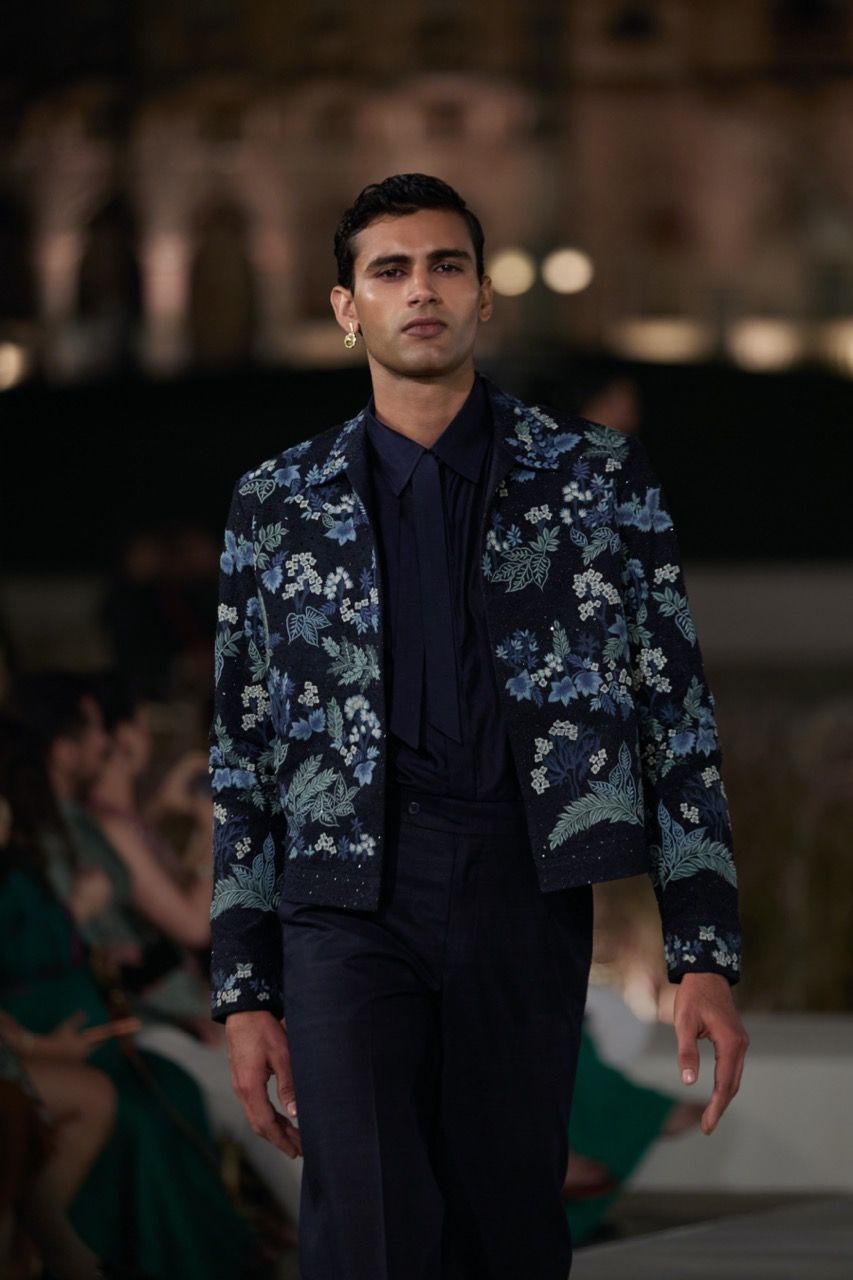
Menswear has become a serious growth category for you. What are the grooms really looking for today?
Menswear is finding a voice of its own, especially in wedding and occasion space. The rise of stylists focused specifically on men reflects how much more intentional grooms have become about what they wear.
Sharp tailoring remains constant, but there’s a growing openness to subtle experimentation. Draped dupattas, textured or pastel safas, coordinated details that echo their partner’s look. It’s an evolution marked by restraint, with grooms taking considered steps towards expressing personal style without overdoing it.
What do you think the world is finally beginning to understand about Indian craftsmanship?
That it goes far beyond vibrant colours and ornate detailing. Indian crafts are rooted in specific communities and geographies, carrying deep cultural and social histories. Each tradition has its own identity, shaped by place, people, and purpose.
Global audiences are also beginning to recognise how inherently sustainable many of these practices are. They were designed to last, created with intention rather than excess.
Opening stores in New York and Beverly Hills marked a major global moment for the brand. How do international clients differ from Indian customers?
International and NRI clients often gravitate towards traditional pieces that help them reconnect with their roots. Indian customers today tend to favour understated elegance. While geography influences taste, the shared thread is a desire for authenticity and craftsmanship.
What did presenting Rewild at Lukshmi Vilas Palace represent for you, creatively and personally?
This collection reflects the philosophy behind Rewild and the brand as a whole. A belief that fashion must exist in harmony with the natural world.
Hosting it at the palace allowed us to ground that idea in cultural legacy and conservation. The space, with its deep association with art and craftsmanship, created a natural dialogue between heritage and modernity. Creatively, the collection introduced new techniques while strengthening our circular design approach, reimagining heirloom Banaras dupattas into contemporary pieces and giving enduring materials renewed purpose. That’s when craft and context truly came together and added meaning.


