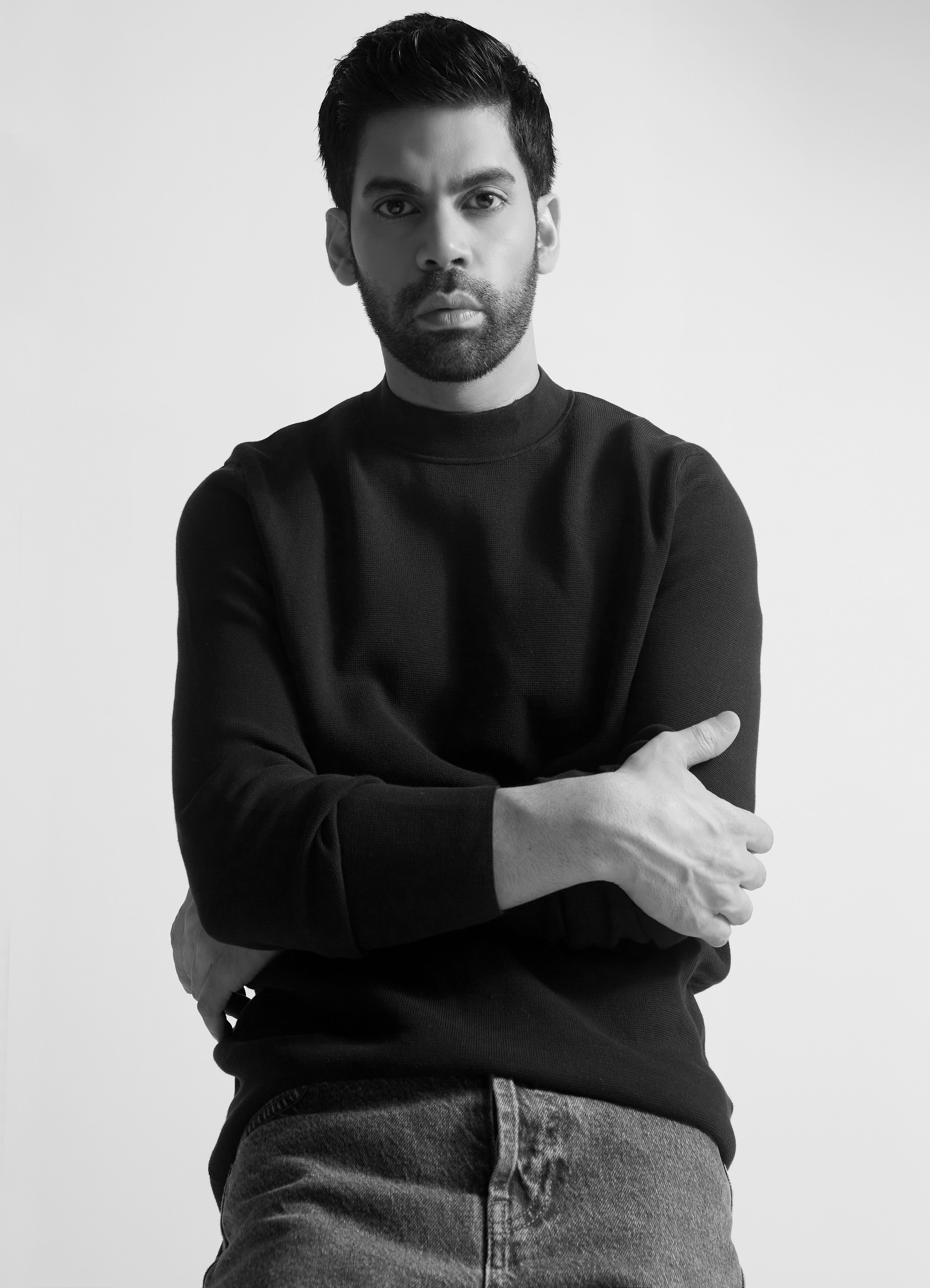
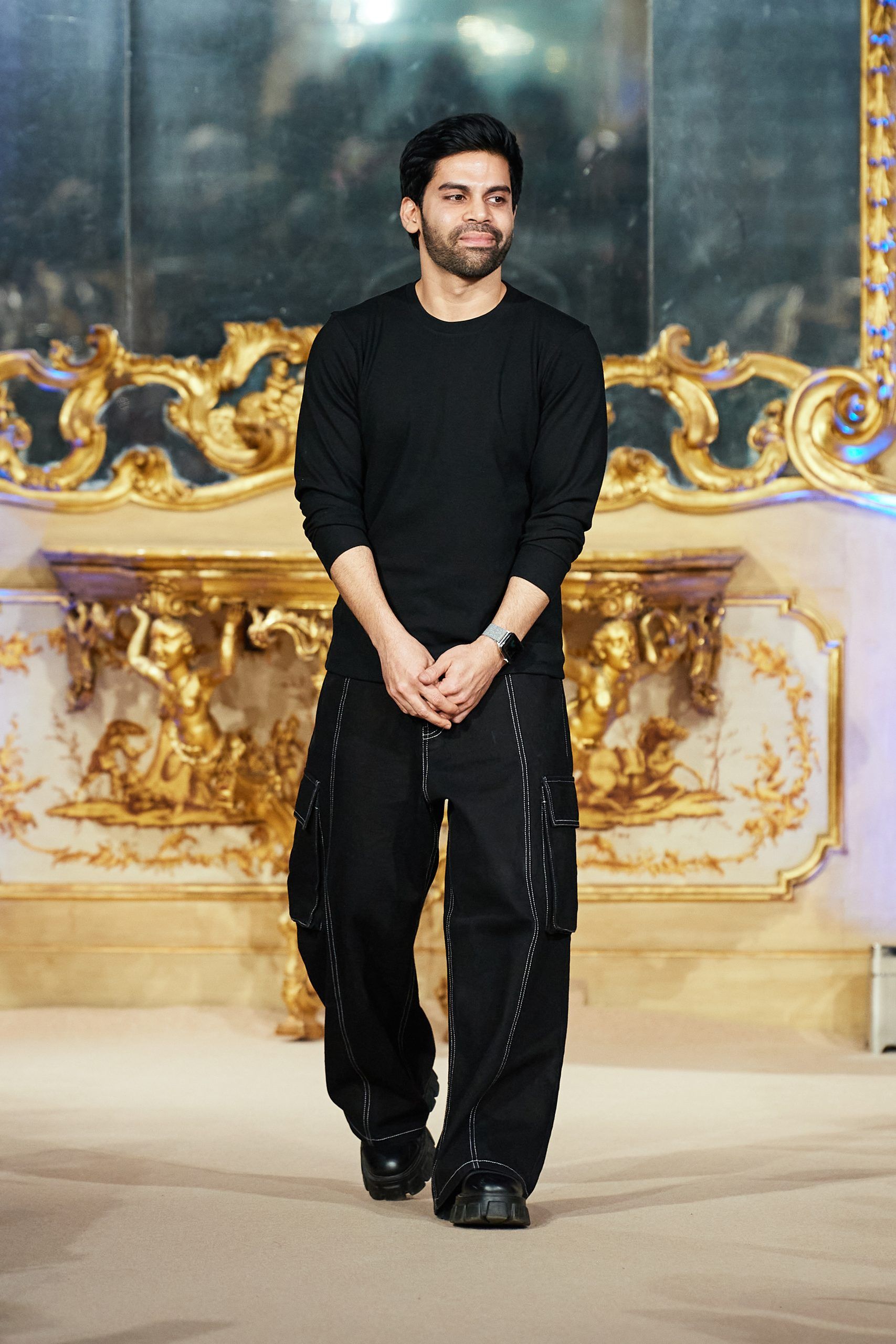
Over the last decade, Dhruv Kapoor has gone from being an Indian designer with a distinctly experimental approach to one of the country’s most recognisable names on the international fashion calendar. He was the first Indian designer to showcase in Milan in 2022, and the difference between his first show—which started an hour late with an entire row empty—and today, when influential buyers and editors actively track his collections and make a point of meeting him backstage, is a lesson in consistency and clarity.
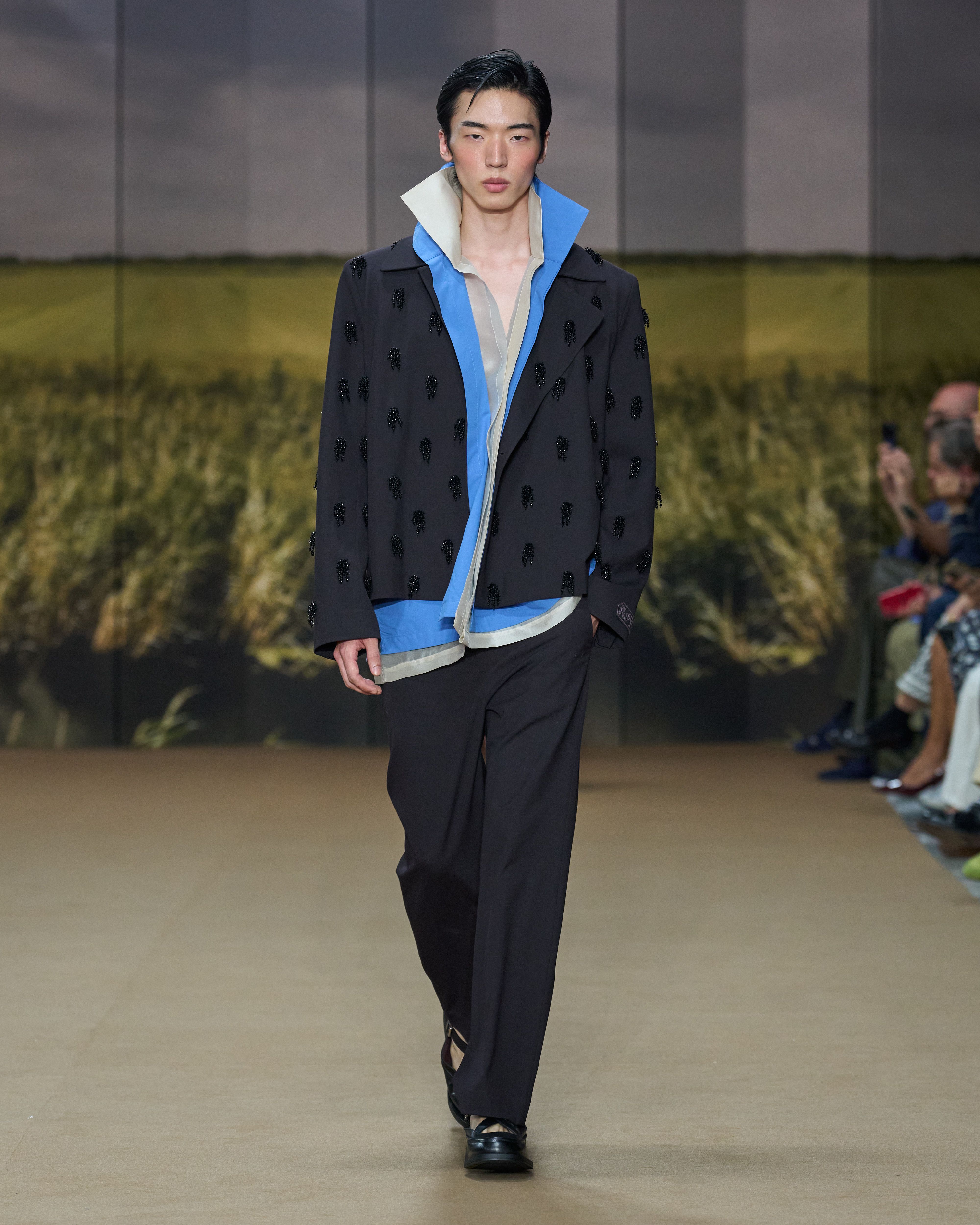
His latest collection, Presence, feels like a natural continuation of his previous collection, which explored the idea of being in transit—of existing between destinations, without a fixed sense of arrival. Presence asks what happens when you become more aware of where you are and observation. It is an idea that also seems to mirror Kapoor’s personal life, where discipline plays a central role: he starts his day at 5:30, runs, meditates, practises pranayama and is usually asleep by 9:30.
But the Dhruv Kapoor story today extends far beyond the runway. There is his first Delhi flagship, Kapoor 2.0’s growing business, his longstanding interest in menswear and collaborations like PUMA × RCB, which brought the codes of Indian cricket fandom to a Milan runway. And while Kapoor is still a designer first, he is increasingly thinking about how to build a business that can grow without losing the ideas that made it interesting in the first place.
After exploring transit in your previous collection, Presence is about awareness of the moment. What made you want to move to stillness?
Simple observations. We are always looking at the next thing- the next meeting, the next goal, the next version, and at that pace the desires of the system replace what we truly desire, as we have no time to think. The rushed pace of being in transit was replaced with something more resolved. However, it is not about sitting still–it is about being more aware of where you are and conscious enough to choose a direction that you desire.
Presence looks at the way time leaves traces—on the body, on fabric, in colour and in memory. How did this idea influence how you approached the silhouettes, materials and styling?
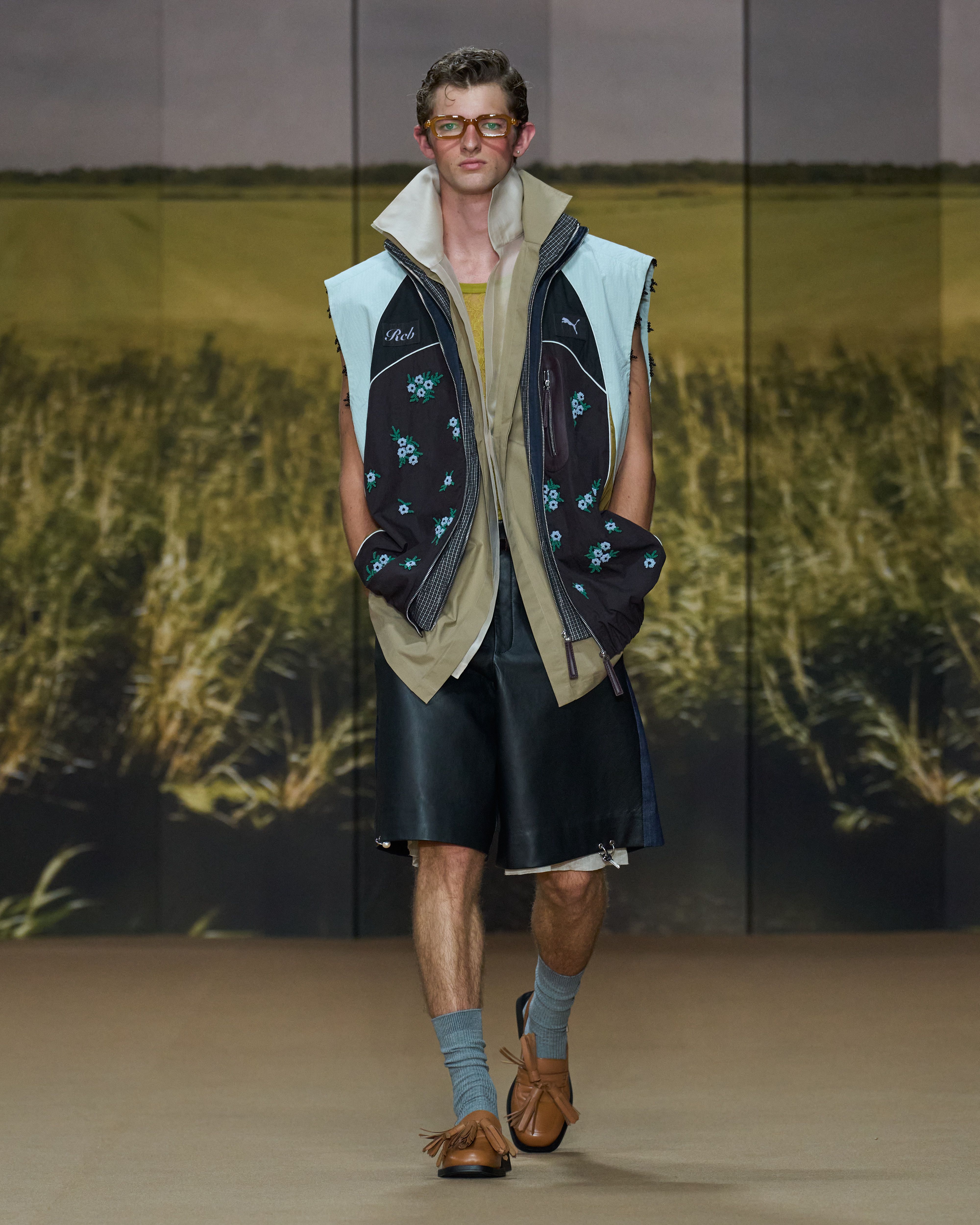
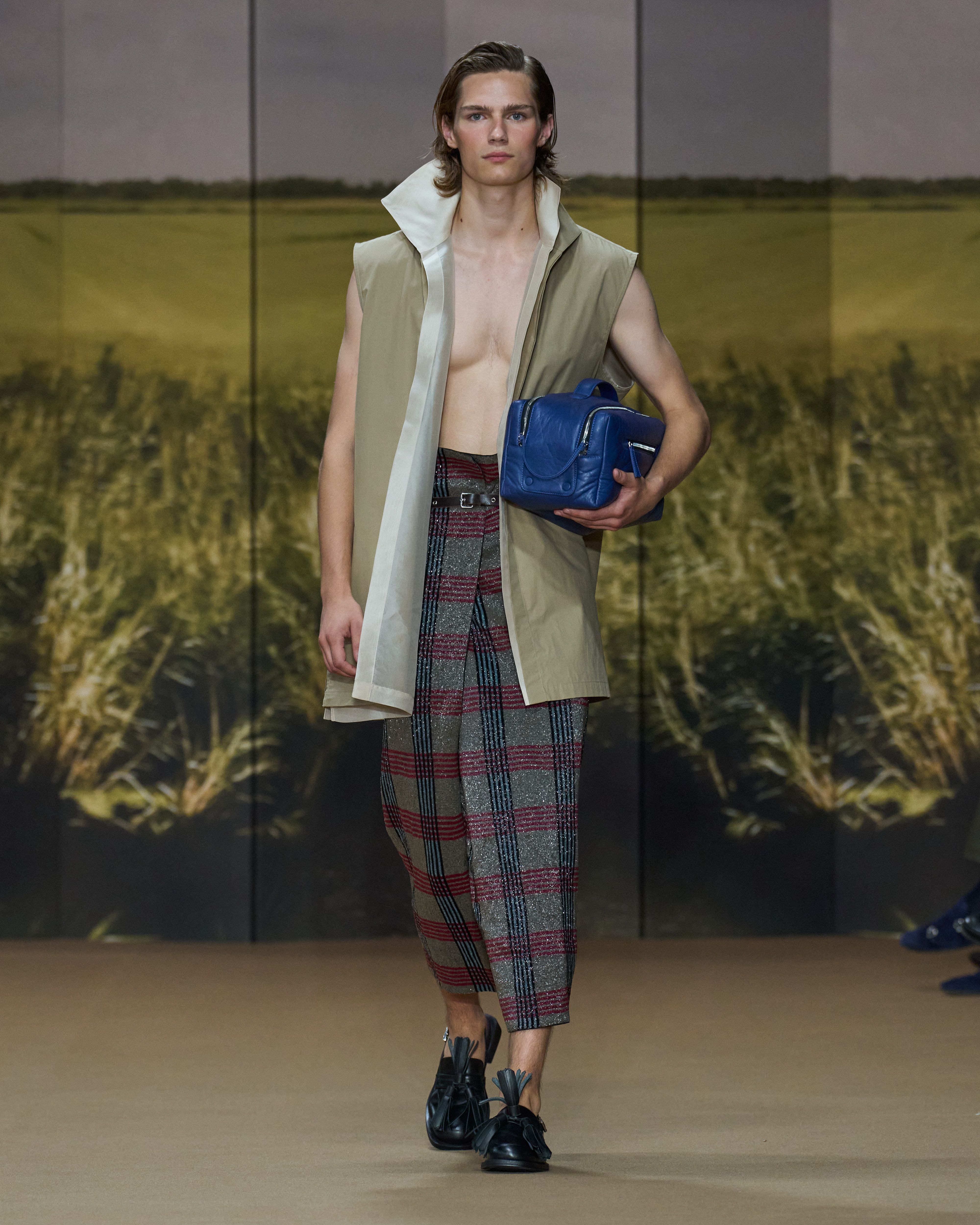
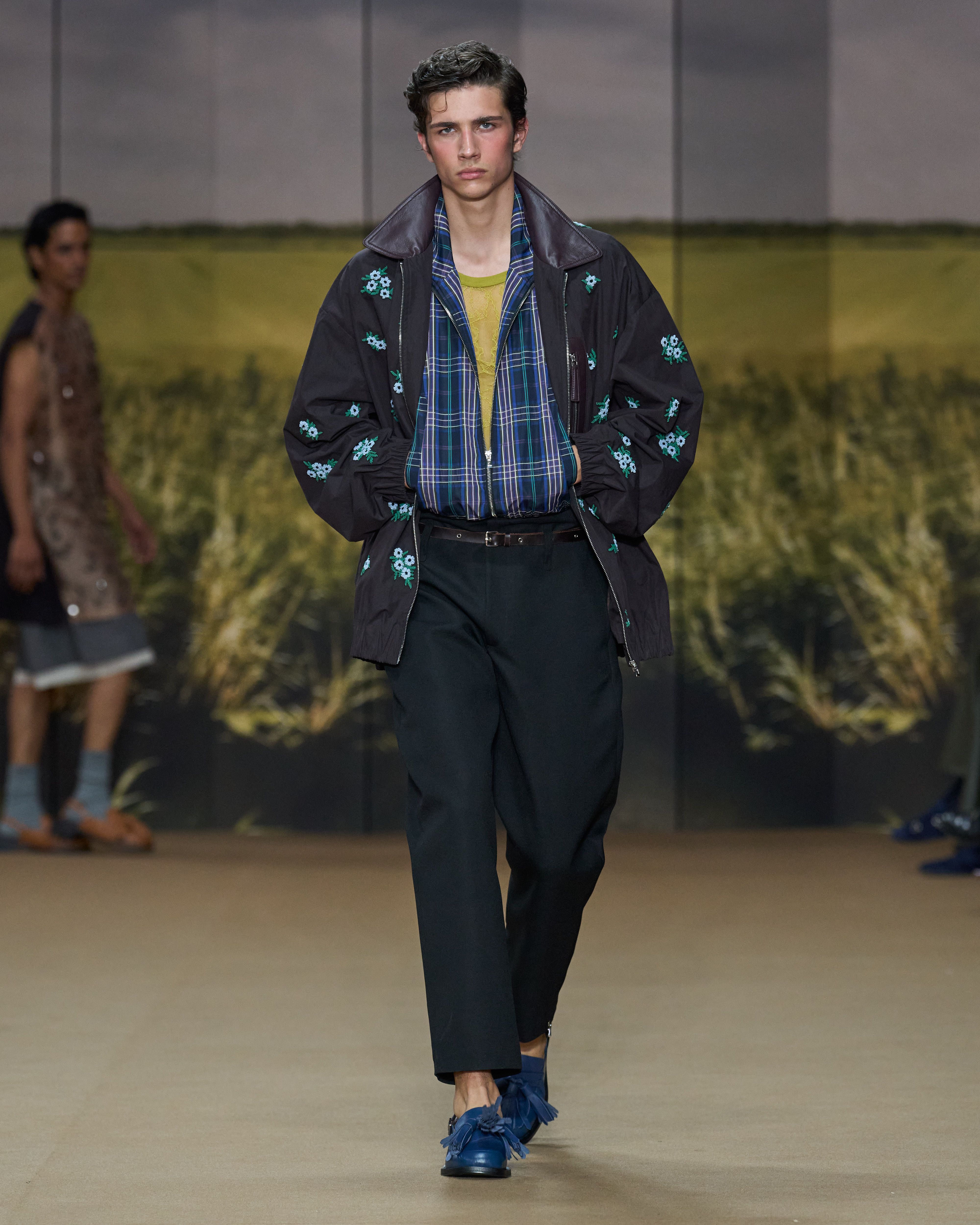
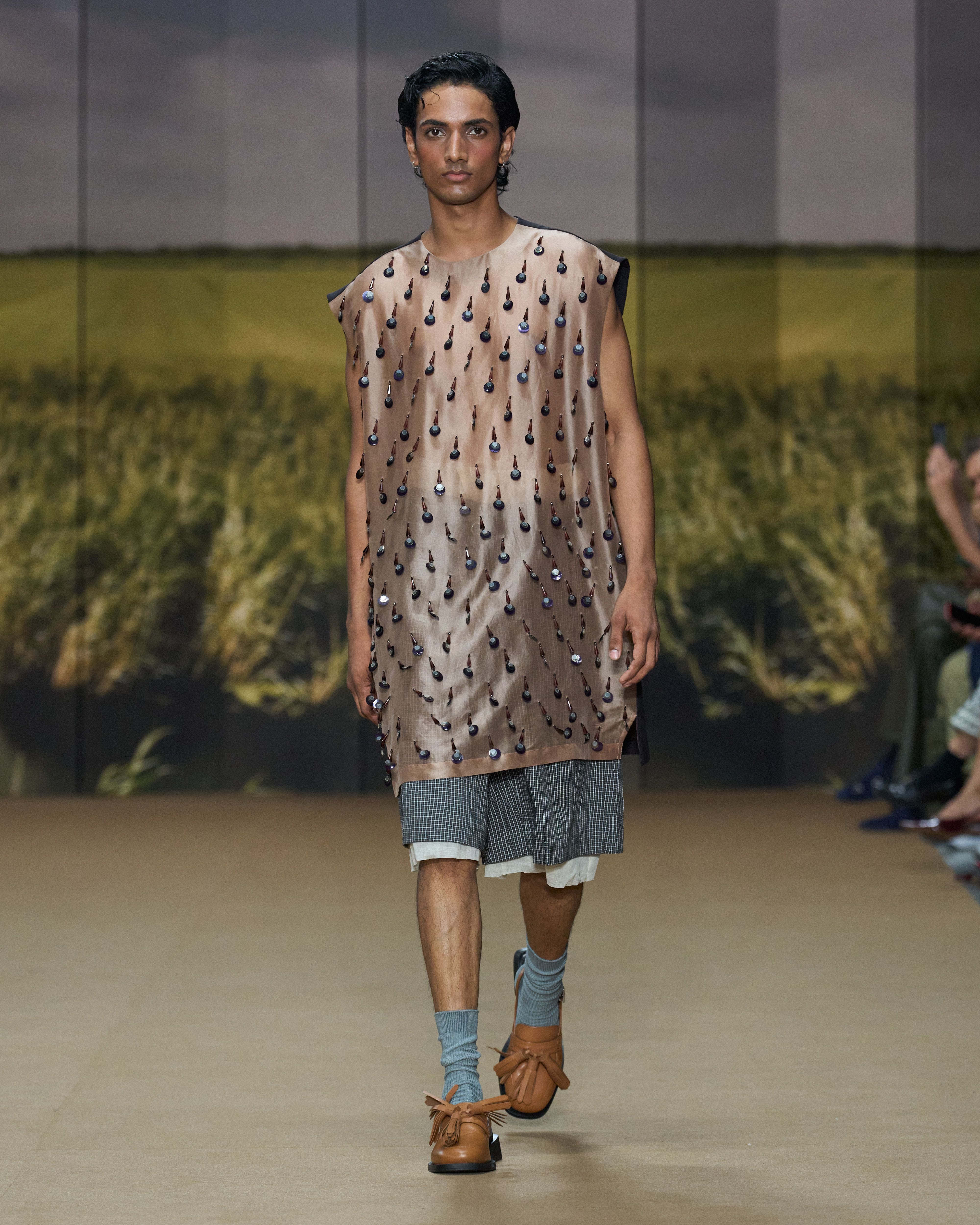
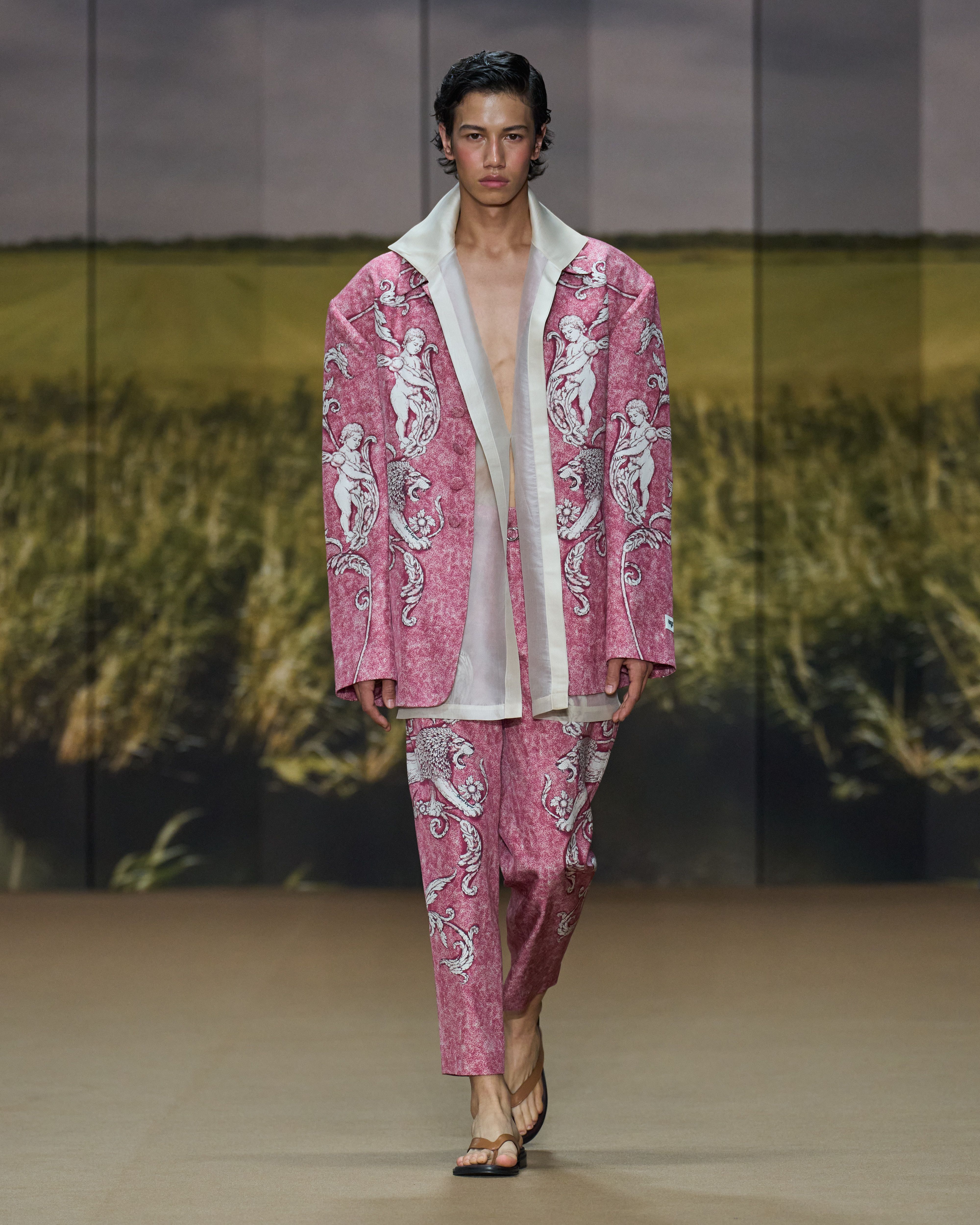
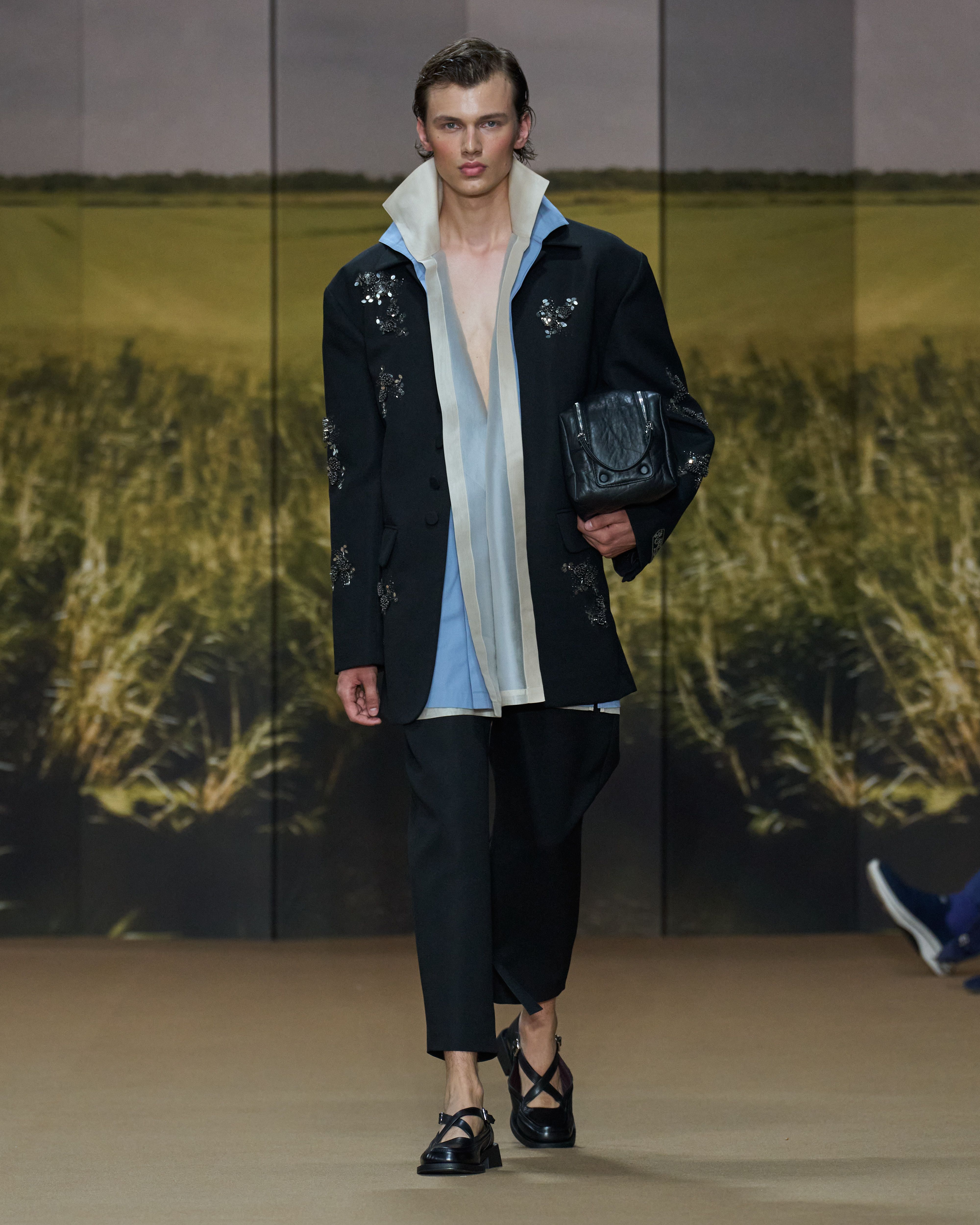
The collection comes from observations made in this state of awareness–how sunlight fades color, how things grow, decay and eventually make way for something new, or how clothes change through the act of living in them. We translated these ideas through sun-faded colors, chipped florals, crumpled checks and pebbled surfaces. Foundational garments from Spring/Summer 2026 return altered, softened and lived in. Silhouettes constantly shift between oversized and precise, soft and structured, while the lungi and sari bring in Indian methods of wrapping and draping. Even the hair and make-up feels like something that was set in the morning and lived in through the day.
You were the first Indian designer to showcase at Milan in 2022 and that show had a very different reception from what you see today. What did those early experiences teach you?
Consistency and clarity. Both the brand and I have matured over the last few years. I think when you enter a new market, there is an instinct to show everything you can do, but over time you understand that building a strong identity is as much about editing as it is about creating. You keep showing up, season after season, and allow people the time to understand your language and see its evolution.
You also studied in Milan. After all these years, what do you understand about Milan and its fashion ecosystem and how different is it to India?
Milan has always been a second home for me. I studied here and showing during Milan Fashion Week was always part of the larger vision for the brand. The biggest difference for me is really the format. In India, fashion weeks tend to offer a more curated framework, bringing designers, production and audiences together within a larger platform. There is also a strong mix of Indian and international press, buyers and industry voices that come into that ecosystem.
Milan operates more independently. Being on the calendar gives you the platform, but as a brand you build almost everything around it yourself- from scouting the location to finding the production team, light and sound, stylist, casting director and PR. That independence gives you a lot of freedom to create a very specific world around the collection, but it also requires you to build your own ecosystem season after season.
You’ve said that in your 20s you were more interested in experimentation, while today you think more about intention and longevity. When and why did that shift happen?
I don't think there was a specific moment. It happened naturally as I grew and the brand grew with me. In my 20s, experimentation was often about seeing how far an idea could be pushed. Today, I still want to experiment, but there is a stronger sense of purpose behind it.
I think much more about whether something deserves to exist, whether someone will want to live with it beyond a season and how it can continue to feel relevant years later. The experimentation hasn't reduced, it has just become more considered.
You’re known for maximalism and strong visual language, while your new Delhi store is deliberately restrained. Was that contrast deliberate?
Absolutely. The clothes already carry a lot of information through print, embroidery, texture and color, so the space needed to create a sense of pause around them. I didn't want the architecture to compete with the product.
It also reflects how I see the brand today. We have always existed between polar ideas- masculine and feminine, ornament and utility, softness and strength. The restraint of the store against the intensity of the clothes is another version of that same dialogue.
Why did you venture into retail almost a decade after starting your brand?
It felt like the right time for the brand to be experienced as a complete world. Until now, most people encountered us through a garment, a runway image or online. A physical space allows us to control the entire experience- how you enter, how you discover the clothes, what you touch, what you hear and how you spend time with the brand.
I also think we understand ourselves much better today. If we had opened a store much earlier, it probably wouldn't have communicated the brand with the same clarity.
Major Western fashion houses are increasingly looking to Indian craft and design for inspiration. Where do you think the line lies between engaging with a culture and simply borrowing from it?
I think the difference lies in understanding and context. Craft, silhouettes and symbols come with histories, communities and systems of knowledge behind them. Engaging with them should involve understanding where they come from rather than simply extracting the visual element.
At the same time, I believe culture must be allowed to evolve. Fashion has always been built through exchange and cross-pollination. For me, the question is whether the reference is being used superficially or whether there is genuine curiosity, respect and understanding behind its transformation.
You’ve said you don’t approach Indian silhouettes with the intention of “exporting India”. Has the pressure to represent India ever felt limiting?
I don't consciously think about representing India when I design. I am Indian, I live and work in India and a large part of what I see and experience comes from here, so it naturally becomes part of my vocabulary.
What can become limiting is the expectation that an Indian designer needs to constantly explain the Indianness of the work. A lungi or sari can sit next to a bomber jacket or tailored coat without one needing to be treated as more exotic than the other. I am much more interested in what happens when these different systems meet and become something new.
Alongside the main label, you’ve built Kapoor 2.0 as a more accessible ready-to-wear line. Was creating a lower price-point label always part of the plan?
It happened along the way. We began seeing ideas that belonged to our larger world but operated at a very different frequency- younger, more instinctive and more immediate. Instead of forcing those ideas into the mainline, Kapoor 2.0 gave them their own space.
The accessible price point is important, but K2 isn't intended to be a diluted version of Dhruv Kapoor. It has developed its own language, audience and identity, and increasingly operates as an independent business within the larger world.
As Kapoor 2.0 grows, how do you balance scaling the business with the responsibility not to simply produce more and encourage more consumption?
For me, scale doesn't necessarily mean producing more and more product. It can mean reaching more people, improving distribution, understanding what the customer actually responds to and becoming more precise about what we produce.
I think the larger responsibility is to make things that people genuinely want to keep and wear rather than constantly creating novelty for the sake of it. As the business grows, the aim is to become smarter and more considered about what we put into the world, rather than simply increasing volume.
You’ve spent years bringing Indian couture techniques into everyday pieces. Do you think Indian craftsmanship is still too closely associated with occasionwear?
Yes, I think there is still a tendency to associate Indian craft with occasionwear because it is often presented as something precious. And when something becomes too precious, people become afraid of actually living in it.
For us, the interesting part has always been changing that context. Embroidery can exist on a bomber, a shirt, denim or something you wear in the middle of the day. It doesn't always have to announce itself as craft. Changing the scale, placement, material and application can completely change how a traditional technique enters a contemporary wardrobe.
Your latest collaboration is with Puma India and RCB. Is this as much a business experiment as a creative one?
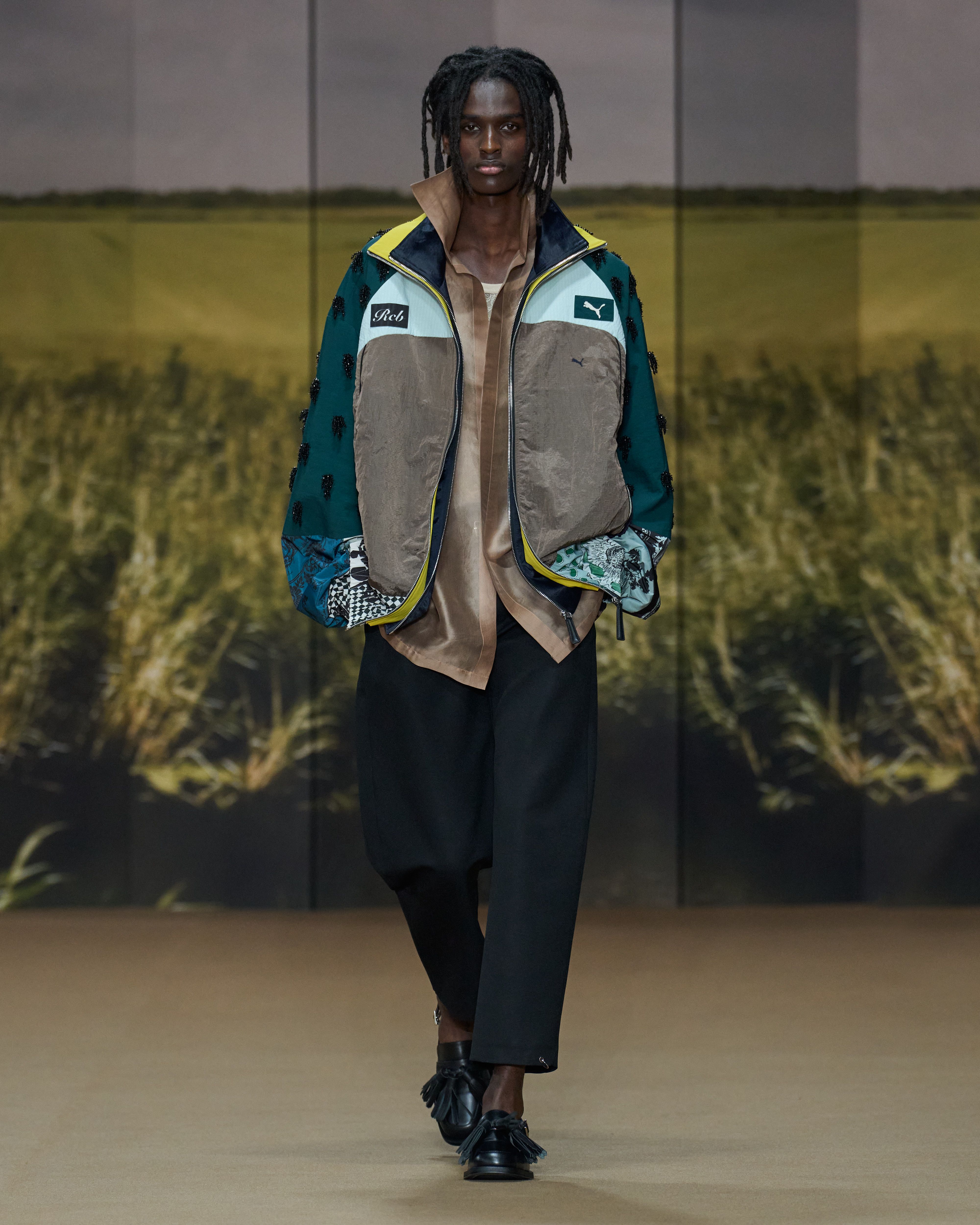
It is both. Creatively, it gave us the opportunity to work with two very established sets of codes–performance from PUMA and the sense of community and belonging around RCB–and reinterpret them through our lens.
Commercially, collaborations also allow different audiences to enter each other's worlds. Someone who knows RCB through cricket or PUMA through sport might encounter Dhruv Kapoor for the first time through this project. For me, a successful collaboration should create that exchange while still resulting in something that feels authentic to everyone involved.
The IPL and RCB is a sporting phenomenon in India, but it doesn't have the same cultural currency in Milan. What interested you about taking something so geographically and culturally specific to an international fashion audience?
That specificity was actually what made it interesting. We weren't trying to take cricket to Milan or expect an international audience to understand every reference. We were interested in what happens when those codes move into a completely different context.
RCB carries a very strong sense of community and belonging, and we translated that through familiar sporting and varsity codes. Those were then interrupted with hand embroidery, altered proportions and the design language of Dhruv Kapoor. Someone in Bengaluru may read those pieces through cricket, while someone in Milan may simply encounter them as fashion. Both readings can exist at the same time.
What has changed about an Indian man's relationship with fashion over the last five years?
There is definitely much more freedom. Men are experimenting with silhouettes, color, jewelry, bags and beauty in ways that weren't as widely accepted even five years ago. There is also much greater exposure now–you can see completely different expressions of masculinity from around the world every day.
I think that has helped break the idea that there is one correct way for a man to dress. People are much more comfortable using fashion as a way to express themselves rather than simply dressing according to a prescribed idea of masculinity.
What did working primarily through menswear teach you that still influences the way you design today?
Menswear taught me the power of proportion and detail. When you begin with something incredibly familiar like a shirt, trouser, jacket or bomber, even a small intervention can completely change the way it is perceived. It also made me question the rules around masculinity very early on. Why should embroidery, softness or ornament belong to one gender and structure, utility or strength to another? That thinking eventually became fundamental to the entire brand, across both menswear and womenswear.
Do you still think like a designer first, or do you find yourself increasingly thinking like a businessman?
Designer first, always. But I understand the business much better today and I don't think the two can exist independently if you want to build something for the long term. The business creates the structure that allows the creative side to grow, while the creative side gives the business its identity. Increasingly, my role is to make sure that growth doesn't dilute what made the brand interesting in the first place.
You’ve said you start your day at 5:30, run, meditate, practice pranayama and are usually asleep by 9:30. Has becoming more disciplined in your personal life changed the way you work creatively?
Definitely. For me, it is the most productive format and probably the most balancing part of each day. That time in the morning allows me to reset, clear my head and charge myself for whatever is to come. Personally, it is about maintaining a calm and steady approach. There is always going to be a certain amount of unpredictability in what we do, so having that discipline gives me a stable foundation to operate from. It also creates more freedom creatively because I am not bringing unnecessary chaos into the process. Meditation and breathwork have made me more observant as well–you notice things you would otherwise rush past, and those observations often find their way back into the work.
You’ve spoken about expanding into footwear, accessories and even home. Are you ultimately building a fashion label with more categories, or a world where clothing is just the starting point?
I think of it as building a language rather than simply adding categories. Clothing is where that language started, but the larger idea has always been about bringing polar worlds together and finding a point where they can coexist. That thinking can move into footwear, accessories, objects, spaces and experiences without simply putting the Dhruv Kapoor name on more things.
Eventually, I would like to explore experiences around wellbeing as well. Clothing works from the outside in–you put something on and it can change how you feel. I am equally interested in the reverse–practices like breathwork and meditation that begin at the core and work their way out. I would love to create spaces where design, wellbeing, culture and technology can come together.
So I don't necessarily see the end goal as a lifestyle brand in the conventional sense. I see it as building a thinking system that can move across different disciplines while retaining the same point of view.


