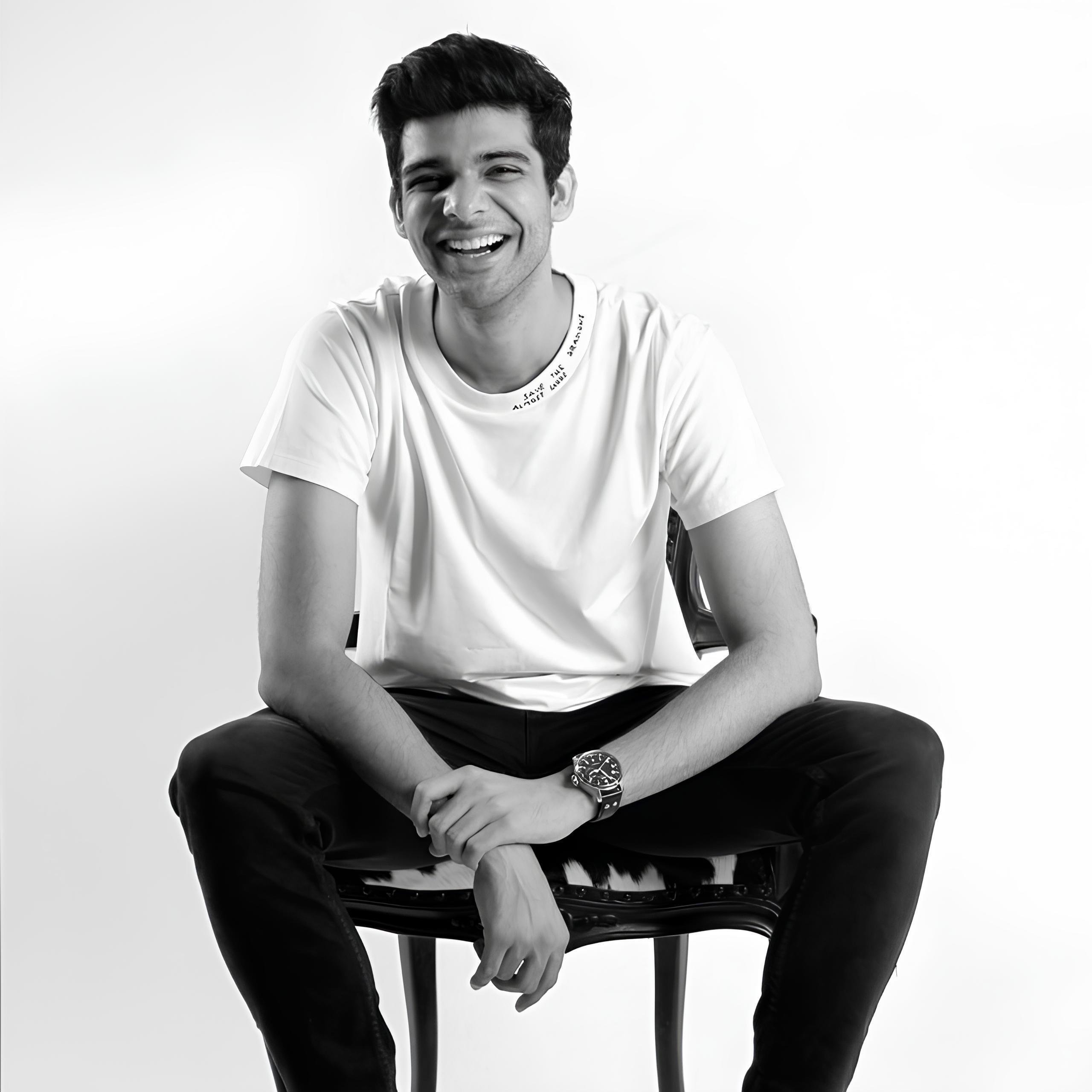
As the founder of Almost Gods, Dhruv Khurana has spent the last eight years building one of India’s most distinct fashion labels—one that blends mythology, memory, and contemporary street culture without ever feeling forced. What started as an instinctive response to a gap in the Indian fashion space has slowly grown into a brand with a world of its own, shaped as much by storytelling and material exploration as it is by clothes themselves.
This interview took place while Almost Gods was celebrating its eighth anniversary with a showcase in Mumbai featuring some of the brand’s most memorable pieces from over the years—from the now-iconic red hoodie to early graphic sweats and experimental silhouettes that captured the raw energy of its beginnings. Since then, the brand has also stepped into footwear with Tether, a sneaker that continues Khurana's obsession with construction and narrative.
In this conversation, Khurana talks about the evolution of Almost Gods, why personal style today feels increasingly algorithm-driven, the pieces he keeps going back to, and why he’s far more interested in construction and individuality than trends or hype.
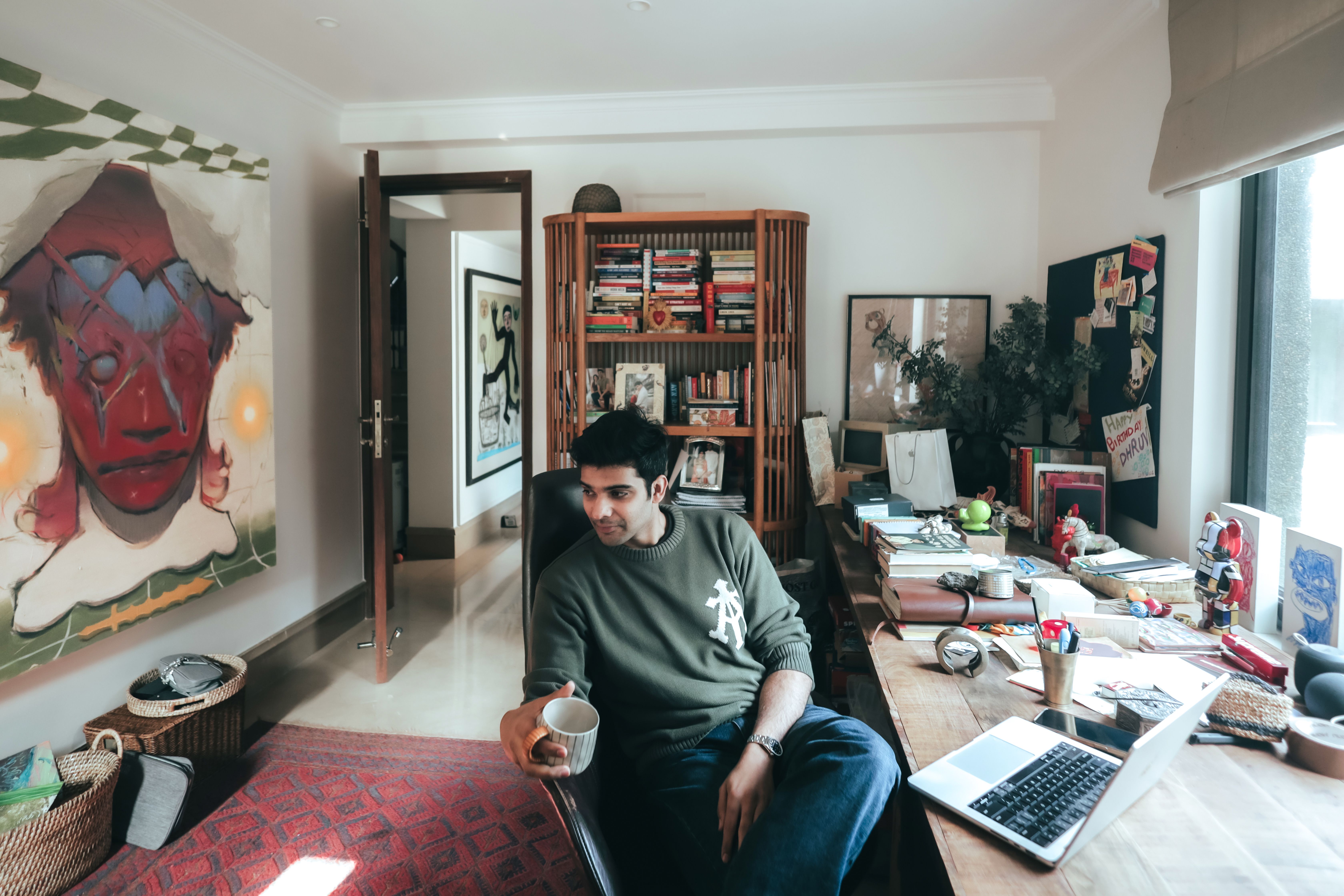
Q1) What inspired you to start a homegrown brand like Almost Gods?
I came back to India after studying in the US, at a time when there wasn’t really a streetwear movement here. Globally, I had seen there were all these independent labels shaping culture, but within the subcontinent it felt like a gap. I wasn’t thinking of building a “homegrown brand” in that sense - it was more instinctive. I just wanted to make things that felt culturally relevant to how I saw the world. Almost Gods started as a way to participate in that conversation and eventually shape it.
Q2) What are the challenges that come with combining two opposite worlds—one of mythology and the other of streetwear?
I don’t see them as opposites. If anything, they come from the same place, both are about identity, belief and storytelling. I think people try to box things in too quickly. For us, it’s about finding a balance where references feel intuitive, not forced. It should feel like a natural extension of how we live today, not a costume.
Q3) Which is the most memorable piece you've created for Almost Gods?
There are a few. The red hoodie from our early days definitely stands out, not just for what it was, but for what it did for us. It was one of the first times something we made really connected with people at scale.
We actually just celebrated 8 years of Almost Gods in Mumbai and had a showcase of some of our earliest pieces. Seeing them all together - the red hoodie, the Last Judgement tee, some of our early graphic sweats, even a custom utility lehenga we designed, each one felt pretty special. They really trace the journey of the brand finding its voice. At that point, everything was driven by instinct, a string of ideas that felt exciting to execute, without overthinking merchandising or the balance between creative and commercial.

Today, I think we’re far more intentional and intelligent about our design process, and there are a lot of contemporary pieces I’m proud of - the Mandrake camo net pieces which by the way are built by upcycling army nets into jackets and hoodies, the Arcana jacquards, the Templar shirt. But standing at this 8-year mark, I do feel a certain nostalgia for those early pieces. They represent a kind of raw energy that got us here.
Q4) Why did you decide to venture into footwear and sneakers after eight years?
Honestly, it never felt like we were suddenly deciding to enter footwear. The larger goal has always been to build a complete fashion ecosystem around the world of Almost Gods. We’ve just always believed in doing it patiently and step by step.
For us, it was important to first define our core language through apparel and really build confidence in our quality, construction, and storytelling before expanding into a completely new category. We never wanted to move just for the sake of growth. We wanted to wait until we felt we could genuinely bring something meaningful into the space.
Footwear has been on our minds for years. The ideas behind these sneakers have existed internally for a very long time. But until we found the right partners, the right production capabilities, and a way to properly translate our design language into footwear at the quality we wanted, we didn’t feel the need to rush it.
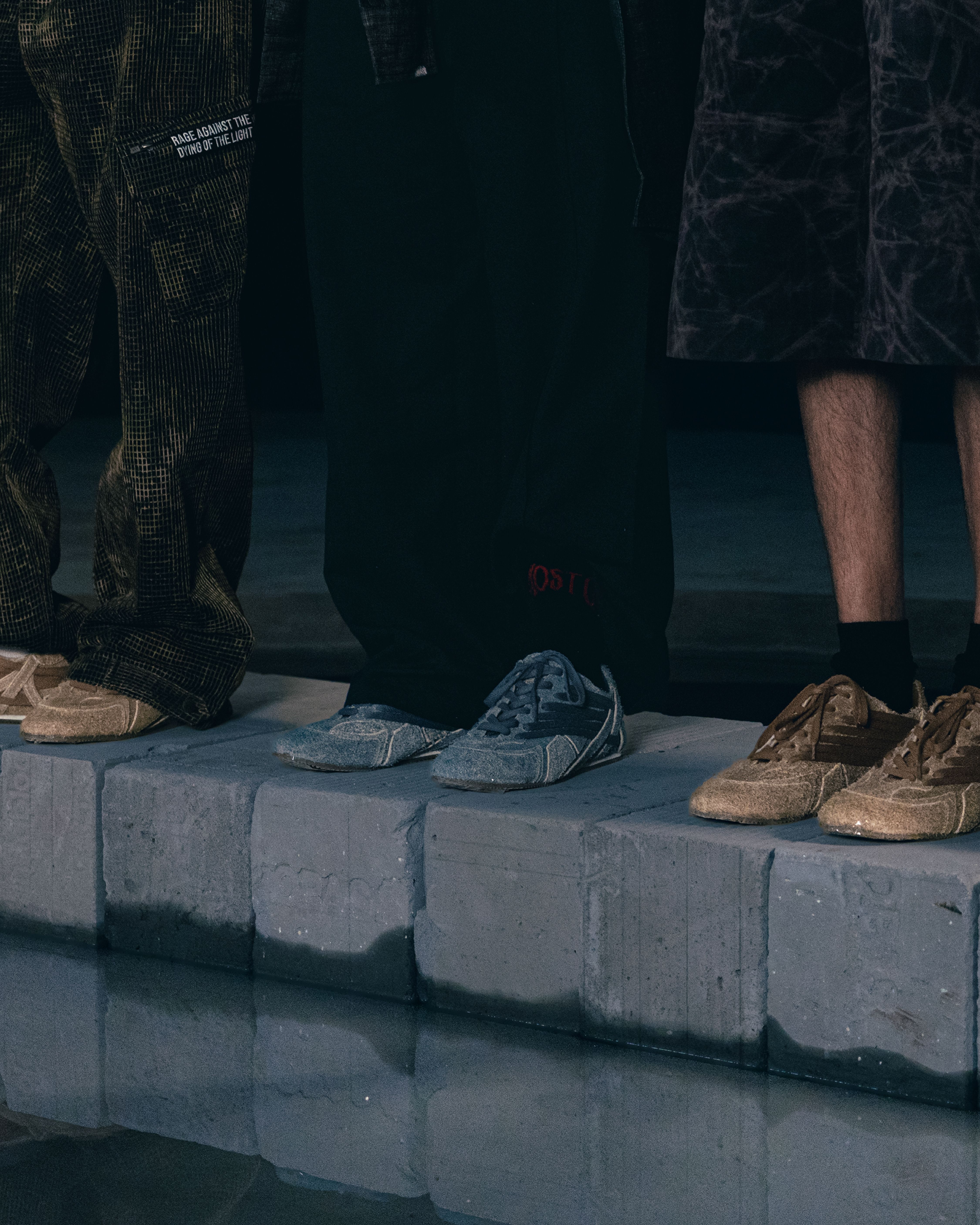
Q5) How did you conceptualize the ‘Tether’ sneaker and what makes it special?
One of the biggest ideas is this wrapping/lacing language that runs around the shoe. It comes from something I’ve always found deeply fascinating - the way many cultures, especially within Shinto traditions, use wrapping or circular enclosures as a symbolic gesture to elevate or sanctify something. There’s something very human about the idea that once you create a boundary or a circle around an object, it suddenly begins to feel more important, protected, or sacred.
That idea has existed in our work for a long time in different forms, but the body of a sneaker felt like the perfect place to finally execute it properly.
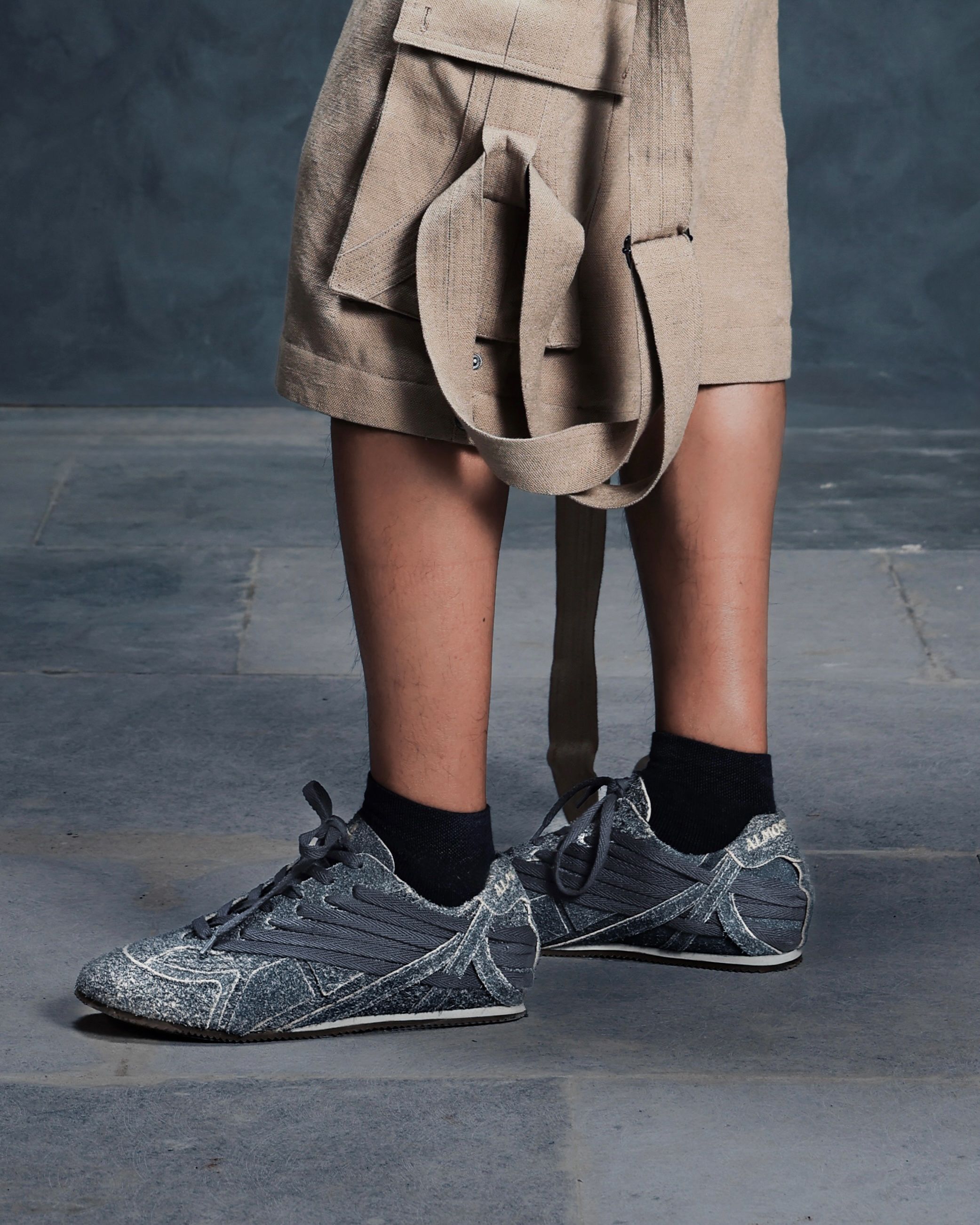
At the same time, the silhouette itself draws from references we’ve always been attracted to. The German GAT language has always spoken to us because of its military roots and the conversations around utility, structure, and power that naturally exist within that world. It also just feels like an incredibly timeless and effortless summer silhouette.
Then there’s the brutalist influence - the paneling, the geometry, the architectural feeling of the construction. That’s a huge part of our identity overall. Our stores, our interiors, and even the way we approach garments often come from this idea of monumental, almost temple-like forms. We wanted the sneaker to carry that same energy.
So there wasn’t one singular inspiration. Most projects for us are years of references, inquiries, symbols, and obsessions slowly accumulating over time. Internally, we keep refining and balancing those ideas until nothing feels forced and everything feels like it belongs together naturally. It’s honestly a very intuitive and almost spiritual process.
3) How much of a sneakerhead would you call yourself and what are the top 3 sneakers in your rotation besides Tether?
I definitely was when I was younger. I don’t think I’m a massive sneakerhead in the traditional sense anymore. In college, I used to sleep outside Nike and Supreme stores for drops, trade sneakers, and resell pairs out of my backpack - I was very deep into that culture.
But over time, my relationship with footwear became less about collecting and more about appreciating the product as a whole. I think footwear is an incredibly special category because people emotionally interact with shoes very differently than they do with apparel. There’s something almost totemic about footwear. Especially in menswear, where accessories are still relatively limited compared to womenswear, the shoe becomes this singular object that can completely define the feeling of a person.
That’s what interests me now - the emotional and symbolic power of product.
Right now, outside of the new AG sneakers, one pair I’ve really been enjoying is the Satisfy Rocker. They feel technical but still emotional and beautifully designed, which is something I’m always drawn to.
My other everyday pair is the Salomon XT-6--If I’m at a construction site, running around the city all day, travelling, or just generally destroying a shoe, that’s what I’m wearing. They can take absolutely everything.
And recently, I’ve also been loving the newer Birkenstock sneakers. They have this slightly awkward dad-shoe energy, but at the same time remind me of old-world clogs or vintage workwear footwear. There’s something very grounded and unpretentious about them.
Q4) What is the one piece in your wardrobe that gets worn far more than it should?
Eden Jacquard Hoodie - we made it in A/W22 I think. It’s one of my favourite pieces… can use it as a daily or it can be styled to feel a little bit more occasionwear-friendly. I’ve taken mine absolutely everywhere.
Q5) What do men usually get wrong about styling streetwear?
I think it is approaching it too narrowly - just consuming pieces as “streetwear” instead of seeing them as part of a broader wardrobe. What’s more interesting is when your style pulls from different subcultures and influences, and comes together into something that feels uniquely yours. That mix is what creates a real point of view. You don’t need to stay confined to one ecosystem.
Q6) A trend you completely dislike right now?
Instagram has definitely pushed things toward a kind of monoculture, people consuming the same references, liking and disliking the same things, and eventually dressing in very similar ways. It flattens individuality. Personal style starts to feel less like an expression and more like a replication. And that’s a bit sad, because fashion is at its best when it reflects who you are, not just what’s trending.
Q7) A colour you have fallen back in love with recently?
Red, always. It’s been part of our journey from the start, but I keep rediscovering it in different ways. It has a certain energy that’s hard to ignore.
Q8) What are your non-negotiable wardrobe essentials when travelling?
Good sneakers and a light layerable hoodie.
Q9) What do you usually wear for a night out?
I think I end up consuming so much fashion through the day that when I’m heading out, I naturally pull things back. Right now, I’m mostly wearing some of our more construction and fabric-focused pieces in development for S/S27, which I’m quite excited about.
Q10) A menswear trend you see dominating this year?
I like the renewed focus on construction over logos that’s starting to come back. It feels more considered, more soulful. It’s a nice shift from the past few years.
Q11) Which brands or designers do you actually wear apart from your own?
Junya Watanabe, Undercover, Bakr, a lot of beaten up old tees from Supreme, Palace – to name a few.


