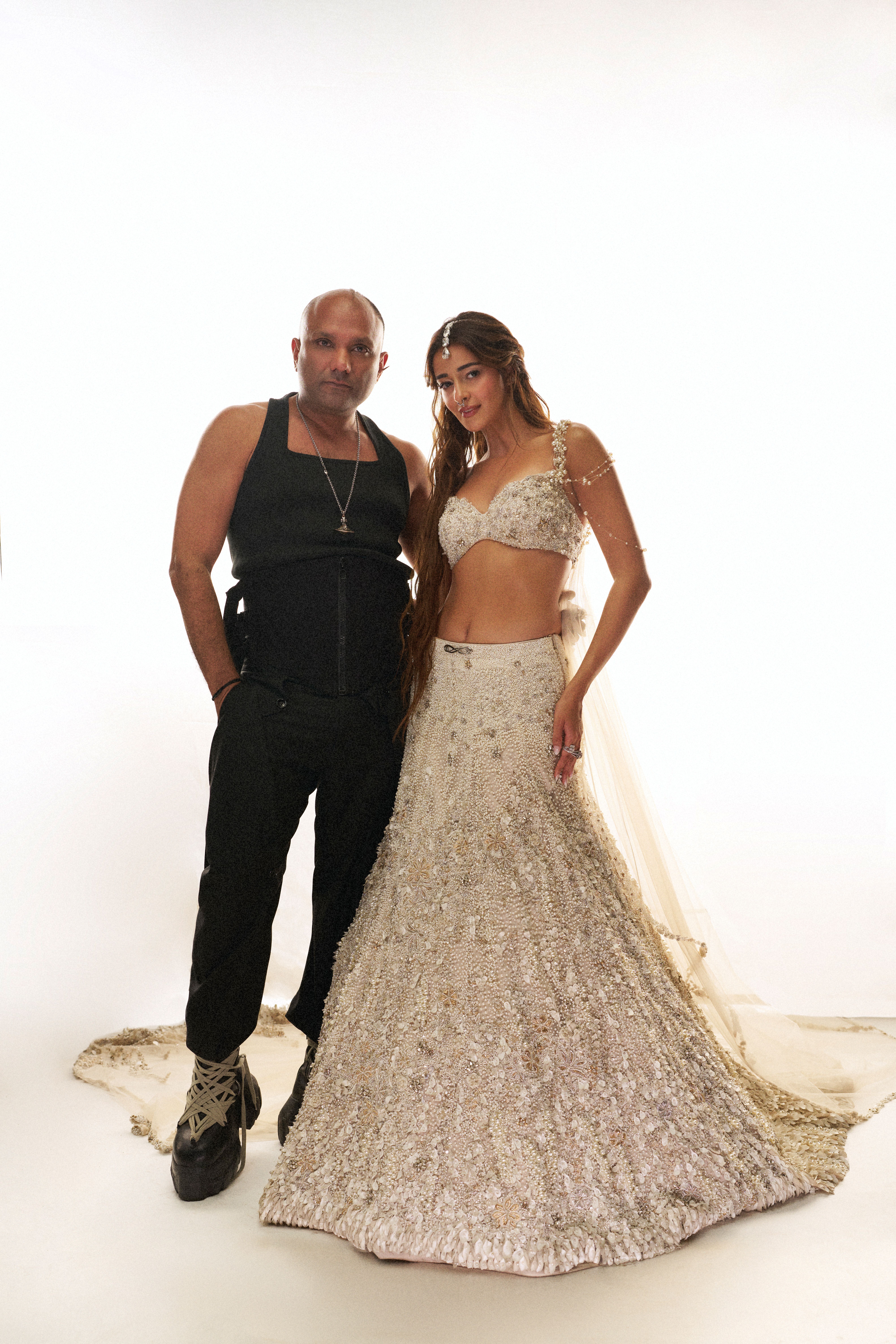
Gaurav Gupta is among the few Indian couturiers who have built a design language so distinctive that it's instantly recognisable and widely referenced. The moment you see sculptural tailoring paired with mythology and futuristic forms, you know it carries the mark of the 'Panther'—as his moniker goes.
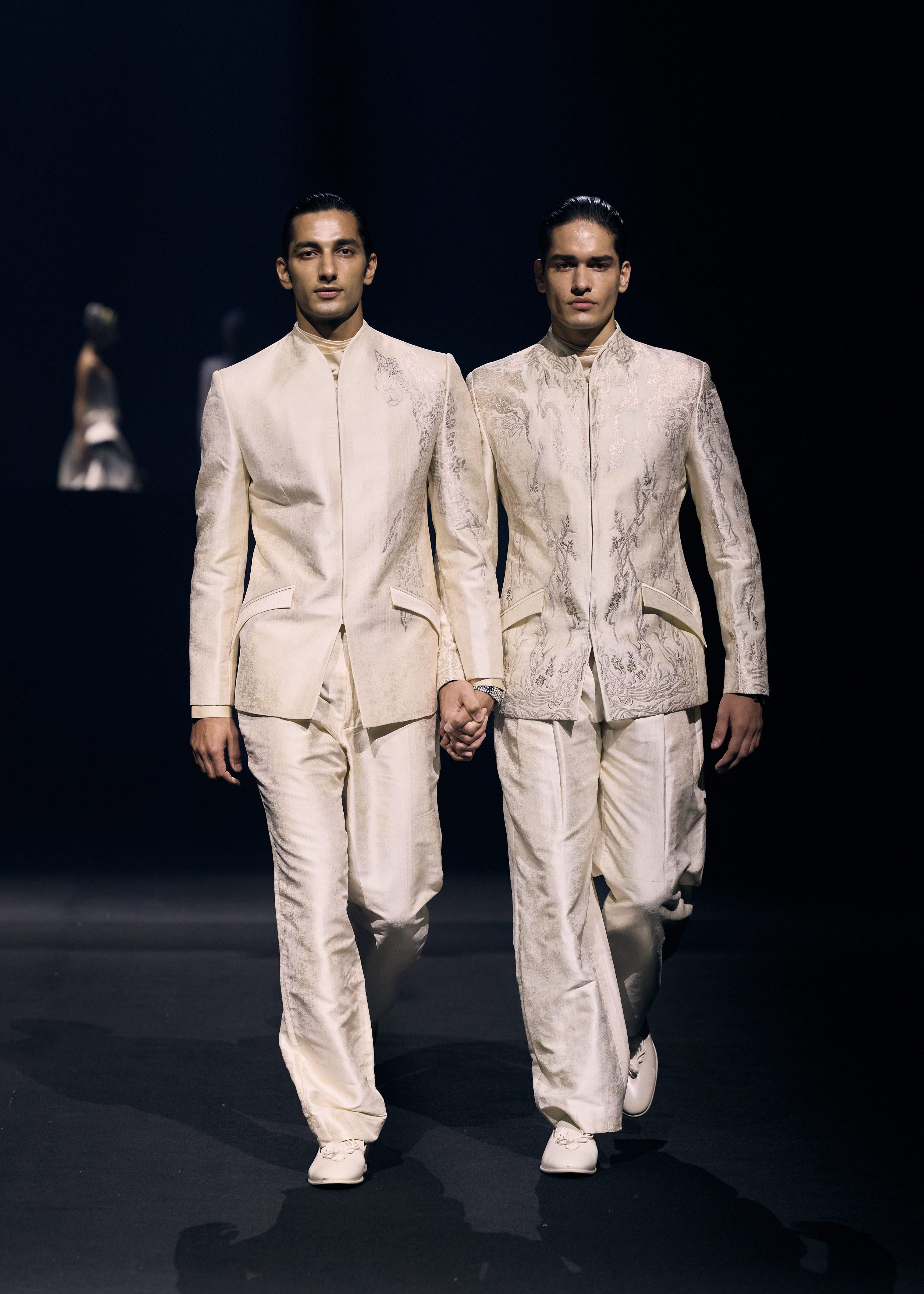
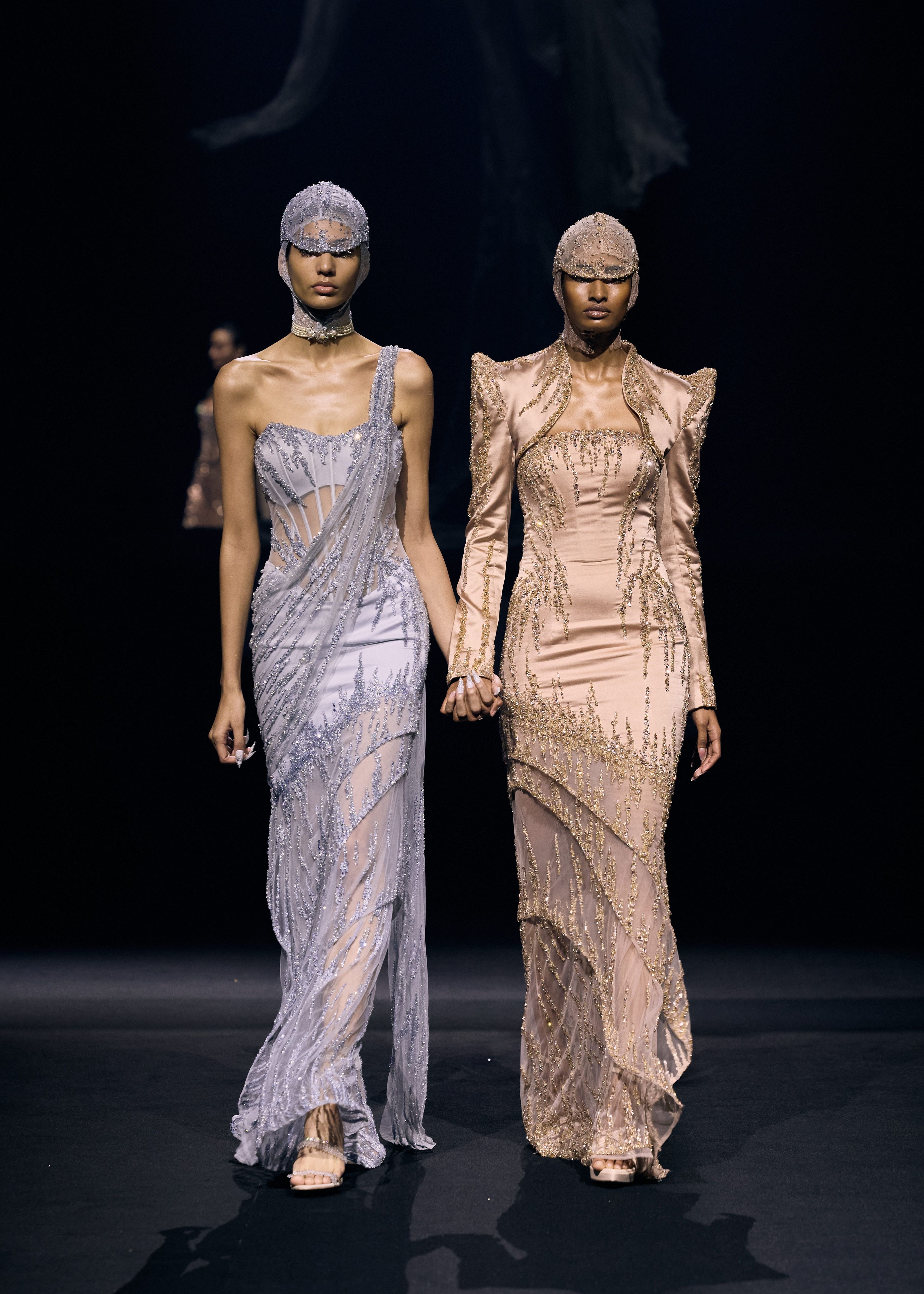
On July 17, Gaurav Gupta unveiled Light Song, one of the largest showcases in the House's history, featuring more than 70 looks across eveningwear, bridal couture and menswear, in Mumbai. Created over nine months by more than 200 artisans, the collection draws from the complementary relationship between the Moon and the Sun. Divided into three chapters—Lunar, Solar and Cosmic Union—Light Song explores themes of intuition, vitality and balance through sculptural silhouettes, new techniques and intricate hand embroidery.
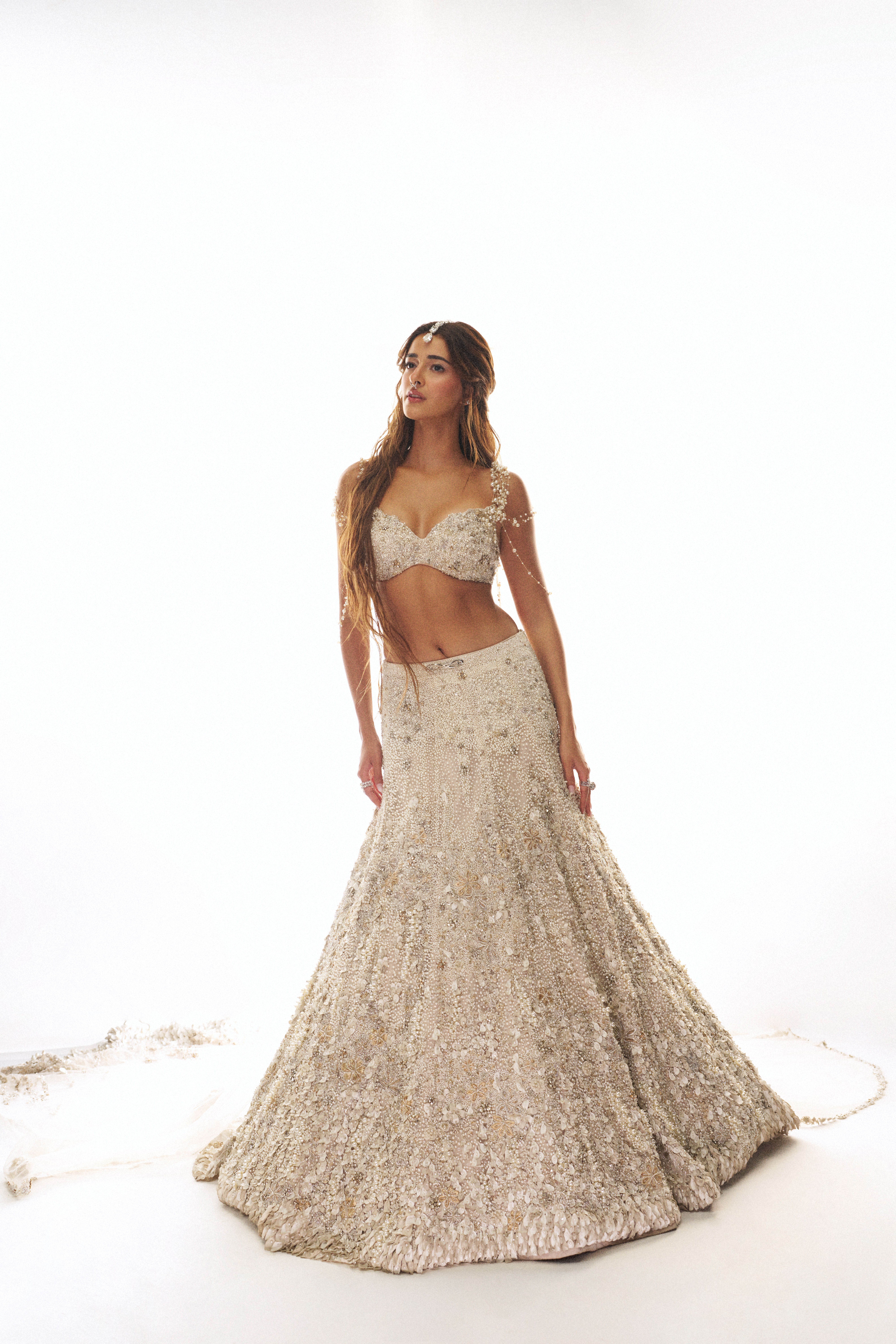
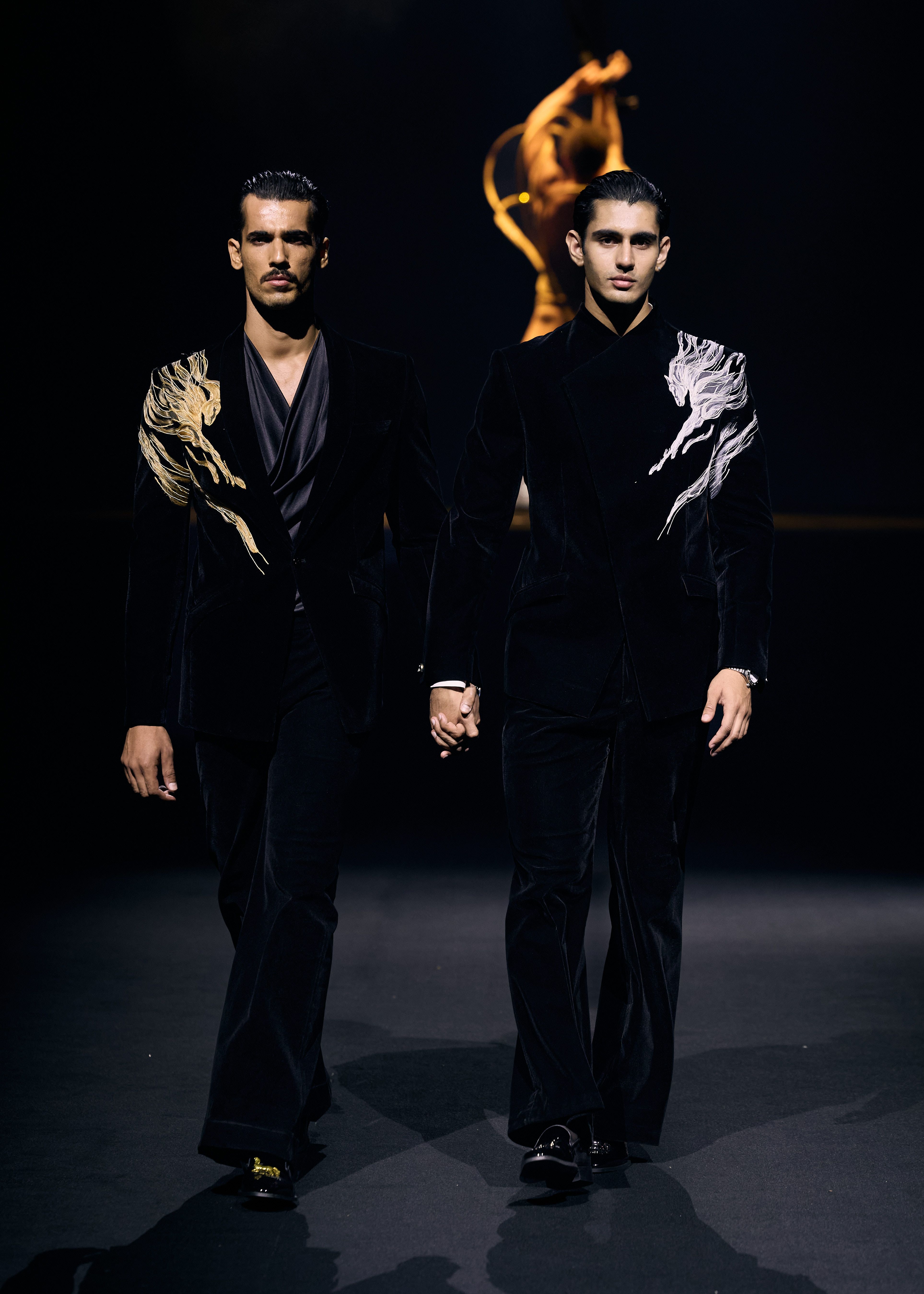
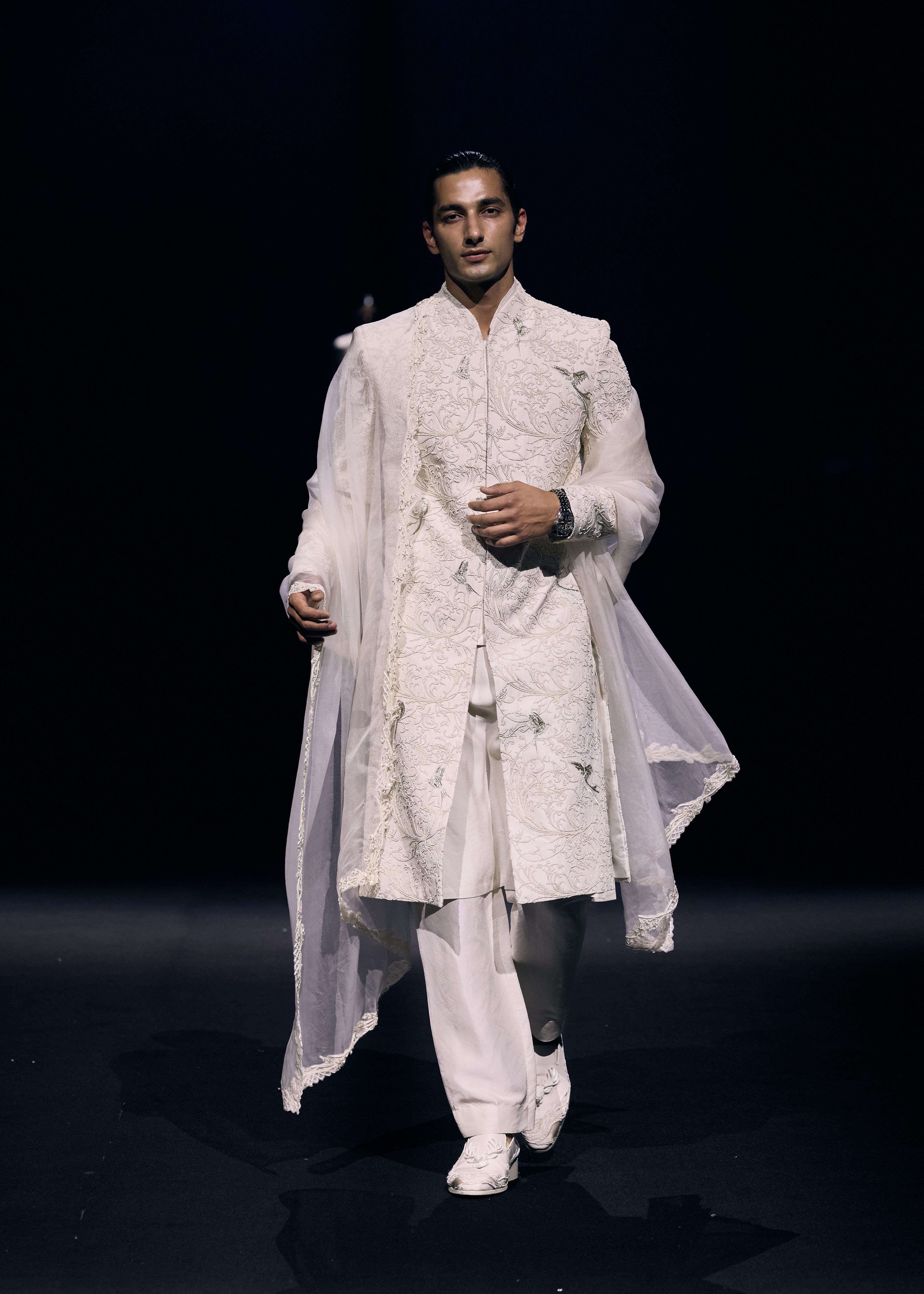
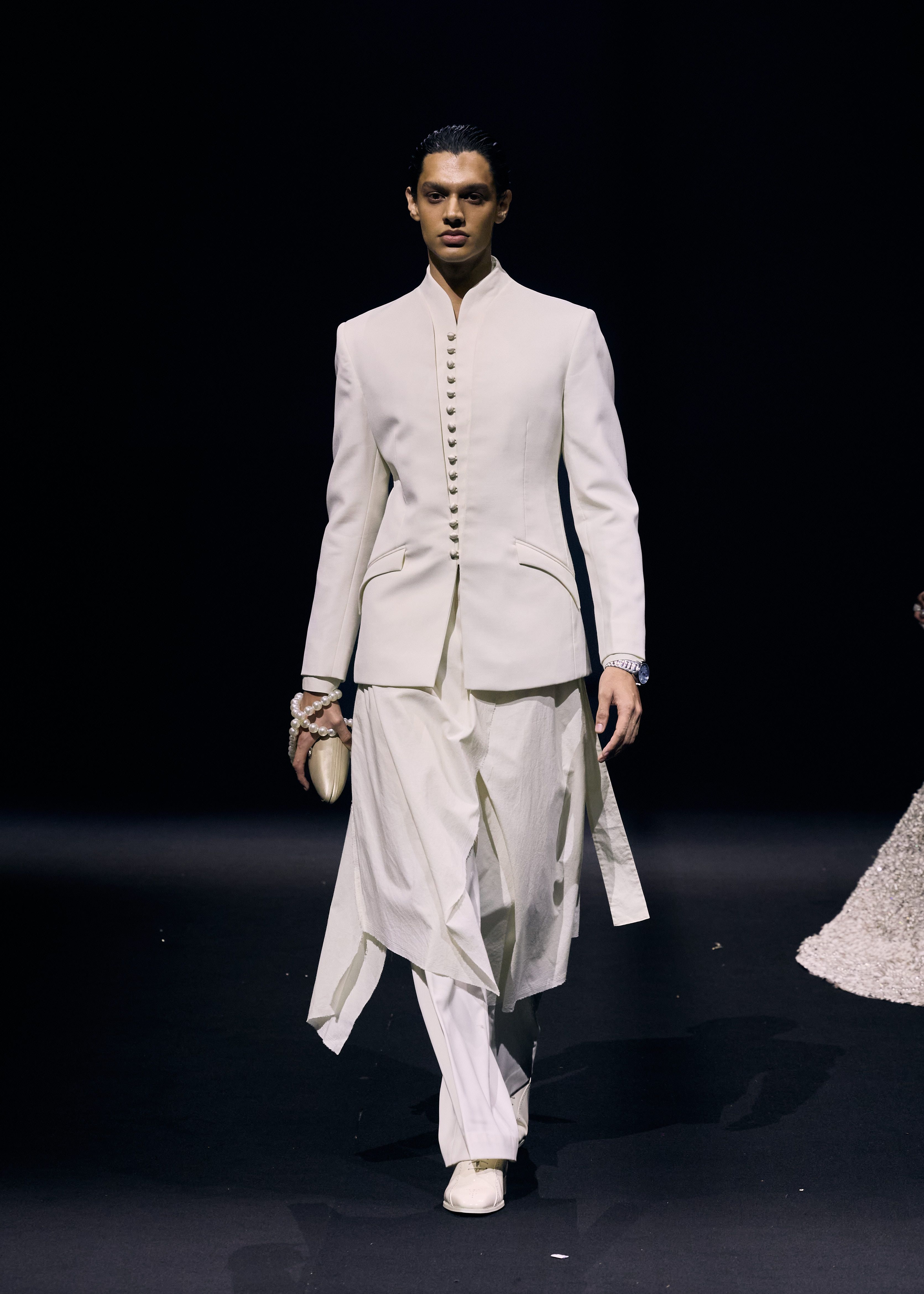
Highlights include new bridal lehengas and sherwani inspired by the Konark Sun Temple, the revival of the House's chikankari and molten crystal techniques, and and an expanded menswear offering featuring ceremonial sherwanis and custom-engineered jacquard jackets woven with Pegasus and fantasy-motif brocades. The show closed with Ananya Panday in a bridal look crafted over 1,500 hours by 30 artisans, featuring more than 5,000 individually hand-cut fabric camellia petals embroidered with pearls and crystals and flowing into a matching veil.
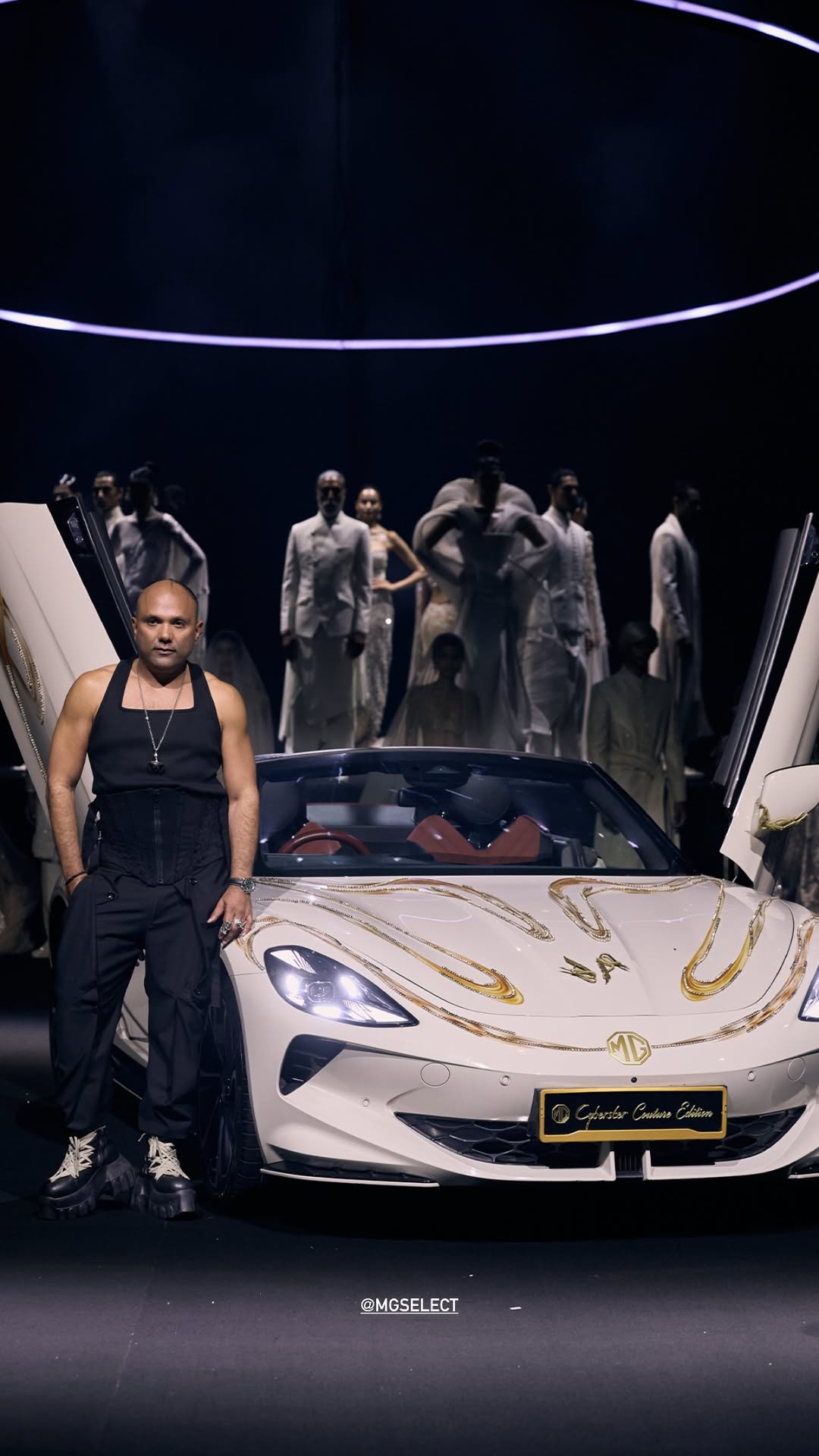
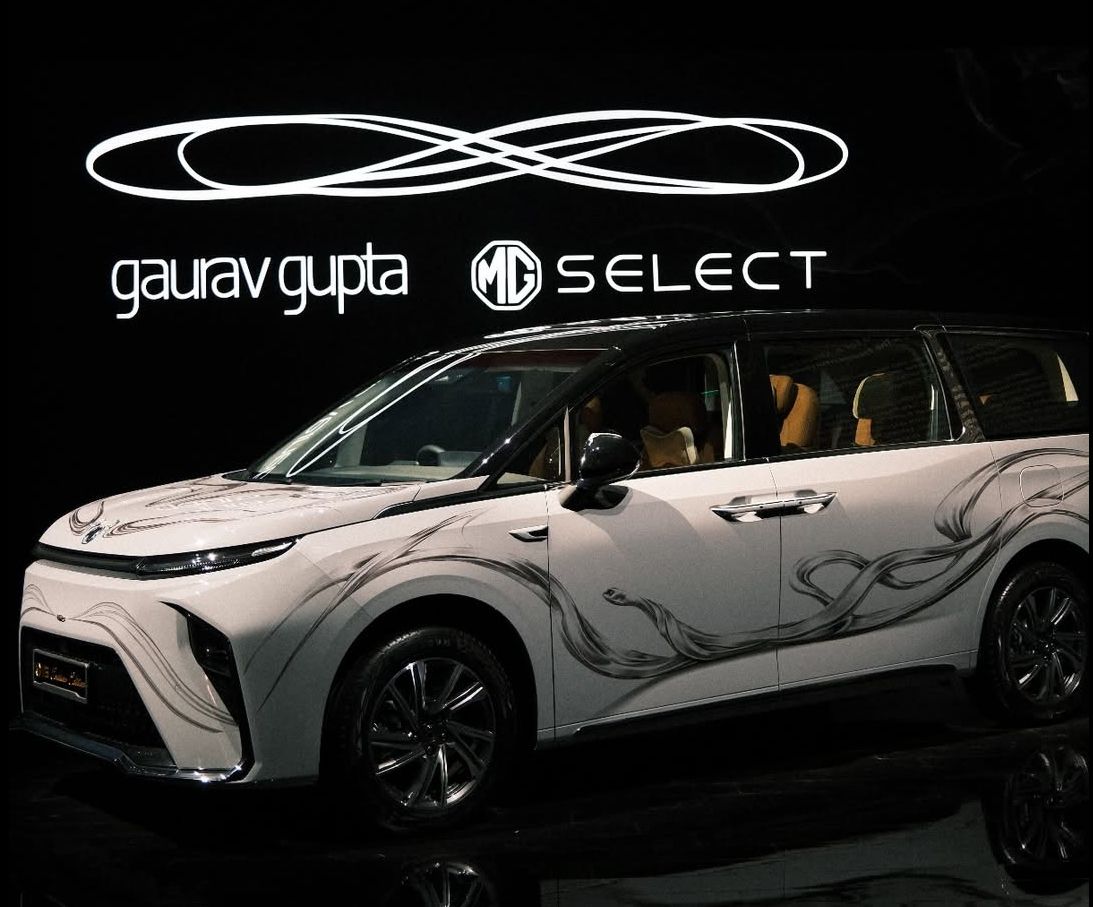
Beyond the runway, this show also showed how Gaurav is expanding beyond fashion thanks to his growing luxury collaborations. JSW MG Motor India's luxury channel, MG SELECT, unveiled couture editions of the MG M9 and Cyberster, with the MG Cyberster Couture Edition making a dramatic entrance by driving onto the runway.
Huda Beauty served as the official beauty partner, with runway looks created by celebrity make-up artist Daniel Bauer. Kolkata-based heritage jeweller Nemichand Bamalwa & Sons crafted the show's diamond, Polki, Jadau and gold jewellery, while Kérastase partnered with hairstylist Laurent Philippon on the runway's hair direction. Models also wore Favre Leuba timepieces, with the Swiss watchmaker announcing a co-designed timepiece with Gupta set to launch later this year. HSBC India, meanwhile, showcased a limited-edition Mahjong set designed by the couturier exclusively for its customers.
Gupta's influence stretches far beyond the runway. His creations have become a fixture at India's biggest weddings while also appearing on international red carpets, worn by everyone from Beyoncé and Nicki Minaj to, most recently, Lady Gaga for her cameo in The Devil Wears Prada 2.
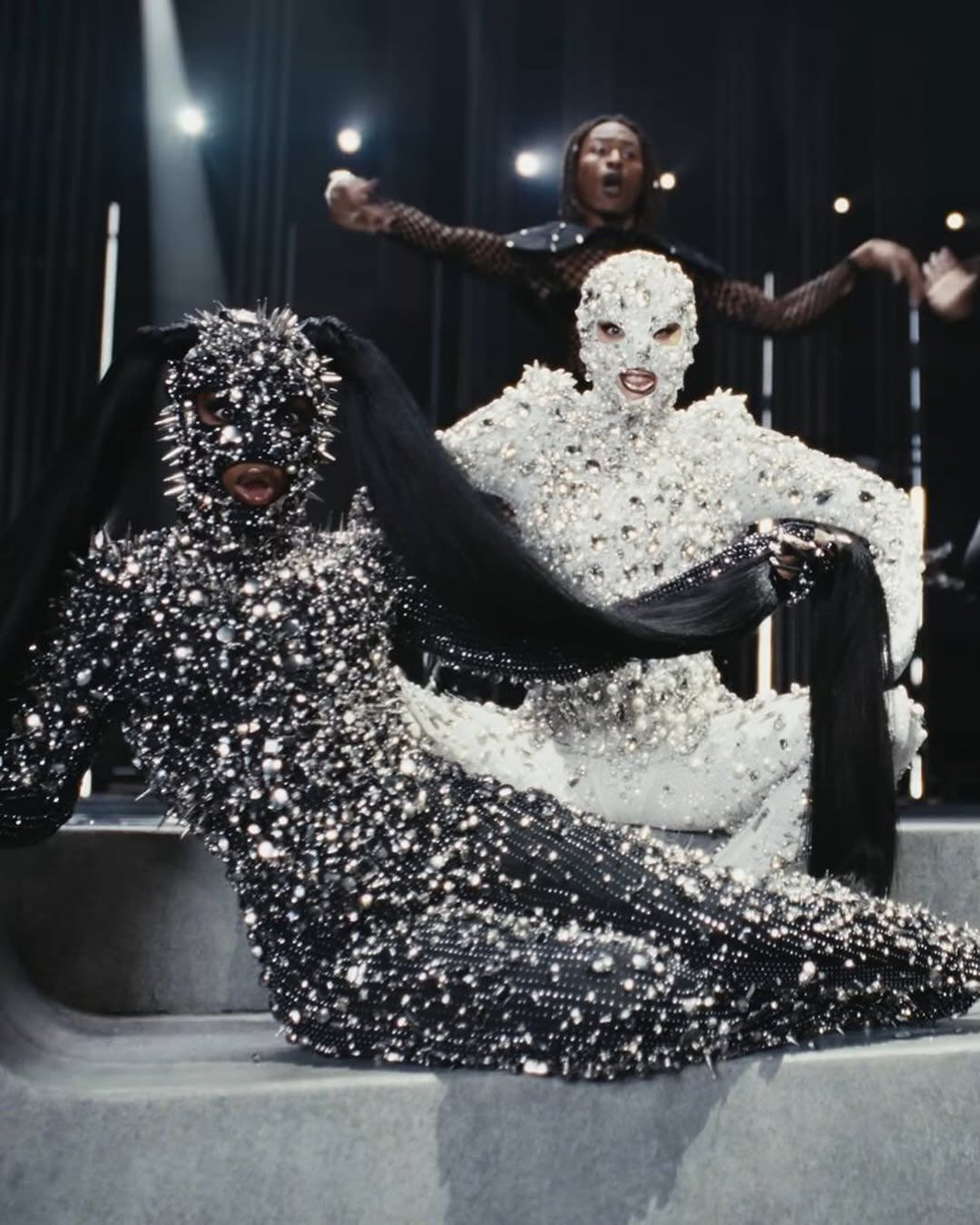
Light Song is an extension of The Divine Androgyne, Gupta's Spring/Summer 2026 collection presented at Paris Haute Couture Week earlier this year. Inspired by the concept of Ardhanarishvara and ancient Mauryan and Gupta-era temple architecture, it featured sculptural bridalwear, sari silhouettes and striking breastplate-like bodices. Just months later, the collection found itself at the centre of a controversy after Rahul Mishra's Devi couture show drew comparisons for its temple-inspired aesthetic, sparking an online debate over creative references. We spoke to Gupta before the controversy unfolded, and while we later sought a response from his team, the designer declined to comment.
Here's the rest of our conversation as we discuss Light Song, the growing global recognition of Indian fashion, the current fashion ecosystem, protecting artisans, and building a luxury business on his own terms.
1. What was the starting point for this collection, and how did that idea evolve into the final pieces we will see on the runway? What would you say is the defining emotion or message behind this collection?
The collection began with a simple but powerful idea: the eternal relationship between the sun and the moon. I've always been fascinated by opposing forces that don't compete, but complete each other. After exploring duality in The Divine Androgyne, I wanted to continue that conversation through the language of couture.
As the collection evolved, those ideas became more emotional. The moon represents intuition, mystery and softness, while the sun embodies vitality, strength and transformation. Rather than treating them as opposites, I wanted to show how they coexist within all of us. Ultimately, the collection is about connection. It's about relationships, individuality and union, and finding beauty in contrasts.
2. What were the biggest challenges that came along with this collection?
The biggest challenge was balancing emotion with technical innovation. Every couture collection pushes our artisans to experiment with new materials, embroideries and construction techniques, while still feeling effortless on the body. This collection also spans bridal, occasion wear and menswear, so ensuring a cohesive narrative across very different categories required a lot of refinement. At the same time, we're growing as a global house, so there is also the responsibility of maintaining the highest level of craftsmanship while scaling thoughtfully. That's a challenge I welcome because it pushes us to evolve without compromising our values.
3. You've spent years building visibility in the global couture conversation. Does choosing to present a collection in Mumbai signal that success for an Indian luxury brand no longer needs validation from traditional fashion Capitals?
Paris will always be an important part of our journey and the global couture calendar. Opening our Paris Atelier this year was a significant milestone for the house. But presenting in Mumbai is equally meaningful. India is where our story began, where our artisans are, and where so much creative energy exists today. I don't see it as choosing one over the other. It's about showing that an Indian luxury house can belong confidently in both conversations. We don't need to seek validation. We need to continue creating work that speaks globally while remaining rooted in our own identity.
4. At a time when many designer brands are seeking external investment, launching diffusion lines or partnering with larger groups, you've continued to grow independently. What has informed that decision? What are the advantages and challenges of remaining independent today?
Remaining independent has allowed us to build the brand at our own pace and protect the integrity of our creative vision. Every decision we make is guided by the long-term identity of the house rather than short-term expectations. Of course, independence comes with challenges. Growth requires patience, discipline and continuous investment, especially in craftsmanship and talent. But it also gives us the freedom to build something lasting. Luxury isn't about growing as quickly as possible. It's about creating enduring value.
5. If you could change one thing about the Indian fashion ecosystem tomorrow, what would it be?
I'd love to see greater long-term investment in craftsmanship and creative education. India has extraordinary talent, not only in design but in embroidery, textiles and artisanal knowledge. We should be creating stronger systems that preserve these skills while giving younger generations a reason to continue them. Our heritage is one of our greatest strengths, and protecting it is essential for the future of luxury.
6. In an era dominated by algorithms, trends and fast content, why does couture still matter?
Because couture reminds us that not everything meaningful can be rushed. In a world driven by speed and constant consumption, couture celebrates patience, craftsmanship and human touch. Every piece carries thousands of hours of work, generations of knowledge and an emotional connection between the maker and the wearer. Luxury isn't just about exclusivity. It's about creating something with permanence in a culture that's increasingly temporary.
7. Earlier this year, you inaugurated a menswear-only store at DLF Emporio. What role does menswear play in the Gaurav Gupta brand today and in the future?
Menswear has become an increasingly important part of the house. Today's client is looking for individuality and emotion, not just tailoring. The dedicated store allows us to build a complete universe around the Gaurav Gupta man, from occasion wear to couture. Going forward, I see menswear becoming an even bigger part of our story, not by following trends but by expanding the possibilities of what modern Indian luxury for men can look like.
8. What shifts are you seeing in men's wedding fashion today? Are grooms becoming more experimental, and what are some of the requests or concerns you hear most often from them?
Absolutely. Grooms today are much more involved in the creative process than they were a decade ago. They're open to richer embroidery, sculptural silhouettes, jewellery and unconventional colours, but they also want comfort and ease. They don't want to feel like they're wearing a costume. The most common request is to feel like the best version of themselves. That's always the goal, to create something that's memorable while remaining deeply personal.
9. Historically, Indian menswear was far more expressive in its use of colour, jewellery, textiles and silhouette. Do you think contemporary Indian menswear has become too restrained? Are there aspects of that heritage you would like to reinterpret for the modern man?
I think we've gone through a period where minimalism became the dominant language, but I also see a renewed confidence emerging. Historically, Indian menswear celebrated ornamentation and self expression in remarkable ways. That's something worth revisiting, not through nostalgia, but through reinterpretation. For me, it's about taking those traditions and expressing them with a contemporary sensibility that feels relevant today.
10. The conversation around accessories has become increasingly fluid in recent years. Are you seeing traditional boundaries between menswear and womenswear continue to dissolve? Are there particular accessories or styling choices you've enjoyed seeing more men embrace?
Definitely. The conversation around fashion has become much more personal and less defined by traditional categories. We're seeing men embrace jewellery, sculptural accessories and expressive styling with much greater confidence. That's exciting because fashion should be about individuality rather than rules. I've always believed beauty isn't gendered, and I think the next generation understands that instinctively.
11. You recently created custom looks for Lady Gaga and Doechii for The Devil Wears Prada 2. How did that opportunity come about, and what does the creative process look like from first conversation to final look? Among all the celebs you've worked with, who surprised you with their knowledge of fashion?
We're fortunate to work closely with Maison Bose Communications, whose relationships and understanding of the global entertainment landscape create opportunities for us to dress some of the world's most exciting artists and cultural figures. Every collaboration begins with understanding the artist's vision and the significance of the moment. We work closely with their styling teams to translate that vision through the language of the house, ensuring the final look feels authentic to the artist while remaining unmistakably Gaurav Gupta.It's always a balance between collaboration and staying true to our design philosophy. I've been fortunate to work with many incredible artists over the years, and what consistently impresses me is how deeply engaged they are with fashion. Many have a genuine appreciation for craftsmanship and come into the process with a clear creative point of view, which makes the collaboration incredibly rewarding.
12. Your work has extended beyond fashion through collaborations with brands such as MG Select, Huda Beauty and Favre Leube. What makes a collaboration interesting to you, and how do you decide whether a partnership is the right fit?
For me, a collaboration has to begin with shared values rather than visibility. I'm interested in partnerships where both sides bring something meaningful to the conversation and where creativity can exist beyond a logo placement. Whether it's automotive design, beauty or luxury spirits, I ask myself the same question: can we create something that neither of us could have created alone? If the answer is yes, then it becomes exciting.
13. Artisans are at the heart of Indian couture. As your business grows globally, how do you ensure craftsmanship remains protected and passed on to future generations, and what responsibility do luxury fashion houses have in that process?
Our artisans are the foundation of everything we do. Every collection is a reflection of their skill, patience and imagination. As we grow internationally, our responsibility is not simply to preserve these crafts but to create opportunities for them to evolve. That means investing in training, encouraging innovation within traditional techniques and ensuring craftsmanship remains valued both culturally and economically. Luxury houses have a responsibility to protect these ecosystems because without artisans, couture simply doesn't exist.


