Men’s and women’s fashion have rarely played by the same rules. Where womenswear thrives on fluidity and fearless experimentation, menswear has historically preferred the safety of a formula: structured, predictable, comfortably contained. Change arrived in measured doses, and rarely without hesitation. That hesitation now appears to be dissolving.
Menswear is borrowing confidence from its more adventurous counterpart, growing more colourful, more expressive, and far less apologetic about occupying visual space. Think of it as the style equivalent of a man ordering a fruity cocktail and not feeling compelled to justify it. The House of Glenfiddich presents FDCI India Men’s Weekend made that cultural shift impossible to ignore.
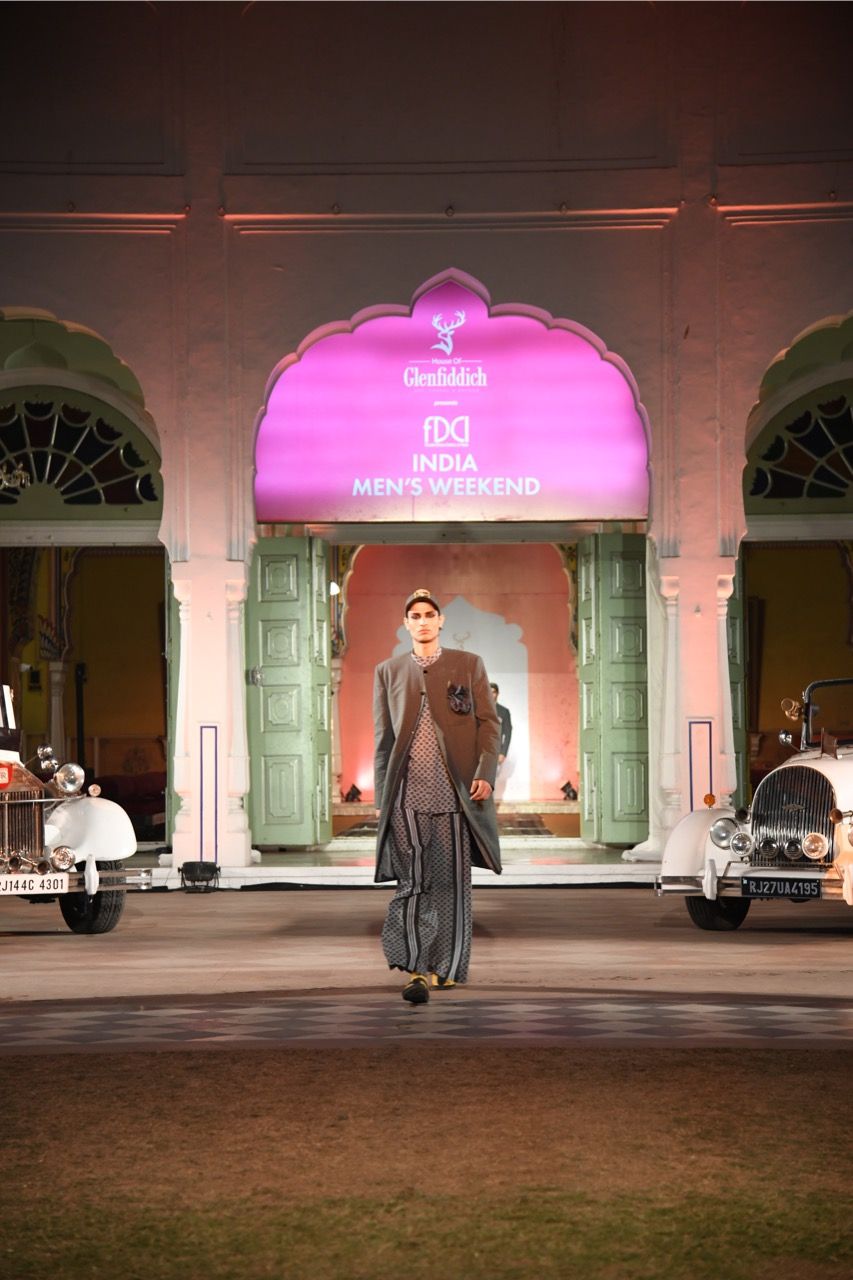
Hosted at Jaipur’s Diggi Palace, the fourth edition of the annual showcase brought together twenty designers spanning established veterans and promising newcomers. Over two days, Indian menswear revealed a newly assured middle ground. It was not flamboyant for the sake of spectacle, yet it showed little interest in playing safe. Designers pushed colour, softened silhouettes, experimented with surface and print, and reimagined Indian wear for lives that extend well beyond weddings.
What we are witnessing is not merely a shift in clothes, but in masculinity itself. As the idea of modern manhood expands, wardrobes are following suit: more considered, more expressive, and significantly less bound by inherited rules. For decades, Indian menswear has been dominated by occasion dressing. Now, as men grow more visually literate and socially visible, everyday wardrobes are finally catching up. Indian menswear is no longer dressing for permission. It is dressing for presence.
Day One
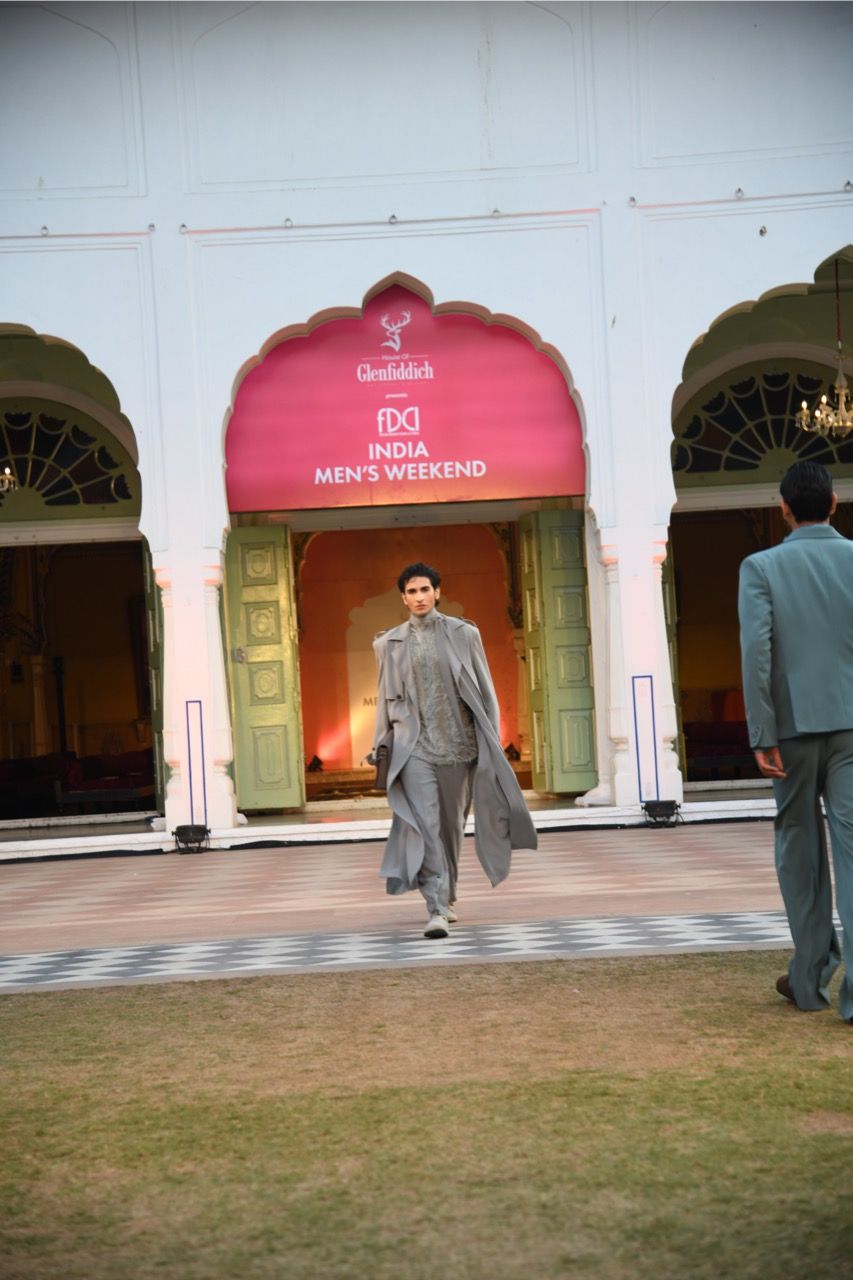
Kicking things off was Nikita Mhaisalkar with a collection inspired by Gujarat’s Sidhpur. Relaxed suits, airy jackets and fluid shirts arrived in softened pastels with restrained embellishments, nostalgic without slipping into sentimentality. These were clothes designed for men comfortable enough to be noticed without needing to announce themselves.
Mani Shanker Singh’s Son Of A Noble SNOB followed, where military references, camouflage and utility detailing were deliberately softened through fluid trousers, layered kurtas and relaxed outerwear. Discipline remained, but rigidity did not.
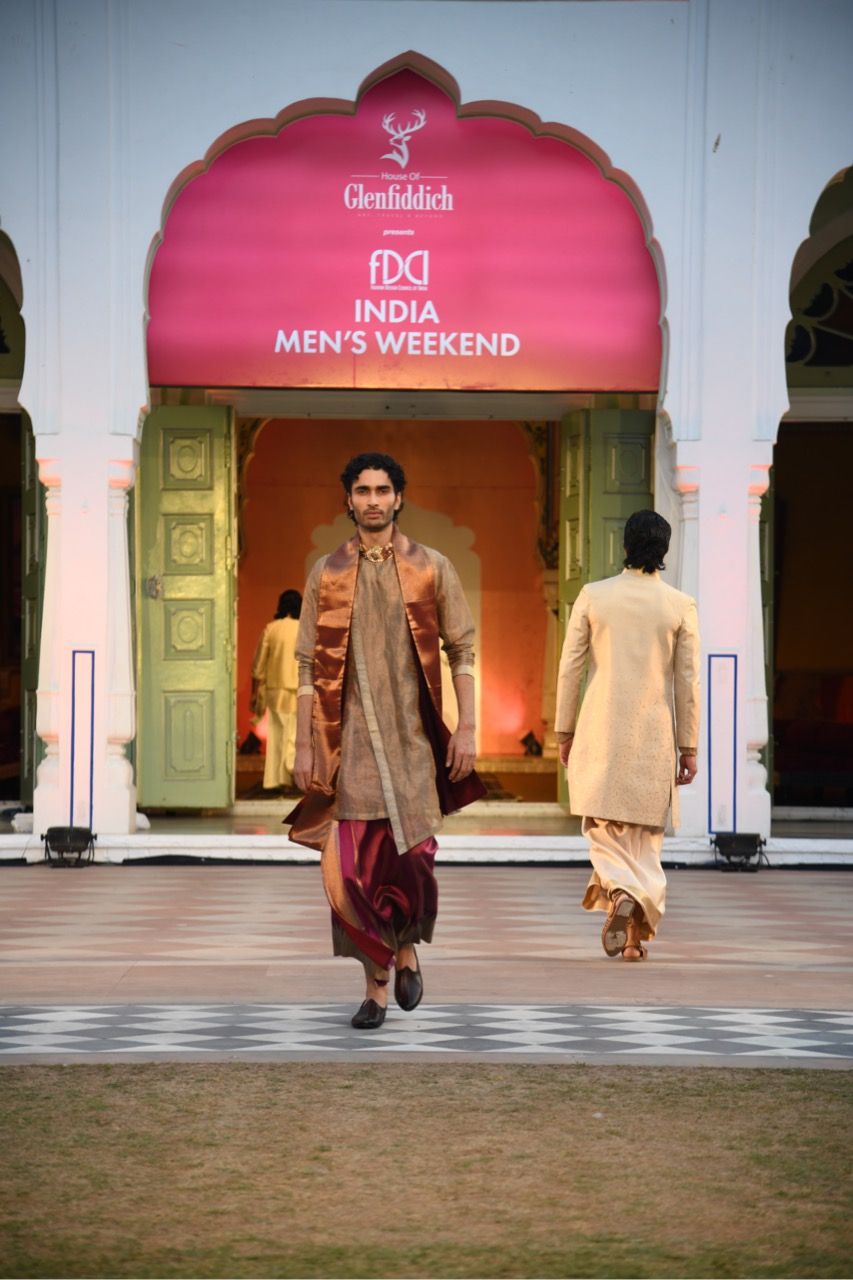
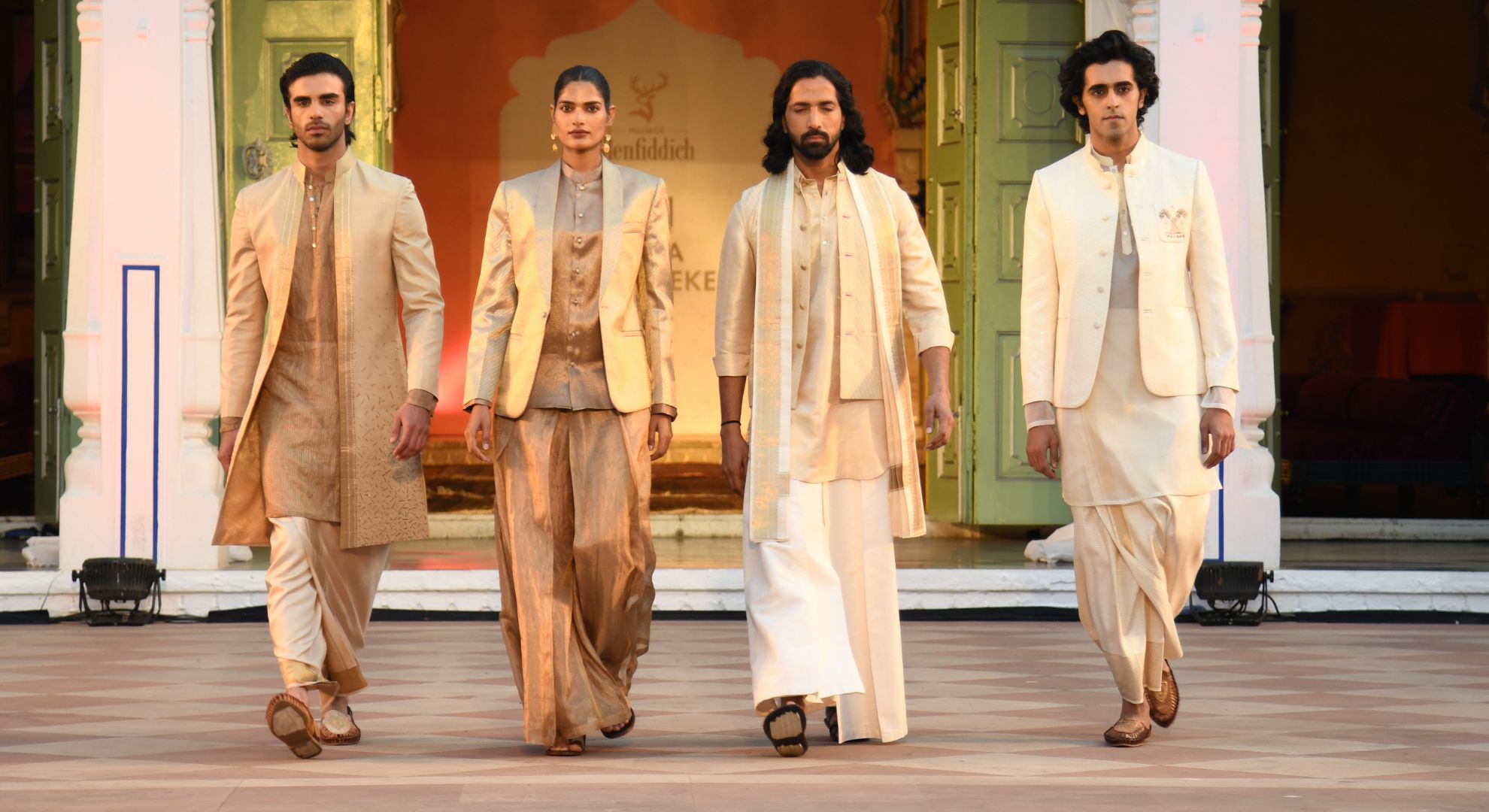
Next came Vivek Karunakaran, building on the momentum of last year’s standout presentation with a lineup that felt quieter yet markedly more assured. Working with raw silks, tussar, Kanjeevarams and silk organza, the designer leaned heavily into texture. Crushing, topstitching and surface manipulation created garments that felt lived-in rather than preserved, while gold appeared sparingly along seams and inner edges, subtle enough to reward a second glance. Few designers understand restraint quite like Karunakaran, and fewer trust it this completely.
Kommal & Ratul Sood set the tone even before the first look appeared, handing the press a fabric swatch as preview. On the runway, that translated into sharply cut suits, jewel-toned jacquards and graphic patchwork that nodded to classic sartorial codes without feeling nostalgic.
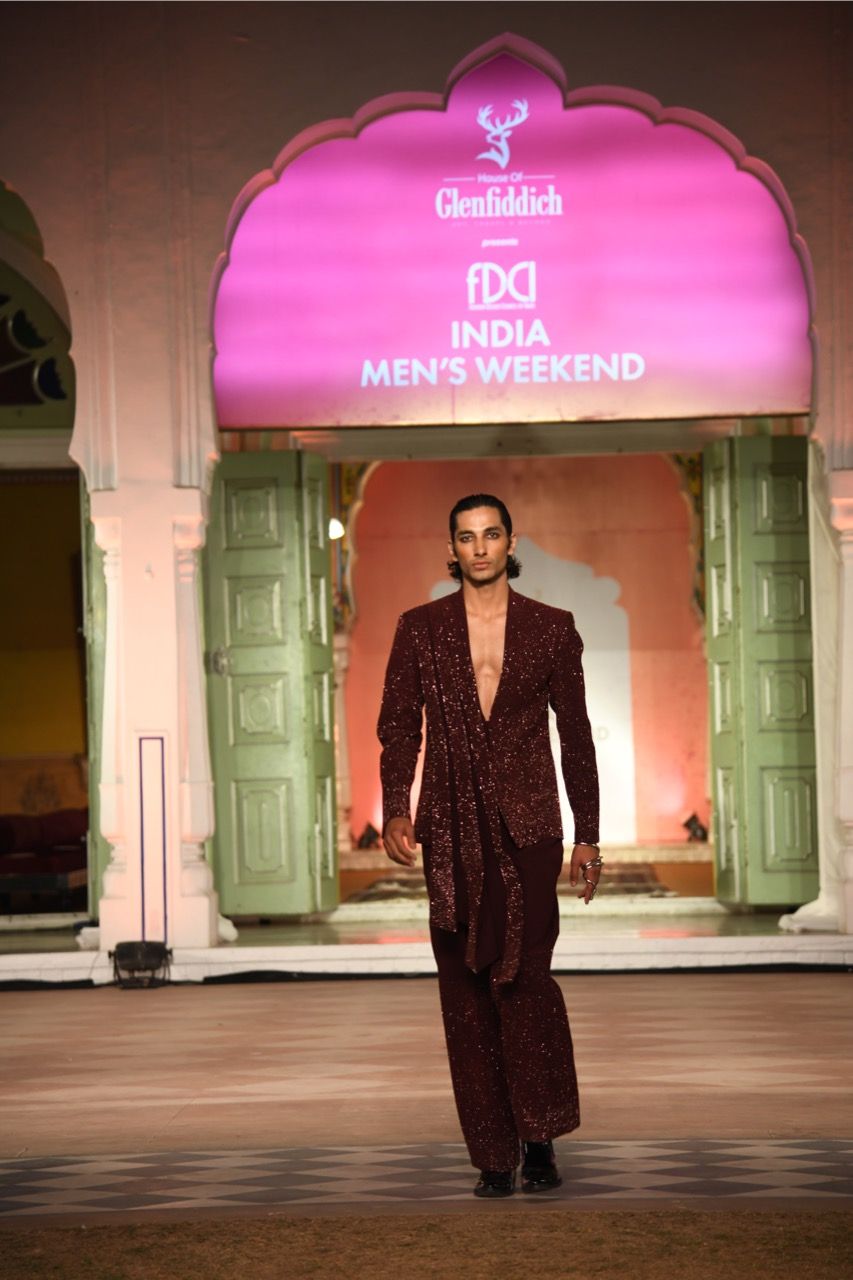
Paresh Lamba leaned into architectural black silhouettes punctuated with controlled gold detailing, delivering ceremonial Indo-Western wear for the man who prefers authority over ornament.
Rohit Kamra’s Sartorial Nomad stayed firmly in its lane, heritage tailoring sharpened for a contemporary client who wants tradition edited, not diluted. Bandhgala jackets, hunting silhouettes and structured tailoring felt regal without veering into costume.
As the evening progressed, the mood darkened with Nitin Bal Chauhan, who embraced spectacle without apology. Models marched out carrying flags, faces hidden behind masks, dressed like fugitives from a dystopian, Mad Max-coded universe. It was confrontational, cinematic, and impossible to reduce to mere clothing.
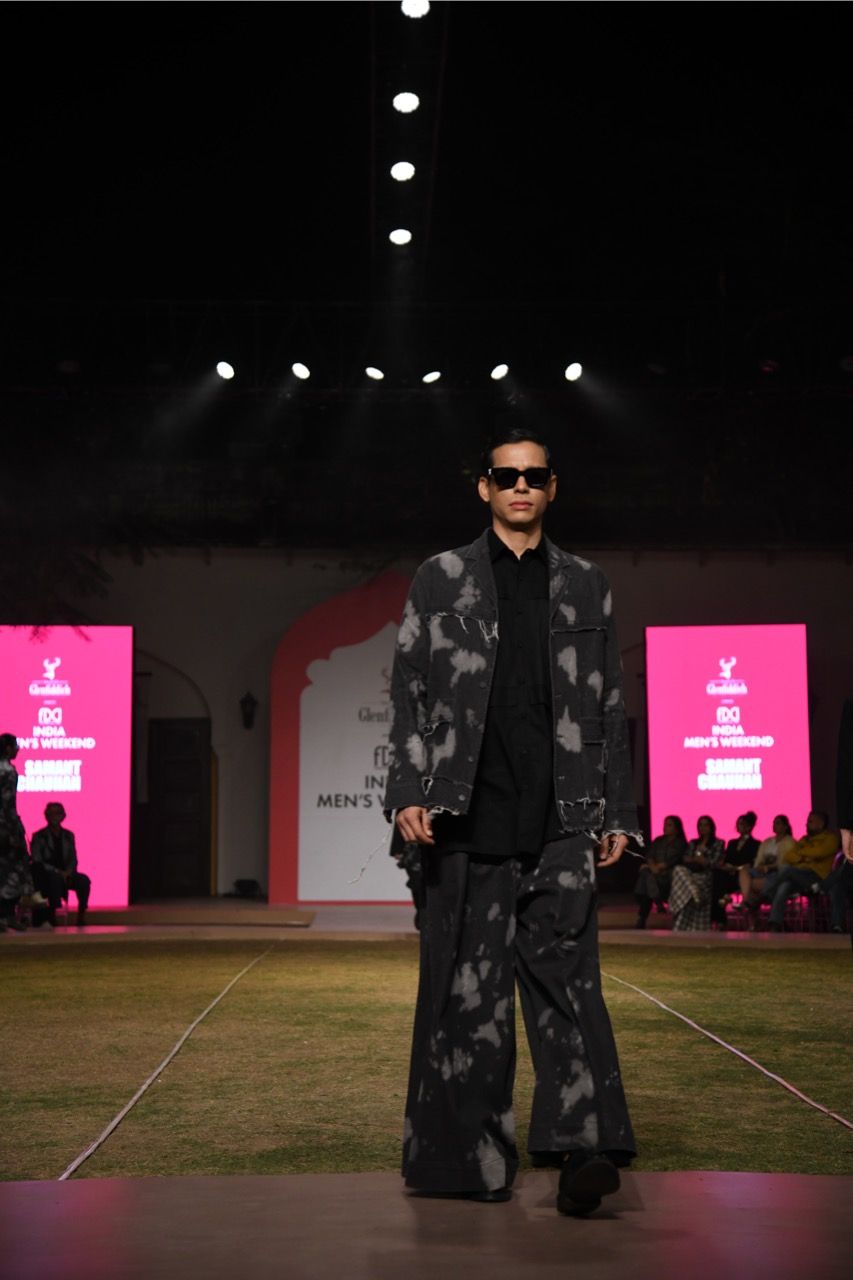
Samant Chauhan offered a softer counterpoint with Rose, reflecting on beauty, restraint and our relationship with nature, while Siddartha Tytler’s Miraas leaned unapologetically into heritage, reworking Parsi Gara embroidery through a sharply contemporary couture lens.
The highlight of the first day came from industry veteran Ashish N. Soni, who injected the runway with a decisive burst of colour. Mustards, ochres, deep blues and chocolates moved effortlessly across relaxed silhouettes, while micro prints and monogram-style patterns added playfulness to wraparound dhotis, soft tailoring and tapestry jackets. These were clothes built for movement, not posture, signalling a designer deeply attuned to how modern men actually live.
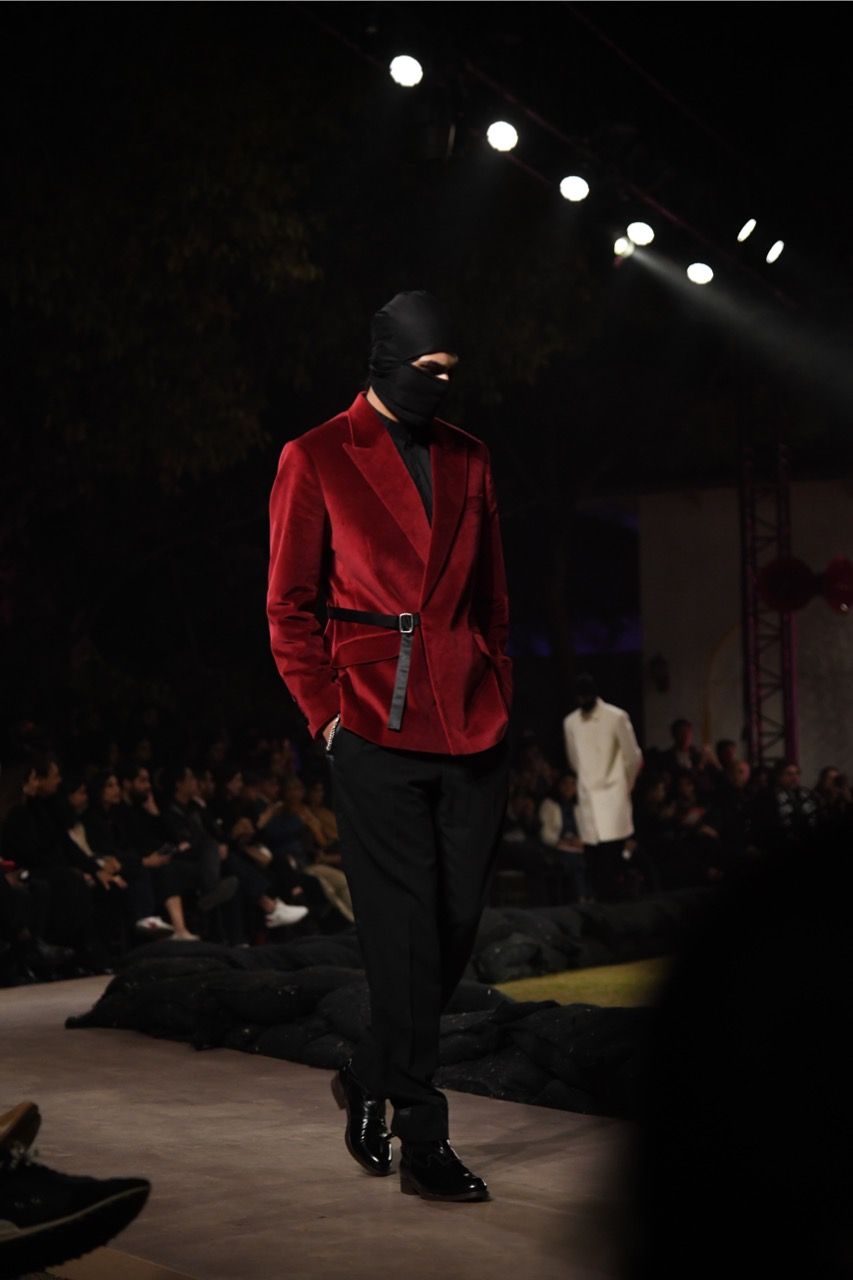
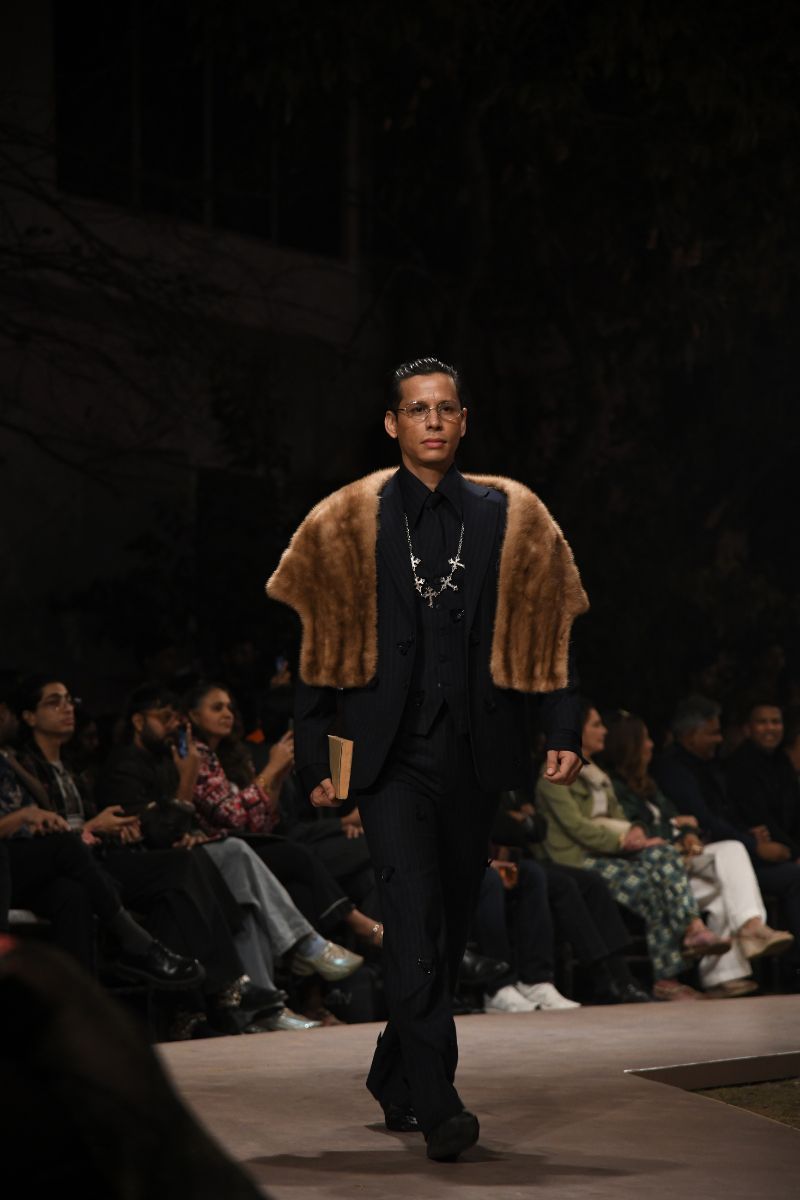
Rajesh Pratap Singh closed the evening on a deeply introspective note with what was easily among the most affecting showcases of the weekend. Against a stark, war-like setting, models walked slowly with lowered gazes, some pausing mid-runway to sit, turning the presentation into something quietly emotional rather than overtly theatrical. The clothes mirrored that restraint: sharply tailored coats, controlled layering and sombre tones that spoke of endurance and silent resilience.
Day Two
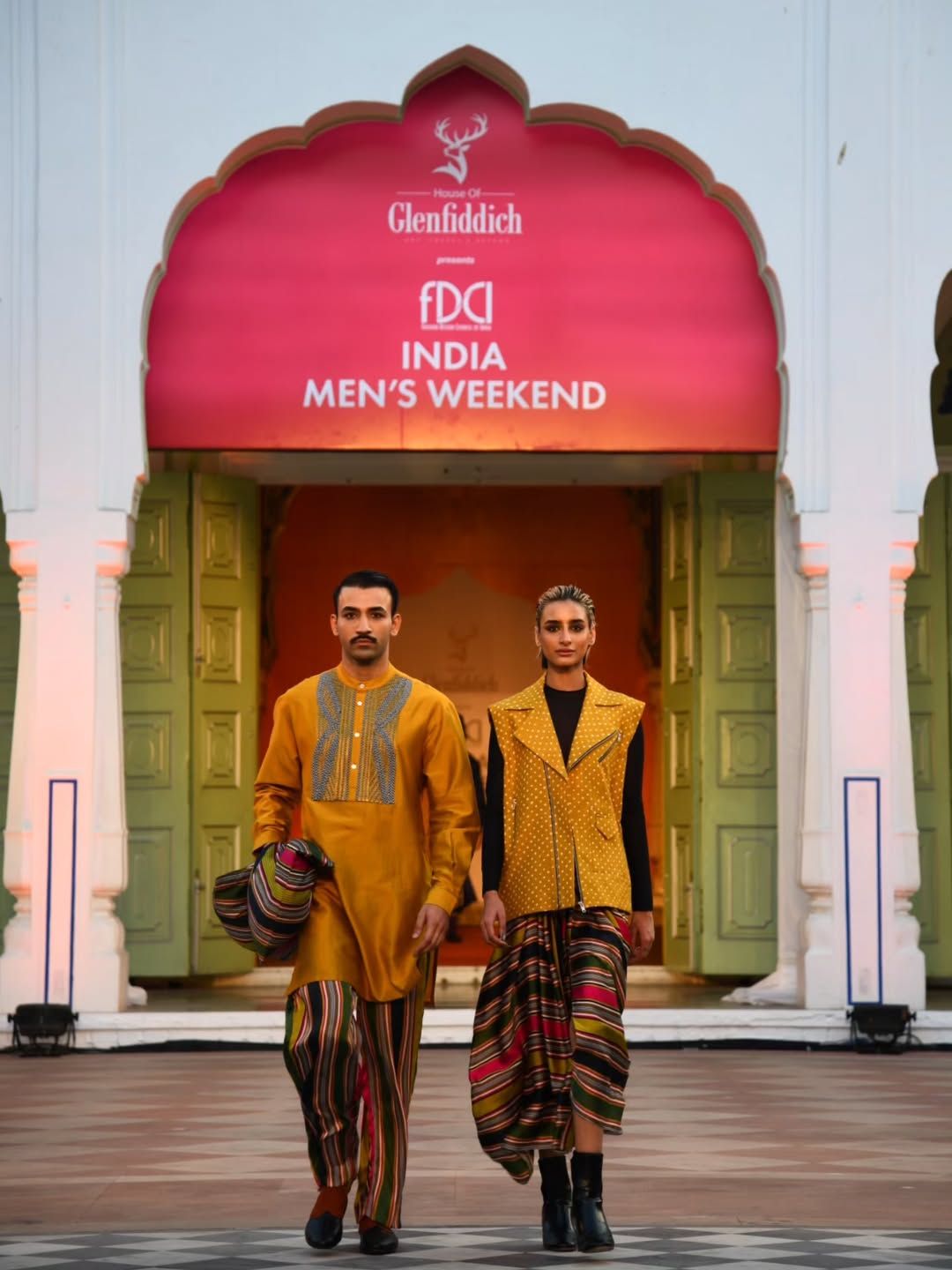
The second day opened with Amit Hansraj’s INCA, marking the label’s entry into menswear with notable composure. Inspired by the journey of a single Bandhani dot, the collection translated that idea into shifting geometric patterns through shibori, block printing, and lehariya. Easy kurtas and relaxed separates dominated, while saffron, indigo, maroon and mustard injected calibrated energy.
Ajay Kumar followed with a confident riot of colour, sending out nautical blues, sun-washed reds and spirited prints across resort silhouettes that captured the romance of travel without collapsing into a cliché.
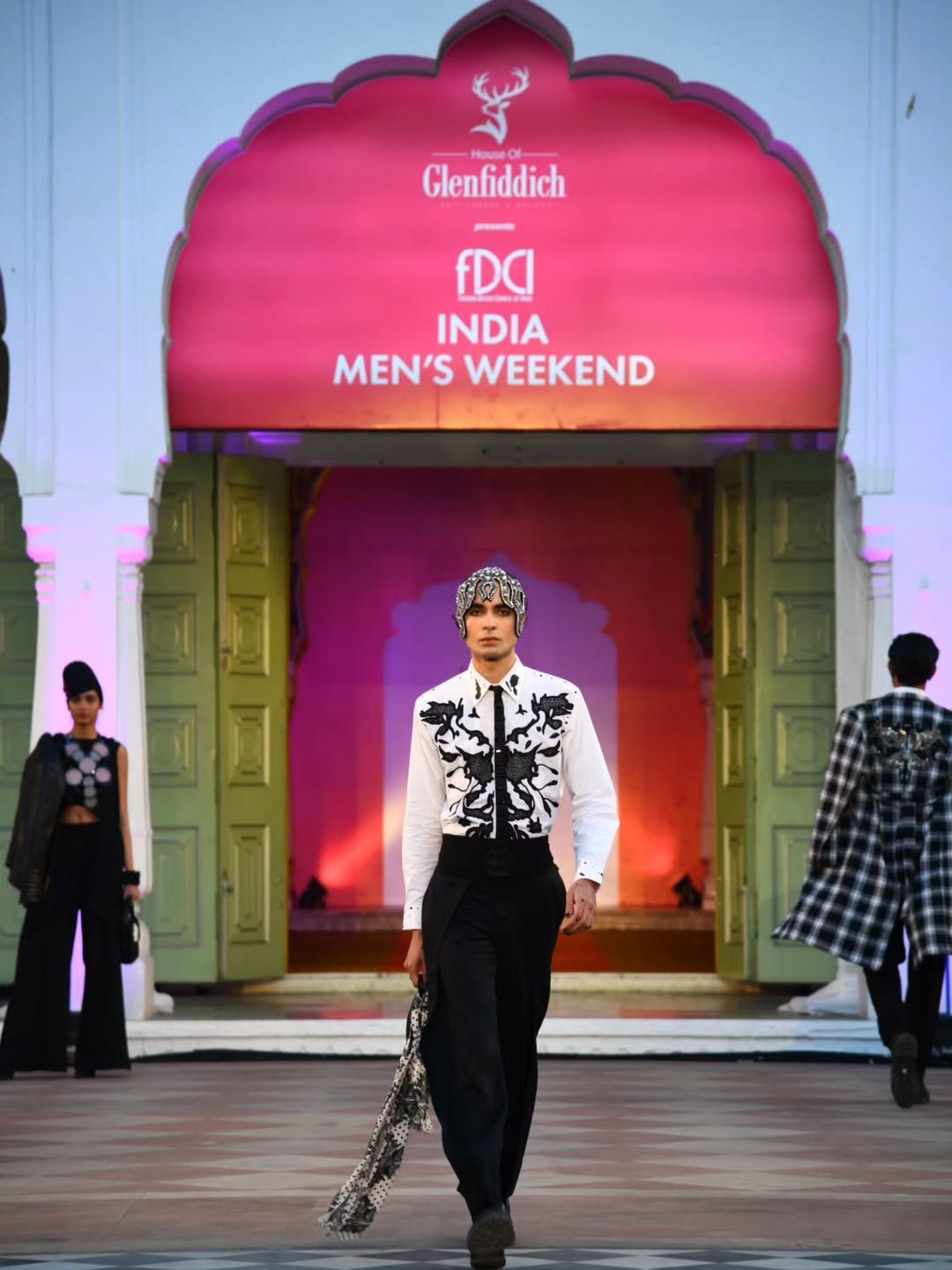
Before Felix Bendish’s show began, the press was handed a Rorschach test, an invitation to consider perception before the runway even started. I looked at mine and saw the real challenge: sitting through twenty designers and still finding something new to say. Thankfully, the evening made that easier than expected.
Mirrored inkblot motifs anchored the collection, with black and white dominating sharply tailored jackets, sculpted shirts and fluid layers. Foil finishes, flocked textures and dense embroidery added depth without disturbing the collection’s tightly controlled graphic language.
Til followed with cloud-soft whites, muted earth tones and sheer, handworked layers that drifted down the runway like a measured exhale.
Antar-Agni continued its signature dialogue between structure and fluidity through architectural layering and cerebral monochromes that felt experimental without appearing effortful.
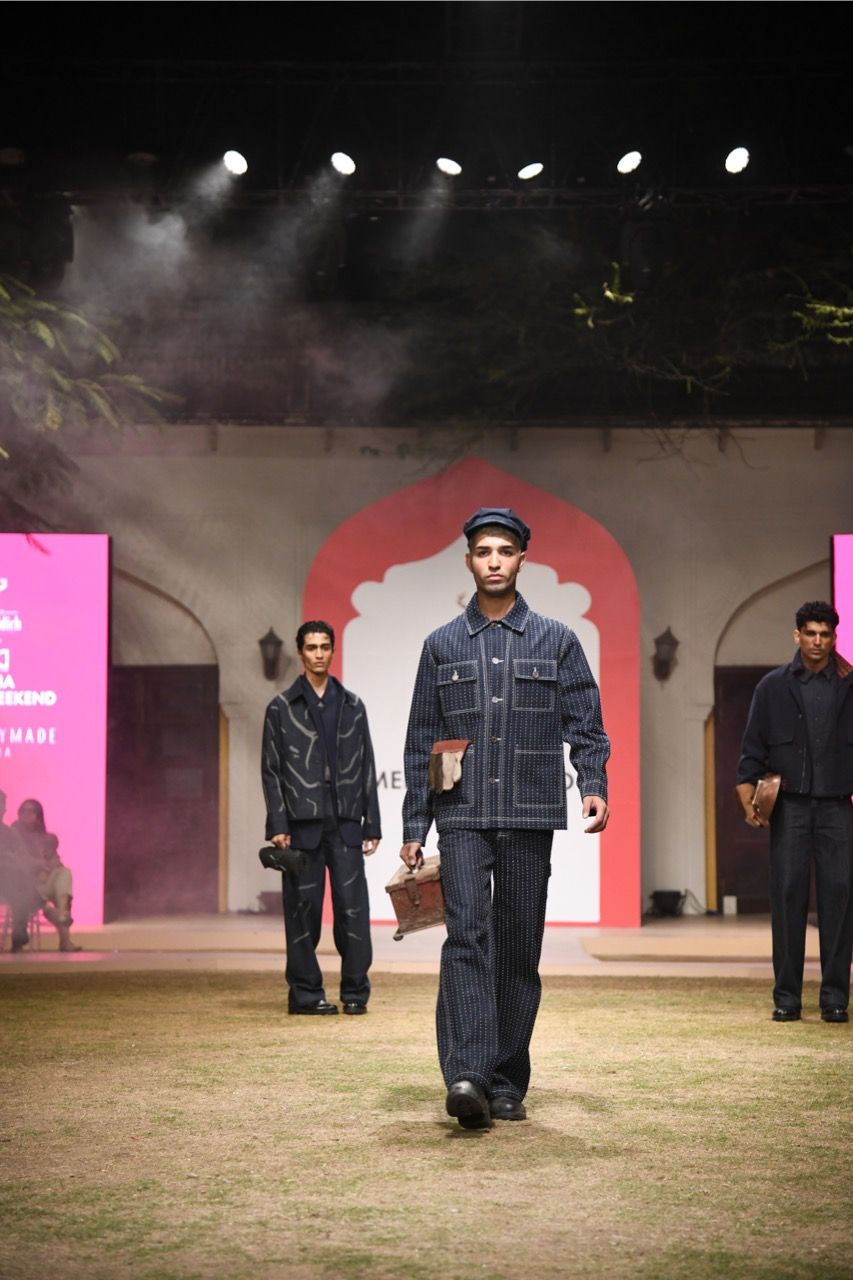
Countrymade staged one of the weekend’s most memorable openings, with a model hammering a chisel while the press was handed a machined metal fragment. Soon the runway filled with sturdy denim sets, boxy work jackets, burnished leathers and carpenter trousers in charred blacks, rust tones and industrial browns. This was workwear reframed for a generation increasingly drawn to utility over decoration.
Sahil Aneja picked up where he left off last year, doubling down on dystopian energy with leather, tweed and technical blends suited to a world that feels perpetually on edge. Dhruv Vaish nudged himself out of familiar territory, trading drama for control through inside-out tailoring and sharper silhouettes, while Krishna Mehta stayed anchored in quiet elegance, allowing craft and gender-agnostic shapes to lead.
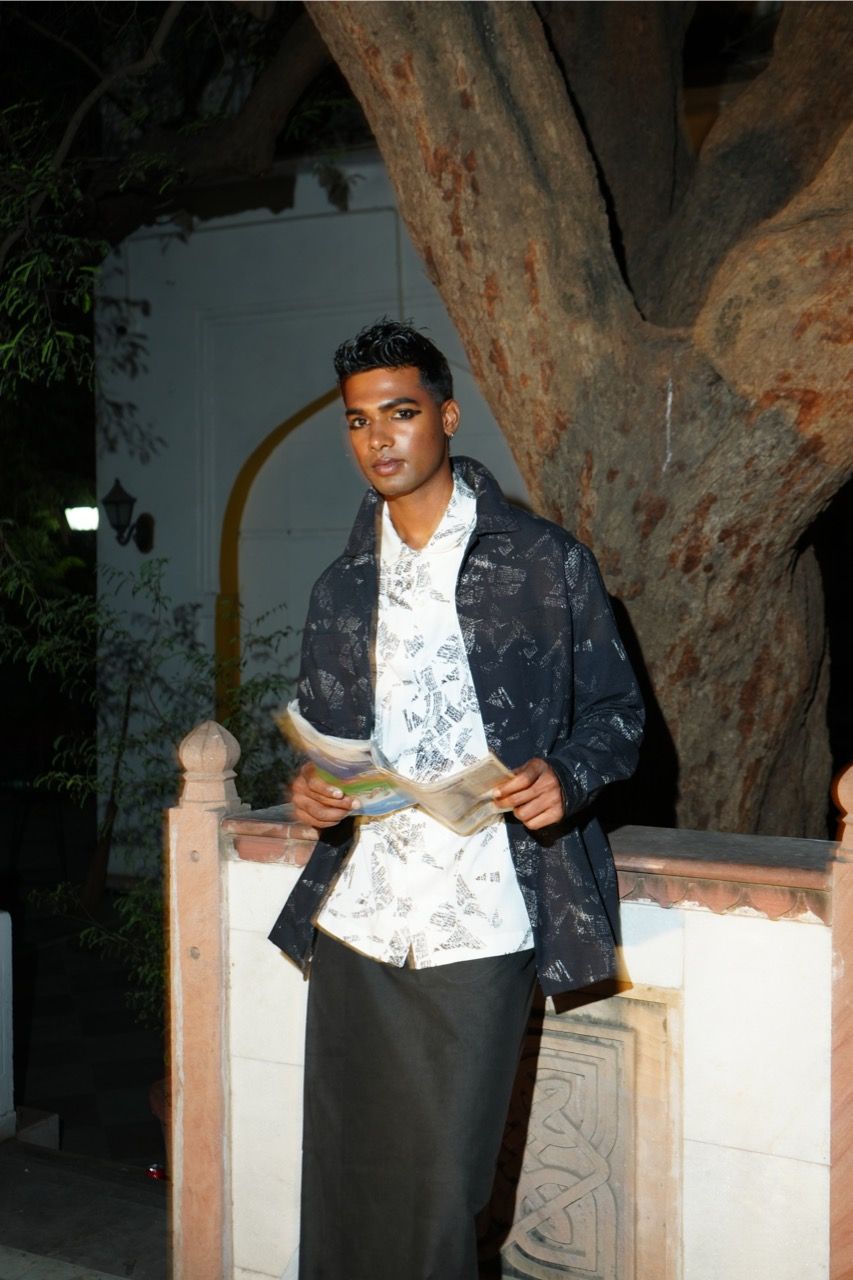
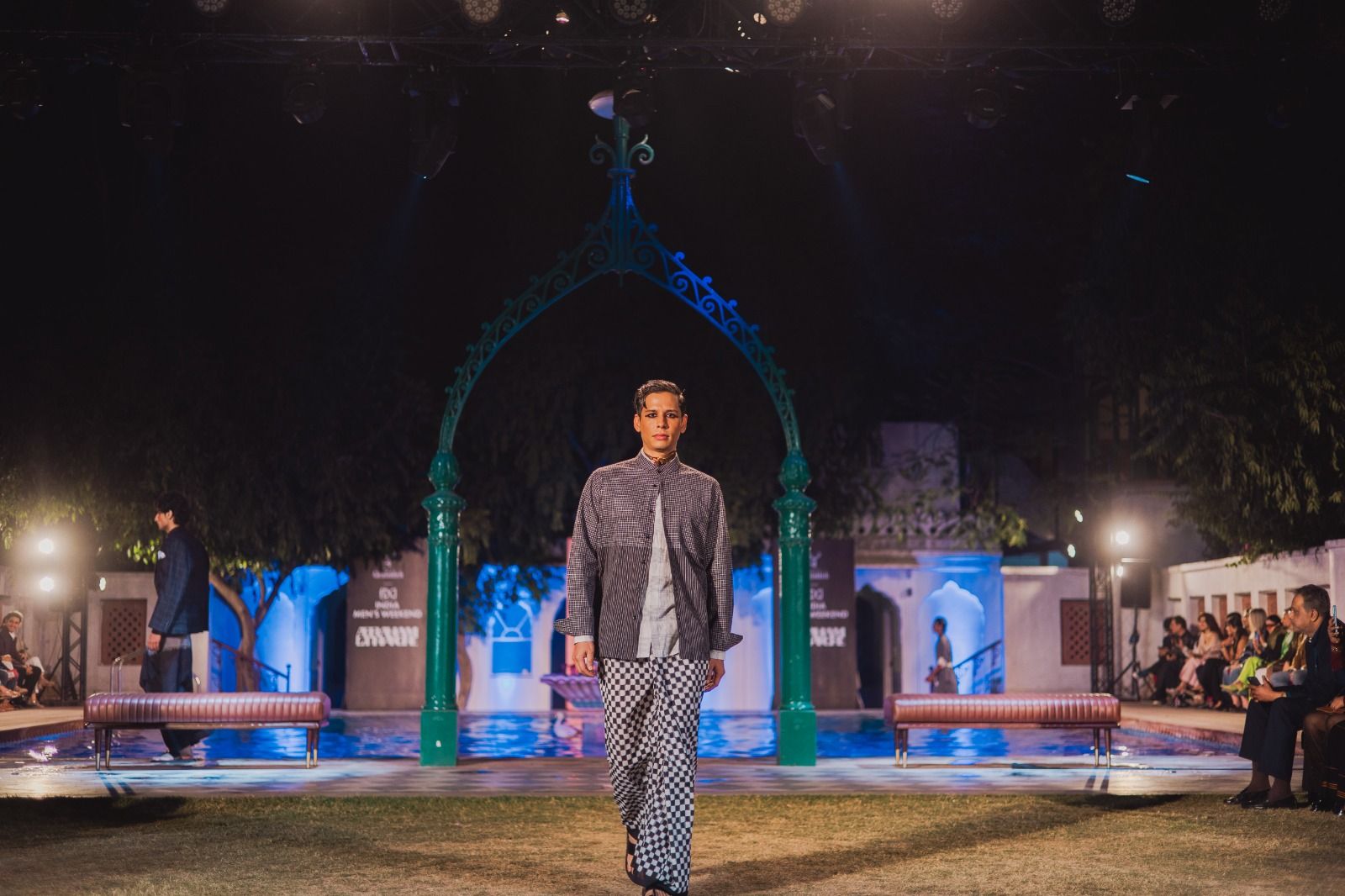
Closing the showcase were veterans Abraham & Thakore and JJ Valaya. The former opened theatrically as two models appeared to swim their way onto the runway before revealing sharply constructed sarongs reworked from the humble lungi, paired with crisp shirts and jackets in disciplined black, white and gold.
JJ Valaya delivered a fittingly royal finale, sending out relaxed yet regal silhouettes, kimono-inspired layers and restrained embroidery that spoke less of excess and more of evolution. It was grandeur with maturity, not volume.
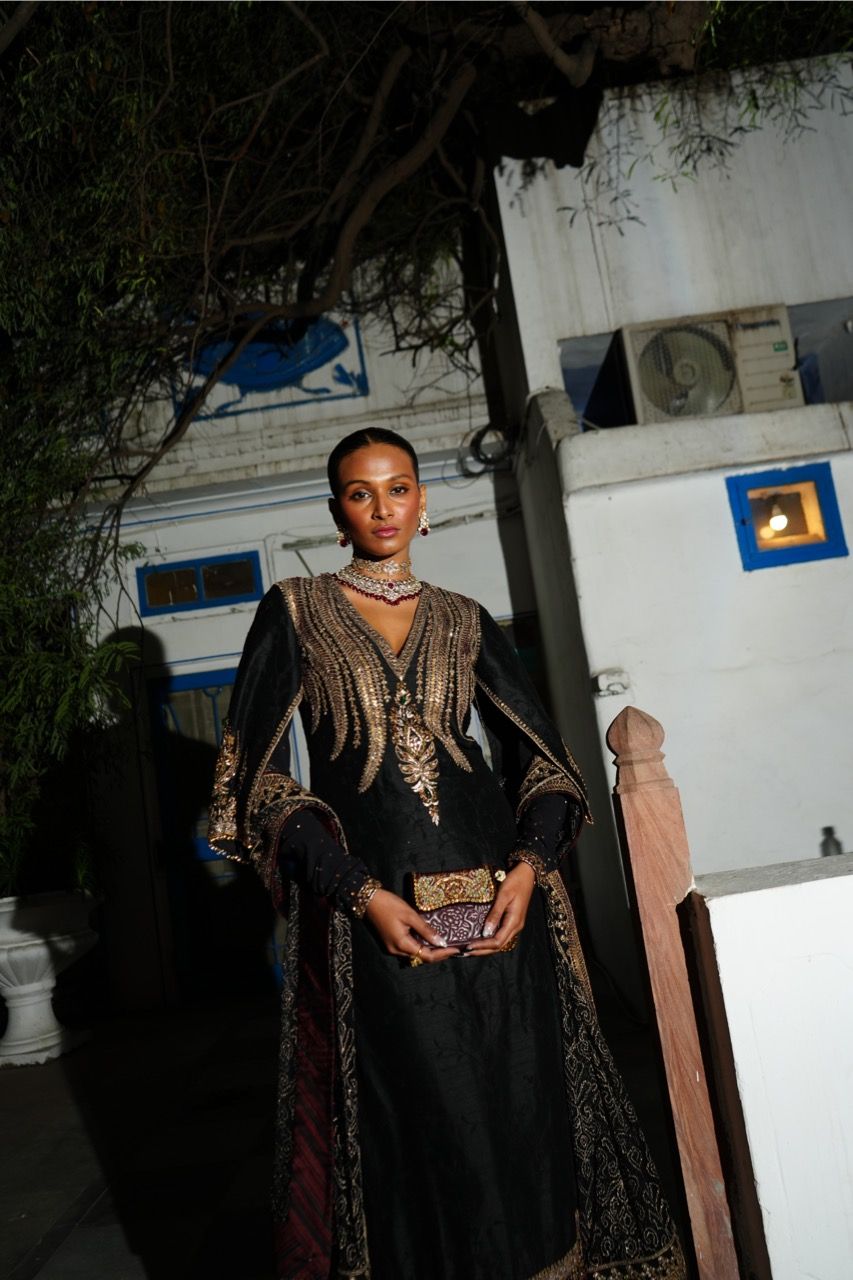
Taken together, the weekend pointed to something far larger than seasonal direction. This was neither about chasing global tailoring fatigue nor mimicking Western codes. Designers appeared far more interested in recalibrating tradition on their own terms, softer, more adaptive, and aligned with how Indian men are increasingly choosing to live.
If it proved anything, it is this: Indian menswear is no longer negotiating with tradition, nor is it intimidated by modernity. It is absorbing both and moving forward with a sharper sense of self.
The Indian man today is not dressing louder. He is dressing clearer. And designers are finally meeting him there. What remains is a category that understands its identity and, more importantly, its audience.
Trends We Spotted
Relaxed Tailoring Takes Centre Stage
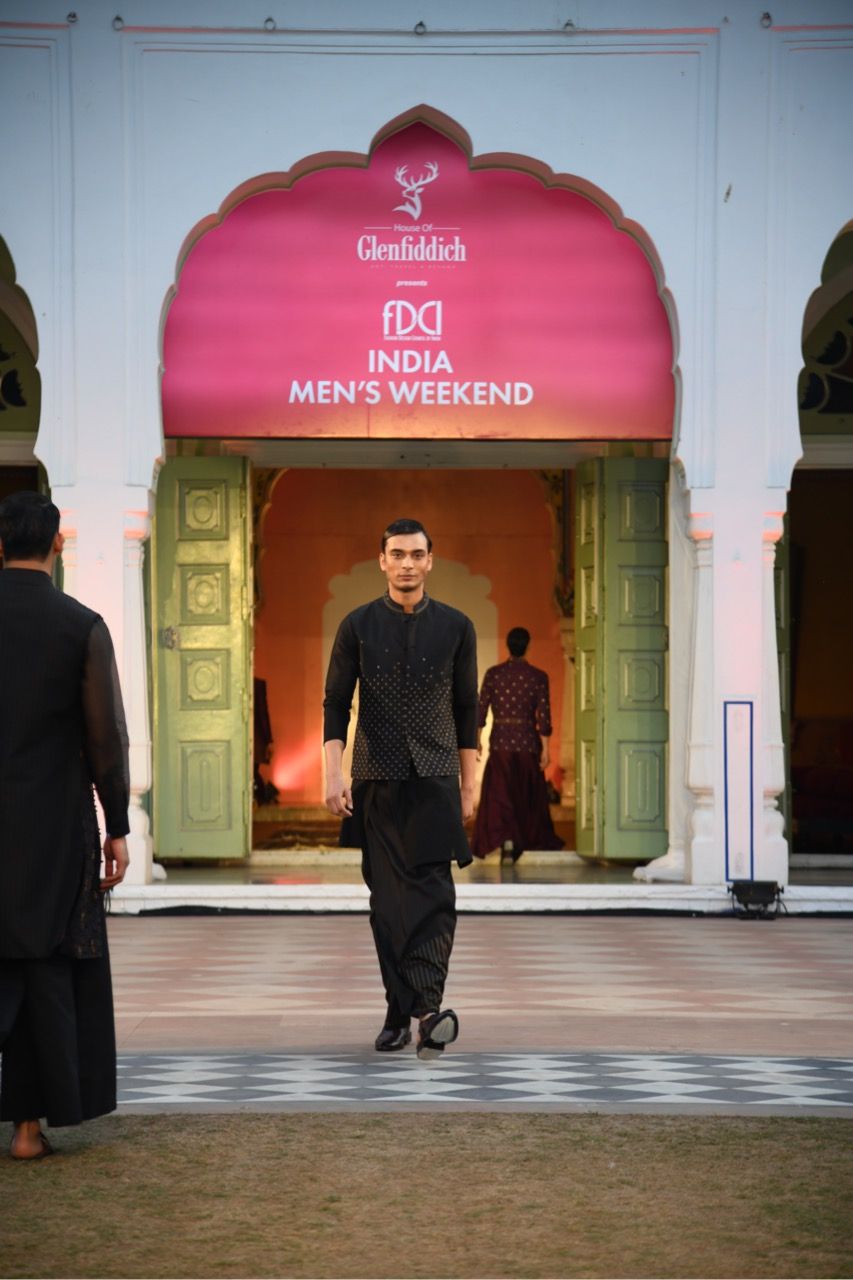
Structure has not disappeared; it has simply learned to breathe. Designers including Nikita Mhaisalkar, Ashish N. Soni, Vivek Karunakaran, JJ Valaya and Amit Hansraj traded rigidity for ease, proving that sharpness and comfort are no longer opposing ideas.
Craft, Minus the Costume
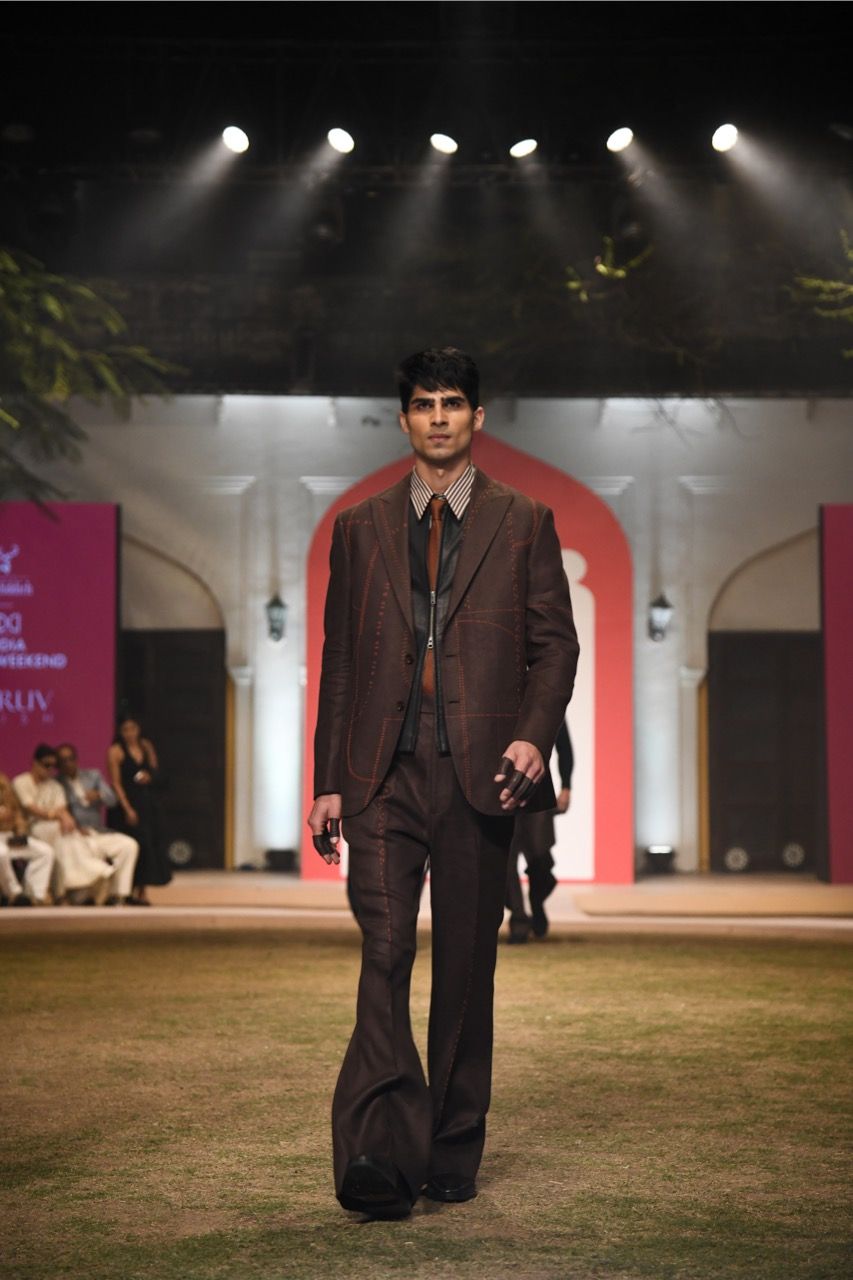
Heritage appeared across runways without tipping into theatrics. Vivek Karunakaran, Krishna Mehta and Dhruv Vaish treated craft as construction rather than decoration, allowing technique to shape the garment instead of merely embellishing it.
Indian-Influenced Workwear
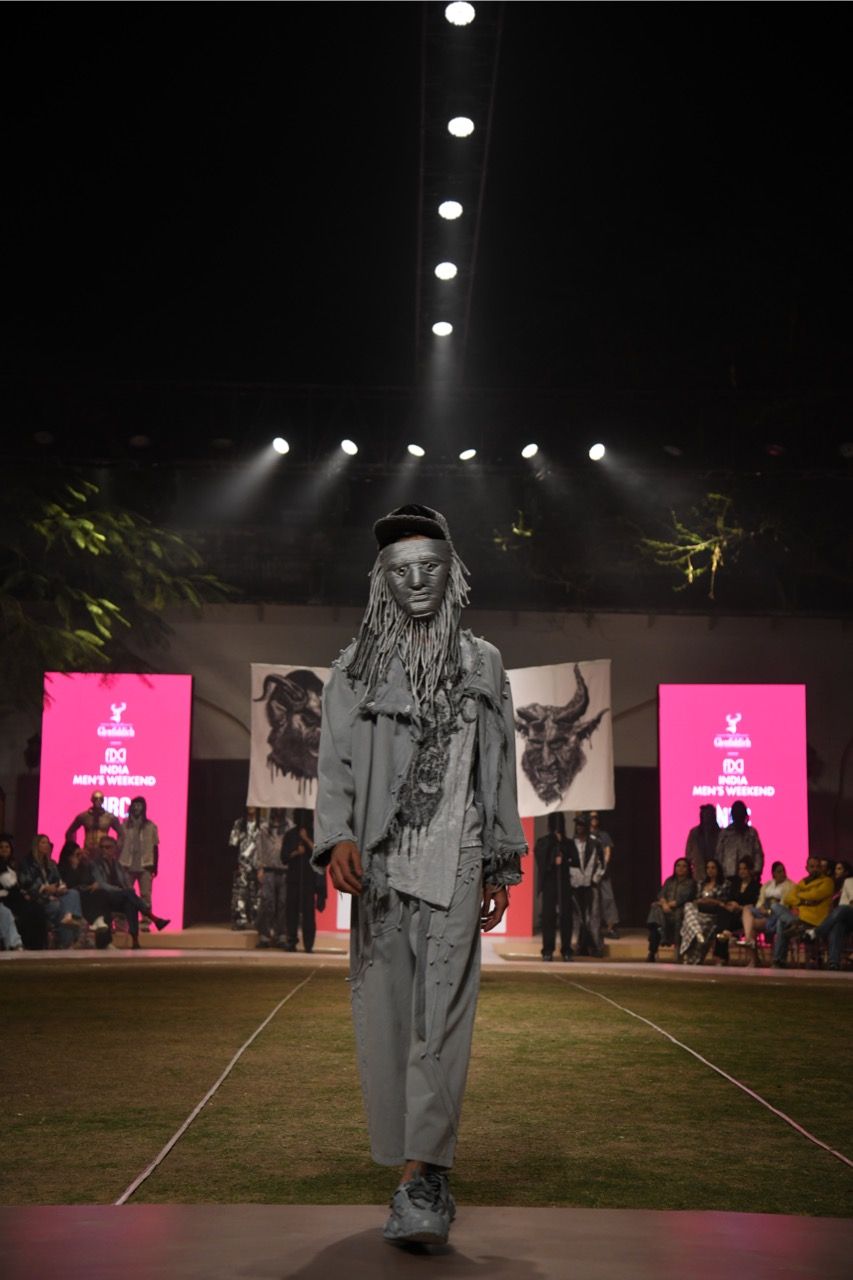
Countrymade and Nitin Bal Chauhan led the charge with industrial textures, boxy jackets and utility-driven pieces built with intent. Ruggedness here was not performative; it was controlled and urban.
Rethinking Traditional Silhouettes
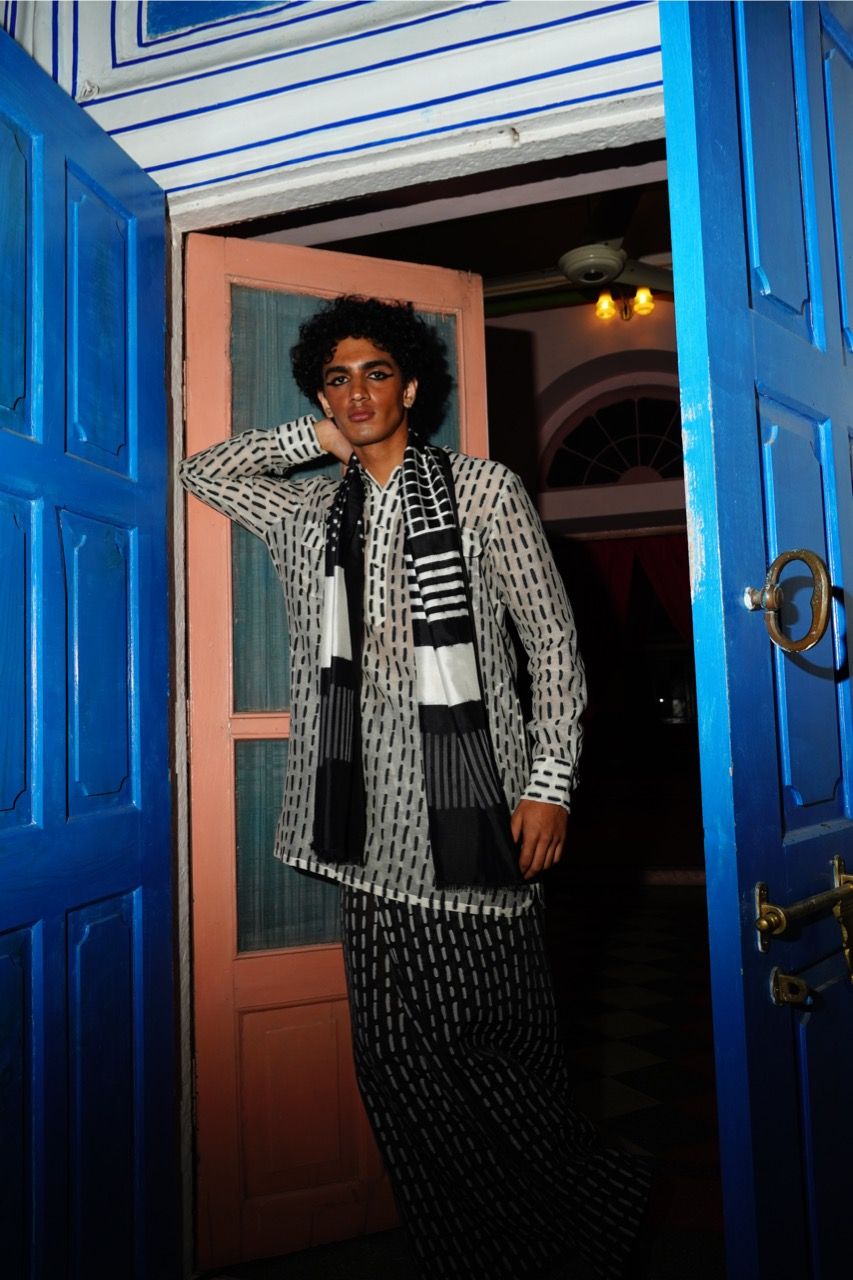
Rather than repeating familiar forms, designers chose reinterpretation. Abraham & Thakore reworked the lungi, and several others pushed kurtas and bandhgalas into contemporary territory. Less disruption, more evolution.


