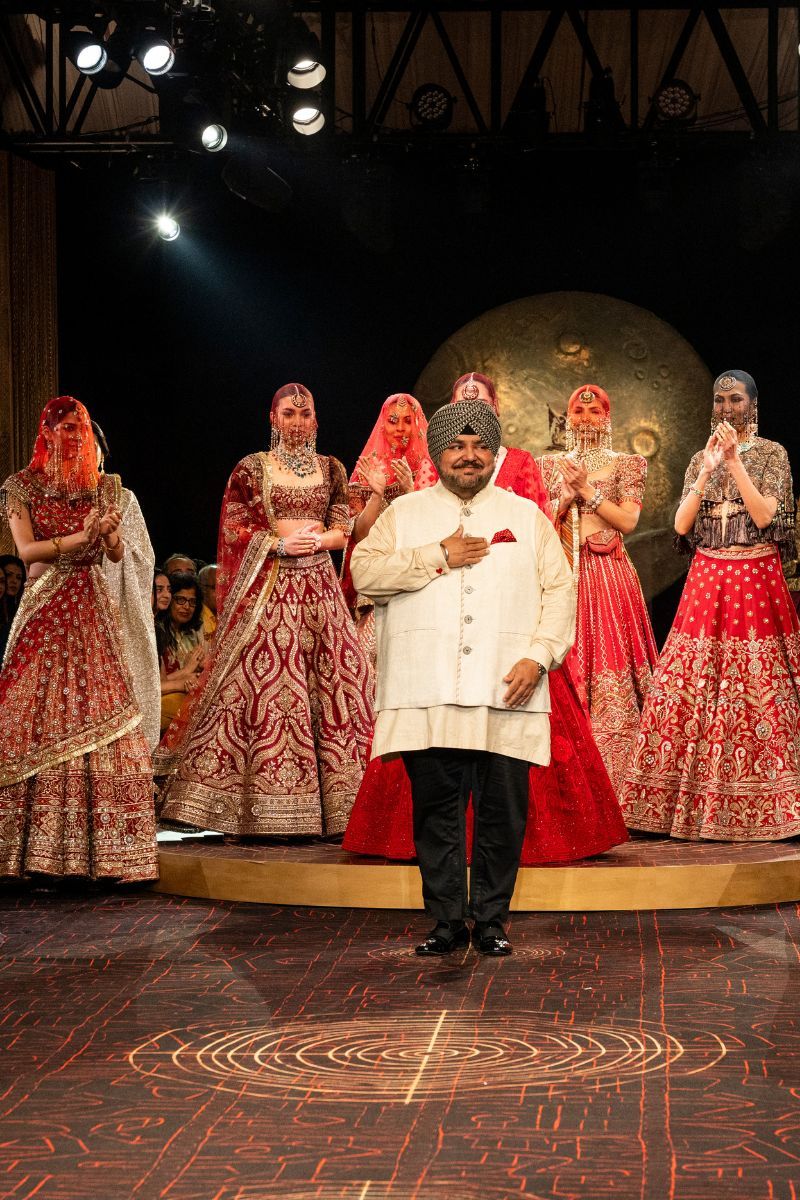
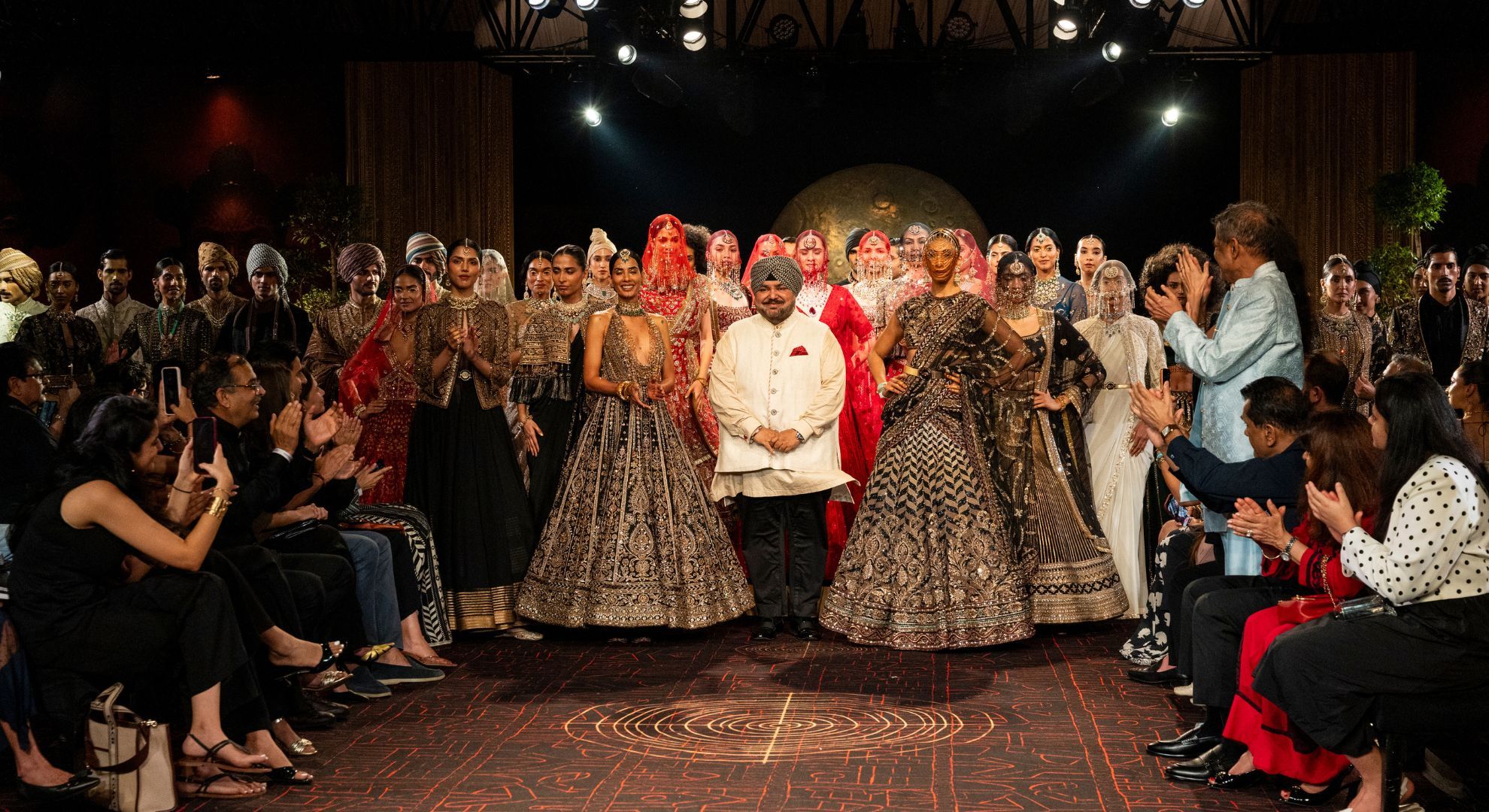
Indian men have a habit of treating festivewear like family heirlooms. We spend a fortune on it, bring it out for special occasions and then carefully pack it away until someone else decides to get married. JJ Valaya thinks there's a better way. For the designer, whose work has long celebrated the grandeur of Indian craftsmanship, festive dressing doesn't necessarily mean piling on the embroidery or looking like you've walked straight out of a royal procession. Sometimes, all it takes is a beautifully cut bandhgala, an unexpected black shirt and the confidence to mix things up. As part of The Festive Man's Little Black Book, we caught up with Valaya to discuss the art of dressing with intention, why the bandhgala deserves a life beyond weddings and how the future of Indian festivewear lies somewhere between tradition and individuality.
What is the biggest mistake Indian men make when dressing for the festive season?
Trying too hard to look festive. There is often an assumption that celebration must translate into more colour, more embroidery and more ornamentation. I believe the opposite can also be powerful, the most important fact being that what you wear should be who you are. A beautifully cut garment in an extraordinary textile, with perhaps one unexpected detail, can have as much presence as a beautiful, intricately embroidered and detailed garment. Elegance applies to both: Less is more and More is less.
To look festive without appearing overdressed, what should a man prioritise: silhouette, fabric, colour or detailing?
Silhouette first, always. If the proportion and cut are right, you already have presence. Fabric comes next because it creates richness without necessarily creating noise. Colour and detailing should then support the garment rather than become the garment. The hierarchy for me would be silhouette, textile, colour and finally embellishment.
Which traditional menswear silhouette deserves a rethink, and how would you modernise it?
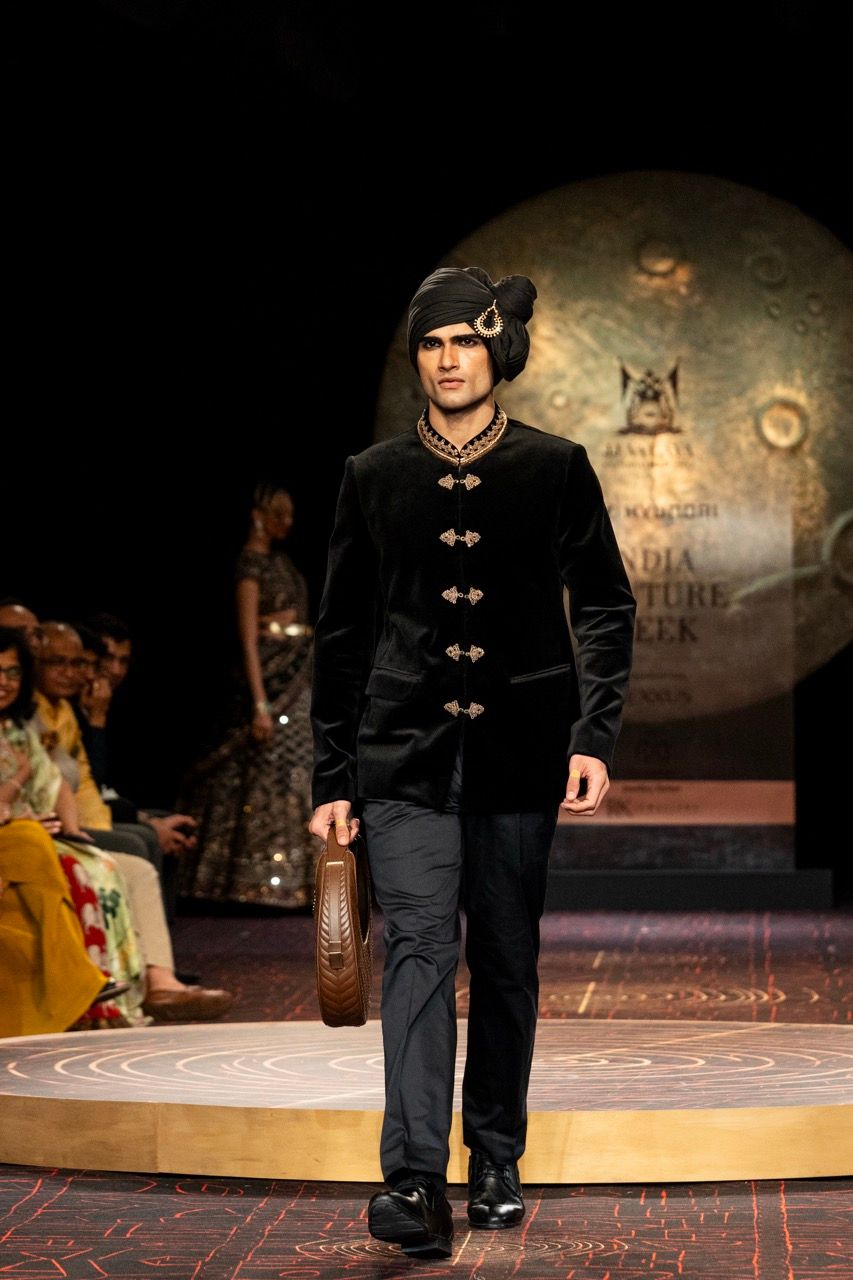
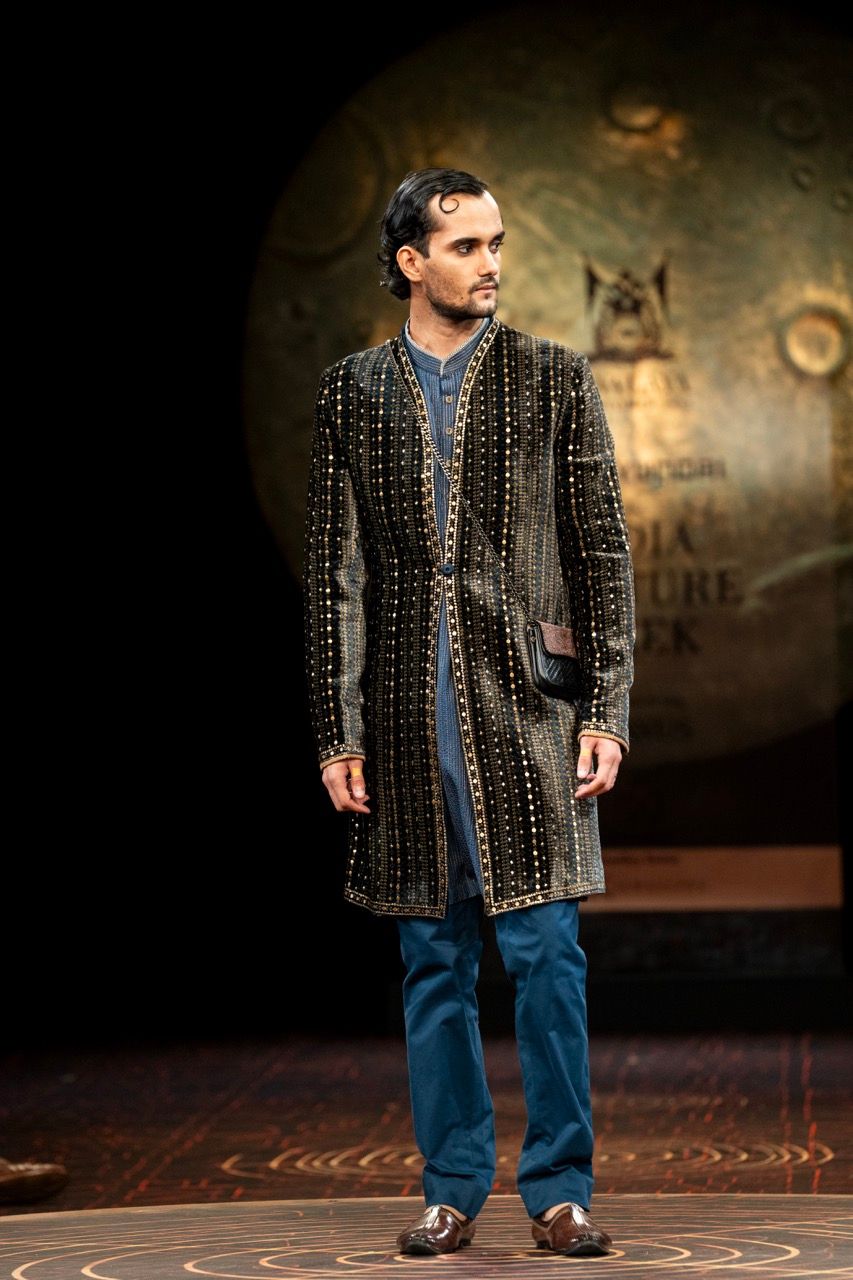
The bandhgala. It is one of India’s most sophisticated contributions to menswear, but it is too often treated either as ceremonial clothing or as something extremely formal. I would make it sharper and easier … experiment with length, construction and unexpected textiles, and wear it with trousers that are decidedly contemporary. It should become an Indian alternative to the modern jacket rather than something one retrieves only for a wedding. We’ve experimented with a style this season which is an interesting hybrid between a Bandhgala and a waistcoat.
Beyond the standard kurta-pyjama, which pieces should men be experimenting with this festive season?
Shorter structured jackets, bandhgalas, shaped Nehru jackets, beautifully tailored overshirts, interesting trousers and layered separates. I particularly also like pieces that don’t immediately declare themselves as either “Indian” or “Western”. That ambiguity makes them much more relevant to the way men dress today.
Which colours or colour combinations would you suggest to men looking to move beyond the usual festive palette?
I would move towards deeper, more complex colours: tobacco, oxblood, aubergine, forest and bottle greens, charcoal, midnight blue and antique gold. I also like tonal dressing: several values of essentially the same colour used together. It creates richness without becoming theatrical.
Are there any new techniques in construction, textiles, embroidery or craftsmanship that are changing how you approach Indian menswear? Could you share an example from your work?
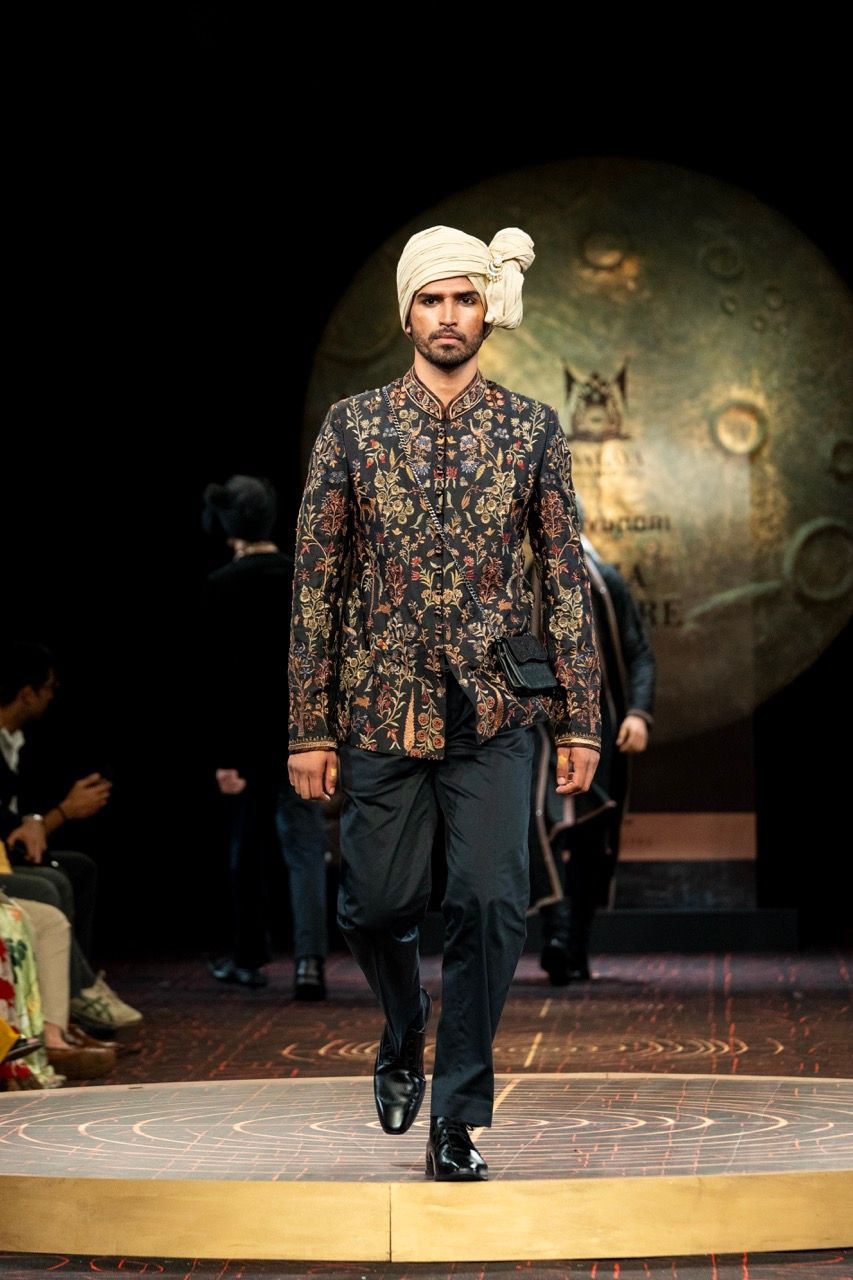
For me, innovation isn’t necessarily about inventing a new craft. It can be about unexpectedly using an ancient craft. We constantly explore how embroidery, engineered prints, surface textures and traditional techniques can become more integrated with the architecture of a garment rather than simply being applied as decoration. In our work, you will often see several techniques coexist within one piece, but the objective is that they ultimately read as one composition.
For someone investing in just one standout festive piece this year, what should it be, and how would you style it for different occasions?
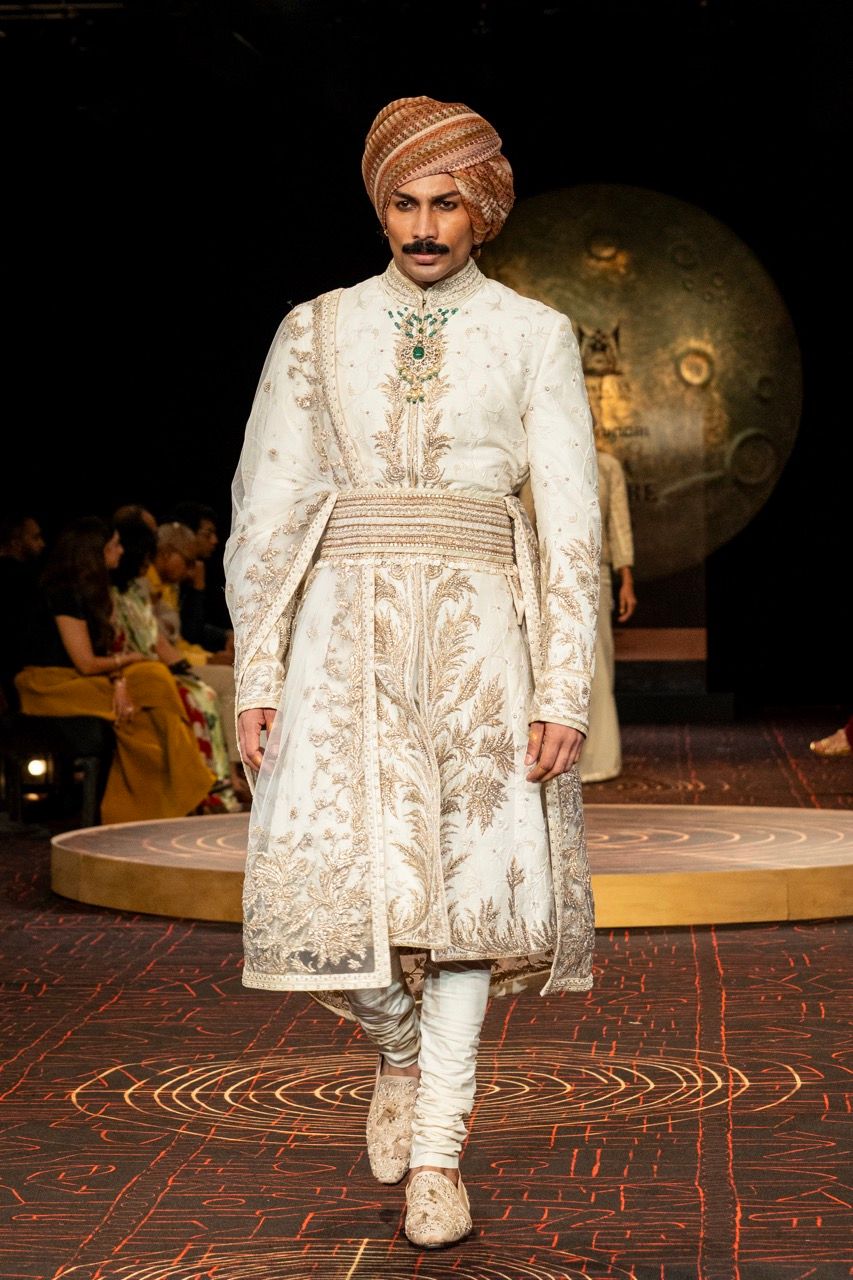
A superbly cut statement bandhgala or Nehru jacket. Wear it traditionally with a kurta and trousers for a wedding; with a fine shirt or knit and tailored trousers for a more contemporary evening; or even with a simple T-shirt and very clean trousers when you want to dismantle some of its formality. A good investment piece should have several lives.
What is one everyday wardrobe staple you would bring into a festive look, and how would you style it?
A black shirt. Put it under an embroidered or richly textured bandhgala, add beautifully cut trousers, and suddenly the entire proposition becomes younger and less predictable. I enjoy that tension between something completely ordinary and something decidedly luxurious.
Which accessories can elevate a festive outfit, and how would you style it?
One strong accessory is usually enough. A beautiful brooch, an unusual pocket square, a stole, a distinctive pair of cufflinks or an exceptional watch can transform a look. The mistake is wearing all of them simultaneously. Accessories should punctuate an outfit, not compete for attention.
What footwear styles work best when mixing Indian and Western elements in the same festive look?
A clean, shaped loafer or monk works remarkably well, as does a beautifully made jutti or mojhri when the rest of the look is more contemporary. Depending on the silhouette, even a sleek boot can work. I don’t think footwear needs to belong to the same cultural vocabulary as the clothes … the contrast can actually make the look more interesting.
What is the next big shift you foresee in Indian festive menswear, and which trends have run their course?
We are moving from “occasion dressing” towards individual dressing. Men are becoming far more confident about combining tailored pieces, Indian silhouettes, unusual textiles and things already present in their wardrobes. The head-to-toe, heavily coordinated festive look feels increasingly restrictive. The future, to me, is modular: extraordinary individual pieces that can be recombined and worn repeatedly rather than a complete outfit designed for one occasion.
What is the oldest piece in your own festive wardrobe that you still wear, and what keeps you coming back to it?
A black jacquard Nehru jacket with pipings of an antique jamawar shawl and vintage buttons as closures. What keeps an old garment alive is rarely fashion. It is usually memory, craftsmanship and the way it makes you feel when you wear it. The finest clothes acquire character with time rather than becoming obsolete, and that, ultimately, is my definition of true luxury.


