Indian men have a peculiar relationship with festivewear. We'll spend a small fortune on an outfit, wear it to one wedding, collect a few compliments and then banish it to the back of the wardrobe until the next cousin decides to get married. Kunal Rawal thinks we can do better. For the designer, festivewear should be less about buying a complete look and more about investing in pieces that can be worn, reworked and reinvented. Think sherwanis you can actually dance in, bandhgalas that work with denim and bundis that are just as comfortable over a T-shirt. As part of The Festive Man's Little Black Book, we caught up with Rawal to talk about rethinking traditional silhouettes, the growing importance of functionality and why Indian occasionwear deserves a life beyond the wedding circuit.
What is the biggest mistake Indian men make when dressing for the festive season?
The biggest mistake is treating occasionwear as a fixed set. You buy a look, wear it exactly as it was styled once, and then wait for another occasion to wear the same combination again.
I’d much rather you invest in a beautifully handcrafted piece you genuinely love and find five different ways to wear it. Break the look up. Change the layers, change the bottoms, dress it up, dress it down. Occasionwear should multitask.
To look festive without appearing overdressed, what should a man prioritise: silhouette, fabric, colour or detailing?
They all matter, but for me it really comes down to balance. If I had to prioritise, I’d start with silhouette or fabric; you don’t necessarily need both doing all the talking.
A modern Indian silhouette can immediately make a look feel occasion-appropriate, even in a quieter fabric. Equally, something as classic as silk, brocade or another Indian textile can make a relatively understated silhouette feel festive. Colour and detailing can then add another layer, but they don’t always need to.
The idea is to know when to stop. If the silhouette is making the statement, everything else can take a step back. Festive doesn’t have to mean more of everything.
Which traditional menswear silhouette deserves a rethink, and how would you modernise it?
I’ve been obsessed with the kediyu for a very long time. I remember those chart-paper sheets we had in school showing the traditional clothing of different cultures, communities and regions of India, and even then the kediyu stood out to me. There are so many interesting iterations of that silhouette. We worked with it in our Role Play collection around 2017–18, but I still think there’s a lot more I want to do with it. The classic Indian safari suit is another one; I’d love to play with that further.
But honestly, I don’t think it’s about one or two silhouettes. Everything needs a rethink from time to time. Look at what has happened to the kurta: we’ve played with it as kurta shirts, changed the lengths and hems. The bandhgala has gone through endless iterations and become incredibly versatile. Menswear is evolving so quickly that the clothes we wear for Indian occasions have to keep up.
Beyond the standard kurta-pyjama, which pieces should men be experimenting with this festive season?
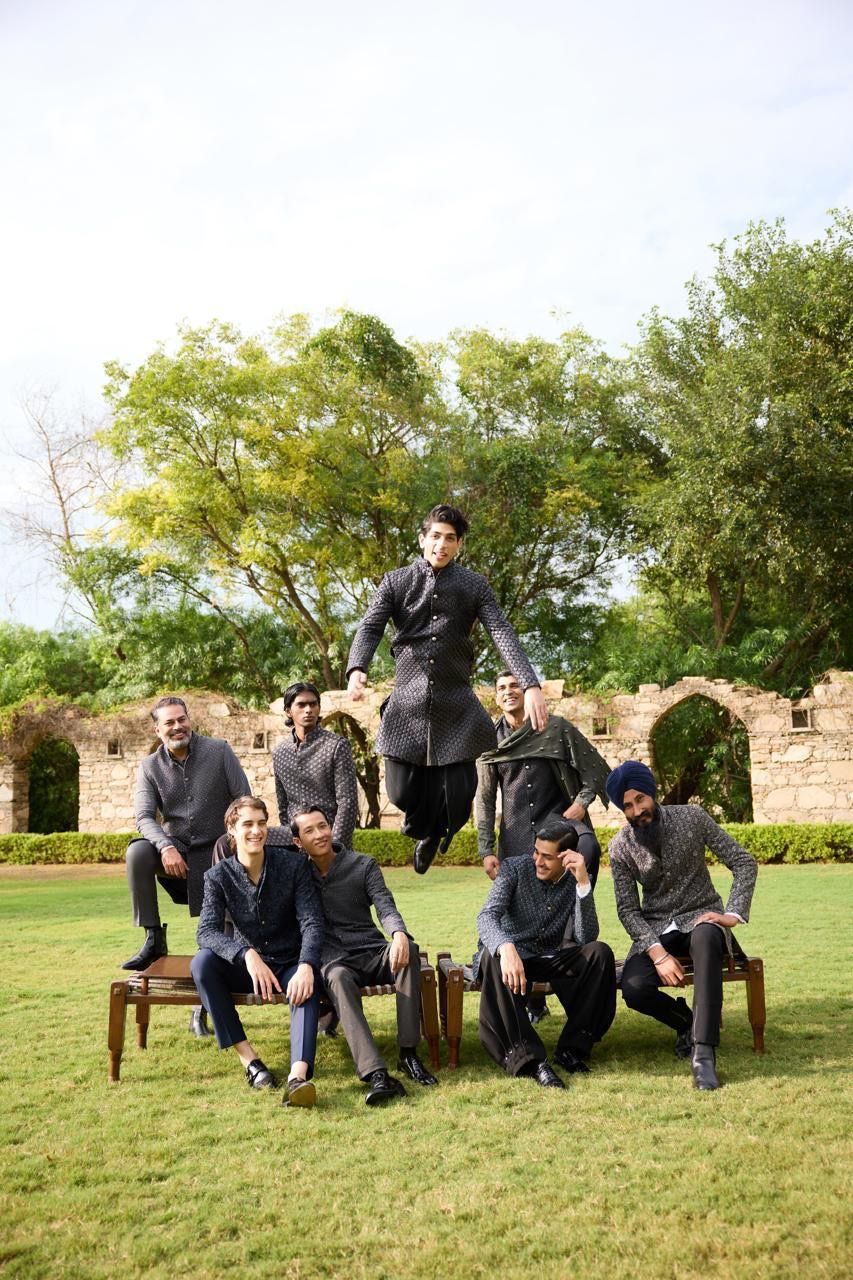
There’s so much more to Indian occasionwear now. Try a deconstructed sherwani. Swap a traditional kurta for a kurta shirt, or wear your kurta with a slimmer trouser instead of the expected pyjama. Play with cropped bandhgalas, shorter high-waisted bandhgalas, deconstructed jackets and different iterations of the bundi. You could even replace the bundi entirely with a waistcoat.
My rule is simple: first, be correctly dressed for the occasion. Once you’ve crossed that barometer, have fun with it.
Which colours or colour combinations would you suggest to men looking to move beyond the usual festive palette?
I’m very drawn to mixed colours: the more unusual the tone, the more interested I am. We actually create a lot of our colours through handwork, mixing different threads together to develop shades that don’t necessarily exist as a flat colour.
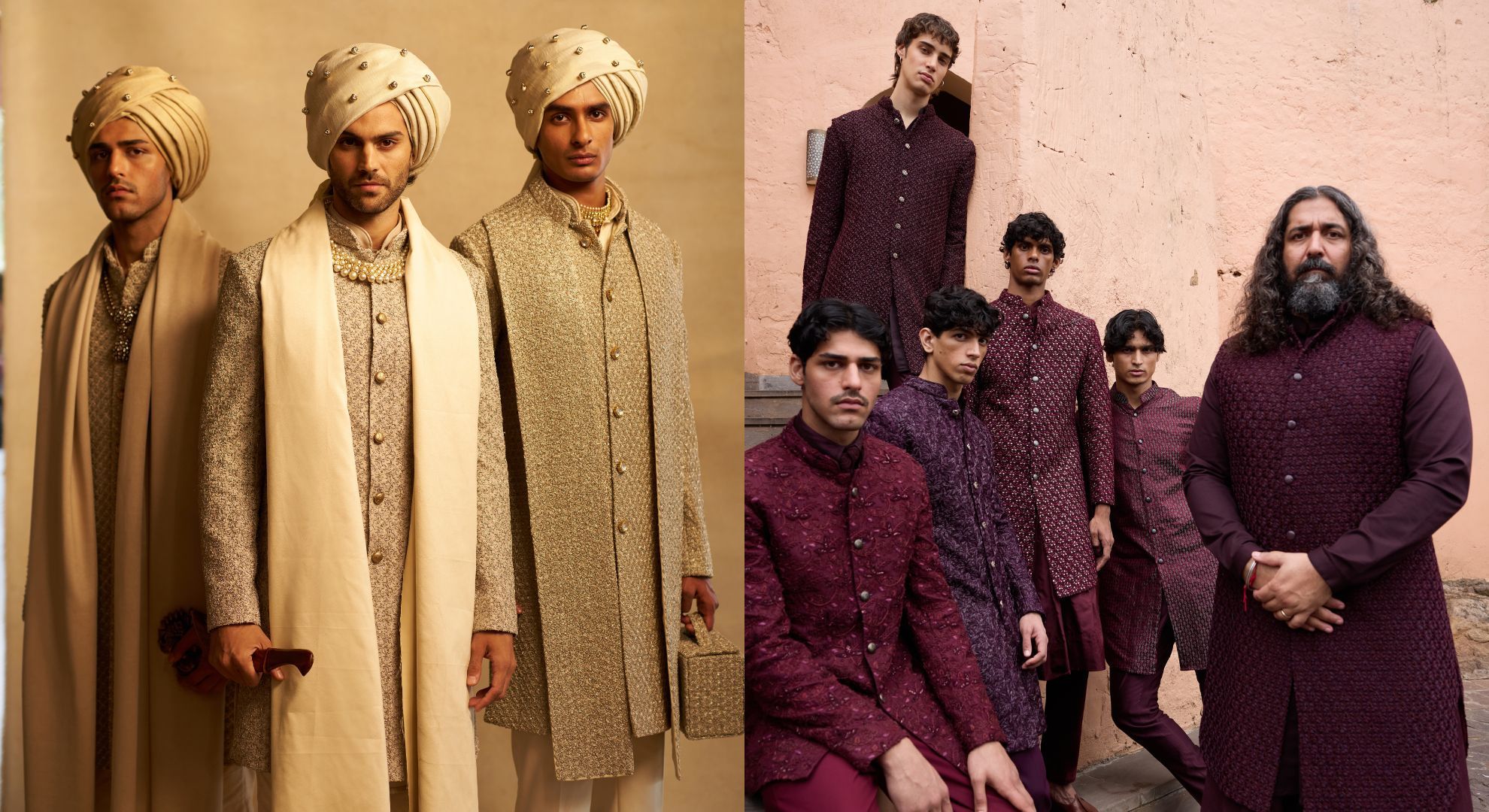
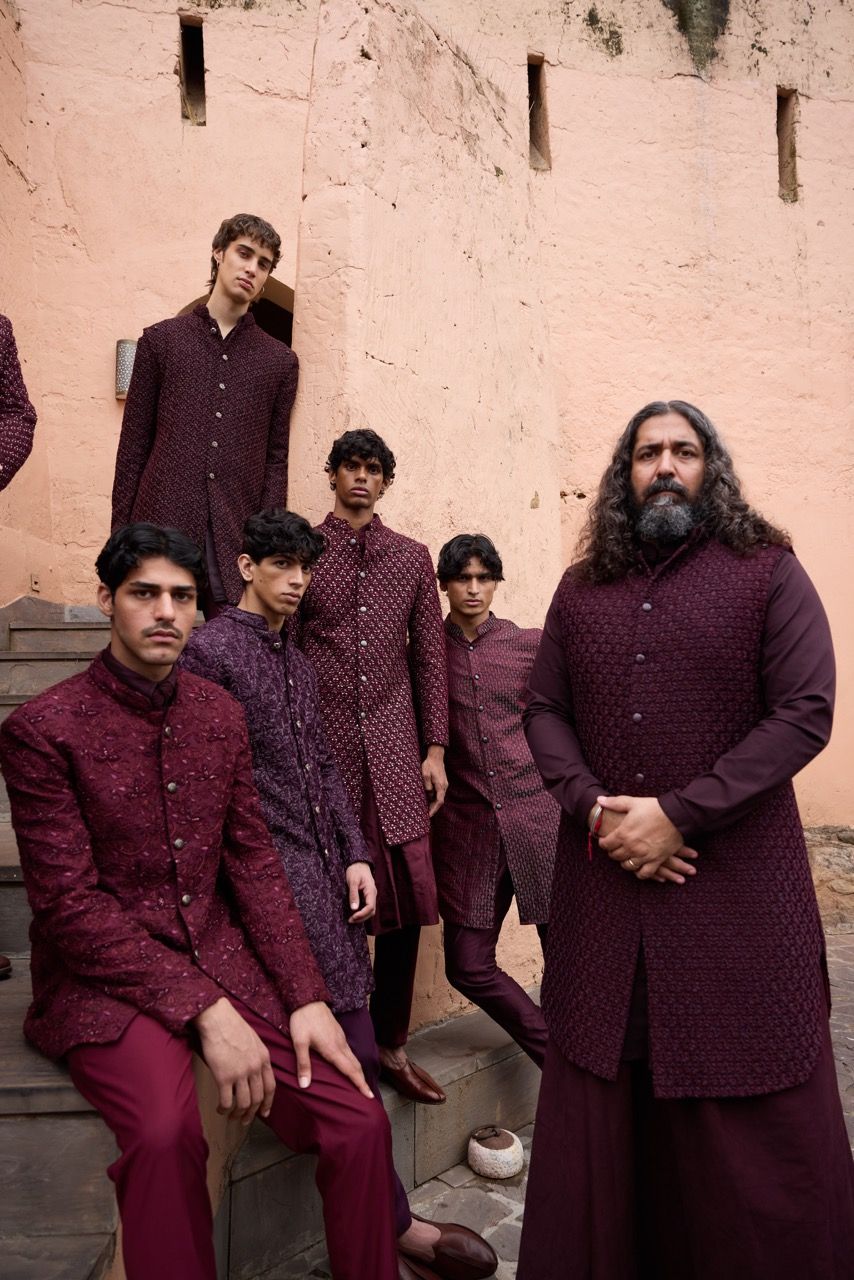
For evening, I’m very into military tones: olive, deep charcoal, a midnight navy that’s almost navy-black, and dark wine. Rust is another colour I love. This season we’ve also introduced mulberry for the night; it’s almost our menswear answer to hot pink.
For the day, I like whitewashed pastels and the neutrals that have always been part of our world: beige, champagne, brown and ivory. And obviously, you can never really go wrong with black.
Colour is less about picking something loud and more about finding tones with depth and dimension.
Are there any new techniques in construction, textiles, embroidery or craftsmanship that are changing how you approach Indian menswear? Could you share an example from your work?
I always look at design from a functionality perspective. Design should solve a problem. Our deconstructed sherwani came from something very simple: a groom wants the presence of a sherwani, but at his sangeet he also wants to dance without having to take it off or constantly adjust it. So we reworked the construction to give him both.
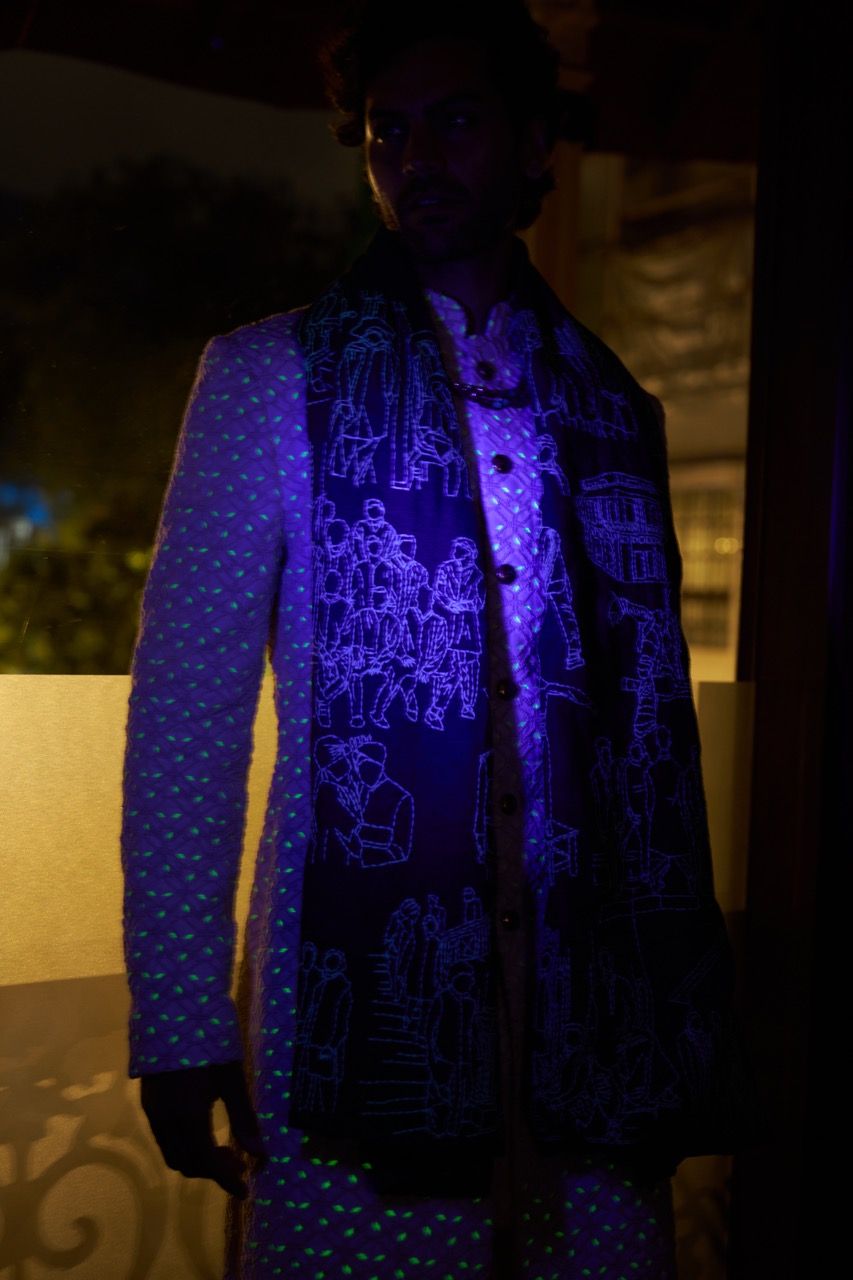
During COVID, we developed a glow-in-the-dark groom’s sherwani with hidden messages. At the time, people were having multiple celebrations in the same space, sometimes even the sangeet around the mandap. A change in lighting suddenly gave you a completely different expression of the same garment, almost two looks in one.
This season, we’ve also introduced the Magnet Stole. I’m incredibly fidgety with stoles and wanted one that would just stay where it was meant to. So ours clips onto the shoulder and becomes completely fuss-free.
They’re different ideas, but they all come from the same place: how do we make Indian occasionwear work better for the person actually wearing it?
For someone investing in just one standout festive piece this year, what should it be, and how would you style it for different occasions?
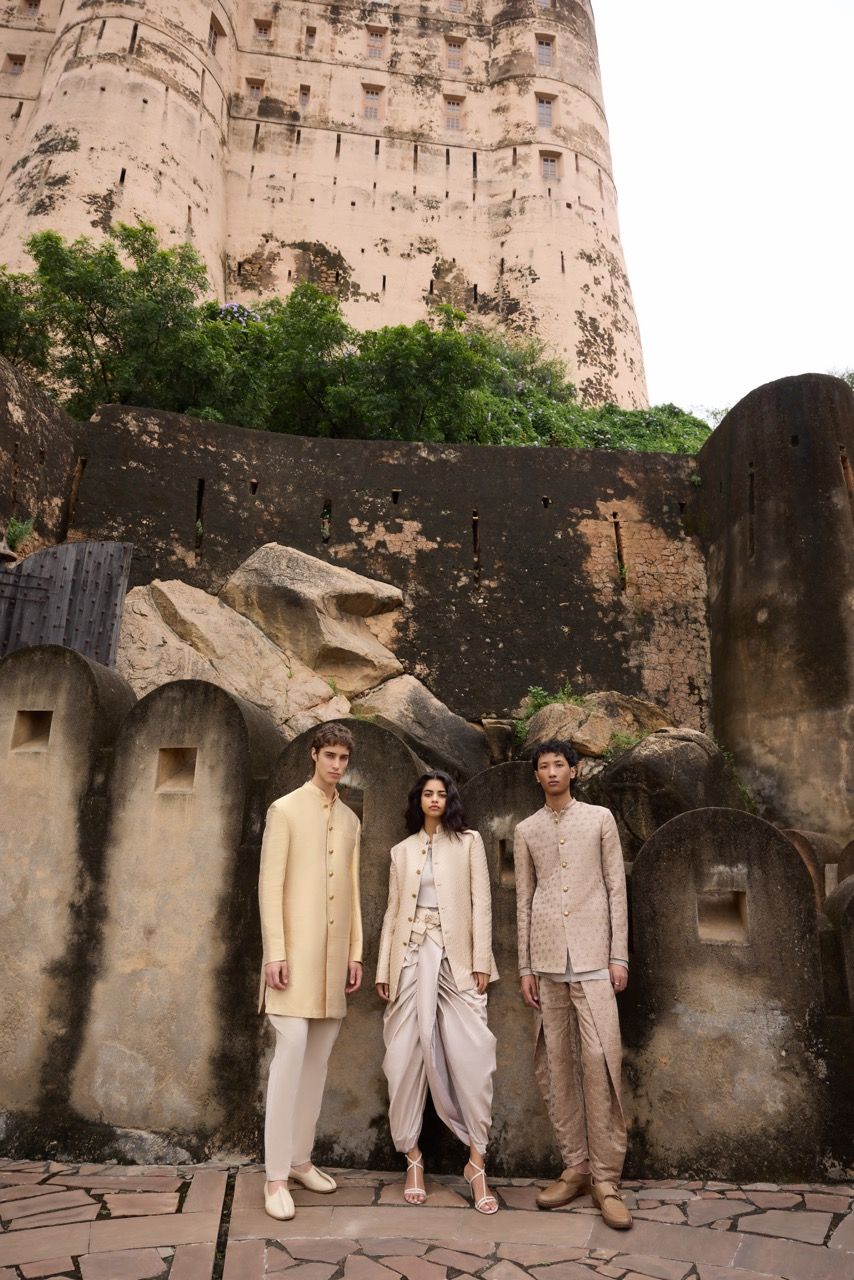
Either a great bundi or a really well-fitted, slightly shorter bandhgala.
A bundi is probably one of the most useful layers in an Indian wardrobe. It can immediately formalise a daytime look, but it’s also easy enough to travel and move in. Wear it over a kurta, a shirt, or even a T-shirt if you want to take it somewhere more casual.
If you’re going for a bandhgala, I’d make it something you can keep returning to. Classic black always works, or choose a textured motif that doesn’t immediately register as a repeat every time you wear it. Even corduroy can work; we recently did something along those lines for Ranbir Kapoor.
What is one everyday wardrobe staple you would bring into a festive look, and how would you style it?
Denim. A really clean, unwashed jet-black denim can very easily move into occasionwear. Put it with a kurta, a jacket or a bandhgala and a great pair of formal shoes, and suddenly it works for an evening without feeling like you’ve tried too hard.
I also personally love T-shirts and crew necks with Indian wear. I’ll wear a simple crew-neck inner under a kurta as well. It takes a little of the formality away and makes the look feel more modern.
Which accessories can elevate a festive outfit, and how would you style it?
The right buttons can completely change a festive look. Shoes are obviously incredibly important. For a day function, I like jewellery used quite sparingly: a ring, a bracelet, or a thin Indian neckpiece or choker worn inside a jacket so you only catch a hint of it.
I prefer those smaller details to piling accessories on. And I’m not a big brooch person. I’d rather something reveal itself slowly than enter the room before you do.
What footwear styles work best when mixing Indian and Western elements in the same festive look?
The classics usually work best. A great Oxford or lace-up can look incredibly sharp with Indian wear, particularly when you’re mixing Indian and Western elements.
There’s no absolute rule; certain mules can work really well too, but honestly, there’s still very little that beats a beautifully constructed jutti or Kolhapuri with festive wear.
What is the next big shift you foresee in Indian festive menswear, and which trends have run their course?
Functionality and repurposing are going to become much more important. Occasionwear is far more exciting today, particularly in menswear, but for me the next step is getting people to actually wear these clothes more.
I want festive pieces to enter everyday wardrobes. I want someone to take a jacket or a bundi out of a wedding look and wear it differently six months later. Comfort matters more, versatility matters more, and how many times you can wear something matters more, particularly now, when everyone is out more, photographed more and posting more on social media.
I also think we’re moving away from the mannequin look. Men are beginning to add their own personality to Indian wear in the way they already do with Western wardrobes: mixing pieces, bringing in something vintage, rewearing something old, styling it differently. That’s much more interesting to me than buying a prescribed head-to-toe look.
As for what has run its course, I’m always careful saying never as a designer. But feathers, particularly on brooches and occasionwear, are a personal pet peeve. I’d be quite happy to give those a rest.
What is the oldest piece in your own festive wardrobe that you still wear, and what keeps you coming back to it?
I have a black threadwork waistcoat that has probably lived more lives than most things in my wardrobe. It actually started as a sherwani, then became a deconstructed sherwani, then a bundi, and now it’s a waistcoat. I wore it again this season for our Rawalgarh show.
I’ve probably worn that handwork hundreds of times, and somehow I enjoy it more every time I come back to it. That’s the beauty of great craft. It doesn’t have to be precious. It can change with you, be reworked, be worn again and again, and actually become better because of it.


