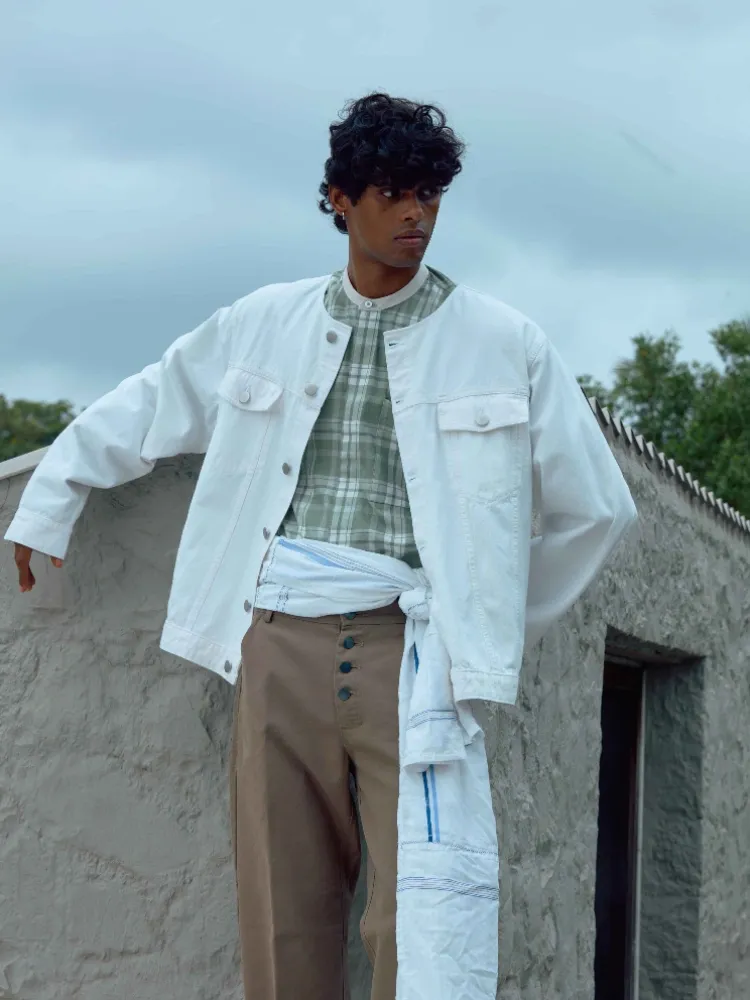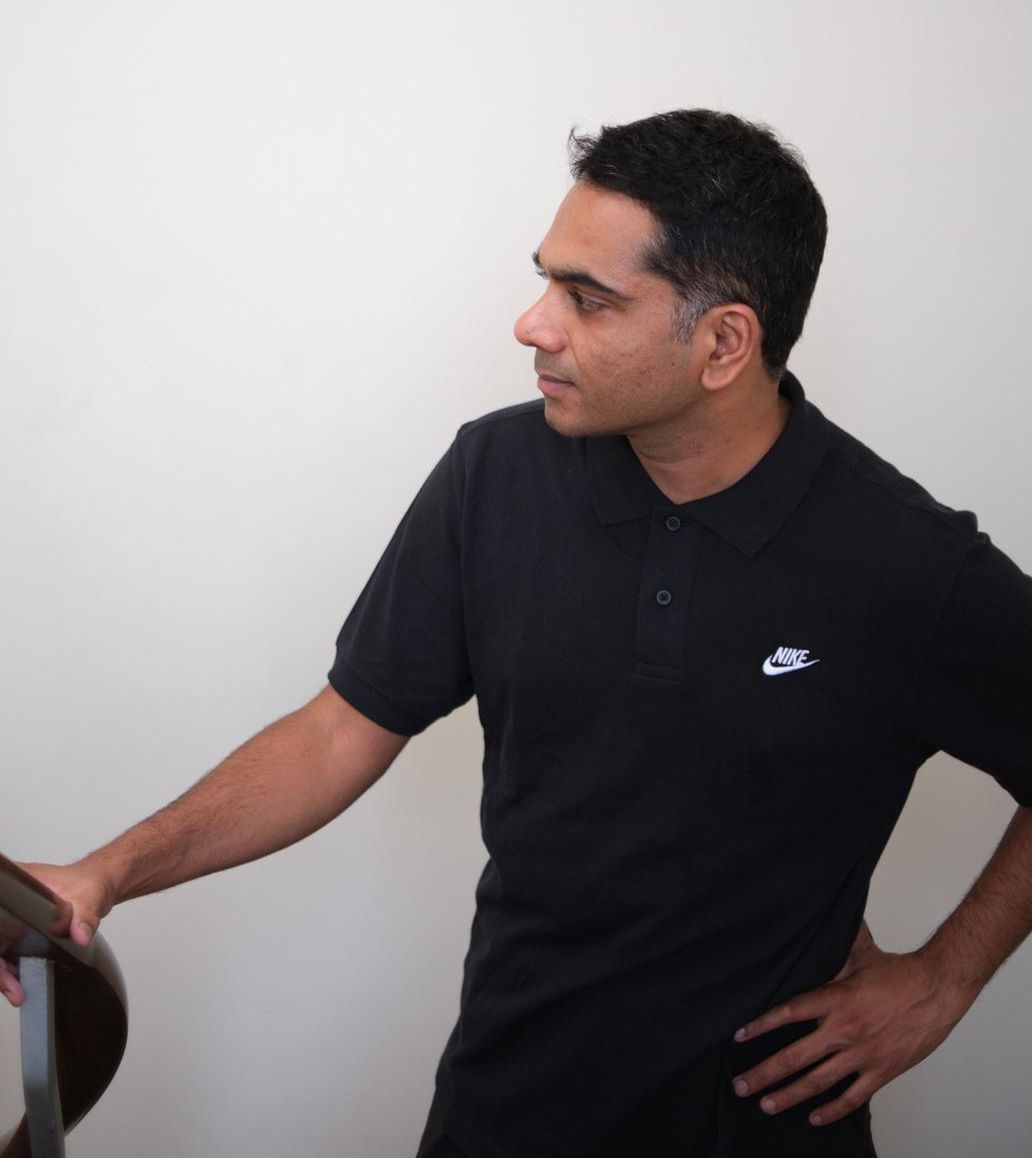
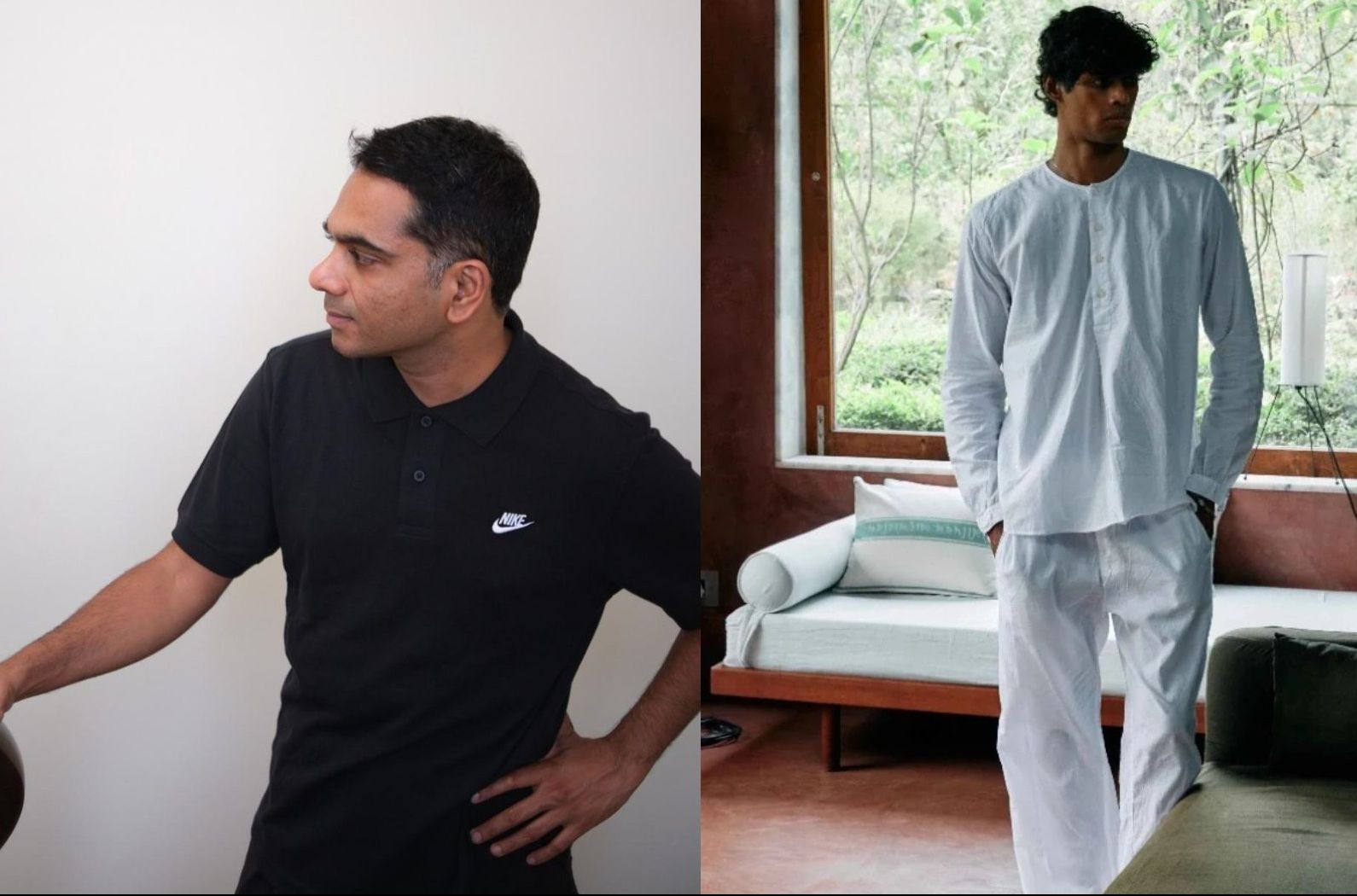
Fifteen years after launching Shift, designer Nimish Shah is returning to his label with a renewed focus and a new direction. Having first established his signature through womenswear, Shah is now venturing into menswear and home, bringing together his interest in material, craft and everyday design. It's a new chapter shaped by years spent working across the fashion industry, building brands and keeping a close eye on India's evolving fashion landscape.
A graduate of London's London College of Fashion, Shah began his career with stints at Chloé and Burberry, followed by roles at Browns and Jigsaw. In 2011, he channelled these experiences into Shift, an independent womenswear label that earned recognition for its understated aesthetic, easy silhouettes and quietly eccentric design language. In 2018, he put the label on hold to become Creative Director at Bhaane, where he helped shape the brand's identity and build its community. He also worked as a creative supervisor on Converse India's business.
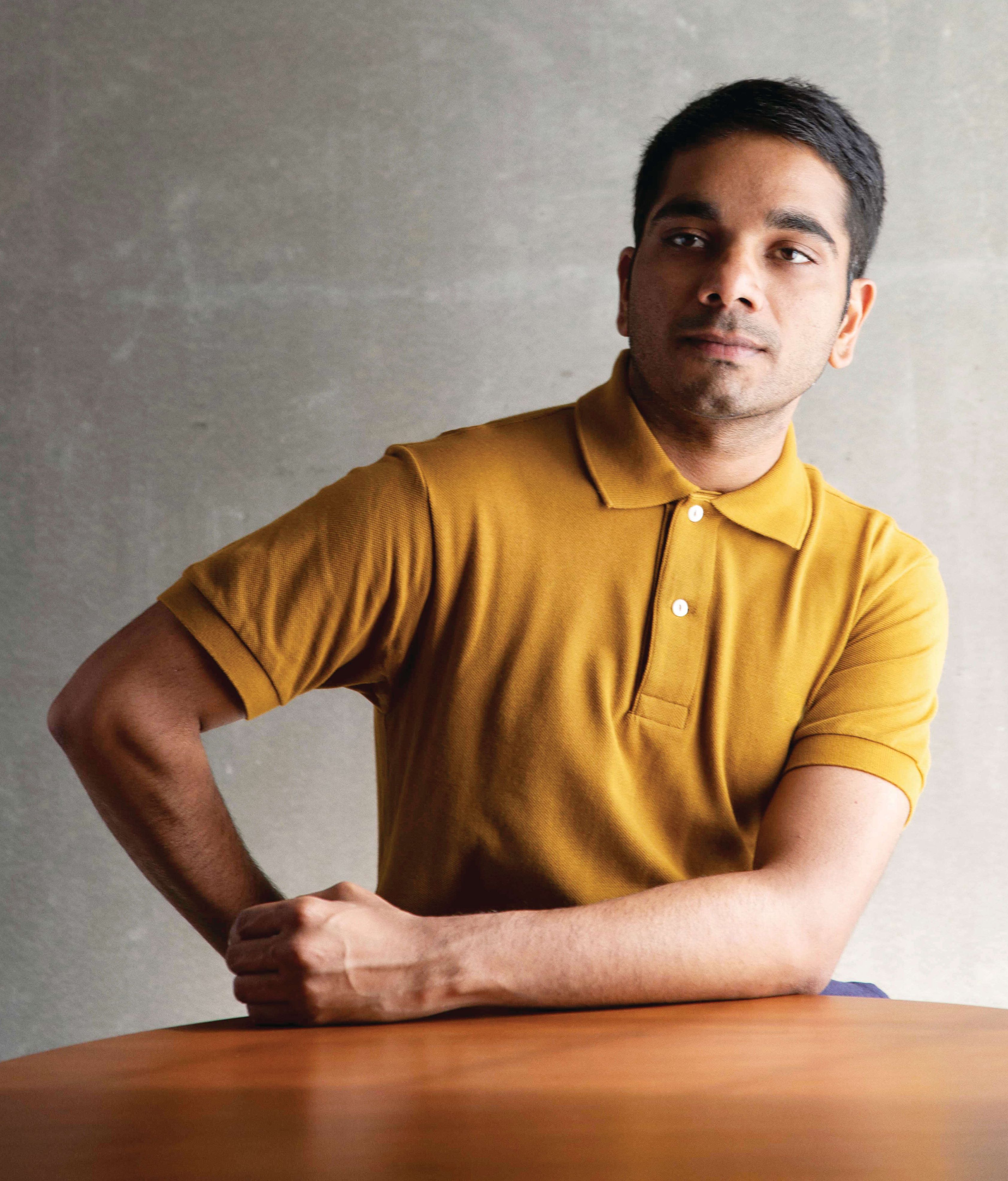
After years of building and shaping other brands, Shah found himself missing the hands-on process of making clothes. With Bhaane having grown into a business with its own identity and place in the market, he felt it was time to return to the grassroots of design and build something again. Shift's comeback, then, is less about relaunching a label and more about revisiting a creative expression that has evolved with him.
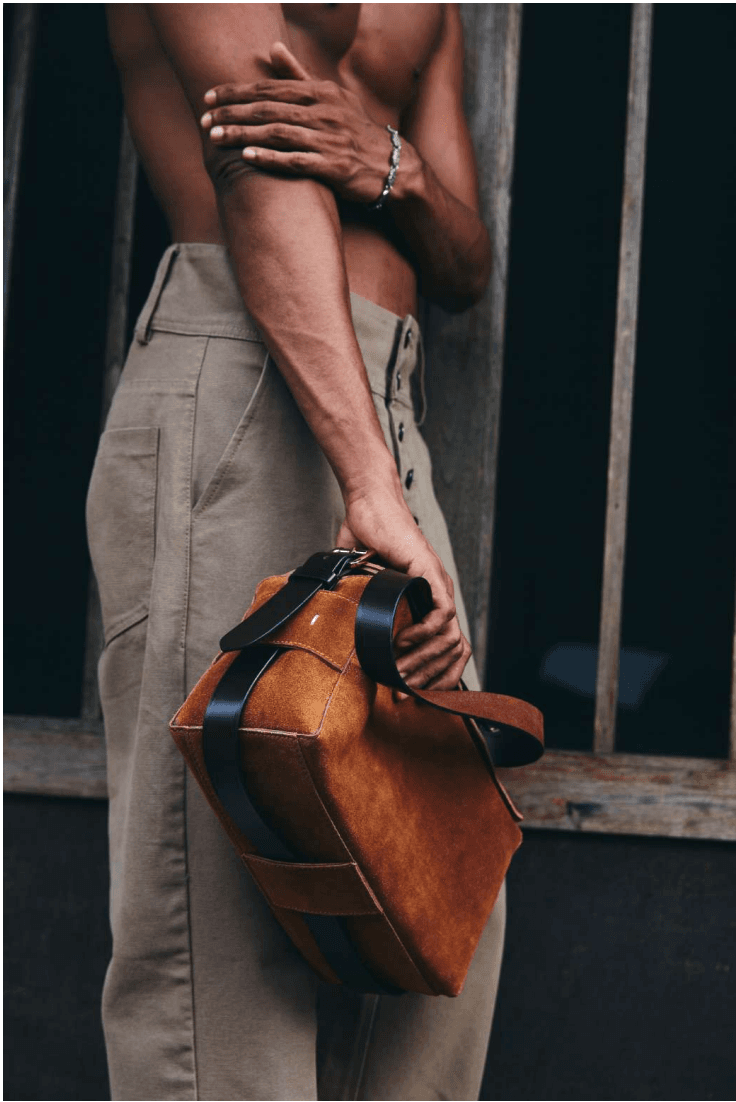
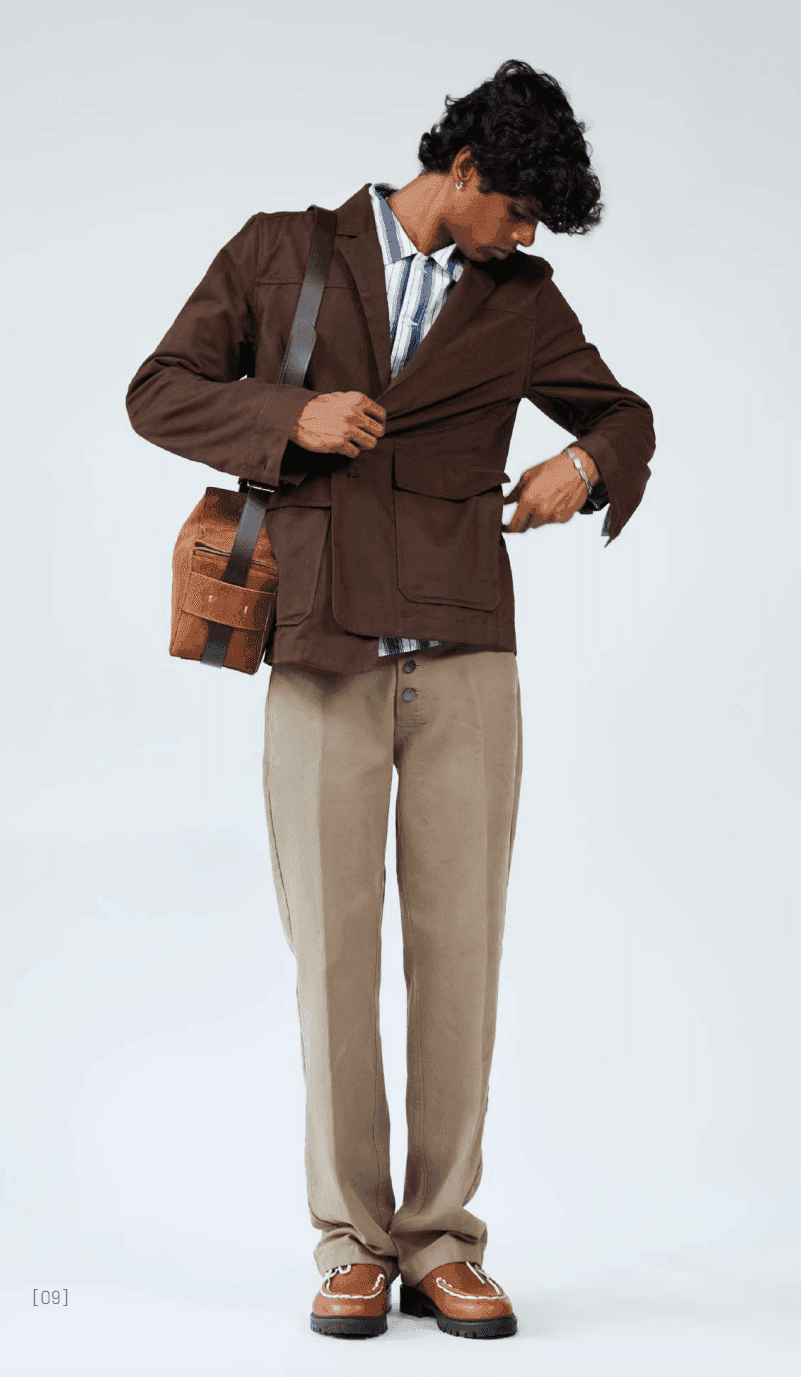
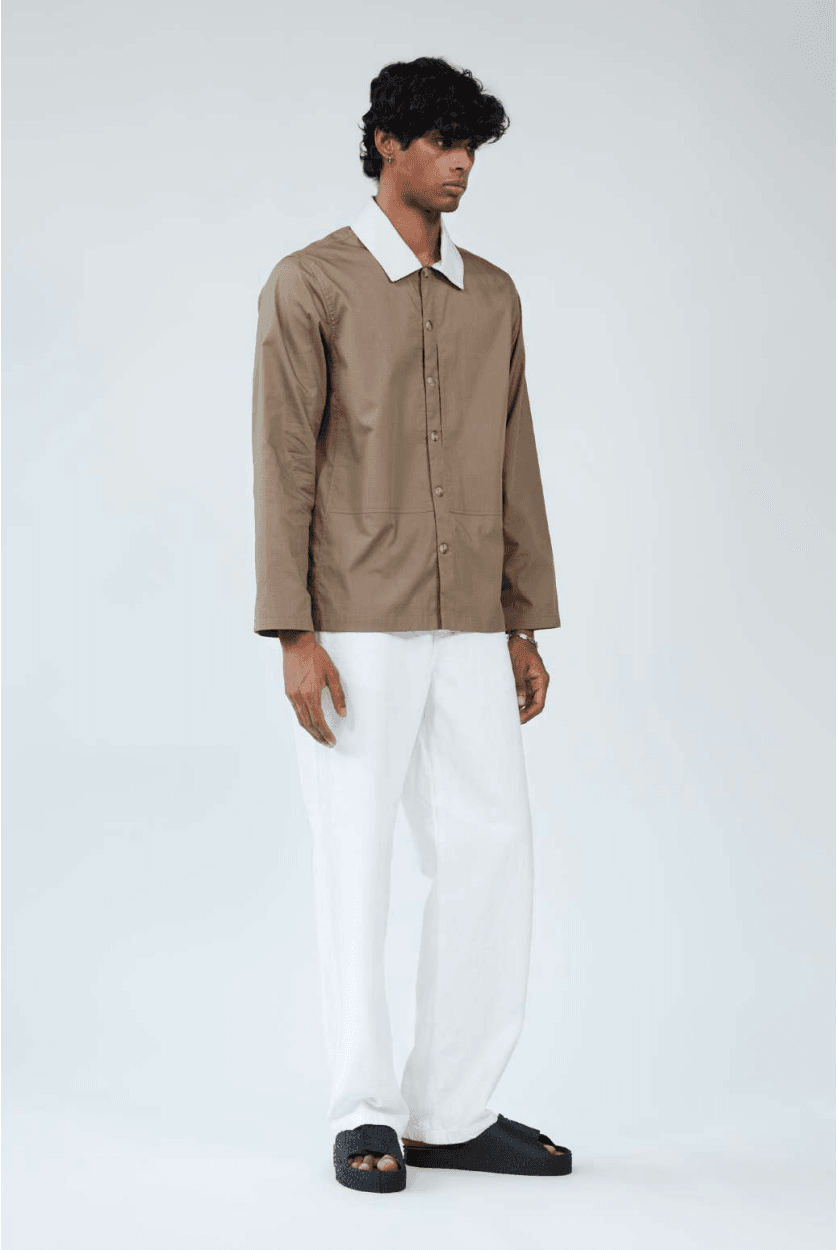
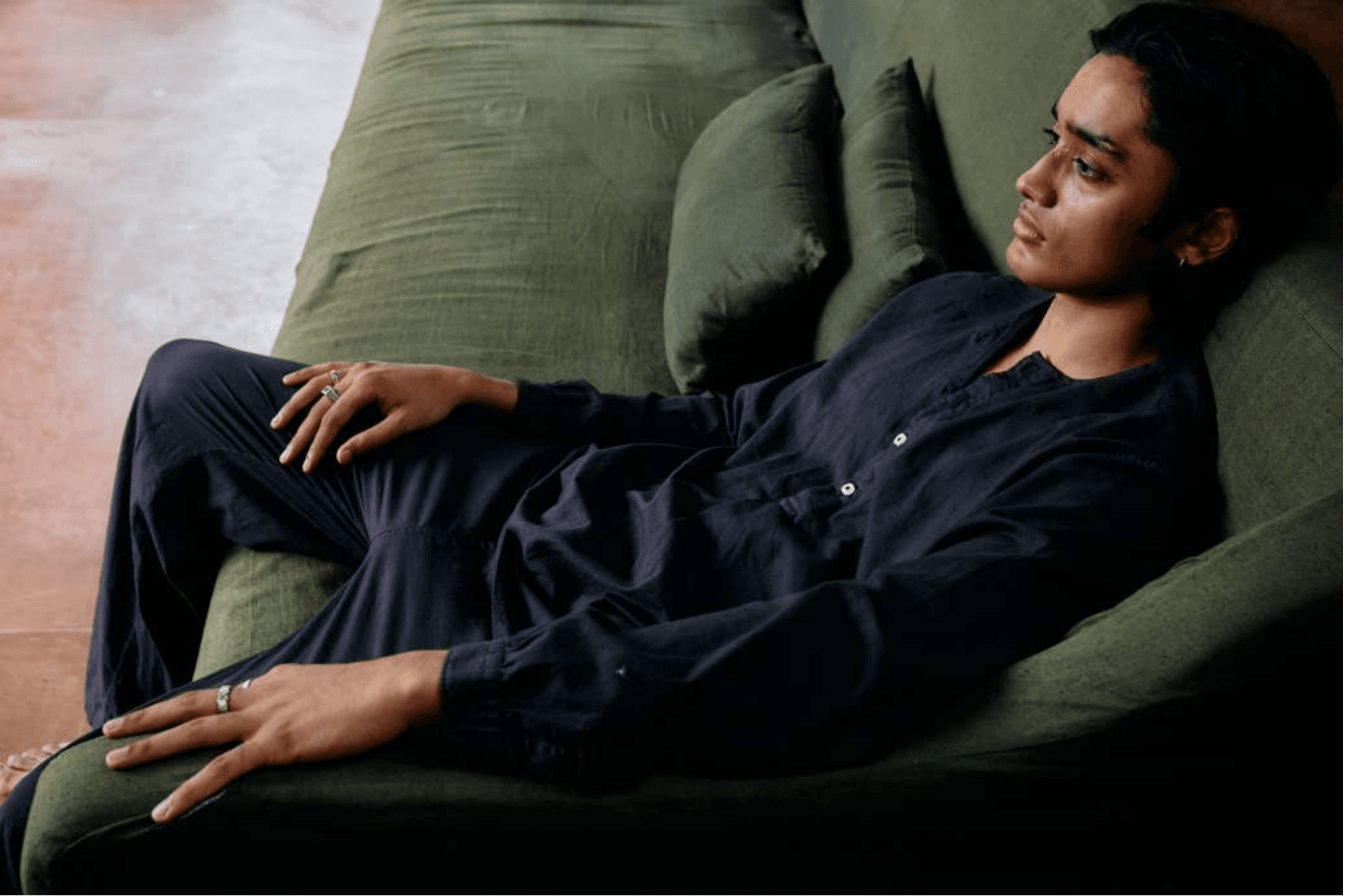
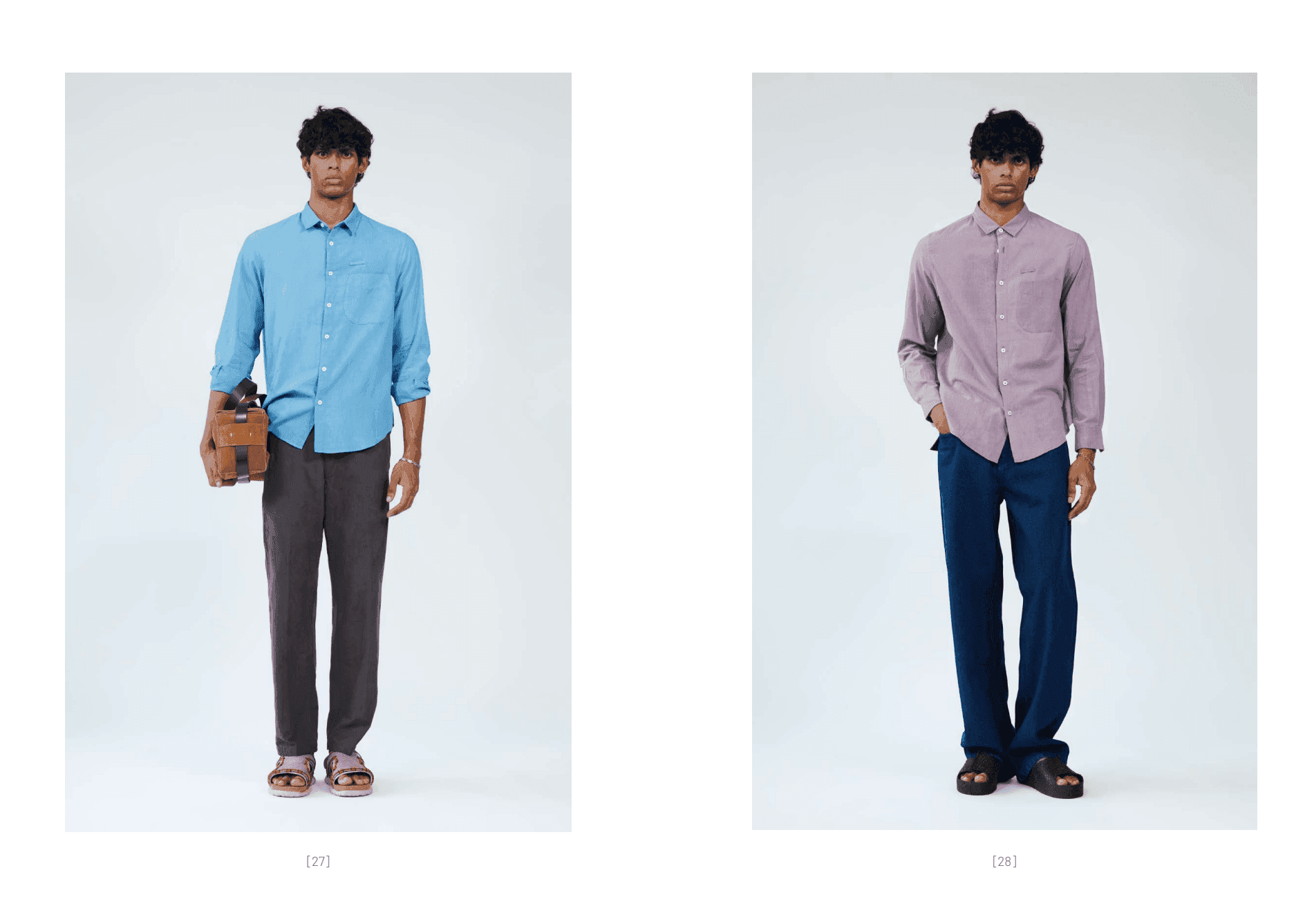
Drawing from his Gujarati roots and what he describes as Gandhian Modernism, the new collections put material intelligence, common-sense sustainability and the beauty of everyday objects at the forefront. Shift Man explores end-of-line textiles, natural-dyed cottons and contemporary denims through familiar silhouettes with unexpected details, while Shift Home extends the same sensibility into ceramics, basketry and metal. We caught up with the designer earlier this month to learn more about his return and philosophy for this new chapter, and here’s an excerpt from our conversation:
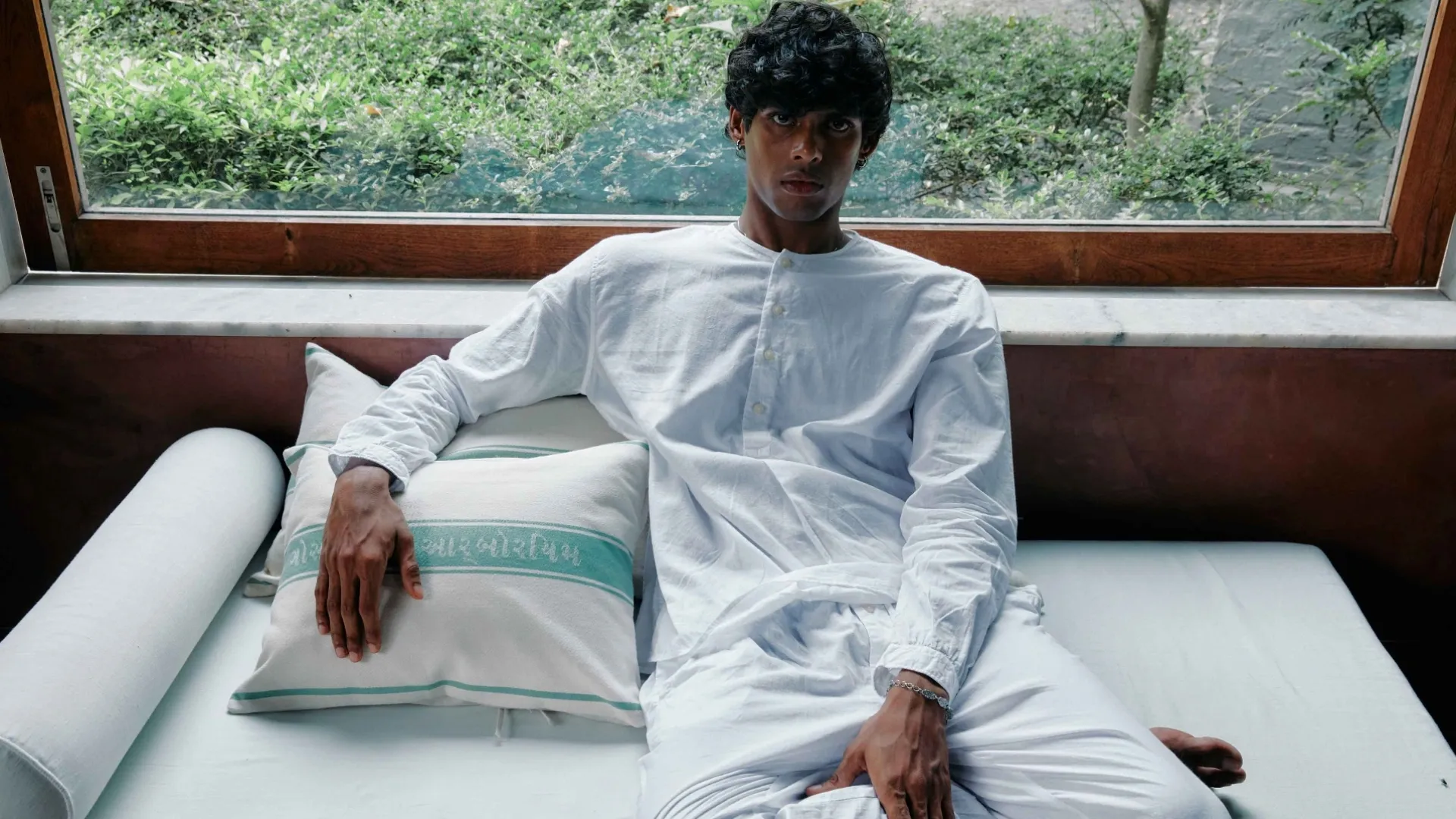
1. The lehngo-jabho is a beloved Gujarati essential and an important reference in this collection. What do you remember about seeing the men in your family wear it while growing up, and when did you get your first pair? How did you begin to appreciate it as a piece of design for your comeback collection?
I don't remember noticing it quite distinctly, but it was always around me. What I noticed much later, in hindsight, after understanding fabric and clothes, was the pristine white that was maintained across all wearers. For some reason, all these lehngo-jabhos were always well maintained, with very little effort. It was one of those vanity things that had nothing to do with the family's demographic. It was maintained beautifully across homes. People really enjoyed and cared for it, like they did for cotton saris as well. I've just seen that sort of uniform being well maintained, used and loved. We were given our first pairs as kids, but it was more playful than a sincere wardrobe thing and it somehow stayed in my mind.
I don't know where it came up, but I was researching the origin of cotton and the cotton trade, and how it is one of the most popular exports of our country, and yet not enough people are grateful for it. It's always looked down upon. It isn't cherished the way, say, a Harris Tweed is. And this is human nature, right? We just don't celebrate and cherish natural things that are in supply. We try to revive and restore things, rather than maintain the balance of nature and appreciate it.
Cotton is such a common thing, but I feel its beauty and value aren't respected enough. I was investigating that, and thinking about how Indian everyday life was largely built around cotton. Of course, there were silks for ceremonies, but otherwise it was always cotton, which was beautifully maintained by everyone. I suppose those were the underlying things that connected at the end of the journey.
I don't think I started by looking at it and wanting to create something alternative. It was just documentation and looking at it through an alternative lens.
2. You’ve described this collection previously as “Gandhian Modernism”, which sounds like a fairly serious idea, but the clothes themselves feel easy and relaxed. How would you explain the philosophy to someone encountering Shift for the first time?
I feel the ‘Gandhian’ part is such a heavy subject, but the approach here is about the modesty and earnestness of the approach or philosophy. I'm also Gandhian, and I’m dipping back into Gujarat and the origins of these ideas and concepts, and how khadi became a symbol. A piece of textile became something the whole country was known for and a symbol of freedom. In so many ways, what we call vanity has supplied livelihoods and freedom.
This collection was a nod to modesty. Modernism is pretty much my design aesthetic, and I've always been—actually, more and more—postmodernist now. I feel there's a hint of the contemporary, a little bit of play, and a mix of high and low culture. I bring all of those things into the work. I suppose that's where everything fit in. It's not a documentary project. It's not meant to be serious. It's just fun, but it's not a tease from that angle.
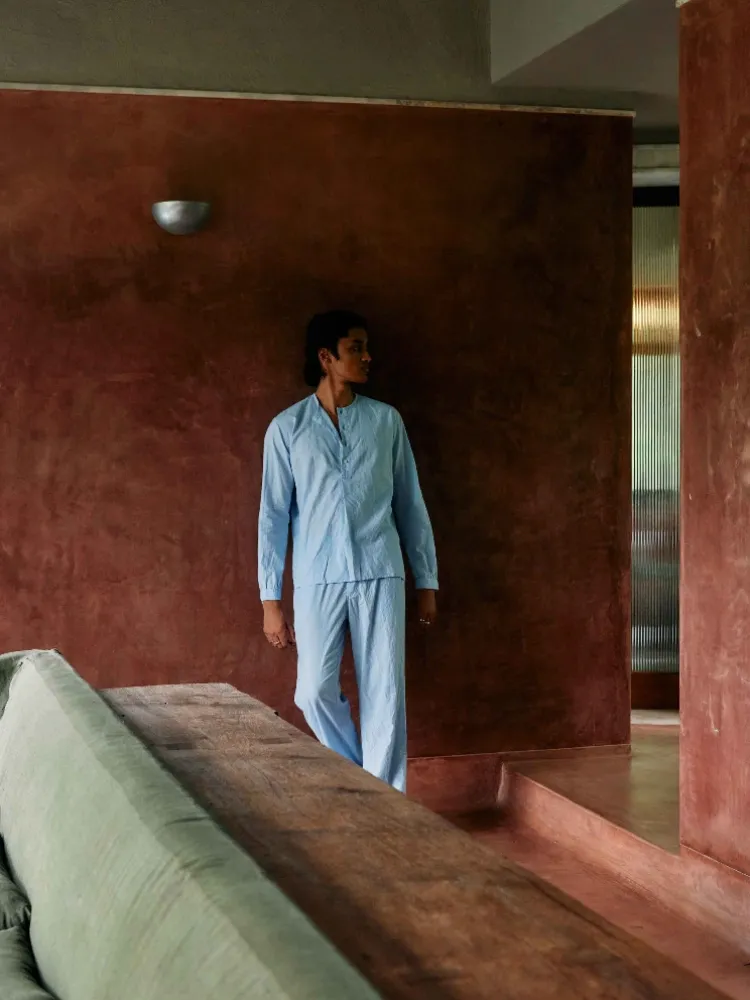
3. ‘Desi cotton’—or Gossypium arboreum—is central to the collection. What made you fall for the fabric, and what does it do differently from the cotton most of us are used to wearing?
It doesn't do anything differently. It's really what everybody's wearing and what India is known for. It's more a discourse on an international conversation around desi cotton, or Gossypium arboreum.
Europeans didn't know cotton was a crop when they were used to wearing wool and animal by-products. So the whole cotton trade, and the weight that India carries in supplying it, was part of it. I feel it was more about celebrating all of that and acknowledging it, and taking a moment to look at cotton in a more meaningful way rather than as a cheaper alternative to do other things, or as a filler in blends.
I don't think there's any innovation in terms of the cotton itself. Everybody uses it. Where we come in is through a modest craft approach. Some of the pieces are handwoven; some are handwoven and naturally dyed. There's experimentation with low craft, not extreme high craft.
For example, our denims are made in Ahmedabad, which isn't necessarily a popular hub for denim. It's a mix of cotton from across India like Coonoor, Karnataka, and there are things from West Bengal.
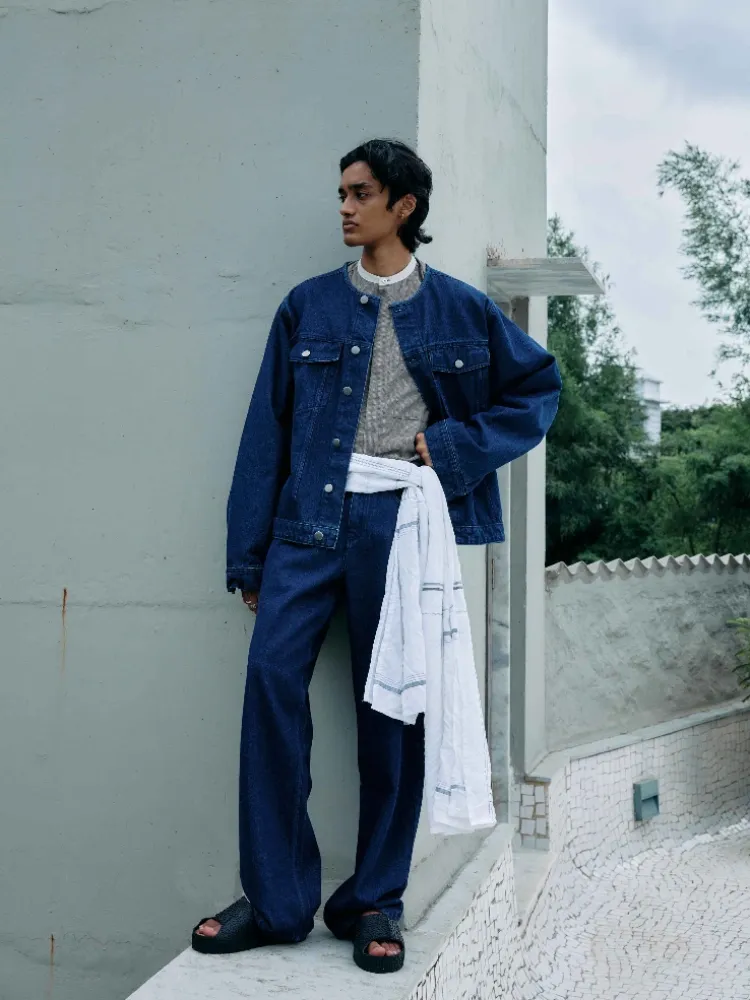
4. When you launched Shift in 2011, the label was largely built around womenswear. What did that first chapter allow you to discover about your design language—and how is it shaping this new menswear-led chapter today?
It was a very natural, organic edit this time around. When I started sampling things and putting together fabrics and shapes, they naturally felt more menswear-heavy and easier to explain and curate for a man than for a woman. My womenswear is a bit more nuanced in terms of its shape and material.
I wanted to strip all of those things down, so I toned down the complexities and went back to basic silhouettes. I feel the men's category has evolved now, where it's still not boring, so you can still have fun. Men are understanding various techniques, playing along and wearing them better than ever. I feel there's a certain joy in dressing a man at this point of time.
I don't think there was any strategic decision about men and women. It just happened. It was muscle memory: I ended up making more men's clothes and said, "No, this is it." It just looked like a suitcase for a man.
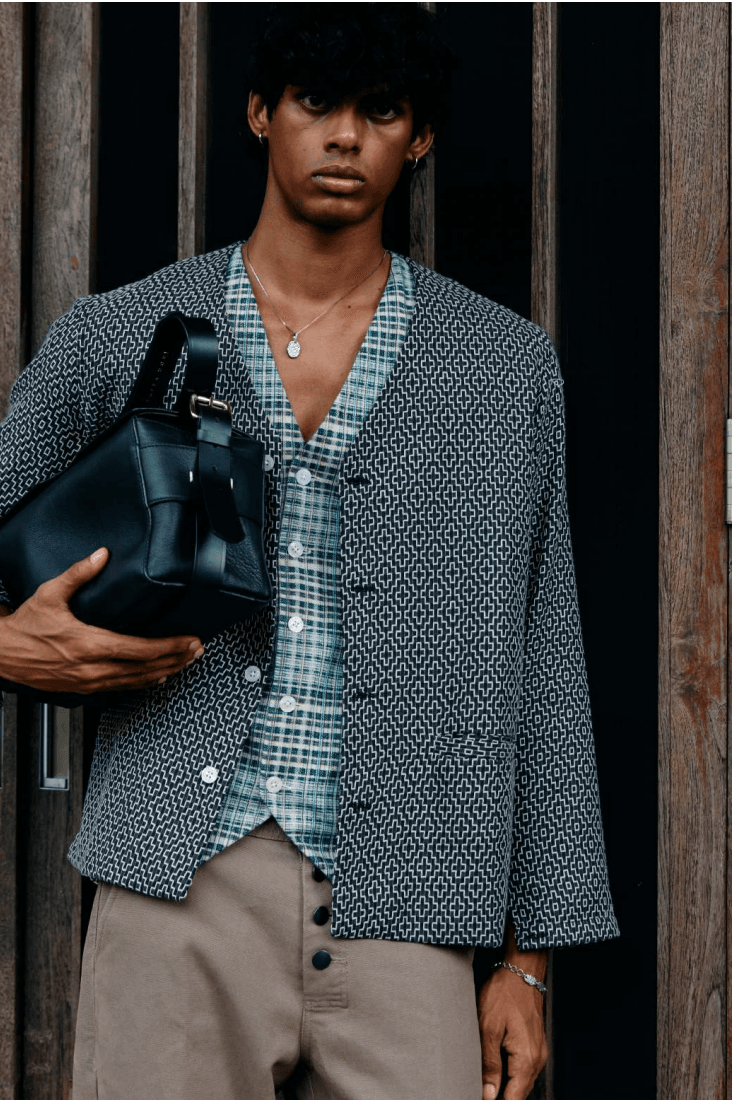
5. Before launching Shift, you studied at the London College of Fashion and gained experience at Chloé, Burberry, Browns, Jigsaw, then Bhane and Converse. How did those early roles shape your understanding of design and the kind of label you eventually wanted to build?
I feel they've all contributed extremely heavily. These were the early days when you build your identity and your aesthetics. Every single work experience has led to building my signature style, which is more personal. Within that, there's an understanding of what one brand wants versus what another brand wants. There's a level of creative servicing and absorption.
Except for Bhaane, which was a much larger undertaking and about growing something organically new, listening to the community, responding to it and taking it forward, the work was different. With Bhaane, it was about going with the community. Shift, when I started it, was purely a creative expression for myself. Then people followed and became interested. Even within that, there were multiple personalities within Shift.
Now what I'm doing is going back to that creative expression, with a certain edit. We're looking at items that are extremely simple, without having to dress them up or decorate them because, as a designer, you feel something has to be added. It doesn't really. As long as it's made well and is honest in its material, it's fine. This time around, there's obviously the confidence that comes from knowing, over the years, what works and how to create excitement within the offering. It moves between responding and offering.
6. In 2018, you stepped away from Shift to become Creative Director at Bhaane. What made you want to put your own brand on hold at that point and take on the challenge of shaping someone else’s brand?
It was such a beautiful experience and it's a once-in-a-lifetime opportunity to be able to get somebody's trust to grow something. For me, I needed that change of language because I'd been running Shift for the last eight years. We were doing exciting things, but it had its own boundaries. With Bhaane, the conversation became completely different and reached a much larger audience. The excitement and opportunity were obviously huge.
The whole community angle—listening, responding and building collectively—was something I'd never done, and I thoroughly enjoyed doing it. Taking a pause from Shift and taking some of Shift's DNA into Bhaane was inevitable, because it is a personality trait. You can't stop those things.
That DNA coming into Shift again is also inevitable, in terms of values, not necessarily looks. At Bhaane, we were building a unique person, a unique couple, family and individuals. They evolve, and I feel it's so much about the moment. The DNA stays; it gets borrowed, you grow it, and it evolves.
7. You played a role in bringing Converse back to India. Why did you believe it would resonate with a new generation of young Indians—and which is your favourite pair?
With Converse, I was more of a creative supervisor, leading the identification of the right things because Converse is such a larger-than-life brand, even within India. The Converse India community has its own force. It's like crowd-diving: you can only tap into and direct a little bit of an ongoing force.
For me, it was about making sure we were responding to and mirroring the community in the most authentic way. Converse was a natural extension for me because I've been wearing it forever, and I still continue to wear the Chuck Taylors. They become those uniforms that I so deeply enjoy making for an everyday wardrobe. It's the perfect shoe for anything and everything.
8. After spending years helping shape other brands, what did you know you wanted to do differently when it was finally time to bring Shift back?
It's a personal evolution, and that journey really had to take another turn. With Bhaane, we did so many things and achieved so much more than we had planned for. Within Bhaane came Converse, too, so things were moving very fast, and in a very beautiful way.
A lot of it could then go on autopilot mode. I was personally feeling that I needed to go back to the grassroots and make things again. It's one thing to run a larger company with teams, where you have a more executive approach to design, versus getting hands-on, making things again, ironing clothes. I was really missing that.
I wanted to go back to a smaller scale and build something again. Bhaane is beautiful; it's grown and has its place in the market. Now, I felt I wanted to build once again, and Shift just becomes a working title for me because it's in me and has been there. My philosophy and DNA migrate with me and my evolution. But because Shift was an ongoing name, brand and identity, for me it was about making things more than making a brand.
It all fits within the brand universe. Also, when I started Shift, I was always looking back and saying, "Oh, this is a good brand" or "It is a good brand." It wasn't about saying, "Let's make a good brand." I think it was always product-first.
9. Who is the Shift Man? The press note suggests “he is part club regular, part coffee snob and occasionally wakes up in a lehngo-jabho”—which feels rather specific. How much of him is based on you or someone you know?
I think he's made up of so many people I know, and a bit of an aspiration for me as well. There's a little bit of Amol Palekar, a little bit of Satyajit Ray, there’s a lot of (Asha) Sarabhai–It's adapted, but it's really thinking of veterans like them and their families. We all know ‘that’ Gujarati man–they've never been that aggressive; they don't hold the place in a very stereotypically masculine way.
I think these were the markers and identifiers where I felt there is this very undertoned character which exists in every community. It is as Indian as it gets. There's always that soft-spoken man who listens and cares for things.
10. You have also launched Shift Home, working across ceramics, basketry and metal. Are you someone who notices the chair, tray and glassware and other little decor details when you enter a room?
Absolutely, all the time. My observations are more to do with personal choices, not with cost and origin. I love it when some offices still serve tea in that brown cup, which was served in every single office back in the day. You know that chikoo-coloured cup and saucer? We should make that uniform. I love that. It was such a great design, and it's still so beautiful. I really enjoy things that have been around and made well from the beginning. We all used them and obviously then, evolved with time.
I notice all these choices. I notice default designs that nobody can identify who designed it, but they're fully functional, beautiful and aesthetically relevant to where we are. Good design immediately comes to me without its price and origin because I'm always seeking to explain myself, and if I can find something that explains me or Shift, it's a joy to find that and catalogue it, or put it into research.
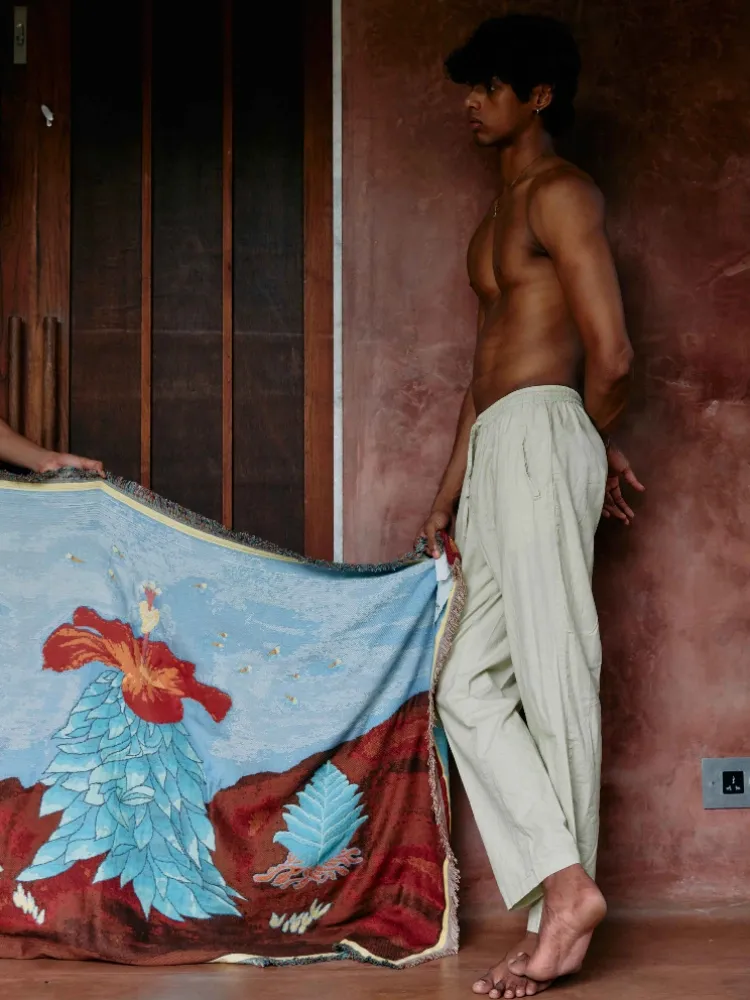
That's how Shift Home came up. It was, again, about common design, yet well made. It comes down to who consumes it–they're not looking for any alternative; they're looking for more of a design scheme, and yet they get novel pieces. They're special, and not generic in any way.
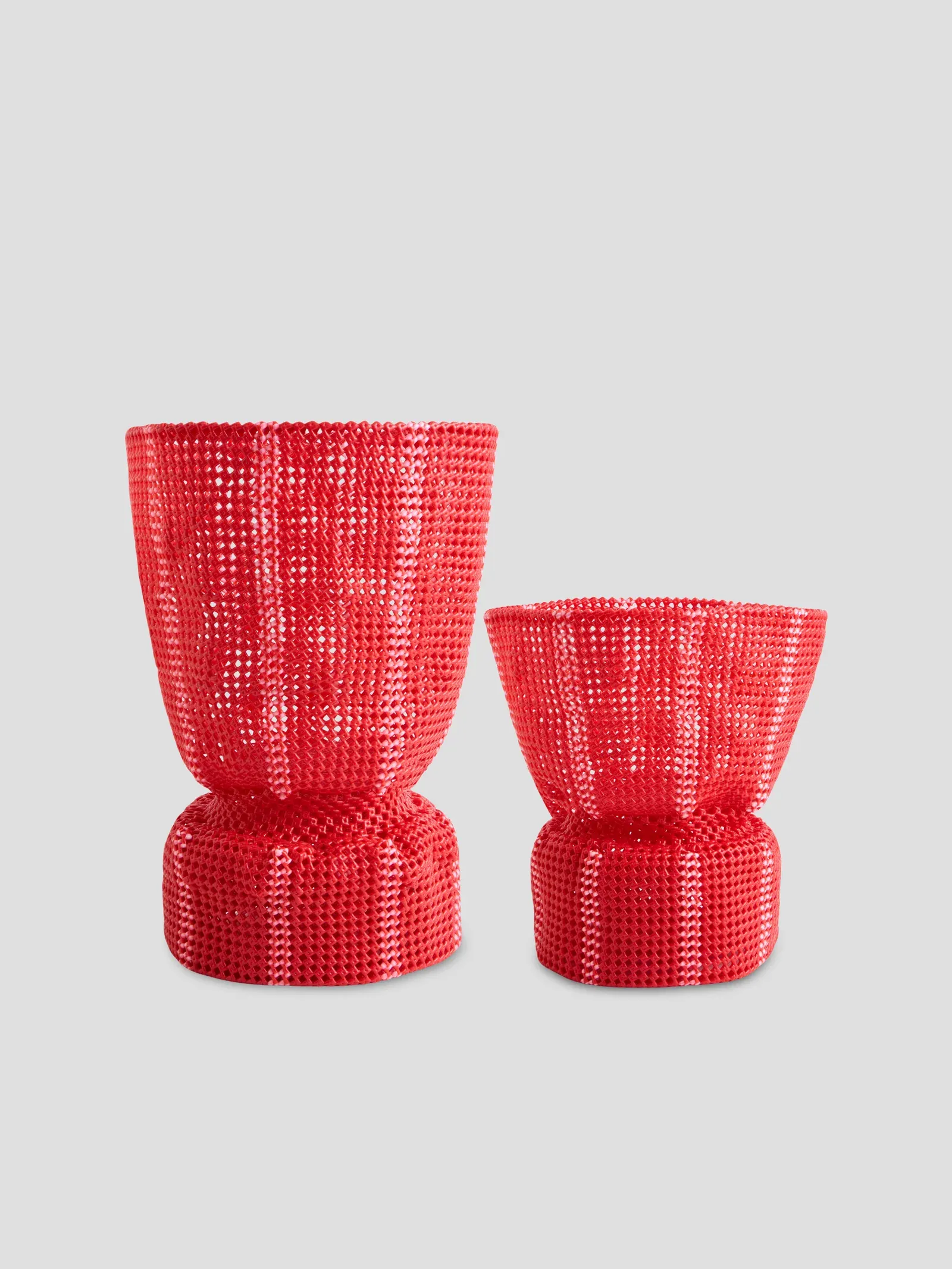
11. The Home collection turns familiar objects into something unexpected—a traditional basket becomes a sculptural garden urn, for instance. Which object was the most fun to rethink, and which proved the most difficult?
I think it was exactly the Kottan basket, which is so commonplace. We've all seen that basket, and we’ve all used it. It's the world's best lunch bag. I wanted to use something that wasn't high craft. It is still made in a woman's house as a part-time thing by hand; there's no factory turning them out. It's a beautifully self-sustainable, community-made object, and I'm sure there's a larger network of women who make these things.
For me, that was beautiful. Then getting them to do an alternative shape was challenging the sort of knitting and crochet of basketry, and getting them to redo the math to create a certain complex object. The point was to celebrate the craft, not so much the shape or utility. These are collector objects, and somebody will find a way to use them, as decor or whichever way.
I really enjoyed that. Then there are other things, like the metal pieces with extremely nuanced etching, which also took a lot of back and forth. It feels like generic etching, but getting the colour and tonality right took longer design work. Every product is, in its own way, special.
12. Finally, give us a few honest menswear takes: what are Indian men buying too much of?
I feel there's a wide variety. There's a clear thing where an Indian man is always either in a T-shirt or in shorts. I feel breaking that mould is important. T-shirts can go into softer shirts; stiff office shorts can go into softer shorts and T-shirts. Because they are still not blending, sadly Indian men are still very categorised in their sartorial choices, and I feel blending that would be amazing.
13. How can men be more experimental with Indian wear for festivals or celebrations?
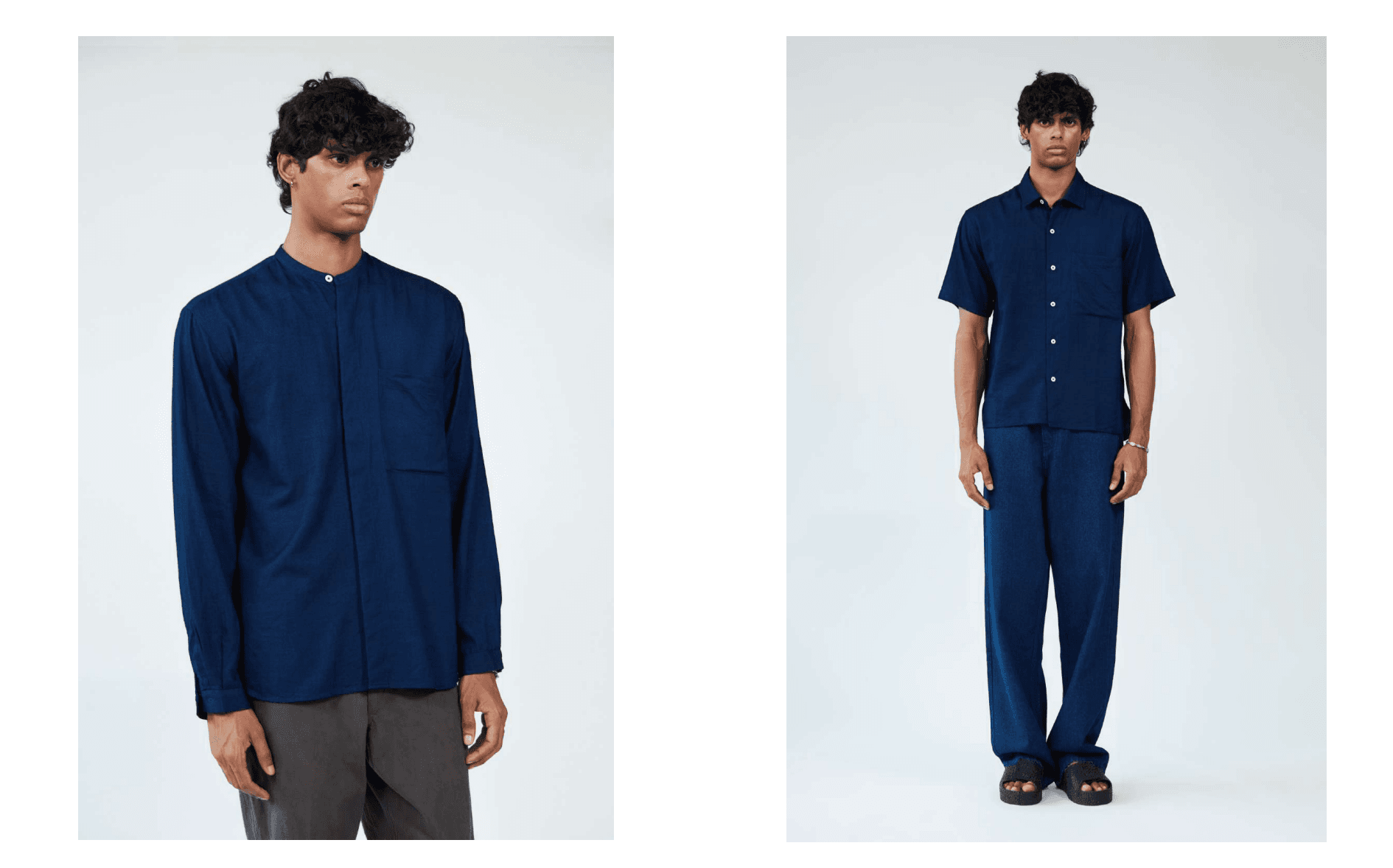
I feel people really switch their personalities when it comes to festive wear. They want to express a completely different light. I think identifying something closer to your personality is better than going into a complete ethnic mode, because even within that there are minimalist options. Staying closer to your everyday personality is better than being a complete ethnic rebel.
14. What is one supposedly ‘unfashionable’ thing you will always defend?
The power of white. I feel white is just not treasured enough. Just plain white things—I feel more and more people need to wear them. India is a nation full of colour. But there's a strictness and discipline that comes with a beautiful white, or the softness that comes with a beautifully washed white. White isn't supposed to be intimidating and I feel you can play with it so well.