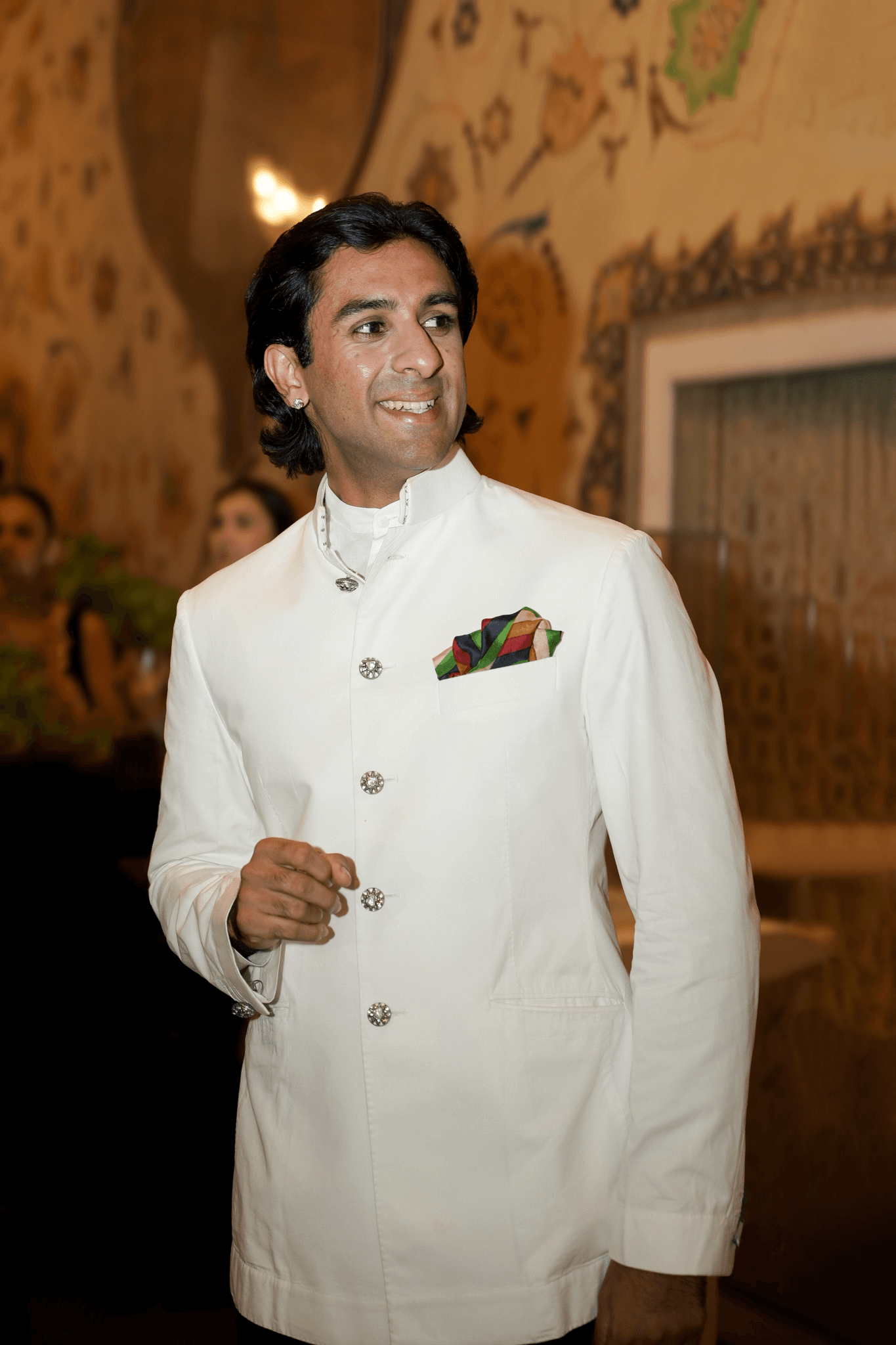
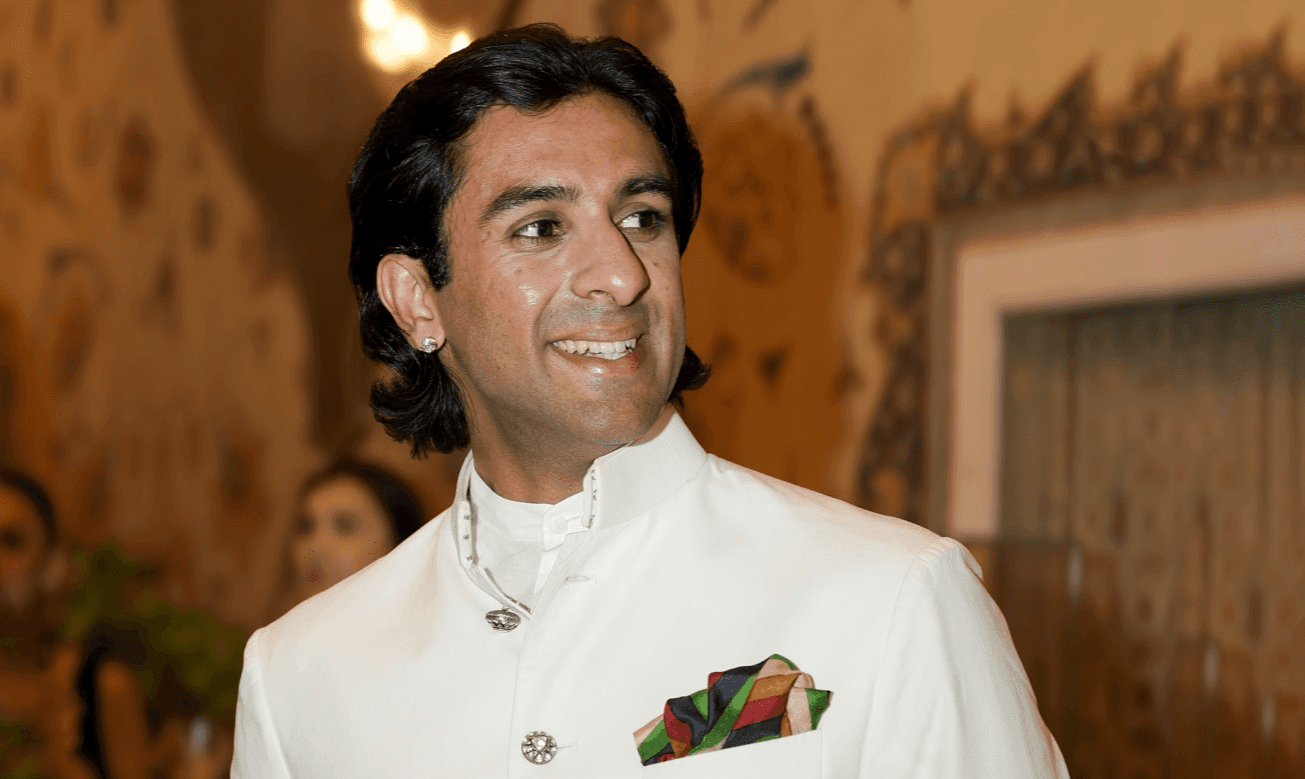
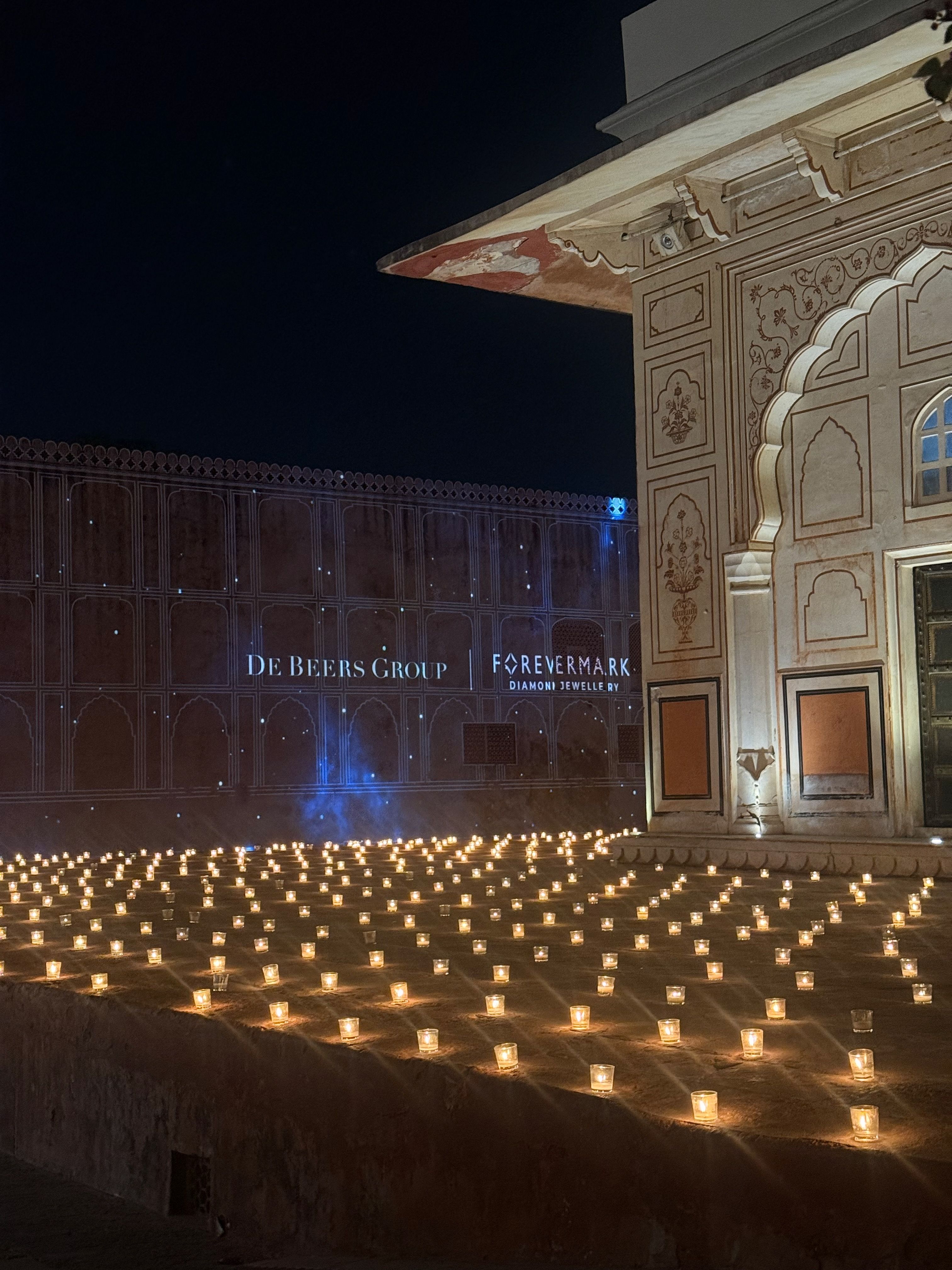
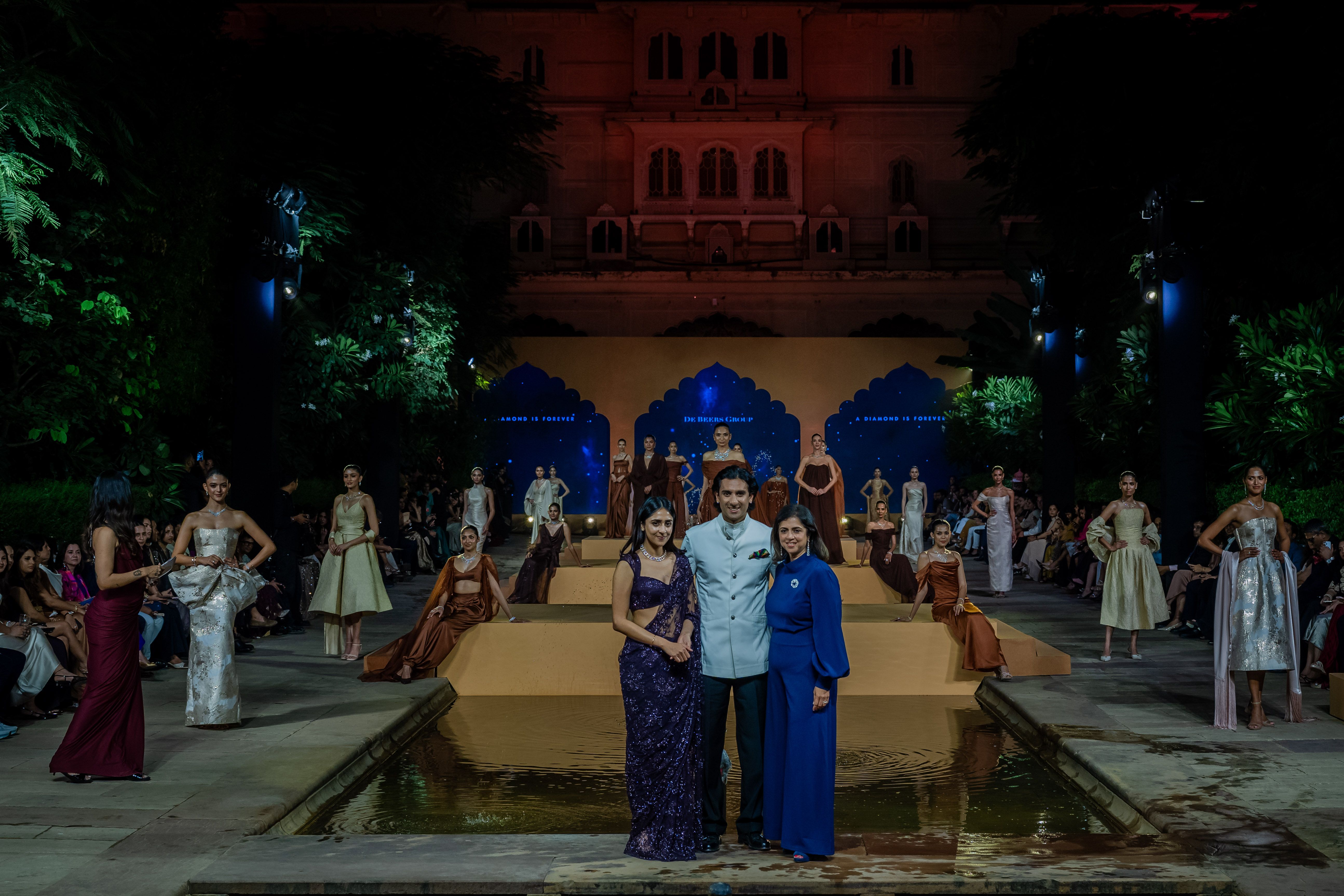
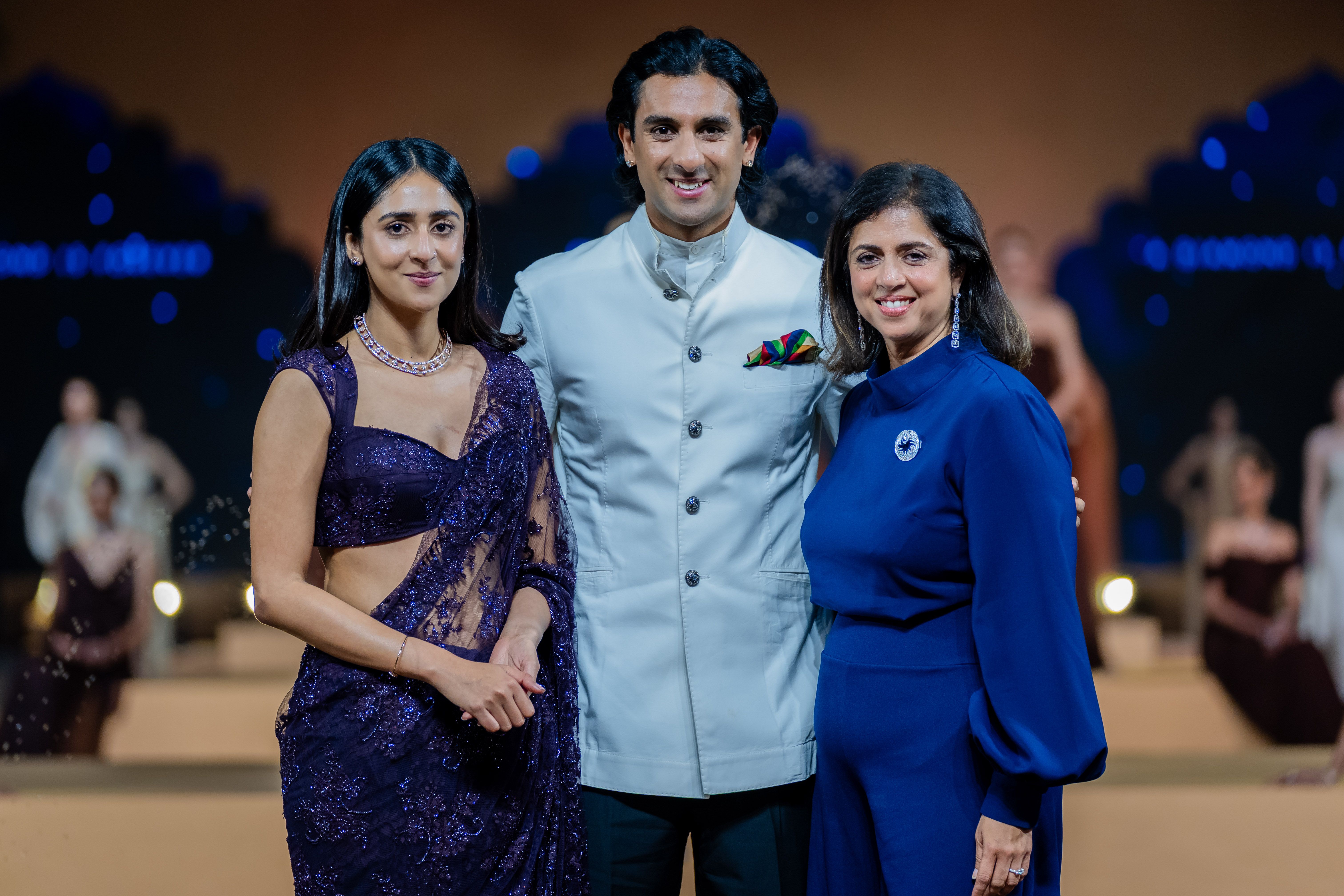
What do natural diamonds, Jaipur and Padmanabh Singh have in common? Legacy, and a story that has been passed down through centuries and generations. It was this shared history that brought De Beers and the Maharaja of Jaipur together for a special celebration at the City Palace, marking Pacho's new role as the brand's advocate for natural diamonds in India. The setting was quite something. Picture hundreds of diyas illuminating the palace courtyard, a bar positioned within the pavilion, and a fashion showcase unfolding against the backdrop of the palace and its water fountains. It was an evening that brought together royal heritage, contemporary culture and the enduring allure of diamonds.
The story, however, goes back nearly 300 years, when Maharaja Sawai Jai Singh II, Pacho's ancestor, founded Jaipur in 1727 and invited master jewellers to the city, laying the foundations for a thriving jewellery-making tradition. Crafts such as Kundan and Polki, which have since become synonymous with Jaipur's jewellery heritage, continue to be practised and celebrated today. Pacho recalls growing up hearing that some of the world's most famous diamonds would pass through Jaipur at some point in their journey. The city has long held an important place in India's diamond story, and its legacy lives on through generations of artisans and families who continue to keep these crafts alive and still thrive today within the bustling lanes of Johri Bazaar to the royal Koshagaar, or treasury, where exceptional objects have been collected and preserved across generations, the relationship between Jaipur and precious stones runs deep.
And then, there's the story of the diamonds themselves. During the evening, a De Beers executive shared an interesting detail with me: natural diamonds were formed billions of years ago, deep within the Earth, making them some of the oldest natural objects we can encounter today. Their rarity, origins and extraordinary journey are, after all, a large part of what makes them so coveted. Historically, Indian royal men were just as experimental with jewellery as women, with everything from diamond brooches and necklaces to elaborate turban ornaments and swords encrusted with gems serving as expressions of wealth, power and personal style. Think of Maharaja Bhupinder Singh of Patiala, whose legendary Cartier necklace featured thousands of diamonds, including a spectacular De Beers yellow diamond, or the Nizams of Hyderabad, whose extraordinary treasury included the 184.75-carat Jacob Diamond.
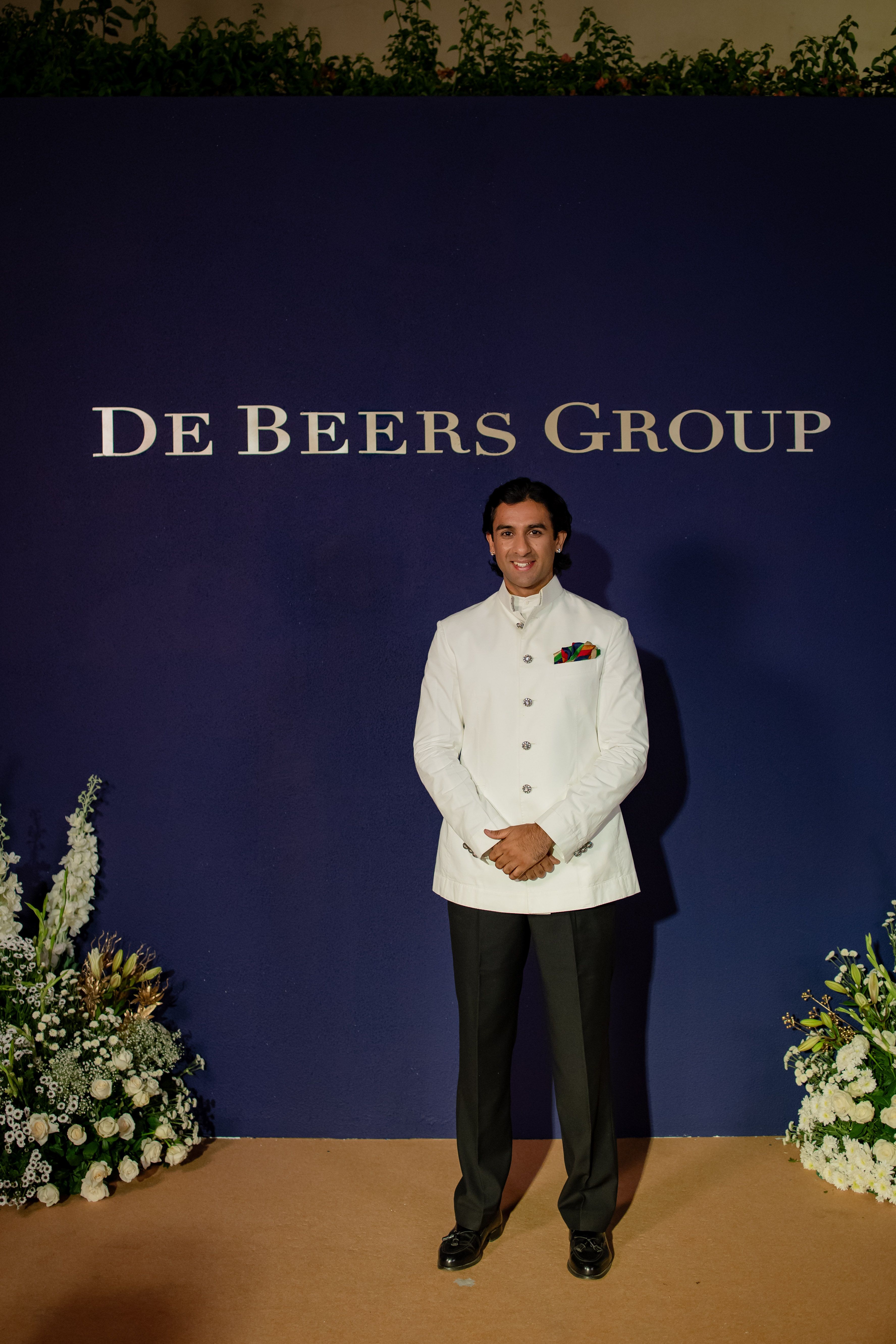
While maximalism is slowly making its way back and a new generation of men is becoming increasingly experimental with jewellery, there's still plenty of room to rediscover this relationship. During our conversation, Pacho himself was wearing diamond studs and a bandhgala finished with diamond-encrusted buttons, a rather fitting reflection of how jewellery can be woven into a man's personal style without necessarily being over-the-top or conventional. We sat down with him to talk about his own relationship with jewellery, the heirloom pieces passed down by his grandmother, Jaipur's enduring connection with natural diamonds and what it means to take on his new role with De Beers. The evening also marked another milestone for the diamond house, with his sister, Princess Gauravi Kumari, unveiled as the face of Forevermark's festive campaign, as the brand celebrated its first anniversary in India.
Here's an excerpt from our conversation with Pacho:
Sawai Jai Singh II brought master jewellers to Jaipur, helping establish traditions like Kundan and Polki. Almost 300 years later, what do you think makes these crafts—and the natural uncut diamonds they work with—still so enduring?
Simply the fact that these traditions and crafts, and families of craftsmen, of jewellers, et cetera, have survived for 300 years, and not only survived, but thrived. Jaipur was one of India's first industrial town, in that context, which was entirely planned by Sawai Jai Singh II. And what I find amazing is that these traditions continue, and they continue to invite people from all around the world to come and experience this great city and everything that is to be found in this great city. And yeah, and I hope that we can continue for the next 300 years!
What does a royal ‘Koshagaar’ (treasury, of sorts) tell us about how people understood luxury 300 years ago?
A royal Koshagaar offers a glimpse into how luxury was understood 300 years ago through the collection and preservation of exceptional objects. Their value lay in where they came from, the skill of the people who made them and the history they accumulated. These were things to be cared for and passed down, with each generation adding to their story. I think that approach remains relevant today. A piece of natural diamond jewellery can hold that same significance: something chosen for its rarity and craftsmanship, then treasured for the memories it carries.
Today, you’re also exploring De Beers natural diamonds. How do you see that legacy of Jaipur craftsmanship evolving with the way we think about jewellery today?
Well, it's incredible that these traditions have survived for so long. There was a time when I was growing up, that it wasn't uncommon to hear that a lot of the most famous diamonds would cross through Jaipur at some point in their lifetime. So Jaipur has been, in the context of the natural diamond story, a very important city. And of course, there are several other places in India that continue to be an important part of the story. But here in Jaipur, we very strongly believe in values of preservation, of conservation, and to be here, celebrating the story of natural diamonds feels very much aligned with our values, principles and beliefs. Natural diamonds, just like so many other things in our culture, are extremely ancient and it's important for us to highlight that part of their history and journey. And I feel very proud to be able to do that.
Is there a particular diamond or piece of jewellery that has been passed down through your family that you find especially beautiful or meaningful? What do you know about its story? Does knowing who wore it and the occasions it was part of change the way you see the piece itself?
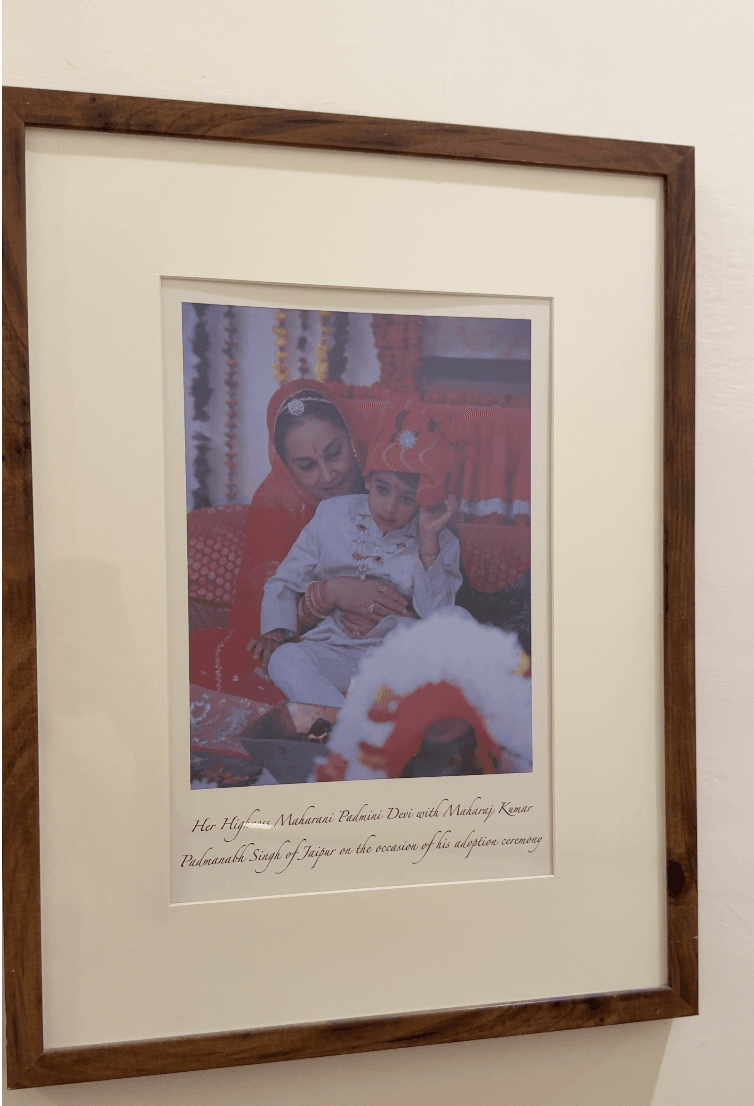
Oh, there's several pieces that have been passed down to me by members of my family, my grandmother, most notably. It's very special each time I get the occasion to wear them. My grandmother (Padmini Devi) spent many years of her life going around the city, sourcing stones, natural diamonds mostly, and designing, sketching and getting those made into various pieces. And today, both my sister and I, and our little brother, have the opportunity and privilege to wear them, sometimes when we get the chance. Those are the most special pieces, I'd say.
Do you remember the first diamond you ever owned or were gifted? What was the occasion, and who was it from?
PS: As a child, I had very similar earrings to the ones I continue wearing even today. A little bit smaller, with a smaller diamond. And if you look at pictures of me when I was a little kid, I always had that pair on, so maybe that is a special piece for me and my grandmother still has them in her cupboard and perhaps, when I have a son or a daughter, I can give it to them.
From diamond brooches and cufflinks to rings and necklaces, men have more ways to wear diamonds today. What’s your favourite way to wear diamonds?
I would disagree and say that men in our country, especially, have always had several ways to wear jewellery. You just have to look about 100 years ago or a little bit more than in our history to see proof of that. Some of the most incredible experimentation with jewellery happened in that period. We have objects in our collection such as swords and even paintings that have diamonds and gems on them. So jewellery is something that has been a very strong influence in our culture, whether that is in personal fashion or otherwise. We're a community that always found ways in which to integrate natural diamonds into everything that we did. It always gives me a lot of happiness to see people of my generation experiment with jewellery but I will say that I'd like to see more of it.
What can today's generation learn from how royalty approached jewellery?
I think what they can learn is that this is not new, it is something that we've always done, and perhaps that gives a lot of people that extra bit of confidence to be able to pull off various pieces of jewellery.
Do you think luxury today is moving away from simply being about status and towards things that have meaning, provenance and longevity?
I think status will always play some part in luxury, but it isn’t the whole picture. People have access to much more information now, so they can look beyond a name and understand the quality behind it. That makes the choice more considered. You can appreciate something for its design, but also ask where the materials came from, how it was produced and whether it will last. For me, those details give you a clearer sense of what you’re investing in and why you would choose one piece over another.
In a world where almost anything can be reproduced, what do you think makes something naturally rare feel different?
Something naturally rare makes you pause and appreciate how it came to exist. Whether it’s a landscape, a material or something you encounter while travelling, knowing that it developed through its own particular circumstances, gives it another dimension. You can admire its appearance, but there’s also a curiosity about its origins and why it took that form. With natural diamonds, that’s part of the appeal for me. Each stone has been shaped by conditions in the earth over an extraordinary amount of time, and it has its own characteristics before anyone cuts it or sets it into jewellery. The craftsmanship brings those qualities into focus. Even in a very simple piece, I find it interesting that there’s so much behind what you see.
We live in a culture that increasingly values speed and immediacy. What is lost in the process, according to you?
Probably patience and an appreciation for the process. When everything is immediate, you can sometimes lose sight of the time, skill and thought that goes into creating something properly. There’s value in things that take time.
What is one aspect of Jaipur’s heritage that you think should always be preserved?
Its craftsmanship. Jaipur has generations of knowledge in everything from textiles and jewellery to architecture and art. So much of that knowledge lives with the artisans themselves and is passed on through practice. I think preserving it means supporting the people who do this work and creating opportunities for younger generations to learn from them. There should also be room for new ideas and uses for those skills. That’s how craftsmanship continues to be part of the city’s life, and how the next generation finds its own connection to it.
You’ve grown up around some of India’s finest jewellery. When you now see Indian jewellery being embraced globally, what do you think people outside India are beginning to understand about it?
People are beginning to see that Indian jewellery is not just about ornamentation. There’s an incredible depth of craftsmanship and history behind it, but also a versatility that allows it to feel very contemporary. I think that combination is what is making it resonate with people well beyond India.


