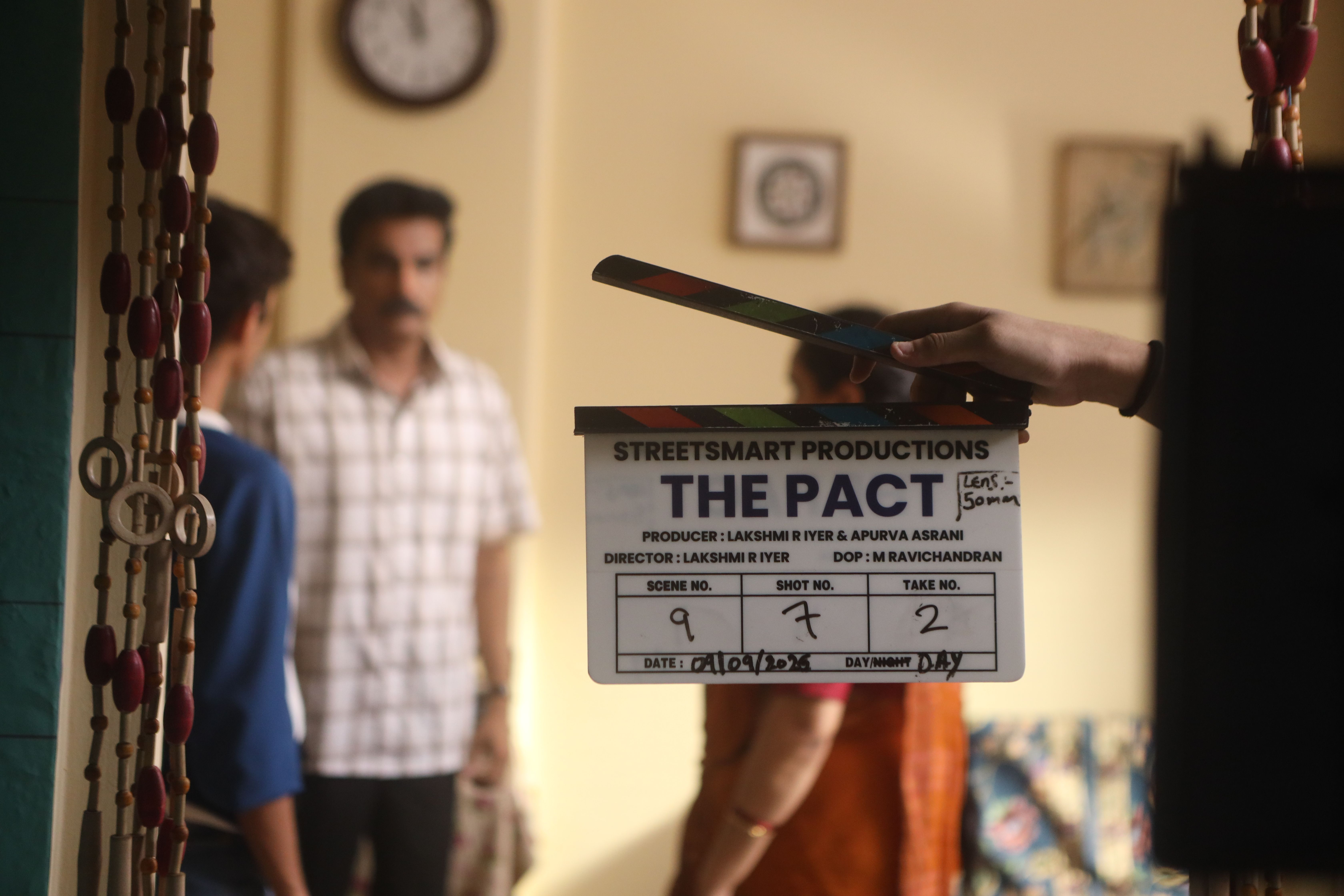
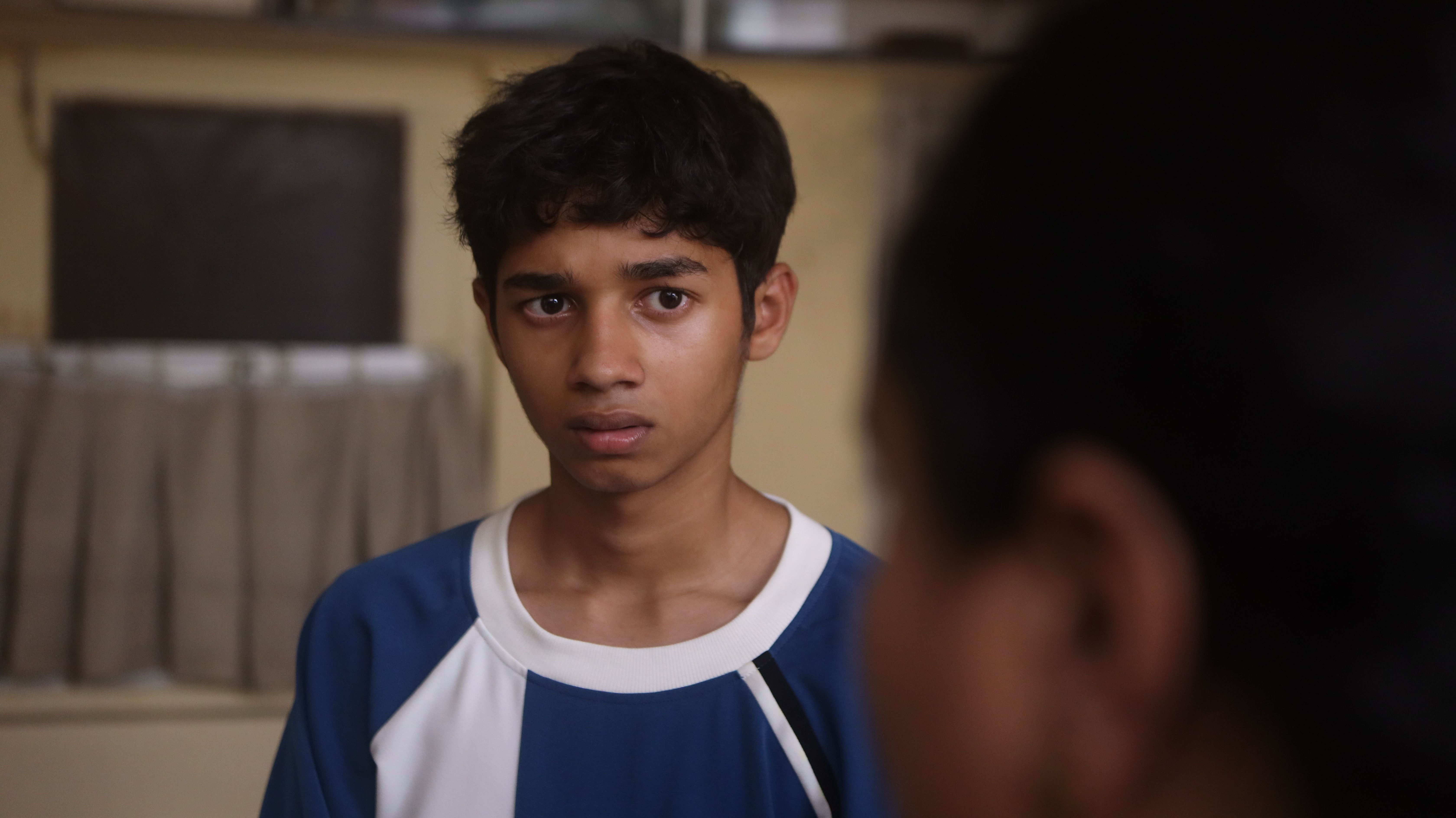
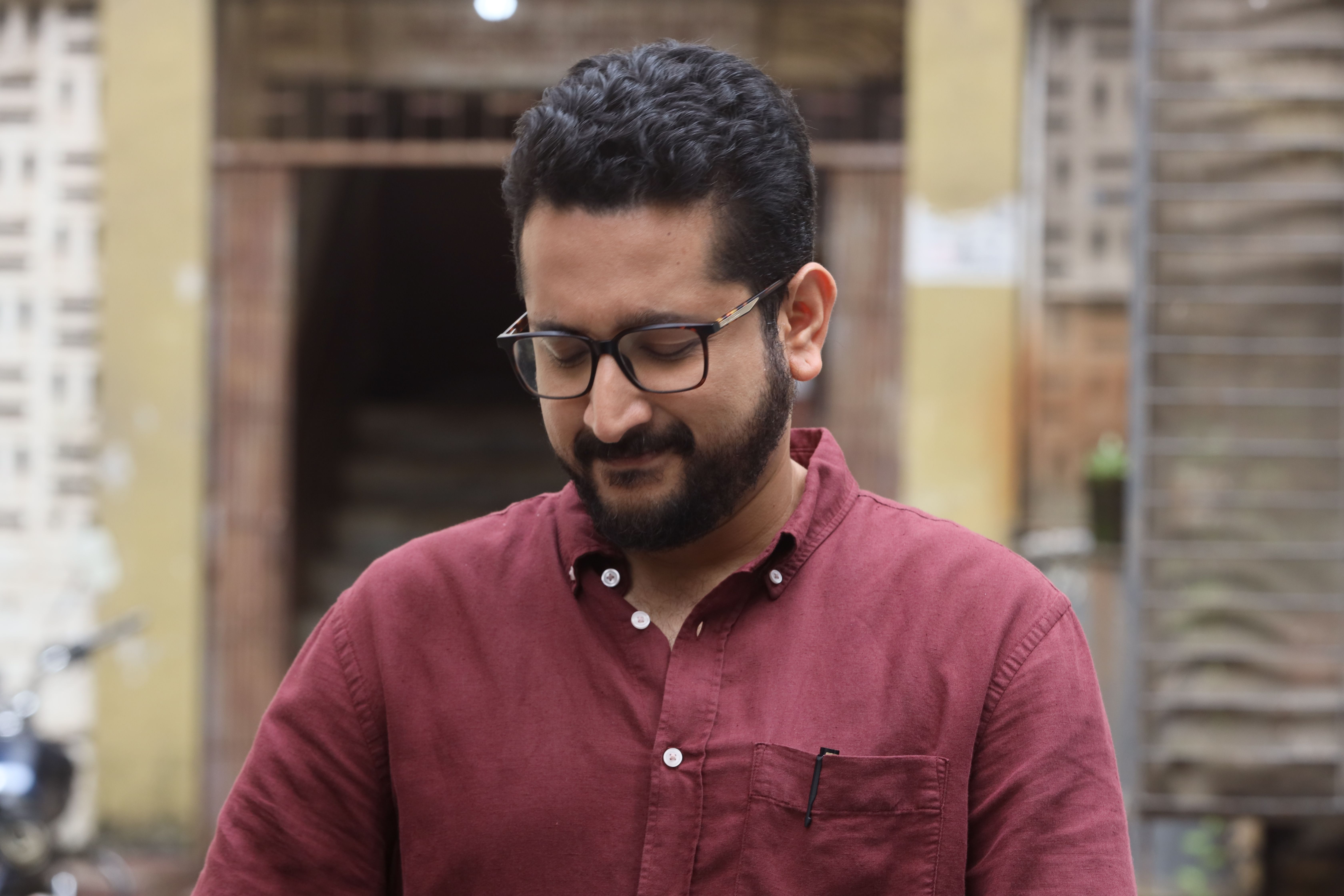
The Pact is a short film directed by Lakshmi R Iyer and written and edited by Apurva Asrani, which is streaming on YouTube. It starts with Raghav (Parambrata Chatterjee) going back to his childhood home after the death of his father to sell the property. As he turns the key, he unknowingly opens floodgates of memories. Sifting through those, he slowly starts to understand the love that cemented the brick-and-mortar structure, turning it into a home. He realises how over time the plaster had chipped and cracks had started appearing—a timely intervention could have easily fixed those; all it needed were sealant of understanding and care. He regrets how he had let those cracks turn into deep fissures between him and his father.
I have known Apurva Asrani (read: stalked him on Instagram) since years now and one of the things that has stayed with me over the years were his absolutely heartwarming videos with his father where the two would sit together and sing old Hindi songs. It seemed like those perfect father-son bond one sees in the movies! A bond that I never had with my father. I envied him. When his dad had passed away, I felt a sadness that you feel when someone you have known for years expires.
Cut to 2026. His Instagram announced his first project as a producer—The Pact, a short film that he has also written and edited. Of course, I had to watch it. It is beautiful and poignant tale about an estranged father and son—it follows the son as he, upon the death of his father, goes back to his childhood home to sell the property where in a moment of epiphany he realises his outwardly strict and ‘heartless’ father’s selfless love and dedication towards his family, especially towards him. The story felt very personal and relatable…to me. But I couldn’t relate it to Apurva’s life—he was the lucky one; the one who had the ‘cool’ dad. Or that is how his Instagram posts had made me believe. But then, I had forgotten that social media comes with an in-built rose-tinted glass that makes your life look perfect.
Talking to Apurva, I realised how much effort and understanding it had required for this father-son duo to build those perfect moments in real life. The editor, writer, filmmaker, and now producer talks about his relationship with his late dad, how they both accepted each other, and the pact they made but couldn’t keep. Excerpts:
Usually, one expects one to hold on to a place that houses so many memories… Why did he choose to sell the house?
Not selling the house would have been a cliché. It’s what a film usually expects you to do, and we were very clear we didn’t want an expected ending. But more than that, the reason he sells the house is because he has already found his father. He has met him, truly met him. His father can’t be reduced to objects or property. Those memories, especially the ones where his father loved him, aren’t trapped in the walls of that house anymore. Wherever he goes, his father goes with him. If he held on to the house, the father would remain fixed in a place, far away from him. By letting go of the house, he allows his father to stay close to his heart.
What was the starting point of The Pact? How did the story evolve?
It actually began with Lakshmi R Iyer. She had been in touch with me for over a year, trying to collaborate on something. She brought me a few ideas, and I was very honest that they didn’t quite align with my sensibility. But she had been following me on social media and had observed my relationship with my father, and how deeply his loss had affected me.
One day she simply said, “Why don’t you write something for your father?” That was it. The floodgates opened, and within a week I had a first draft to share with her.
But a film like The Pact isn’t really written in a week or even in the month it took to arrive at the shooting draft. It’s written over a lifetime. The film may be 25 minutes long, but it carries nearly 45 years of my life and a relationship with my father that went through many iterations before reaching this point.
Among other things, the film is also a commentary on toxic masculinity, especially the idea that men must be stoic and never show emotion or admit fault. Did this connect to the pressure you felt to conform to conventional ideas of masculinity?
If you look at the world today, we’re living in a constant state of conflict. There’s a new war every few months, and even those who don’t want to fight are often forced into it. That, for me, is deeply connected to what we casually call toxic masculinity. In fact, I don’t even think it’s masculinity. It’s a distortion of it. True masculinity, to me, isn’t devoid of heart or feeling. It includes introspection, vulnerability, and emotional honesty. Strength doesn’t come from shutting down emotion; it comes from being able to hold it.
I enjoy many of the films being made today that reflect strength, protection, and duty. War films, stories of men guarding borders or fighting for a cause, reflect a certain global and national sentiment. But I feel it’s equally important to represent the other side: the heart, the softness, the ability to look inward.
I genuinely believe that many conflicts between men stem from fractured relationships with their own fathers. When that relationship is incomplete or emotionally unresolved, it shows up elsewhere. But when it is loving, honest, and whole, a man learns how to relate to another man with empathy rather than aggression.
That emotional maturity begins at home. It begins in childhood. And that’s why I wanted to explore this through Raghav and his father.
You lost your father a few years back. Did that personal loss translate into this story?
Yes, absolutely. While my father was alive, no matter how our relationship shifted or evolved, there was always the possibility of conversation. We could talk things through, argue, write letters or emails. It was a work in progress.
After he passed, I was confronted with the finality of that relationship. I kept asking myself: is this it? Do we not get to evolve anymore? As I grew older and began to see the world through his lens, I gained perspectives I didn’t have earlier. I wanted to sit across from him and say, “I understand now. You were right. Thank you.” But that opportunity was gone.
Writing The Pact allowed me to continue that dialogue. And in the process, I realised it wasn’t just my conversation with my father. These emotions are universal. People who’ve lost parents, or fear losing them, write to me saying they see themselves in the film.
I used to love the videos of you singing with your dad. Those were such joyous family times. You both seemed to have a very loving, chilled-out bond, quite different from the strict father we see in the short film. How was your relationship with your dad growing up?
It took a long time for my father and me to arrive at the phase you see in those singing videos. Like most parent–child relationships, ours went through misunderstandings, fights, rejection, acceptance, and periods of not quite meeting each other where we were.
I think a lot of disappointment in these relationships comes from expectation. Parents expect their children to become certain kinds of people based on the world they’ve known. Children, on the other hand, want to be seen and accepted as they are, especially as they encounter a changing world and new possibilities. That gap often creates conflict.
In my case, there were very specific points of friction—my sexual orientation, the fact that I wouldn’t marry conventionally or have children, and my choice of a deeply unstable career in cinema, when my father had lived a very stable life in a government job with Air India, all of this caused strain. But beneath it was love, and the understanding that much of the resistance came from concern, not rejection.
I deeply admired my father. He was extremely well-read, had a strong aesthetic sense, and introduced me to the films of Kurosawa and Satyajit Ray. He had travelled widely, shared cultures, food, and music with me, and even though he hadn’t supported my career choice initially, he saw the effort, the discipline, and the films I did, that meant something to him.
Singing became our language. He loved music, would set up the karaoke, pour himself a drink, make it a family moment. When we sang together, it didn’t matter what argument we’d had or whether it was resolved. Through music, there was admiration, encouragement, and love. That was our way of communicating when words fell short.
In the film, the son begins to truly understand his father after his passing. For you, did that reconciliation start earlier?
I think the shift really began when my father was diagnosed with end-stage kidney disease. Dialysis and the uncertainty around the transplant changed how I saw him—this man who once commanded a room suddenly became frail. He was still proud, but he needed care, gentleness, and a softer way of being handled.
Before the transplant, there was a phase when we genuinely didn’t know if he would survive. Time felt like it was running out. That’s when I consciously chose to befriend him, to forgive as much as I could, and to treat him with patience, his outbursts and stubbornness stopped feeling personal and began to feel human. Whenever I felt provoked into reacting the old way, I backed down. I apologised. I chose kindness. And something shifted in him too. He became gentler and more compassionate.
After the transplant, we were given five or six good years together. We travelled, spent time with each other, had long walks and quiet conversations. He saw me buy my first home and enjoyed spending time there. We didn’t resolve everything from the past, but we stopped creating new difficult memories, and that itself was a gift.
After he passed, another layer of understanding came in. I began to grasp how hard his life had been, raising two boys and holding a family together while managing an intensely stressful, erratic job. When I was younger, I resented his impatience. As I grew older and faced the world myself, I learnt to cut him some slack.
The son and the father make a pact to be friends first, but they’re unable to keep it. Was there ever such a pact between you and your dad? How close did you come to becoming friends?
Yes, the pact in the film is based on a real one my father and I made. It unfolds almost exactly the way you see it on screen. I had done something wrong at school, hid my diary because I was afraid of his reaction, and when he discovered it, he hit me. Seeing me sob afterwards completely broke him. Once he had calmed down, he took me out for a drive. He kept apologising and tried to explain that he was still learning how to be a father, because he had lost his own father very young. He told me he might not always be a good father, but he could try to be a good friend.
He bought me an ice cream and suggested we make a pact that day, that if we ever forgot how to be father and son, we would be friends first. He wrote it down, explained to me what a pact meant, and we both signed it. For me, that moment was profound. It felt like he was levelling with me, like we were equals for the first time.
Of course, we slipped back into our old patterns. I disappointed him, he disciplined me, and life carried on. But that moment of vulnerability stayed with me. I may not know where that piece of paper is, but like so many things in the film, it survived as memory. It reminded me that my father was human, trying his best, and that stayed with me for the rest of my life.
He seemed pretty chill with your partner as well. How was it coming out to him, and then eventually introducing your partner to him?
Coming out to my father was very difficult. He was deeply disappointed and felt he had failed as a parent. He came from a generation where this wasn’t even an option, so it shattered certain expectations he had of me. Initially, he tried to change me, and when he realised that wasn’t possible, he withdrew. We stopped speaking, especially after I moved in with my partner in the late ’90s. What broke the silence was my work. When I won a Filmfare Award, something shifted. There were calls and messages telling him how proud he should be, and he truly was. Satya was one of his favourite films. My achievements helped him move past his fear and allowed him to accept my partner and move forward with me. The discomfort never completely disappeared. At times, he still hoped I would change. But over time, I understood that it wasn’t judgement as much as fear, fear of how I would survive in a deeply homophobic world, one that had been cruel to people like me in his generation. We spoke about that fear, about how family makes the world less frightening. By my next relationship, he was far more accepting, even though a part of him may always have wished I were straight and had children.
This is a deeply personal story. Did you ever consider directing it yourself?
When a story is this personal, directing it can make you lose objectivity. I was already writing, producing, and editing the film, so directing it as well could have made it indulgent rather than universal. Lakshmi [Lakshmi R Iyer] directing The Pact was always the plan. She comes from a very different emotional place with her father and that distance helped the story open up. She could look at it holistically, without being burdened by my personal attachment. I still wanted to protect the film, which is why I came in as a co-producer. Lakshmi and I challenged each other throughout the process, sometimes disagreed, but always in service of the film. That collaboration is what allowed The Pact to remain deeply personal yet resonate across ages, sensibilities, and belief systems.
Are you planning to get into full-time film production? What’s the plan going forward?
Turning producer came from a realisation that a certain kind of cinema I’ve been closely associated with is slowly disappearing. Today, you either have big-budget, multi-starrer spectacle films, or very niche art-house films that do the festival circuit but don’t really find audiences in Indian cinemas. I’ve been fortunate to be part of films like Satya, Shahid, CityLights, Aligarh, Waiting, and even Simran –films that told intimate, character-driven stories, and still reached people. There was a time when the industry was willing to experiment, and that middle space existed. I feel that space has shrunk. I want to help reclaim it. The kind of films that are emotional, relatable, rooted in relationships, and can speak to families, while still being made on sensible budgets that are easier to sustain and recover. With The Pact, I’m also understanding the economics of storytelling today—what online platforms offer, what YouTube allows, what theatrical release can mean. The idea is to use this learning as groundwork for the next project, which may be a feature film. Producing, for me, isn’t about scale. It’s about protecting the kind of stories I believe in and finding the most honest, effective way to tell them.


