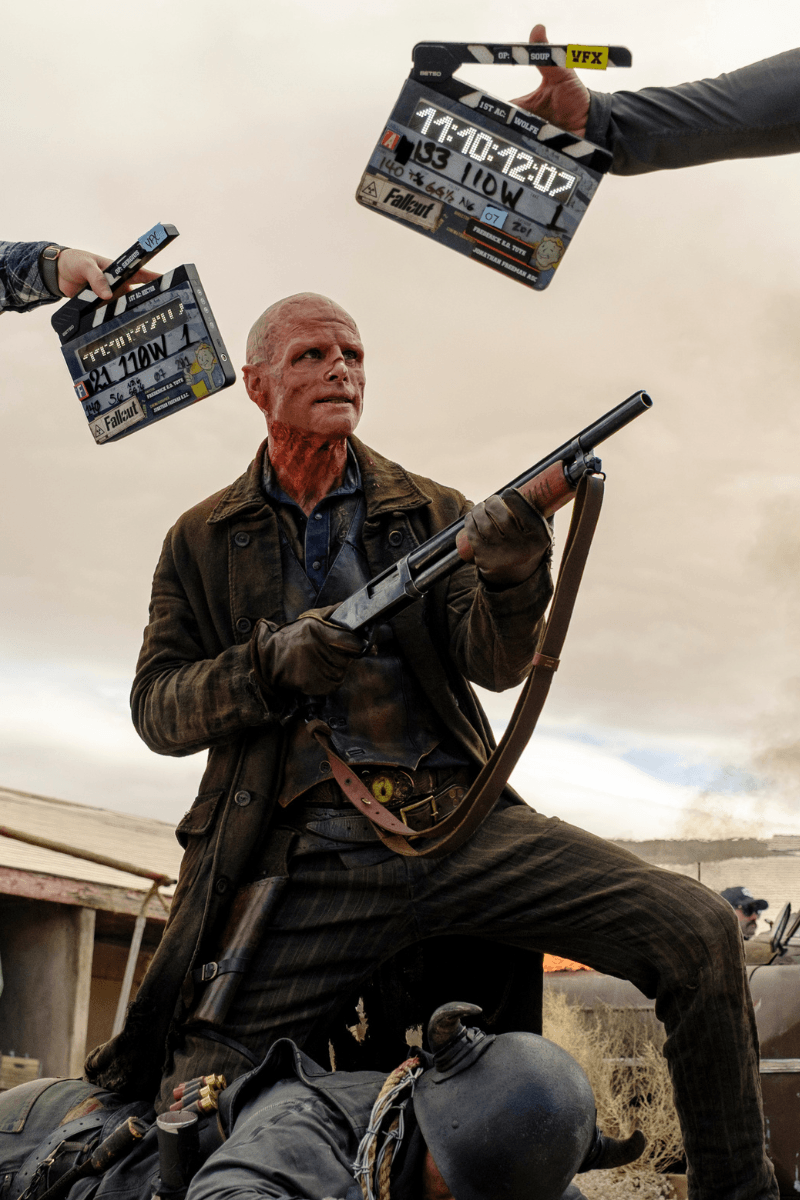
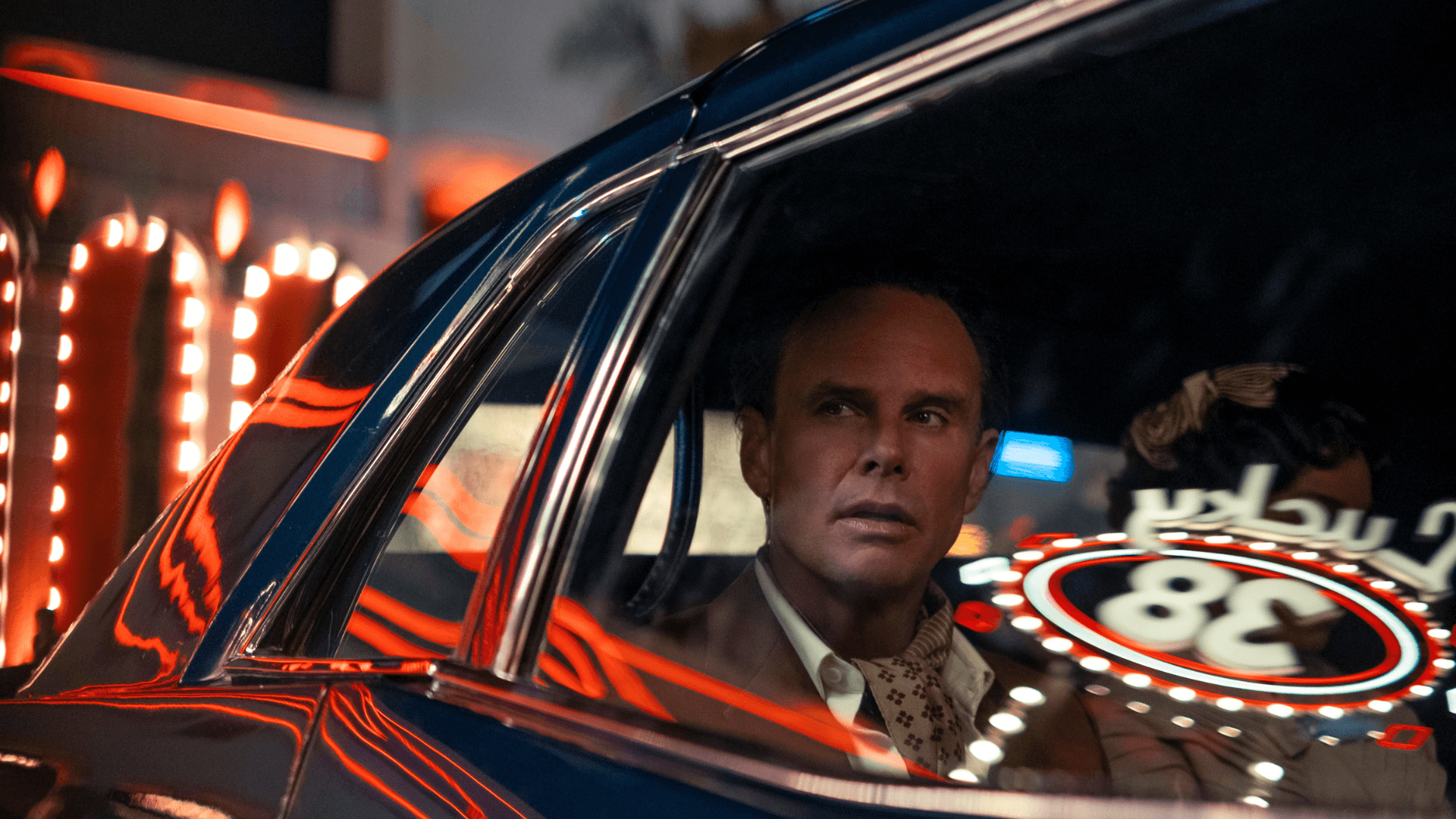
It is 2077. On a sun-bleached afternoon in Los Angeles, a jaded Hollywood leading man stands before a crowd, selling the fantasy of a safer world. Minutes later, the sky tears open. The bombs fall. Everything ends. In Fallout, that is the precise second the fissure opens: the last breath of Cooper Howard, and the first of the Ghoul, a semi-immortal gunslinger stitched together from memory, radiation and rage. Two men separated by centuries, inhabiting the same body.
It is 2296. What survives of him walks the wasteland, leathery and stripped of sentiment, driven by instinct and the echo of grief. Yet beneath the cracked exterior sits the ghost of the man he was, a reminder that identity does not vanish in catastrophe, it calcifies. It is the defining tension of Fallout, and the reason the show needed an actor capable of holding an entire universe in a single face.
Walton Goggins has arrived at that moment not abruptly, but as the inevitable culmination of a long, slow climb. For two decades he has quietly altered the temperature of every project he touched: the electric moral decay of Shane Vendrell in The Shield, the dangerous charm of Boyd Crowder in Justified, the crackling menace of Sheriff Mannix in Tarantino’s The Hateful Eight, and more recently, an Emmy-nominated turn as Rick Hatchett in The White Lotus. That character’s griefsoaked pilgrimage to Thailand mirrored a journey Goggins himself made in 2004 after the death of his first wife, a reallife parallel he has spoken about with disarming honesty, and one that seemed to fold his own history back into the work. Perhaps it was this authenticity that made him the scene-stealer directors trusted to deepen a story, the actor audiences leaned in for, a presence that turned supporting roles into gravitational centres of attention.
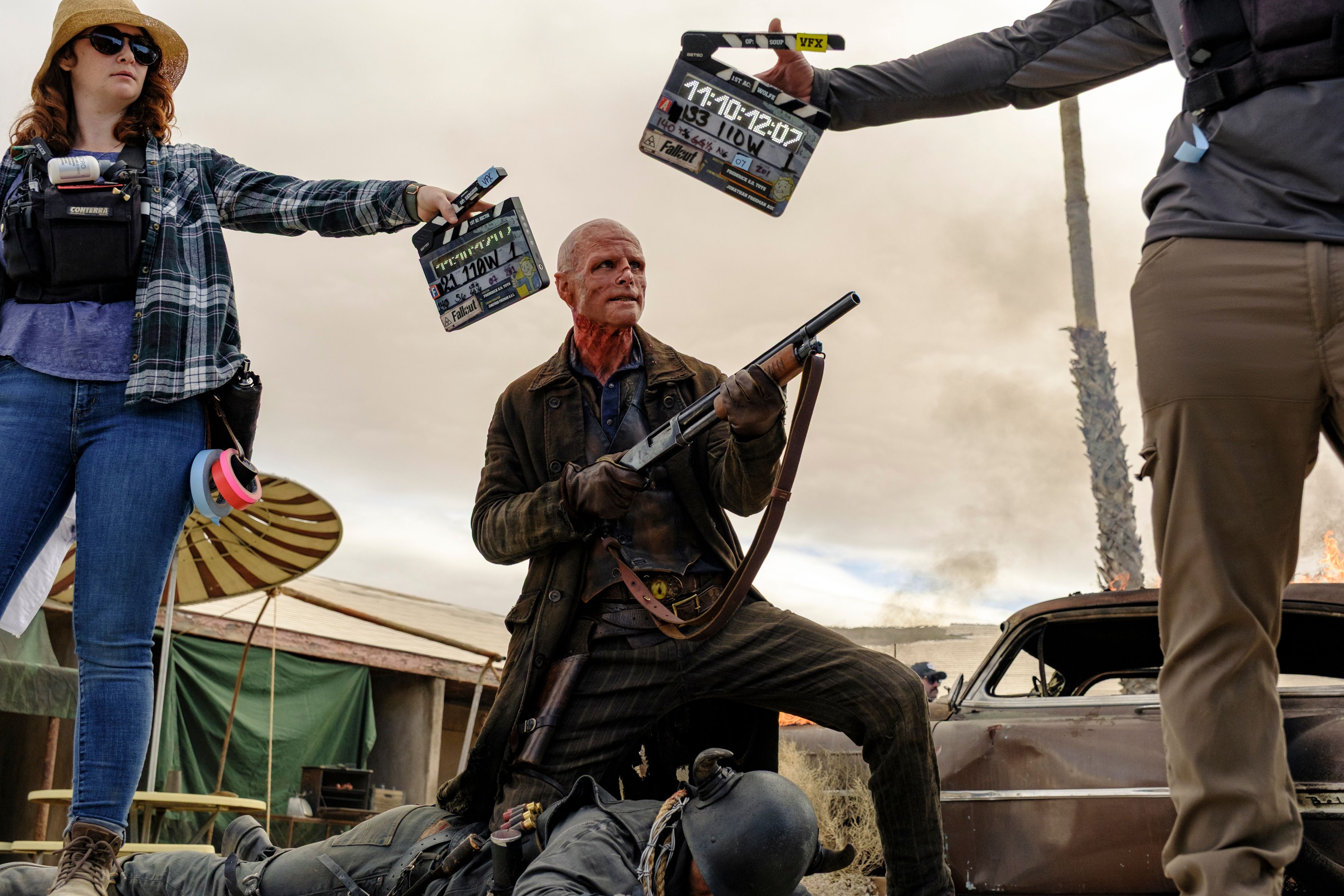
And now, after a post-pandemic run of zany magazine covers, high-profile roles and a certain relaxed, earned confidence, the industry is finally saying aloud what viewers have sensed for years: he is one of the greats of modern Hollywood. In Fallout, that truth crystallises. Season one positioned him as the show’s emotional core; season two pulls the wire tighter, excavating Cooper’s past, sharpening the tragedy and mapping the slow erosion of identity into something mythic, within what has quickly become one of the best-received video-game adaptations in recent memory. What emerges is less a performance than a metamorphosis, the moment an actor long considered a cult favourite steps decisively into global superstardom. Excerpts from our conversation:
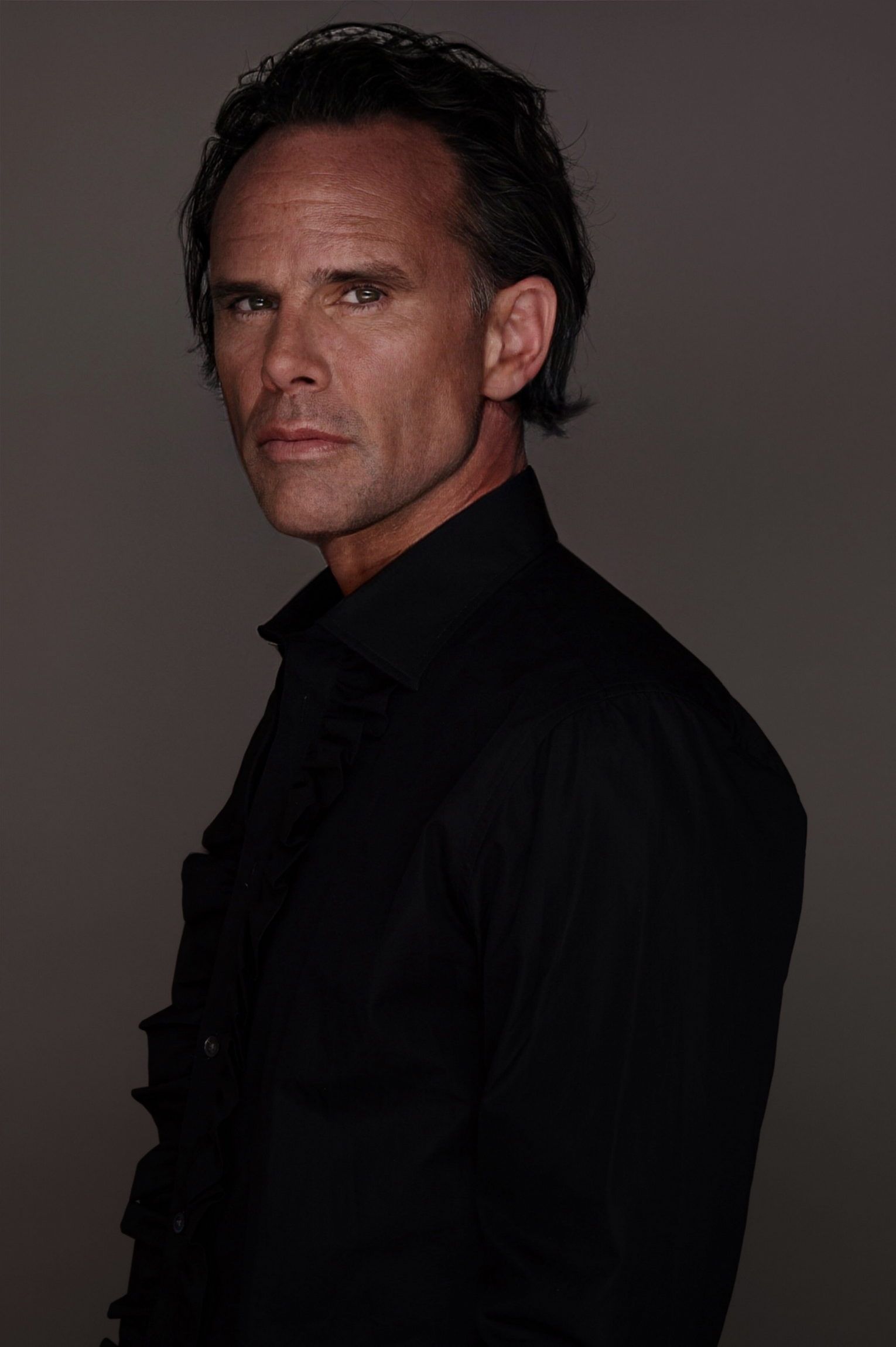
What was more difficult for you, playing Cooper or playing the Ghoul?
That’s a great question. I get something from both. In season one, when I first read the script, the hardest part was understanding who these people were and how they spoke to each other over time. Once the show picked up steam and I really started to understand the Ghoul—the makeup, who he was in this world—I felt very comfortable with that.
Then the day came when I played Cooper for the first time and I was in a bit of shock, to be honest, because I didn’t have all that makeup as armour. Now, with season one behind us, the human side of what he’s going through resonates deeply with me. So much of this season is about Cooper Howard; who he was, what he knew, when he knew it, and what he tried to do about it. Like the audience, I get that information as the scripts come in. It’s a learning curve for me too. I’m on a similar journey; it just happens to be on the page instead of on the screen. But I love him so much.
I don’t think you’ve played an actor before. Were there bits of your own experience as an actor that you channelled into him?
No one has ever asked me that. I’ve been waiting for that question! [laughs] I’ve never played an actor. I’ve come close a couple of times, but those didn’t work out. But this isn’t me...it’s someone from a very specific period in American cinema.
I watched a lot of films from that era, and interviews with actors from that time—John Wayne, James Arness from Gunsmoke—just trying to understand how they moved in the world, what questions were asked of them, how they responded. And I also watched Brad Pitt. I’ve never said this before, but he did something so interesting in Inglourious Basterds. Maybe because I’ve seen that movie so many times, I found a part of Cooper that came from Brad’s experience. It’s an amalgamation of things. But truthfully, I don’t overthink it. I turn myself over to the imaginary circumstances and play pretend. I believe Cooper Howard was a real movie star in 1950s America.
You’ve once said that the best dramas are funny and the best comedies are serious. Have you thought about that balance while performing recently?
That doesn’t come from movies. It comes from being human. Over this past year, like everyone else, I’ve had trying moments in my life. And in those moments, something funny or absurd usually happens that gives you the perspective. You laugh when you’re sad. And when you’re really happy, something shitty comes along to remind you it’s not all fun and games. We live with those extremes every day. That’s what makes us human. It comes from observing it in myself and in the people I love.
Do you have any anecdotes or funny incidents that stuck with you from shooting this season?
Becoming the Ghoul is not easy. I had my scripts, I’d been studying, having conversations with everyone. Then on a Sunday night, I get a call with my call time for Monday morning. I thought they’d made a mistake. I said, “No, I don’t work until Wednesday.” I’d just had a couple of Negronis, I was relaxing before starting the journey. And they said, “No, man. You’re first up tomorrow morning.”
I got back on my heels, said, “Okay, I’ll see you in the morning,” hung up, and looked at myself in the mirror: “Oh my God.” But I didn’t have time to panic. I fell asleep, woke up at 2.30 in the morning, headed to work, and there it was.
I have to talk to you about watches for a moment. You once mentioned a Rolex that meant a lot to you and said you weren’t a watch guy; but you’ve been wearing some cool stuff on the red carpet. Have you become a watch guy in the last year?
Oh my God—yeah. I’m not a watch guy… but I have two watches now. The second one was a present to myself because I’d been working for a year and a half. I’ve always wanted one watch I can bang around during the day and another to wear to a nice dinner.
So yes, in theory I am a watch guy, because I’ve worn so many watches I could never afford. And I do like them. They’re an accent, a piece of fashion, a piece of mechanics that can reflect your personality. I understand why people with the means collect many. I collect rugs and I collect art. Who knows, maybe I’ll start collecting watches someday.
What’s your favourite watch, and what catches your eye when you see a watch on someone else?
The one I wore at the SNL show—the Jaeger-LeCoultre Reverso Tribute Monoface Small Seconds.
This is going to sound like a pat, bullshit answer, but it’s not what they’re wearing. It’s the energy that comes into the room before they do. You feel a confidence or swagger in someone. It’s not gender-specific. It’s a joy for living. That’s what attracts me most. It’s the first thing I notice.
What are you looking forward to in 2026?
A number of things. The most important is people getting to see what all these craftsmen have been up to in season two. I watched the first two episodes last night, even without full colour-time, and I just marvelled at the work. The artisans, the crew, the amount of effort that went into this story humbled me. I’m excited for people to see it. I’ve also got a couple of jobs I’m excited about. And I had a great long run with my family this year, so I’m looking forward to getting back in the saddle.
Images by Amazon Prime Studios, Manfred Baumann


