Ishan Kishan hit a six off the first ball he faced, and thirty-five thousand people lost their minds. I know what a stadium sounds like when it erupts. I've been to Montjuïc when Barcelona put five past Sevilla, felt the Kolkata stands shake during Argentina vs Venezuela back in 2011, and heard away sections at football stadiums go quiet in that specific, satisfying way. I thought I understood what live sport could do to a room. But R. Premadasa Stadium on February 15, with India and Pakistan on the field, was something I had no reference point for. None. The sound seemed more like a detonation than a roar. This was my first cricket match in a stadium.
I should probably explain how I got here. I'm a football guy. Always have been. I've watched cricket on screens my whole life, enjoyed it the way most Indians enjoy it, which is to say passively, with opinions, from a couch. I'd never felt the need to be in the stands which could have stemmed from my aversion for plastic fans of the sport. Football was the sport I travelled for, spent money on, planned trips around. Cricket was never that. Until Budweiser 0.0 flew me to Colombo for the T20 World Cup, put me up at Cinnamon Life, handed me a ticket, and said: go watch India play Pakistan. Not a bad entry point, as these things go.

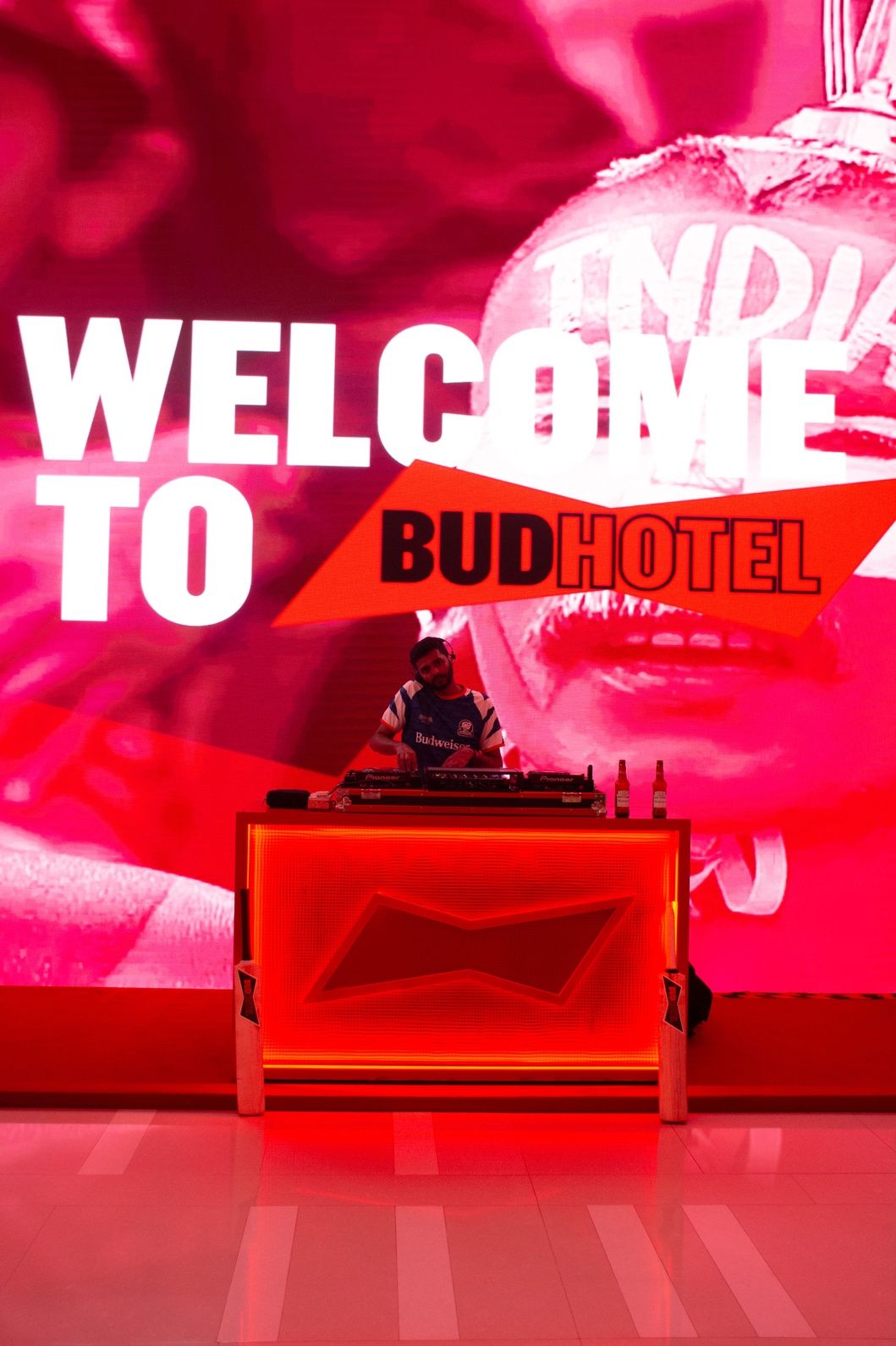
Budweiser 0.0 had taken over Cinnamon Life hotel for the weekend, turning it into a kind of cricket commune where fans, creators, and a handful of very famous retired cricketers were all thrown together. The Pakistan team was staying there too, which added a surreal quality to breakfast. You'd reach for the egg hoppers and spot Shaheen Afridi three tables away.

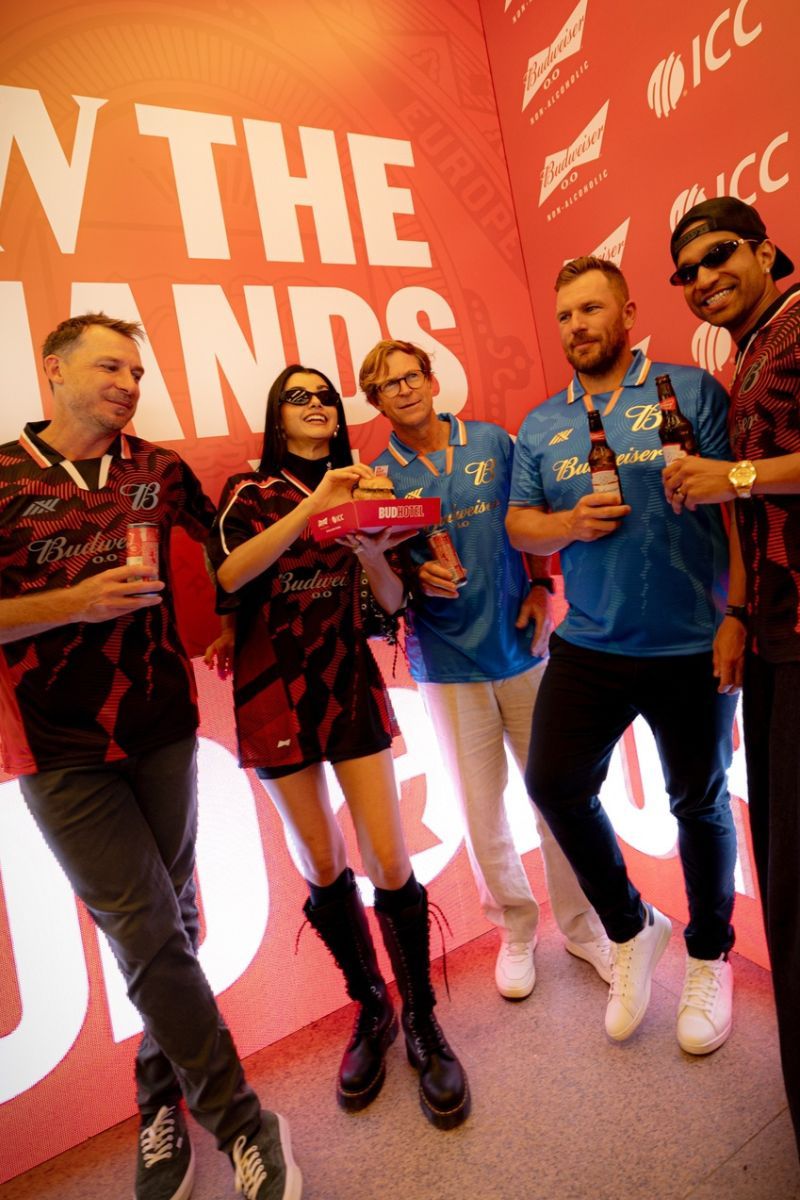
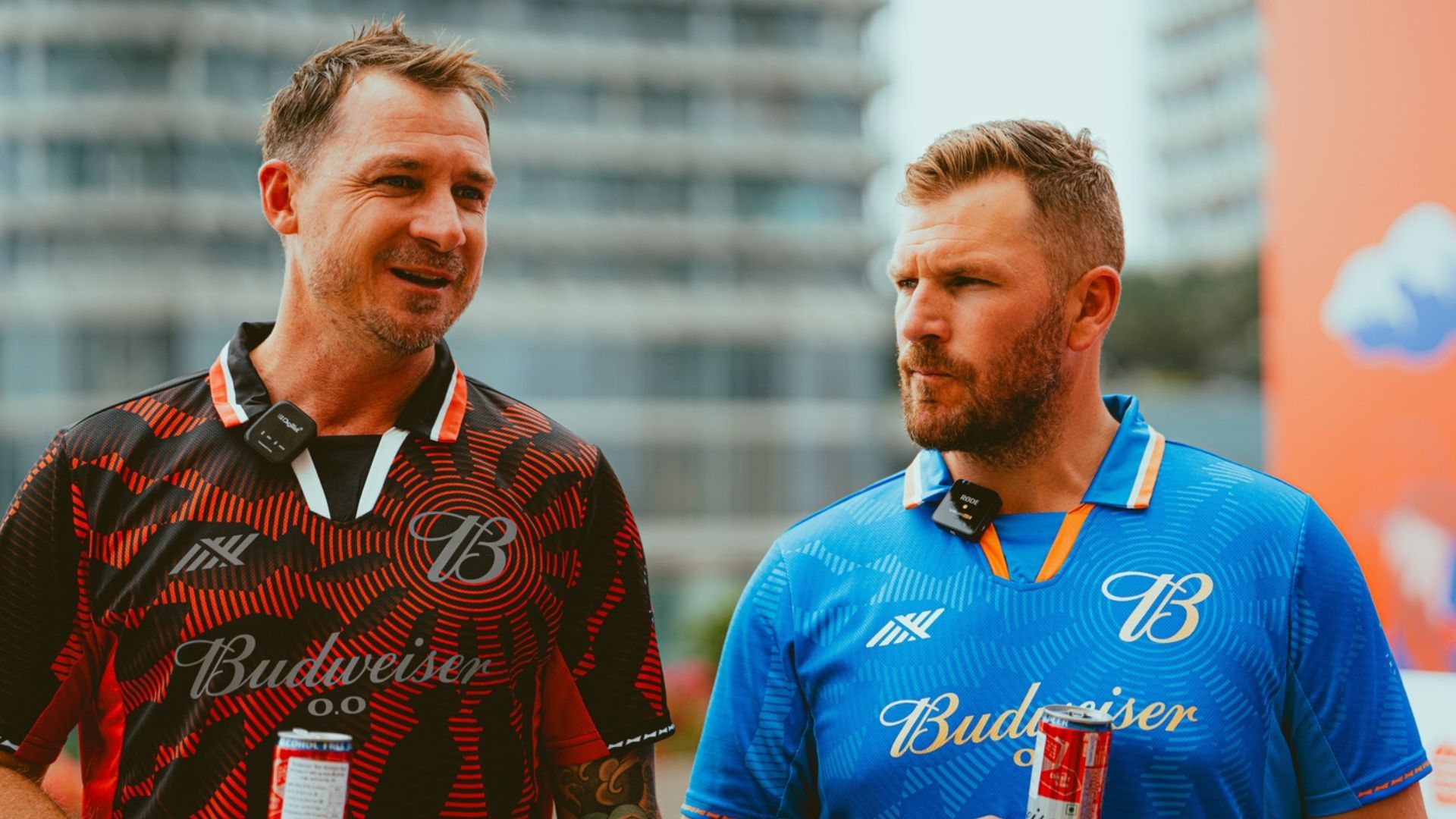
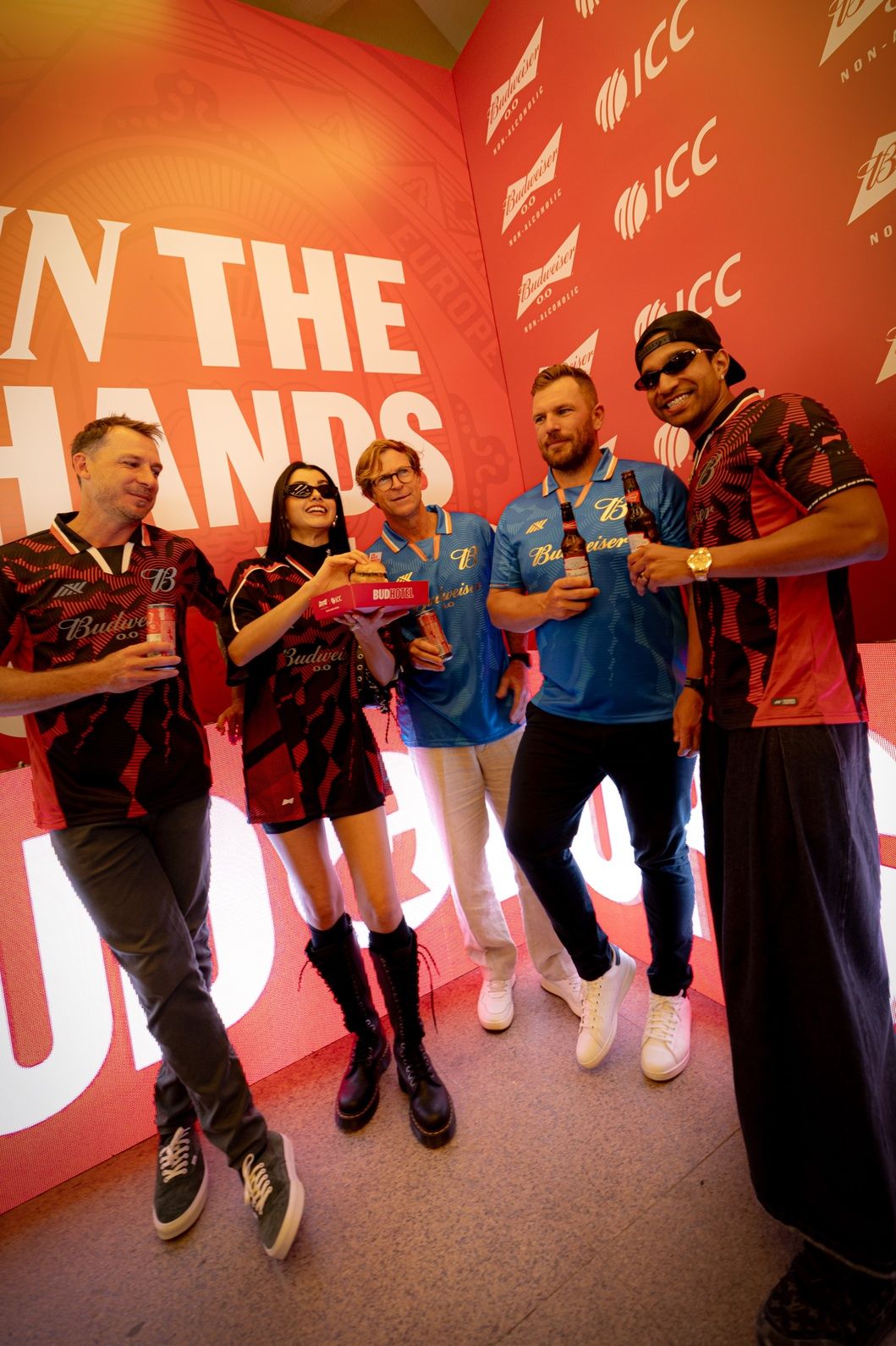
The afternoon before the match, I found myself at the Bud & Burgers event at the hotel eating burgers with Dale Steyn, Jonty Rhodes, and Aaron Finch, three men who'd collectively spent about five decades playing international cricket. I'll say this about retired cricketers: they're better company than retired footballers. Steyn was relaxed in a way that suggested he'd been relaxed his entire life, which is strange for a man who spent fifteen years running in fast and angry. He talked about fishing, missing dressing rooms, while exhuding an annoying sense of humility. I handed him one of my phones to use as a makeshift mic during our chat, and he immediately remarked on how light it was. Before I could launch into an explanation, Jonty Rhodes cut me off. "Don't show off," he said, grinning. Fair enough. Rhodes, who has a daughter named India and a house in Goa, was warm and sharp and clearly delighted to be there as a spectator rather than a coach. Aaron Finch was quick to say “Hardik Pandya” when I asked them who'd be the most fun at a hypothetical Budweiser 0.0 house party. Jonty shook his head. "I'm old. I don't do house parties,” he said with a characteristic ease of a man who'd cleared his calendars.
The bus to Premadasa took twenty minutes from the hotel. You could feel the city tightening around the stadium as you got closer. Tricolours on cheeks, green crescents on flags, vendors selling both jerseys side by side, which tells you something about Colombo's diplomatic instincts. There had been genuine doubt about whether this match would happen at all. Pakistan had announced a boycott on February 1 in solidarity with Bangladesh. For about a week the whole thing wobbled. I always thought it would go ahead. Some carnivals are too big to cancel. The confirmation came on the 9th, six days before the match, and ticket queues went berserk. And here I was, heading to the stadium to watch India play Pakistan, sat in the same bus as the man who'd taken 699 international wickets, terrifying batting lineups across the world.
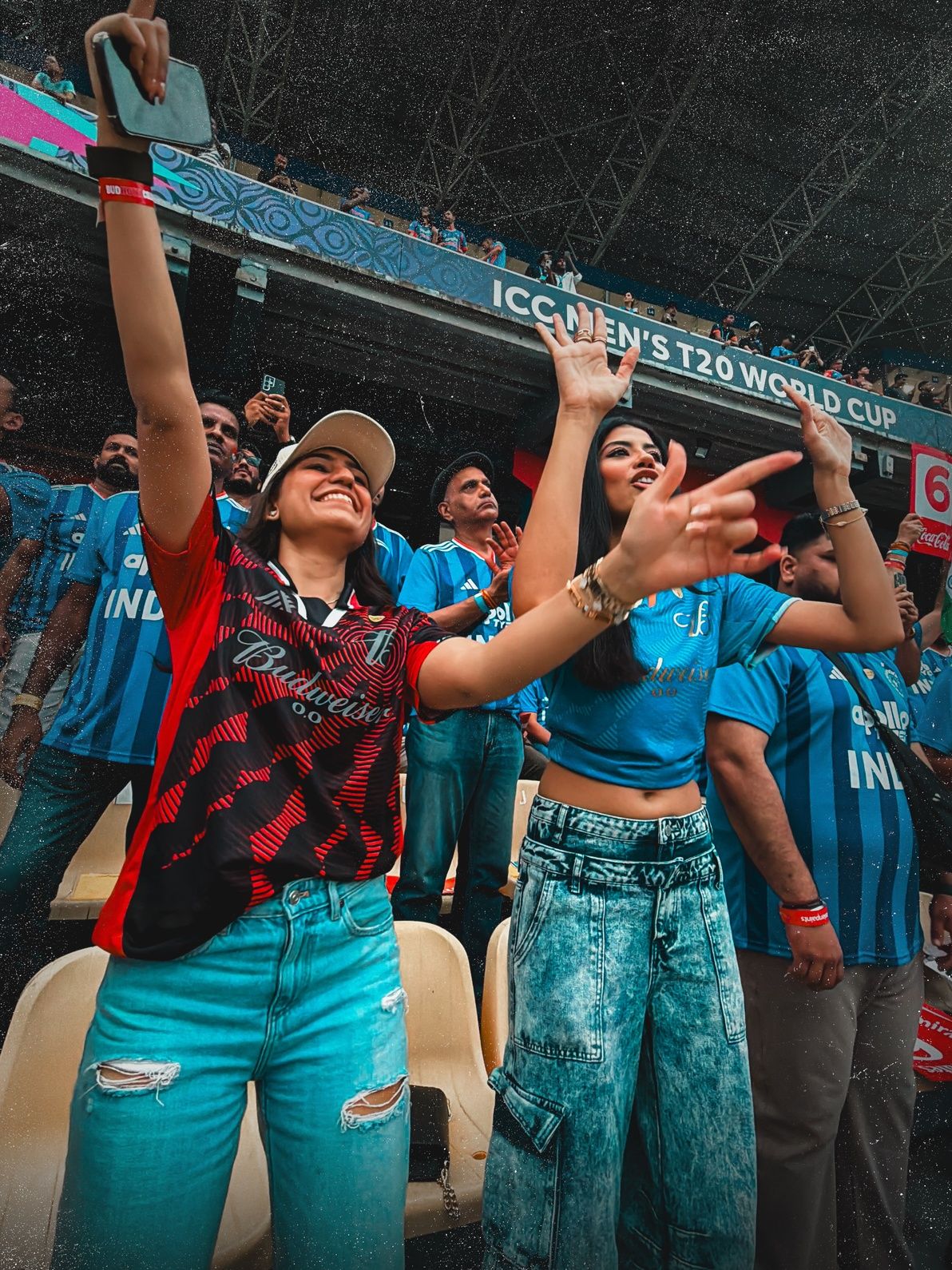
Inside the ground, you know where to look even though your eye doesn't have a fixed anchor. It wanders from the pitch to the scoreboard to the stands to the sky and back. The rhythm is completely different too. In football, tension builds in waves, a passing sequence, a counter-attack, you're leaning forward for minutes at a time. In cricket, every delivery is its own contained drama. It builds in spikes. Six balls, a pause, six balls, a pause. The crowd breathes with it. Silence before the bowler runs in. Explosion or exhale depending on what happens. In football, the crowd carries the team. In cricket, the crowd reacts to the game. The game leads. There's a different kind of intimacy in that shared attention that makes cricket, and especially a game as big or perhaps the biggest, as India vs Pakistan a religion in India. Thirty-five thousand people holding their breath in unison and then releasing it. And then doing it again. And again. For forty overs.
India batted first. The pitch was slow, spin-heavy, the kind of surface that makes strokeplay difficult. Pakistan bowled eighteen overs of spin out of twenty, which even I knew was unusual. But Kishan didn't seem to care. He hit 77 off 40 balls, with a strike rate that belonged to a different pitch entirely. His fifty came off 27 deliveries, the fastest ever in an India-Pakistan World Cup match. Watching it live was different from watching it on television in a way I can now articulate: on screen, you see the ball. In the stadium, you see the crowd. You see the fielder's body language before the ball is bowled. You see the batter's feet move and the bowler's follow-through and the umpire's hands and you process all of it a fraction of a second before the noise tells you what happened. You see an Indian fan and a Pakistani fan in the row ahead of you, both in their national jerseys, both reacting to the same shots with mirror-image emotions. One man's ecstasy was the other's despair, separated by two plastic seats and six decades of geopolitics. It's richer. Messier. More human.
Suryakumar Yadav made 32, Shivam Dube chipped in with 27, and India finished at 175 for 7. It felt like enough. It was more than enough. Pakistan's chase barely started before it ended. They were 38 for 4 after the powerplay. Bumrah and Hardik Pandya tore through the top order with the kind of controlled violence that makes fast bowling the most watchable thing in sport. I sat there thinking: so this is what it looks like in person, watching a team buckle. On television you get replays and analysis. In the stands you get the silence of the Pakistan supporters around you, drowned by the Indian cheers; the low murmur, the bodies sinking into seats. And then an Indian bowler takes another wicket and the other thirty thousand people stand up and you stand up with them, almost involuntarily. Pakistan were all out for 114. India won by 61 runs, their biggest T20 win over Pakistan ever.
But the scoreline is the least interesting thing about that evening. What I keep thinking about, weeks later, is the difference in how cricket occupies a stadium compared to football. Football is ninety continuous minutes of collective anxiety. Cricket is two hundred and forty individual moments, each one reset to zero before the next. The tension may not always be sustained, but it never fully dissipates either. It pulses. And between those pulses, there's time. Time to talk to the stranger next to you. Time to notice that the Indian fan and the Pakistani fan three rows up are sharing peanuts. Time to look up at the Colombo sky and register that it's a warm evening and the floodlights have turned everything the colour of old photographs. Football gives you the rush. Cricket gives you the rush and the pauses to appreciate it. I didn't expect to prefer that. I think I might.
I was late to this. Embarrassingly late. Thirteen years of chasing football across continents, and it took Budweiser 0.0’s partnership with ICC to get me into a cricket stadium. There's a joke in there about Budweiser 0.0 being new to cricket too, with their first World Cup tie-up, and both of us apparently making up for lost time. I was already talking about the next round on my way back. The Super Eights. Who India might face. Where the matches would be. Planning. Wanting to be there for the next one. Yes, I was there for the semi-final. And yes, my tickets for the upcoming IPL games are already booked.


