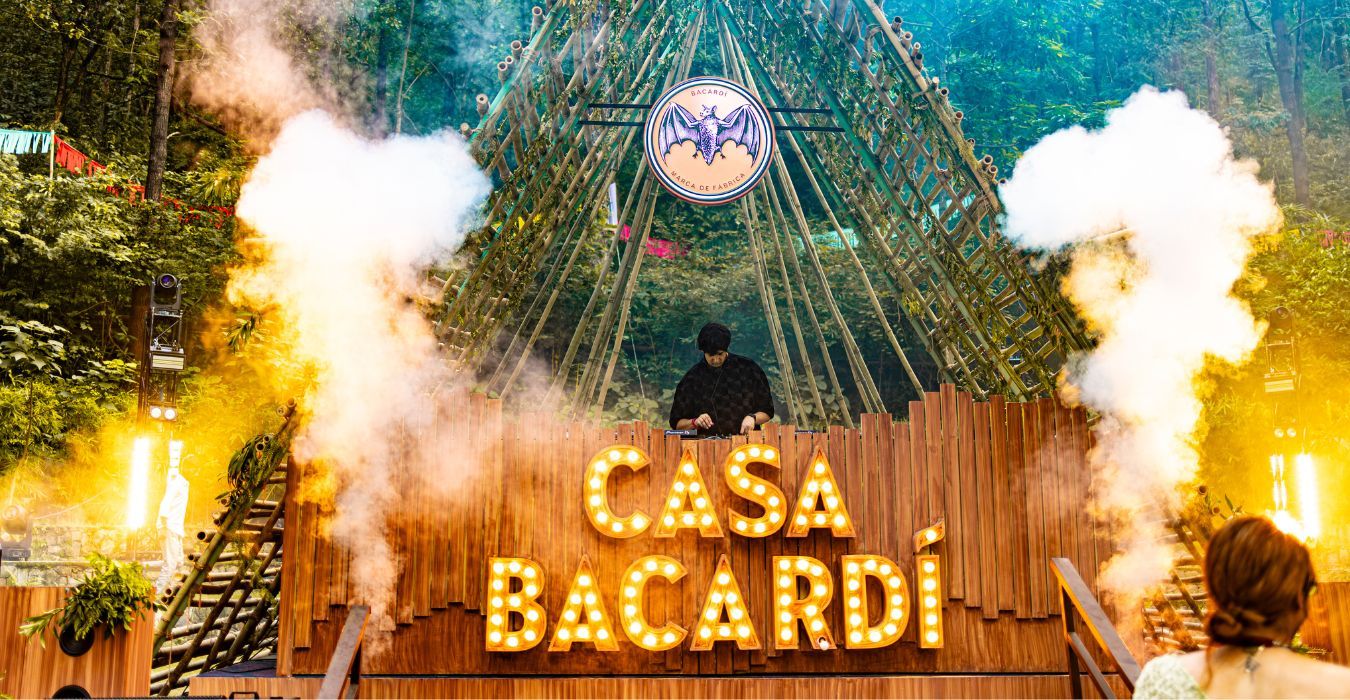
The mountain takes the form of whatever humanity projects on it. For climbers, it’s a challenge to be conquered, the triumph of modernity; for mystics, it’s a place of enlightenment; for junkies, it’s a safe space, away from the reaches of punishment; and slowly it’s becoming an awe-inspiring backdrop for music fests that have been reserved for the confines of big cities, the likes of Bengaluru, Goa, Mumbai, and New Delhi part of the big-boy club. The psytrance wave had spread across the mountains in states like Himachal Pradesh, and there are other festivals, but nothing at what could be called a monumental level: featuring global artists, attracting crowds in the thousands. And the neighbouring state, Uttarakhand, has been mostly shorn of such popular and prevalent forms of our modern culture. Beyond a religious and spiritual destination, this state could also hold space for modern forms, of which live music is surely a vital part, because in the end, enlightenment is the denouement that both religious and cultural pursuits chase. Different journey, same destination.
Perhaps this is what the second edition of CASA BACARDÍ, a travelling music and cultural festival, wanted to deliver by staging it in Dehradun, boasting global artists spanning an eclectic mix of electric genres, across two days, an hour from the iconic hill station Mussoorie. And if turnout is anything to go by, the festival was a massive hit: sold out for both days, a huge mass of crowd, around 2000 on both days, throbbing non-stop to the pulsating beats of house music from evening to late into the night. The fact that this festival was planned around a long weekend — Friday, a national holiday due to Gandhi Jayanti — definitely played its part. At around six hours away from the national capital, New Delhi, and not far from the states like Punjab and Haryana, Dehradun’s popularity as a weekend gateway has grown in the last few years. It’s the connecting station of the tourism industry in this region, boasting great proximity to touristy places like Haridwar, Landour, and Rishikesh.
A Tranquil Setting
The venue for CASA BACARDÍ was around a twenty-minute drive from Dehradun, just far enough for the urban chaos to disappear. Once the city is left behind, the lush green beauty of mountains and forests reaches far into the wilderness. A perfect setting, so far, that many urban dwellers imagine when they think of a peaceful escape. Though the romanticisation of this landscape is having an adverse effect now, leading to more people than this sensitive region can handle, and the dangers that lurk are too many. If everyone fantasises about the same feed that the algorithm pushes, then everyone goes to the same place to fulfil them. There was a long serpentine queue of cars on the way, a narrow road. An uphill journey is concomitant with uphill troubles, and this is where executing every aspect of a big festival like this in the mountains, far away from the conveniences of urbanity, becomes a hassle.
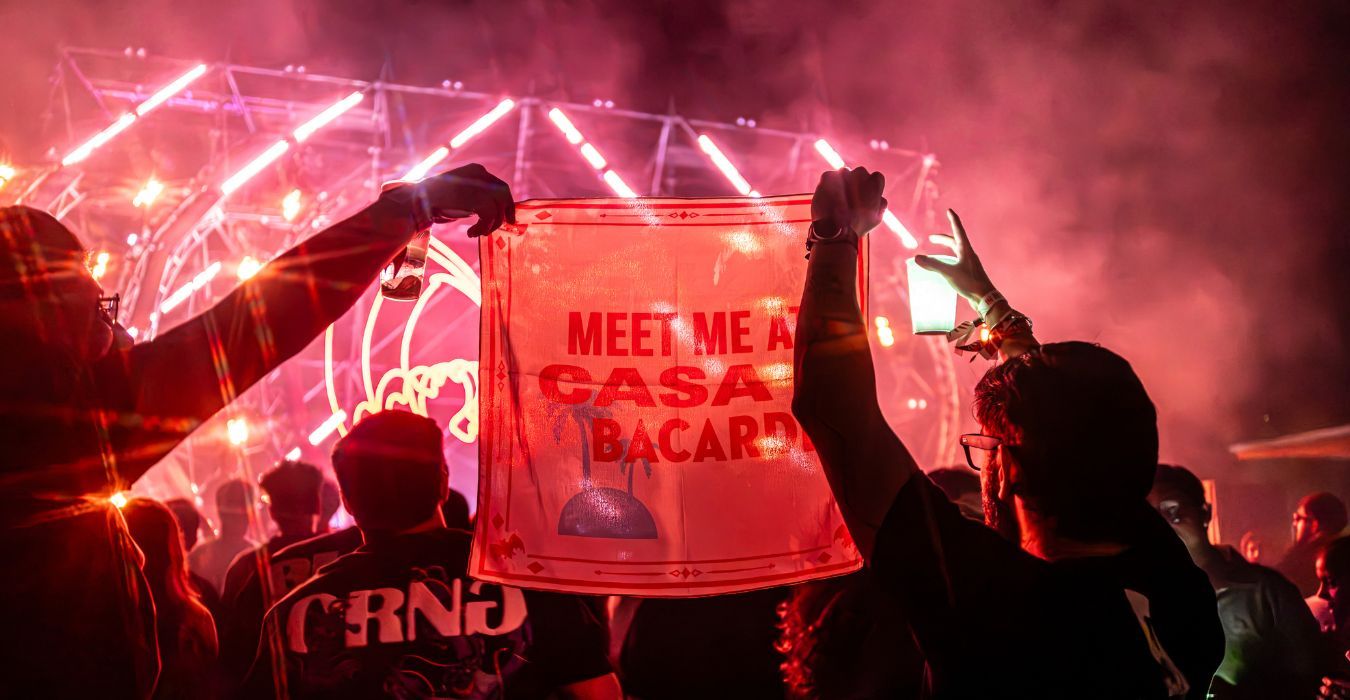
Yet, CASA BACARDÍ knew this when they took this plunge, and they did get things right: the usual aspects, the basic infrastructure, that many music festivals unfortunately lack. There were no big queues to suffer at the ticket counter or the main gate, wi-fi network stations at every counter to compensate for the weak coverage, crews at every point ready to assist, and washrooms close to all three stages at this sprawling venue.
When The Sun Goes
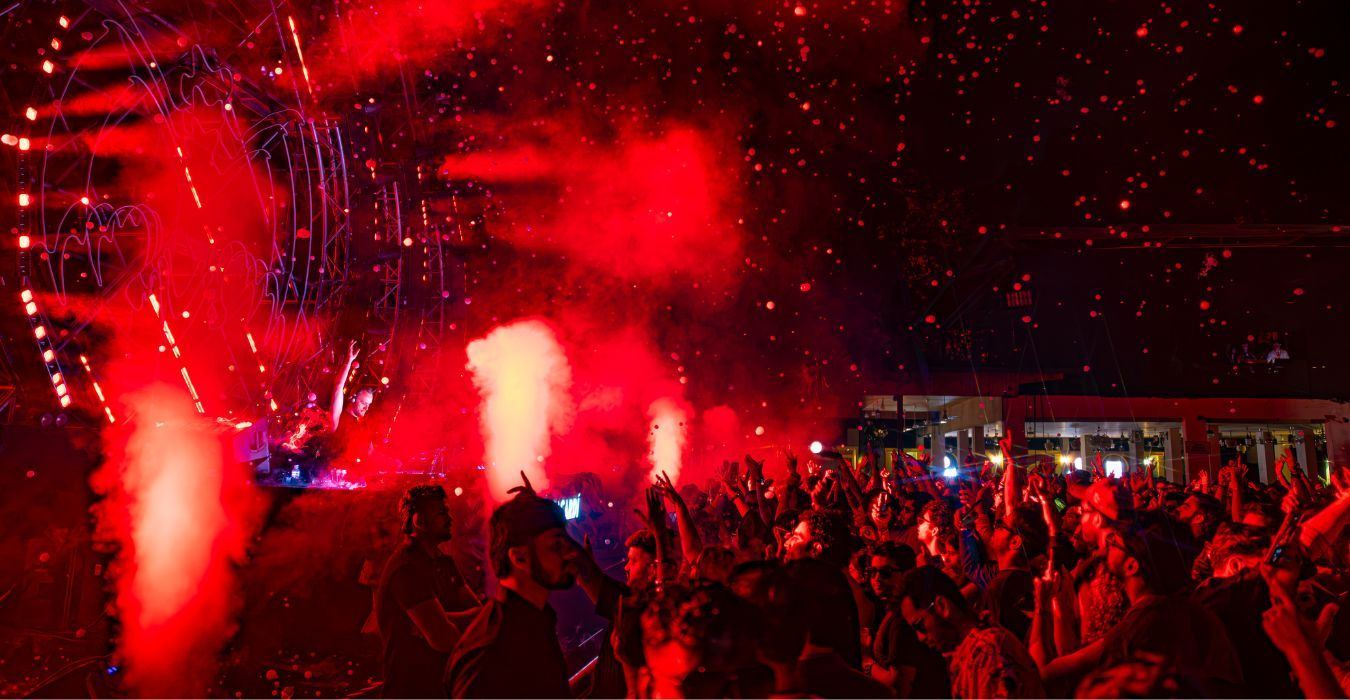
On the first night, Maribou State, an English electronic music duo, and Nils Hoffmann, the Berlin-based producer and electronic artist, were the biggest attractions. As the night grew, so did the weariness; steps became more staggered, and vision a bit blurry. Hoffman replenished the energy with his live act, a great exhibition of melodic house music. He performed at the Skyline, the most spacious stage, set against a rising mountain in the background. The tiled floor was perfect for partying, without worrying about a twisted ankle. So the moves flowed, and the spirit, literally and otherwise.
Soon after his set, Solto began his high-tempo Afro House journey on another stage. That Afro House is not a very popular genre in India would have gone lost on you after seeing Solto’s reception. But also perhaps that’s the thing with most electro music: though knowing the song beforehand might heighten the pleasure, not knowing it does not really diminish it. You can still respond to the groove, the beats, the highs and lows, the anticipation before the bass drops and then explodes. The context often falls behind the immediacy of the moment so sweeping, that it drowns out the need for language, and that’s the very appeal, drawing everyone in. There’s very little barrier to entry. The high point of this performance was when he played the tunes of a Bollywood number, which made the crowd go wild. Though soon after, when the time came to leave, the high of this performance gave way to an arduous walk to find a cab, an exhausting affair. There was a shuttle service, and it did make life easier for those who got it, but the frequency was low; many had to walk for an hour to reach a place where their cabs were stationed. The second day of the festival, Sunday, belonged to Lost Frequencies, the crowd-puller, the most popular artist of this festival. The Belgian DJ and producer renowned for hits like “Are you with me now” and “Where are you now” did not disappoint them. He too gave a nod to Bollywood fever, playing a remix of ‘Kesariya’, adding a desi twist to the sound, which the crowd, again, loved. There was also a brilliant curation of homegrown artists, led by Tech Panda & Kenzani, Rabab, and Jhanvi Sareen.
Electronic music is having its moment in the sun; the number of music festivals built around this is at an all-time high now. I felt I should break out of my shell and talk to people to understand what brings them here. I did. Some came to catch a certain artist; some just to party, with live music as background to their hedonism; some to satisfy their curiosity; some to experience something that felt larger than life. There were varied answers, but all of them seemed to stem from a singular desire: to break away from the monotony of life built around the strictures of routine, and feel a sense of belonging. The dancefloor was a place where they could lose themselves and form temporal bonds.
Besides Music: What Else?
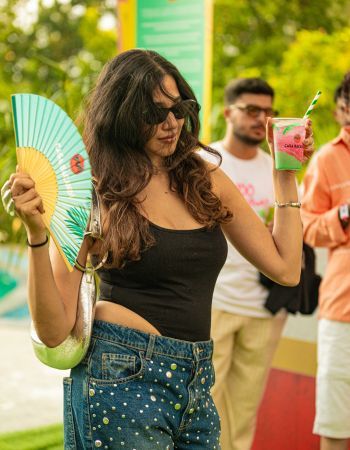
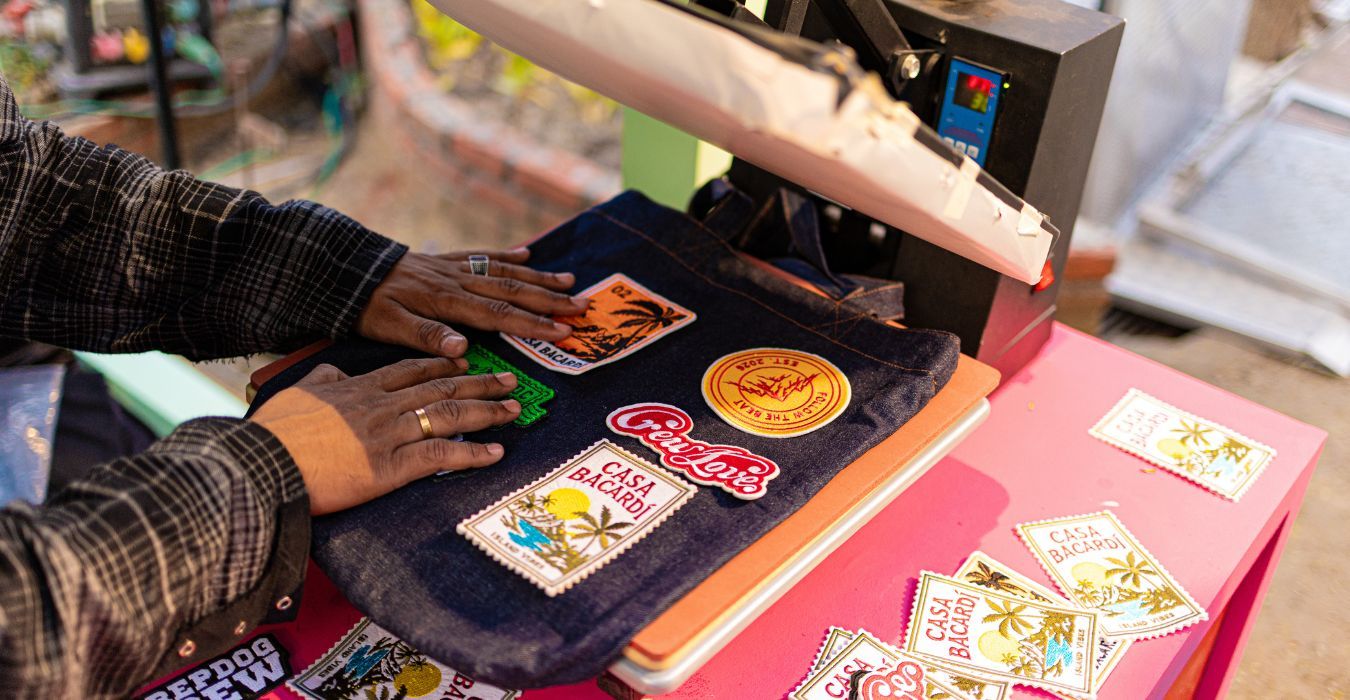
Beyond the musical acts, there were both cultural and gastronomic delights to be savoured: fashion pop-ups, mixology workshops, face-painting stands, and jewellery-making workshops. Enough to keep you on your feet for as long as you can, from one stage to another, to fashion pop-ups, workshops, poolside space, and a food court. The mixology workshop conducted by Jatin Waingankar drew a great response, an indication of the young generation’s affinity for experimentation when it comes to drinks.
Away from the bigger stages, a moderately sized space, accessible via steps, formed what they called “Ruin Bar”. On one end of this room stood a modest bar counter, and on the other side was a DJ playing his tunes, and in the remaining little space, people drank and danced. It was an intimate venue, a totally different world, where the expansive space of the rest of the festival was lost, so did the night sky, and drinks were savoured with extra care, straight out of the bars of Italy and Thailand. Not a bad place for bar takeovers. No Vacancy, a New Delhi-based bar, too, had a takeover at a nearby ground, and their team did bring some real energy and fun to the open space, just beside the food court. Their Bournvita cocktail was a big hit, impressing and confounding everyone with its taste and texture.
The night unfolded seamlessly, yet I couldn’t stop wondering if this seamlessness has a higher, hidden cost. Does convenience and comfort blind us to the caveats? The sprawling resort that housed the concert is one of the many such grand hospitality projects that have sprung up in these regions, often to the detriment of the fragile ecosystem. The wilderness of the mountain is no match for the march of urbanity, and the successful edition of CASA BACARDÍ is just another step forward in that direction.


