
Being a gamer has always been a slightly deliberate act. You queued up at arcades, turned up unannounced at a friend’s house because they owned a console, and eventually saved up to buy one yourself. Gaming was never passive. You went to it. It demanded time, effort, and intention.
That changed with handhelds. When even a PlayStation 5 sitting on your desk can feel like too much commitment after a long day, the industry has quietly pivoted again. Not by making better games, but by making them easier to reach.
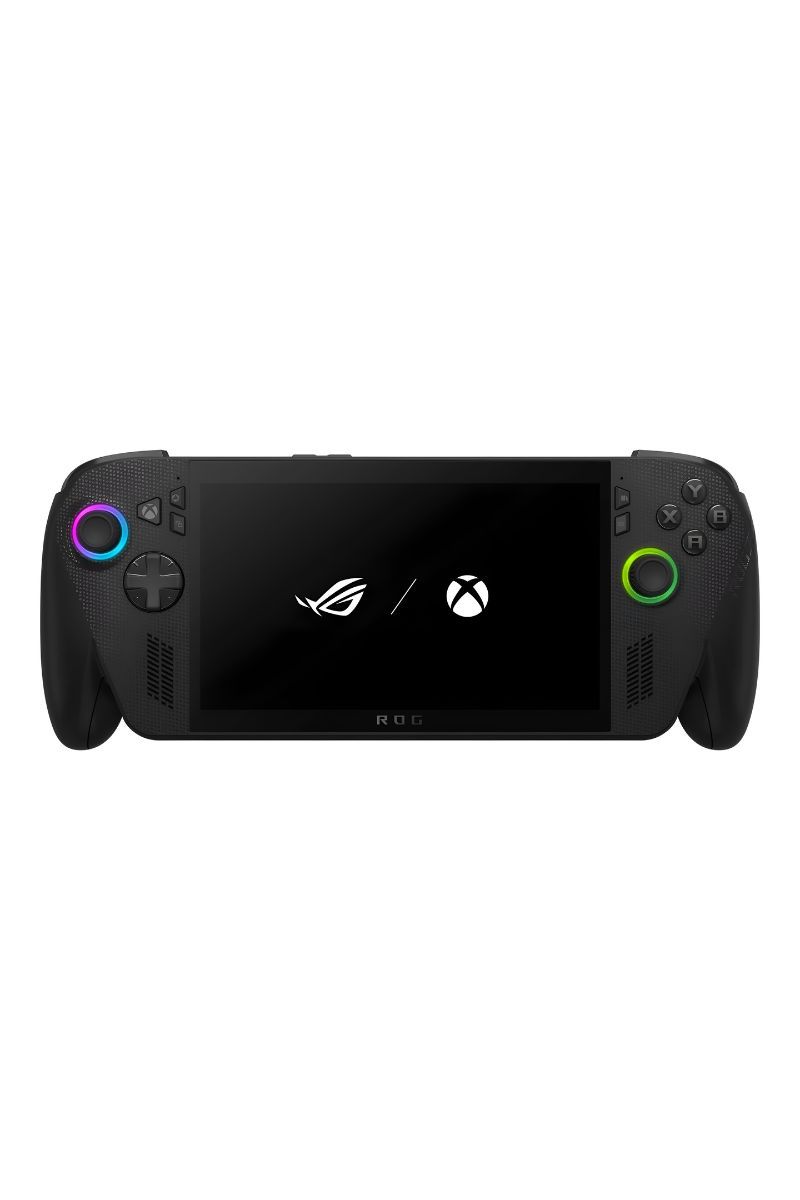
The 2025 ROG Xbox Ally X feels like the culmination of that shift. A trend popularised by the Steam Deck and the Nintendo Switch, it attempts to be a conclusion to what both devices set in motion. Instead, it also exposes a deeper confusion about where handheld gaming hardware stands today. Nearly a month with the device reveals some surprisingly pointed insights into both.
The Good
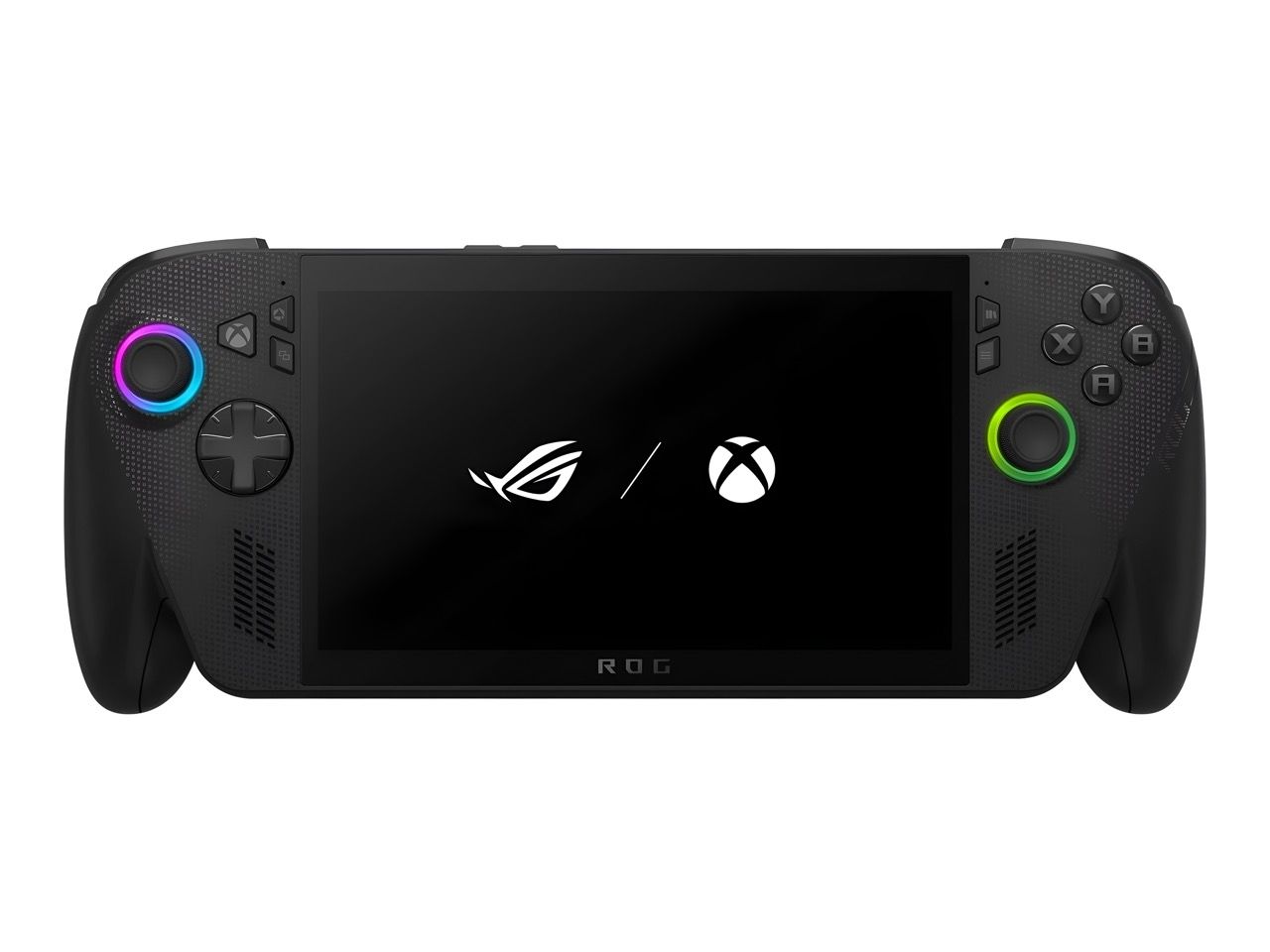
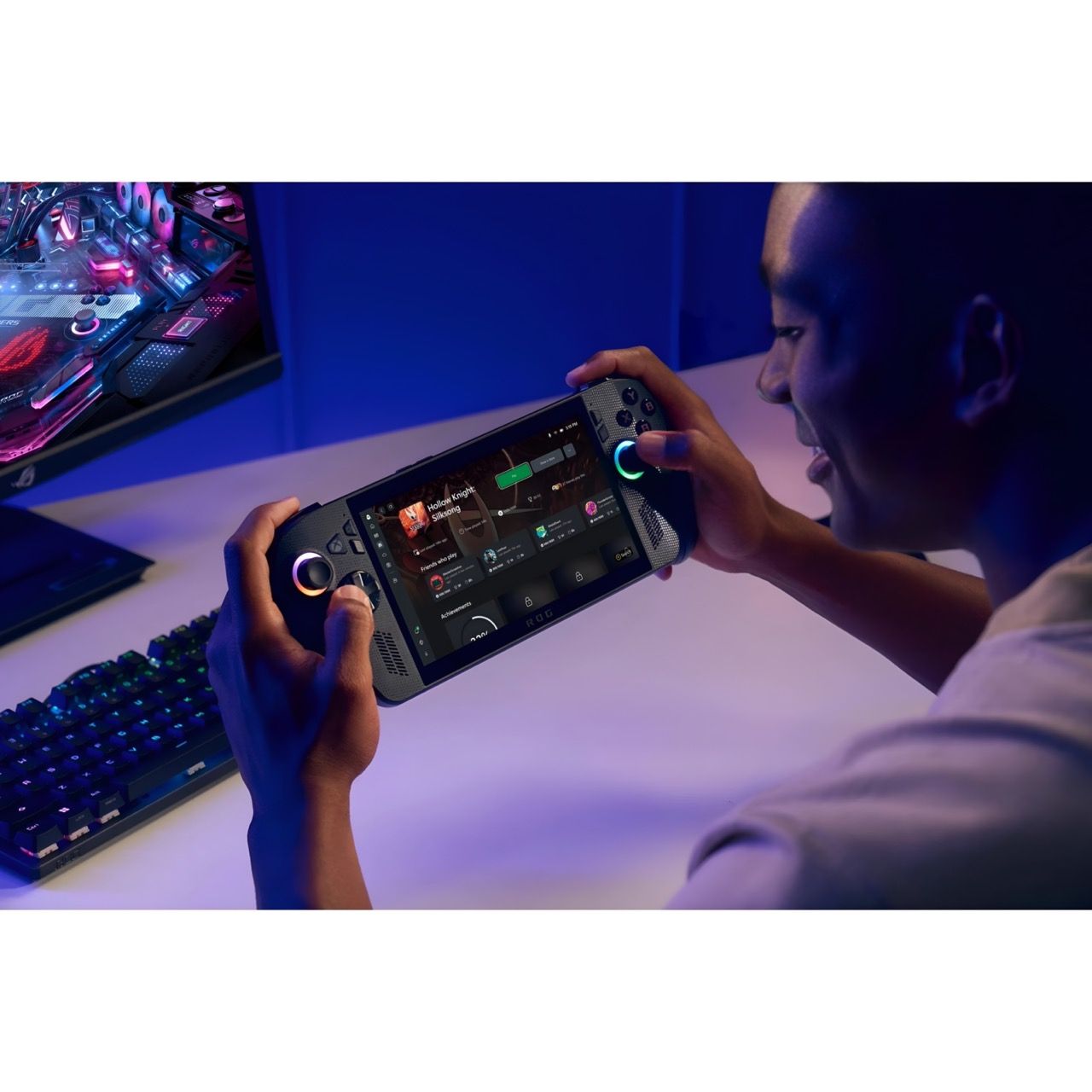 Unboxing the Ally X is a spectacle in itself. Where last year’s model leaned into softer, rounded edges, the 2025 version makes full use of its Microsoft partnership. It borrows liberally from the Xbox controller, still widely regarded as the best gamepad on the market and wedges a surprisingly capable computer right in between.
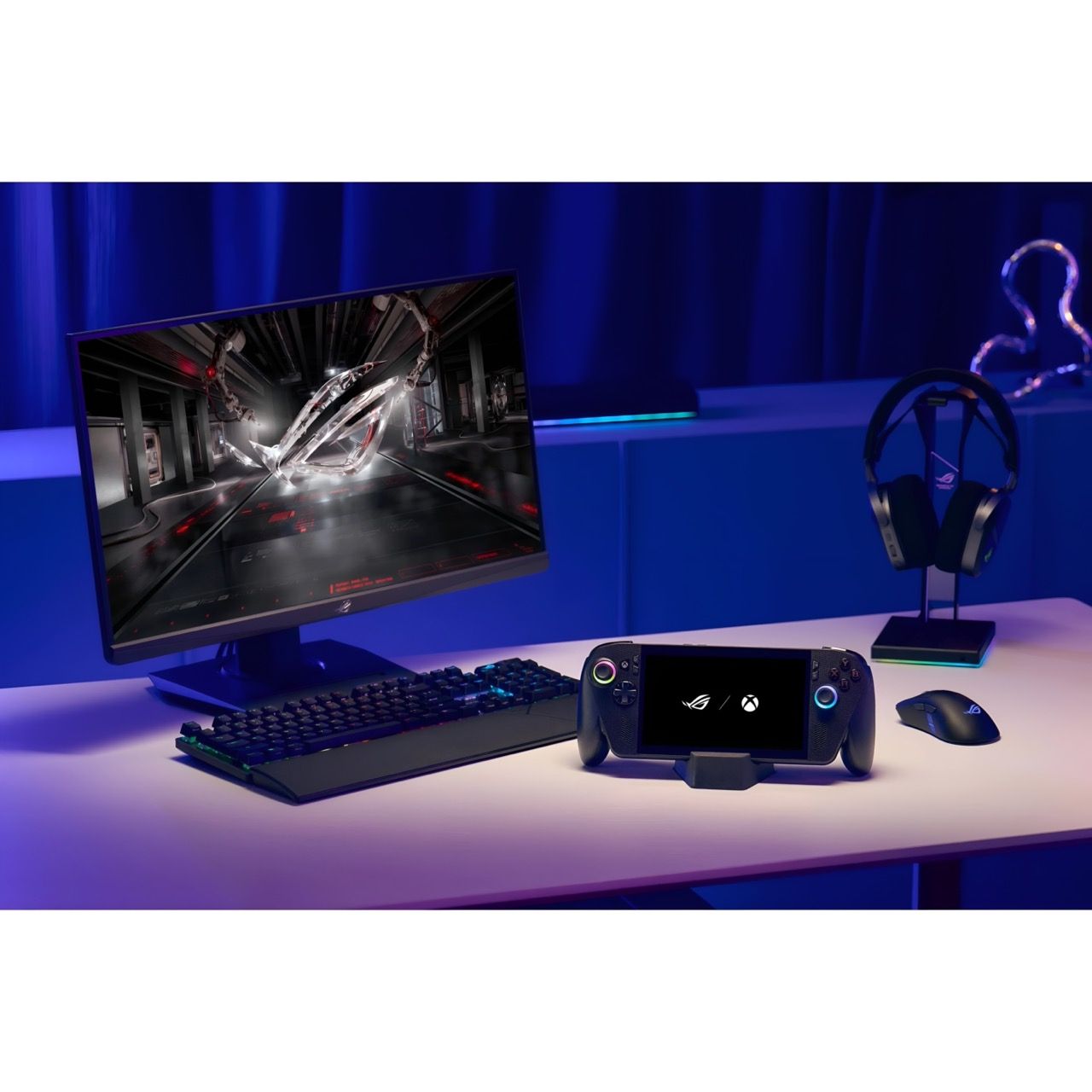
The result is, predictably, a chunky boy. Controller-style grips, a 7-inch LCD panel with thick bezels, and a form factor that feels unapologetically dense. What really works in Asus’ favour here is a clear understanding of its audience. The Ally X is generously equipped with ports, and they actually make sense. You get a 3.5mm combo audio jack, a USB 3.2 Gen 2 Type-C with DisplayPort and power delivery, a second Type-C with USB4 and Thunderbolt 4 compliance, DisplayPort 1.4 with FreeSync support, Power Delivery 3.0, and a UHS-II microSD card reader supporting SD, SDHC, and SDXC cards. This is a handheld designed to live on desks, docks, and cables, not just coffee tables.
Behind the 7-inch display sits a fully-fledged Windows PC, and we will get to what that means in practice. On paper, the upgrades are hard to ignore. Battery capacity is now double that of last year’s model at 80Wh. Storage jumps to a 1TB SSD, up from 512GB, and memory climbs to 24GB of LPDDR5X, which in 2026’s ram shortage world might genuinely buy you a house.
All of this pushes the 2025 Ally X to a manageable weight of 715g, roughly 70 grams heavier than its predecessor. You feel it, but not enough for it to ever feel like a deal-breaker.
The Inconvenient
 Using a Windows-based gaming handheld comes with its own mix of genuine flexibility and persistent irritation. On the upside, support is effectively limitless. Steam, Epic Games Store, Xbox, and just about any launcher a Windows desktop can run all work here. In theory, this is handheld gaming without walls.
In practice, that same openness works against it. You would assume booting up the Ally X means jumping straight into games. It does not. The first few hours are spent navigating updates. Windows updates. Armoury Crate SE updates. Launcher updates. And this is not a one-time ritual. It is something you return to far more often than you would like.
The bigger problem is more fundamental. Windows at present isn’t built for handheld gaming. It assumes a mouse and keyboard, or at least a large touchscreen. Trying to navigate the operating system with a controller quickly becomes an exercise in frustration. No amount of getting used to it changes the reality of poking at small menus, tiny buttons, and desktop-style prompts on a 7-inch screen.
The Xbox app is a clear example of this tension. Asus has done genuine work with Armoury Crate SE, positioning it as a central hub for all your game libraries. It launches automatically at startup, has a dedicated hardware button next to the right stick, and offers quick shortcuts to apps like Steam, which sensibly opens in its controller-friendly Big Picture mode, as well as the Xbox app for accessing your games.
Still, the friction never fully goes away. Armoury Crate helps paper over the cracks, but it cannot fix the underlying issue. Windows remains at the core of the experience, and it remains stubbornly desktop-first.
The Impressive
Once you push past the early friction, the Ally X finally shows what it was built to do. The surprise is not that it can run modern games in such a compact silhouette. It is how confidently it does so. For a device this size, the performance ceiling feels genuinely disorienting at first.
Across demanding, contemporary titles, performance is consistently strong rather than impressively spiky. Games like Indiana Jones and the Great Circle, Resident Evil 2 Remake, and Forza Horizon 5 comfortably hover around the 60fps mark with sensible settings, and more importantly, they remain stable. No sudden drops, no unexpected crashes.
A lot of that comes down to thermal headroom and battery capacity. The larger 80Wh battery does more than improve longevity. It allows the system to sustain performance without immediately resorting to aggressive throttling. Fan noise is noticeable but controlled, and heat management is good enough that longer sessions never feel punishing in the hands.
That confidence really hits when you go back to older heavy hitters. Booting up Gears 5 is a reminder of how far handheld gaming has come. This was once a game that demanded a full console and a living room setup. Here, it retains the same visual weight and cinematic punch on a 7-inch screen. The same applies to Cyberpunk 2077, where dense lighting, texture work, and atmosphere translate far better than expected to a handheld format. Playing games of this scale on something you can slip into a backpack still feels faintly unreal, and even after weeks of use, that sense of disbelief never quite goes away.
The Verdict

I am still a little conflicted about the Ally X. On one hand, it genuinely feels like a game-changing piece of tech. On the other hand, it also feels slightly unfinished, a device with enormous potential that has not quite been fully realised yet.
At Rs137,990, the ROG Ally X is asking serious money. It costs more than a current-gen console and a half-decent gaming PC combined, and Asus does not even bother including a carrying case in the box. That stings, especially at this price.
And yet, it is hard to ignore what the Ally X gets right. The compactness, the sheer capability packed into a handheld form factor, and the confidence with which it runs modern games all feel genuinely impressive. It is the kind of product that feels tantalisingly close to greatness, like an almost-there Michelin-star meal that just needs a bit more time in the kitchen.
If you can afford it and are willing to live with its compromises, there is nothing else quite like it right now. If not, it might be wiser to wait and see where handheld gaming lands next. The idea is right. The execution just needs a little more cooking.


