Arvid Lindblad's first season in Formula 1 has been a promising and eventful introduction to the sport's highest level. Racing for Visa Cash App Racing Bulls (VCARB), the 19-year-old has already shown glimpses of his potential, with a points finish on debut in Australia, a career-best sixth place in Monaco and another points-scoring weekend at his home Grand Prix at Silverstone. The transition to the sport's highest level, however, has also brought its share of challenges, including crashes in Madrid and Baku and a collision with Oscar Piastri that saw him retire from the Mexico City Grand Prix. With 38 points and 11th place in the Drivers' Championship after 19 rounds, Lindblad's rookie campaign has offered a taste of just how demanding life in Formula 1 can be.
At 19, Lindblad is also the youngest driver on the current Formula 1 grid. He is the only driver young enough to have a mathematical chance of breaking Kimi Antonelli's record as the sport's youngest-ever World Champion, set when the Mercedes driver clinched the 2026 Driver’s Championship at 20 years and 68 days.
While he races under the British flag, Lindblad has always been vocal about his Indian heritage. Born to a British-Indian mother and Swedish father, his strongest connections to Indian culture came through his maternal grandparents, who who watched the Buddh International Circuit come up from their Noida apartment, not knowing that one day their grandson would be driving on it, when he drove Sebastian Vettel's 2012 title-winning Red Bull RB8 in March this year.
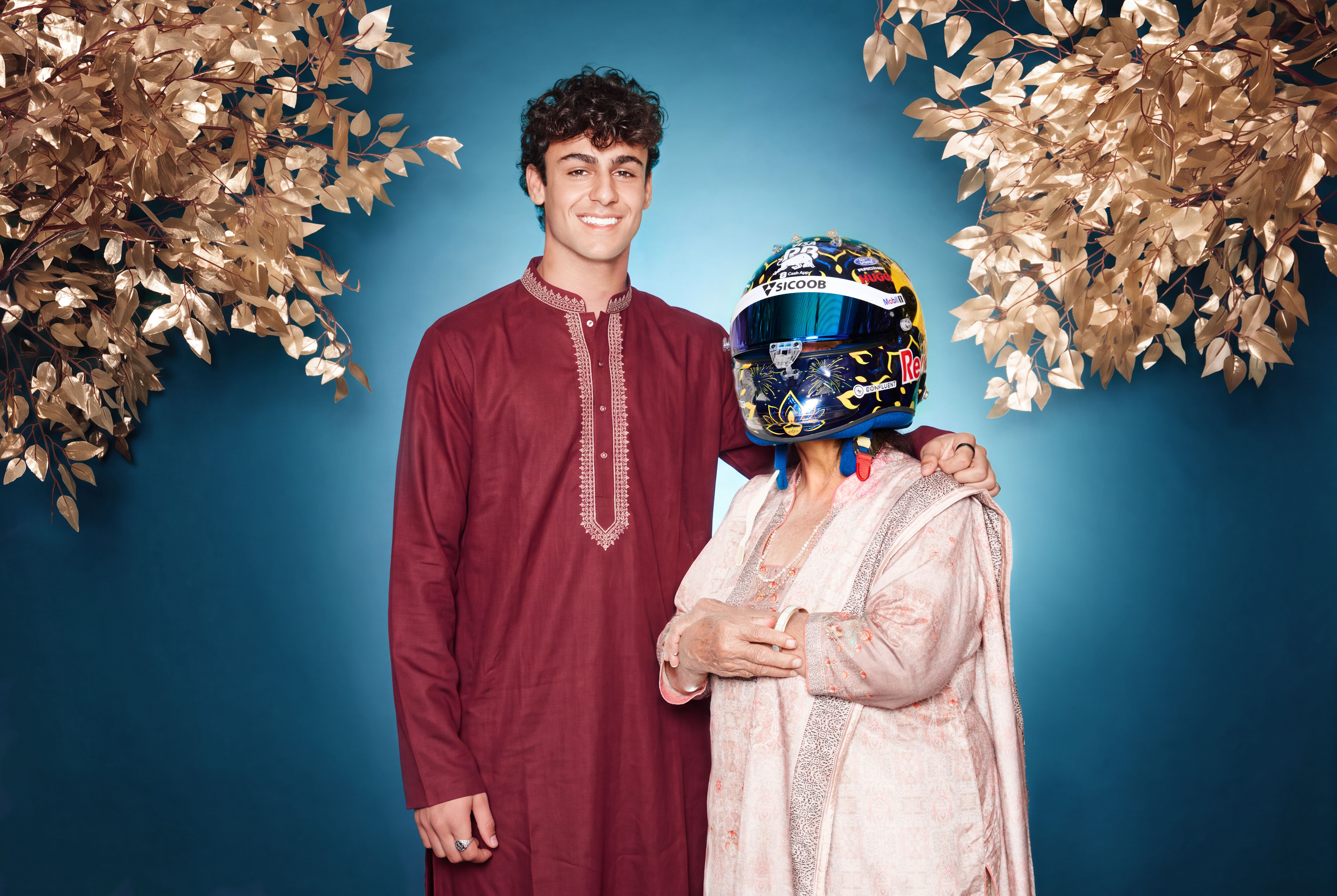
With Diwali coinciding with the São Paulo Grand Prix on November 8, Lindblad will be taking a little piece of the celebrations onto the track. The 19-year-old has designed a special helmet for the occasion, incorporating rangoli patterns, diyas, a lotus flower and fireworks, alongside a Phulkari-inspired design paying tribute to his Nani and her Punjabi heritage. More than a festive gesture, the helmet is a personal expression of the culture and family traditions that continue to shape his connection to India.
We sat down with Arvid in the week leading up to the Brazil GP and spoke to him about his design process for the helmet and the family traditions that it represents. We also discussed demands of his first Formula 1 season, the training and nutrition routines that keep him race-ready, his growing connection with Indian motorsport fans and why the possibility of racing in India would mean so much to him.
In Conversation With Arvid Lindblad
Q. Your debut F1 season has had a bit of everything — points on debut, your best result yet in Monaco, points at your home race, an early retirement in Canada and a few crashes. What’s been your biggest learning so far?
Arvid Lindblad: I think there have been many. It's been a very enjoyable year. Overall, very, very positive. Obviously, it's been a big change, and the team has helped me a lot in getting up to speed and adapting to it. They're very used to welcoming rookies, so it's been really good on that side.
There are many things I've learnt, obviously in the car, but honestly, a lot outside the car as well. Working with the team, managing more commitments and managing my energy throughout the year.
Q. What’s been the biggest change in your life since becoming an F1 driver? Are you getting recognised more often, and how are you adjusting to that attention?
Arvid Lindblad: Yeah, for sure, I get recognised a little more. But, being honest, I'm still relatively pretty small on the grid but I'm not one of the big guys, so it's still pretty chill, I’d say. But for sure, I get recognised a bit more.
Q. The Racing Bulls social media team seems to keep you busy. What have been some of your favourite trends so far?
Arvid Lindblad: I think the team is honestly quite creative. We have to do a lot of stuff, so for sure there are some things that are better than others, but I would say almost every week there's at least one idea that's quite funny. In Austin, they did some pretty cool ones. Honestly, I struggle to name one that I've loved, but in general, they’re quite enjoyable to do with Liam (Lawson) because we get along really well. It’s not energy draining and quite chill.
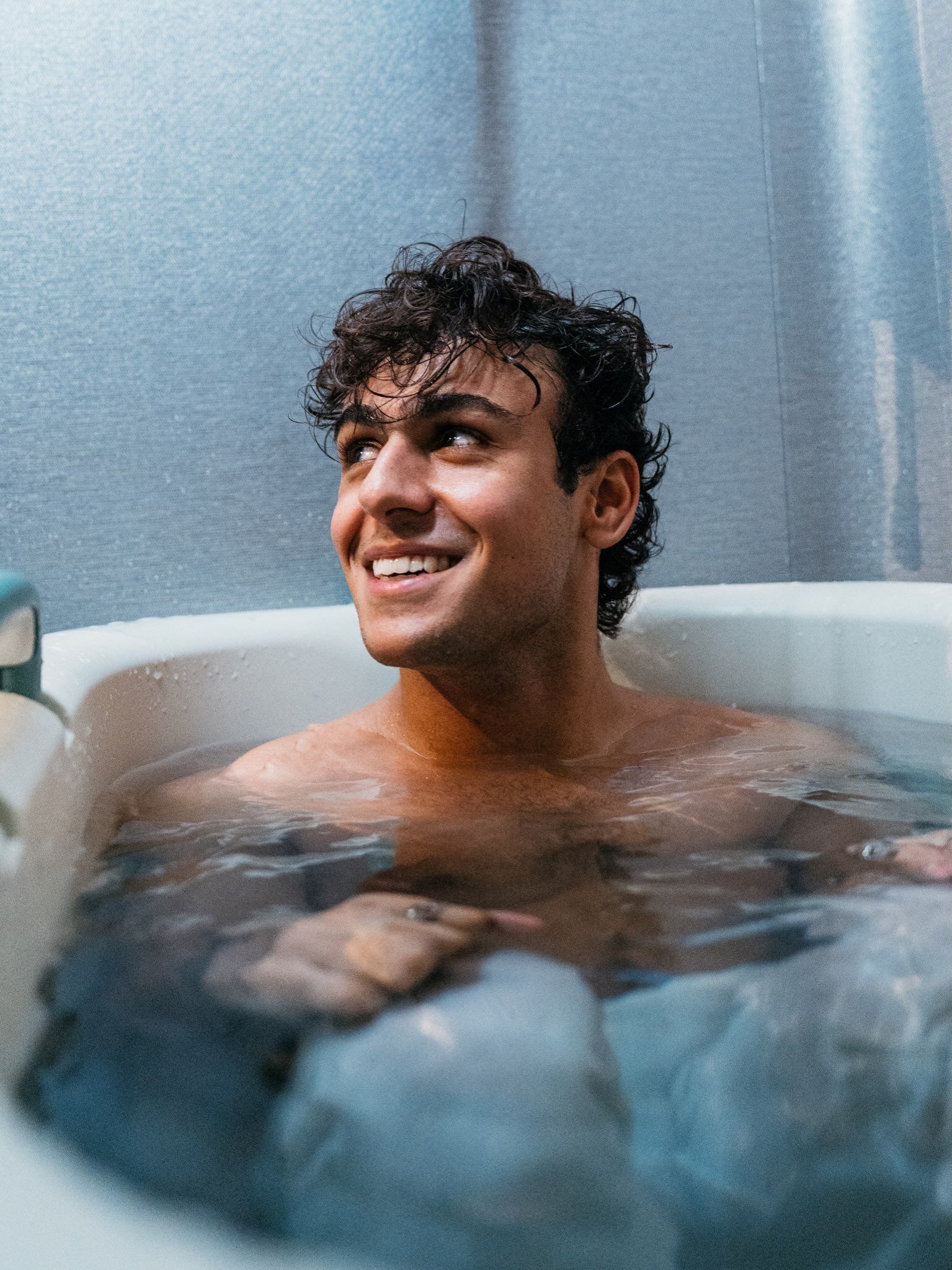
Q. What does your fitness routine look like during the racing season? How many times a week do you work out?
Arvid Lindblad: It varies throughout the year, depending on where I am, what I'm doing and the intensity of the races. Earlier in the year, I was doing quite a lot of training, especially during the longer breaks when I'd be at home. I'd be training basically every day and had a really good routine.
Now that we're getting towards the end of the year, everyone's a bit more tired and energy levels are lower, so the focus is more on recovery. At the end of the day, I've been driving all year, so I'm very well adapted physically to the car. There are sort of limited gains to be made there, but making sure that I'm coming into every week energised, motivated and happy is what's making the difference now. Obviously, now that I'm away from home, it's not as easy to train but I still do one or two sessions a week, but the primary focus is more on recovery.
Q. How strict are you with your diet during the season? What does a meal look like on race day and what’s your go-to cheat meal?
Arvid Lindblad: At the track, I'm very lucky that we're looked after really well by Red Bull at the Energy Station. My trainer and I basically send them a menu of all the things I should eat, on which day, at what time, and the portion sizes. So everything is very well managed on track.
For breakfast, there's usually a rotation between overnight oats, avocado toast with eggs and protein pancakes. For lunch, I've got very much into burritos recently, so I've been having those. Otherwise, it's chicken and rice or chicken pasta. For dinner, it'll either be chicken curry or another curry, or a stir-fry with rice or noodles.
I think sometimes at home (my diet) could still be managed slightly better, but it's pretty good. I wouldn't say we have proper cheat days. The reality is that it's hard enough to follow the routine properly because of all the travelling, so normally, whenever we can, we just try to eat well. But if I have guilty pleasures, I love sweets. Whenever I can indulge in something, a packet of sweets is something I enjoy.
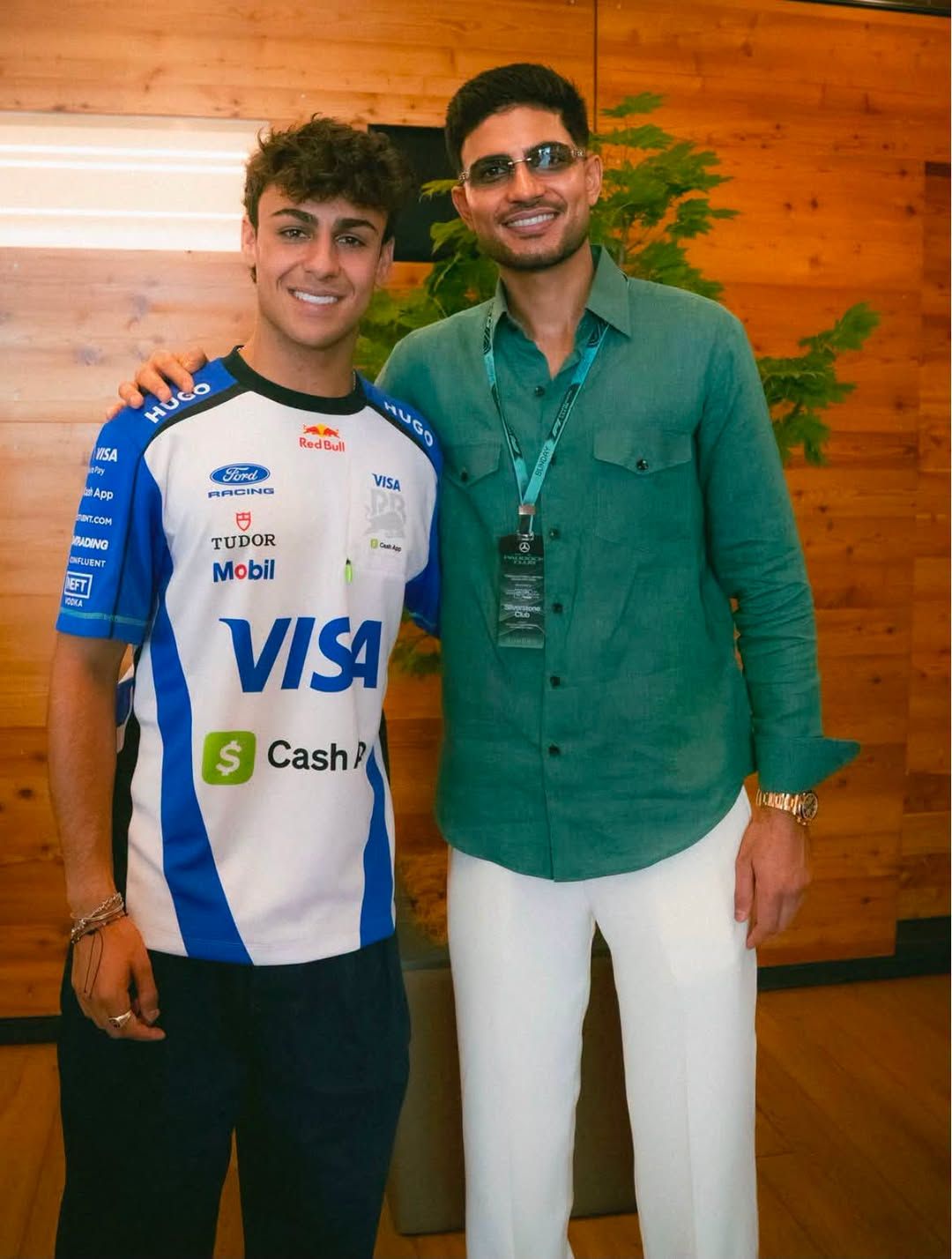
Q. You met Shubman Gill and Ishan Kishan while watching cricket in the UK, and then Shubman came to watch you race at Silverstone. What was it like having another athlete come and watch you do your thing? Did you get to compare notes on performing under pressure?
Arvid Lindblad: Talking a bit about cricket, it's something I've seen a lot growing up. I spent a lot of time with my Nani and Nana, and whenever I'd visit them, they'd always have cricket on in the background. So growing up watching IPL games or international matches is something I'm very used to. It was really nice to go and experience my first live game earlier this year. I really enjoyed it. Obviously, the pace of the match is a bit slower than what I'm used to in F1, but it was still very enjoyable.
I got to meet Shubman and that was really nice. He's a really cool guy. We get along very well, and it's interesting because, as athletes from different sports, we did talk a little bit about mindset and things like that now that we've got to know each other better. It's interesting to compare the differences and similarities between the sports.
Q. You’ve told me before that some of your earliest memories of Indian culture came from your grandparents. Now that you’ve experienced India for yourself, has your relationship with that side of your heritage changed? Has there been an interaction with a fan here that’s really stayed with you?
Arvid Lindblad: My Nani and Nana are a big part of my connection to India. From an early age, my parents would be away working, and I spent a lot of time with them. They played a big part in raising me, so I've been exposed to Indian customs and traditions for a very long time.
It was very special for me to go to India for the first time and really experience all of that. Like I said, I've celebrated these festivals from home, and they've been a big part of my upbringing. But seeing everything in real life for the first time and getting a real appreciation of it was very special. It felt like it brought everything to life and gave it a greater meaning.
That's why I always enjoy going to India, and I try to make the effort whenever I can during the breaks. Normally, it's towards the end of the year because the racing calendar is quite busy. My grandparents still have an apartment in Greater Noida, which is actually quite close to the Buddh International Circuit, so we're still very connected there. I enjoy it a lot.
On the fan side, I've met fans from India. I can't remember any particularly funny interactions, but they're always very nice. Actually, earlier this year, a fan gave me some Indian snacks, which was quite nice. They're always very friendly and respectful, which is lovely.
Q. For your Silverstone helmet, you worked with British-Indian artist Navinder Nangla, who illustrated your journey to F1. With your Diwali helmet, what was the initial brief and what did you know you wanted to express about your Indian heritage?
Arvid Lindblad: I think for me, Diwali has always been about family. It's been a very personal celebration that we've always had. This year, unfortunately, I'm not going to be able to celebrate it in the normal way because I'll be racing in Brazil, but I still wanted to do something to celebrate it.
So I decided to come up with a helmet, and I wanted it to be very personal because, like all family traditions, these things are quite personal and important. I had quite a lot of involvement in the design. I discussed a lot with my mum about what we wanted on the helmet, including the rangoli, the diyas and the whole idea of representing light in the dark.
We wanted a very dark navy blue as the background colour, but then all the yellow and orange would be really bright, with the glitter popping. That was all about representing the idea of light over darkness, which is what Diwali is all about.
We also included Phulkari embroidery for my Nani because she used to wear a lot of chunnis. We discussed what we wanted on the helmet and the idea behind it, and although I've been quite busy this year, I was involved as the designs came through, saying yes or no to the elements I liked.
I think it's turned out really well, and I'm really happy with it. I think it's a really good balance of being authentic, following tradition and being genuine, but also having that nice balance of being aesthetic, young and creative.
Q. When we last spoke, you were looking forward to your first Indian show run as an F1 driver. Having now experienced the excitement of Indian motorsport fans firsthand, what has surprised you most about the way people here connect with racing? What would it mean to you if you ever had the opportunity to race in India in Formula 1, in front of the passionate Indian fans?
Arvid Lindblad: I really enjoyed the show run at the Red Bull Motor Jam. It was very cool to do that in front of the Indian fans, and I felt like I was connecting with them.
Obviously, everyone knows that the main sport in India is cricket, and that's what everyone is very passionate about. But I think there's also a growing audience on the motorsport side in India. It was really cool to be so close to the fans and see how passionate they all were.
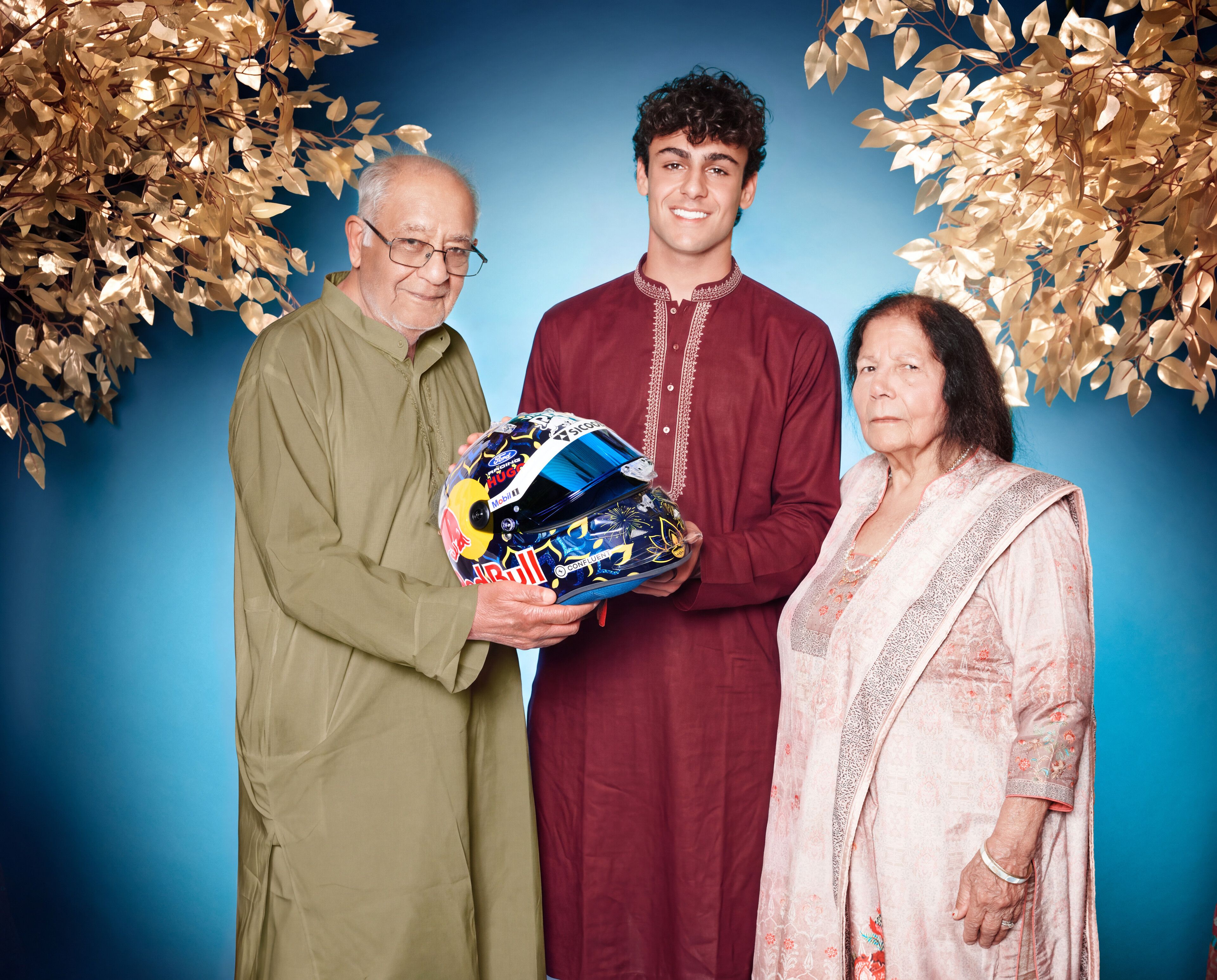
Touching on the Indian Grand Prix, it would be very special for me if it were to come back. As I mentioned earlier, my grandparents have an apartment in Greater Noida, which is near the circuit. My grandad was there when the circuit was being built; he saw its beginnings.
It's actually quite funny because the decision to build the circuit was made in 2007, which was around the time I was born. I don't remember the exact months, but I know it was around the same time.
It would obviously be something very special. My grandparents witnessed the circuit being built, and I think they would never have imagined that their grandson would become a Formula 1 driver and potentially even race on that circuit himself.
As I've always said, I'm very proud of my Indian roots, and I feel very connected to them. So to have an Indian Grand Prix would almost feel like another home race, which would obviously be very special and enjoyable.


