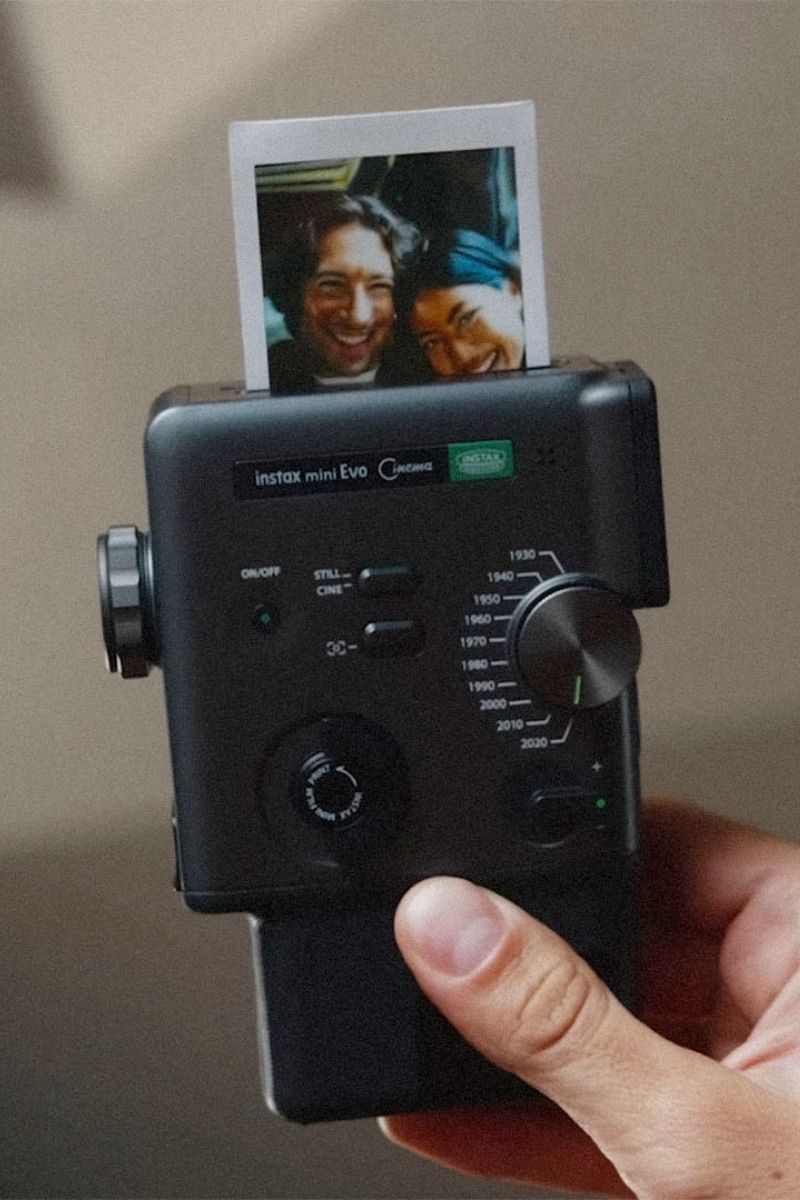
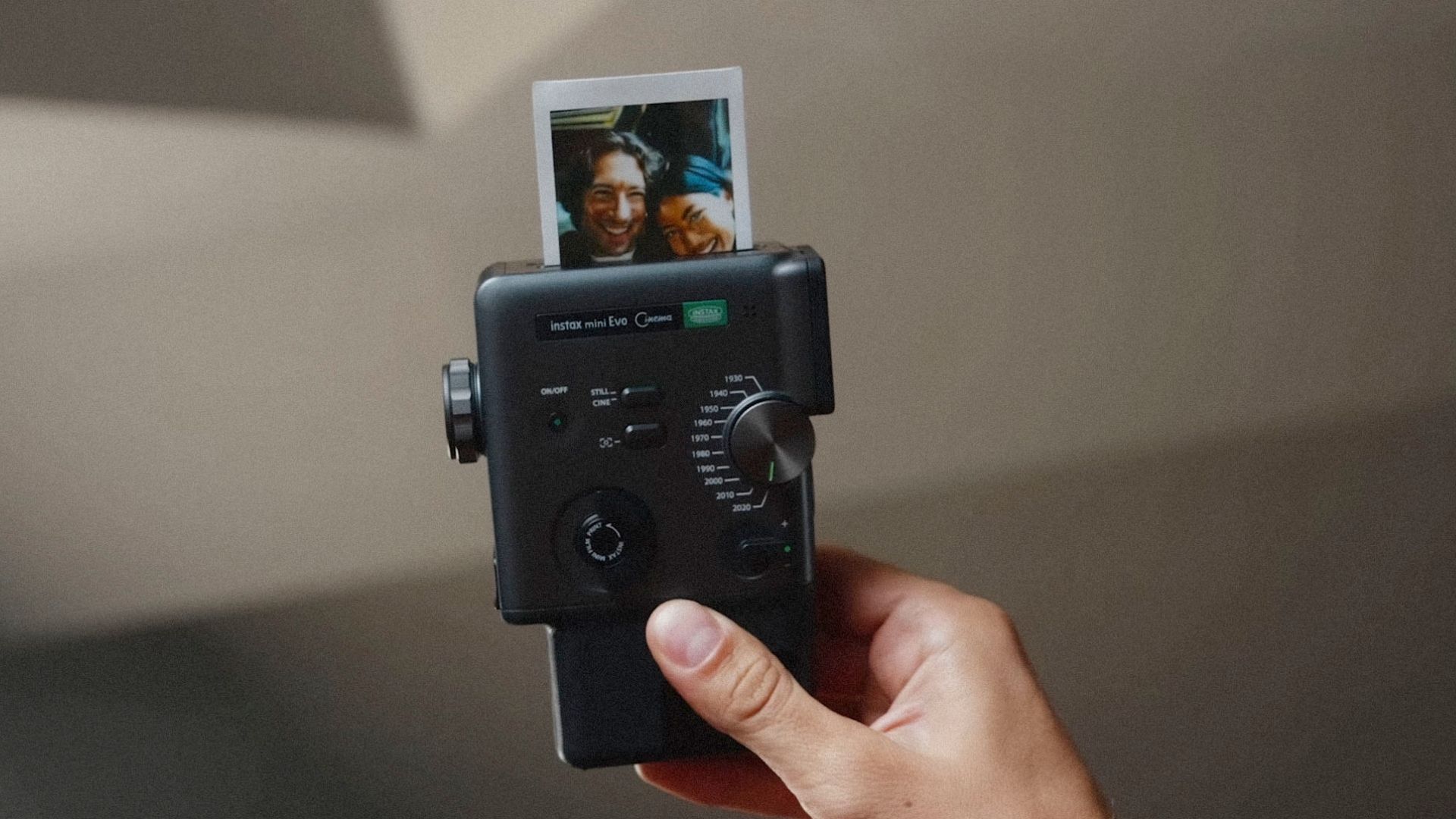
The Goa trip had been sitting in the group chat for months, slowly gathering suggestions, abandoned itineraries and increasingly implausible promises that this time, everyone was definitely free. When it finally escaped WhatsApp and became an actual road trip, we approached it with the sensible restraint you would expect from a travelling carnival of creative professionals.
There was a visual artist, a scriptwriter and actor, an art historian, two animators and illustrators, and one journalist. Between us, we were carrying enough cameras to document a minor military campaign. There were mirrorless bodies, DSLRs, and of course, phones in our hands at all times. Some of us had a vague ambition of returning with a road-trip film. I arrived with perhaps the strangest camera of the lot: the Fujifilm Instax Mini Evo Cinema.
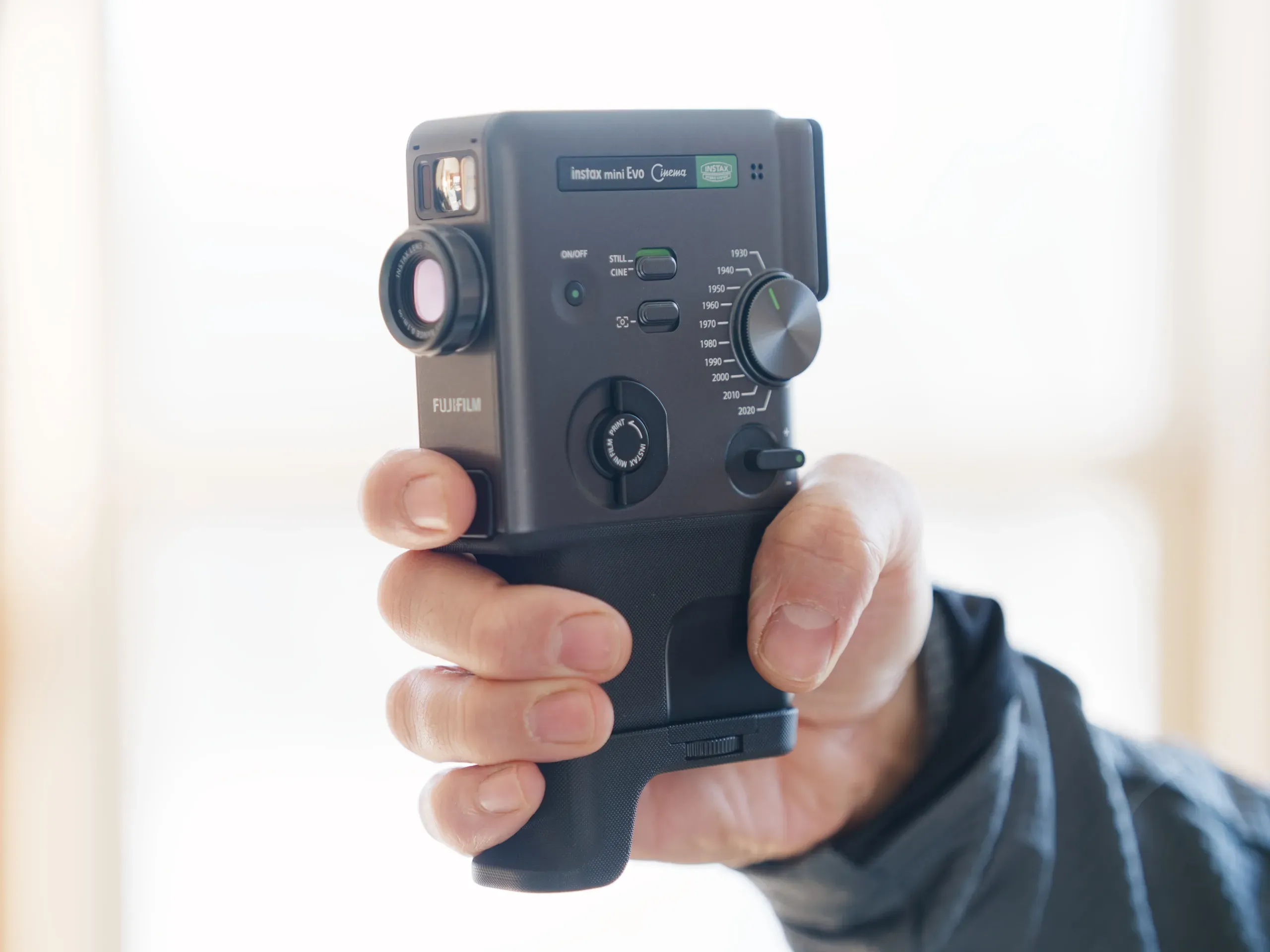
Announced in January, the Mini Evo Cinema is a hybrid instant camera that shoots stills, records short video clips and prints onto Instax Mini film. Its upright body is inspired by Fujifilm’s Fujica Single-8 home-movie cameras of the 1960s, complete with a pistol grip, side-mounted controls and a removable viewfinder attachment. It looks more like a prop from an old family holiday film than a conventional instant camera, which immediately made it a good fit for the occasion.
Underneath the styling, however, it is a fairly modest digital camera. It uses a 5MP, 1/5-inch CMOS sensor paired with a fixed 28mm-equivalent f/2 lens. Stills are recorded at 1,920 x 2,560 pixels, while standard video is limited to 600 x 800 pixels at 24fps. A higher-resolution 1,080 x 1,440 mode is available, but only while using the camera’s 2020 Era setting and with a microSD card installed.
The unusual bit is the Eras Dial on its side. It moves through ten treatments inspired by moving images from every decade between the 1930s and 2020s. A second ring around the lens adjusts the strength of each effect, giving you 100 possible combinations, while another switch can add decade-specific frames and overlays. The changes also extend to video audio, with effects intended to evoke old film reels and other period sounds.
That sounds like a lot to process, but the camera is pleasantly easy to use. A switch changes between still and cine modes, the shutter sits naturally beneath your index fingerand the large Era dial clicks firmly between decades. The body is built almost entirely from plastic and weighs around 270g without film or storage media, so it is easy enough to carry, even if its tall, awkward shape rules out slipping it into most pockets.
Its best control is also its most unnecessary. Once you have selected an image to print, you pull out and rotate a large, satisfyingly ‘clicky’ winding lever on the side. The rear screen plays a small animation of the photograph emerging before the real print appears from the slot above. A button could have performed exactly the same function, but that would miss the point entirely.
The first time I used it over dinner, the entire table stopped to watch. As the little print emerged, it was passed around our increasingly hungover, seafood-filled crew, earning precisely the kind of oohs and aahs Fujifilm’s designers must have hoped for. People who had shown no interest in comparing lenses or film stocks suddenly wanted their photograph taken. Someone else wanted to try the lever. Another person wanted a second print to keep. For the next hour, the Mini Evo Cinema was less a camera than a small piece of table-side entertainment.
It is difficult to overstate how much the physical ritual adds to the experience. Winding the lever, watching the animation and waiting for the image to develop makes the result feel like an event. The camera is full of details that exist primarily because they are pleasurable to use, and that is not something I am inclined to dismiss. It reminded me of a design principle that we have somewhat lost since the consumer electronics ‘golden age’ of the early 2000s—gadgets are allowed to be fun.
The Morning After
The following day, we took the camera south to visit some of Goa’s churches. This was much closer to its natural habitat. The monsoon had left the landscape green and overcast, with soft daylight falling across whitewashed facades, old stone, tiled roofs and damp streets.
In those conditions, the Mini Evo Cinema performed reasonably well. The 28mm-equivalent lens is wide enough for architecture and group photographs without feeling wildly distorted, while the muted daylight worked well with several of the more recent Era treatments. On an Instax Mini print, the camera’s limited resolution was much less distracting than it appeared on a larger screen. The photographs had enough detail for the format and, more importantly, looked like convincing keepsakes rather than shrunken digital files.
Fujifilm claims the Mini Evo Cinema produces its highest-resolution Instax prints yet, reaching 600dpi when printing directly from the camera. That improvement is visible in the crispness of text, frames and finer details. The camera can also function as a portable smartphone printer, although images sent from a phone are printed at a lower resolution than those captured and printed directly from the camera.
This creates one of the camera’s central contradictions. The printing hardware is genuinely impressive, but the photographs supplying it come from an extremely small sensor. In decent daylight, the format hides much of the difference. Once conditions become more demanding, the weakness of the camera module begins to undermine the quality of the printer attached to it.
That became obvious during a night out around Chapora Lane. It should have been an ideal setting for the Mini Evo Cinema: crowded bars, colourful lights, loud outfits and the best fits anyone had packed for the trip. These were exactly the photographs we would have wanted as physical souvenirs afterwards.
However, the camera struggled. Faces became soft, fine detail disappeared and darker scenes picked up an unpleasant amount of noise. The flash could rescue a close group portrait, but it also flattened the atmosphere that had made the scene interesting in the first place. Its quoted flash range is only around 50cm to 1.5 metres, while the camera automatically tops out at ISO 1600, leaving it with limited room to recover in dim conditions.
The results were not unusable; some shots even acquired a scruffy charm that suited the night. But too often the deficiencies felt less like deliberate lo-fi character and more like a tiny sensor running out of light. There is a meaningful difference between an image looking rough because of an aesthetic choice and looking rough because the hardware could not manage the scene.
The Eras system also lost some of its appeal as the trip continued. For the first hour, cycling through the 1930s, 1940s and 1950s is entertaining. The filters are thoughtfully made and clearly distinct, rather than minor variations of the same colour grade. But most of us soon settled on a few options from the 1980s onwards and barely touched the earlier settings again. The oldest decades produced a few curious raised eyebrows, then became something we showed new people before returning to the modes we actually liked.
The video function is similarly caught between a clever idea and limited execution. Clips can run for up to 15 seconds, after which they can be linked to a QR code printed onto an Instax photograph. Scanning the code plays the associated video on a phone, effectively allowing a physical print to carry a moving memory. The problem is that standard clips are recorded at a very low 600 x 800 resolution, and even the higher-quality mode remains modest by contemporary standards. The videos feel designed to be viewed as novelties within the Instax ecosystem rather than used as serious travel footage.
The all-plastic construction presents another mixed result. The camera is light, the ergonomics are good and nearly every switch or dial is enjoyable to operate. Yet the material quality never quite matches the price or the strength of the design. The Fujica Single-8 inspiration makes the Mini Evo Cinema look like a small enthusiast object, but in the hand it feels closer to a premium toy.
That description sounds harsher than my experience of actually using it. The camera brought people together, gave us physical photographs before the trip was even over and produced several images I would rather have in a drawer than buried somewhere in my phone. There is value in all of that. The limitation is that the Mini Evo Cinema’s strongest qualities surround the act of photography, while the photographic hardware itself remains its weakest link.
Fujifilm has nevertheless landed on something unusually compelling. The design, print mechanism and tactile controls deserve a second life in a more enthusiast-focused model. Keep the Fujica Single-8 shape. Keep the winding lever. Keep the sharper instant printing and perhaps a smaller selection of genuinely excellent Era treatments. Then give it a better sensor, stronger low-light performance and a body whose construction feels as considered as its styling.
In its current form, the Instax Mini Evo Cinema is a product of extremes. It can be irresistible around a table and frustrating on the street a few hours later. It is too imaginative to dismiss as a gimmick, but too compromised to become the one travel camera you depend upon. What Fujifilm has made is not quite a must-have yet. It is, however, an unusually sincere first draft of one.


