

The idea of a tech product becoming a collector’s item feels a bit contradictory by nature. Most gadgets are built to be used, abused, upgraded and eventually forgotten in a drawer somewhere. But every now and then, something comes along that feels less like a device and more like the sort of thing you would keep in a glass cabinet and irrationally refuse to let anyone touch.
Last year, ASUS launched the ROG Flow Z13, a tablet that had enough performance to make plenty of gaming laptops look slightly embarrassed. This year, it has gone one step further.
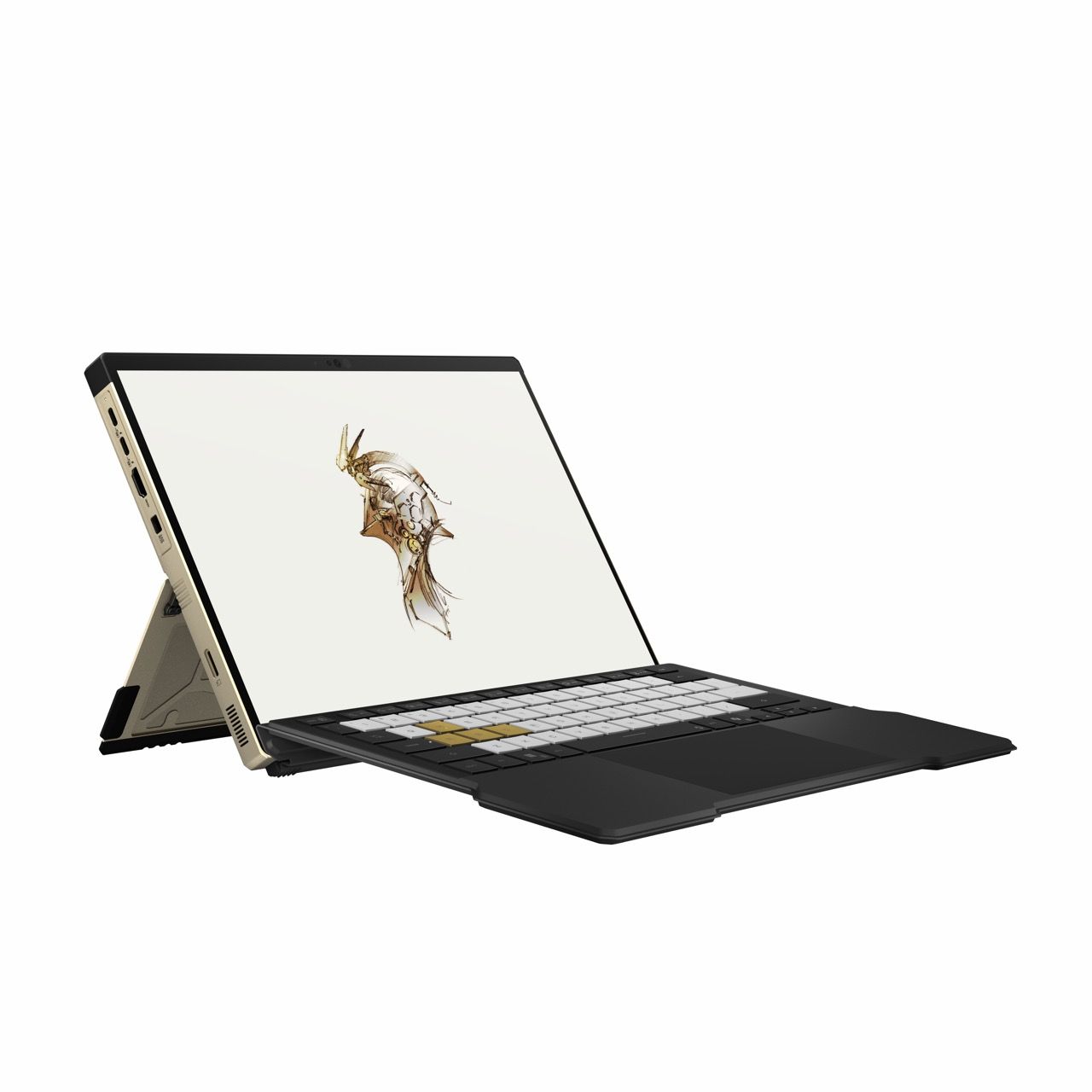
Meet the ASUS ROG Flow Z13-KJP, a collaboration between ASUS and Kojima Productions celebrating the tenth anniversary of Hideo Kojima’s studio. Technically, it is still a tablet computer. In reality, it looks like the sort of thing a billionaire supervillain would use to launch satellites.
A Legendary Moniker
Unlike most people, my tryst with Hideo Kojima did not begin with Metal Gear Solid. It began during the pandemic, when I picked up a PlayStation 5 with God of War and Death Stranding. At first, I genuinely did not get it. For the first few hours, I kept wondering if I had somehow paid full price for a game about a man delivering parcels and falling over rocks.
But somewhere between the long walks, the eerie silence, the strange beauty of its empty landscapes and the complete absurdity of carrying cargo up mountains, something clicked. During a time when the real world felt like it was actively disintegrating outside the window, Death Stranding felt oddly calming. Almost meditative. It was lonely, weird, self-indulgent and occasionally ridiculous. Which, in many ways, is exactly what makes Kojima’s work so compelling in the first place. I think I finally got it.
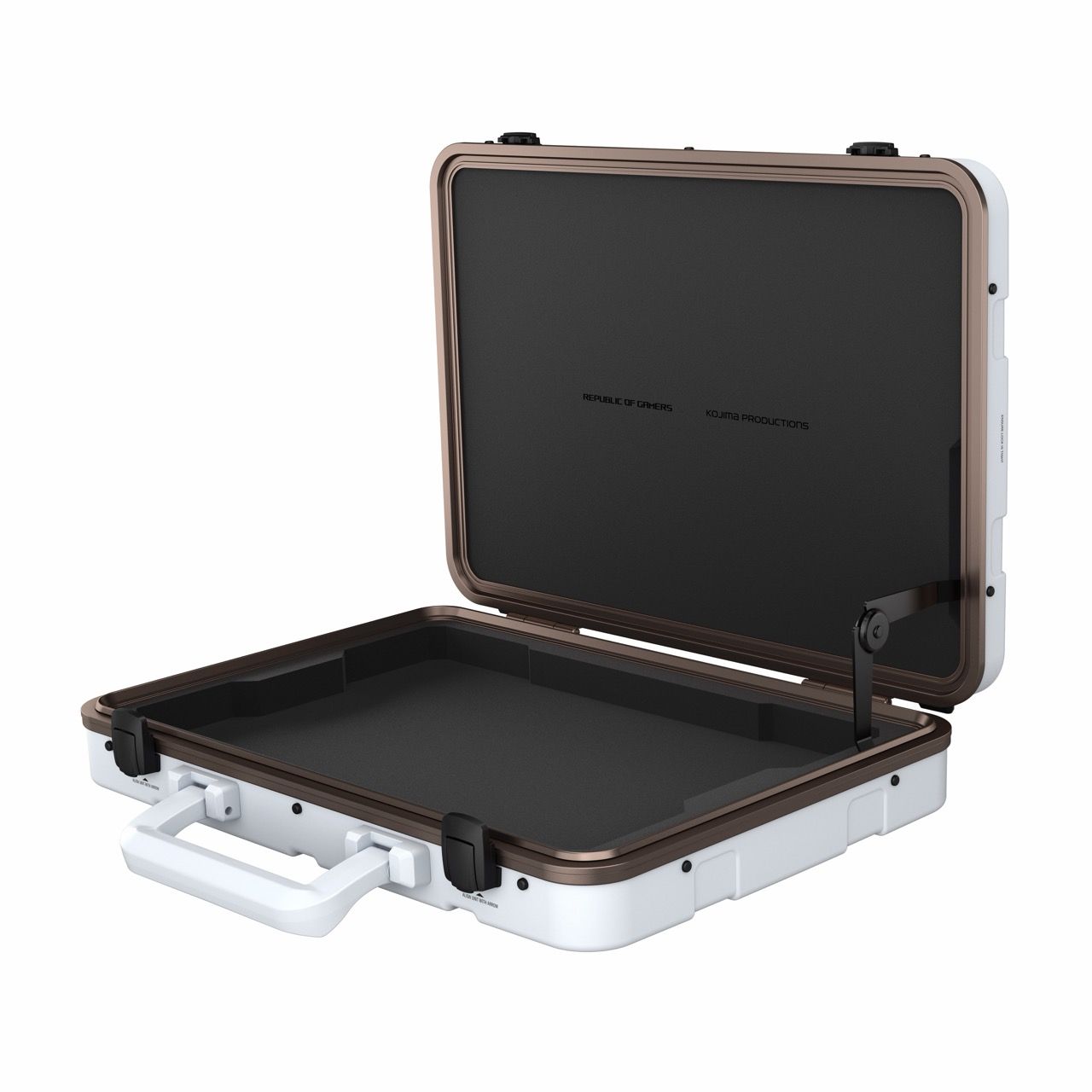
That alone, though, does not make the ASUS ROG Flow Z13-KJP interesting. What does is how much thought has gone into making this feel like a proper object rather than just another limited-edition reskin. The whole thing looks like one of the cargo cases Sam Porter Bridges would lug across a mountain in Death Stranding 2: On the Beach.
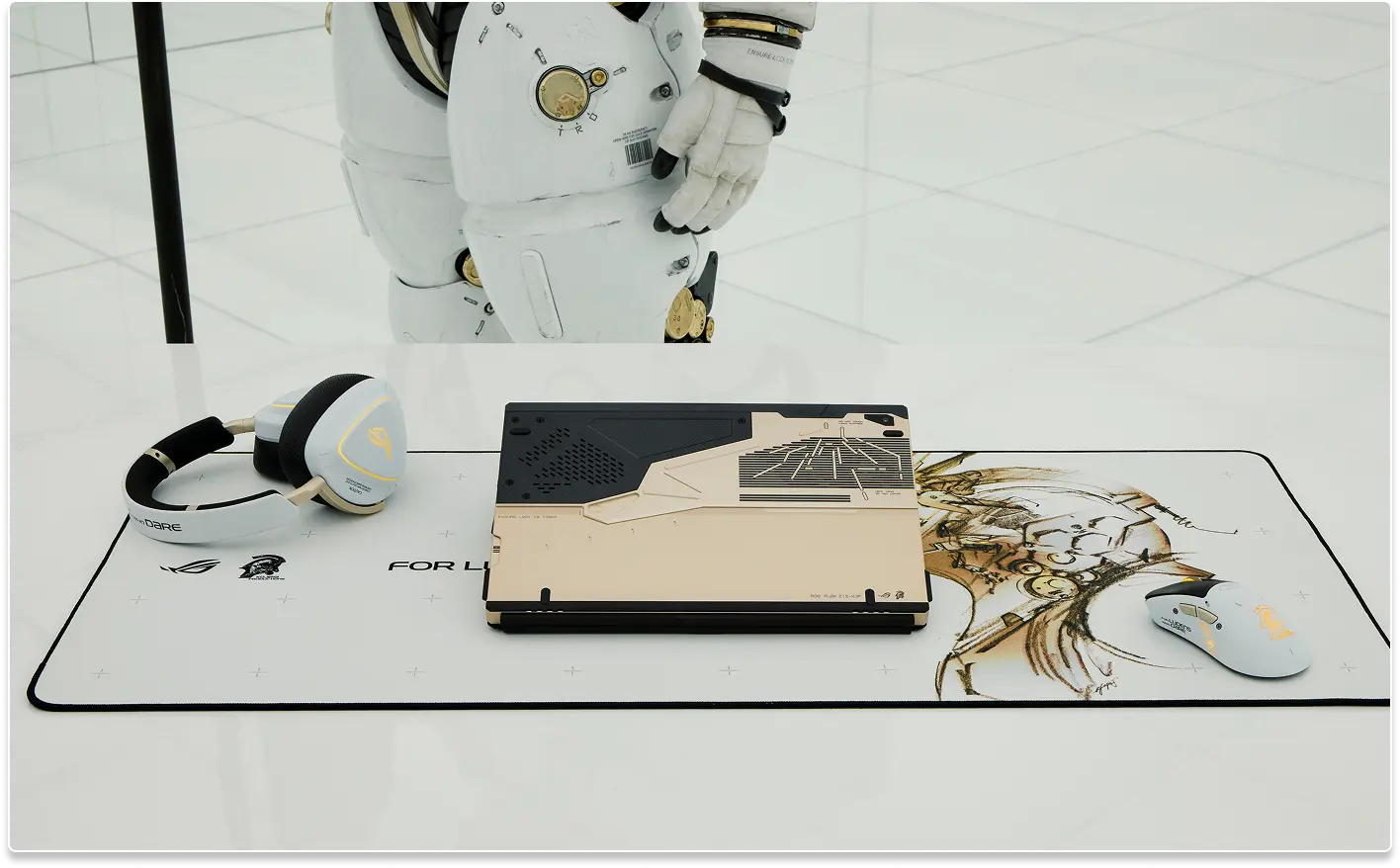
Compared to the standard Z13, this is a far more dramatic-looking machine. The usual dark greys have been swapped for muted gold and carbon fibre accents, giving it the sort of military sci-fi look. Turn it around and the rear is just as considered. One vent disappears neatly into a carbon fibre panel, while the other has been laser-etched with a dotted beam pattern that looks more like a spacecraft hull than cooling system.
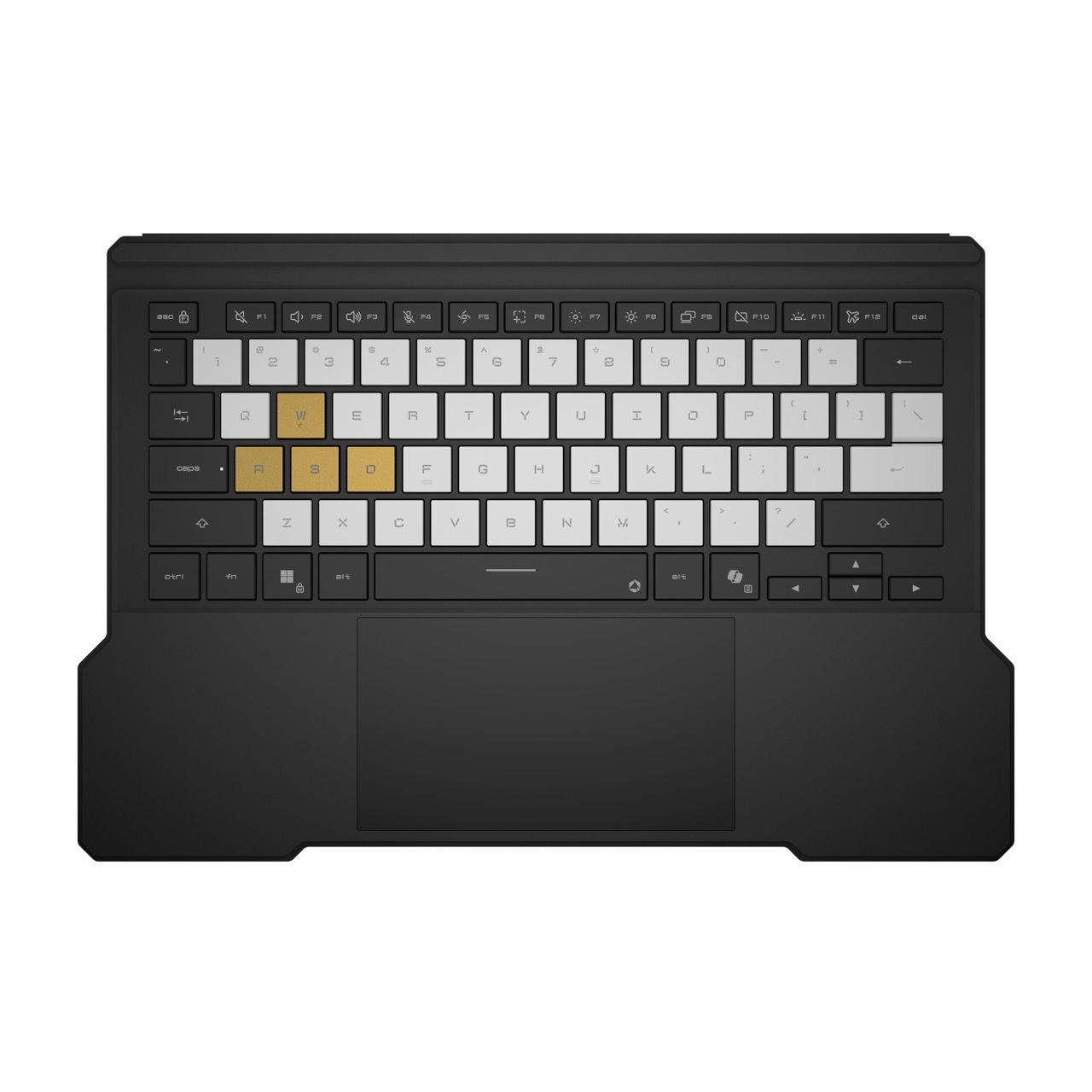
Even the accessories have been treated with the same level of care. The detachable keyboard folio gets white-and-gold WASD keycaps and a more industrial-looking typeface, while the included hardshell carrying case is modelled after the cargo containers from the sequel game.
Package And Performance

The most impressive thing about last year’s ROG Flow Z13 was what it managed to pack in its rather compact body. This year is not any different, except for one big change. The special-edition 2-in-1 comes with a whopping 128GB of LPDDR5X RAM clocked at 8,000 MT/s, which should be enough to put down a downpayment for a house in 2026 RAM prices.
Surrounding specs do not disappoint either. You get the flagship AMD Ryzen AI Max+ 395 with its powerful Radeon 8060S integrated GPU. Not to mention, there is also a swappable SSD tucked beneath the kickstand, making storage upgrades fairly painless down the line. All of this is packed underneath a 13.4-inch IPS LCD display with a 180Hz refresh rate. Although, more on that later.
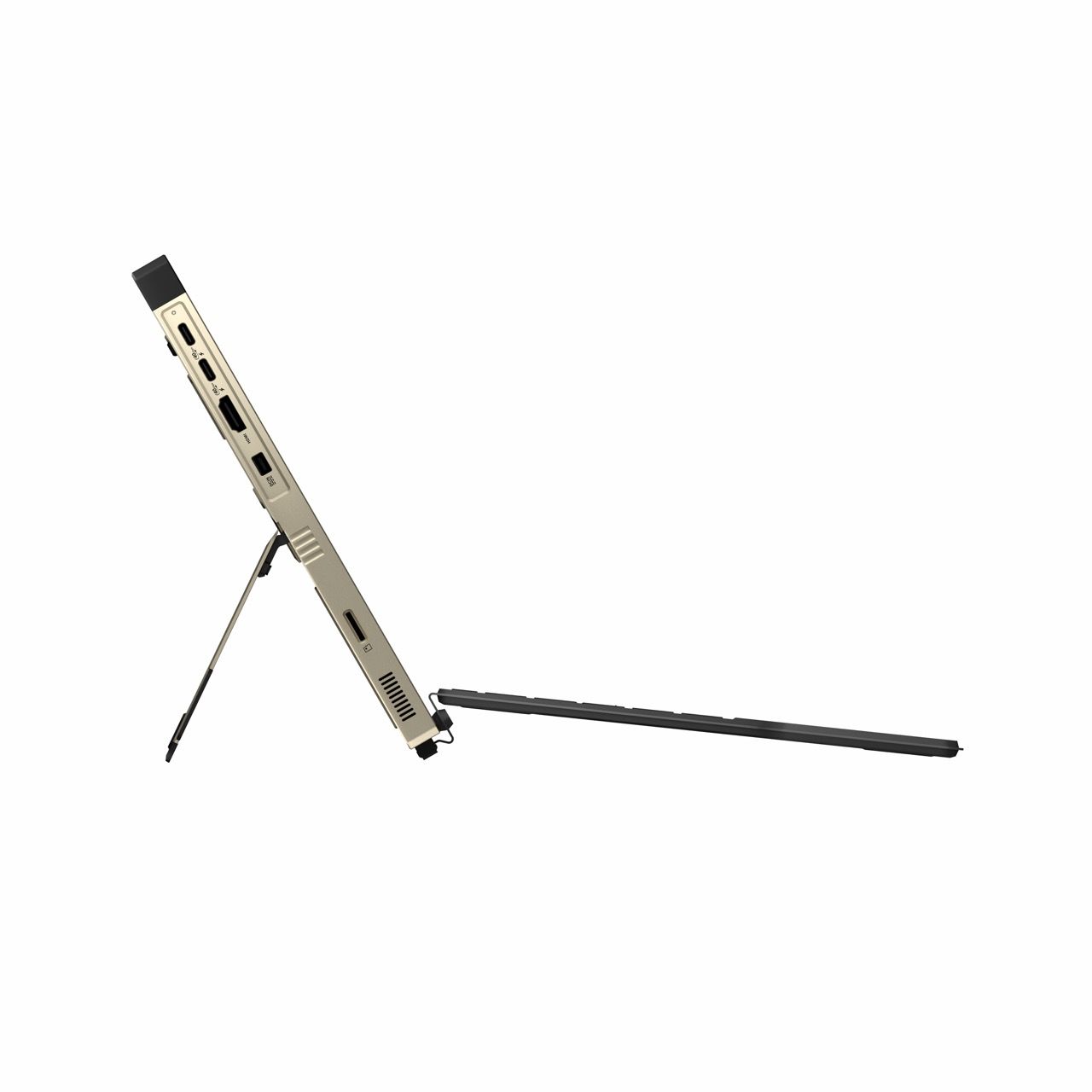
Being a 2-in-1, the keyboard can also be detached entirely, turning it into a giant Windows tablet. The folio attaches magnetically and feels reassuringly solid when clipped in, while the rear kickstand is sturdy enough to use on pretty much any surface that is not actively moving. It also supports stylus input, touch gestures and multi-touch controls, which makes it feel surprisingly versatile beyond gaming. You could quite easily use this for editing, drawing, writing or pretending you are going to be productive before inevitably opening Steam.
Ports are also refreshingly generous for something this slim. You get two USB4 ports, a full-size USB-A port, HDMI 2.1, a microSD card slot, a headphone jack and support for external GPUs if you really want to turn this into something completely ridiculous. It feels far closer to a proper gaming laptop in terms of connectivity than most thin-and-light tablets that give you two USB-C ports and wish you the best of luck.
Enough of the numbers though, what does it actually feel like to game on this? Not very different from last year’s ROG Flow Z13, which is a good thing. The two games I managed to test during my admittedly brief time with it were Cyberpunk 2077 and Death Stranding 2: On the Beach, which comes bundled with the tablet.
Both ran pretty impressively. Cyberpunk 2077 gave an output of around 120fps in Performance mode. Although, when pushed to Turbo mode via Armoury Crate, things started to get rather loud. While the performance looked top notch, the fans got so loud that I feared the tablet might start flying off on its own. This was, of course, when I pushed it to Ultra settings across the board. There is definitely a ceiling here.
A similar experience was noticed on Death Stranding 2: On the Beach as well, with textures and graphics looking pretty high-end, similar to what you would find on a decent RTX 4060 gaming rig.
Strange Niggles
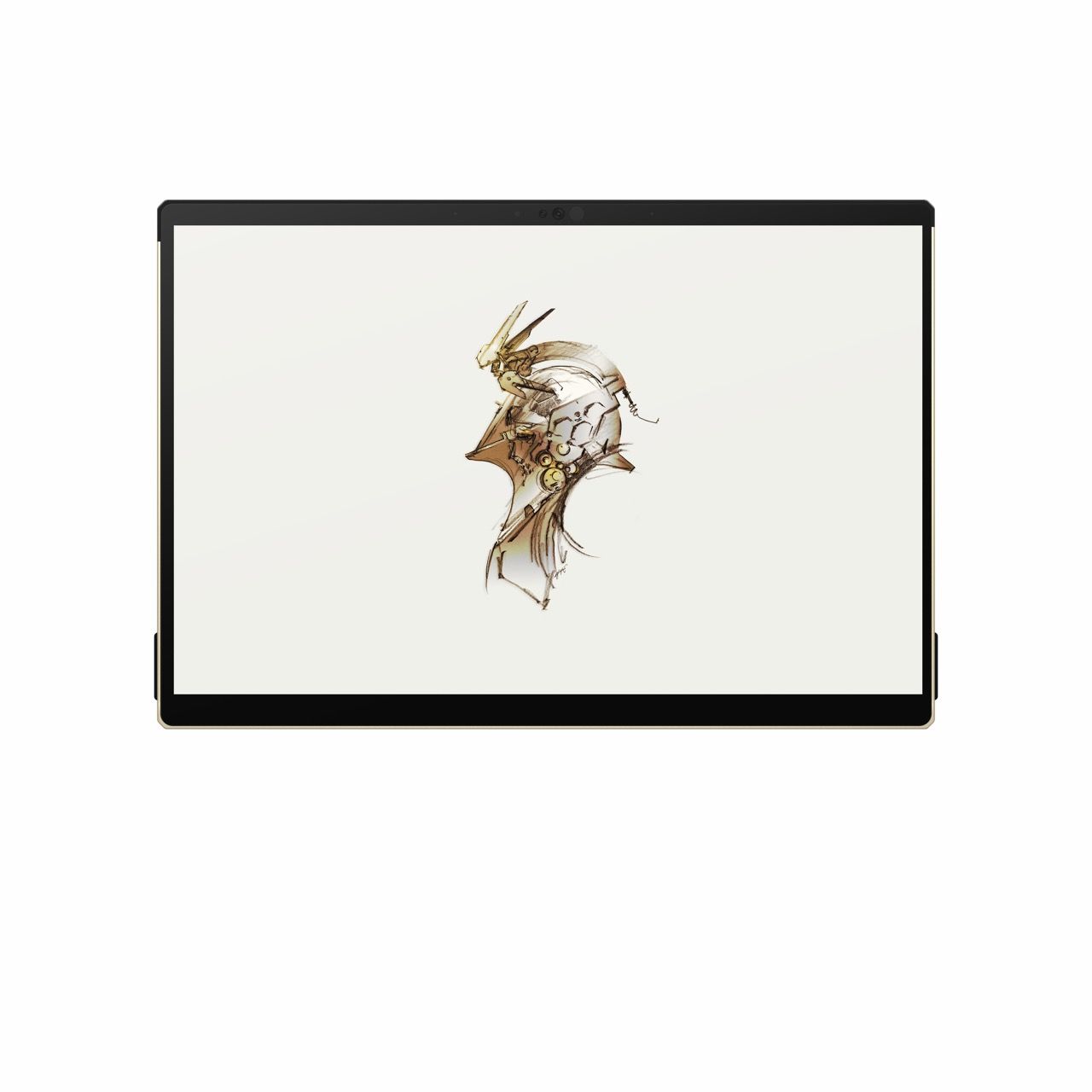
One of my biggest gripes with the ROG Flow Z13 was its rather underwhelming IPS display, which, to its credit, is plenty bright. But at this price point, why not just give us an OLED panel? The 13.4-inch screen is sharp, vibrant and smooth thanks to the 180Hz refresh rate, but there is still a part of me that expects deeper blacks, punchier contrast and the sort of inky blacks that make sci-fi games look borderline religious.
The compact size also creates another issue: battery life. During my testing, I streamed YouTube videos from 100 per cent battery down to 0, which took a little over three hours. Switching to it as my work machine did not help much either, with the battery hovering around the two to three-hour mark depending on how much abuse I put it through. If anything, this makes an even stronger case for a larger OLED panel to be here. If I am already carrying around a charger everywhere like it is life support, I may as well get a bigger and better screen out of it.
That creates a bit of a problem. If you plan to properly game on this thing, you pretty much have to stay plugged in. Otherwise, not only will the battery vanish alarmingly quickly, but the tablet also automatically switches itself into Silent mode to preserve power, which means you are not really getting the full performance either.
Another interesting “quirk” I found was with the included keyboard folio, where some of the function keys never once worked as intended. The volume down button brought up Search for some reason, while the volume up button did nothing. Not to mention, despite positioning my face in every possible angle and pose, the front-facing sensor never once unlocked itself via face ID.
Verdict

At ₹4,19,990, the ASUS ROG Flow Z13-KJP is not pretending to be sensible. This is not a device you buy because you need a practical gaming laptop. This is the sort of thing you buy because the idea of owning a gaming tablet designed to look like a prop from a lost Hideo Kojima project speaks to a very specific, very expensive part of your brain.
And to be fair, there really is nothing else quite like it. The performance is absurd for something this compact, the amount of RAM borders on parody, and the fact that it can function as both a gaming machine and a giant Windows tablet only makes it feel even stranger. It is the kind of device that feels designed by people who kept asking “why not?” until they accidentally ended up building one of the most overpowered 2-in-1s on the market.
More importantly though, this does not feel like one of those lazy collaborations where a brand slaps a logo on the lid and calls it a day. Between the carbon fibre detailing, the laser-etched vents, the themed carrying case, the custom keyboard and the whole Death Stranding aesthetic, there is enough here to make it feel like a proper collector’s item rather than just an overpriced reskin.
It is not without its quirks. The IPS panel still feels like a compromise at this price, battery life remains underwhelming and there are a few software oddities that should not exist on a machine this expensive. But if you can live with those compromises, the ASUS ROG Flow Z13-KJP is exactly the sort of gadget that deserves to sit in a glass cabinet when you are not using it.


