Many brands come to Geneva hoping one watch will carry the week. Chanel, increasingly, does the opposite. Its Watches and Wonders 2026 presentation was less about a single breakout piece than a flood of ideas, spread across the J12, Coco Game, Première and Nœud de Camélia. That can make the collection feel a touch overstuffed on first pass, but it also suits Chanel. This is a house whose watchmaking strength has never really been about one heroic technical statement. It lies more in how stubbornly and consistently it reworks its own visual codes until they begin to feel immovable. Black and white, bows, lions, camellias, chain links, lacquer, glossy ceramic, Mademoiselle herself: all of it came back in force this year.

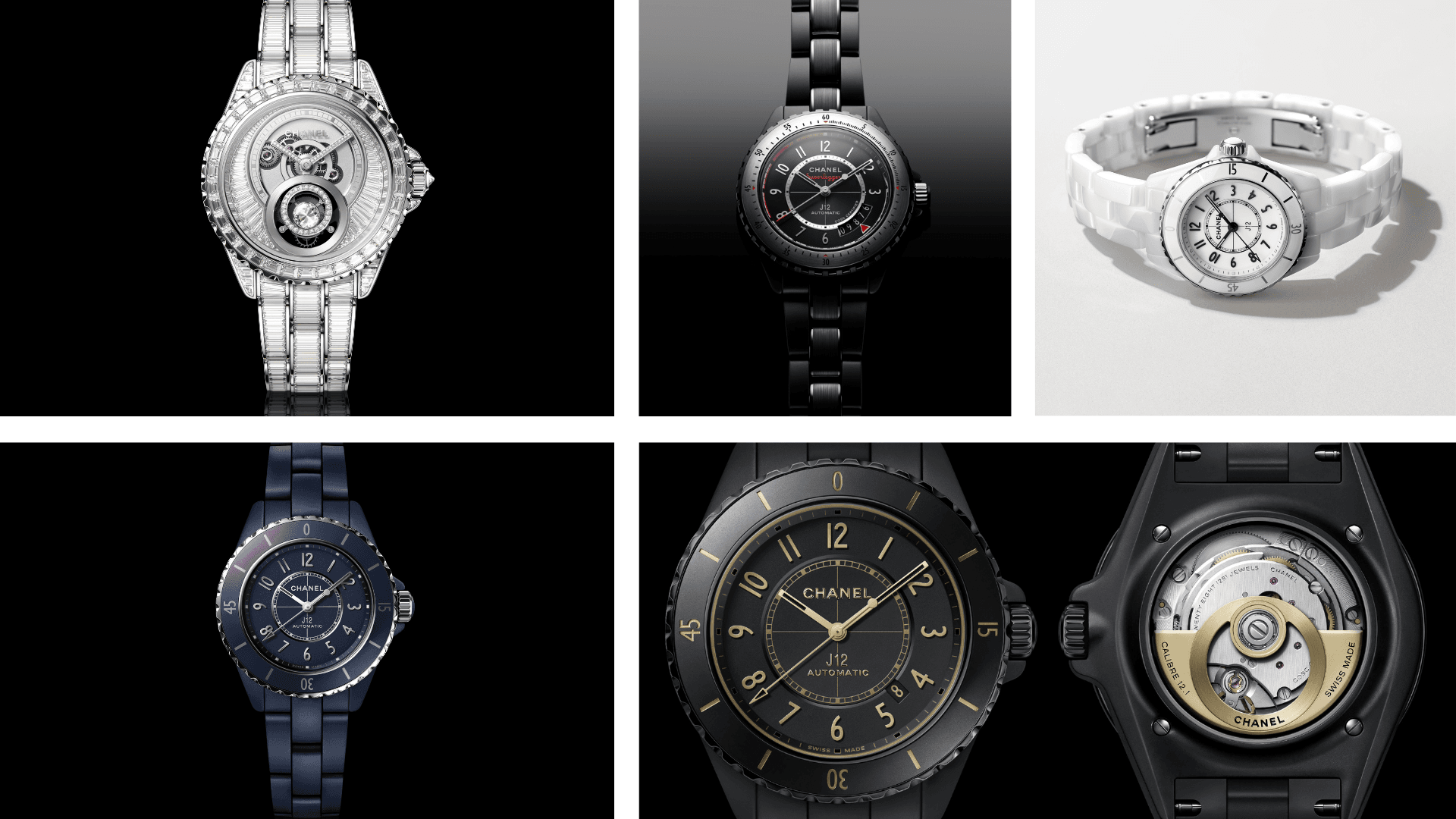
Set against last year, the shift is easier to read. Watches and Wonders 2025 felt more focused around the matte blue J12, a colourway that stood out because Chanel had taken so long to arrive there in the first place. This year, the blue ceramic moves from novelty to permanent collection in 38mm and 33mm, which makes the launch feel less like a one-season experiment and more like a new permanent branch of the J12 story. It helps that Chanel’s own description of the colour still does the work: Arnaud Chastaingt—the celebrated Director of Chanel's Watchmaking Creation Studio—has called it “too blue to be black and too black to be blue”, which is exactly the sort of problem Chanel seems to enjoy solving. The shade took five years to develop, and in 2026 it feels less like a shock of colour than a considered addition to the house’s ceramic vocabulary.
The J12 still does most of the heavy lifting because it remains Chanel’s clearest watch icon, but 2026 broadens the family in practical ways. The new 28mm is the smallest J12 yet, while a new 42mm pushes in the other direction. Chastaingt’s framing is useful here because it keeps the size story from becoming a lazy gender story. “Offering the J12 in two distinct sizes is a way to embrace diversity and individuality,” he says. “For Chanel, it’s essential to recognise that style is deeply personal—there is no single way to wear a watch. By proposing both a larger and a smaller diameter, we give our clients the freedom to choose the piece that resonates most intimately with their own sense of elegance.” The decision is less radical than sensible. If the J12 is going to remain Chanel’s most dependable watch line, it needs to stretch without losing itself.
That stretch also lets Chanel play with proportion without throwing out the J12’s basic grammar. The 28mm gets quartz, while the 33mm, 38mm and 42mm preserve the self-winding side of the story where relevant. It is not ideological. It is just good product planning. Chastaingt puts it more elegantly, describing the two-size approach as a way for the Maison “to reinterpret classic codes in new proportions, creating fresh dialogues between masculinity and femininity, power and discretion.” That last pairing is probably the key to the J12 in 2026. It is still glossy, graphic and slightly aloof, but the range now gives clients more ways to decide how loud, compact or assertive they want that aloofness to be.
Some of the better J12 additions are the less fussy ones. The Golden Black pair, in 28mm and 42mm, uses yellow-gold-plated indexes against black ceramic with more restraint than the name suggests. The returning Superleggera, meanwhile, looks sharper than before, with matte black ceramic, steel, red accents and a red arrow date indicator that gives the watch a bit of snap without turning it into cosplay motorsport. The alternating polished and matte bracelet finishing is one of those details that only really comes alive in person, and it gives the watch more bite than the press images suggest. It is probably one of the more convincing sport-adjacent things Chanel has done in recent years, mostly because it does not try too hard.
At the higher end, Chanel still seems intent on reminding everyone that the J12 is not just a ceramic cash cow. The Coco Game J12s introduce a pixelated Mademoiselle running around the dial on the seconds hand, laser-cut from carbon so the added shape does not throw off the motion. The X-Ray Coco Game goes much further, combining sapphire crystal with white gold and the in-house Caliber 3.1, with the sapphire components alone said to require 1,600 hours of machining. Then there is the J12 Diamonds Tourbillon Caliber 5, whose radiating baguette-cut diamond layout circles a flying tourbillon and pushes the collection straight back into the house’s preferred territory of highly controlled excess. Whether all of this lands equally well is another matter, but the underlying point is clear enough: Chanel is still determined to collapse the old distinction between “fashion watch” and “serious watchmaking” whenever it gets the chance.
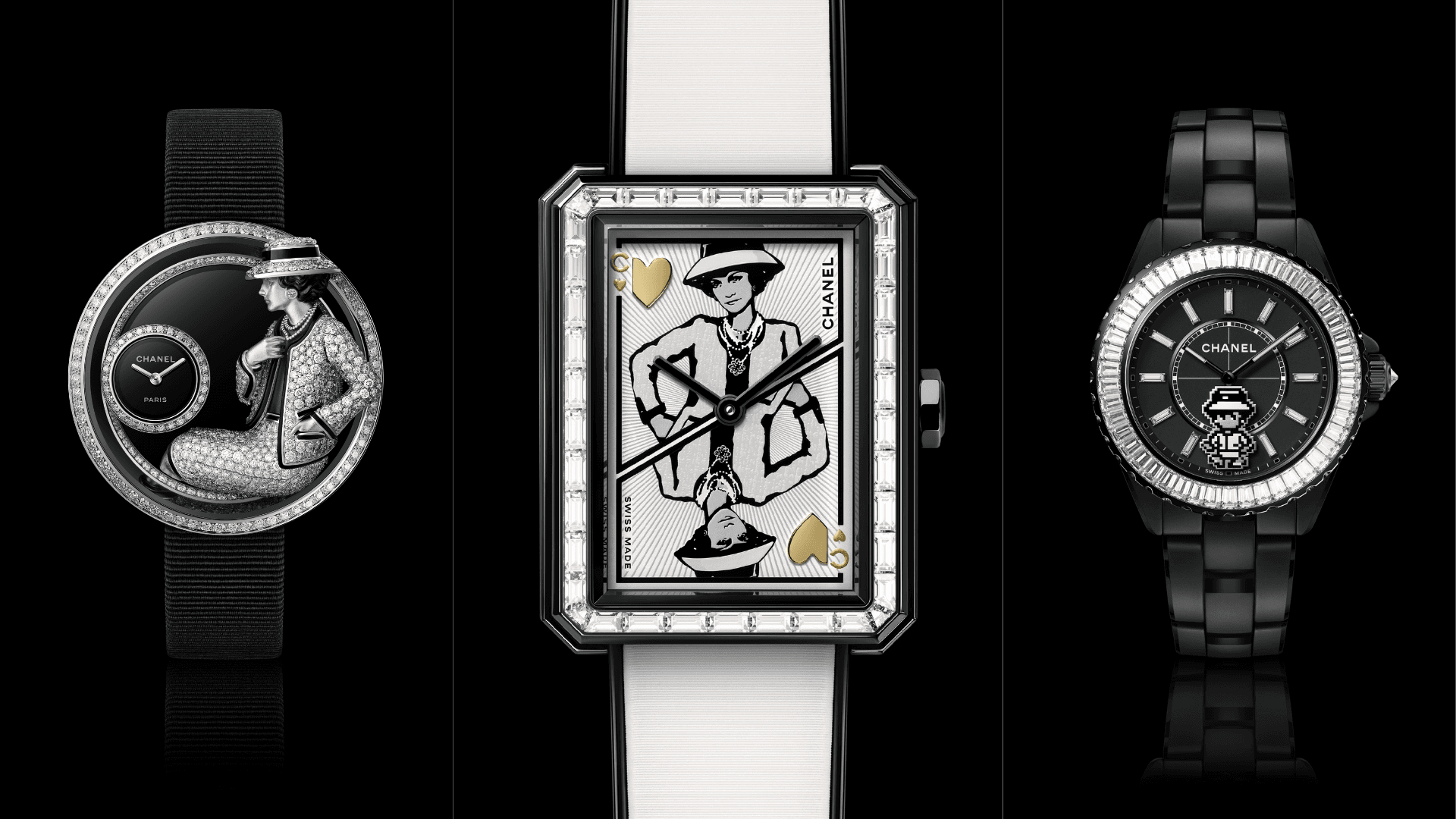
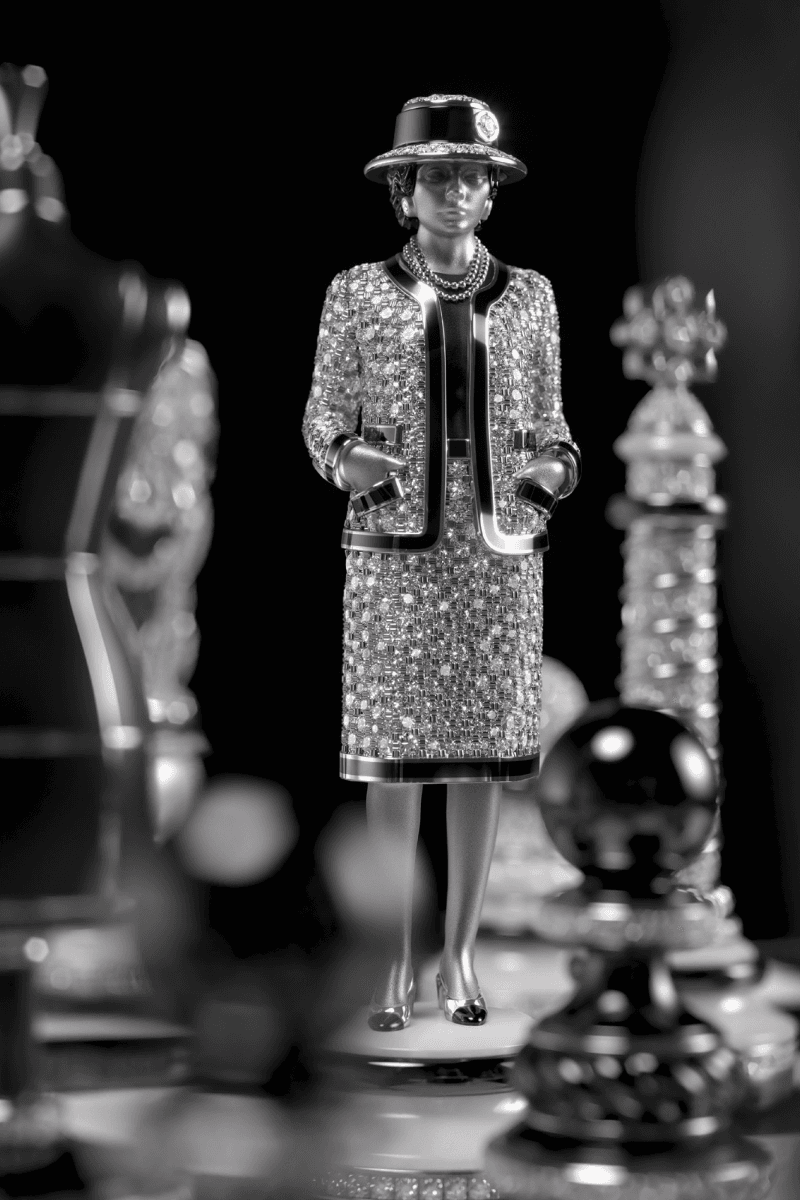
That instinct runs even harder through Coco Game, which is probably the most coherent themed collection Chanel brought this year. The basic premise is fairly odd: Gabrielle Chanel turned into a character inside her own gamified universe, appearing as a Queen of Hearts, a pixelated figure, a sculptural watch form and a hidden mechanism across 14 pieces. On paper, it sounds like something that could go badly wrong. In execution, it mostly works because Chanel commits fully to the bit. The BOY·FRIEND Coco Game renders her as the Queen of Hearts. The CODE COCO Game pulls in dominoes. The J12 Coco Game turns her into an 8-bit mascot. The Gabrielle watch goes the other way entirely, sculpting her in white gold and surrounding her with diamonds arranged in the house’s tweed-setting technique. It is knowingly theatrical, but at least it is not timid.
Chastaingt’s own favourite from the 2026 novelties seems to sit right at the centre of this theatrical streak. “Among the novelties unveiled at Watches & Wonders 2026, the ceramic chessboard piece is particularly close to my heart,” he says. “The concept of bringing the strategic elegance of chess into high watchmaking was both thrilling and full of challenges.” That chessboard reportedly sits somewhere around the €3 million mark, which is enough to make the whole exercise feel slightly surreal before you even get to the details. But the details matter here. As Chastaingt notes, “Ceramic is a signature material for Chanel, but to create the precise geometry and subtle contrast of the chessboard, we had to push our technical limits and invent new methods.” That is the useful bit, because it stops Coco Game from reading as pure diamond theatre. There is genuine material stubbornness sitting under the whimsy.
The Queen piece may be the clearest example of that. Chastaingt describes the development of the new “serti-tweed” technique as a personal highlight, “especially for the Queen”. Tweed is one of Chanel’s most recognisable house codes, but translating its texture into gem-setting is not the same as simply quoting it on a moodboard. “We worked closely with our artisans, experimenting with patterns and stone arrangements to evoke the richness of tweed within the confines of the pawn,” he says. “It required patience, creativity, and a deep respect for both tradition and innovation.” That might sound like the usual maison language, but in this case the object earns some of it. Turning Gabrielle Chanel into a pawn, queen, avatar and hidden watch mechanism all at once is knowingly strange, and that oddness is also what gives the collection a bit of life.
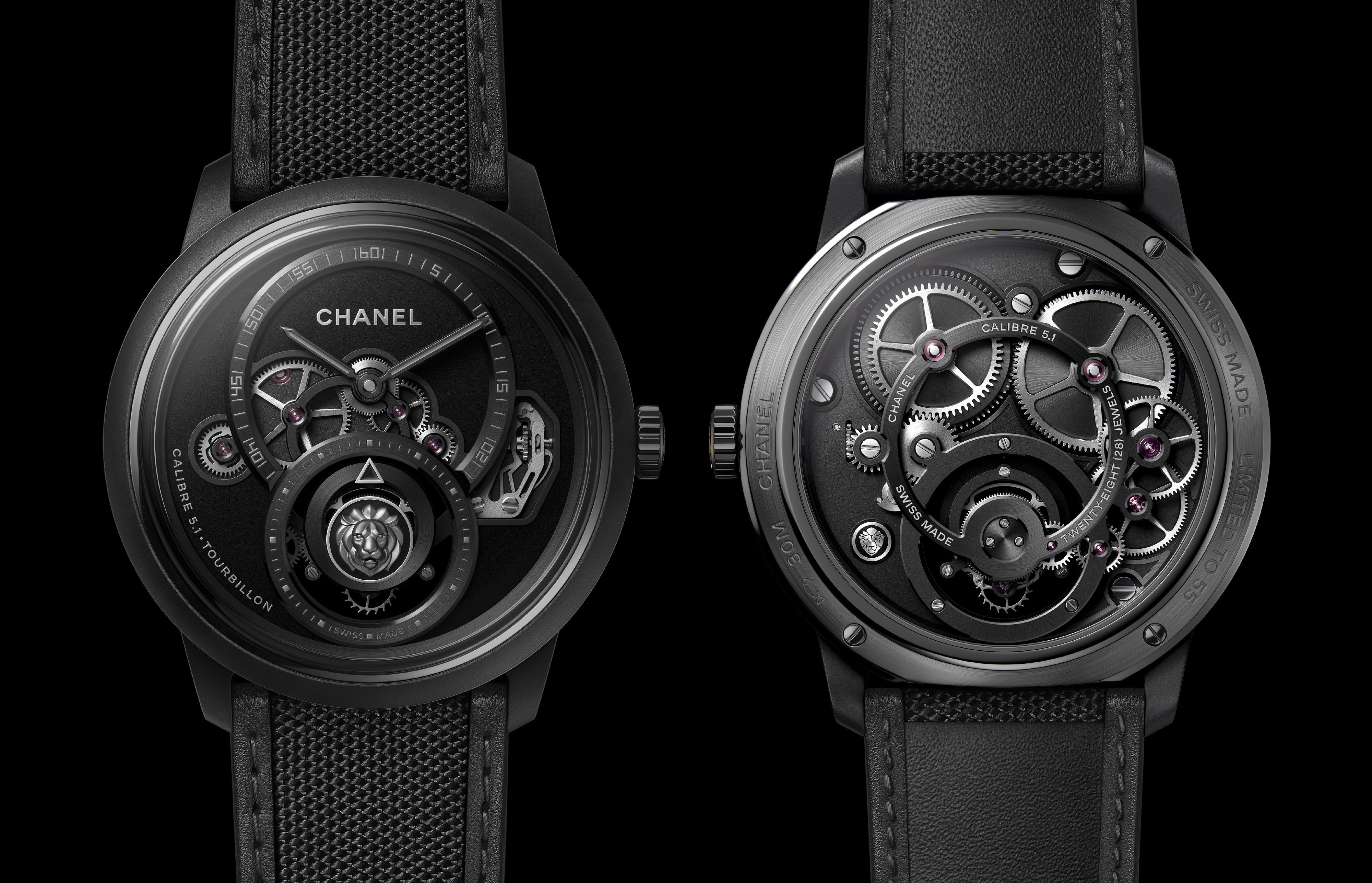
Chanel did not leave the more overtly mechanical side of the fair entirely to the J12, either. The Monsieur Lion Tourbillon Black Edition, limited to 55 pieces, brings back one of the house’s more straightforwardly serious men’s propositions in a 42mm matte black ceramic and steel case. Powered by the in-house Caliber 5.1, it uses a flying tourbillon at six o’clock with a laser-engraved titanium lion’s head at its centre, tying one of Chanel’s oldest symbols to one of its more openly technical watch formats. In a collection full of bows, camellias and gamified Mademoiselle references, the Monsieur works as a useful reminder that Chanel still knows when to cut the theatre back and let the mechanics do more of the talking.
If Coco Game is Chanel at its most playful, Nœud de Camélia is Chanel reverting to type, though not always in a bad way. The collection pushes the camellia and bow deep into jewellery-watch territory, with secret watches, cuffs and rings that often feel closer to ornamental objects than conventional timepieces. The standout is obviously the unique Nœud de Diamants Cuff, with its 5.23-carat Asscher-cut centre stone, a hidden dial beneath it, and more than 3,300 diamonds across the piece. The diamond counts quickly become silly, but that is hardly the point. What matters more is how stubbornly Chanel keeps forcing its couture motifs, from camellias and bows to grosgrain textures and black-white contrast, into watch form, even when the result sits closer to high jewellery than horology in the traditional sense. The Lesage embroidery element on the cuff pieces is especially telling. It is Chanel using the watch fair not just to show watches, but to show how many of its métiers can be folded into them.
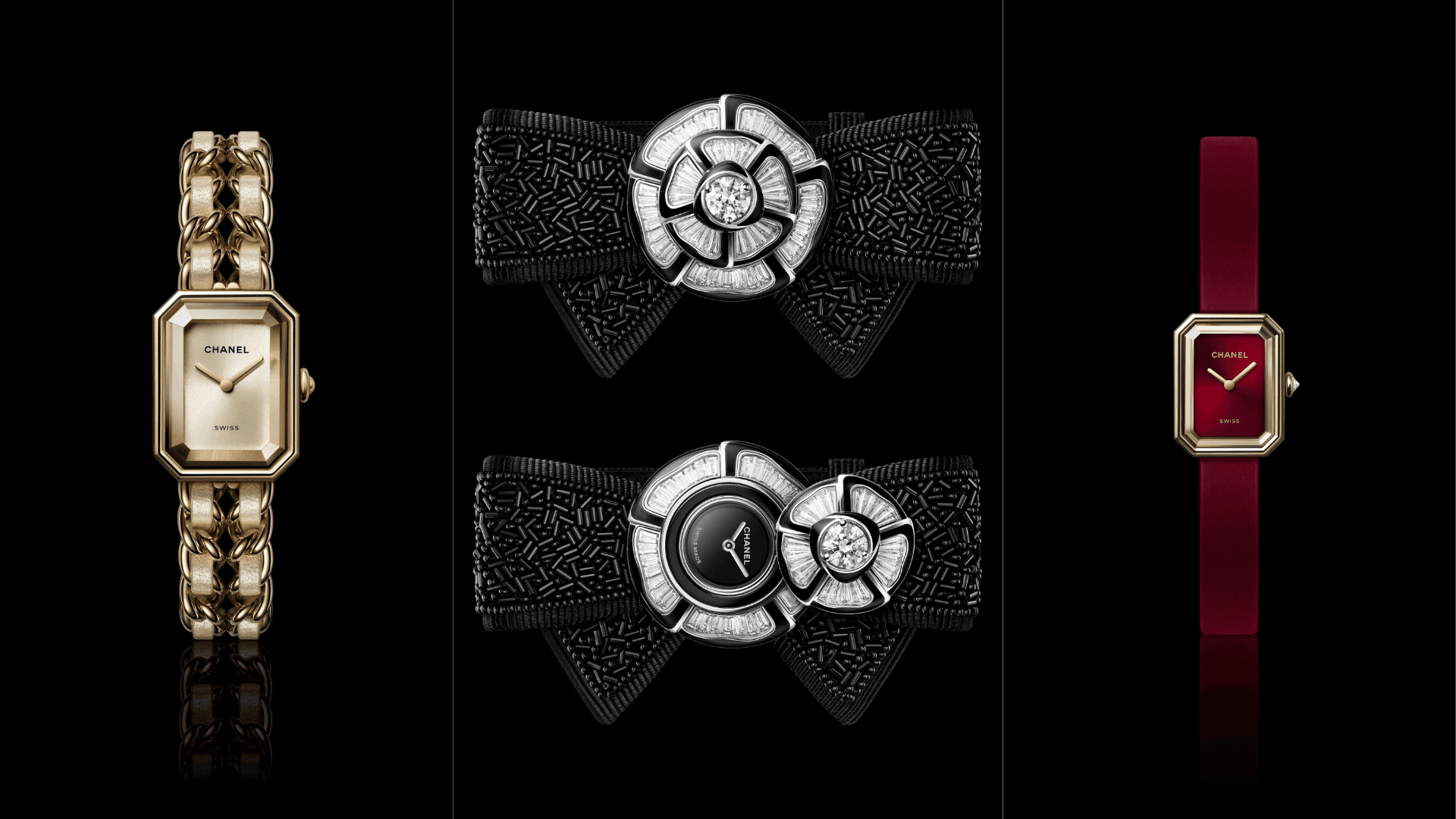
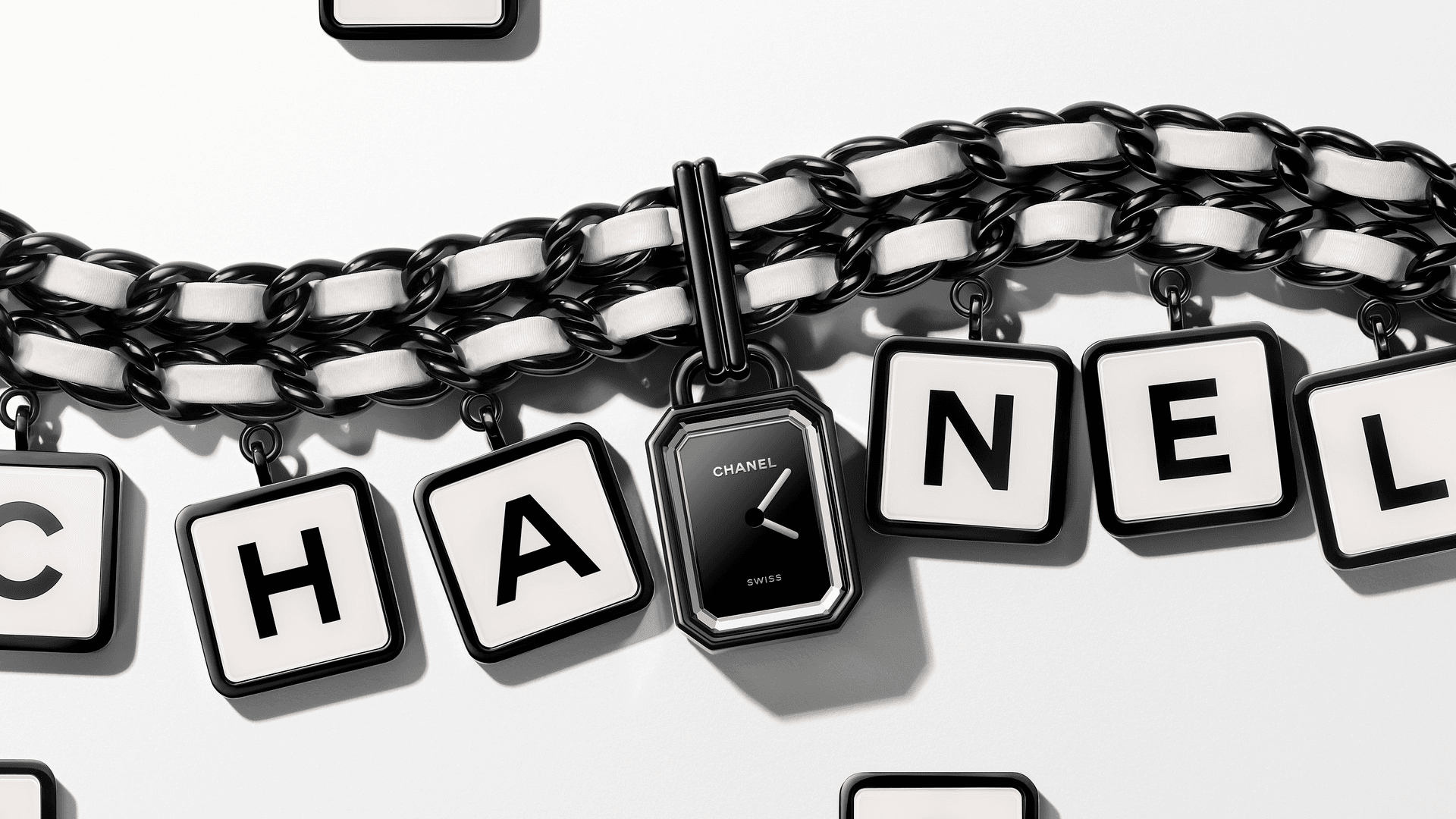
The Première line sits somewhere between those two poles. It is not as concept-heavy as Coco Game and not as loaded as Nœud de Camélia, but it continues to prove how much mileage Chanel still gets from a case shape introduced in 1987, one that I definitely expect to show up on red carpet wrists. This year’s additions include the Ribbon Red with its red-lacquered sunburst dial, the Coco Game charm model, the brown-toned Iconic Chain, and the Première Galon line arriving in white gold after last year’s yellow gold debut. The red Ribbon piece feels especially persuasive because the colour brings a slightly warmer charge to a line that can sometimes read as almost too composed. Chanel is not reinventing Première in 2026. It is just changing the finish, material or tone enough to keep it moving.
Many of these pieces live in very limited, very expensive territory and are not exactly going to become everyday retail staples, but that has never been the only measure of what Chanel is trying to do with watches. The broader task is to expand how its watch and jewellery stories are understood locally, beyond the safer familiarity of core J12 and Première references. Chastaingt’s own summary of the chessboard Queen could just as easily describe the collection as a whole: “This piece, and the Queen in particular, embodies the audacity of Chanel: the will to explore new territories and the dedication to refine every detail. It represents playfulness, sophistication, and the timeless allure of the Maison—qualities that continually inspire me.” Watches and Wonders 2026 was not Chanel arriving with one obvious star and asking the world to stare at it. It was Chanel presenting a full ecosystem instead: broad, coherent, occasionally a bit much, but interesting precisely because it refused to simplify itself.


