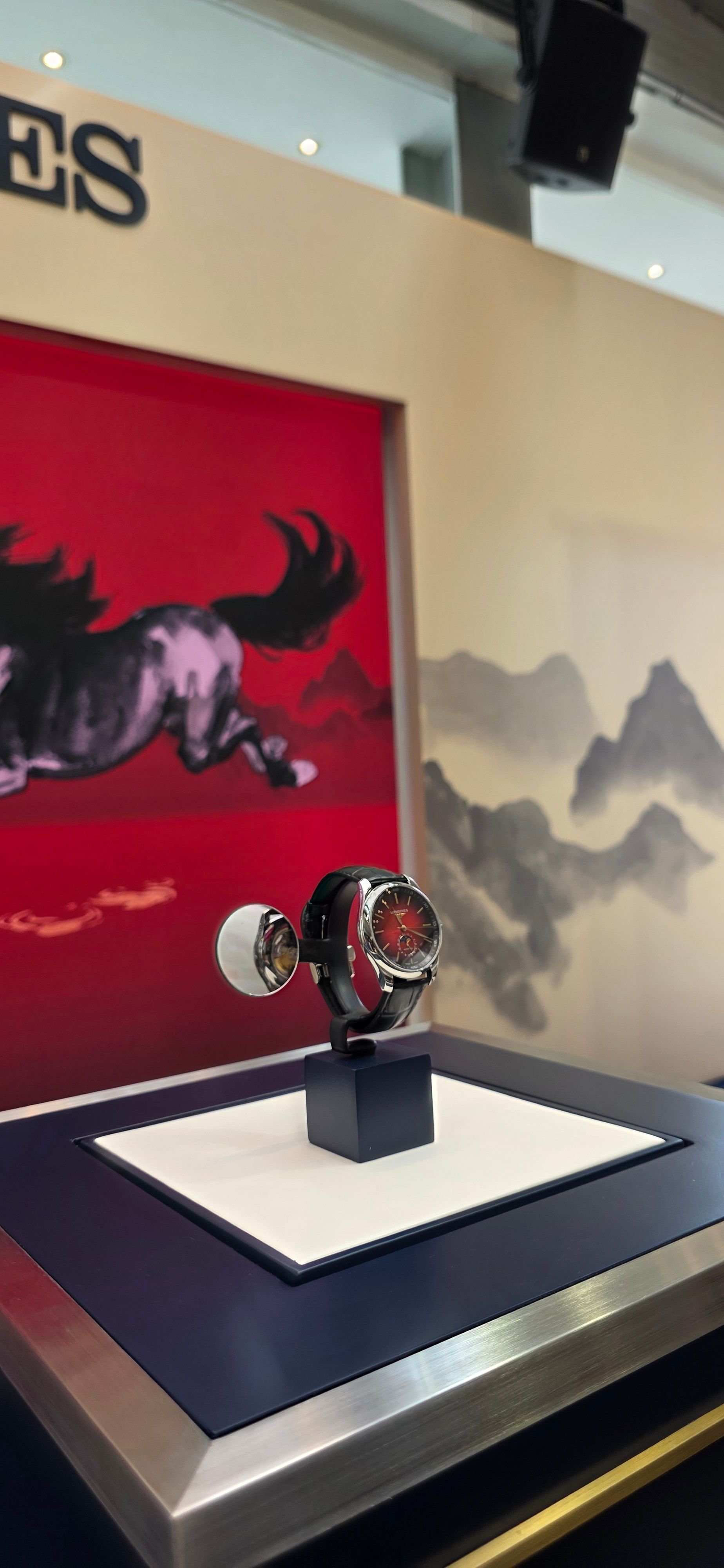
There are brand launches, and then there are weekends that simply work. The Longines Hong Kong Races fall firmly into the latter camp; trackside, with sweeping views of the parade grounds, faultless hospitality, and a crowd that felt equal parts relaxed and sharply dressed, the atmosphere struck that rare balance between warmth and polish. Longines was everywhere, on timing boards, signage, and in conversation, but never in a way that felt forced. This is a relationship the brand has spent decades refining, and it shows.
The day moved with an easy rhythm. The reveal of the new Longines Master Collection Year of the Horse watch set the tone, followed by a high-energy performance from K-pop legend Rain, a lunchtime Q&A with newly announced brand ambassador and Chinese actor Yosh Yu Shi, and races that brought the focus firmly back to sport. It was confident, fluid, and quietly theatrical. I was there personally, and I enjoyed it immensely; not as a choreographed brand moment, but as a reminder of how compelling a watch launch can be when the setting does half the storytelling for you.
A day earlier, I had sat down with Longines CEO Patrick Aoun at one of the brand’s Hong Kong boutiques for a cup of tea. It felt like a fitting prelude. While Aoun has only been in the CEO role since June this year, he is anything but new to Longines. With over two decades in the watch industry and nearly ten years spearheading the brand’s Middle East and Asia operations, including a stint as Management Delegate for Swatch Group India, he speaks with the ease of someone who understands markets not as abstractions, but as lived realities. “This role is not being done behind a desk on a big chair,” he told me. “It’s fulfilled by being close to the market, knowing what customers eventually need and want.” That mindset quietly framed the weekend, and the watch itself.
The inspiration behind the Year of the Horse edition is worth lingering on, because it goes deeper than surface symbolism. The engraved rotor draws from Galloping Horse by Xu Beihong, one of the most influential Chinese artists of the twentieth century. Xu’s career was defined by cultural exchange. From humble roots in China, Trained extensively in Europe, he absorbed Western techniques of realism, anatomy, and perspective, then returned to China to reinterpret them through traditional ink painting and brushwork. His horses, muscular, kinetic, and emotionally charged, became enduring symbols of strength, momentum, and progress. It is an inspired choice, not least because it mirrors Longines’ own relationship with China. This is not a brand treating the zodiac as a seasonal costume change; The Year of the Horse watch feels less like an homage and more like a conversation between cultures, disciplines, and histories.
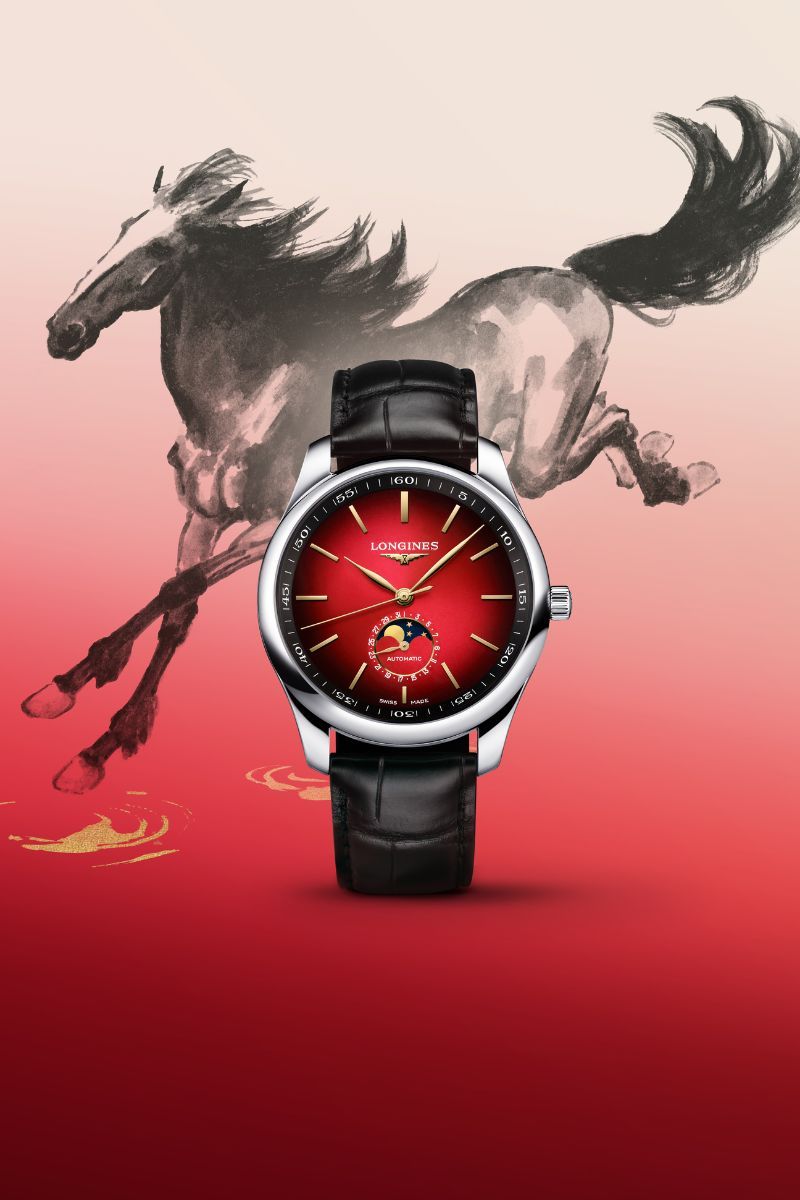
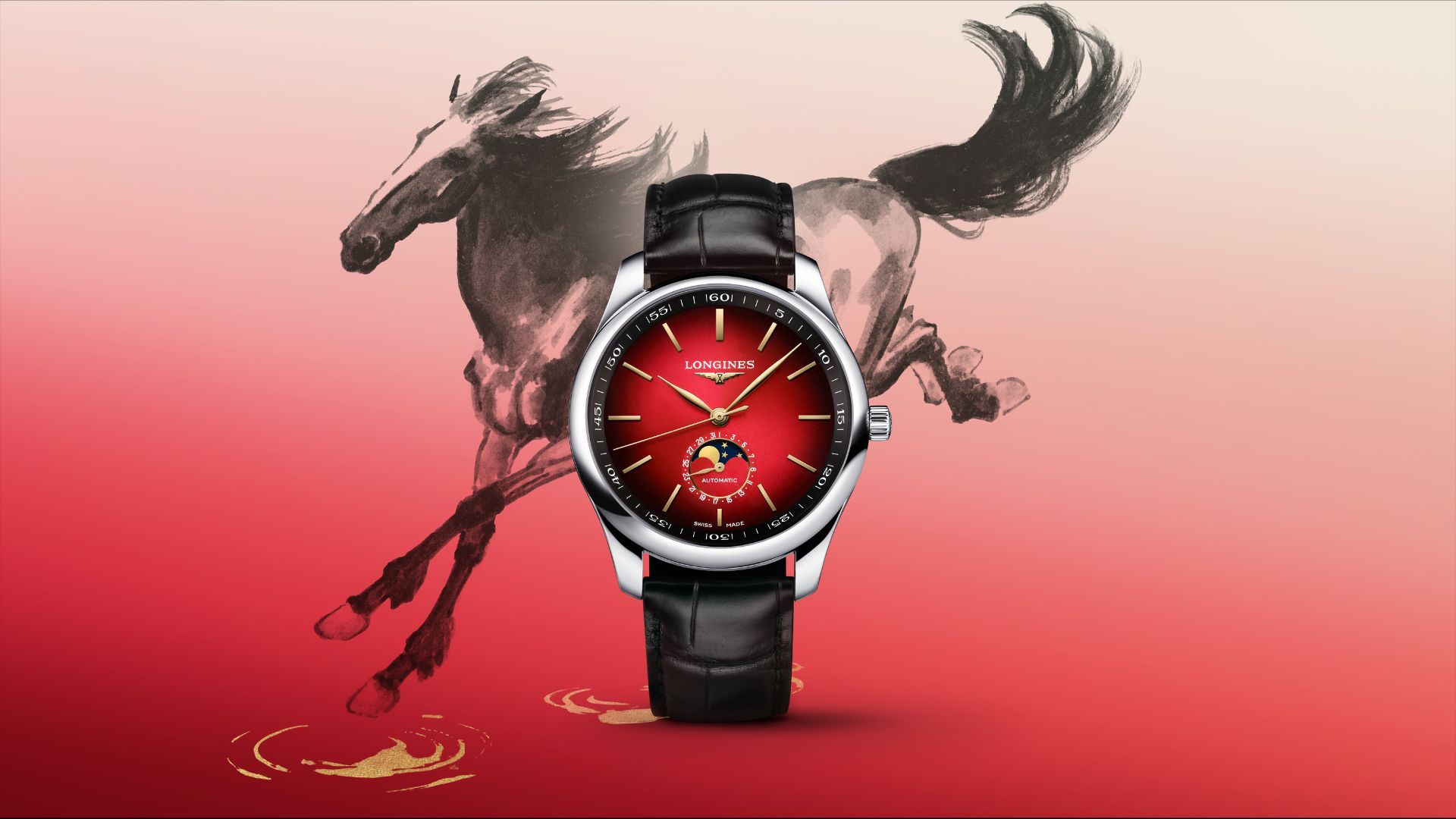
Technically and aesthetically, the watch builds on a foundation laid by 2024's Year of the Dragon edition, but it improves on it in meaningful ways. Housed in a 42 mm stainless-steel case, the Master Collection Year of the Horse features a rich red sunray-brushed fumé dial that fades subtly towards the edges, evoking the warmth of sunrise and an auspicious sense of renewal. Elegantly shaped gilt hands and applied indices keep the composition balanced, while a moonphase at six o’clock is paired with a date display, reinforcing the lunar theme without overwhelming the dial.
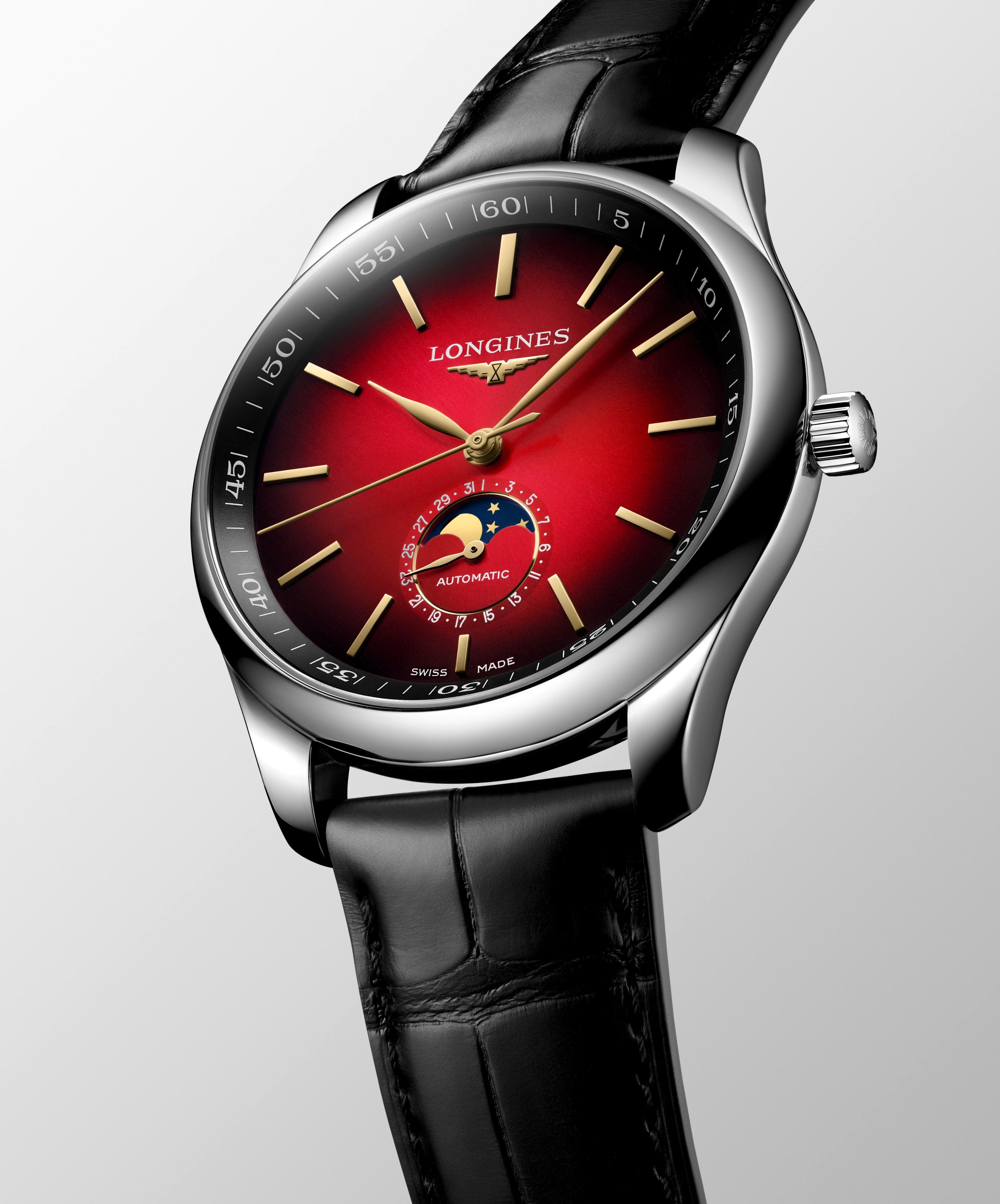
This is where the refinement shows. Compared to the 2024 Dragon model, the slimmer baton indices and more delicately proportioned hands feel calmer and more resolved. They allow the dial to breathe, letting the colour and complication do the work. Finding a moonphase watch with this kind of dramatic red fumé finish is uncommon, and here it feels both bold and tasteful. It draws attention, but it does not demand it.
Turn the watch over, and the real storytelling begins. Visible through the sapphire caseback is the self-winding Longines calibre L899.5, equipped with a silicon balance spring and offering a 72-hour power reserve. The yellow-gilt rotor is engraved with Xu Beihong’s galloping horse motif, complete with the artist’s personal seal. Unlike 2025's Year of the Snake and its Dragon-themed predecessor, which featured closed casebacks that were beautifully executed but static, this watch embraces motion. Every movement of the wrist sets the horse in motion, turning symbolism into something physical and alive. For a zodiac year defined by energy and forward momentum, the switch to an exhibition caseback is welcome
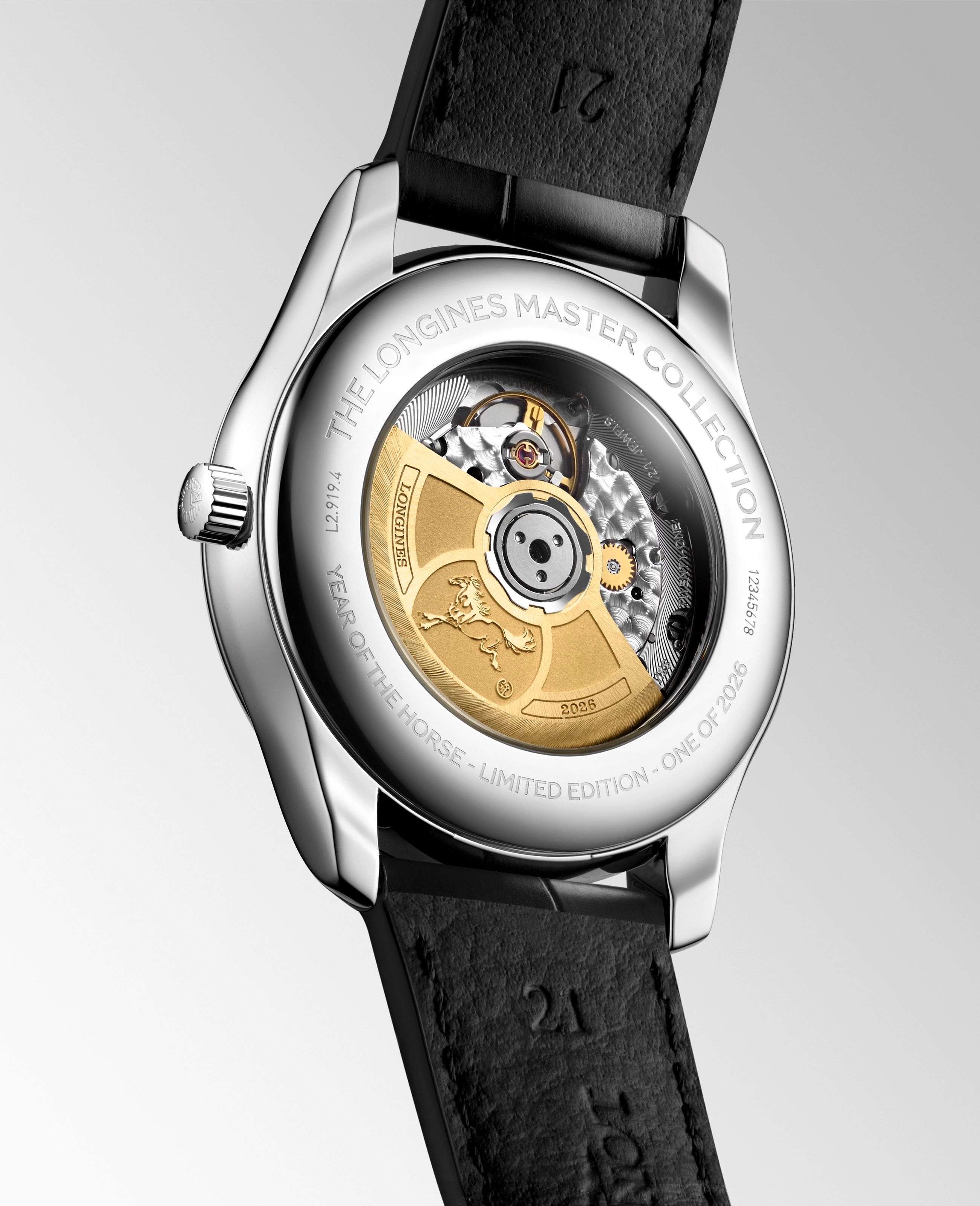
Limited to 2,026 pieces worldwide, the watch strikes a balance Longines seems very comfortable with. Exclusive enough to feel special, but not so scarce that it becomes frustrating. As Aoun put it, “I don’t do limited editions of 10 or 20 pieces. Why would I deprive a larger audience? When we do limited editions, we do them in reasonable volumes.” It is a pragmatic stance, and a sensible one.
The result is a piece that feels culturally specific without becoming theatrical, and expressive without straying from Longines’ core visual language. Aoun is equally clear-eyed about where Longines sits in the market, and why that position matters. “I’m not here to change the brand identity,” he told me. “I’m here to strengthen it. I’m here to maintain our leading position in our price segment, and not to go up in price point.” In an industry that has spent the last few years relentlessly climbing the ladder, Longines’ refusal to move feels less like caution and more like conviction.
That conviction extends to how Aoun defines luxury itself. “The price tag is not necessarily synonymous with quality,” he says. “Luxury is owning a legitimate, authentic, reliable timepiece, something that can live with you for 30, 40, 50 years.” He pauses, then delivers the line that quietly undercuts much of modern consumption. “You buy a phone today and change it in three years. What’s the better investment?”
It also explains why Longines approaches its zodiac editions with restraint. “We are not a brand that relies on hyped trends,” Aoun says. “We produce watches you can wear today, in 10 years, in 20 years, and they don’t go out of style.” The Year of the Horse works precisely because it is a deviation, not a habit. The dramatic red fumé dial, the moonphase, and the animated caseback stand out against a catalogue largely defined by blues, silvers, and whites. When Longines does colour and symbolism, it does so deliberately.
Seen through that lens, the Master Collection Year of the Horse feels less like a destination and more like a marker along a longer path. It refines what the Dragon introduced, improves meaningfully on the Snake, and suggests a brand that is learning how to speak this cultural language with increasing fluency. Which naturally raises the question of what comes next. If 2026 was about momentum and motion, what does 2027’s Year of the Goat bring? In Chinese culture, the goat is less about force and more about harmony, virtue, and renewal, often depicted in pastoral scenes rather than heroic ones. That opens the door to gentler symbolism, quieter cues, and perhaps a more introspective take on the zodiac. If Longines continues at this pace, whatever comes next is unlikely to shout. And that, increasingly, feels like the point.
The Longines Master Collection Year of the Horse is priced at ₹3,00,000 and is available at Longines boutiques across India.


