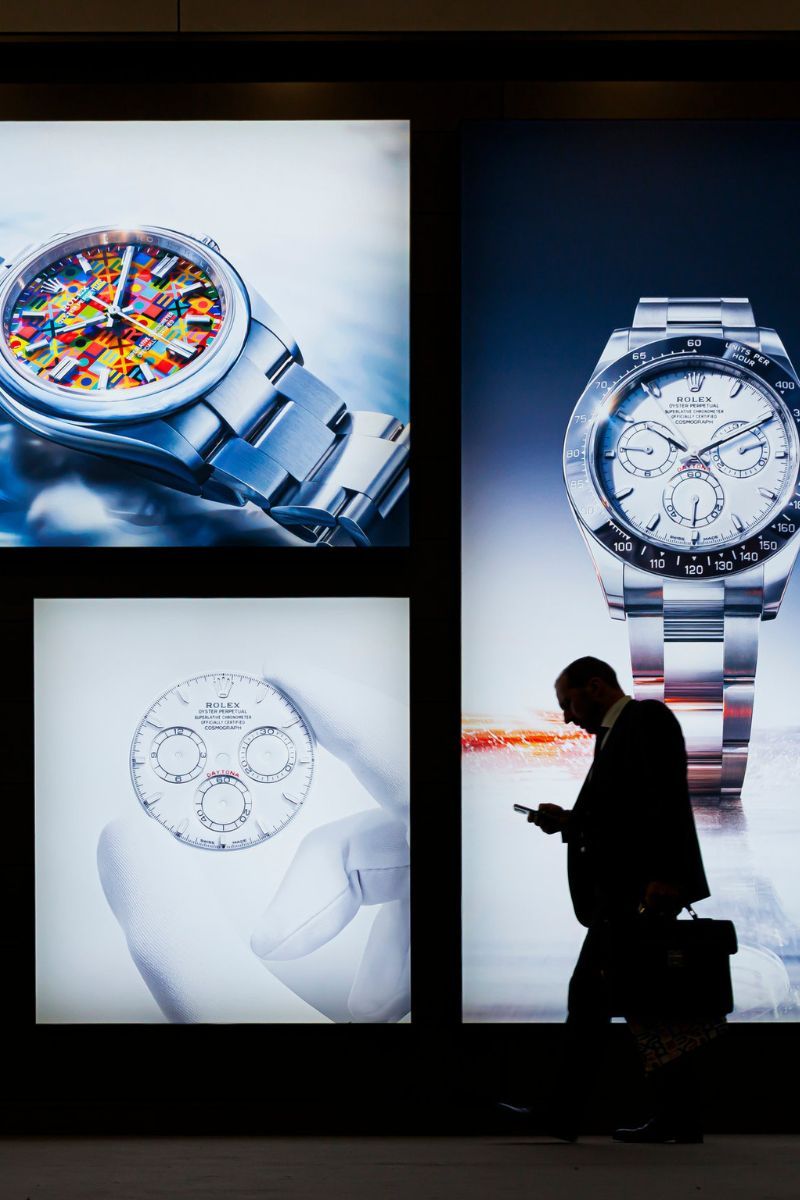
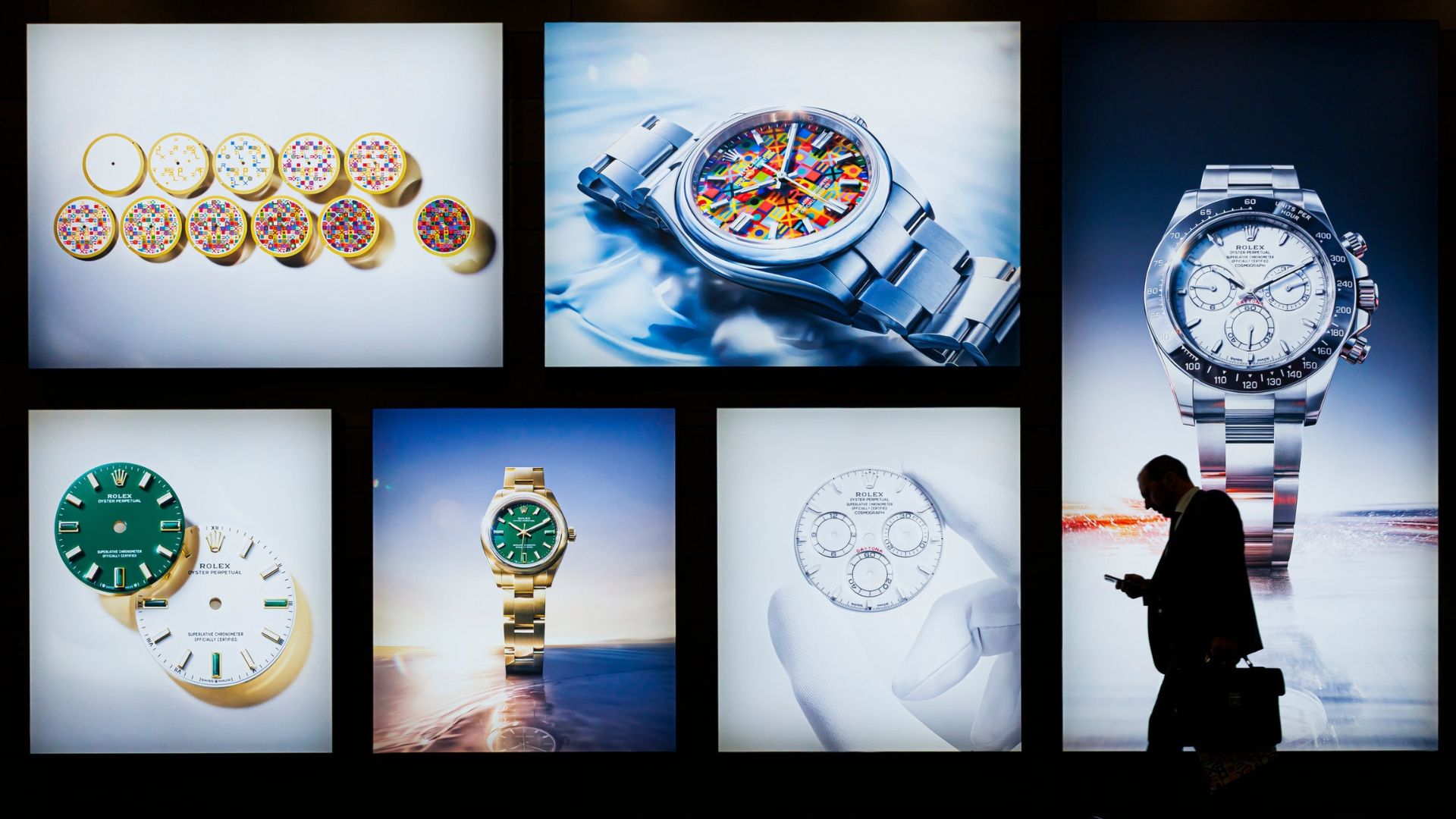
Last year, Rolex did what it almost never does and hijacked the fair outright, guns blazing. The Land-Dweller arrived at Watches and Wonders 2025 with the force of a carefully managed detonation: new architecture, big technical talking points, and enough immediate debate to suck the oxygen out of half the week. By comparison, the Crown’s 2026 showing feels calmer and more composed on first contact. But that calm is slightly deceptive.
Rather than hinging the entire conversation on one disruptive new pillar, Rolex has used the 100th anniversary of the Oyster case as a unifying theme and then stretched that idea across the collection with a level of discipline that is, in its own way, just as revealing. The Oyster Perpetual becomes the main vehicle for this story, moving from commemorative restraint to outright visual mischief, while the Day-Date, Datejust, Daytona and Yacht-Master II each carry a different part of the message. There is metallurgy here, there is dial craft here, there is a real movement story here, and there is also a sharp understanding of how modern collectors respond to nuance. If 2025 was Rolex proving that it could still shock the room with a single haymaker, 2026 is the brand showing it can make hierarchy, texture and omission feel just as eventful.
Oyster Perpetual Cosmograph Daytona in Rolesium, White Grand Feu Enamel Dial (Ref. 125602)
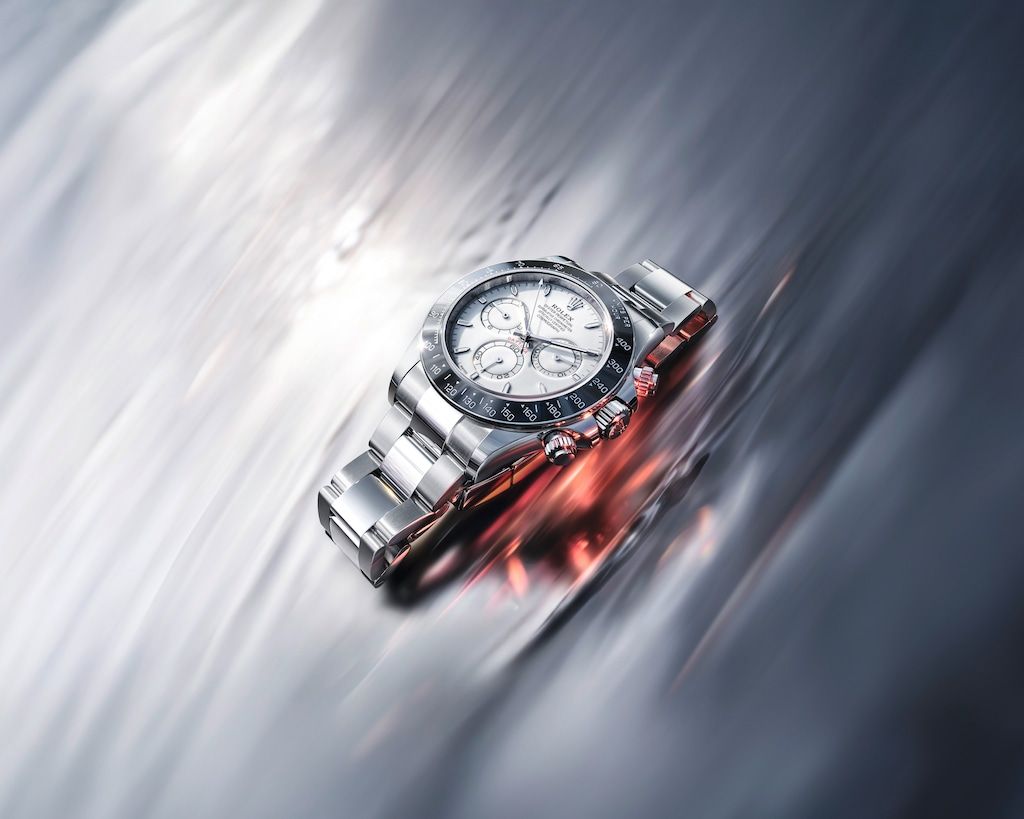
If there is one watch here that most clearly earns the right to dominate the conversation, it is the new Daytona. Rolex has taken its most bulletproof modern sports watch and given it the sort of treatment usually reserved for pieces that arrive wearing a much louder price tag and a far more overtly precious attitude. This is the first Daytona to use Rolesium, combining an Oystersteel case with platinum components, and Rolex has packed in the sort of detail that obsessive collectors tend to clock from across the room. The anthracite Cerachrom bezel is new, its tachymeter scale rendered with horizontal numerals as a nod to older Daytonas, while the exhibition caseback is framed in platinum and opens the watch up in a way the brand once treated with extreme caution.
Most importantly, the dial is white Grand Feu enamel fitted over ceramic plates on a brass base, which adds a certain black-tie polish to this collection that will likely have collectors stumbling over themselves at the boutiques—enamel is rare in the Rolex lineup, having last been spotted on the headline-grabbing 'Puzzle' dial Day-Date back in 2023. The Daytona has spent years being untouchable in hype terms. What this release suggests is that Rolex now sees room to make it more refined too, not just more collectible.
Oyster Perpetual 41 “100 Years” in Yellow Rolesor, Slate Sunray Dial (Ref. 134303)
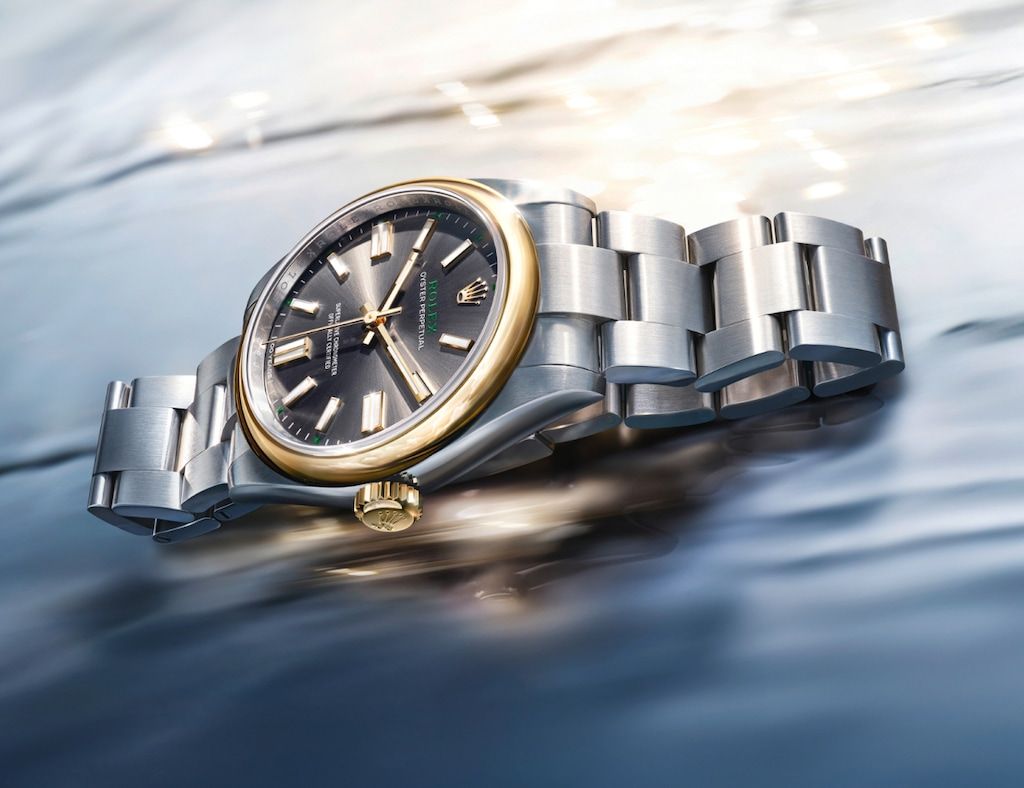
The centenary Oyster Perpetual is arguably the key to understanding the whole collection. On paper, the move sounds simple enough: to mark 100 years of the Oyster case, Rolex has taken its most elemental watch and given it a commemorative spin. In practice, it is a neat little exercise in hierarchy. Instead of a standard two-tone execution, yellow gold is reserved for the bezel and Twinlock crown while the case and bracelet remain steel, creating an unusual partial Rolesor effect that nods to early Oyster watches without turning the OP into something gaudy. The slate sunray dial keeps things restrained, but not timid. Green details, including the Rolex logo and minute accents, carry the anniversary colour cue, while the usual “Swiss Made” at six o’clock is replaced by “100 years”, a signature echoed on the crown itself. It is precisely the sort of underplayed branding gesture Rolex tends to get right, because it understands that its audience likes to feel clever for noticing things.
More interestingly, the watch asks a bigger question about the Oyster Perpetual’s place in the catalogue. Once the clean, democratic baseline of Rolex ownership, it is increasingly being used as a platform for experimentation, soft status signalling and commemorative depth. That shift may be one of the most important things Rolex has said all year.
Oyster Perpetual 36, Multicolour Jubilee Motif Dial (Ref. 126000)
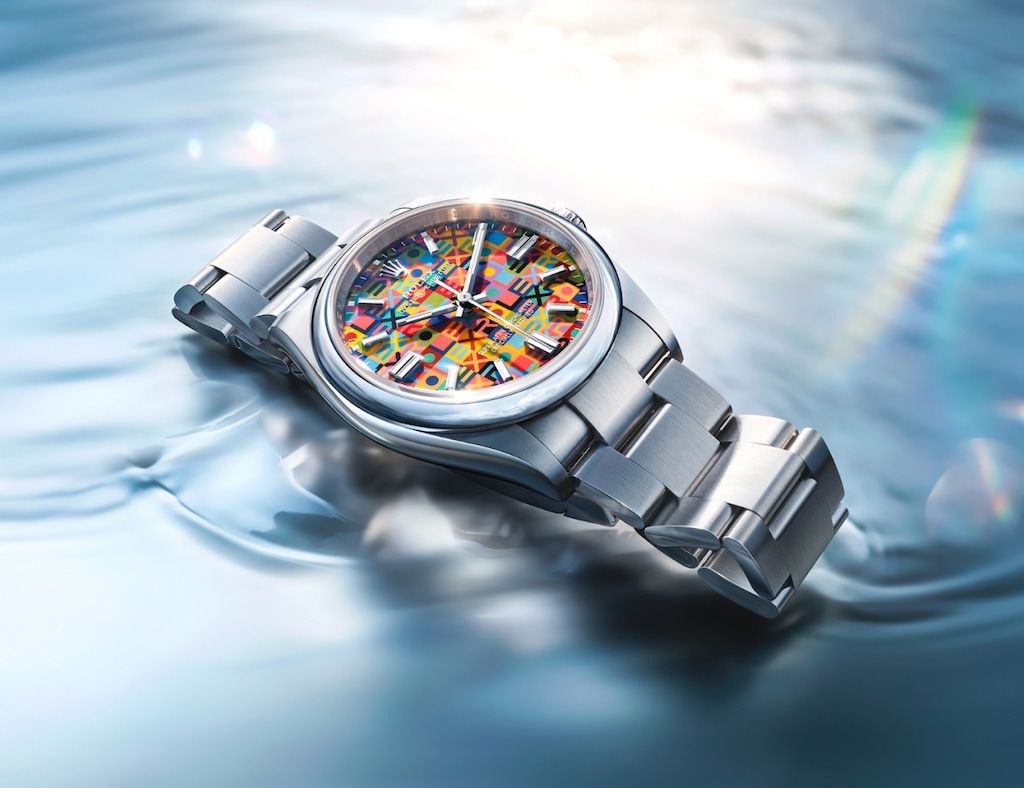
The most divisive watch of the lot is also one of the most interesting, which feels very Rolex in a year like this. The new Oyster Perpetual 36 Jubilee dial is the sort of release that can look faintly monstrous in first images and then, annoyingly, begin to make a bit more sense the longer you stare at it. Its multicolour lacquered dial, built around a repeated Jubilee motif spelling out Rolex, is not subtle in any conventional sense. One count from Reddit lands at 24 Rolexes on the dial, which sounds like the kind of thing that should immediately send one running.
And yet there is something compelling about the fact that Rolex has not gone halfway here. The brand says the colours are applied in stages rather than all at once, underlining the technical difficulty of the finish, and ties the concept back to celebratory dials from the late 1970s and earlier Jubilee-style references. That historical thread matters, because without it the watch risks reading like a corporate sugar rush. With it, the piece becomes something a little stranger and better: an anniversary object that knows it will split the room. I am still not fully sold on it, and this is one of those watches that probably needs to be seen in the metal before any hard verdict is passed. But it is growing on me, which is usually how the most dangerous Rolexes begin.
Oyster Perpetual 28 in 18 ct Yellow Gold, Green Stone Dial with Heliotrope Markers
(Ref. 276208) & Oyster Perpetual 34 in 18 ct Everose Gold, Blue Stone Dial with Dumortierite Markers (Ref. 124205)
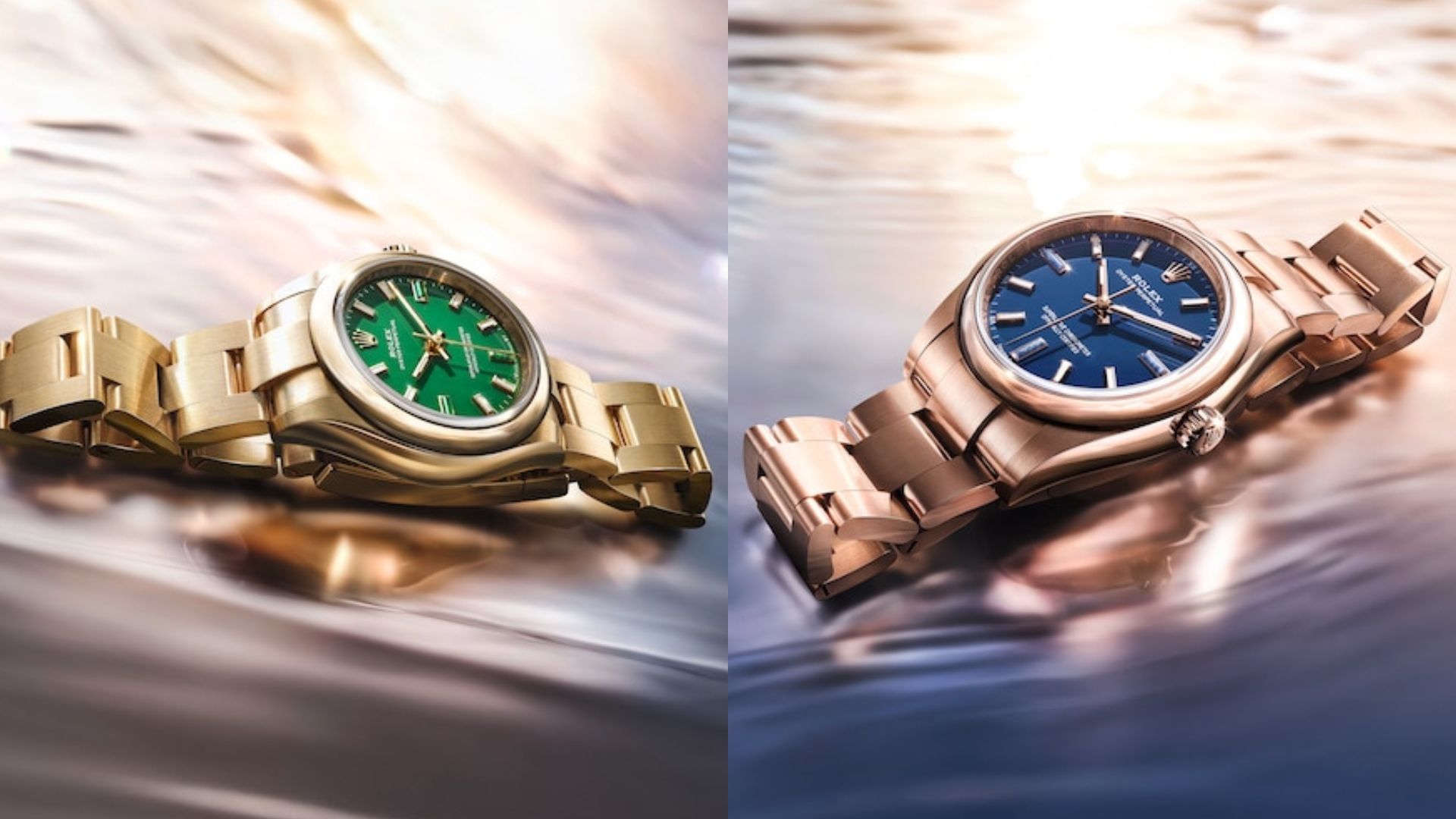
Quietly, and perhaps more effectively than any other part of the launch, the gold Oyster Perpetual 28 and 34 models show just how far Rolex is willing to stretch the OP concept without breaking it. What was once the brand’s most stripped-back and accessible proposition is now being trusted with solid gold cases, stone lacquer dials and natural stone hour markers at three, six and nine. That is not a small shift. The 28mm yellow-gold model pairs a green dial with heliotrope markers, while the 34mm version appears in Everose with a blue dial and dumortierite markers, alongside other variants in black, turquoise and mother-of-pearl.
The blue Everose 34 is the one that really sings. It has that odd quality the best Rolexes sometimes have, where the design feels fresh but also curiously inevitable, as if the brand has finally decided to join a conversation the rest of the industry has been having for a while about stone dials, softened finishes and more tactile forms of luxury. Even the satin-finished gold matters here. GQ notes that Rolex has treated the gold differently from its usual precious-metal approach, toning down the flash and giving the watches a more relaxed presence. That restraint is precisely what keeps these from tipping into novelty. For me, the blue 34 is one of the strongest and most quietly desirable Rolex releases of 2026.
Oyster Perpetual Day-Date 40 in Jubilee Gold, Green Aventurine Dial (Ref. 228235)
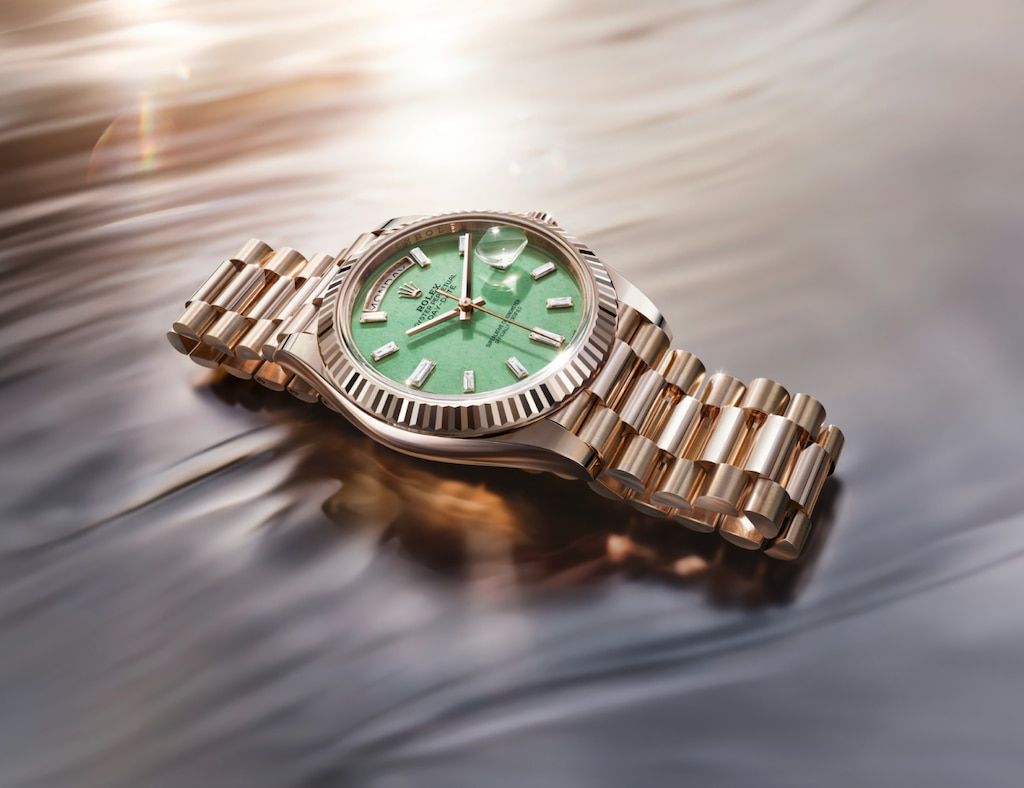
The Day-Date is where Rolex permits itself a little theatre, and the new Jubilee Gold reference wears that role rather well. Under that slightly self-congratulatory name sits a brand-new in-house alloy that Rolex describes as blending tender yellow, warm grey and soft pink tones, producing a softer and less obviously shouty precious metal than the yellow gold most people instinctively picture. This is a distinct new material proposition for the brand, and even if the naming feels faintly ceremonial, the visual effect does appear to justify the fuss. The watch pairs that new alloy with a bright green aventurine dial and ten baguette-cut diamond markers, which sounds close to excess on paper but lands somewhere moodier and more atmospheric than expected.
There is an echo here of the Stella-dial era, though filtered through modern Rolex’s tendency to sand down the louder edges of its own flamboyance. That makes the watch feel both nostalgic and newly calibrated. I like that tension. The Day-Date should never be overly apologetic; it is Rolex’s great wrist-borne symbol of power, vanity and personal taste. But in this case the luxury feels more textured than brazen. Of all the precious-metal pieces in the lineup, this might be the one with the strongest emotional pull, precisely because it is a little dreamy and a little absurd.
Oyster Perpetual Datejust 41, Green Ombré Dial (Ref. 126334)
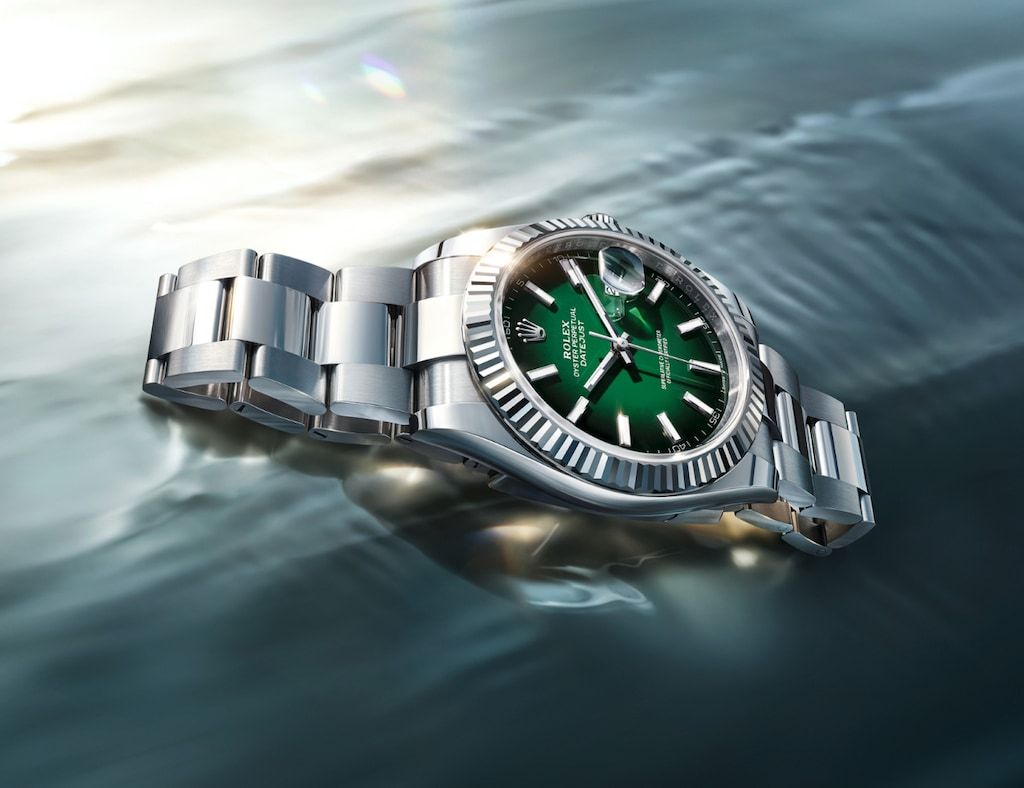
Not every Rolex release needs to elbow its way to the front of the queue, and the new Datejust 41 understands that. In another year, a green ombré dial on a white Rolesor Datejust with a fluted bezel might have had more space to command attention. Here, it plays the role of the classic supporting actor, which is not the worst thing a Datejust can be. The watch itself remains familiar, but the dial is genuinely worth a pause. The effect is achieved through a full lacquer treatment, with green lacquer applied to the base plate and black lacquer sprayed concentrically to create the gradient, marking a new approach to ombré execution since the finish was reintroduced.
That gives the watch a depth that feels richer than a standard colour refresh, and it suits the 41mm format, which has enough dial real estate to let the fade breathe properly. This is not the showiest piece in the collection, nor the most radical, nor even the one most likely to trigger resale hysteria. But it may be one of the smartest. Rolex knows the Datejust does not need reinvention. It needs one or two compelling new reasons to remain desirable, relevant and just a touch covetable. A glossy green ombré face, framed by white gold fluting, does that job rather neatly.
Oyster Perpetual Yacht-Master II in Oystersteel (Ref. 126680) & 18 ct Yellow Gold (Ref. 126688)
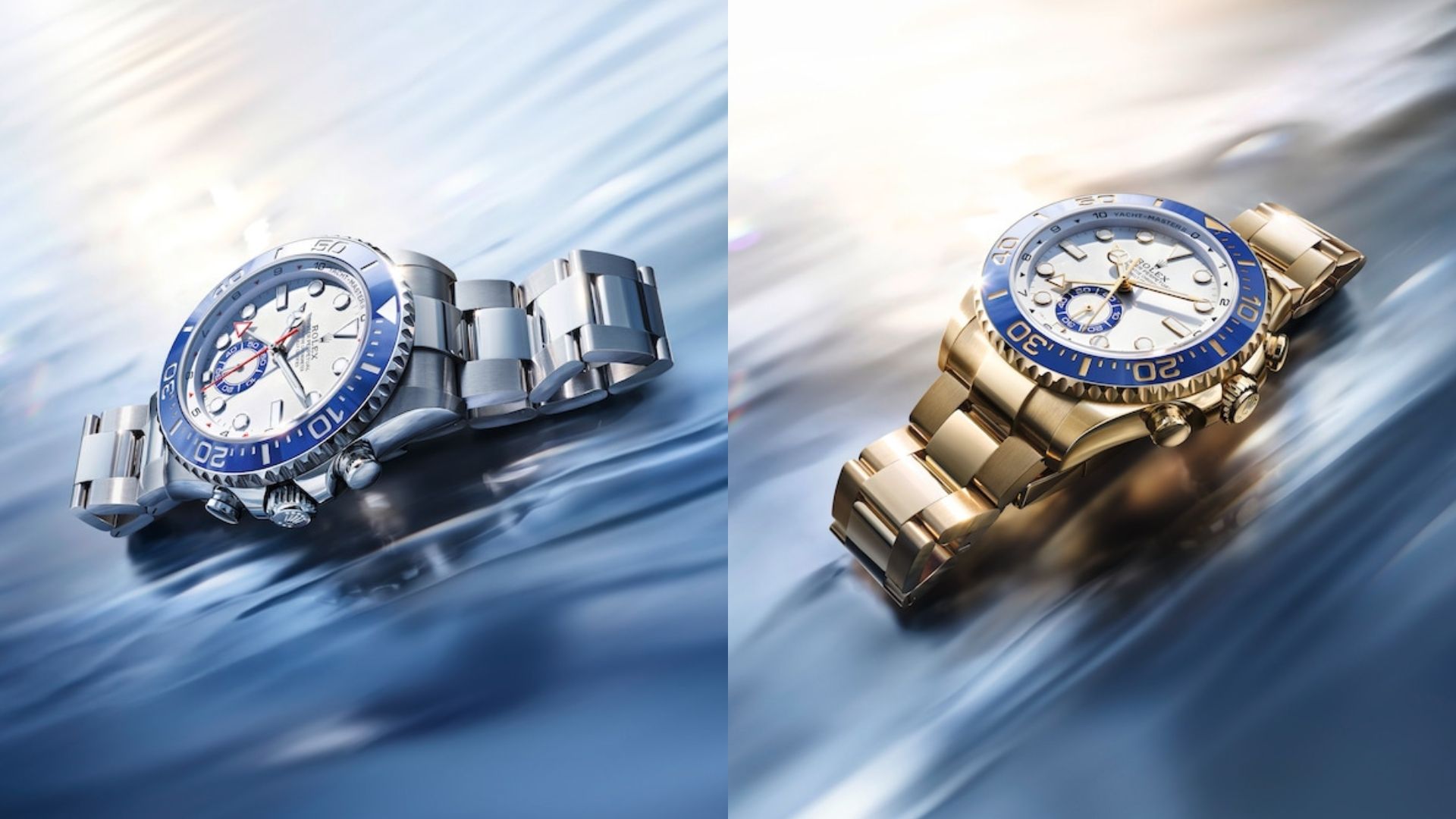
The return of the Yacht-Master II is the collection’s oddball technical story, and I mean that as a compliment. In a year so dominated by dial treatments, anniversary cues and material play, it is rather refreshing to see Rolex drag back the one big, slightly awkward, genuinely niche chronograph in its range and give it a serious rethink. The Yacht-Master II returns in Oystersteel and yellow gold with a reworked case, a cleaner bezel presentation and, most importantly, an all-new calibre 4162 built around a programmable countdown chronograph intended for regatta starts.
The practical use case is undeniably specialised, but the mechanics are cool enough to justify themselves even if you never intend to get near a yacht club. The lower pusher adds minutes to the countdown, which is displayed on the dial flange, while the countdown hands move counterclockwise to make receding time feel more intuitive to the wearer. Robb Report rightly points out that getting something to run backwards inside a watch whose normal logic runs the other way is no trivial task. More impressive still is that Rolex appears to have made the watch sleeker in the process. Will this be the star of the 2026 lineup? No. The Daytona will always flatten almost everything else in the range on design charisma alone. But as a reminder that Rolex still knows how to do proper technical weirdness, the Yacht-Master II earns its place.
Taken together, this lineup suggests that Rolex is getting increasingly adept at staging itself by degrees. That sounds obvious until you consider how difficult it is to make incremental change feel genuinely charged year after year, especially for a brand whose every move is subjected to forensic overreading within minutes. Yet that is exactly what Rolex has managed here. The 2026 novelties are not built around one overwhelming centre of gravity so much as a carefully managed spectrum of desire: a high-craft Daytona for the obsessives, an anniversary Oyster Perpetual that upgrades the brand’s most elemental watch without compromising it, a Jubilee dial that might yet become a cult object, gold OPs that quietly reposition the entire line, a Day-Date that turns metallurgy into atmosphere, a Datejust that does dependable Rolex elegance with a bit more gloss, and a Yacht-Master II that reminds everyone the Crown can still produce an honest-to-god technical curiosity. More than anything, this feels like a year in which Rolex trusted its audience to read subtle changes as meaningful ones. Texture matters. Finishing matters. Placement matters. Small shifts in hierarchy matter. In that sense, 2026 is not a lesser sequel to the Land-Dweller year. It is Rolex proving that it no longer needs to shout to dominate the room.
And then, of course, there is the watch Rolex did not launch. The discontinuation of the GMT-Master II Pepsi is easy to frame as a market story, because the market did what it always does when Rolex removes a beloved steel sports watch from the catalogue: it immediately began hyperventilating. Reports indicate that the steel ref. 126710BLRO and the white-gold 126719BLRO are both gone, that authorised dealers had already stopped receiving fresh deliveries, and that speculation around a replacement had been building for months, especially with chatter around a possible Coke successor and older patent material describing multicoloured ceramic production.
But the more interesting point is not what collectors will now pay for the Pepsi. It is what the move says about Rolex. In 2026, the brand chose not merely to end an icon, but to leave a conspicuous absence in its place. No direct replacement. No red-bezel steel GMT. No tidy act of succession. That gap feels deliberate, and distinctly Rolex. Few brands understand as well as the Crown that desire can be intensified by subtraction just as effectively as by addition. In a year defined by nuance, perhaps Rolex’s sharpest gesture was simply to remove something everyone expected to stay, then let absence do the talking.


