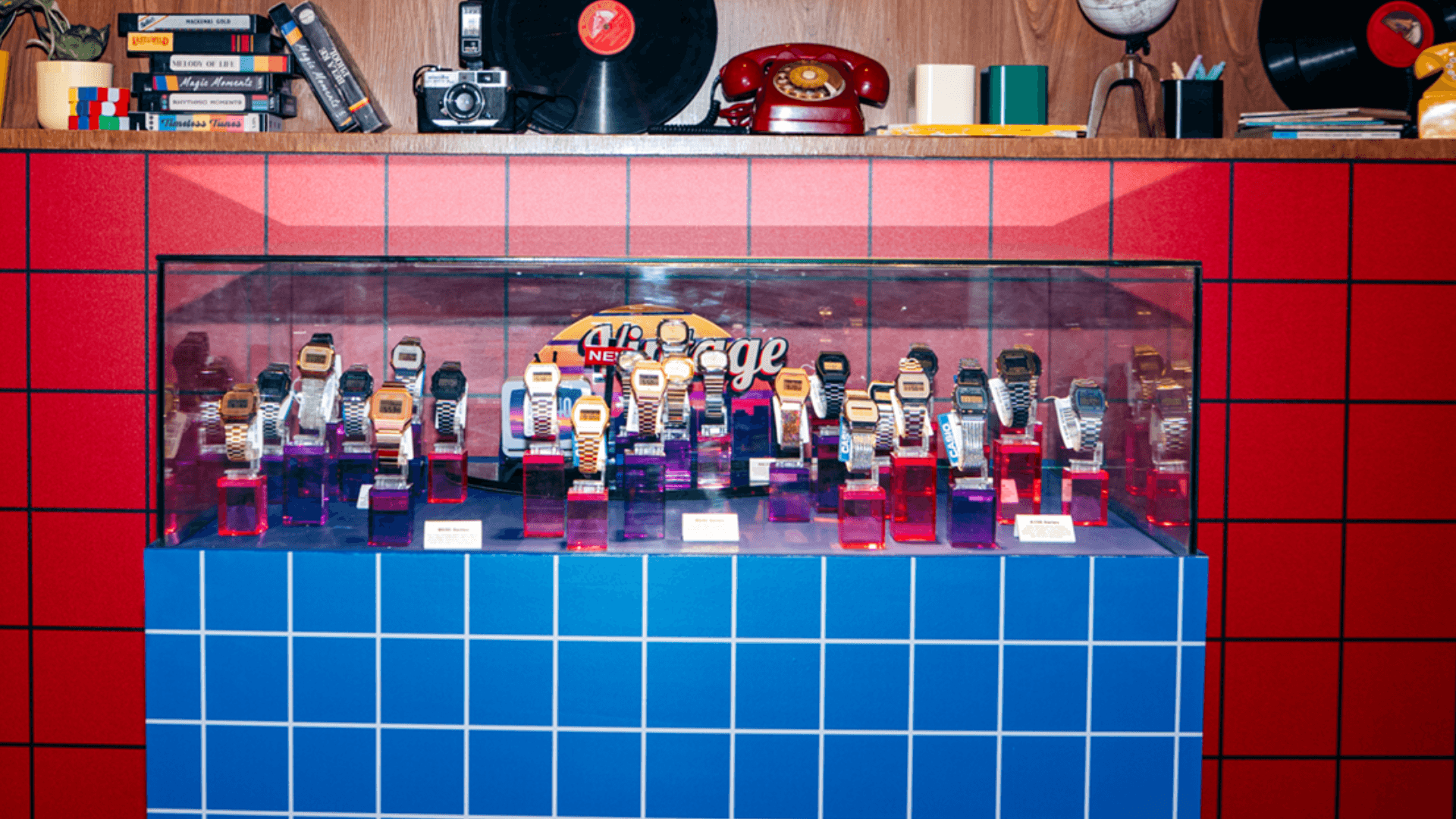
For a brand so closely associated with the late 20th century, Casio has spent an unusual amount of time resisting the urge to move on from it. The core design language that defined its early digital watches—compact cases, sharp geometry, simple displays—has remained largely intact, even as the industry around it has chased complexity, luxury, and lately, screens. What’s changed instead is how those designs are perceived. Once bought for their reliability and affordability, they’ve quietly crossed over into something more expressive, picked up by a younger audience that treats them less like tools and more like cultural artefacts. That shift, from function to identity, sits at the heart of what the brand now frames as its “Future Classics” philosophy: respect the past, update it carefully, and let each generation reinterpret it on its own terms.
You can see that play out in real time. The AQ-230A-2A1MQY on my wrist as I write this blends modern proportions and dial colours with an unmistakably 80s-style octagonal case, and it doesn’t feel like a throwback as much as it does a continuation. Casio has recognised that appeal and leaned into it with newer iterations like the AQ-240E, which softens the edges into a more rounded, “TV dial” form while introducing a pastel palette that feels tuned to the current moment. The bones stay the same, the mood shifts slightly, and that’s often enough to keep things relevant without overthinking it.
It’s also a philosophy that seems to land particularly well in India right now. The market has moved quickly from valuing watches as purely functional objects to treating them as everyday style markers, especially among younger buyers who are as influenced by global trends as they are by local pricing realities. Or, as one Casio executive put it to me recently, what began as “a symbol of reliability and innovation” has now evolved into “a canvas for self-expression.” That tension between consistency and reinvention is what the brand is currently trying to navigate, with a sharper focus on localisation, wider retail access, and a growing slate of Make-in-India models rolled out over the past year.
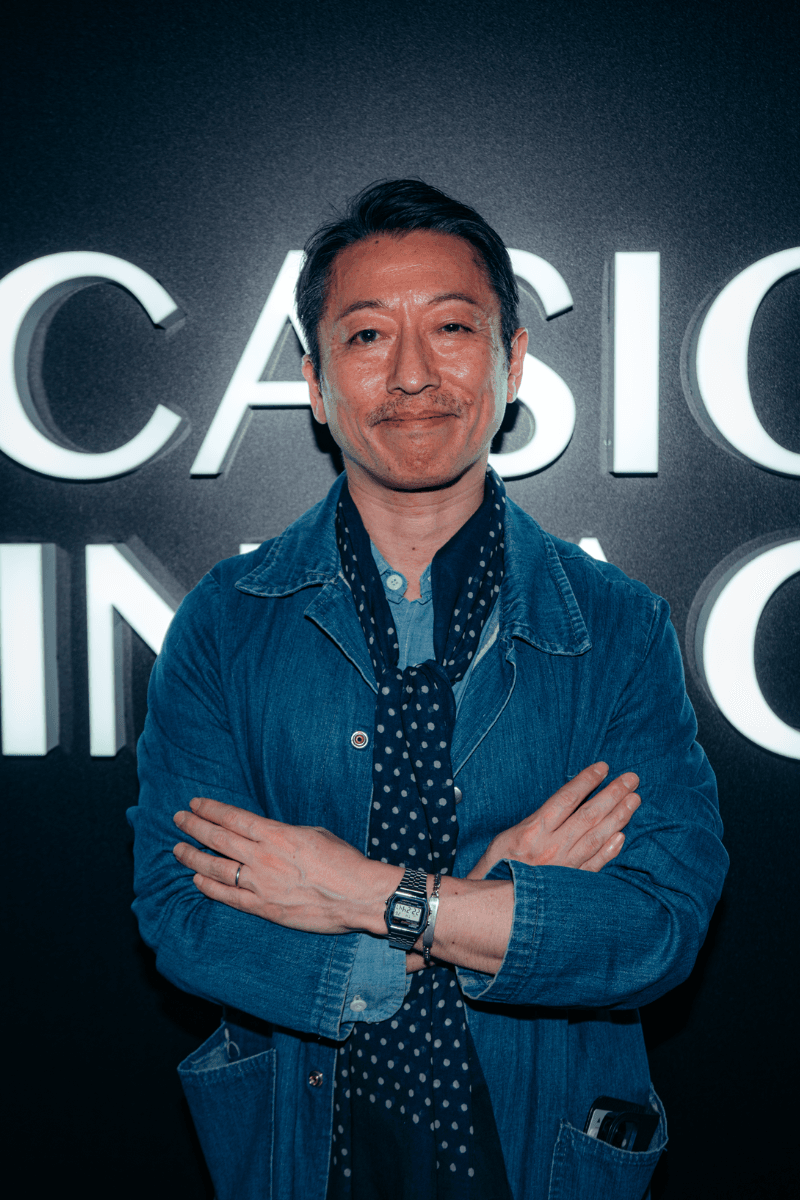
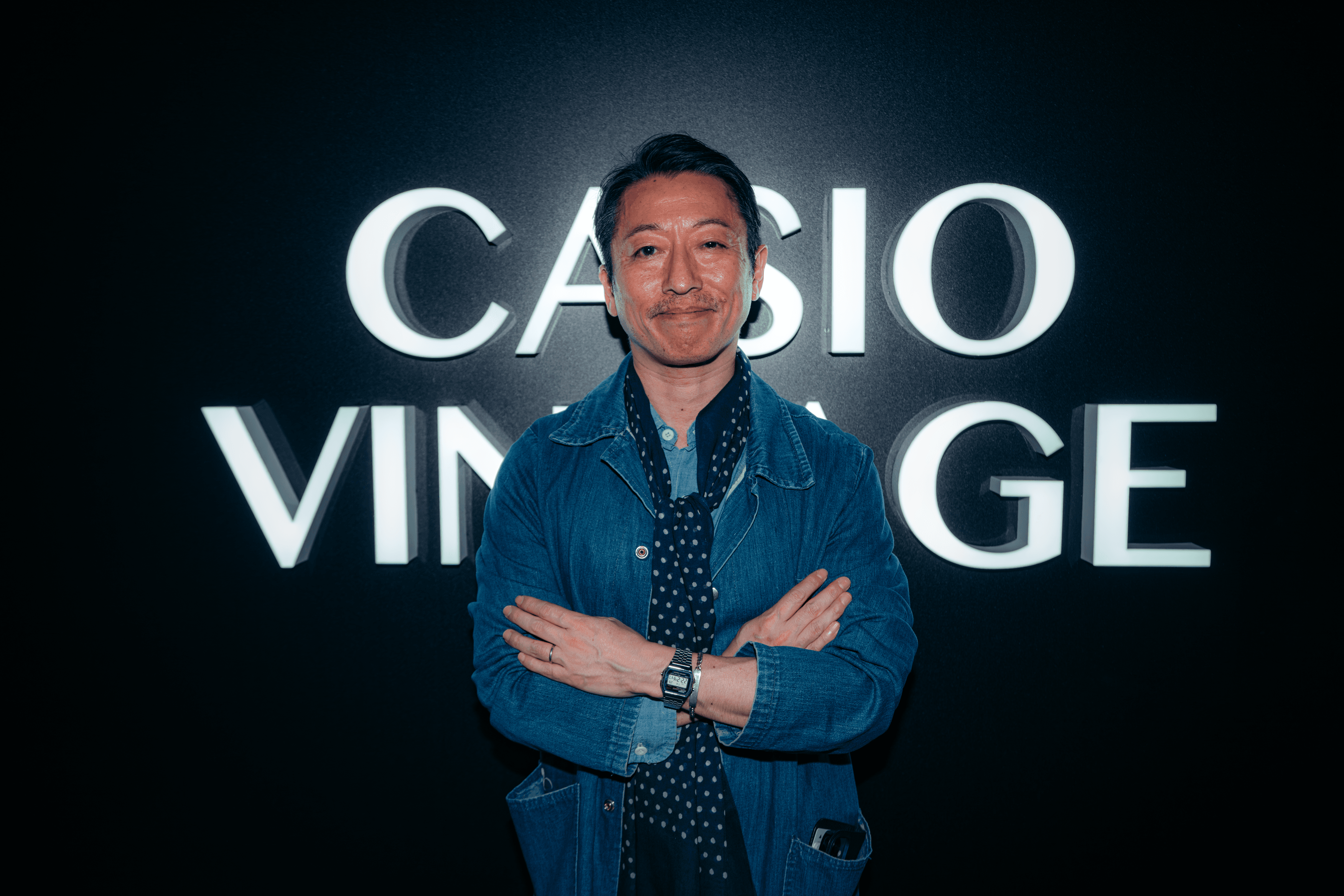
Following Casio’s ‘Vintage Verse’ showcase in Mumbai, we caught up with Takuto Kimura, Managing Director of Casio India, to unpack how the brand is thinking about this moment — from Gen Z’s fixation with 80s design codes to the quiet staying power of digital watches in a market that’s learning to value style just as much as substance. Excerpts:
Casio Vintage has such a strong association with the 80s and 90s. How did the collection originally come into being, and how has it evolved into what we see today?
In India, the evolution of Casio Vintage has been quite organic. Initially, these watches were appreciated for their reliability and innovation. They were functional timekeeping devices first. But over time, especially in recent years, they’ve moved beyond that to become more like fashion icons. What’s important for us is to respect designs that transcend trends, generations, and occasions. That’s what we mean by something being timeless. We keep that heritage design intact, but we update and interpret it based on current market trends. That balance is what defines the collection today.
When did you start noticing that shift from functionality to style, especially in India?
I think the pandemic played a role, but it’s also part of a larger shift in the watch market. Earlier, people focused on reliability and function. Now, especially with younger consumers, watches are more about self-expression. They are exposed to global fashion trends very easily through social media. So even though a watch still tells time, it’s also becoming a fashion accessory. That’s the biggest change I’ve seen in India.
A lot of that seems to be driven by younger consumers. What’s been your perspective on how Gen Z is engaging with these designs?
Yes, this is a global trend. There is a strong interest in vintage aesthetics, especially from the 80s and 90s. Even if they were not born in that era, younger consumers can easily access and imagine that culture through social media. That creates curiosity and appreciation for those designs, and we see that reflected in demand.
Digital watches are also quietly having a moment again. Do you see that as a lasting shift?
I think digital will continue to be relevant. At the same time, we are also seeing interest in combinations like digital-analogue watches. In general, trends tend to repeat in some way. What we’re seeing now is not completely new, but a reinterpretation of what has worked before.
Have there been any specific models or formats that surprised you in terms of how well they’ve performed?
Yes, the growth has been quite strong. Our Vintage models have seen around two times growth compared to last year, and overall brand searches have increased significantly. Some of the hybrid designs, like the AQ series, have been especially well received. They combine familiarity with something slightly different, which seems to resonate.
You’ve explored hybrid formats quite a bit. How do you think about expanding the collection from here?
We are always studying trends and thinking about how to expand the lineup, but our base concept remains the same. It has to feel timeless. We don’t want to force a specific way of wearing the watch. Instead, we want to give space for the end user to make it part of their own style. The watch should support the fashion, not dominate it.
Casio has historically done strong collaborations with G-Shock and Edifice. Do you see something similar happening with Vintage?
Yes, we are exploring that direction. In India, we haven’t done many collaborations for Vintage yet, but we are studying it. For us, it’s important that any collaboration connects naturally with culture and community. That’s how we can update heritage designs in a meaningful way.
That idea of community seems central to your approach right now. How are you thinking about creators and cultural engagement?
We don’t want communication to be one-way. Events like Vintage Verse are important because they allow us to engage directly with communities and influencers. Many creators already have a strong connection with our Vintage collection. When conversations happen naturally around fashion and style, they are able to share that with their audience in a more organic way. That has a strong impact.
What stood out to you from the Vintage Verse showcase in Mumbai?
The level of enthusiasm stood out. Many influencers were already fans of the collection, and the conversations went beyond just the watches. We spoke about broader topics like fashion trends and how Vintage fits into different styles. That kind of engagement feels more natural and helps strengthen the connection with the brand.
Looking ahead, what are your key priorities for Casio in India?
Vintage will continue to be a focus, but we are also looking at expanding our overall watch portfolio. One key priority is increasing our Make-in-India models to better fit local needs. We also see strong growth potential in Tier 2 and Tier 3 markets, so expanding our retail footprint there is important. At the same time, we are strengthening our online platforms and continuing to invest in community and cultural engagement.
On a more personal note, is there one Vintage model you think every collector should own?
Personally, I would choose the A158. It represents the most authentic expression of our heritage in the Vintage collection.
Finally, we’re seeing more fluidity between men’s and women’s watches, especially in Casio's catalogue. How do you see that playing out?
I think Vintage is a good example of this. The designs are quite neutral, so they work for both men and women, even if the case size is smaller. This kind of gender-neutral design is becoming more accepted globally. It’s not just an India trend. People are choosing watches based on style rather than categories, and that will continue.


