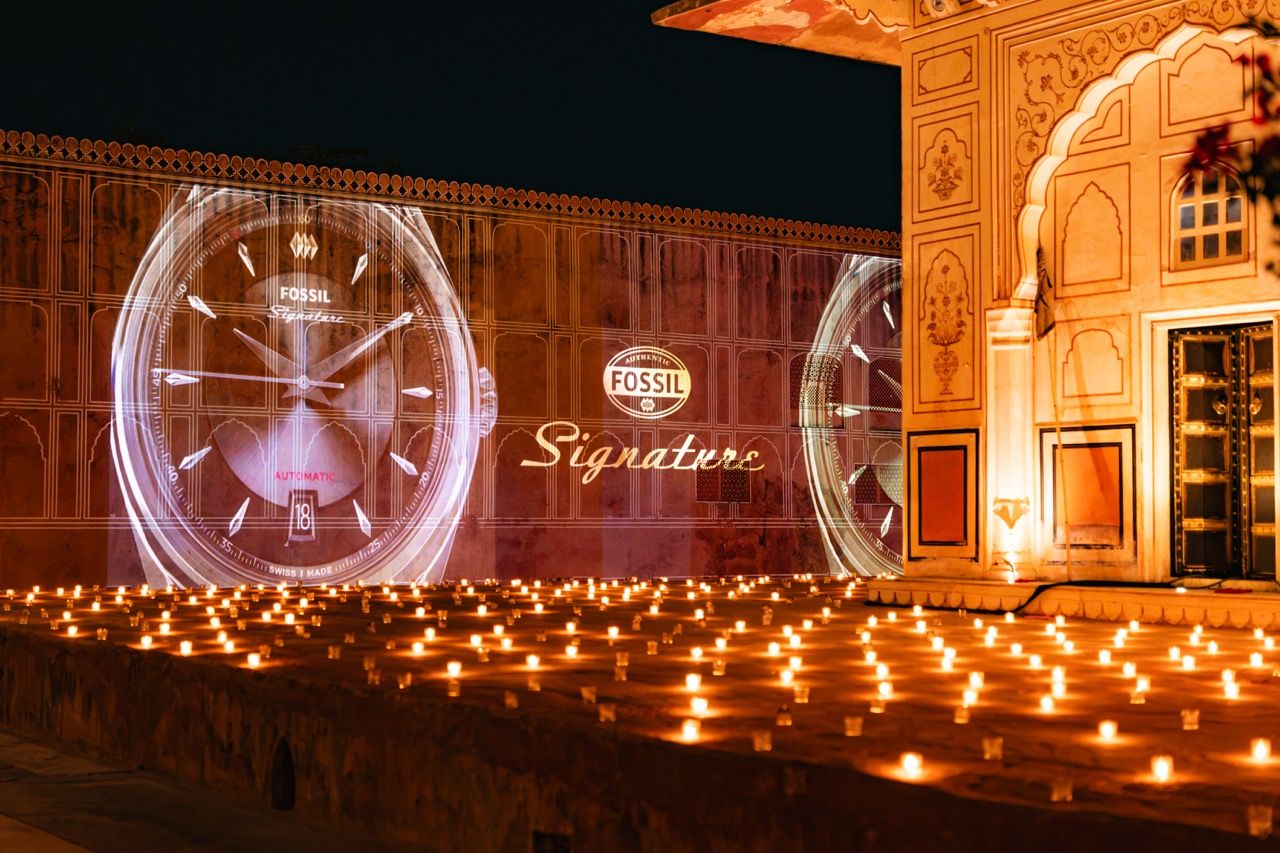
Jaipur's City Palace has become something of an industry darling for fourth-quarter brand events, and my first visit of the season came courtesy of Fossil. This time, the American watchmaker had gathered us in the Pink City for the unveiling of its new Signature CS-1 collection, accompanied by the announcement of Sawai Padmanabh Singh, better known as Pacho, as its global ambassador. The setting was rather appropriate. Here was a brand with four decades of American design heritage, introducing a collection inspired by Californian modernist architecture, powered by Swiss movements, and doing so within the walls of one of Rajasthan's most recognisable royal residences. There was quite a bit of history sharing the room that evening, although Fossil's attention was firmly on the future.
For anyone who grew up around watches in the 1990s and 2000s, Fossil probably needs little introduction. Founded in Texas in 1984, the company made its name by bringing personality, nostalgia and a certain American playfulness to affordable watchmaking. Its retro-inspired designs, colourful dials and collectible metal tins helped turn watches into something more approachable for an entire generation of consumers. Over the years, the brand expanded into everything from mechanical watches to smartwatches, while remaining largely associated with accessible, fashion-oriented timepieces. The new Signature collection, however, represents a rather different proposition. With Swiss-made movements, more considered construction and prices stretching from ₹57,995 to ₹75,995 in India, Fossil is asking consumers to reconsider what the name on the dial might represent. And as I discovered over conversations with the people behind the collection, the thinking goes considerably deeper than a change of movement supplier.
"We saw an opportunity to premiumise based on what we believe our customers are looking for, and we want to participate in all parts of their journey," explained Melissa Lowenkron, Fossil's Chief Brand Officer, when I asked what had prompted the move. "We're still very focused on our core assortment, but this is really an opportunity to build on that heritage and have a modern expression with elevated materials, precision engineering and Swiss craftsmanship, but still in a very accessible way." For Lowenkron, the differentiation lies not simply in the Swiss-made designation, but in Fossil's ability to bring its own design personality to the category. "We bring a timeless American design and a personality and optimism that really only Fossil can bring," she added. It's a familiar argument in the increasingly crowded world of accessible premium watchmaking, but one that becomes more interesting when you consider the collection's rather unusual source of inspiration.
A Case Study In Design
The Signature CS-1 takes its name from the Case Study Houses programme, an ambitious experiment in American residential architecture that ran from 1945 to 1966. Initiated by Arts & Architecture magazine, the programme invited architects to reconsider what modern housing could look like in the aftermath of the Second World War, producing influential buildings including the Eames House and the Stahl House. Its guiding principles were relatively straightforward: good design should be functional, economical, visually compelling and accessible. Rather than treating architecture as an exercise in decoration, the programme explored how materials, proportions, space and construction could work together to create something genuinely suited to modern living.
For Ryan White, Fossil's Senior Creative Director of Global Watch Design and the man behind the collection, the connection was a personal one. "Mid-century design has always been really important to Fossil," he told me, before explaining that the movement had also been a longstanding influence on his own creative sensibilities. The Case Study Houses provided an obvious starting point, but their influence extended beyond visual references. "We pulled in the geometry of some of the houses. We have concentric circles on the watches. It's very architectural, the construction of the watch. It's all about symmetry," he explained. More importantly, the programme gave his team a particular question to work towards. "They started from a place of asking, what does a modern home look like in that time period? And for us, we asked ourselves, 'What does a modern watch look like for Fossil?'"
That question feels particularly pertinent for a company whose relationship with watchmaking has evolved considerably since its early days. Fossil's Swiss ambitions aren't entirely new, either. The group established a presence in Biel/Bienne through Montres Antima in 2002 and maintains its European headquarters in Basel. The Signature collection therefore represents a return to a part of the company's history rather than an entirely unfamiliar venture. Still, Lowenkron was keen to distinguish it from previous efforts. "Signature is different than anything we've done in the past, and it's really an important moment for us because we feel the customer's ready for this premium watch," she said. What follows is an attempt to reconcile that ambition with the brand's established identity, using design principles that, perhaps fittingly, prioritise usefulness over unnecessary complexity.
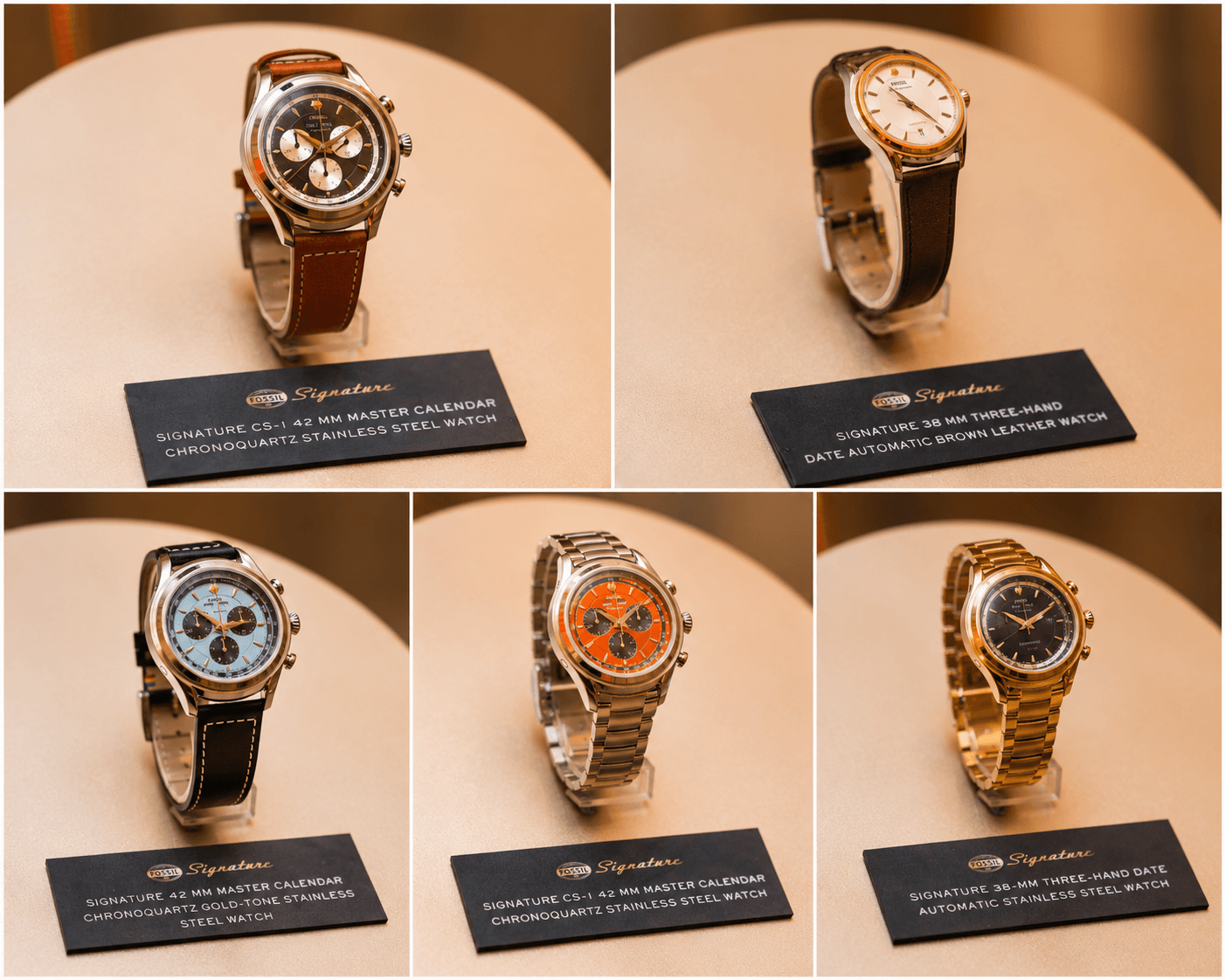
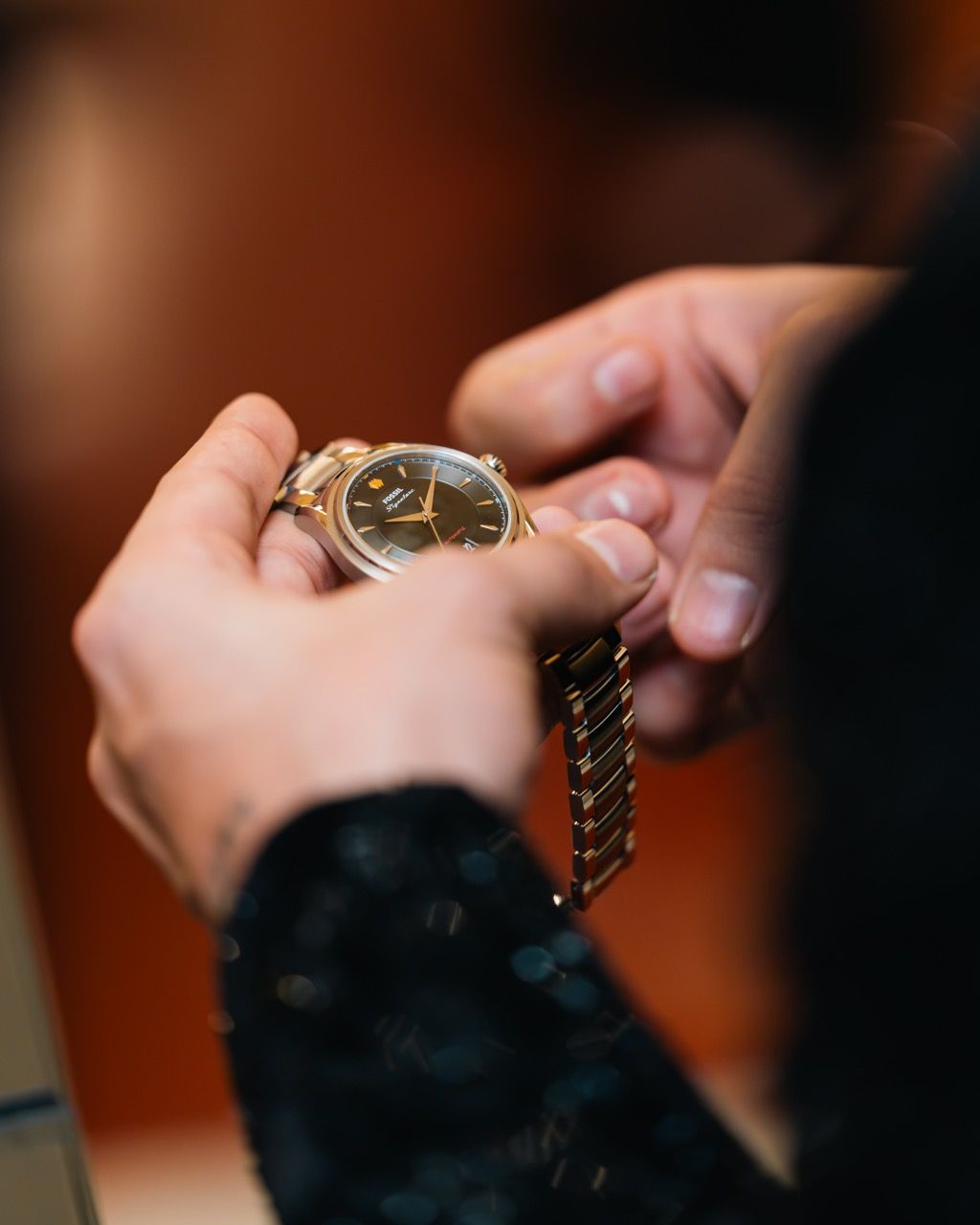
The collection opens with two models, each interpreting that philosophy rather differently. The first, the CS-1 Three-Hand Date Automatic, is the more restrained of the pair. Housed in a 38mm stainless steel case, it features sculpted lugs, alternating brushed and polished surfaces, a domed sapphire crystal and a dial characterised by concentric textures inspired by vinyl records. Elongated, faceted hour markers provide definition without overwhelming the design, while subtle touches of colour along the minute track introduce a little of Fossil's familiar playfulness. At 12 o'clock sits the Triple Diamond Quality insignia, a reference to the brand's past, present and future, while a trapezoidal date window occupies the six o'clock position. Turn the watch over and an exhibition caseback reveals the Swiss Sellita SW200-1 automatic movement, complete with a customised Signature rotor and a power reserve of approximately 41 hours. Water resistance is rated at 100 metres.
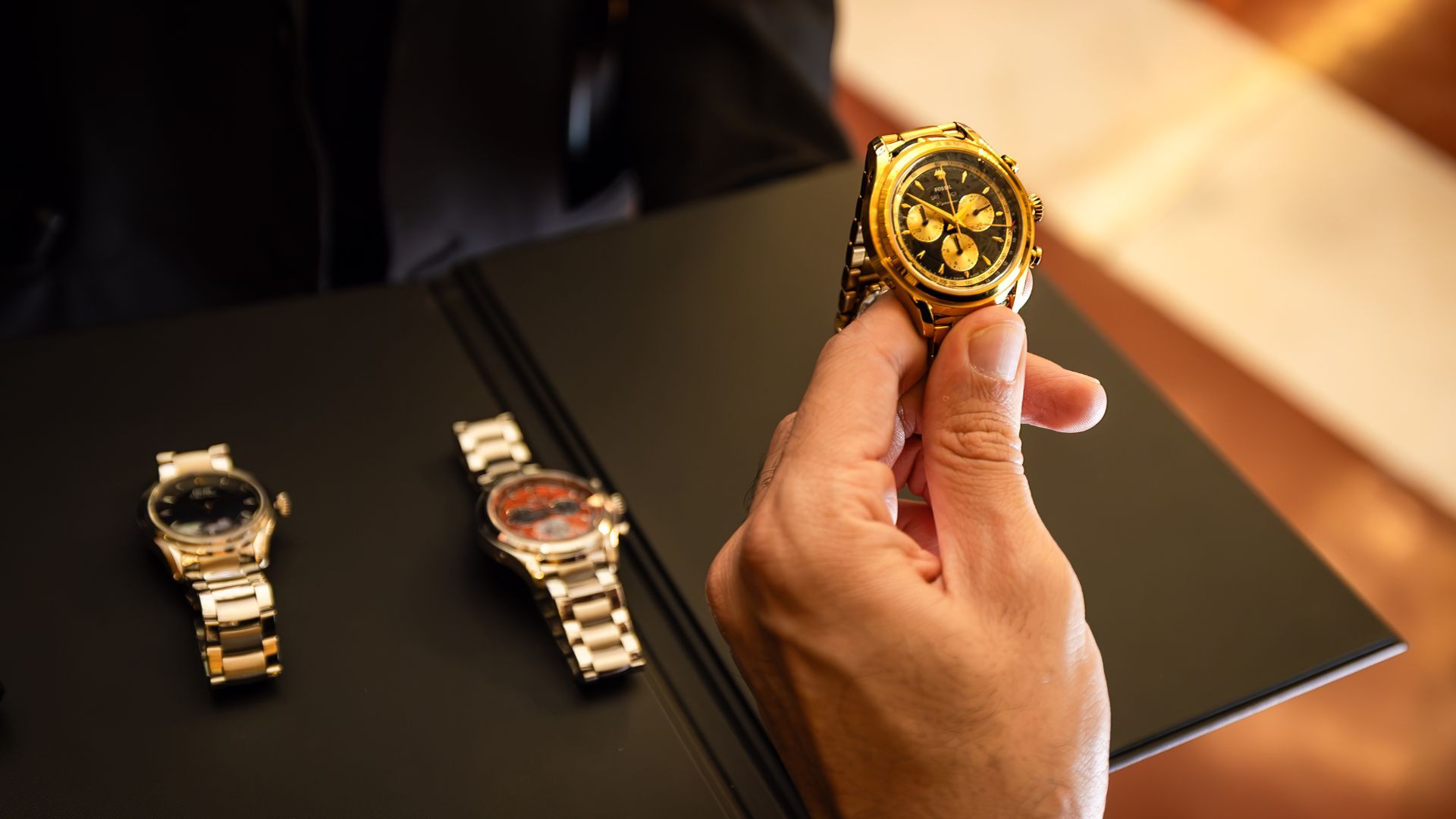
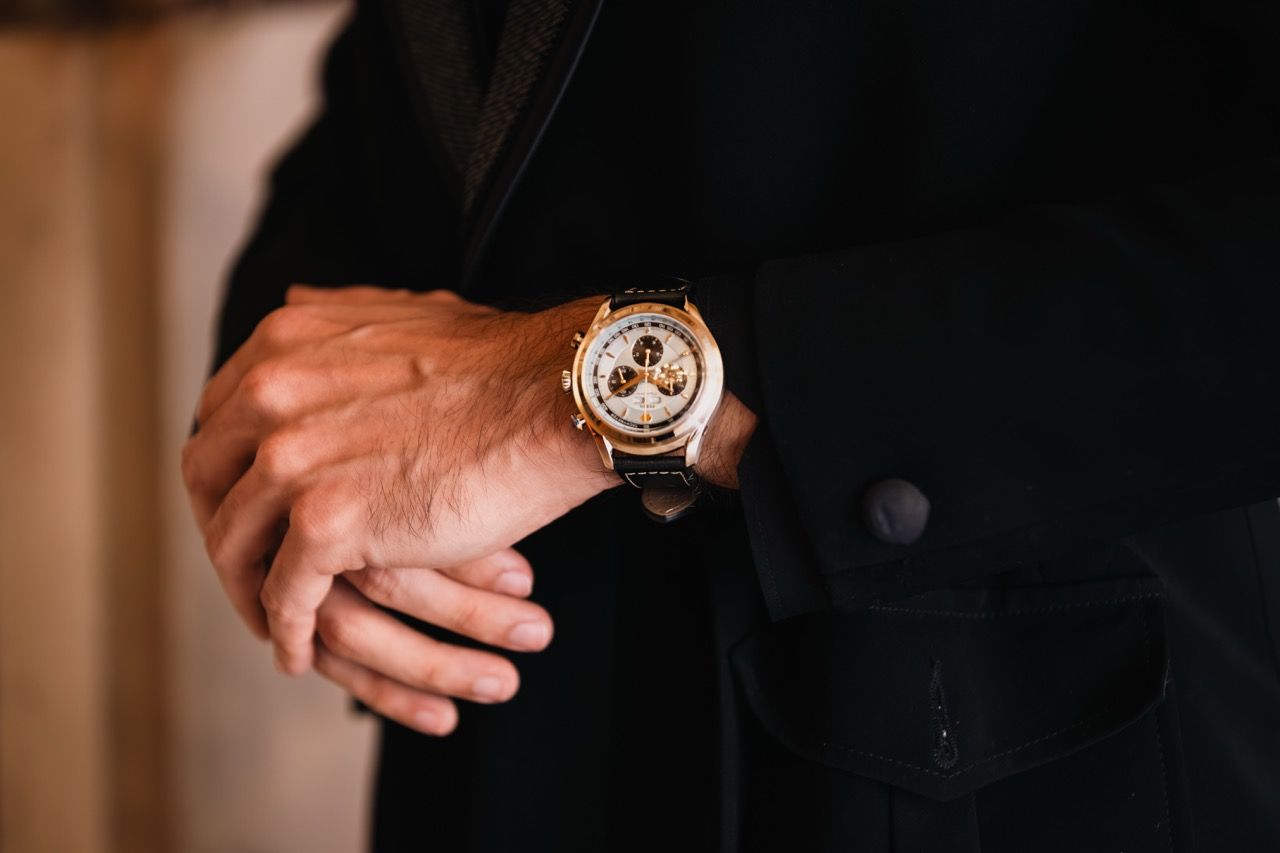
The second model, the 42mm Master Calendar Chronoquartz, takes a considerably busier approach. Powered by a Swiss Ronda 5040.F quartz calibre, it combines a chronograph with day, month and pointer-date displays, alongside a tachymeter scale around the dial. The day and month apertures sit near 12 o'clock, while a centrally mounted, red-tipped hand indicates the date against a peripheral scale. Three subdials accommodate the chronograph's elapsed-time indications and running seconds. Despite the additional information, the layout retains a pleasing degree of symmetry, with the sculpted case and dial architecture providing continuity with the automatic model. The chronograph also receives a solid caseback bearing the Triple Diamond insignia, 50 metres of water resistance and an estimated battery life of four and a half years. Neither movement is particularly exotic, but both are established Swiss calibres, and their selection makes practical sense for a collection attempting to balance credibility with relative accessibility.
Where the CS-1 becomes more expressive is in its treatment of colour and materials. The automatic arrives in Jet Black, Parchment and Prairie Green, while the chronograph offers Golden Hour, Sunset Orange, Robin's Egg Blue and Studio Black. White explained that the palette was developed with the same care as the physical design. "The Robin's Egg Blue, for example, is actually a paint colour that I found from a list of paint colours. And we did Prairie Green for the green. It's all intentionally going back to that era and those Case Study Houses," he said. "But I also think that the names themselves, there's an emotional connection to them, and we thought that was going to be important for the collection." Depending on the reference, the watches are fitted with Italian leather straps featuring soft lambskin backing or stainless steel bracelets with butterfly clasps and links designed for easier adjustment. White himself seemed particularly fond of the green automatic, which he admitted he'd been wearing throughout the week. "I just catch myself staring at it," he laughed.
There's something quite appealing about this approach. The watches don't attempt to recreate architectural landmarks in miniature, nor do they rely on overtly nostalgic detailing to justify their inspiration. Instead, White's team has tried to interpret the ideas behind those buildings. As he explained, the original Case Study Houses were expected to be "efficient, economical and beautiful, all at once". Whether the architecture connection is immediately apparent to someone encountering the watches for the first time is debatable, but the underlying emphasis on proportion, materiality and functional design is easier to appreciate. The larger question, of course, is whether such considerations will be enough to change how consumers perceive Fossil.
The Indian Question
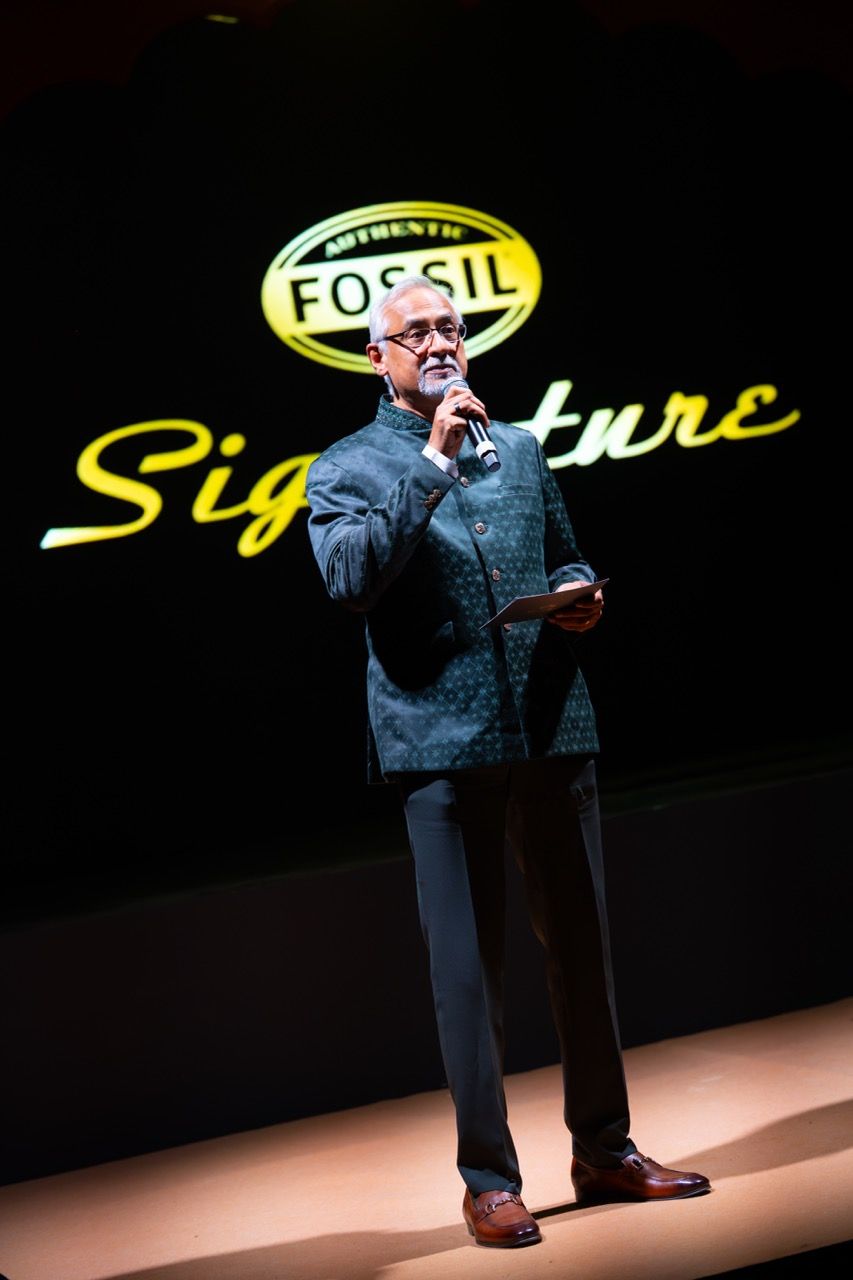
For Johnson Verghese, Managing Director of Fossil India, the answer begins with customers who already know the brand. India has been an important market for Fossil since it established its local operations in 2007, and Verghese believes many of those early customers have simply grown into a different stage of their watch-buying lives. "Fossil is best known for being an accessible watch brand, as it were. And I don't think we want to change that DNA significantly," he told me. "What we do appreciate is that our consumers who've been with us all the way from 2007 have actually grown, and a lot of our customers are desirous of moving up the value chain." In his view, Signature is not so much an attempt to abandon Fossil's traditional audience as it is an opportunity to retain them as their interests and purchasing preferences evolve.
Verghese pointed towards the company's earlier push into mechanical watches as evidence of this progression. "About five, six years ago, we brought in automatics as something that we wanted to push forward. We thought that was something our consumers really wanted to buy into," he recalled. The Signature collection represents another step along that trajectory, offering more elaborate construction, elevated materials and Swiss-made credentials without creating an entirely separate identity. "To our mind, it is an extension of what we are doing and not really to create a completely different consumer base," he explained. "We aren't going to have a different DNA for the Fossil Signature collection. It is an extension of what we believe that we have with our audience."
It's a sensible strategy, although the competitive landscape is considerably more complicated today. At approximately ₹58,000 to ₹76,000, Fossil is entering territory where established Swiss names such as Tissot and Hamilton already command considerable recognition. Meanwhile, Indian buyers have become increasingly exposed to independent watchmakers, microbrands and a rapidly expanding variety of mechanical watches. The enthusiast shopping in this segment is arguably more informed, more particular and certainly more spoilt for choice than the average Fossil customer of a decade ago. When I asked Verghese what it would take to persuade such a buyer to consider Signature, his answer was refreshingly straightforward. "You will have to have the product stand for itself. The product needs to speak for itself, needs to be in the mind space that the consumer has, needs to be relevant to the consumer."
That, ultimately, is where the CS-1 will have to make its case. A recognisable movement and respectable specifications can establish a foundation, but they cannot automatically confer the sort of emotional or historical credibility that established enthusiasts associate with traditional watchmakers. Fossil's challenge is to convince buyers that its own design heritage deserves a place in that conversation. Verghese remains optimistic about the opportunity to attract both returning customers and those approaching the brand for the first time. "We believe that the product stands for itself, and you can get new consumers who want to walk in, who see Fossil with a new pair of lenses, so to speak," he said. The watches, rather than the marketing surrounding them, will ultimately determine whether that ambition translates into something lasting.
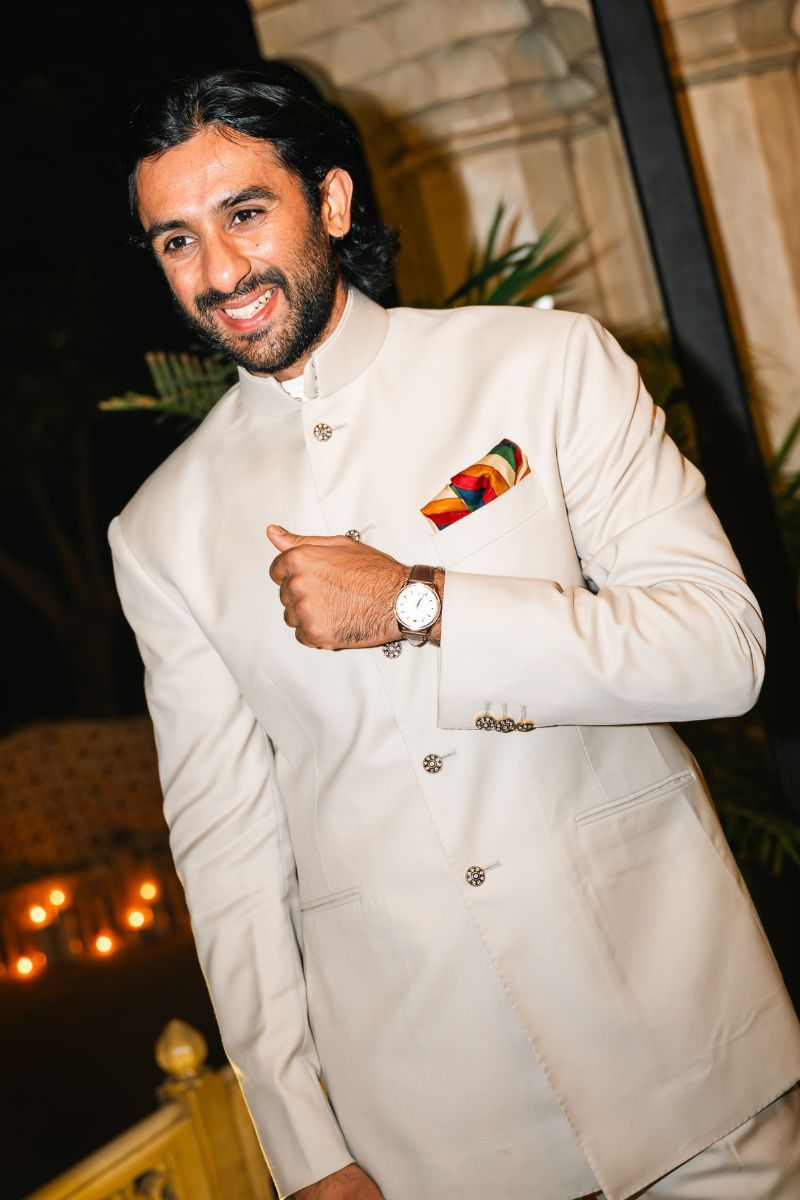
Which brings us back to Jaipur, and to the gentleman Fossil has chosen to represent this new chapter. Sawai Padmanabh Singh's appointment as global ambassador is an interesting one, not least because of how neatly his public identity connects the various themes running through the collection. A professional polo player and member of Jaipur's erstwhile royal family, Pacho occupies a rather distinctive space between inherited tradition and contemporary culture. For Lowenkron, that combination made him a natural fit. "We really appreciate his deep connection to his heritage, mixed with his individual style and a modern point of view," she explained. "We were also very drawn to his appreciation of craftsmanship, architecture, the art of watchmaking. They're all things that are really important to us as a brand."
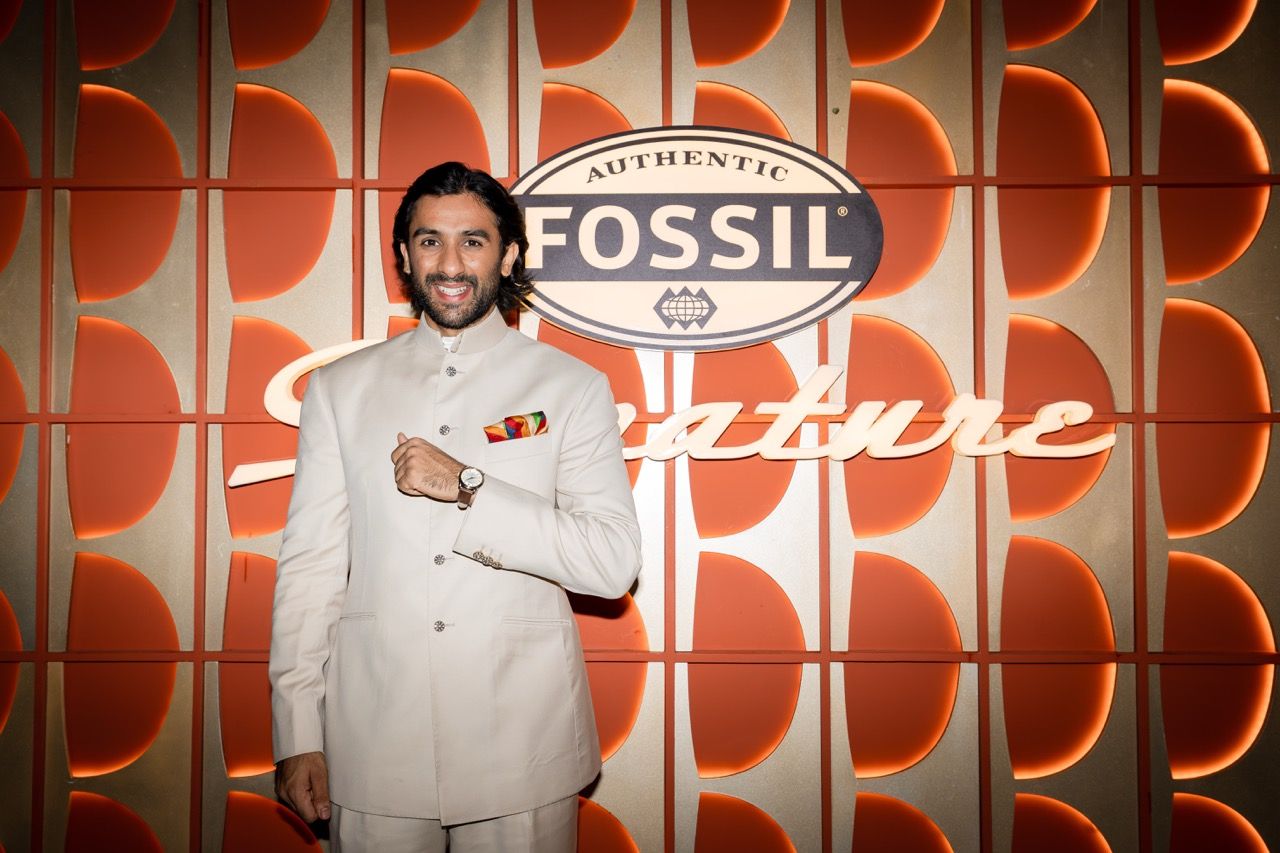
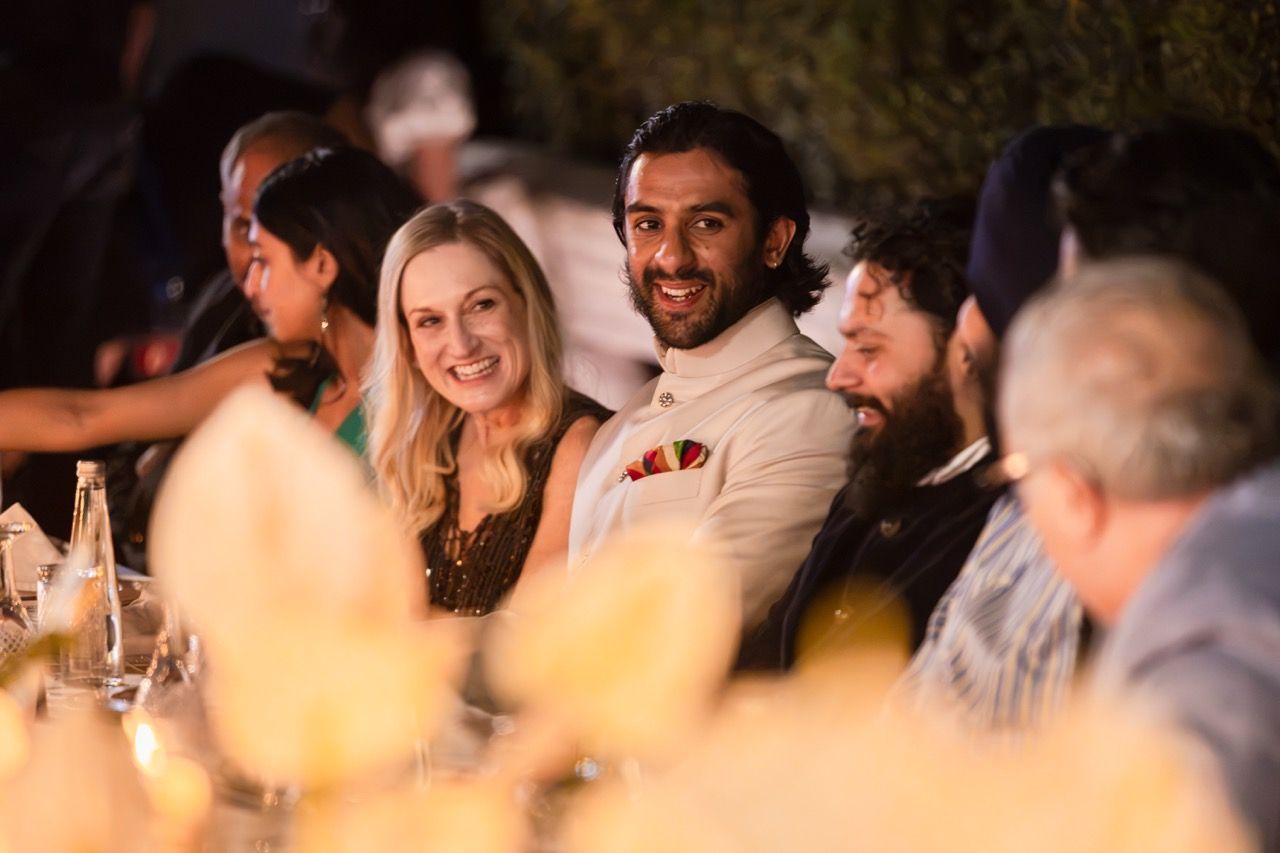
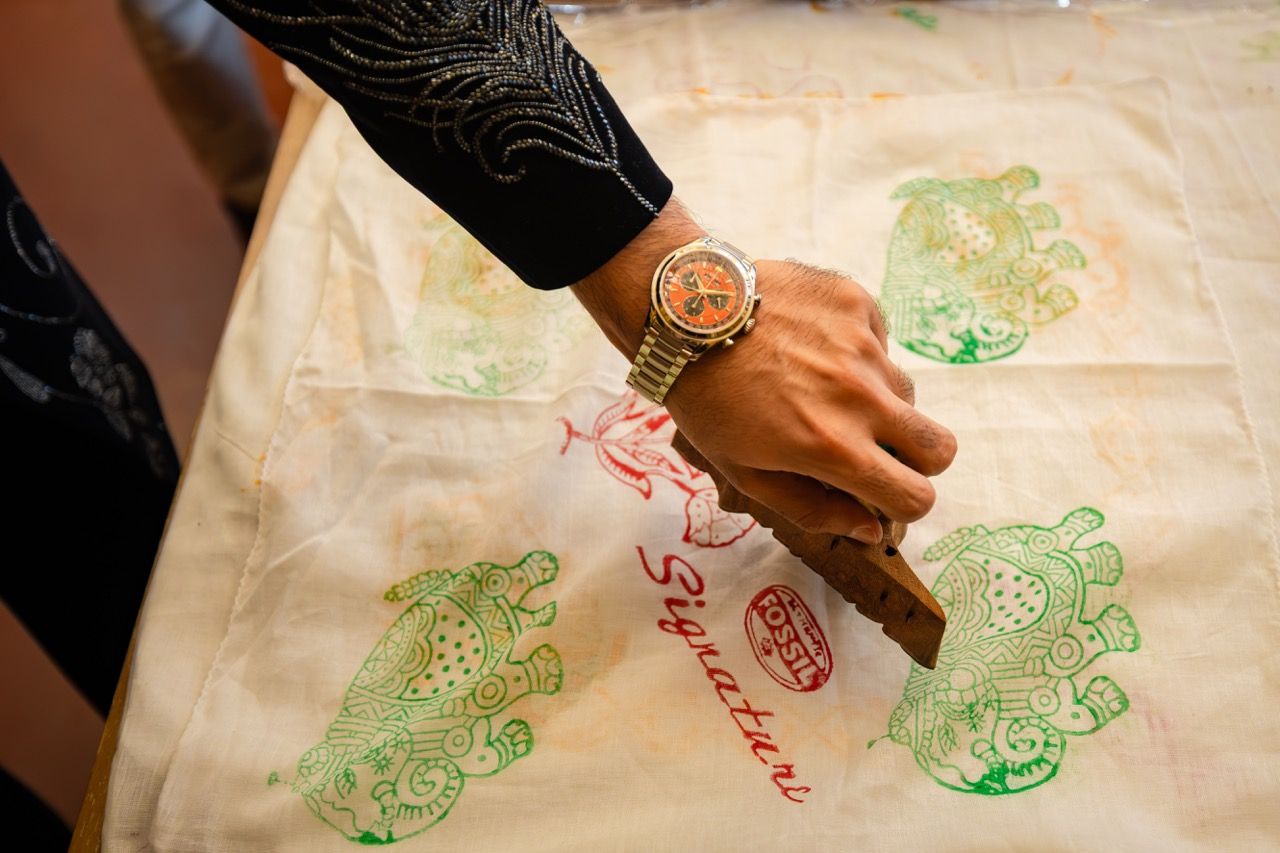
My conversation with Pacho, however, ended up moving well beyond the usual territory of brand ambassadorships. When I asked how growing up surrounded by objects, architecture and traditions that have survived generations had influenced his relationship with personal possessions, he began by speaking about Rajasthan itself. "It's really been the honour of my life to do so," he said of his upbringing, before reflecting on the influence that the region's visual and material culture has on the people who live there. From its monuments and palaces to its distinctive craft traditions and natural surroundings, he believes Rajasthan encourages a particular sensitivity towards the objects people encounter in everyday life. "I think that's had a huge influence on the way in which we look at the world, the way in which we look at objects. At least, I look at objects with a lot more appreciation."
What followed was perhaps the most interesting observation of the evening. "I care a lot about how things are made over how they look," he explained. "The aesthetic appeal has a lot less of an impression on me over the way in which it was built, the materiality involved, the precision used, the thinking, the emotions, the people behind the process." It was a thoughtful distinction, particularly coming from someone whose public-facing life involves fashion, architecture and the preservation of historic spaces. For Pacho, an object's appeal seems to lie less in its immediate visual impact than in the decisions and human effort responsible for its existence. He spoke about discovering those qualities during the campaign shoot, which took place at City Palace, and about the enthusiasm of Fossil's team in explaining the collection's construction and design.
He also offered an interesting interpretation of Jaipur's own history. Despite its deeply rooted cultural identity, the city was conceived in the eighteenth century with an openness to new ideas, drawing on contemporary thinking in urban planning and architecture. Pacho described it as a place that embraced its inheritance without treating tradition as something static or untouchable. "From day one for us over here, I think it was really that balance of embracing your past, but treating it not so much as your end all, but as your vehicle into the future," he said. It's a sentiment that could just as easily describe the rationale behind the Case Study Houses, or indeed Fossil's attempt to revisit its own history through a contemporary design language.
There's a temptation, particularly at events like these, to draw grand conclusions about the meeting of cultures, the endurance of craftsmanship and the future of watchmaking. But perhaps the most revealing moment came when I asked Pacho about the watch he had chosen for the evening. He admitted that he'd initially considered a silver model with a black dial, before settling on something else for an altogether more practical reason: it matched his shoes. A perfectly reasonable consideration, I'd argue, and one that rather neatly punctured the evening's more philosophical discussions.
He went on to explain that while an object's appearance might initially attract his attention, its ability to become part of everyday life mattered considerably more. "I like to buy things that I can fall asleep wearing," he said, describing possessions that feel less like accessories and more like extensions of oneself. For all the discussion of Swiss movements, architectural theory and premium positioning, it was a fitting thought to end on. Fossil may have spent considerable time considering what a modern watch should look like, but the more enduring question is what makes someone want to live with one. And that is something no amount of heritage, however carefully packaged, can answer on its own.


