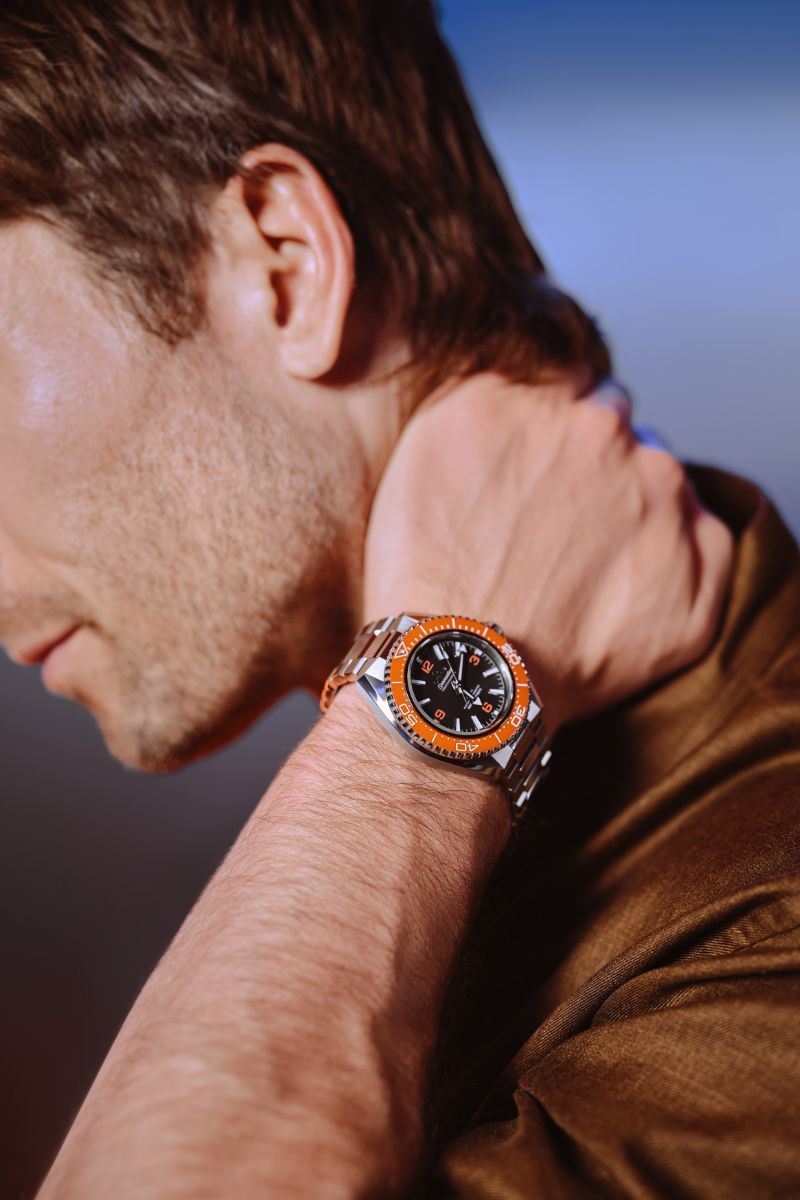
If Omega wanted to remind the world that the Planet Ocean still rules the waves, Miami was a suitably spectacular place to do it. The Faena Forum, all brutalist curves and theatrical lighting, hosted the brand’s latest Planet Ocean reveal, staged deliberately close to the Atlantic but far enough from the beach to feel intentional rather than obvious. Water reflections rippled across the space, blue and orange accents nodded to the collection’s visual DNA, and a central display ensured the watches stayed visible even as the guest list pulled focus.

Glen Powell was the headline presence, joined by a mix of actors, athletes, and cultural figures that skewed contemporary rather than legacy. A couple of personal favourites were Colman Domingo and Mondo Duplantis, both of whom have been sporting eye-catching Omegas across their public appearances in 2025. It was a reminder of how Omega now deploys celebrity; not as distant endorsement, but as atmosphere—you were meant to notice the watches on wrists as much as the people wearing them. CEO Raynald Aeschlimann’s remarks leaned into that logic. Launching an ocean watch next to the ocean still carries meaning, he suggested, but only if the timepiece earns the setting and its wearers alike.
A few days later, Omega repeated the exercise in Chongqing, and the contrast was deliberate. Where Miami felt cool, architectural, and coastal, Chongqing was warm, reflective, and immersive. The Yifang Art Museum became the backdrop, with water features and golden lighting playing directly into the Planet Ocean’s signature orange accents. Chinese actors Wei Daxun and Song Weilong led the guest list, with Song’s personal connection to diving and the sea adding a welcome layer of credibility to the proceedings.

Taken together, the two events told a clear story. Omega is not simply celebrating a new watch. It is reasserting the Planet Ocean as the forward-facing pillar of the Seamaster family. While the iconic Diver 300M continues to dominate pop culture and Bond associations, the Planet Ocean is increasingly positioned as the brand’s technical and design-led canvas. This is where Omega experiments, refines, and occasionally expands its technical horizons.
It's also a very important milestone for the collection; the Planet Ocean turns twenty this year, which in watchmaking years, is just old enough to risk being taken for granted. When it launched in 2005, it was unapologetically overbuilt. Six hundred metres of water resistance, a helium escape valve, thick cases, and a posture that bordered on aggressive. Over the years, it absorbed ceramic bezels, Liquidmetal scales, Master Chronometer movements, and a steady increase in size and heft. The question surrounding the 2025 update was straightforward. Does the Planet Ocean still know what it wants to be?

Omega’s answer is confident, if restrained. The new Planet Ocean does not abandon its professional credentials, but it finally acknowledges that most of its life will be spent above water. This is a watch that still wants to be taken seriously by divers, while remaining comfortable and coherent for everyday wear. That balance defines the redesign, and in an industry obsessed with vintage cues and nostalgic reissues, that restraint feels intentional. By the time the lights dimmed in Chongqing, the message was clear. The Planet Ocean is not being repositioned as a heritage piece, nor is it chasing trend-led minimalism. Omega is carving out space for it as the Seamaster for people who value substance over spectacle.
And that brings us to the watches themselves.
What Changed, And Why It Matters
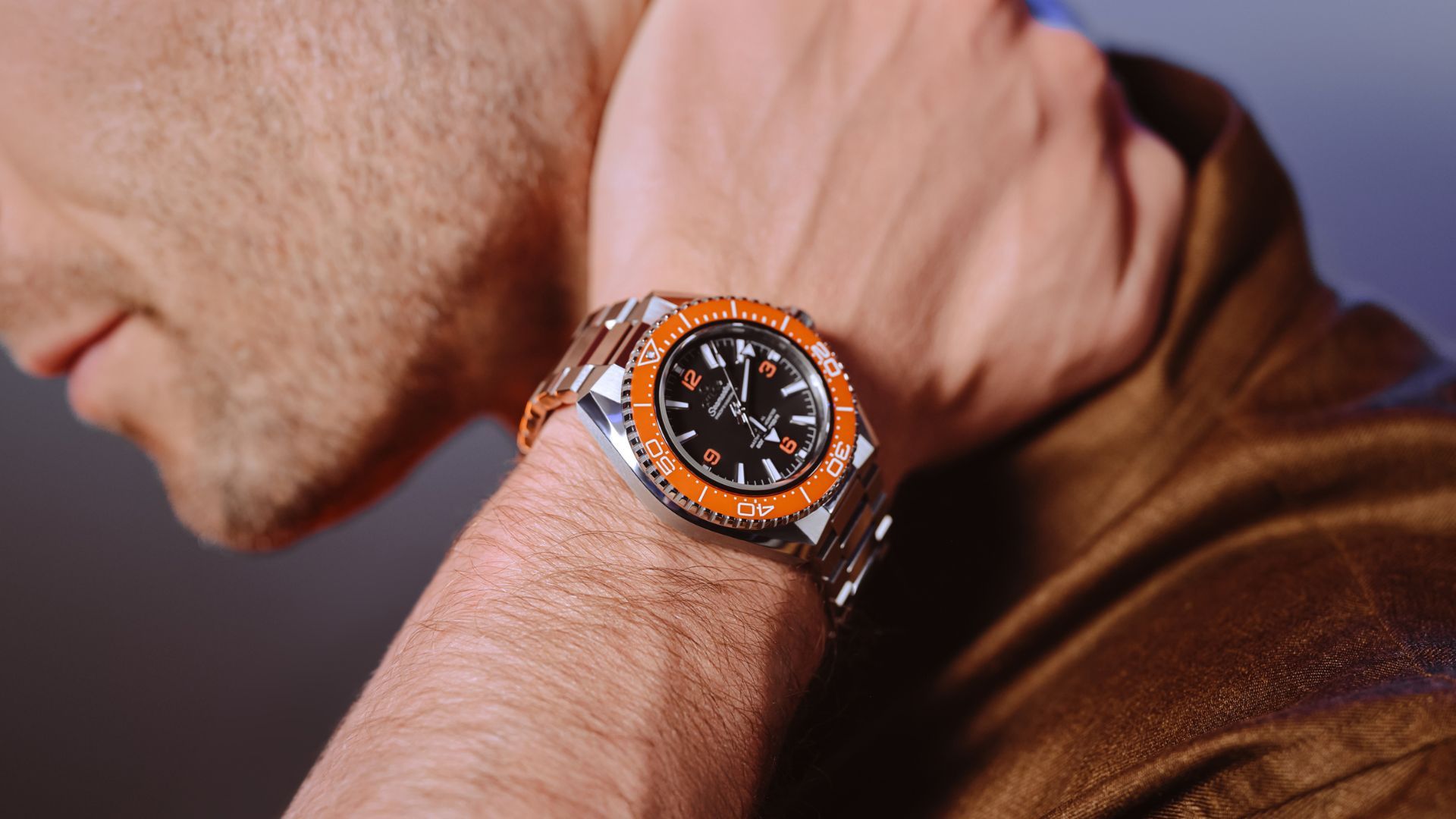
At first glance, the new Planet Ocean does not announce itself as a revolution, and that’s by design. Omega has not torn up the rulebook here, rather, it has rewritten the margins. The 2025 Planet Ocean remains unmistakably itself, but everything has been pulled tighter, flatter, more deliberate, and more in tune with the trends that seem to be defining the ebb and flow of 2020s watchmaking.
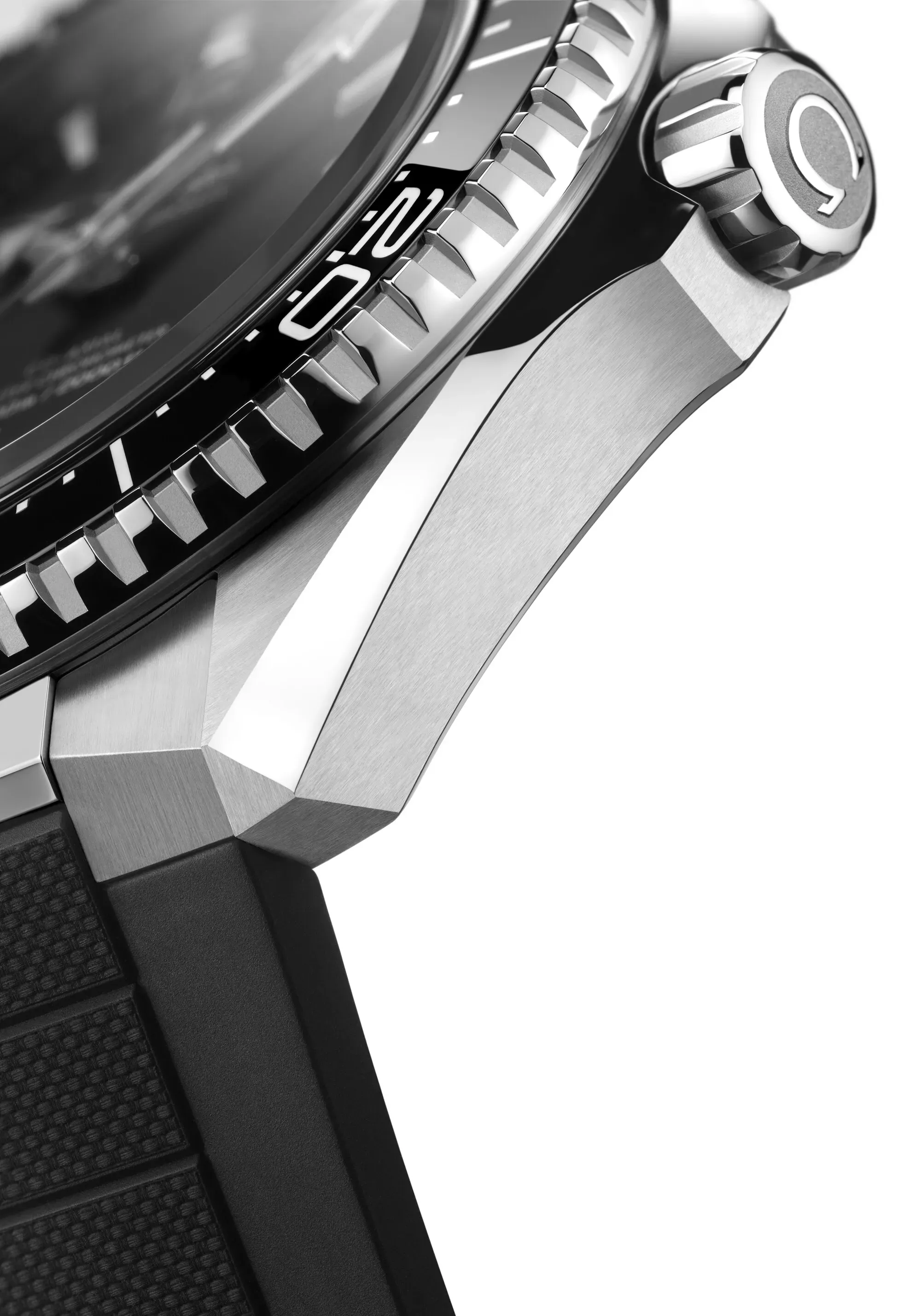
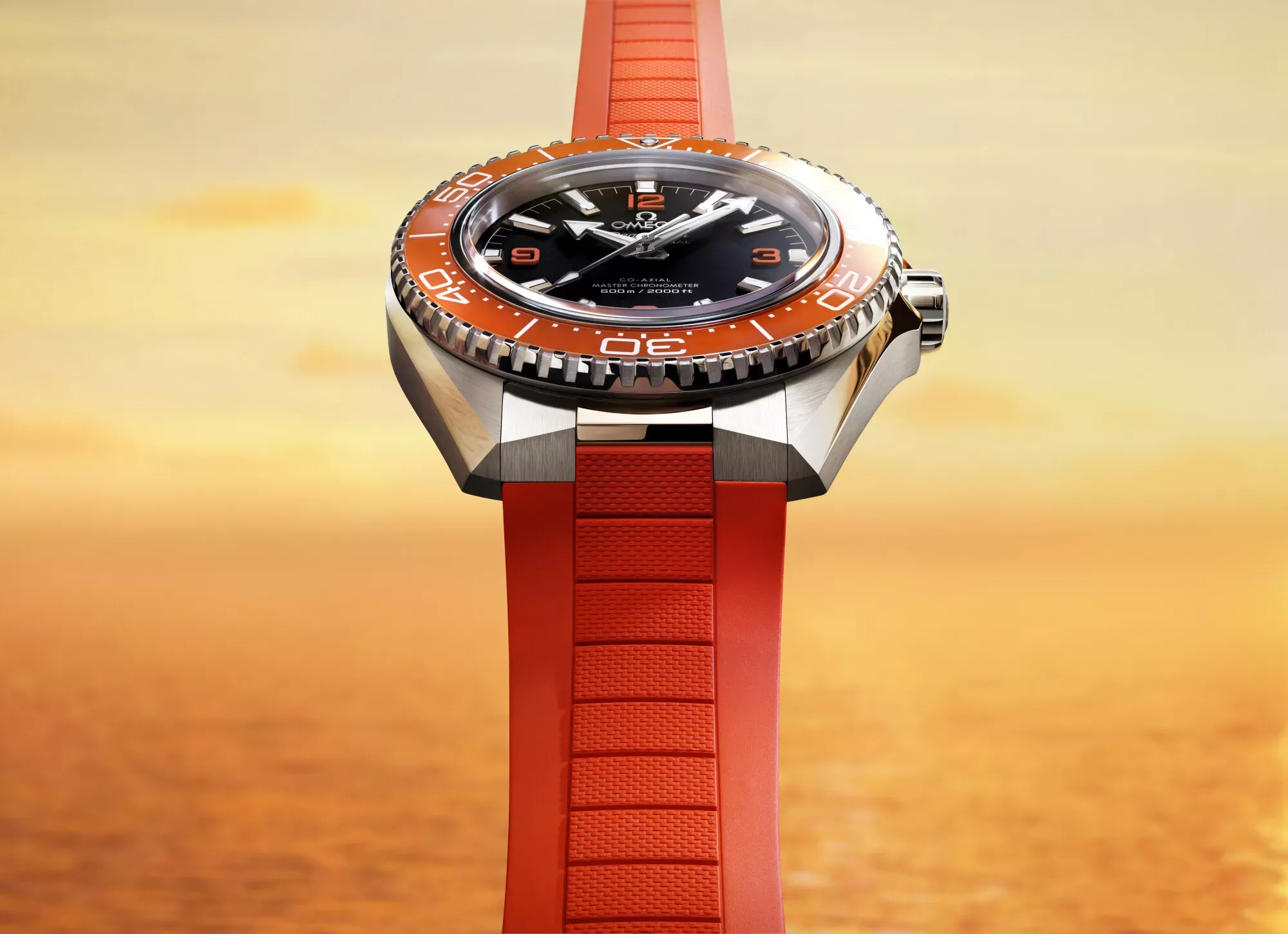
The case is where the most meaningful work has been done. The headline figure is 42mm, which already feels like a reset after years of Planet Oceans creeping upward in size. More important than diameter, though, is thickness. At 13.79 mm (down from the 3rd Gen’s 16.09 mm), the watch is significantly slimmer than the previous generation, and that difference is immediately apparent on the wrist. This slimmer profile is enabled by a new construction approach. The sapphire crystal is now flat rather than domed, lowering both the physical and visual centre of gravity. The case architecture itself feels more angular and planted, borrowing cues from Omega’s late-eighties and early-nineties Seamasters. These were watches that understood how to look technical without feeling bloated. The result is a Planet Ocean that still reads as a serious dive watch, without feeling overbuilt.
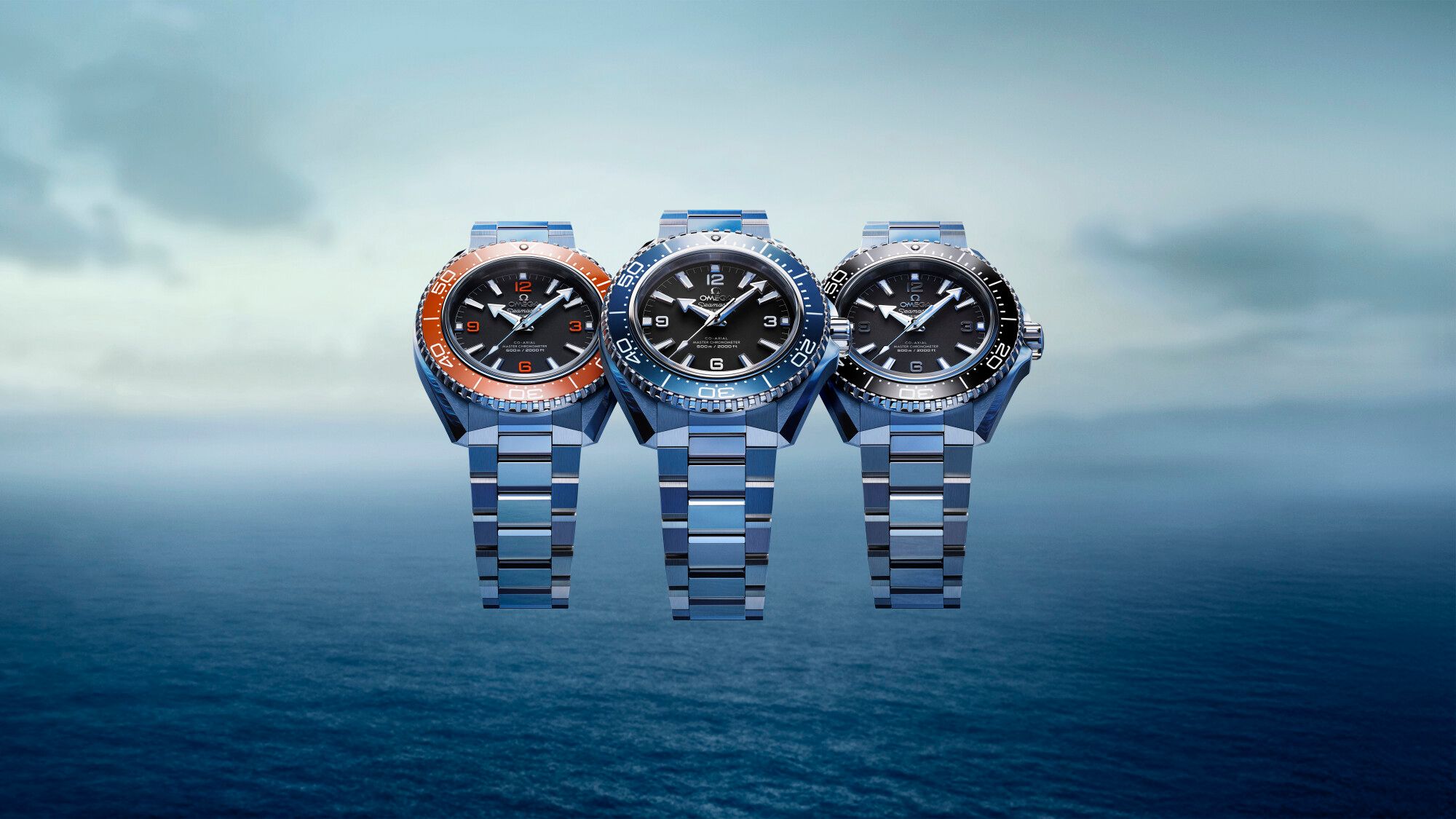
Colour remains central to the Planet Ocean identity, particularly orange. It is still difficult to execute in ceramic, still expensive to get right, and still unmistakably Omega when done well. Here, orange is used with restraint, highlighting function rather than overwhelming the dial. Blue and black variants complete the lineup without diluting the core identity. The dial follows the same logic. Omega has gone matte across the range, moving away from the glossy lacquered finishes of earlier generations. Matte black improves legibility and reinforces the tool-watch intent. The numerals are squarer and more open, aligning better with the sharper case lines, while the hands and markers retain familiar proportions. Turn the watch over and another telling change appears. The exhibition caseback is gone, replaced by a solid Grade 5 titanium screw-in back engraved with the Seahorse emblem. A 600-metre dive watch does not need to display its movement, and Omega seems content to acknowledge that.
This decision leads directly to the most debated change of the new Planet Ocean—the iconic helium escape valve is gone.
For purists, this may feel like sacrilege. The valve has been part of the Planet Ocean’s visual identity since its inception, borrowed from saturation diving lore and worn as a badge of seriousness. For others, its absence will be welcome. In practical terms, very few Planet Ocean owners have ever needed a helium valve. Omega knows this. Extreme diving requirements are already addressed elsewhere in the catalogue, most notably by the Ultra Deep. The new two-part case construction, featuring an inner titanium ring, maintains structural integrity without relying on a valve that has become largely symbolic. If anything, I think other brands could learn from Omega’s willingness to move onwards and upwards, and I hope this ushers in an era of bolder watchmaking choices as we move into the latter half of the 2020s.

Inside, Omega continues with the calibre 8912. Master Chronometer certified, sixty hours of power reserve, and exceptional magnetic resistance. It is a proven movement, and that is precisely the point. Crucially, the water resistance remains unchanged at 600 metres. Omega has not softened the Planet Ocean’s core promise. It is still massively overqualified for recreational diving, but now that capability no longer comes at the cost of wearability.
The bracelet deserves attention too. Omega has quietly rethought how the Planet Ocean integrates with metal. The new bracelet sits flatter against the case, with broader links that echo the architecture of the watch head. Brushed outer links keep things grounded, while polished centre links add contrast without tipping into excess. The clasp includes micro-adjustment and a diver extension but remains unobtrusive—it does its job and steps aside. Rubber straps are available as well, fitted with a foldover clasp rather than a simple pin buckle. It is a small detail, but one that reinforces Omega’s insistence on treating the Planet Ocean as a premium instrument in every configuration. On rubber, the watch feels especially balanced and arguably best suited to the updated proportions, although the bracelet does add a handsome, contemporary edge to the watch.
Viewed as a whole, the 2025 Planet Ocean feels like Omega asking a grown-up question. What does a modern professional dive watch actually need to be? The answer is not louder colours or thicker cases. It is coherence, proportion, and the calm confidence to remove what no longer serves a purpose.
In that sense, the Planet Ocean mirrors Omega’s broader trajectory. Each professional line now has a clearer role. The Diver 300M carries cultural weight. The Ultra Deep chases extremes. The Planet Ocean settles into its place as the most balanced and thoughtful Seamaster we’ve got on an already prolific, powerful catalogue, and we’re thrilled to see what follows in its wake.


