
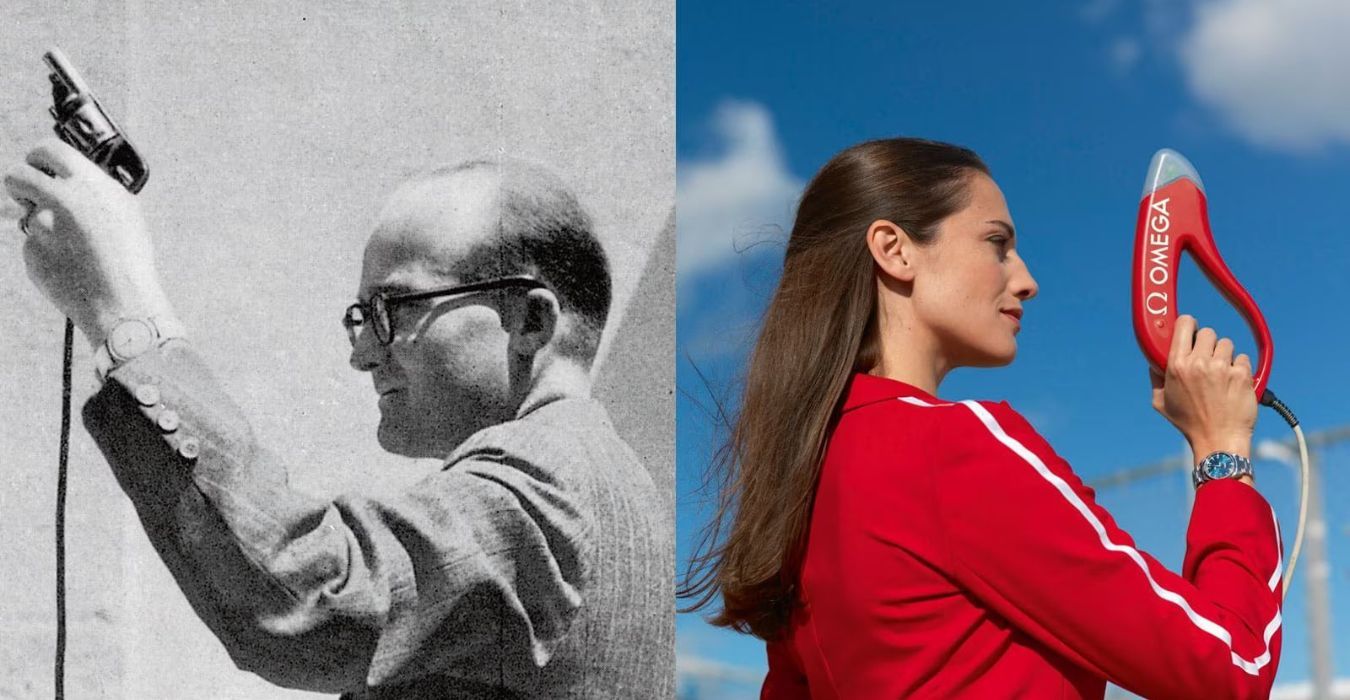
Los Angeles, 1932. The city buzzed with anticipation as the world gathered for the tenth Olympiad, a beacon of hope amidst the throes of the Great Depression. Athletes from around the globe had converged on this Californian metropolis, their dreams of glory shimmering in the summer heat. Amidst the excitement, a lone Swiss watchmaker arrived, cradling a case of 30 split-second chronographs. This humble beginning marked the dawn of Omega's enduring relationship with the Olympic Games.
The scene was electric as Omega took on the monumental task of timing 117 events across 14 sports. The precision required was staggering, with every tick of the stopwatch echoing the hopes and efforts of athletes vying for greatness. Omega's commitment to accuracy and innovation became evident as they provided the first reliable timekeeping solution in Olympic history, a critical step forward that would set the standard for years to come.
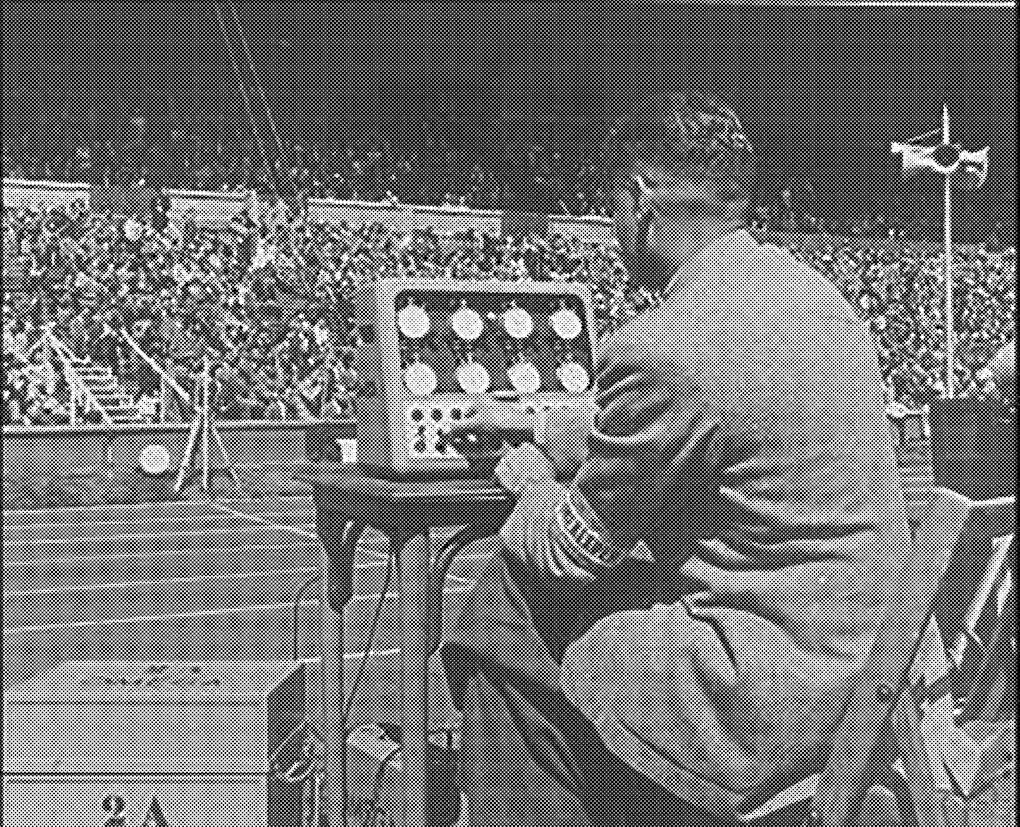
When Omega joined the Olympics in ’32, sports timekeeping operated at an accuracy of 1/10th of a second. Today, Omega’s capabilities sit at over 1/1000th of a second
Throughout the decades, Omega's advancements in timekeeping have revolutionized the Olympic experience. By the 1964 Winter Olympics in Innsbruck, Omega had introduced the Omegascope, which allowed real-time timing data to be superimposed on TV screens, revolutionizing how audiences experienced sports. This was followed by the introduction of touchpads for swimming events at the 1968 Mexico City Olympics, enabling swimmers to stop the clock themselves and eliminating the need for manual timekeepers.
The 1948 London Games saw the debut of the photo finish camera, which provided indisputable race results by capturing the exact moment athletes crossed the finish line. Omega continued to innovate with the introduction of the electronic chronograph at the 1952 Helsinki Games, a device capable of printing race results instantly with an accuracy of 1/100th of a second. In 2012, the Quantum Timer made its debut at the London Olympics, offering a resolution of 1 microsecond with a maximum variation of only one second in a million seconds, setting a new benchmark for precision.
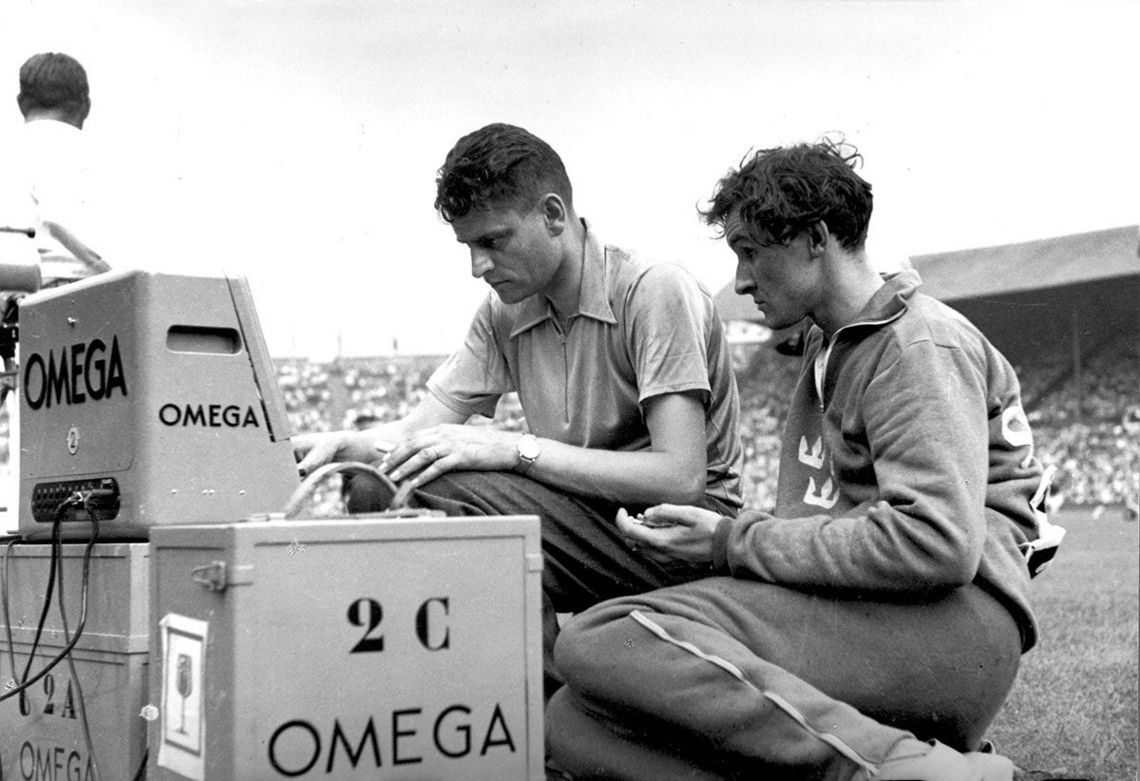
By the late forties, Omega had brought the electronic age to all of sports timekeeping
Fast forward to Paris 2024, and Omega's role as the official timekeeper has evolved dramatically. The latest suite of technological innovations reflects the brand's passion for precision and its commitment to enhancing the Olympic experience for both athletes and viewers. Among these advancements is the Scan‘O’Vision ULTIMATE, a next-generation photo finish technology capable of capturing up to 40,000 digital images per second at the finish line. This remarkable system, used to determine official results in athletics and track cycling, produces a composite photo of every athlete crossing the line, with enhanced colour sensors providing cleaner images without pixel interference. Judges can now decide results with maximum clarity, even in the closest of finishes.
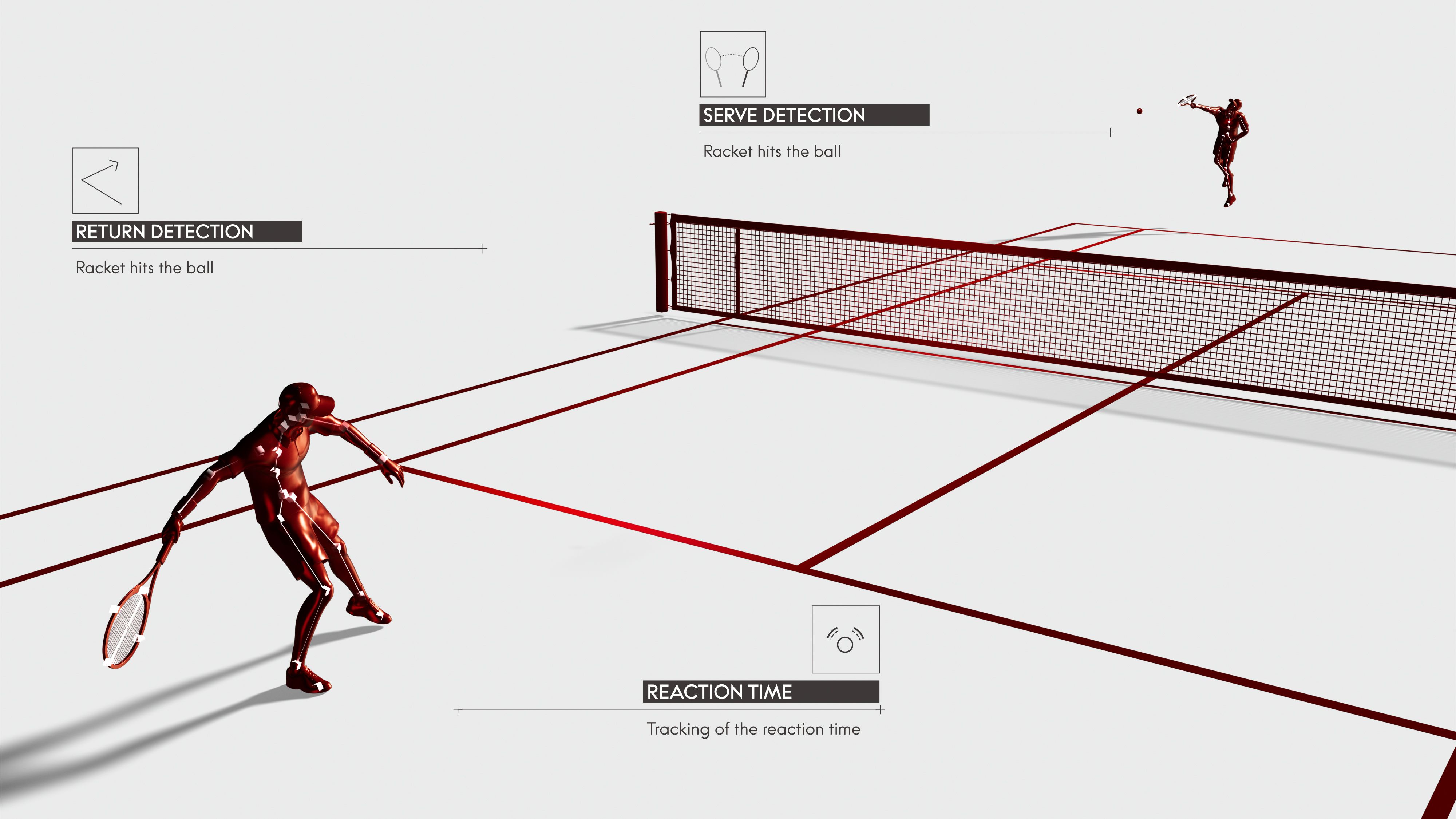
Omega's Computer Vision Technology employs a combination of single and multi-camera systems feeding AI models specifically trained for each sport. This technology tracks athletes and objects throughout events, offering detailed performance analytics without the need for physical sensors. In beach volleyball, high-definition cameras track player and ball movements, measuring distances, speeds, jump heights, and shot types. For diving, it creates 3D reproductions of dives, tracking airtime, speed, and the "safe gap" from the board. In tennis, real-time tracking of players, rackets, and balls measures serve and return reaction times. This technology promises to deliver comprehensive analytics and immersive viewing experiences, providing officials with advanced replay tools for decision-making and result generation.
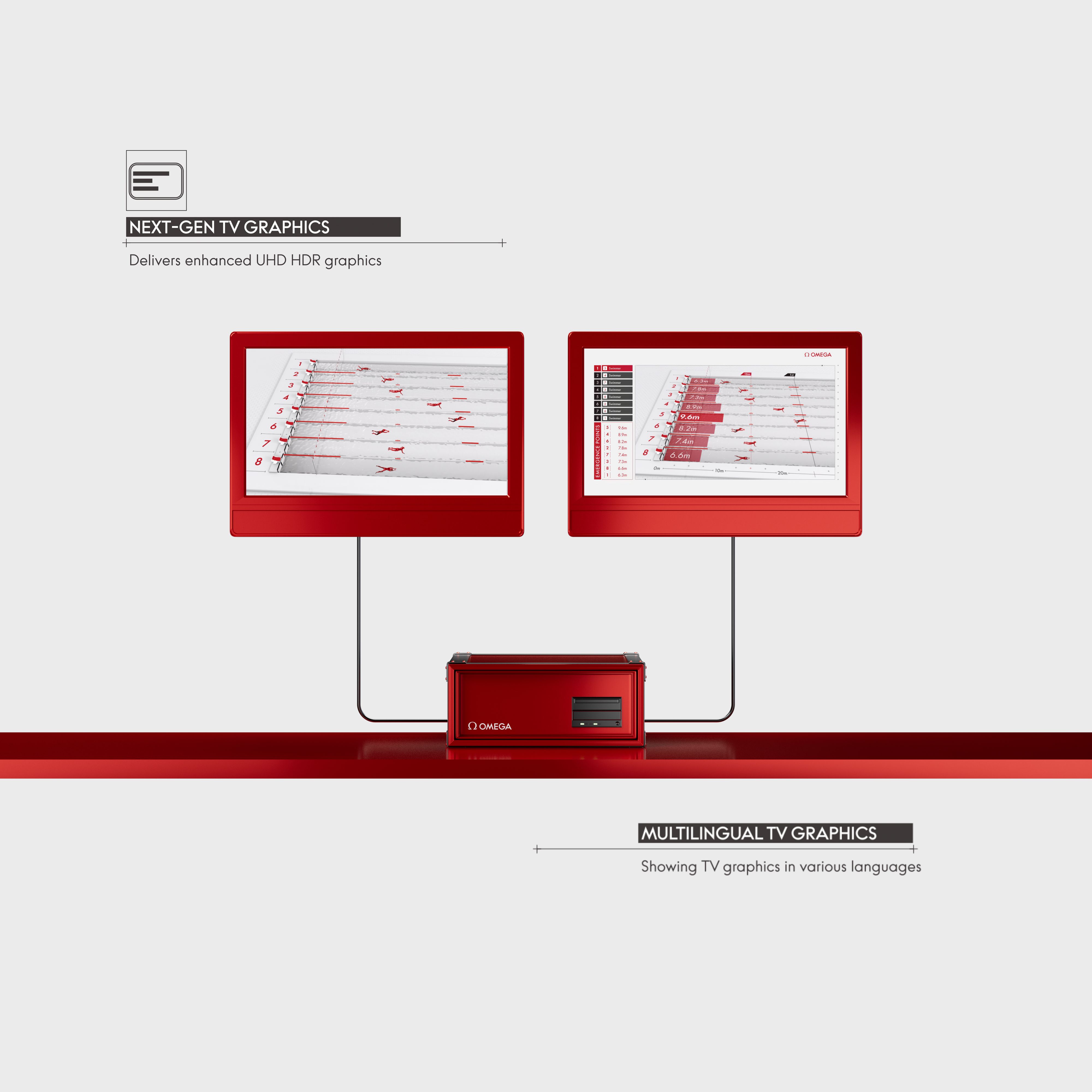
Additionally, Omega's Vionardo graphics technology will deliver real-time 4K ultra-high-definition visuals in multiple languages, enhancing the viewing experience for global audiences. This system supports remote graphics production, reducing on-site infrastructure and improving sustainability. Omega will deploy these graphics at competition venues and the International Broadcast Center, with Olympic Broadcasting Services distributing them to worldwide media rights-holders. The combination of these technologies ensures that Omega remains at the forefront of sports timekeeping, continuing to push the boundaries of precision and innovation.


