Titan of the Year platform has taken shape quietly, without the usual noise that follows commemorative projects. The idea is simple but deliberate: recognise individuals whose work has shifted India’s global standing, and translate that achievement into a watch that feels considered rather than celebratory. That intent first revealed itself with the inaugural Titan of the Year timepiece dedicated to Indian aviator Rakesh Sharma. Understated in tone and limited to 300 pieces, the watch leaned into symbolism and restraint, reflecting both Sharma’s singular legacy as the first Indian in space and Titan’s preference for long memory over momentary spectacle.
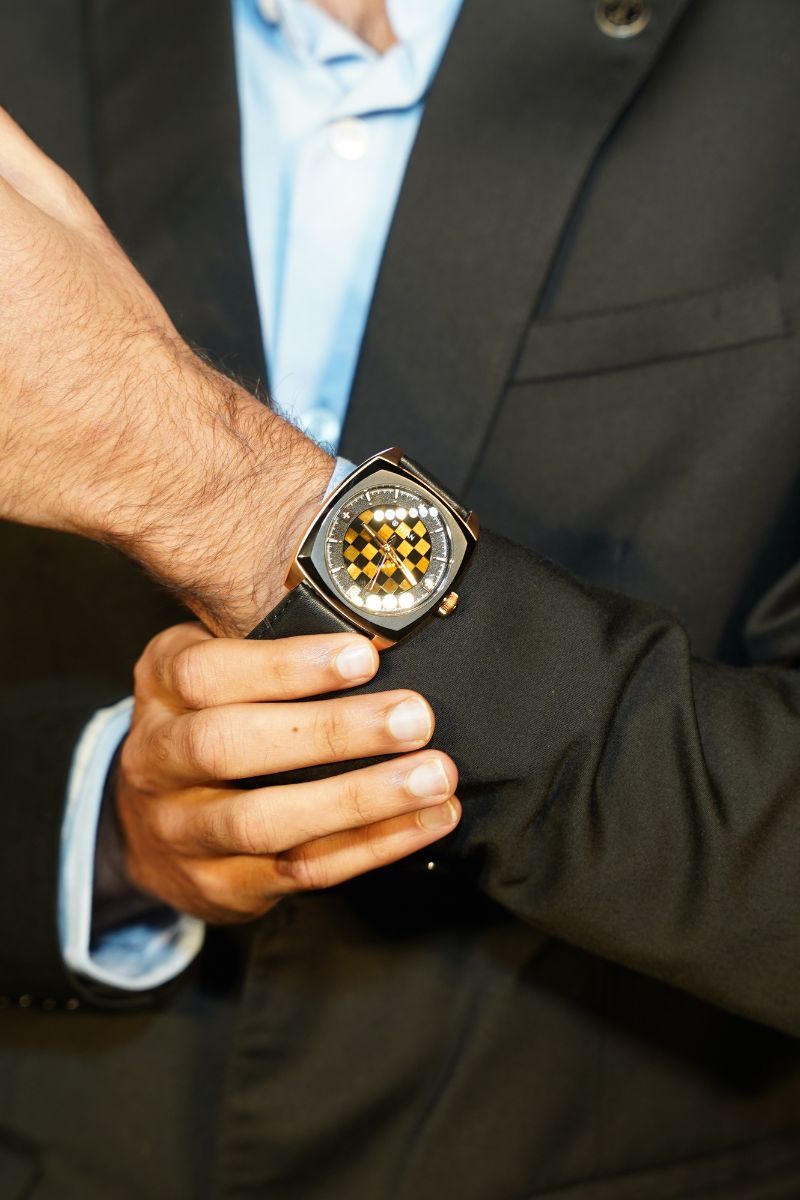
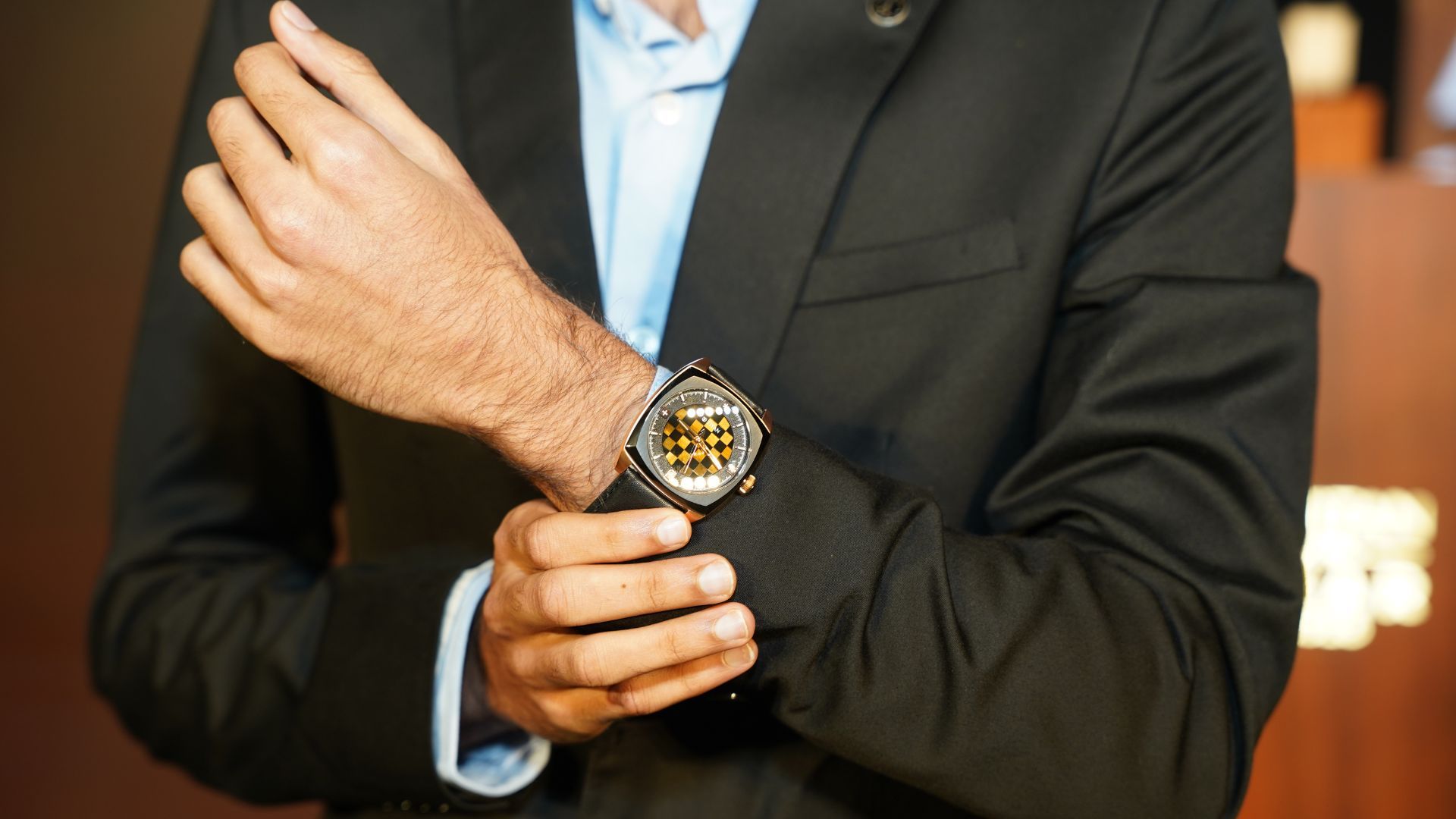
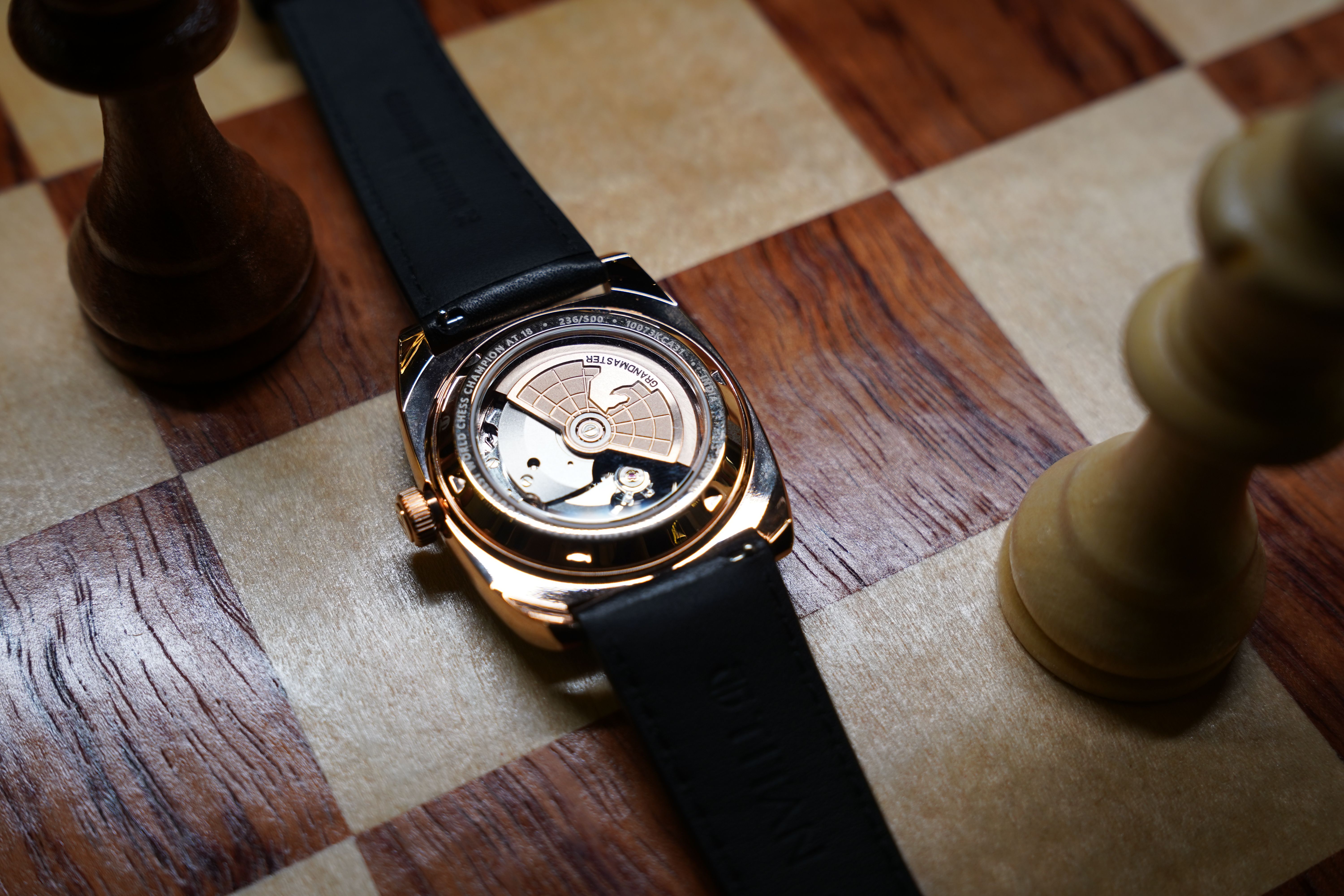
That sense of restraint makes the transition to the 2026 honouree all the more telling. Where the Sharma watch looked back with reverence, the new Grandmaster special edition created for Gukesh Dommaraju is unapologetically future-facing. The shift isn’t just generational, it’s philosophical. At the centre of the watch sits an intricate marquetry dial crafted from tigerseye and black agate, its geometry informed by the chessboard without resorting to obvious metaphor. The design reveals itself slowly: indices shaped around the hierarchy of chess pieces, a Knight motif worked into the rotor, and lume-filled hands that move with a calm, almost meditative glide. It’s a watch that rewards attention rather than demanding it, and once its internal logic clicks, it lingers in the mind.
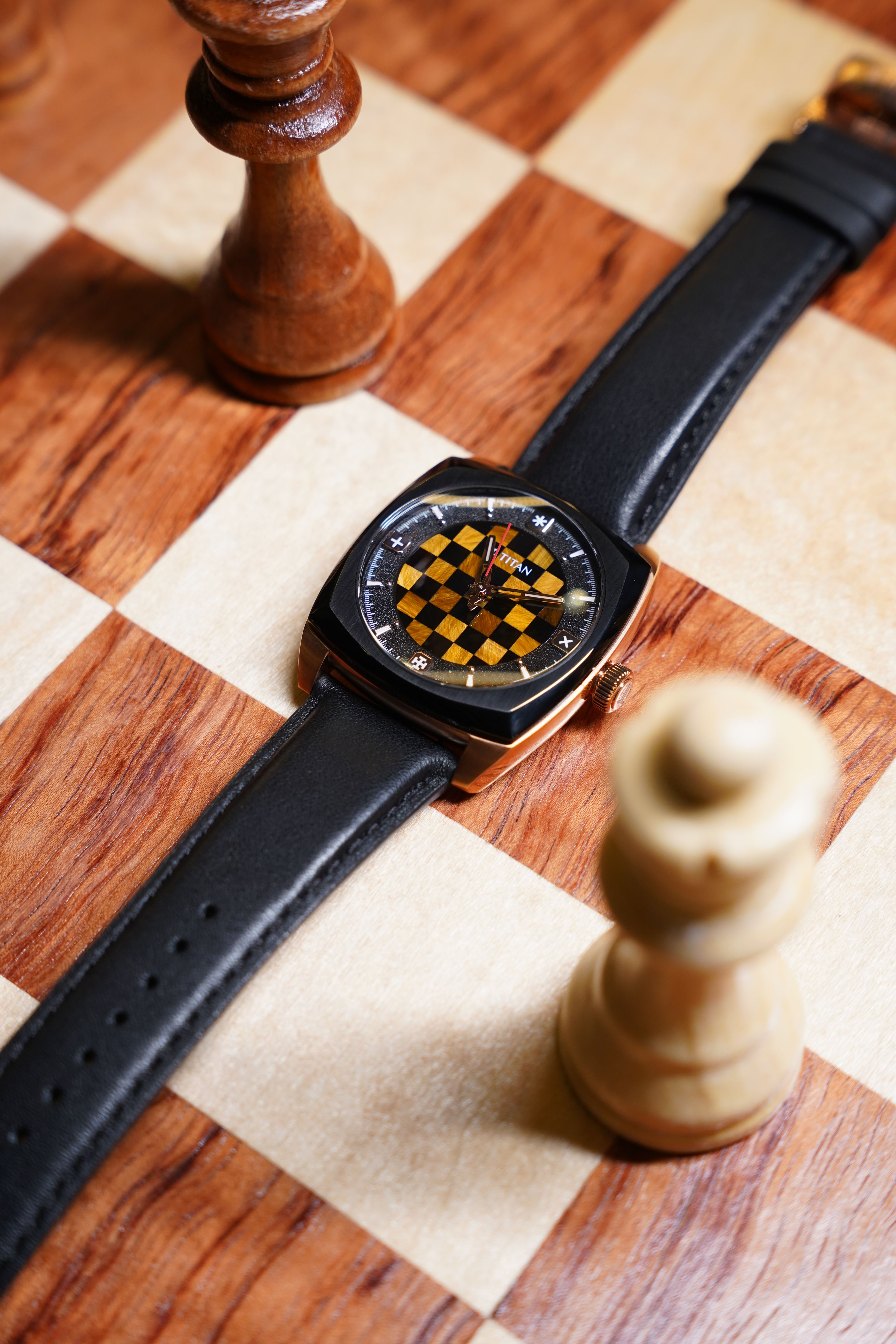
The rest of the build keeps that balance firmly in check. A rose-gold-finished 316L stainless steel case brings warmth without tipping into excess, while the proportions remain contemporary rather than ceremonial. Inside sits Titan’s in-house automatic movement beneath a sapphire crystal caseback, carrying an inscription marking Gukesh’s achievement as the youngest World Chess Champion at 18. Limited to 500 numbered pieces and paired with a black Italian leather strap, the watch lands in a sweet spot: symbolic yet wearable, refined but not precious. At ₹69,995, it also sends a clear signal that this is a collector’s piece designed to be lived with, not locked away.
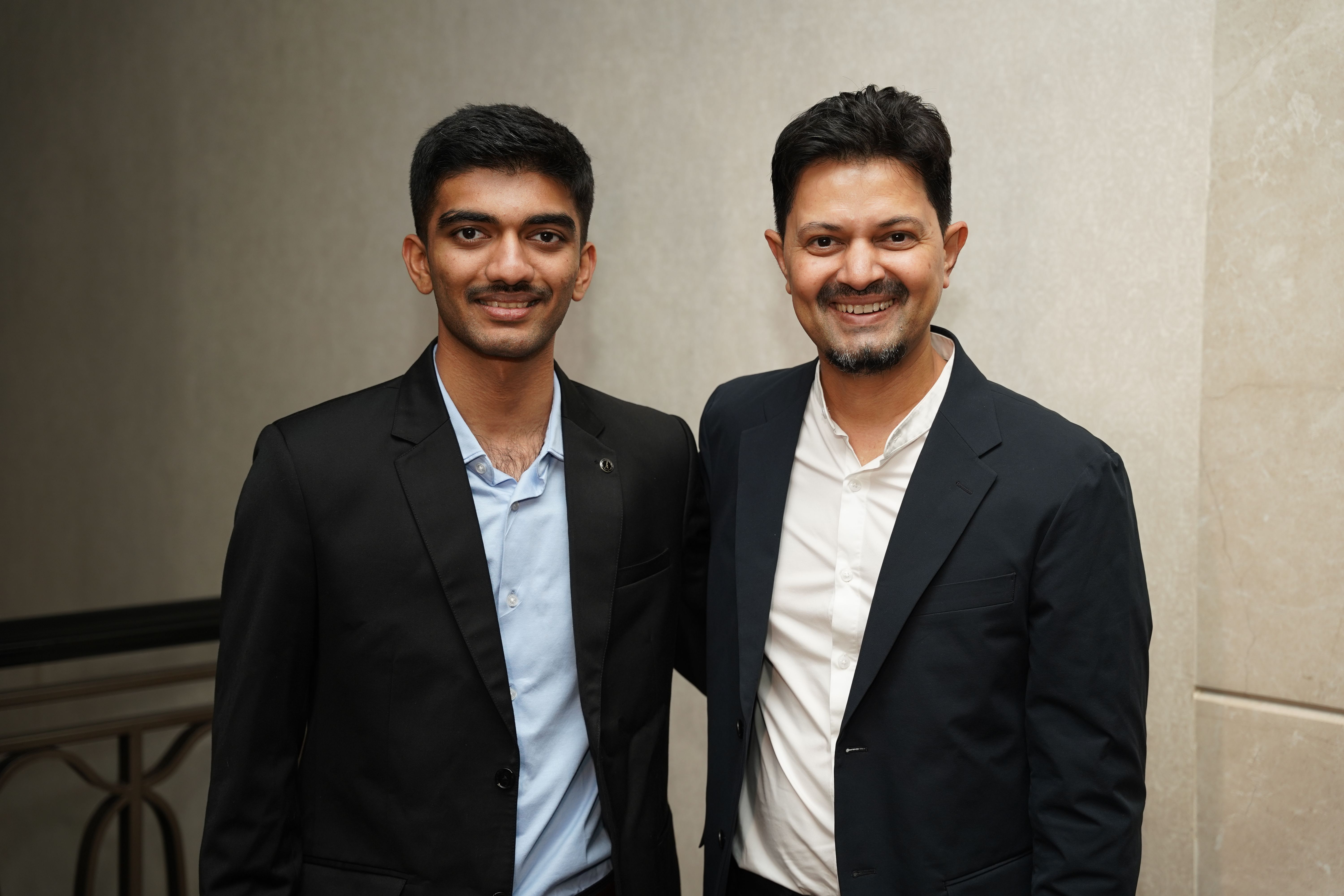
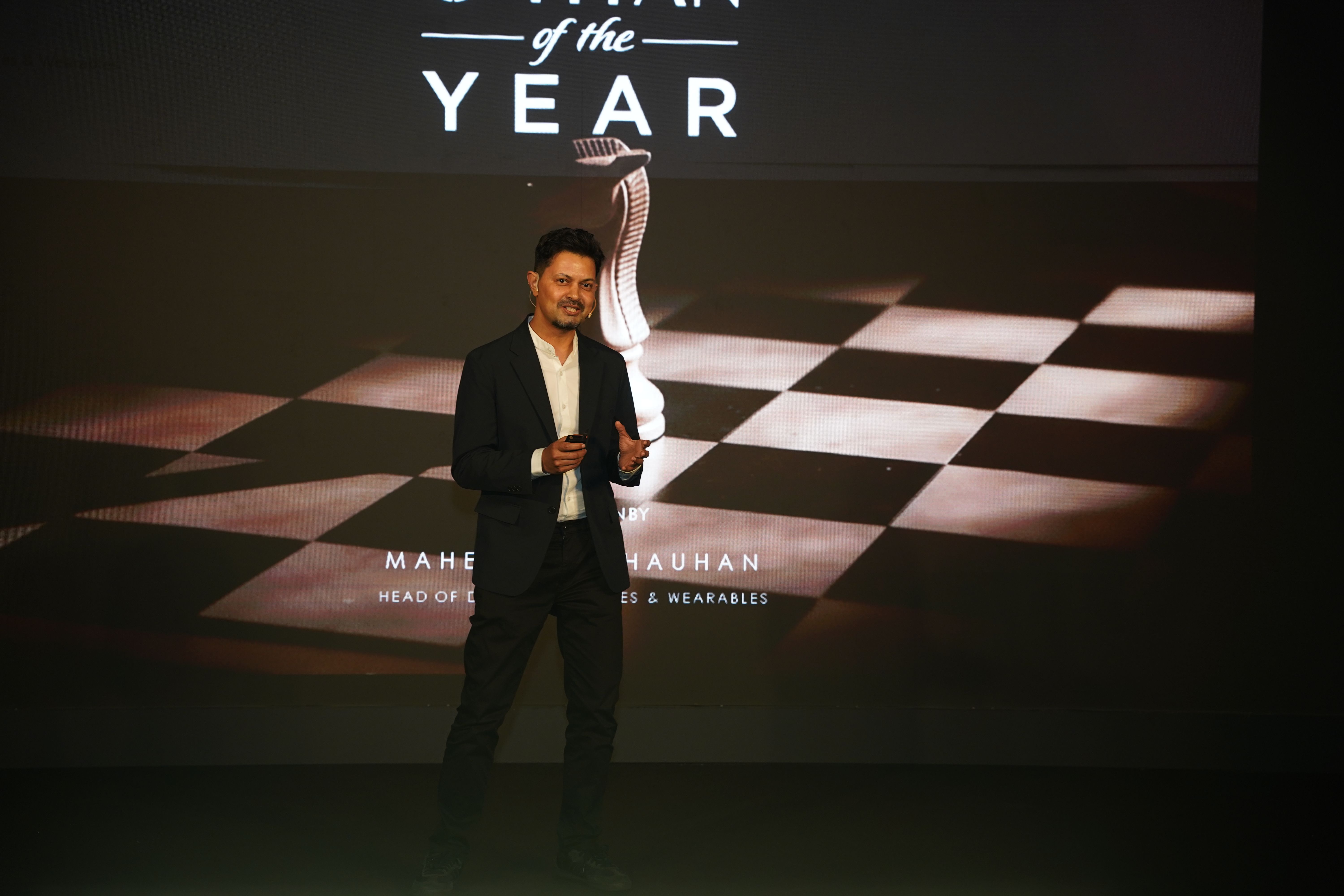
At the heart of this concept-first progression for Titan is Mahendra Chauhan, whose leadership has increasingly steered the brand away from segment-led thinking and towards narrative-driven watchmaking. After the launch event in Mumbai, once the formalities and photo calls were done, I sat down with Chauhan for a conversation that felt refreshingly unguarded. What followed was a candid discussion about the evolution of the Grandmaster collection, the challenge of designing around personality rather than product briefs, and how Titan is balancing ambition with restraint as it enters its fifth decade. Excerpts:
How did the Grandmaster collection begin, and how has that vision evolved over time?
The first Grandmaster came at a time when Titan itself was evolving and finding newer design sensibilities. Earlier, Titan was seen very much as a mainstream, classical brand. It was the initial set of designs which we did about five to six years ago that became stepping stones for a new design language. They were also stepping stones for much more intense, design-led concept creation rather than very segment-led concept creation, which was a turning point for us.
Grandmaster was one of those steps. It was the first Grandmaster where we really wanted to explore and redefine Titan’s design language. We started playing with newer materials. That was the first time we worked with wood as a non-traditional horological material in our watches. It was also the first foray into using teak slices in our products.
That was really the beginning of Grandmaster. It emerged from a larger cultural trend as well, especially the growing attitude towards intellectual games like chess. We were interested in capturing that, and at the same time, we wanted to evolve Titan’s design language.
What were the challenges when it came to the design concept, and how did your early conversations with Gukesh shape the process?
Most of the design concepts on this platform are anchored around the individual rather than the broader brand language. These are limited editions, so the person becomes the centre of the conversation. In the first few discussions with Gukesh, it became clear that he isn’t really into watches or horology, but he does have very clear ideas about what he wants and what he doesn’t want.
Those early conversations became the anchor for the project. The watch is subtle, but it has a certain sheen to it. There are enough design details that an intellectually curious person will eventually discover—the markings, the references—things most people might miss at first. But once you understand that the underlying concept is about moves in chess, you begin to appreciate the design more deeply. Symbolically, it connects strongly with Gukesh’s craft and approach to the game.
There is a transition in the watch form itself. Earlier, we were working with more classic cases paired with interesting dials. With this watch, we wanted to push the form language further into a more contemporary space. Historically, chess is always associated with a square format because of the board, but we wanted to challenge that.
So we played with contrast. The outer form has a tonneau-like structure, while the central element is circular. These are design choices people wouldn’t typically make when working with a chess-inspired concept, but that contrast felt important to us.
I loved discovering how the chess pieces were worked into the indices and rotor. I eventually spotted the pawn—but where’s the Queen? Is she hidden somewhere, or represented by the crown?
(Laughs) We didn’t include the Queen. Some of the other elements were already quite dominant, and through our research and multiple design concepts, this was the direction the team felt strongest about. We explored several ideas and had detailed discussions internally before arriving at this final concept.
This project feels very different from the first Titan of the Year watch. Does Titan now have a clearer idea of what it looks for in a honouree?
Not exactly. It’s more about instinct and alignment, since we look at people with whom Titan connects naturally. The values of the brand need to be in sync with the individual. With Gukesh, it was his maturity, intellectual curiosity, and sophistication—the way he speaks, the way he carries himself. There’s also a strong sense of national representation in what he does.
There were many contenders that we kept in consideration early in the process, and eventually, we arrived at this decision. It’s not about age or psychographic profiling; Rakesh Sharma was over 60, Gukesh is just 20. What matters is whether the person mirrors the brand’s values.
Last year was a phenomenal one for Titan from a design perspective. What should we be excited about in 2026?
Titan hasn’t been chasing short-term combinations over the last few years. You’ve seen Wandering Hours, Nebula, and other high-craft pieces; the craft quotient will keep rising. When a relatively young company—just 40 years old—starts engaging seriously with fine watchmaking, the possibilities are wide open. You’ll see that momentum continue through 2026.
Alongside these statement pieces, where is Titan's focus for accessible segments under ₹25,000?
That’s actually the fastest-growing segment for us. While there’s an audience willing to spend ₹50,000 and above, a large part of India still sits below that price point. Titan is a familiar and trusted brand for them. The flagship watches push brand imagery, but brands like Fastrack, Edge, and Sonata cater to aspirational consumers in different ways. Every brand is pushing boundaries—whether through materials, construction, or design—while staying true to their price brackets. It’s about innovation across all segments, not just the top end.
What stayed with you after meeting and working with Gukesh?
What really touched me was his family, especially his parents. Their attitude towards his achievements, the compromises they’ve made — though they wouldn’t call them sacrifices — and their humility stood out. Gukesh himself speaks very little, but every word feels measured. That quiet discipline and patience felt like a direct reflection of his upbringing.


