India has no shortage of stories worth telling. From the stone wheels of the Konark Sun Temple to the wildlife of Ranthambore and those unforgettable nights when the entire country collectively lost its mind over a cricket match, there is plenty of material to work with. Yet, for all the recent growth in India's watch industry, relatively few homegrown brands have attempted to translate these experiences into contemporary watch design without leaning too heavily on familiar symbols of Indian heritage.
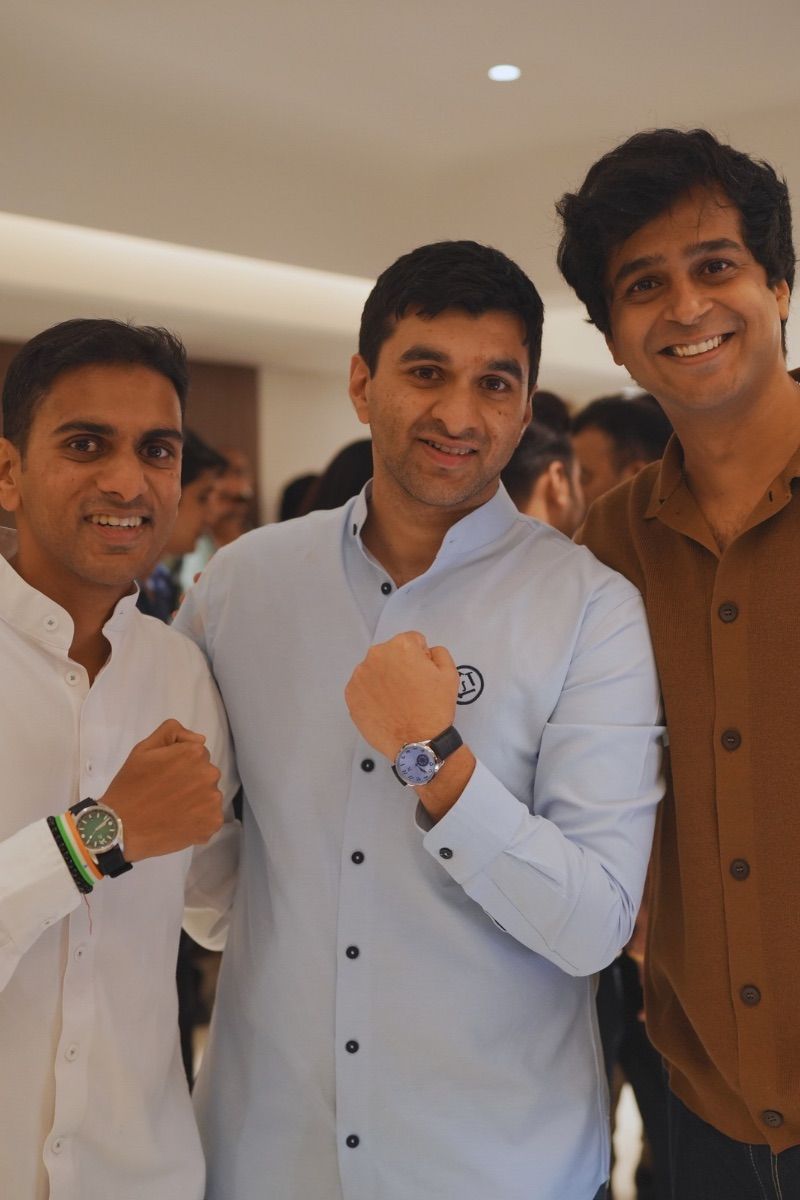
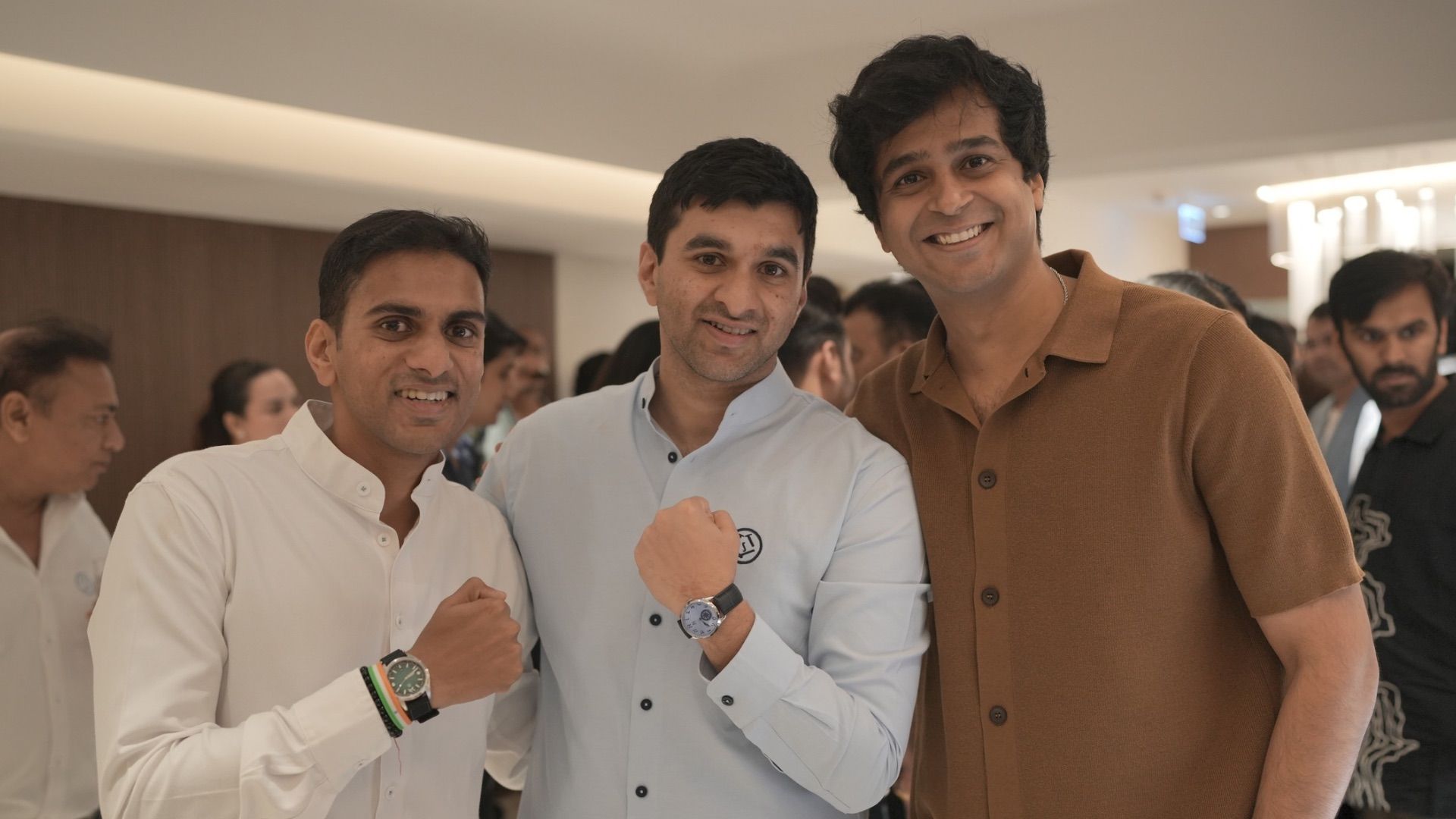
Karan Vaidya thinks there is an opportunity to change that. Having spent much of his professional life around watches through his family's luxury jewellery and retail business, House of Rose, Vaidya has launched IST 1947, a homegrown watch brand built around telling Indian stories through familiar watchmaking formats. Its debut range covers three distinct personalities: Arka (₹9,999), a 38mm dress watch inspired by the Konark Sun Temple; Vanya (₹9,999), a 40mm field watch paying tribute to four Indian wildlife destinations; and Vijay (₹19,470), a considerably sportier 43mm automatic watch commemorating five landmark Indian cricket victories. Vanya is my personal favourite. Its animal tracks, regional references and landscape-inspired colours feel especially well considered. The question, of course, is whether thoughtful storytelling can translate into a compelling watch business. We caught up with Vaidya to discuss the designs, the compromises and the lessons that come with building something of his own.
You've spent much of your life surrounded by watches. What finally convinced you to start your own brand?
I've been around watches for more time than I can even think of. My dad has been doing this for about 38 years, and he was one of the first people to bring imported fashion watches into India in the late 1990s. What always got me about watches was that they tell very cool stories, but they're stories of other places and other people, and they tell them very well. I remember seeing a beautiful Bulgari Diva's Dream watch at LVMH Watch Week a couple of years ago. It had these gold pieces arranged almost like a mosaic, referencing the cobbled streets of Rome. I thought it was such a beautiful way to tell a Roman story. And I started thinking, why can't an Indian watch tell an Indian story? You can take a diver's watch and give it an Indian name, but that doesn't necessarily make it an Indian watch. I wanted the Indian identity to come through in the design itself.
That's an interesting distinction, particularly when Indian-inspired watches often rely on familiar cultural symbols. How did you approach it?
I don't need a Taj Mahal on a dial to sell an Indian watch. That's not necessarily the India we know or experience every day. What was very clear to me was that the watches had to be cool and desirable first, and the Indian identity needed to be an inherent part of them. At the end of the day, you don't buy Sabyasachi simply because he's Indian. You buy it because he's world-class, and he happens to be Indian. That's the kind of thinking we wanted to bring into IST, but at a mass-premium price point. I also didn't want the brand to be tied to one particular style. Everything we do should feel different, but Indian at heart. That's why we have a dress watch, a field watch and a sports watch, with more categories to come.
Why enter the roughly ₹10,000–₹20,000 space, especially given your background in luxury watches?
There were multiple factors. The Indian watch market has grown significantly in the last five to seven years, while the prices of international watches have also increased considerably since COVID. There was a time when you could buy certain Swiss watches for ₹30,000 or ₹40,000, and many of those brands have moved much further upmarket. I felt there was a real opportunity between ₹5,000 and ₹40,000. Another big change is how Indians shop. People are far more comfortable making purchases online today, and UPI and digital payments have helped. Five years ago, I don't think you could have launched a relatively unknown brand and sold watches costing ₹10,000 or more online, through prepaid orders, at the volumes we're seeing. That opportunity simply wasn't there in the same way.
Let's talk about Vanya, my favourite of the three. How did you bring the animals and the landscapes together without overloading the dial?
With Vanya, I was very clear about what I wanted. I've collected watches all my life, so I wanted to incorporate the little details I enjoy discovering in a watch. There's a compass-inspired element around the dial, with north, south, east and west marked on it, and the numeral at twelve o'clock uses the regional script associated with that watch. Then you have the animal's footprints on the dial, different for every animal, and the same footprint appears on the crown. On the back, there's a state map, the name of the location in its regional language, geographical coordinates and a footprint marking the place. Everything needed to connect to the story. We also wanted the colours and textures to reflect the actual terrain: some of the forests are dry, Jawai has its rocky landscape, and Kaziranga is much greener. The idea was to begin with four distinct animals and four distinct locations, rather than attempt to represent every part of India in the first collection.
Those footprints are a particularly nice touch. Did the design always look this restrained?
Not at all. Everything you're seeing is probably the fifteenth or sixteenth iteration. Initially, I wanted footprints all around the dial, but when we tried it there was simply too much happening. We reduced them while keeping the idea of an animal moving through the landscape, almost as though you're tracking it in the wild. One footprint is going down and another is going up. Originally, I also had a conventional location pin on the caseback map. When I showed the prototype around, someone suggested using the footprint instead, which made much more sense. Even the strap went through multiple iterations because I wasn't happy with its adjustability. We're still learning from customers now. One piece of feedback is that not everyone likes the Velcro strap. Personally, I like it because it's utilitarian and suits a field watch, and a lot of collectors appreciate it too. But collectors aren't the only people buying these watches, so we have to listen.
Arka is very different, drawing on the Konark Sun Temple. Was that the first design you worked on?
Arka was actually the first collection I started working on, although the original idea was very different. We were exploring how time is perceived in India, and at one point had a design playing with the way the hour and minute hands displayed time. But it became too complicated and overdesigned. Eventually we decided to take a more traditional watchmaking element and reinterpret it. That's where the Konark wheel came in. The temple is conceived as a chariot with twelve pairs of wheels, and the wheels are associated with telling time through shifting shadows. We incorporated that idea into a small-seconds display. I didn't want it to stop at putting a wheel on the watch, though. We also used a sunburst dial and experimented with the numerals. The final Devanagari-inspired forms went through around 25 iterations. The challenge was translating traditional watchmaking elements into something distinctly Indian without losing what makes them appealing in the first place.
Has the response to Arka matched your expectations?
It's genuinely surprised me. We opened early access to friends and collectors, and most Arka colourways sold out within the first few days. Many buyers hadn't even seen the watches in person, which surprised me even more. Some colourways have also performed very differently from what I'd expected. But that's what retail teaches you: my personal taste isn't necessarily what the customer wants. I can commission a one-of-one watch for myself if I want to, but when you're building a brand you have to understand what people actually like. What they respond to, the sizes they buy and the straps they prefer all matter much more than my own favourite colour.
Vijay is the most unconventional of the three. How did India's cricketing victories become a watch collection?
The idea came from those moments that become core memories. I remember exactly where I was during the World Cups, what I was doing and who I was with. In 2011, I was at Wankhede Stadium, and I'll never forget walking home afterwards because the roads were filled with people. Those moments stay with you. So I began thinking about how to translate those memories into a watch. For me, the 2011 edition will always have a particular significance because I was there, but it's not necessarily just about the cricket. It's about the people you shared that moment with. Someone close to me saw the watch and said she'd buy it because it reminded her of the day we spent together. That's the emotional connection I wanted. In the design, we've included small details for people to discover: a rotating cricket ball in the small-seconds display, colours based on the respective team jerseys, an AM/PM indicator and the year on the case. The back commemorates the stadium, date and location. I like the little Easter eggs on watches that don't really serve a practical purpose beyond making the owner smile.
Most young brands begin with one watch. Why launch three very different collections at once?
I was clear that IST couldn't be a one-watch brand. Nobody really starts with three collections, but we're trying to tell Indian stories through watches, not be defined by one particular watch. If you like dress watches, there's Arka. If you're into field watches, there's Vanya. And if you want something sportier, there's Vijay. I started designing Arka first because I knew I wanted a traditional dress watch. Then I felt we needed a field watch that could serve as an everyday watch. The sports watch was the logical next step. I wanted to establish from the beginning that Indian storytelling could work across all these different watchmaking formats.
You've spoken about designing for women as well. Would that mean smaller versions of the existing models?
No, and that's something I feel strongly about. I don't think you should take an existing men's watch, shrink it and call it a women's watch. Women deserve watches that have actually been designed for them, with their own identity and their own story. Look at Cartier: I think one reason they've done so well is that they understand design as jewellers, rather than simply reducing the dimensions of an existing model. More broadly, we're seeing smaller watches become fashionable again. Ten years ago it was all oversized cases, and today tastes have shifted. These things move in cycles. We chose 38mm for Arka because traditionally a dress watch sits around 36mm to 39mm, while Vanya is larger because it's a field watch. But a women's collection should not simply be a smaller Arka or Vanya.
After years of selling established brands, what has surprised you most about designing and developing watches yourself?
It's completely different. Running a watch business gave me an understanding of merchandising and customers, but developing a watch yourself is another experience altogether. I've learnt an enormous amount about colours. You look at a shade on a screen and think that's exactly what you want, but once you produce it the result can be completely different. I've spent a lot of money on prototypes because the Pantone colour wasn't right. Then there are ergonomic details: a 40mm case isn't just a 40mm case. You have to consider the lugs, how it sits on the wrist, the strap and all the proportions. It takes months to design a watch, prototype it and test it properly. I've had to learn patience, too. I'm naturally not a very patient person, but prototypes go wrong and you can't beat yourself up every time something doesn't work. You have to keep showing up and improving it.
Does your House of Rose background make sourcing and scaling easier? And who do you imagine buying IST in the long run?
Being from the watch industry definitely helps. It doesn't make sourcing easy, but it gives you credibility and relationships with suppliers. People are willing to talk to you and work with you. I was also clear from the outset about scale. We have the capacity to assemble watches ourselves, but my ambition isn't to make just 500 watches a month. I want to build a business that could eventually produce tens of thousands every month, so the systems have to be designed around that ambition. As for customers, I see two broad groups. One is the collector who already owns established international watches but wants something distinctive. The other is someone buying their first serious watch and looking for a product with a story. For both, the experience matters, from the website and packaging to the watch itself. Ultimately, I want people to buy IST because they love the watches, not because they know me or my family's business


