

For the better part of the last decade, Bvlgari’s watchmaking story has often been told through numbers. Millimetres shaved off here, a fresh world record there, another reminder that the Octo Finissimo had become one of modern horology’s most relentless technical flexes. That approach has served the brand well, but Watches and Wonders 2026 suggests Bvlgari is now trying to tell a broader story too. Yes, it still arrived with an absurdly thin platinum tourbillon in the Octo Finissimo Ultra Tourbillon Platinum, a 1.85mm exercise in watchmaking brinkmanship that keeps its record-chasing instincts intact. But the more interesting move this year may be the one that looks modest on paper: the arrival of the Octo Finissimo 37.
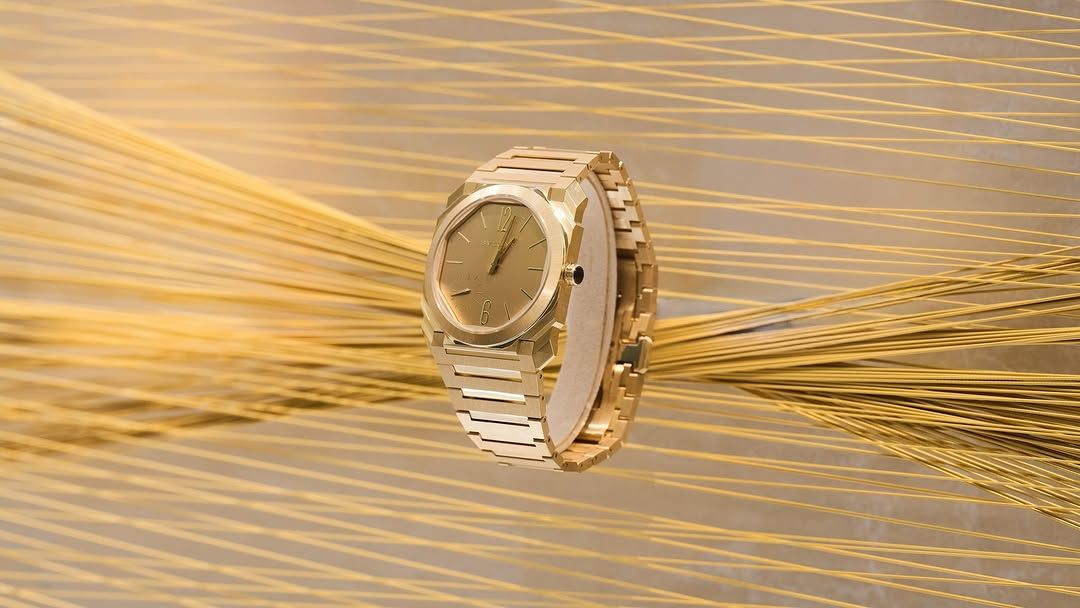
That watch, led by the sandblasted titanium reference 104089, is being positioned not as a shrunken Finissimo for the sake of trend-chasing, but as a second chapter for the line. Bvlgari says the movement has been fully reworked rather than merely resized, with a new BVF 100 calibre delivering a 72-hour power reserve in a more compact format. It also helps that the brand is not treating the 37mm as some watered-down compromise. The launch set includes titanium, satin-polished titanium, yellow gold, and even a minute repeater variant, which is a fairly blunt way of saying this platform matters.
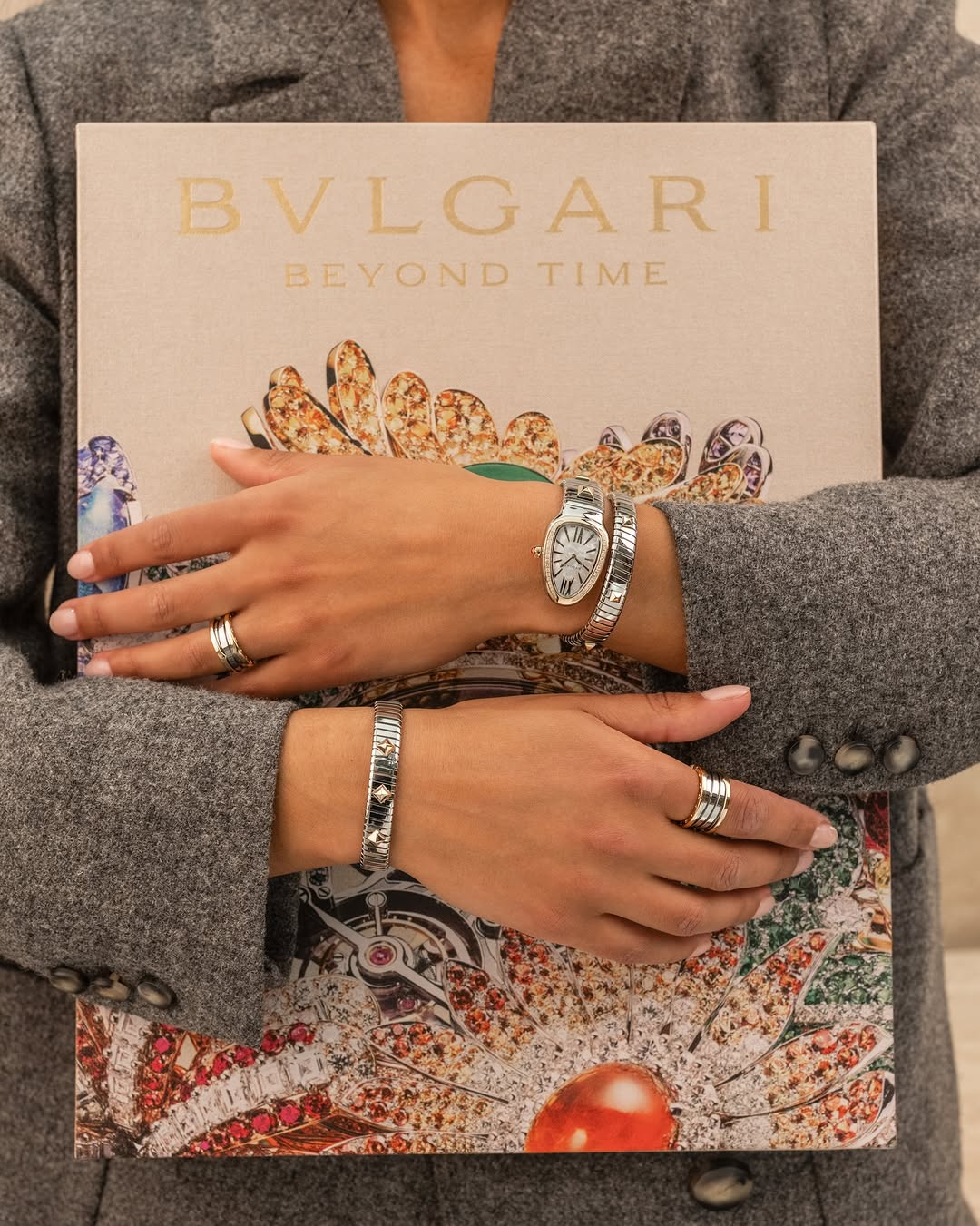
Elsewhere, Bvlgari’s Roman house codes remain very much alive. The Serpenti Tubogas Studs Capsule (pictured above) dips back into the maison’s own experiments with steel and jewellery, mixing yellow gold, studs, diamonds, carnelian, sodalite and malachite across several limited-edition references. The Serpenti Aeterna, meanwhile, goes full spectacle with multi-coloured gemstones, pavé-set diamonds and enough high-jewellery swagger to remind you that Bvlgari still understands when excess is the point. Taken together, the lineup feels unusually complete: technical, expressive, commercial and a little sly.
When I spoke to Jonathan Brinbaum, Managing Director of Bvlgari Watches, it quickly became clear that this balancing act is deliberate. The Octo Finissimo 40mm line, in his telling, remains the brand’s technical summit. The 37mm is something else: more versatile, less rigidly coded, and built with future experimentation in mind. We also spoke about smaller calibres, women’s mechanical watches, digital passports, serious collectors, and why emotion still sits at the centre of luxury watchmaking. Excerpts:

What has the reaction been like to the new collection so far?
We’re super happy because people were clearly waiting for something to happen with Finissimo. It has had 12 years of outstanding history and 10 world records, so there was this desire from collectors, from the press, from the industry, asking when we were going to make it smaller. It’s been one of the highlights of the fair.
What I’m especially happy about is that people were expecting something, but they were still surprised. We didn’t just take the 40mm and shrink it. It is a fully new calibre. We reduced the size by 20 percent and increased the power reserve by 20 percent, and I think that makes a real statement about how far we have come in mastering this world of thinness.
There is now a much clearer split between the 40mm Octo Finissimo and the new 37mm model. Was that always the plan?
Yes. Since the beginning, we believed that the 40mm should remain our technical pinnacle. That is the space where we want to keep pushing the extreme side of watchmaking. The 37mm is much more about universality.
That’s why the thinking is different. The finishing is different. The intention is for the watch to go on many more wrists. In fact, the sandblasted titanium version was already available in stores from the first day of Watches and Wonders, with 500 pieces ready globally, and one of the first sales happened in Boston just a few hours after launch. It was bought by a woman, which was interesting because the market immediately answered the question for us.
So the 37mm is less a downsized Finissimo and more a second chapter for the icon?
Exactly. We wanted the second chapter to be more versatile. That is the right way to pay tribute to an icon, to let it live on more people and in more contexts rather than freezing it in one expression forever.
What is important is that even in the engineering we already left room for the future. The difference in the case gives us the opportunity to play with different dials later, with hard stones for instance. So when we designed the 37mm, we were already thinking ahead about how this watch could evolve.
A lot of brands seem to be moving towards smaller cases and smaller calibres now. Where do you see that trend going?
I’m happy to see it because we have believed in this for a long time. Smaller cases and smaller dials for men are not new for us. Now you see more brands going there, which is a good thing.
But smaller calibres are not easy. As soon as you reduce size, you have issues of efficiency and energy management because size and energy are enemies in watchmaking. So yes, many brands want to go there, but I still believe Bvlgari has a point of difference because of the capability we have built internally around miniaturisation.
You also spoke quite strongly about women’s watches and more fluid gender lines in design. Why is that important to Bvlgari now?
Because we see it happening very clearly. Women are entering through jewellery very often, but they are also more and more interested in watchmaking, and in mechanical watches specifically. That is why our women’s calibres matter.
At the same time, the old labels are becoming more blurred. When the Octo was launched, it was very clearly a men’s watch. Now, when we launch a 37mm 12 years later, we are much less dogmatic about who will wear it. You also see men wearing jewellery, men wearing Serpenti, men being open to watches that once would have been seen differently. Bvlgari has something to say in that space because that fluidity already exists in our universe.
The Serpenti Tubogas Studs collection feels bolder this year, especially with the steel-and-gold interplay. Where did that come from?
The starting point was simple. We are at Watches and Wonders, and steel is one of the core materials of watchmaking. At the same time, we are Bvlgari, so we also have to speak about jewellery.
We went back into the archives and looked at what Bvlgari did in the 1970s with steel in jewellery, because Bvlgari was actually pioneering in that area. From there, it made sense to bring back that spirit in a new way. Tubogas is one of the strongest Bvlgari signatures across categories, so using it for a studs capsule felt natural. It was really about paying tribute to that pioneering side of the house.
You also launched digital passports. That feels timely given how much the second-hand market matters now.
It is very much about connecting the past and the future. We are a historical maison, we work with our archives a lot, but it is also our duty to protect the brand and the client in the future.
The digital passport is part of that. Today, it is a first step. There is a small QR code on the watch, accessible through a dedicated app, and it immediately gives you the specific information for that piece, including the serial number. But I believe it needs to go beyond that. Tomorrow you should be able to follow the whole life cycle of a watch: where it was first bought, what services were done, what happened over time. That becomes increasingly relevant as the pre-owned market grows.
What do serious collectors at the very top end of Bvlgari’s watchmaking usually want from those rare technical pieces?
They want something unique. They want something that not everybody carries and something that is truly outstanding on a technical level. The level of knowledge among those clients keeps increasing, so the conversations become very technical too.
But what I find most interesting is that more and more of them want to meet the watchmakers. They want to know who made the watch. That human link matters. When they buy one of these pieces, they are not just buying a technical object, they are buying part of the person behind it. I think it is our duty as a watchmaker to open those doors more, because the true artists of this industry are the watchmakers.
You previously led Bvlgari’s fragrance division. What did that experience teach you about how luxury actually works?
The link is emotion. What I loved in fragrance, and what I still love about it, is that it is entirely about memory, identity and feeling. Watchmaking is different in many ways, of course, but the emotional side is just as crucial.
When someone buys a serious watch, they are not only buying technique. The technicality matters, obviously, but what really makes the difference is the emotion of the object, the emotion of the artist, the emotion of the watchmaker. Bvlgari has warmth and generosity in its DNA because we are Roman, and I think that makes a difference. Clients are looking more and more for an experience and an emotion, not just a product.
And fragrance taught me that very directly. Even now, if there is one scent that can stop me in the street, it is Fahrenheit by Dior. It reminds me of my father wearing it when I was a kid. That kind of emotional memory is powerful, and luxury works best when it taps into exactly that sort of feeling.
Finally, what’s on your wrist this week?
The new Octo Finissimo 37 in titanium. For me, it is the novelty because our 37 is finally out there, and it brings together what I wanted from it: versatility, lightness and that titanium effect on the wrist, which is crucially important for Finissimo.


