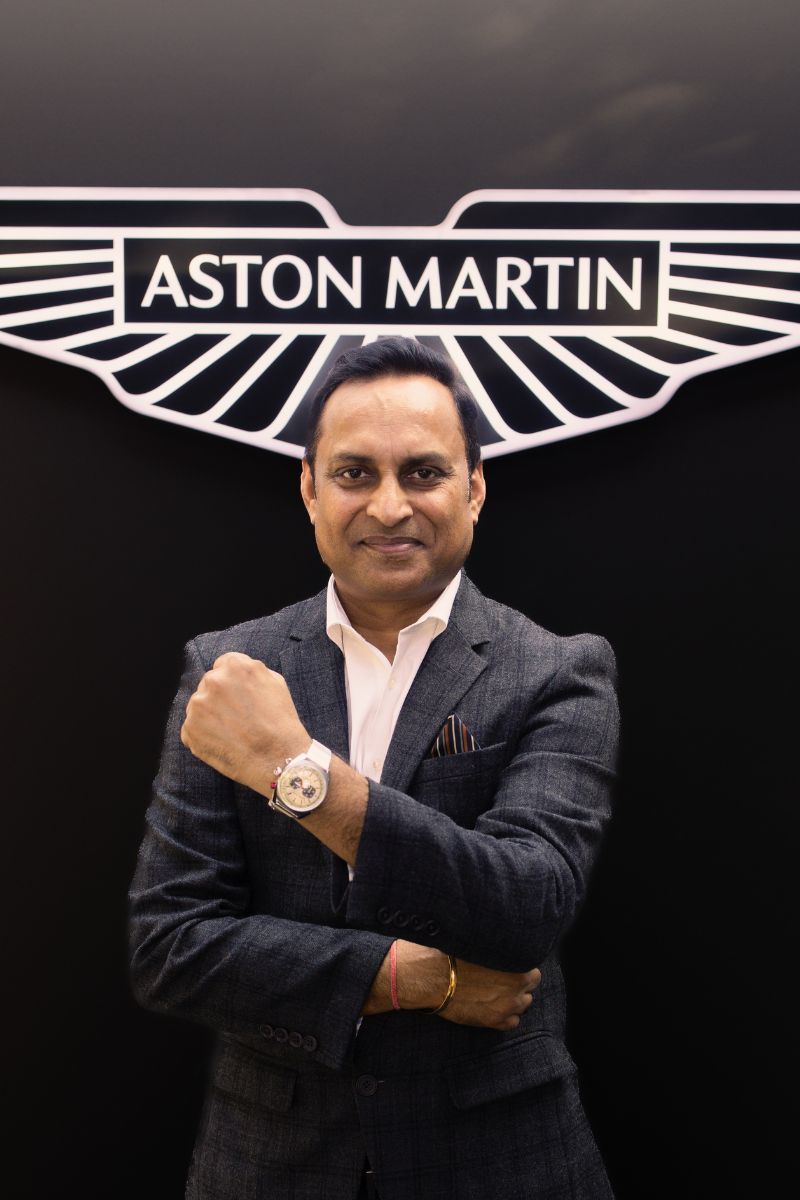
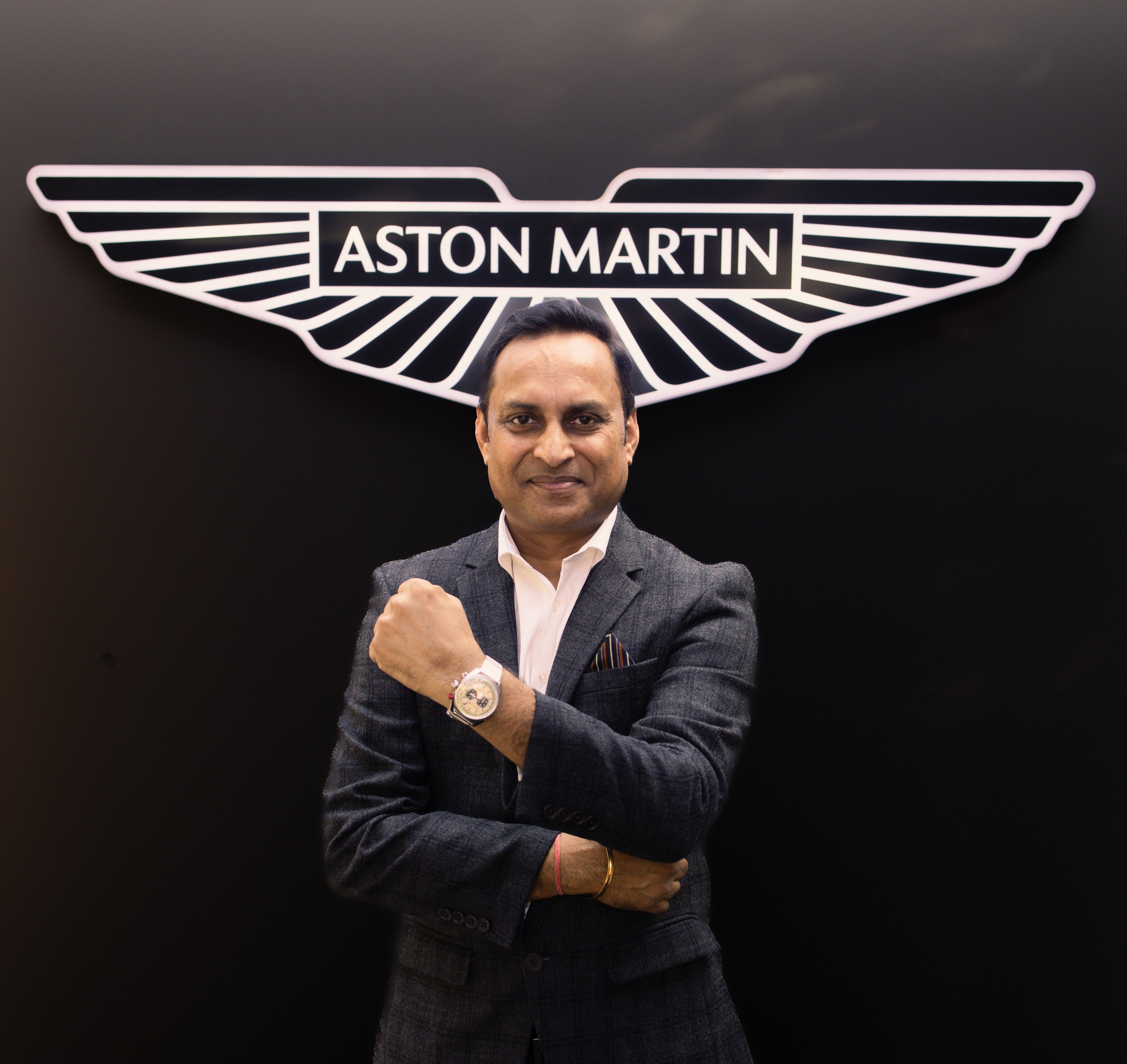
When Timex Group India brought Aston Martin watches into the country, the pitch was fairly clear: a motorsport-adjacent watch line at a time when Formula 1 is no longer a niche weekend obsession in India. But for Deepak Chhabra, Managing Director of Timex Group India, the partnership is not just another logo exercise.
At the Mumbai launch of the latest Aston Martin Watches collection, he spoke about why the brand entered India now, how the watches have performed since launch, and why Indian buyers are suddenly much more comfortable paying more for automatics, chronographs and visibly mechanical watches.
How do you see Aston Martin within Timex Group India’s larger collaboration strategy?
I’ll put collaborations into two buckets. Say Aston Martin or Philipp Plein, which we did, I won’t say it’s a collab. I would say it’s a partnership. Because we are not in for a short period. We have tied up with them for a very long contract, as we have done for all our brands. For example, Guess is for 40 years, Versace is 25 years. So this is sort of a partnership, I should say. And then of course, we do a lot of collabs largely for Timex, which is our own brand. We keep on doing those almost every month. We did with NASA, we did with Harry Potter. Those are more marketing collaborations, I would say, to gain a newer consumer set which is not with us today. So we do both.
Why Aston Martin, and why now?
There is a space in India for a true sports watch brand. There’s no sports watch brand. You have smartwatches, but they’re not sports. And in particular, if you see motorsports, there is no brand. So that was one reason, that there’s a gap which needs to be fulfilled. We do it or somebody else will do it.
Second, as you mentioned, I believe you are also a motorsport enthusiast. There were 31 million fans of Formula 1 in 2022, which has swelled now to about 70 million, which is more than double. Aston Martin owns a Formula 1 team, so there’s a relevance. You have a set of consumers who know Aston Martin already, and they all are affluent.
The good thing is, with Formula 1, you can’t watch it over cable. You have to pay for a subscription. So all those 70 million are affluent and they can afford a watch of, say, ₹50,000 or ₹60,000.
Number three is India has seen premiumisation, so people are investing more in watches. You have a lot of brands, Michael Kors, Guess, Fossil, but they’re all between ₹15,000 and ₹20,000. Now people are able to invest more. An Aston Martin can’t be offered at ₹20,000 as such. It has to be ₹40,000 or ₹45,000 on average. So these three reasons made us believe this is the time for a partnership.
We launched in December, and we have not even completed May. We sold about 10,000 watches. At these price points, about ₹40,000, 10,000 watches at the launch itself is quite a response, very frankly. Once you are established, you build it up. But the response was amazing. I personally get a lot of mails saying, “I saw this watch. Now it is not available either at the stores or online. Can you get me one?” A lot of those. So there’s a very dedicated set of people who really love Aston Martin.
How are you managing distribution for the brand?
The dealers and our partners were very excited about it. But we still try to maintain some exclusivity for the brand because when you overexpose, it becomes messy, and that doesn’t work. That’s not what the brand stands for.
We sell Aston Martin currently to only select 100 stores in the whole country. Plus, we sell it online. We sell it through Myntra, largely because that’s the right platform, and then we also sell on Tata CLiQ, which is again a premium platform. So we have restricted its distribution so that it doesn’t become messy.
What does Aston Martin stand for as a watch brand?
It’s exclusivity, precision and performance. That’s what Aston Martin is known for with the cars. It’s amazingly luxury. You cannot just walk into a showroom and pick up a car. You need an invitation, you need a recommendation from five people, and you need to have ₹5.5 crore minimum in India to own an Aston Martin.
These are hand-assembled cars. They’re not built on a conveyor. So we have tried to do the same thing in our watches. Each watch, when you see it very closely, will remind you of the car, either a popular one or an Aston Martin heritage model. That legacy we have brought to the market, and it has been accepted so well.
How is the collection split between younger F1 fans and more mature buyers?
We have a line which is Formula 1, which is for the youth. Then you have the Heritage one, which is more for an evolved consumer, say about 30-plus, because these are costlier also. But we also wanted to cover 18 to 25, which is also a huge fan base of Formula 1. So that we have priced lower. That starts from about ₹12,000 to ₹25,000.
So we’re catering to youth also, and we’re catering to the more mature, evolved consumer.
What is performing best within the collection?
In Formula 1, it is more of plain three-hand watches because that’s what you can afford at those price points. We try to keep it lower because we are targeting somebody who is not earning today.
But when it comes to the Heritage line, it is more chronographs and automatics. Automatics are becoming big in India. It used to be a very small portion, but now people understand what is automatic, what is chronograph, what is multifunction and what is plain three hands.
The contribution of automatics across the industry is growing faster than plain three hands. And that’s what we saw in Aston Martin as well.
What kind of Indian consumer is buying the Aston Martin Heritage pieces?
There are a large set of people who want classy watches. They don’t want Aston Martin screaming at them. This is more towards the consumer who is sporty at heart. Even if they don’t play a sport, they watch all the sports.
For Formula 1, it is more between 18 and 25. For Aston Martin, it is 25 to about 40. But they need a lot of complication in the watch. If you ask me if I would make plain three hands in this, it will not sell. Here they need complication.
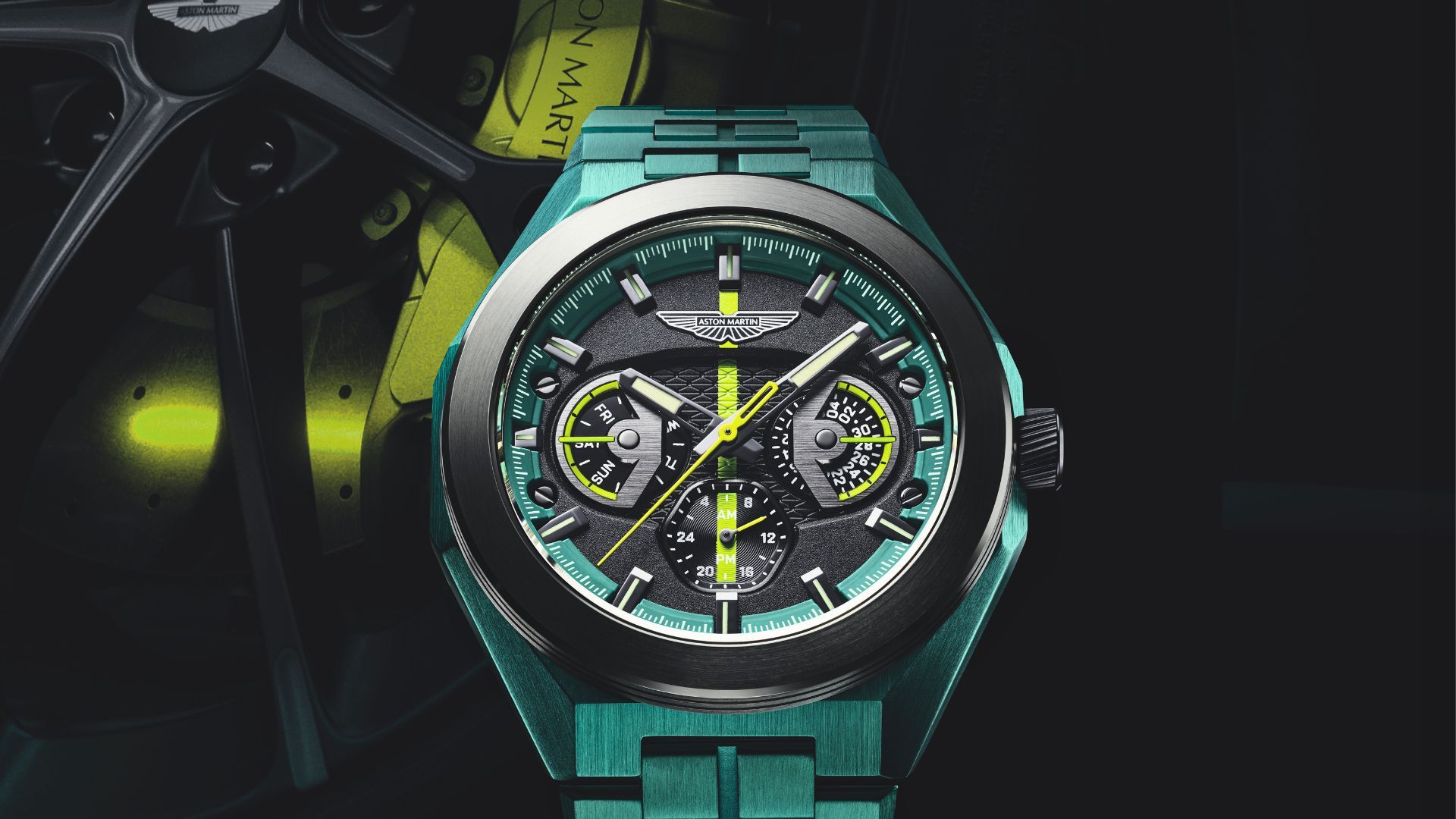
And if you see, there are all the elements of the car on the dial. You will find a speedometer, you will probably find a tyre, you will find a rim, you will find an engine. Every different watch has different elements of the car. That is what is exciting there.
Is India’s automatic watch buyer changing?
India is consuming automatics lately now, and they want skeletal automatics. They don’t want an automatic where you can’t get to know. They want it on the dial. They want skeleton. It should be visible. You should see the gears and everything visible on the dial.
Because when they’re investing more, because automatics come at a cost, they want to flaunt it. That’s the trend which we have seen. Most luxury watches are automatic, but you can’t see anything on the dial. That’s a different consumer altogether. They’re very classy. But the ones consuming now, because of premiumisation, are investing more money in watches and want the skeleton. They want it to be visible.
Automotive watches can often feel like merchandise. How do you avoid that?
For us, we are actually watchmakers. We became a brand later. We are a 172-year-old company. We started as a manufacturer. We learned branding later. So we understand what should go in a watch.
Nobody in the whole company will allow a new launch if it doesn’t have a story. It cannot be that you pick a few things and just put them in the watch. There has to be a story linked to the brand DNA, and you can tell that story to the consumer and sell.
Exactly the same thing happened with Aston Martin. We signed the contract one and a half years back, but we took one year to ensure that we bring the right elements. So when you don’t even see the brand, you know it is Aston Martin just by the features, the look and the colour.
How deep did the design process go?
We tried not to just bring any watch and make it a bit sporty. Everything is linked to Aston Martin as a brand. My colleague can actually explain each and every watch, and you’ll be surprised to know that everything in the watch is linked to Aston Martin, either Formula 1, its past, or its heritage.
Even if you see the strap, it’ll be Aston Martin double colour. Even if you see the pushers, you’ll find branding there. The logos are on the majority of the watches. We just don’t launch watches. We launch a story, and the watches are an outcome of it.
Was this Timex Group India’s first experience creating something this rooted in sports cars?
We never had a sports brand in our portfolio. We tried a few watches within Timex, but this was a new experience altogether. A lot of research went into it. A lot of meetings with the engineering team of the car-making in the UK happened, and then the Formula 1 car-making happened, to understand what are the key features and how we can include them in.
It took relatively longer for us to launch than any other brand because we didn’t want to just launch a brand with the components not matching the branding. So it was a great learning experience for the team. There was a lot of excitement because we put two designers who were ardent fans of Formula 1. That brings the energy and enthusiasm to create something remarkable.
How do you balance so many brands in one portfolio?
Essentially, they do not conflict. Some overlap is there. For example, Timex largely ends at ₹10,000. Guess largely starts at ₹10,000. Guess, Adidas and Nautica have very different DNA. Guess is maximalistic and loud. Adidas is sports. Nautica is sail and water sports.
Then you get into British luxury. Aston Martin is clear-cut motorsports. GC is very classic. Daniel Wellington is minimalistic. Versace is loud. Ferragamo is classy. The whole portfolio is such that there is a very distinct consumer we are targeting.
Cannibalisation certainly happens, but it is minimal in our case because of the DNA. And we don’t just add brands. We see: do I have a space? There are so many brands that keep reaching us to get added. We refuse. If I have a space which does not cannibalise my existing brand, then only I am going to take it.
How does Timex approach design differently across collaborations and partnerships?
We don’t even think of watches first. We first immerse ourselves with the brand. What is Harry Potter for? Who is the consumer? What excites them? Those houses, and who’s going to buy? Is it just the youth? No. Harry Potter fans are across ages.
First, we immerse into the brand itself. We have done it over and over again. When we took Guess, or Versace, we understood what the brand is about. Why does a consumer buy that brand in all other categories, be it clothing, footwear, jewellery and so on? And then we say, “Okay, now how can I incorporate those in watches?”
So it’s a reverse mindset rather than saying, “Okay, I have to make some watches of the brand.” No. We want to understand the brand first. That’s where we are known for being a true watchmaker, because the thought is very different. The thought is not to introduce a watch. The thought is to come up with something which has a huge story to tell.
Timex has been strong in smaller case sizes, especially under ₹10,000. Was that deliberate?
This was by accident. It was not by strategy. We never used to bring the global franchise into India three or four years back. Then we started bringing Marvel, Weekender and all. They were all 39, 40. So I had no choice.
When I brought it here, my team used to tell me, “This will not sell because 38 in men will not work. We need 42.” But globally, we were making 38, 39, 40. So I just brought those watches in. And when we went to the market, we were surprised. India accepted this size, which was by accident.
Now intentionally, we have included smaller case sizes in our plan itself. When you see the new collection, you will find a sizeable collection at 40 or less. Is it working? Absolutely it is working.
There is a segment which needs 46 also, like Diesel. But that is shrinking. A normal dress watch, people prefer it to be 38, 39, 40.
Men, I feel, will still be 38. 38, the new 42 will be 38. You may still have 36 also, but I think 38 would be like the half size. When you go below 38, you shrink the market. The other trend which is also helping is most men’s watches have become unisex. Women are also wearing the same watches. When 38 makes sense to everyone, that is also helping bridge the gap between pure women’s watches and pure men’s watches. The unisex segment is becoming about 10 percent of our business also, which we don’t sell as men or women.
How does the luxury watch market differ between top Indian cities and smaller towns?
If you have a watch brand which is a lakh of rupees or more, 80 percent of business comes from the top 10 cities. Still. While smaller towns are coming up, the number is small.
For luxury, our go-to-market remains that we have to concentrate on the top 10 cities because that’s where the large majority of business lies. And then for the other cities, e-commerce has become luxe. You have Tata CLiQ Luxury selling watches of ₹30 lakh also. So we sell Versace there, we sell Aston Martin there, or Myntra Luxe.
For other cities, we cover it through luxe online currently. If you set up a store or if you have a retailer and give them luxury brands, but the number of consumers is less, financially it doesn’t make sense. You still need 40 SKUs and about 50 watches. If every watch is a lakh, your investment for the retailer is ₹50 lakh. But the number of consumers in those cities is very less.
So the strategy is: in 10 cities, you flood them, and your 80 percent business is in pocket. The 20 percent business, you target through e-commerce. Slowly, steadily, these 10 will become 12, 12 will become 15 cities, and that’s how we grow. We’ll never reach 100 cities for a luxury brand.
Did Aston Martin Watches sell differently across India?
These are a bit bolder watches, if you ask me, as compared to classy. So South takes a bit of a hit. North takes the lead, followed by West. Geographically, roughly about 50 percent business is from North for this, followed by West and then South. East is generally a smaller market for all brands. Aston Martin acceptability was highest in North.
What does success look like for Timex Group India over the next few years?
India is consuming like never before, and it’s consuming across the pyramid. There are a lot of people, way more than we can even imagine, buying their first watch. That is where Timex plays.
While we are upping our price point, getting into Harry Potter, ₹20,000 watches or ₹90,000 watches with Éclaire, the focus remains the smaller towns and the first-time consumer. As we move up the ladder, premiumisation is helping fashion brands extract more money from the consumer. That is where Guess plays, Nautica plays, Adidas plays.
Luxury has seen humongous growth. Although the base was small, percentage growth is like a multiplier. People are buying like never before. So actually, growth is coming from everywhere. We are happy that we have in our portfolio so many brands catering to the entire consumption.
But the largest push is on Timex. Indian demography is such that a lot of people are going to buy their first watch or second watch, and they can’t afford ₹10,000 or ₹15,000. They still want ₹2,000, ₹3,000, ₹5,000 watches. The number is huge there. It’s about 300 million who can potentially buy.
People talk about luxury. I sell luxury every day. But the number is very small. In totality, in the next one decade also, only about five million Indians can buy luxury. Just five million out of 1.5 billion. It has seen a huge surge after COVID, but last year luxury has come down. The growth has tapered down. It is still growing because the set of consumers is still small.
Timex, every year, there will be about 50 million added who will be buying their first watch. So that will be the biggest segment, and we want to focus there.


