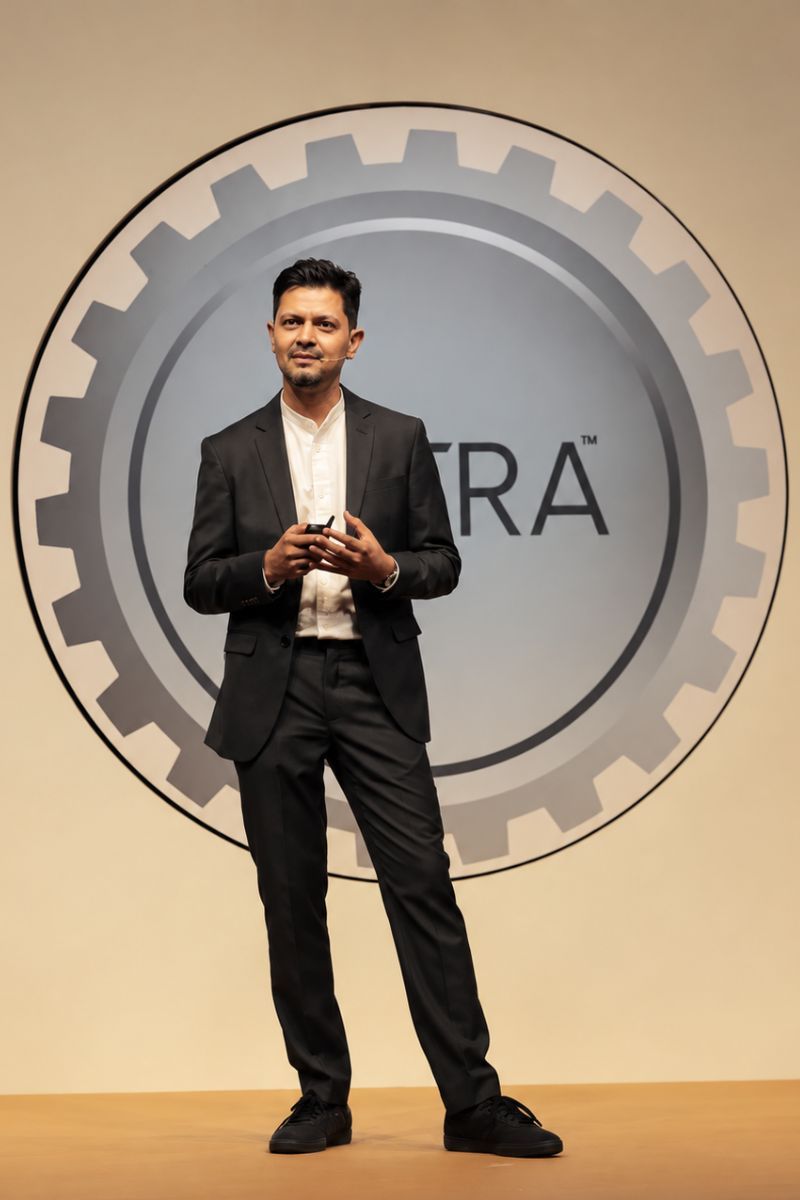
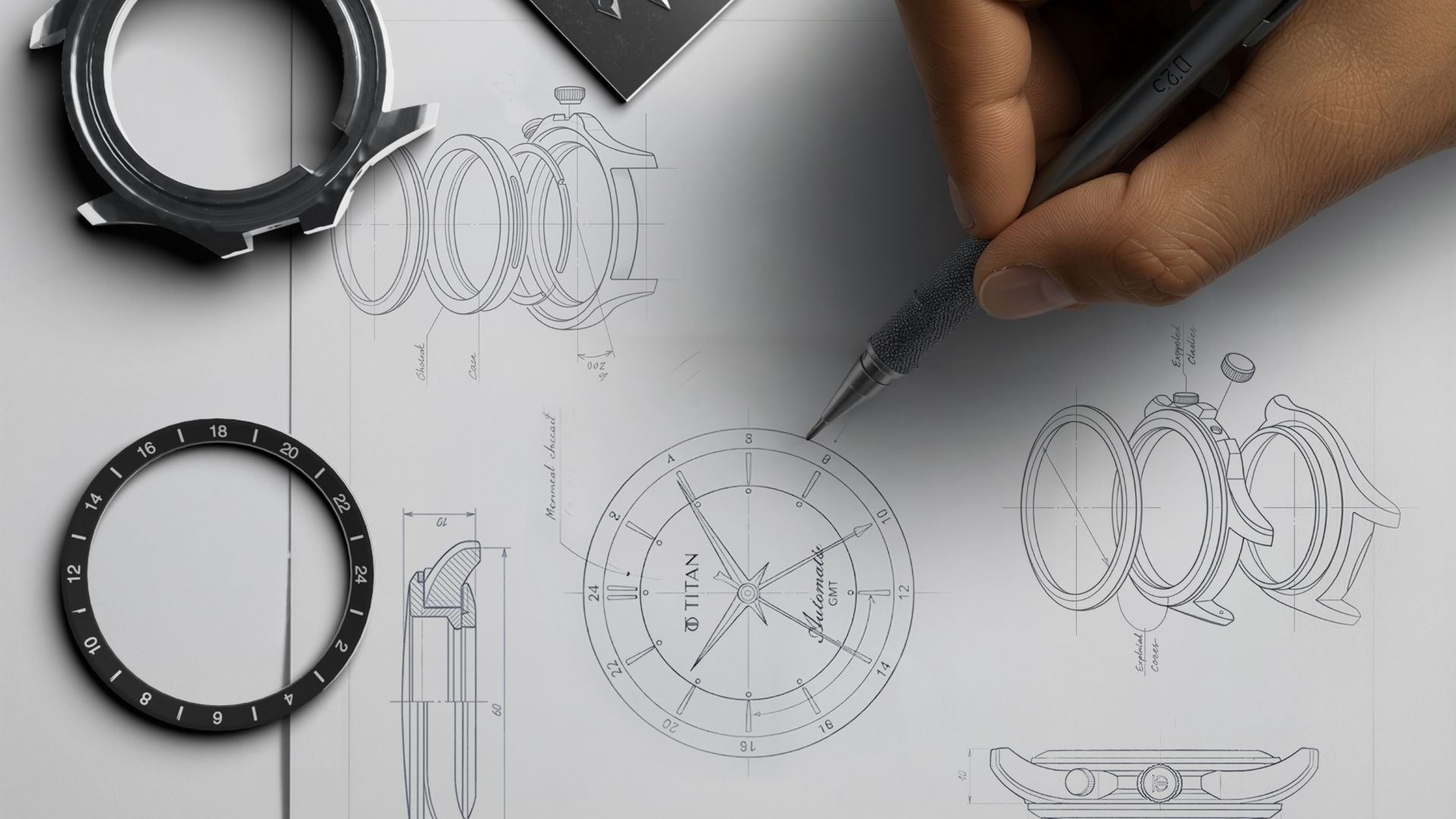
Titan has made mechanical watches for years now, but Vetra feels like a rather different proposition. Instead of launching another collection built around a particular aesthetic or theme, the company is putting a name to the machinery itself. Vetra is Titan’s new in-house mechanical movement platform, beginning with the 7A series and four rather different expressions of it across the new Automatics collection: the three-hand Infinium, GMT-equipped Dualis, big-date Midnite and small-seconds Atrium. The idea is that these are not four unrelated mechanical watches, but the beginning of an architecture that Titan can continue developing, modifying and eventually using across other collections and complications.
That makes Vetra an interesting follow-up to what Titan has been doing over the last few years. When I spoke to Design Head Mahendra Chauhan during Titan's last Stellar reveal, he described Stellar as a platform rather than simply a collection, one through which Titan could continue exploring astronomy-inspired watchmaking. Vetra sits underneath that idea. Where Stellar gives the designers a theme to play with, Vetra gives the engineers a mechanical base to build upon—one rooted in back-to-basics watchmaking that seems centered around weekday wearability. Chauhan is quite specific about the distinction too: this is a movement platform, not a design platform—the aim is to give Titan’s mechanical work an identity of its own rather than having the movement remain an anonymous component inside a larger design story.
The first batch gives Titan plenty to work with. Infinium uses the Vetra 7A20+ and pushes the brand’s automatic power reserve to 72 hours. Dualis uses the 7A37 with a GMT hand and internal rotating 24-hour bezel. Midnite gets the 7A77 and a dual-disc big date, while Atrium uses the 7A200-C with an offset seconds subdial and is offered in both closed and open-heart configurations. All four use 316L stainless steel cases, domed sapphire crystals with three-layer anti-reflective coating, mixed satin and polished finishing and Swiss Super-LumiNova X1, with prices ranging from ₹47,995 to ₹54,995.
I caught up with Chauhan to understand why Titan felt it needed to create a movement brand in the first place, how the four watches came together, why the company is paying closer attention to the increasingly knowledgeable ₹50,000 watch buyer, and how far Vetra could eventually stretch.
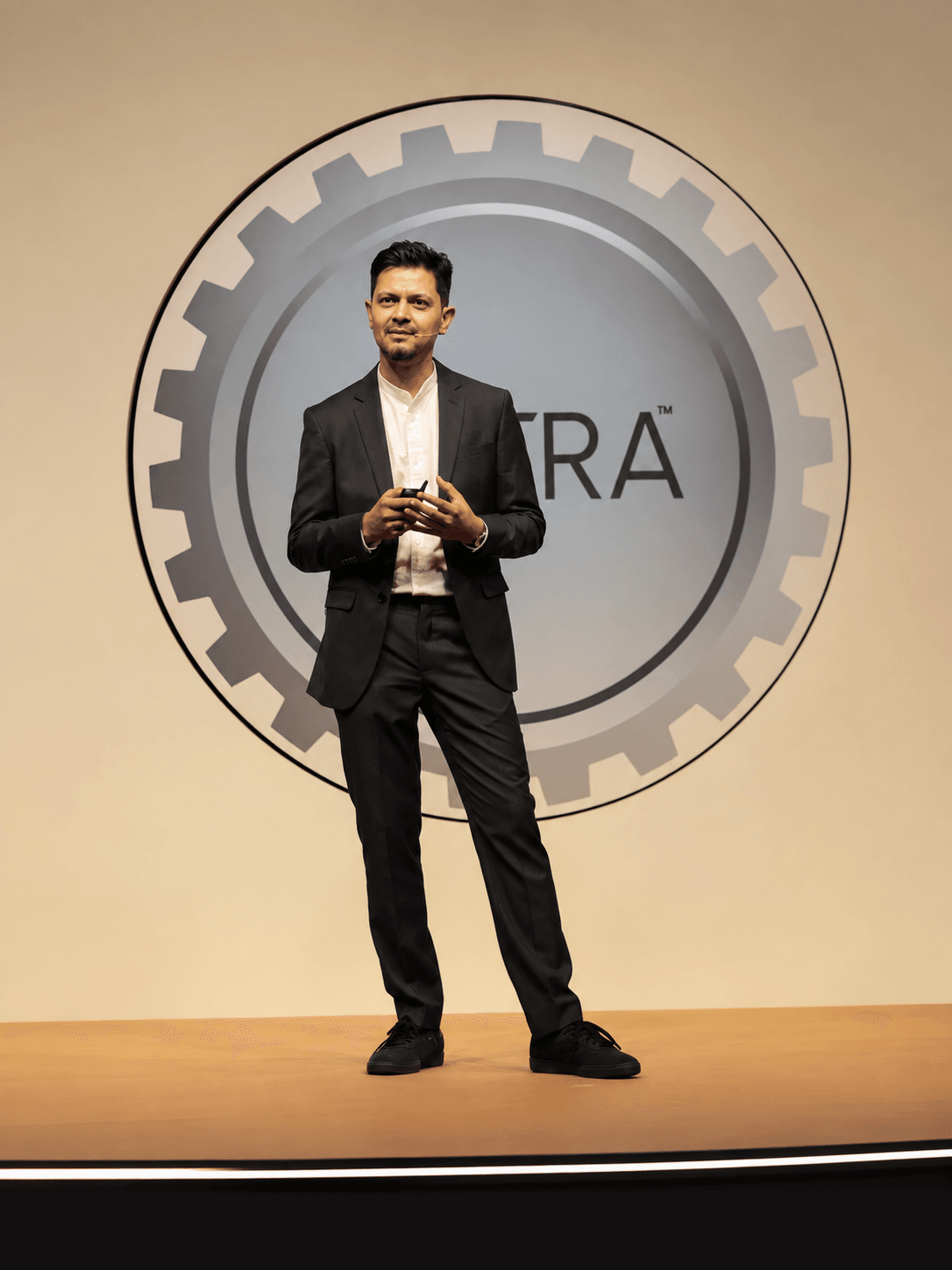
Let’s start right at the beginning. What were the first conversations around Vetra like?
I think if you have seen our journey over the last four or five years, you know that we have been into mechanical watches for close to a decade. But they were always bits and pieces, part of different collections. Even Stellar was not really a story about mechanical watchmaking. Stellar was a story of astronomy, and mechanical watches happened to be part of the collection. What we started realising was that it was important for us to create a platform specifically for watchmaking, something that could become an anchor for all the complications and movements we develop in the future. That was really the genesis of Vetra.
Once you create that platform, products can start coming into it, and even some of the things we have done in the past can eventually become part of that larger ecosystem. With these four launches, you are already seeing four different movements, so the idea was to establish the platform first and then build from there. We also wanted something that would celebrate Indian watchmaking entirely on its own terms.
When you say “platform”, how is that different from something like Stellar or Edge?
It is a movement platform rather than a design platform. That distinction is very important for us. Earlier, you could have a Titan movement inside a collection, you could also have a Miyota movement somewhere else, and the movement itself would essentially remain one part of a larger design story. With Vetra, we wanted to put the focus directly on the mechanism because that is really the soul of mechanical watchmaking. Once you begin focusing on the mechanism, improvements in engineering, performance and execution naturally start following from that. Now the movement has its own name and its own identity. It is not simply one component sitting inside the design anymore.
Even with all this emphasis on the movement, nothing feels particularly over-designed. Was that part of the brief from the start?
The design approach was very clear. We wanted something timeless, classy and contemporary. We never wanted to create this enormous story around the watch because sometimes you can create a movement, build a very glamorous narrative around it and suddenly the story becomes much bigger than the actual movement. Here, we wanted the mechanism to remain at the centre and keep the design clean and wearable. They are almost workwear watches in that sense. You can wear them to the office, you can travel with them, you can use them every day. They still need enough character to be interesting, of course, but there was no intention to make the design louder than what was happening inside.
Infinium is probably the most straightforward watch of the four, but the 72-hour reserve is obviously the big story there. Why was reaching that number important for Titan?
For many Swiss brands, a 72-hour power reserve is a very normal thing. There are brands making watches that run much longer than that. But for us, you have to look at it as part of our own journey. We have moved from roughly 40 hours to 72 hours, and that is a very important milestone for the movement team. It is part of this larger pursuit of improving what we are capable of doing mechanically. So with Infinium, we deliberately kept the watch quite classic and straightforward because we wanted to celebrate that achievement rather than hide it behind something overly complicated visually.
Infinium uses Titan’s Vetra 7A20+ calibre, with the extended reserve coming from changes to the barrel and mainspring architecture. It also happens to be the smallest watch in the collection at 40mm, with a 3D pressed lacquer dial and sharply faceted diamond-cut hands. The dial is perhaps the more interesting part once you spend some time with it. The repeating geometry takes its cues from the Titan logo without simply stamping the logo across the entire surface, creating a pattern that initially reads more like texture than branding.
That dial pattern almost has an optical effect to it. How did you arrive at it?
It actually started much more literally. The inspiration came from a small facet of the Titan logo, and some of the early versions had the logo represented much more directly. As we went through the ideation process, we started modifying it and taking elements from it instead. The final watch feels much more subtle because you see the pattern first and then eventually recognise where it came from. Some of those earlier ideas with a more obvious logo were also quite stunning, though, so you never know, they could return in another form later.
The colours are quite safe for the most part, but then there’s that turquoise-green dial. Was that deliberate too?
Most of the colours are what you would probably expect from a timeless watch because they are colours that connect easily with what people wear throughout the day. You cannot really avoid some of those fundamentals when you are making this sort of everyday watch. The turquoise green was slightly different for us because we wanted to bring in something that also felt connected to Titan itself. So between that colour and the pattern derived from the logo, there are little details that bring the brand identity into the watch without making it too obvious.
The Dualis was probably my favourite of the lot. I particularly liked that you kept the GMT quite clean and skipped the date. Was there ever a version with one?
There was. Initially, we did consider a date and there were several ideations around it, along with conversations between the engineering, marketing and design teams. Eventually, though, we felt the watch would be more legible and have a more distinct identity without it. That became the main reason for leaving it out. Of course, that does not mean you will never see a date on one of these watches in the future. The platform gives us room to continue playing with these things.
Dualis sits in a 42mm case and runs the Vetra 7A37 calibre, pairing its central GMT hand with an internal rotating 24-hour bezel. Titan has also designed the local-time adjustment so it can be changed without interrupting the movement. More than anything, the internal bezel allows the GMT to retain much of the same overall architecture as the other watches rather than suddenly turning into a completely different sort of sports watch.
At around ₹50,000, you’re entering a category where buyers suddenly have quite a lot of mechanical options. What do you think somebody spending that money is looking for today?
From the consumer studies we have done over the last few years, what we have realised is that around this price point people start looking for some seriousness in the horology. At lower price points, the purchase can be much more fashion driven. Somebody likes the look of a watch and buys it because of that. When you start reaching around ₹50,000, the buyer becomes more nuanced. They are paying attention to the engineering and want to understand what they are buying. That is why every watch here needed some mechanical dimension to it. You have our first 72-hour movement, you have the dual-disc big date, you have the GMT. These are all important milestones for us as a company, and the engineering becomes just as important as the aesthetics.
That point is probably clearest with Midnite. The 42mm dress watch uses the Vetra 7A77 calibre and a dual-disc big-date display, another format Titan has not attempted before. Its vertical dial pattern and faceted hands keep things fairly restrained, but the oversized date gives the watch its own personality within the wider family. Atrium, meanwhile, takes a slightly more traditional route with Roman numerals, a sandblasted dial, knurled bezel and dual-finished bracelet, before throwing the layout slightly off balance with an offset seconds subdial powered by the Vetra 7A200-C.
Small seconds normally ends up at six. Why move it off-centre on Atrium?
Sometimes a little imbalance can actually play an important role in a design. We wanted something that felt slightly asymmetrical rather than automatically placing the seconds at six because that is where people expect it to be. That small shift gives the watch a different character without forcing us to completely redesign everything around it.
Titan has also become far more visible within watch culture over the last few years. Has that changed how the design team works?
Of course. There was a time when we were much more internally led. We would design what we wanted to launch. Today, we are listening to connoisseurs much more, we are talking to people from the watch community, and being in places like Geneva exposes us to what is happening across the wider world of watchmaking. That naturally starts shaping the way we approach design and the way we craft our products. It is happening internally as well. We are having much more intense conversations with the movement team around things such as accuracy and improving the movements themselves, while the brand and design teams are constantly talking about how the overall proposition can be sharpened.
Once you have this architecture in place, I suppose the obvious question is what else you can build on it. How far are you already thinking ahead?
There are many things we are working on from Titan. The interesting thing about Vetra is that the moment you give the platform a name, you also start establishing certain principles around what qualifies as Vetra. Accuracy, precision and the overall level of execution have to meet a particular standard. So we are ideating several complications right now. Some of them will eventually fit into Vetra and some may not, but the platform gives us a base from which we can keep developing things.
I have to ask then—a Vetra moonphase inside Stellar someday?
You never know. *laughs*


