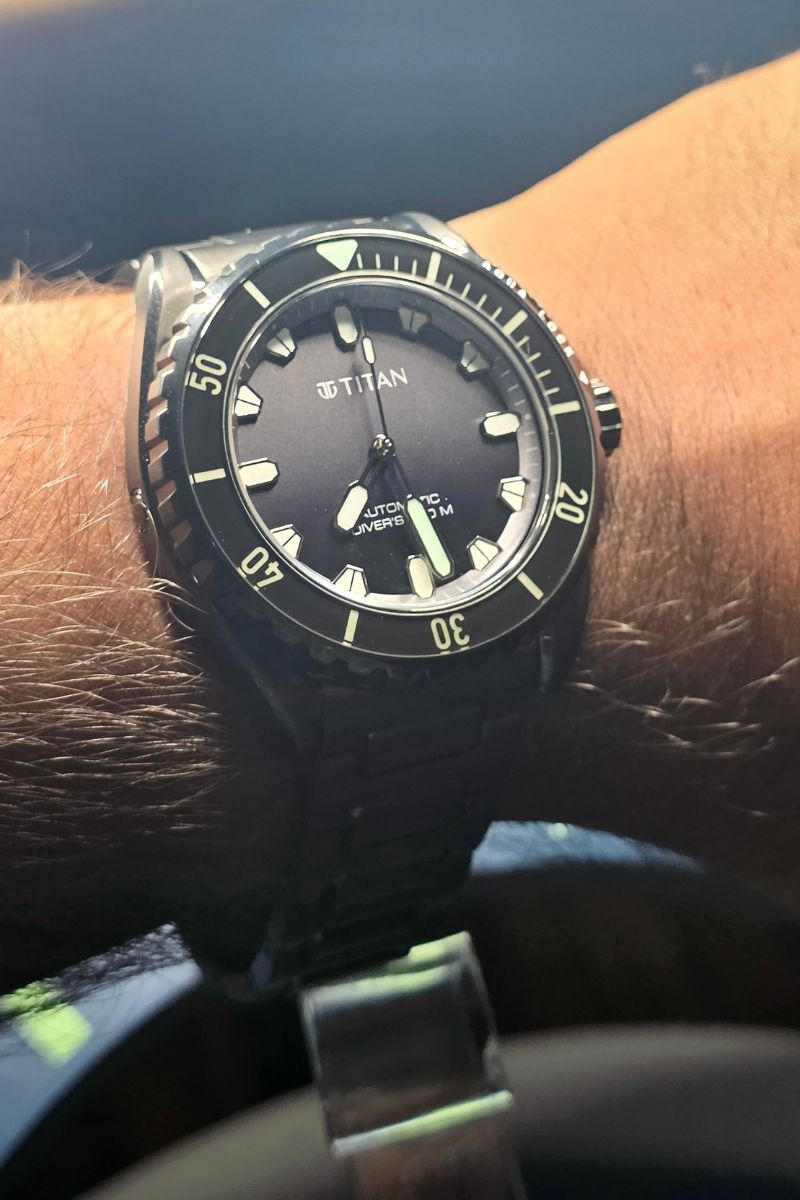
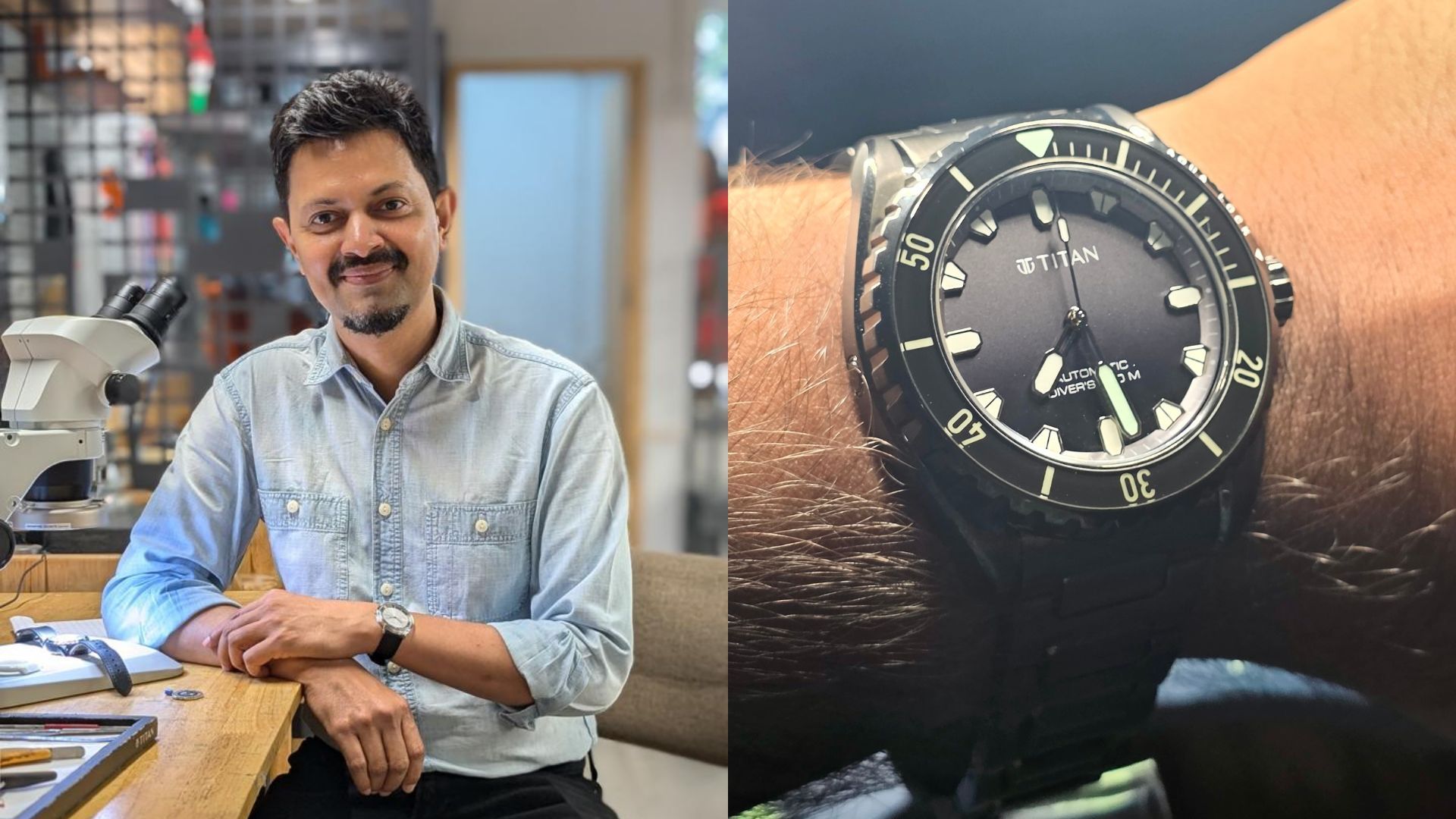
India has always had people working underwater, long before dive watches became shorthand for rugged luxury. From the southern coast's 2,200-year long tradition of pearl diving to modern naval divers, offshore crews, oil rig workers, pro-diving is the kind of job where visibility drops to nothing and reliability matters more than anything. That part of the story has always existed. What hasn’t is a serious Indian dive watch that tries to sit in the same space as the global players. For most people here, that category has always been imported. You either picked up something Swiss if you could, or you didn’t bother because, realistically, even the people who actually dive aren’t relying on mechanical watches anymore; not since atleast the mid-2000s.
Curiously, for India’s largest watch brand (and the world’s third-largest by volume), a break from three decades of watchmaking largely focused on timeless dress watches—a tradition that still goes strong today—and into proper tool watch territory came far from the ocean; rather, it was born on the racetrack. “Around sixteen years ago, we launched a sub-brand named Octane,” recalls Titan’s Head of Design Mahendra Chauhan. “It was a sports watch line inspired from the world of motorsport, and this was during an era when many Swiss brands—TAG Heuer being a prominent example—focused on F1 as a core design theme. We wanted to be in that zone, and so, Octane was born.”
Chauhan is quick to admit that while Octane was not intended to be a ‘serious race watch’ in terms of chronometry certification or other industry badges associated with modern tool watches, it still allowed the brand to champion a quartz chronograph and step away from its established identity; the line is still prized by Titan collectors today and proved to Titan—and its consumer base—that boundaries in homegrown watch design were not immobile in the least. All they needed was a little push. “We felt as a team that we could really create a serious shift within Titan,” Chauhan admits, noting how watch categories can—in an abstract sense—assign themselves to land, sea and air, with brands like Rolex serving up an obvious (and somewhat literal) set of examples with the popular ‘Dweller’ collections. “Land was what belonged to Octane,” he continues. “The other two spaces were fairly empty, in terms of our portfolio. We decided to look towards the water.”
Aquatic Inspirations
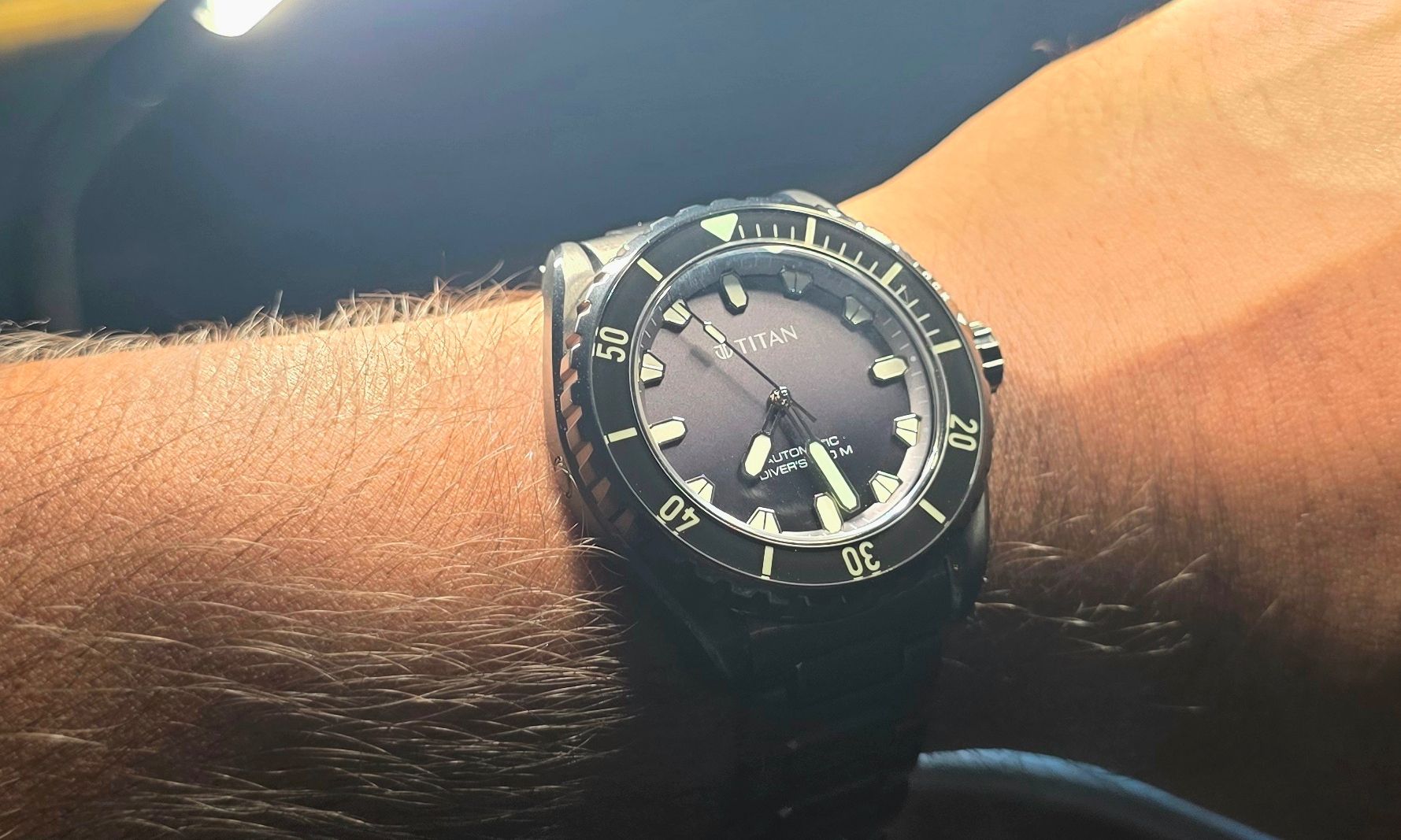
Tool watches are in many ways, a constantly evolving paradox for collectors. The term ‘desk diver’—often used to conjure up the most famous dive watch in the world—Rolex’s iconic Submariner—pokes a bit of fun at how dive watches often reveal the wearer’s depth in terms of corporate entrenchment than anything involving wetsuits and scuba tanks. And yet, fans of the platform seem to have elevated the core ‘tool’ aspects of a diver—from locking bezels to ultra-visible indices and even more extreme features such as helium valves—into core talking points that have incited fierce debate amongst enthusiasts in old-school collectors’ groups as well as the ever-growing legions of watch lovers that flock to YouTube comments after every new launch.
Like any good watch brand, Titan’s design team, after jolting the Zero Hour project to life around three years ago, started their research by going right to the heart of the matter—engaging in conversations with actual divers. This exercise presented them with an answer Chauhan had somewhat expected. “None of them were wearing watches when they dive,” laughs Chauhan, revealing that even his personal experiences with diving did not come with a diver strapped to his wrist. That answer, though, only really explains what the modern dive watch is not. What it doesn’t explain is why Titan chose to enter the category in the first place, and why it did so in such an un-Titan way. Chauhan’s own answer to that sits less in the sea than in product strategy. “It’s always better to establish an icon first and build line later,” he says. “Once the icon gets established, you could really define design language based on those icons; a team ought to shift goalposts depending on the situation. If you’re creating a new line based on a legacy product, you need to follow and develop [design] codes around that legacy. But if you’re creating something fresh? Top to bottom is the approach we followed.”
And so, they embarked on a quest to build an ISO-compliant 500 metre watch—what would become the Titan Zero Hour Diver's Automatic 500M. It’s a risky way to build a line; the entire collection depends on that one watch working. If you don’t crack the tolerances, the sealing, the pressure handling, the brand proposition and of course, the pricing at that level, the rest doesn’t fall into place. Titan wasn’t building on an existing base here either. “The majority of Titan’s catalogue would lie in a 30 metre to 50 metre space,” Chauhan says. Moving into 300 and 500 metres meant stepping into a completely different level of engineering.
What that meant in practice was going back to square one. Not just in terms of design, but in how the watch would be built. “If we are saying something is a serious sport, then I would not compromise,” Chauhan says, and that line becomes a kind of baseline for everything that follows. This wasn’t about adapting an existing platform or stretching a familiar architecture. The team had to rethink how a Titan watch is put together when it is expected to operate at those depths, from the way the case is sealed to how the crown engages, to the kind of tolerances that would hold up under sustained pressure. “We studied ISO specs… we studied the world of diving watches,” he says, describing a process that leaned as much on benchmarking as it did on internal development. There was no attempt to do this in isolation either. Testing and validation ran through labs in Switzerland, China and India, alongside conversations with divers brought into the studio to pressure-test assumptions about how these watches are actually used.
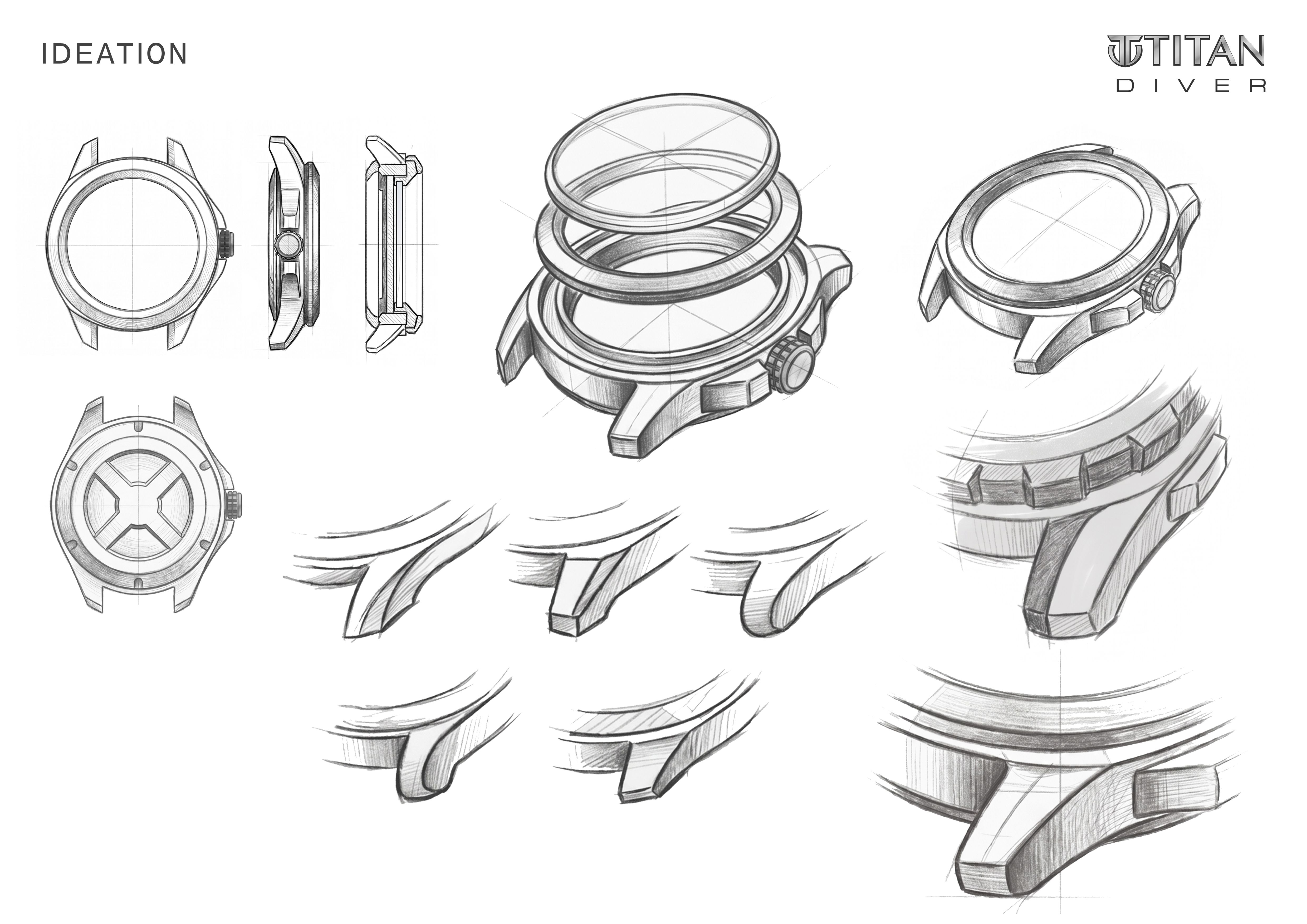
The deeper they went into that process, the more it became clear that certain components would need to be reworked entirely. A 500 metre watch isn’t just a scaled-up version of a 100 metre one; it behaves differently, and the margin for error shrinks quickly. “You need to crack a newer kind of bezel lock…you need to crack newer kind of crown fitments,” Chauhan says, pointing to areas where the team had to spend disproportionate amounts of time. “These are very new spaces,” he adds, referring to the kind of micro-engineering involved. Ideas that worked on paper often fell apart once they moved into modelling, forcing the team to start over more than once before landing on something that felt right.
It’s an interesting reminder of how design inspiration can come from rather unexpected places, but also of what Chauhan is really chasing here. “I like watches which are beyond aesthetics,” he says. “If it does not have a beautiful spec or a newer movement or mechanism… probably I don’t like it.” That extra layer, in a watch like this, often shows up in how it behaves—the feel of a crown, the action of a bezel, the small tactile cues that make it more than just something you wear. Even the diver itself sits in that space. “It is more of an emotive feel or appeal,” he admits. And it’s that mix of utility and emotion that finds its clearest expression in the watch’s most interactive element—the patent pending ‘Aqua Lock’ bezel.
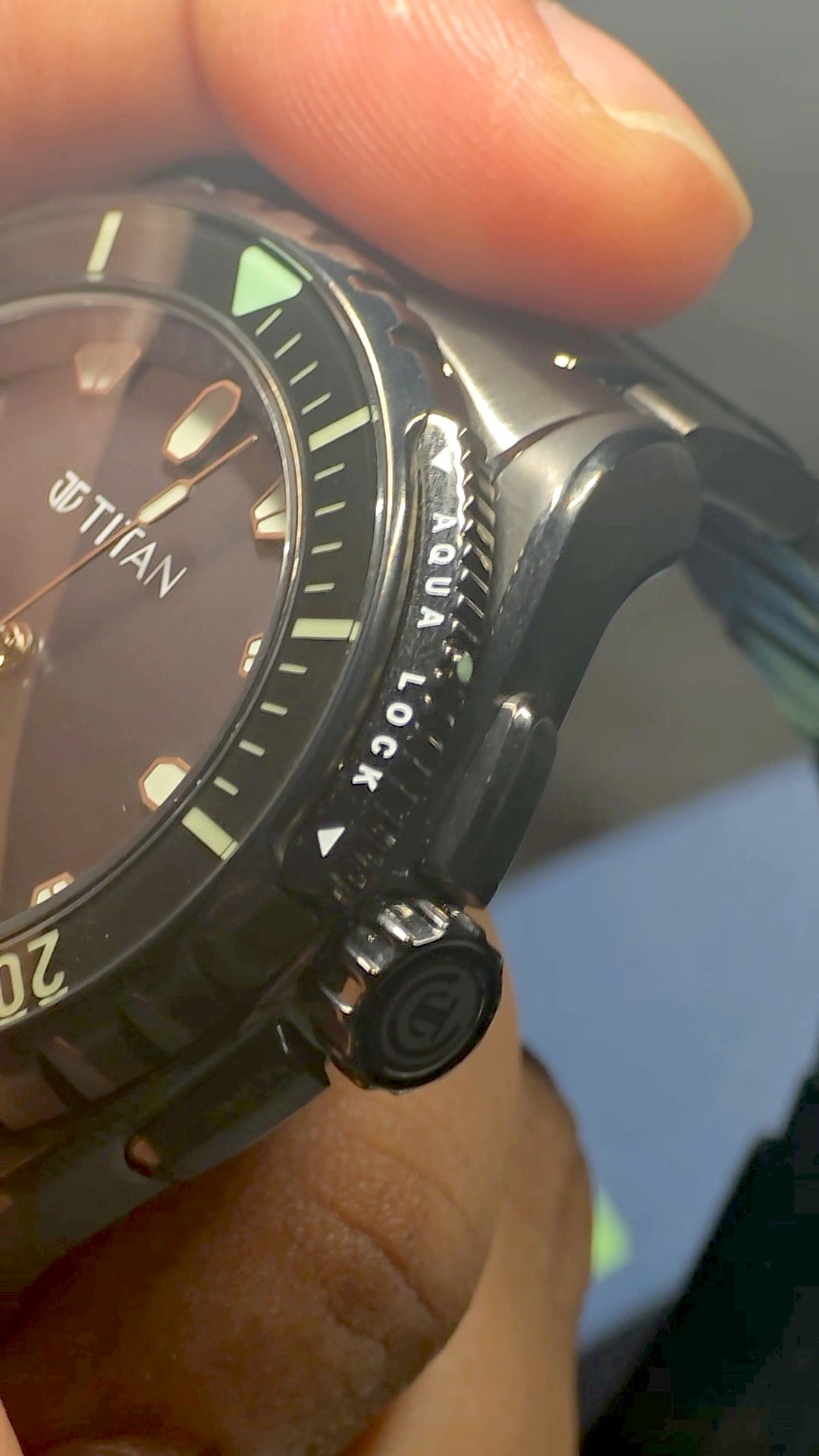
Getting there, however, was far from straightforward. Chauhan describes a process that saw the team explore “seven or eight really unique concepts” for the bezel lock, most of which didn’t survive once they moved into 3D modelling. “These are very new spaces,” he says, referring to the kind of micro-engineering involved. The breakthrough came from an unlikely place. A photographer on the team, used to working with camera lenses, pointed out how a lens cap is removed—press, rotate, release. “I have this lens… when I want to remove the cover, I need to push both the buttons and then rotate it,” Chauhan recalls. That interaction became the starting point. Translating it into a watch component meant reworking it at a much smaller scale, but the core idea held. The result is a press-and-rotate system that feels deliberate in use and reduces the chance of accidental movement, one the team eventually felt confident enough to file a patent for. In practice, it feels precise and satisfyingly mechanical in the way it asks to be used—an interaction that stands out in a category where most things tend to blur into one another.
Even the features that feel familiar on paper come from that same mindset. The inclusion of a helium escape valve, for instance, wasn’t about ticking a box as much as it was about establishing intent. “The helium valve as a spec…it is an emotive spec rather than a functional spec,” Chauhan explains, almost undercutting the feature as he explains it. The original use case for saturation diving is well understood, but he’s clear that very few people buying this watch will ever come close to it. “I don’t think people would really wear these watches and go for a professional saturation dive,” he concurs. The point, instead, is that the watch is built to that level. That it carries the same cues, the same signals, as the category it is trying to enter.
What Titan has built here isn’t just a dive watch in the traditional sense. It’s a reflection of what the category has become—part engineering exercise, part emotional object, shaped as much by perception as it is by performance. The specs matter, but so does the feeling they create. That tension runs through the entire collection, from the 100 metre pieces built for the idea of diving, to the 500 metre flagship that anchors it all. Somewhere in between sits the real appeal: a watch that may never see the depths it’s built for, but still manages to carry a bit of that world onto the wrist. For Titan, that’s a new space. And for Indian watchmaking, it’s one that has been a long time coming.


