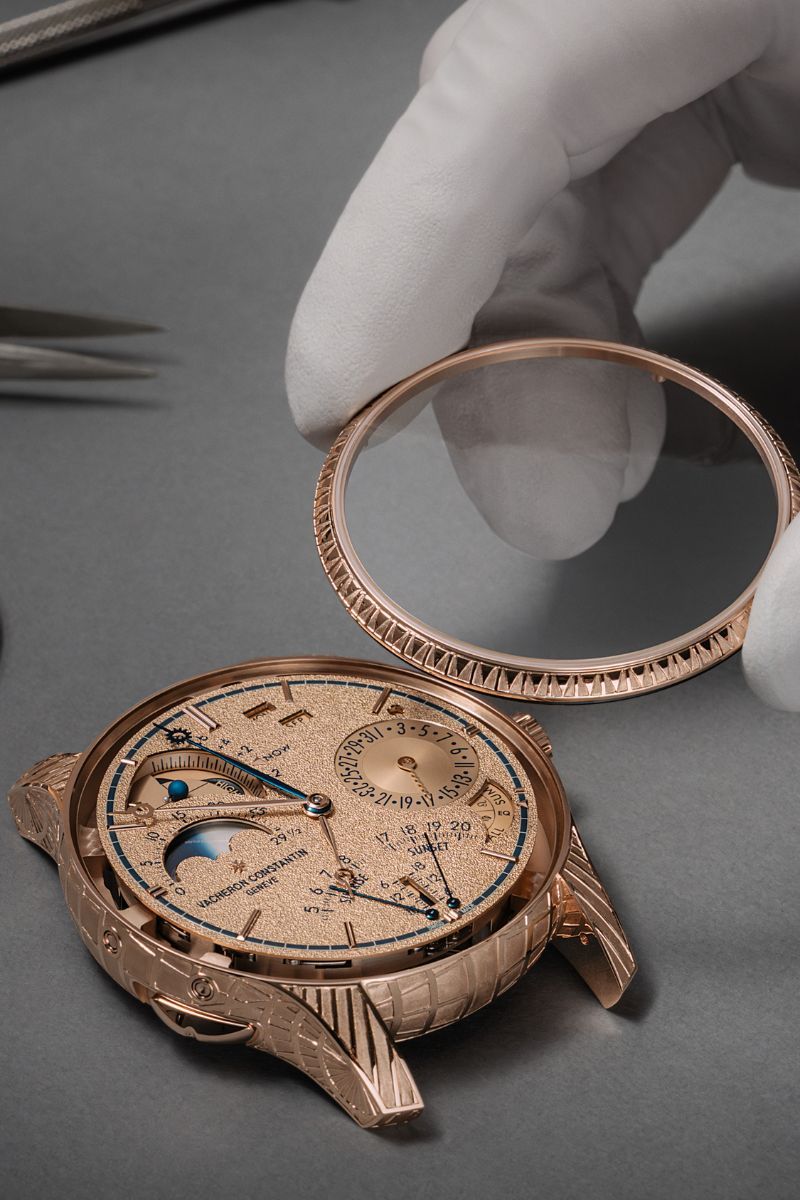
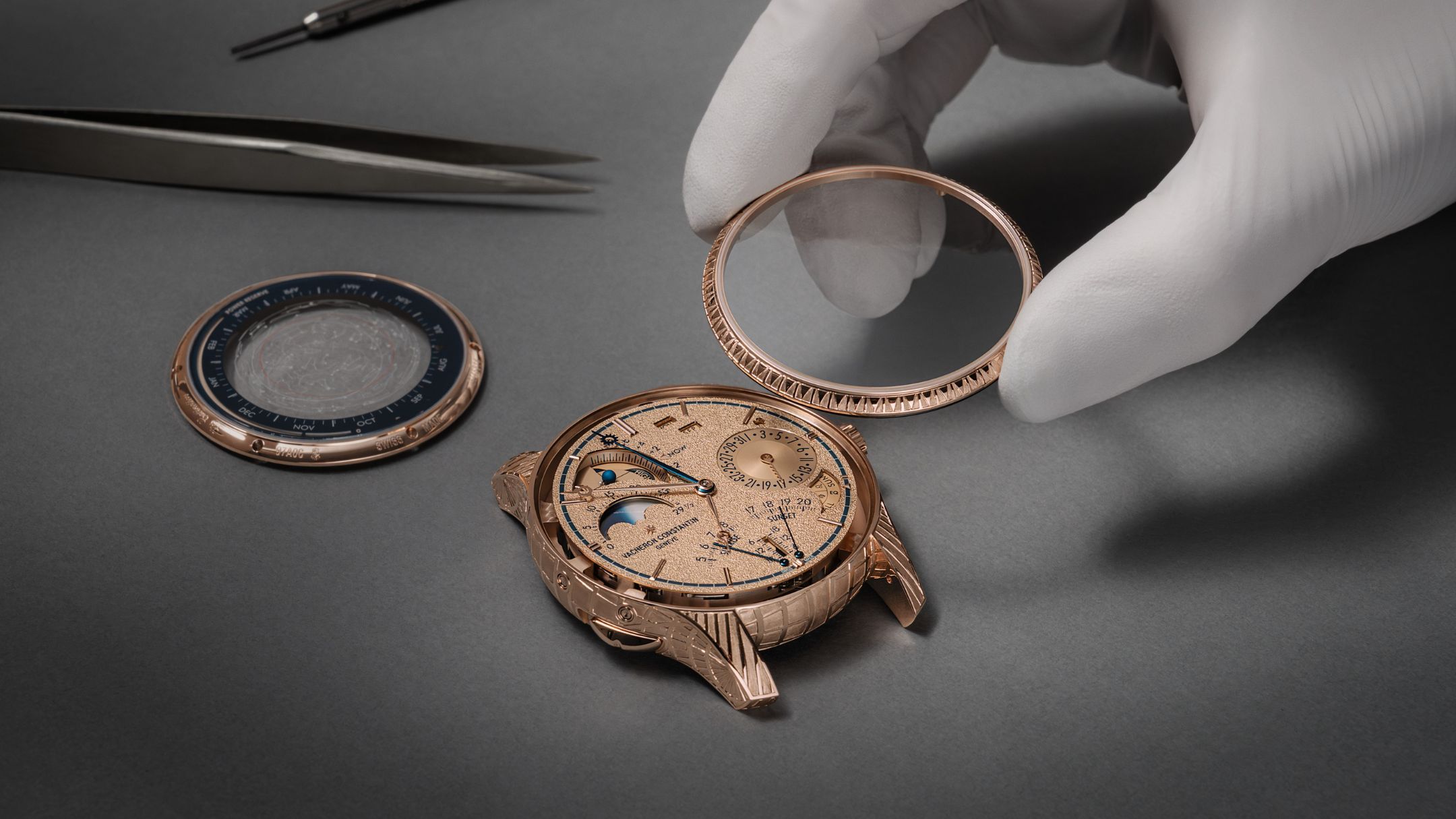
To celebrate its 270th anniversary—one of the most launch-packed years in Vacheron's already-titanic history—the iconic Geneva maison has revived one of its most extraordinary creations, the Les Cabinotiers Celestia Astronomical Grand Complication. This year’s edition arrives in two single-piece watches, Homage to Ptolemy and Homage to Copernicus. Each represents a different view of the universe, rendered through hand-engraved planetary orbits and a movement that’s more like an observatory than a calibre.
A Universe in Motion

The Celestia has always been less about telling time and more about understanding it. These 2025 editions retain that philosophy. Both are double-sided, showing three types of time: civil, solar and sidereal. They use the manual-winding Calibre 3600, a movement made in-house and certified by the Geneva Seal. It has 514 components, six barrels for a three-week power reserve, and a thickness of just 8.7 millimetres.

The front dial displays a perpetual calendar, a moonphase accurate for 122 years, a tide indicator, sunrise and sunset times, and the changing lengths of day and night. The reverse is a rotating star chart that shows the constellations as they appear above the northern hemisphere. Everything moves in perfect synchronicity, reflecting the rhythms of both the planet and the stars.
Two Visions of the Cosmos
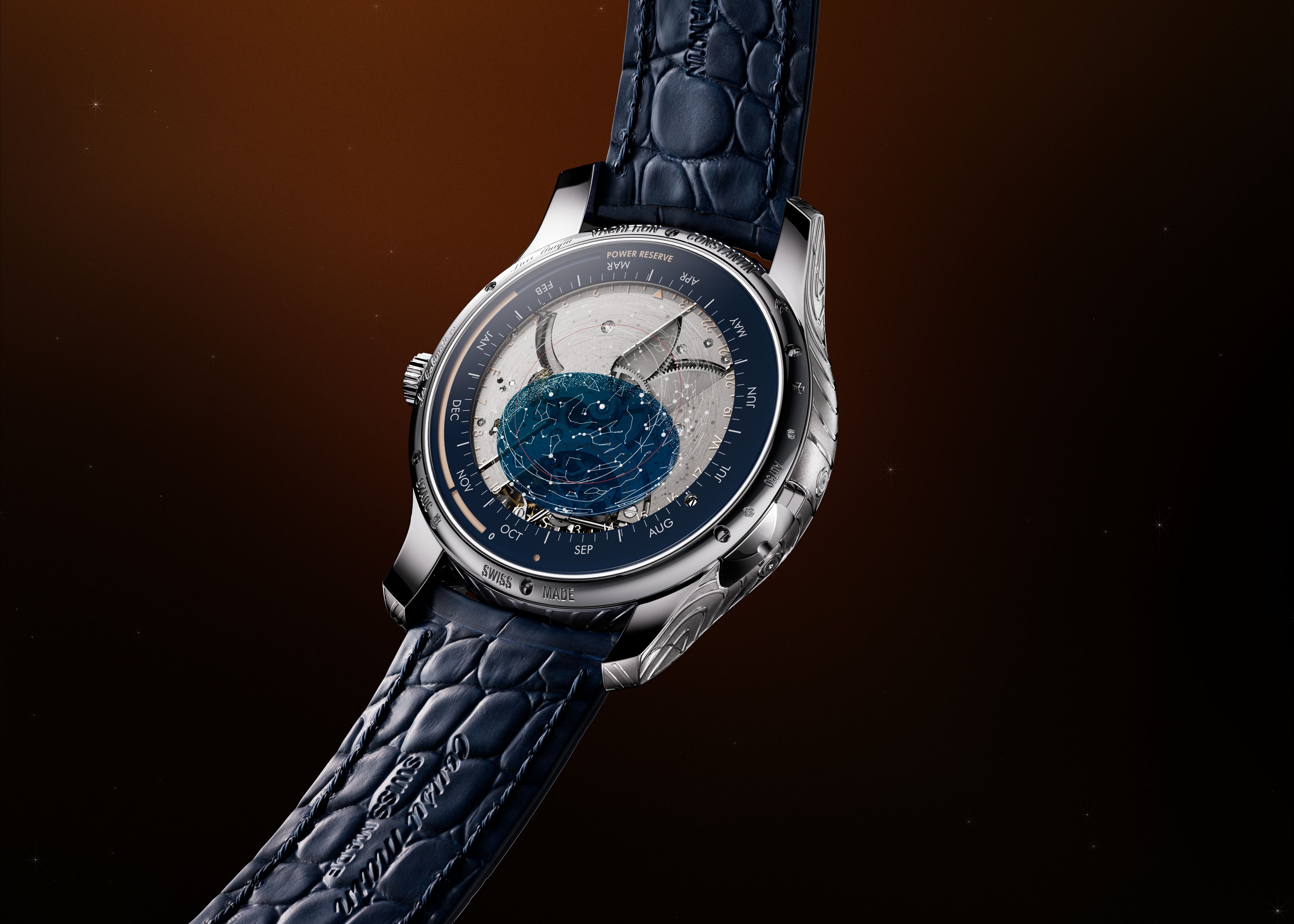
While the mechanics impress, the design is quietly poetic. The Homage to Ptolemy is crafted in white gold and represents a geocentric universe, where Earth sits at the centre. The Homage to Copernicus, in pink gold, honours the heliocentric model with the Sun radiating outward from the crown. Both use the champlevé engraving technique, which involves hollowing out the metal by hand to create intricate reliefs. Each case took 240 hours to complete, the result being less an engraving than a sculpted galaxy.
Christian Selmoni, Director of Style and Patrimony at Vacheron Constantin, explained the thinking behind it. “The aim was to create a wristwatch that brought together all of the Maison’s expertise in astronomical functions, not only in terms of complications but also miniaturisation. The Celestia, with its 23 complications integrated into an 8.7mm calibre, set a new milestone in our story with astronomy." He also spoke about the role of craftsmanship: “The artistic crafts are as essential as the technical challenges. These engravings give each watch a historical and philosophical dimension, showing how humans have always tried to understand their place in the cosmos.”
These two Celestia editions form part of La Quête, a special 270th-anniversary collection that explores the idea of human and technical discovery. Other highlights from the year include the Traditionnelle Tourbillon and the Les Cabinotiers Armillary Regulator, each a reminder that innovation and heritage still share a common language at Vacheron Constantin. Both Celestia pieces are unique commissions, priced on request but expected to exceed CHF 1 million. They are less watches than statements of intent — a demonstration of what happens when centuries of precision meet pure imagination. As François Constantin once wrote, “Do better if possible, and that is always possible.” Two hundred and seventy years later, that idea still shines as brightly as the stars these watches follow.


