Just In Time has been on a steady expansion run for a while now, but the past year feels more deliberate than aggressive. Founded in Mumbai in 2006, the retailer has grown into one of India’s largest organised watch networks, with over 80 stores across 18-plus cities and a portfolio that spans everything from entry-level fashion watches to Swiss mainstays. That scale, however, isn’t the most interesting part of the story anymore. What stands out is how the brand is choosing to show up in newer markets, especially in the north, where awareness is still catching up with presence.
Delhi offers a clear view of that shift. Over the past couple of years, the city has seen watch retail move towards larger, more considered formats, with stores that encourage browsing and comparison rather than quick transactions. Single-brand boutiques have grown, but multi-brand retailers are also rethinking their spaces, leaning into curation and time spent in-store. The customer, in turn, has changed alongside it. There is more curiosity, more willingness to engage, and a growing expectation that the retail environment should reflect that shift.
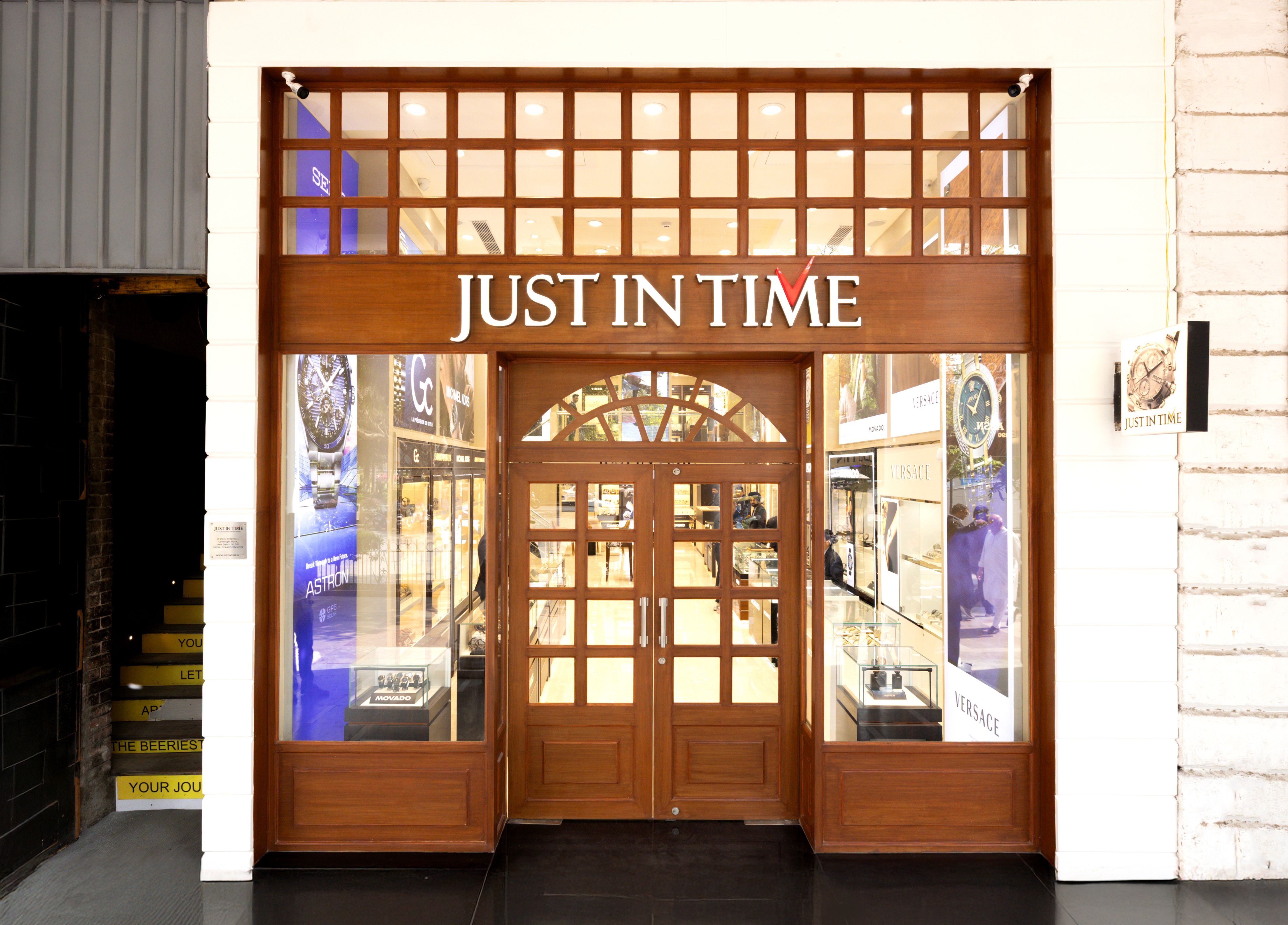
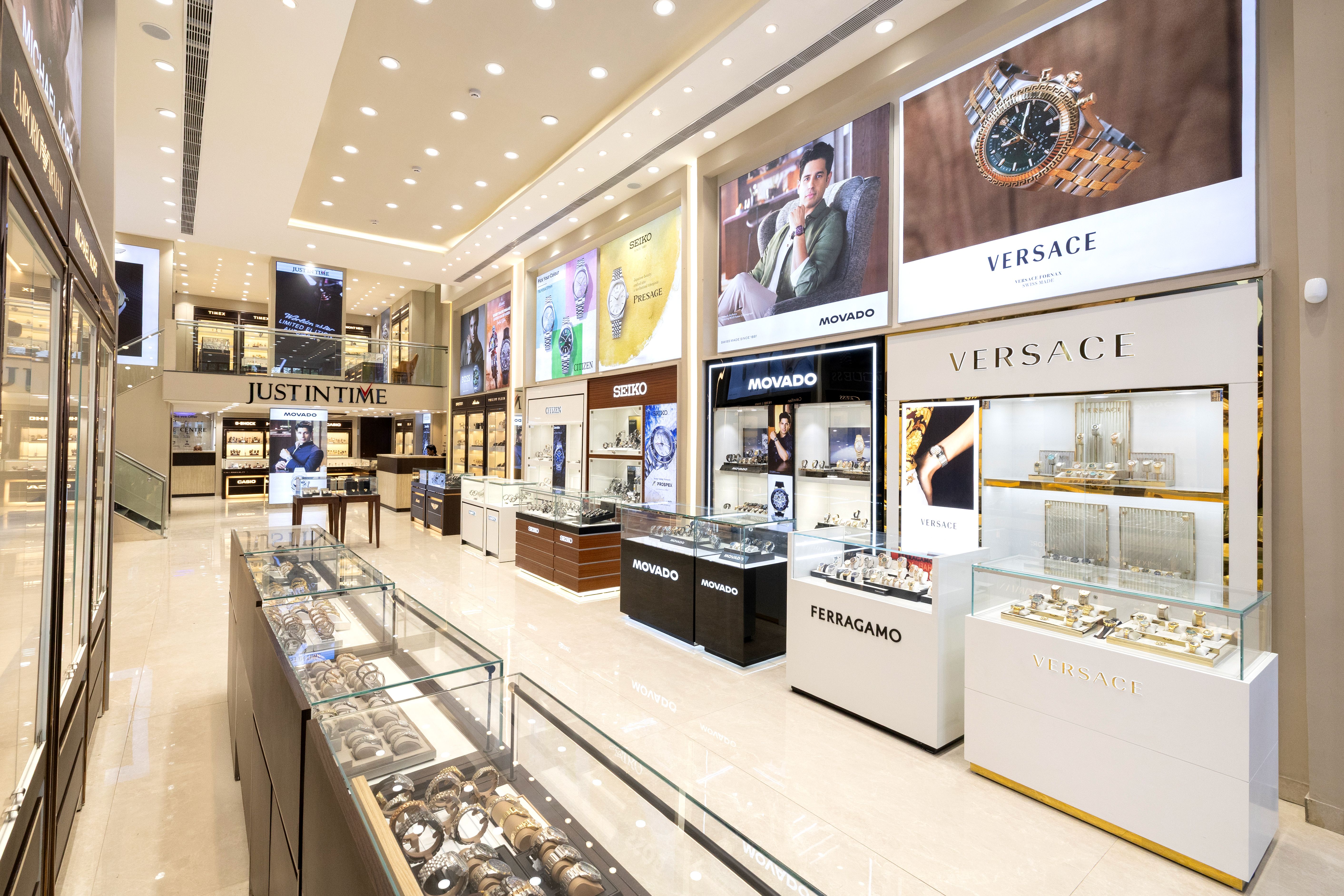
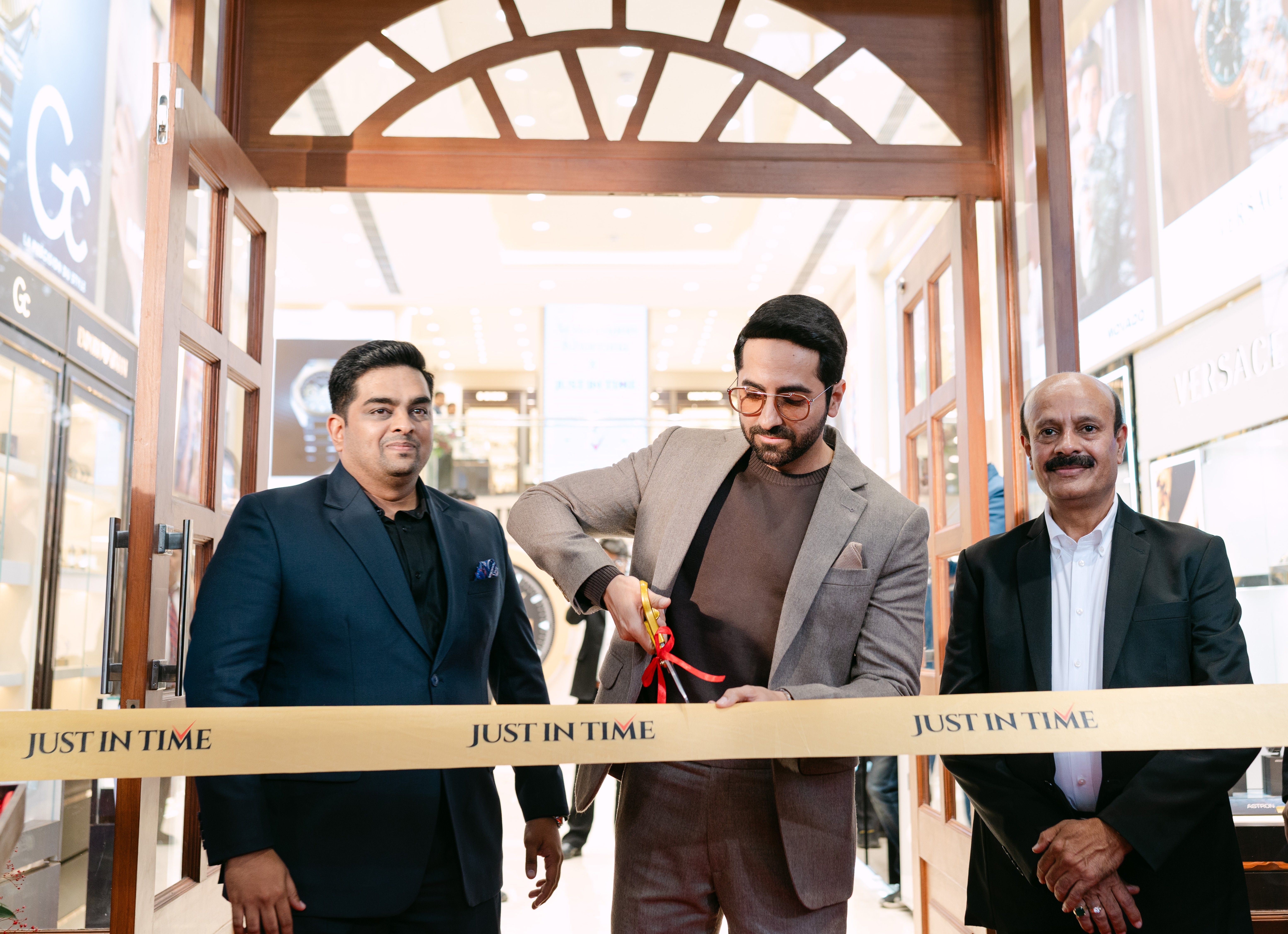
Just In Time’s new Connaught Place flagship fits neatly into this moment. Spread across two floors and over 3,000 square feet, it is one of the brand’s largest formats to date, designed to function as much as a place to explore as it is to buy. The choice of location feels deliberate. Connaught Place carries a certain weight for any retailer entering Delhi, and for a brand still building recall in the region, it signals intent. As CEO Ronak Shah puts it, the plan was always to enter Delhi through CP, even if it meant waiting nearly two years to find the right space without compromising on scale or positioning.
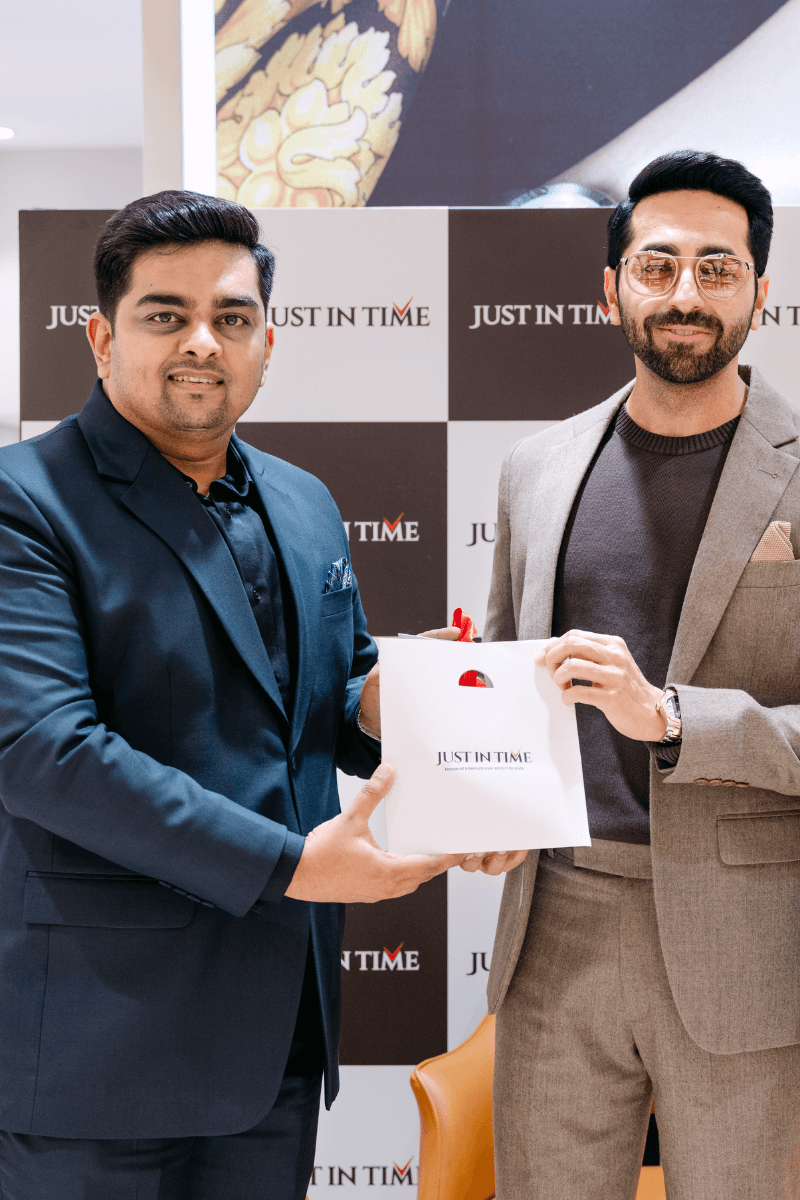
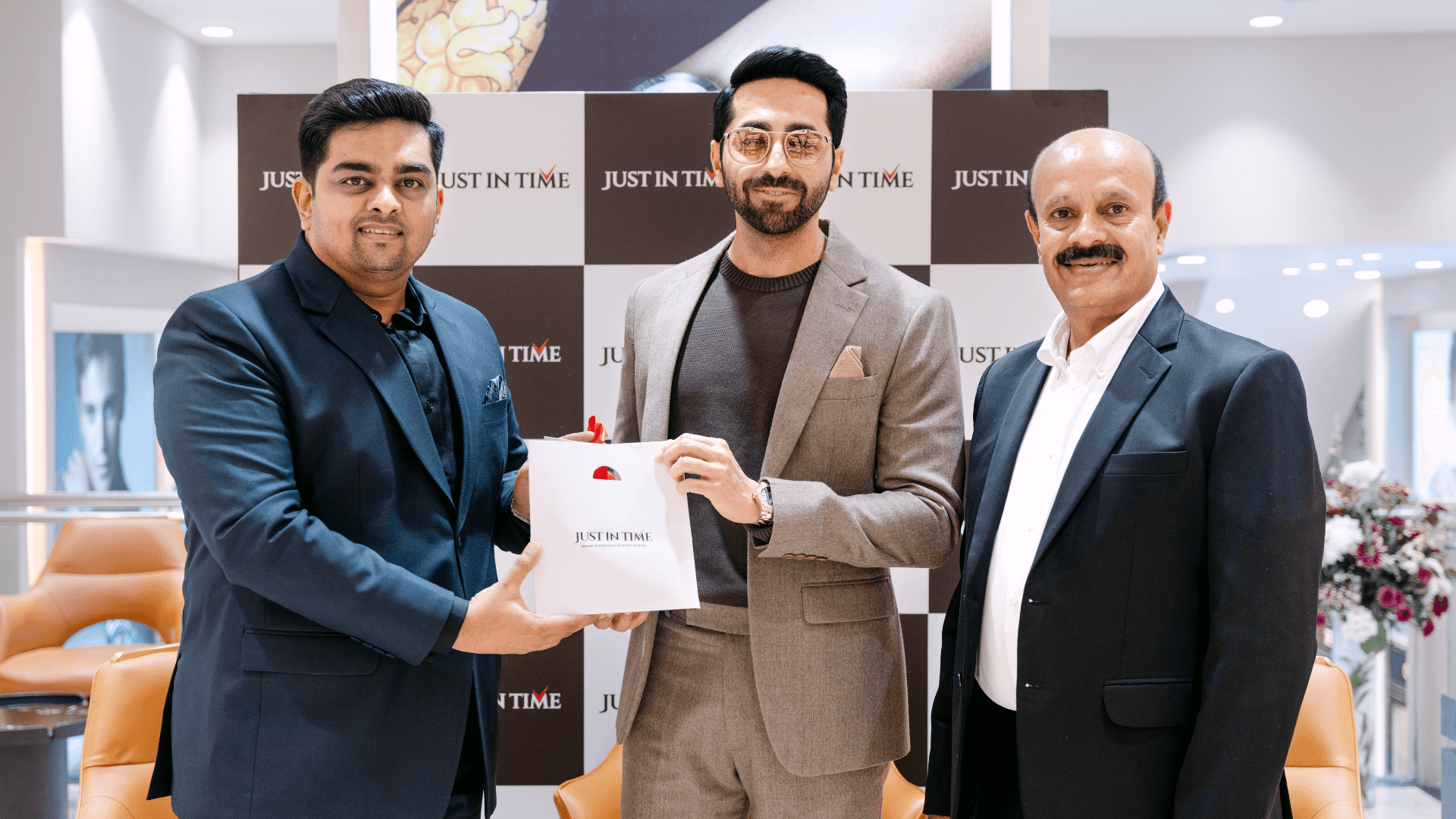
The launch, however, wasn’t built around the store alone. Alongside the flagship, the brand brought on Ayushmann Khurrana for the opening, a move that stands out in a category where multi-brand retailers rarely lean on celebrity faces. The decision feels less like an endorsement and more like a way to build familiarity in markets where the brand is still finding its footing. Shah points out that the collaboration came together quickly because Khurrana had already interacted with the brand as a customer, which adds a layer of credibility that most partnerships have to manufacture.
That underlying shift in the customer is something Shah returns to often. The expectation was that Delhi would lean heavily on brand recognition, but the reality has been more nuanced. Buyers are increasingly aware of what goes into a watch, from movements to materials, and are willing to spend time understanding those details before making a purchase. This changes the role of a retailer in subtle but important ways. A multi-brand format is no longer just about offering variety, it becomes a way to guide decisions, introduce lesser-known brands, and create a space where discovery feels natural. It’s from that vantage point that the conversation with Shah unfolds. Excerpts:
You’ve worked with Ayushmann Khurrana on this launch. How did that collaboration come together?
The conversation was quite natural. He had shopped with us before and had even come to Just In Time for service, so he already knew the brand as a customer. That made the discussion much easier. He also has a strong sense of choice in the kind of work he does, so the alignment felt right. As we were expanding into Delhi and the north, where we were still building awareness, it made sense to collaborate with someone who already had that familiarity with us.
Connaught Place is one of the most recognisable retail hubs in the country. Why was this the right moment to open here?
For Delhi, Connaught Place is always a key destination for any retail company. For us, it was always a wish that whenever we entered Delhi, we would open a store there. The challenge was finding the right location. It took us almost two years because we didn’t want to compromise on the exact block or the size of the store. In cities like Mumbai and Bangalore we are already well known, but in North India we are still building that presence, so getting this right was important. CP is definitely a milestone for us.
How does this flagship differ in terms of scale and experience?
At Connaught Place, we try to showcase a large part of what we offer, not everything but close to 80 percent of our brand mix. Across Just In Time today, we have over 10,000 unique styles across about 85 stores. Here, the idea was to hand-curate the right models for Delhi, focusing on what we felt was missing in the market. Delhi has always been aspirational when it comes to consumption and has shown strong interest in watches, but we felt that the availability was limited to the most well-known brands. There are many interesting brands globally, including microbrands and strong players from Japan and the US, that are ready for India but don’t have the right platform here. That is the gap we are trying to address.
Do you see a difference between watch buyers in Mumbai and Delhi?
We have been quite surprised by Delhi. The customer profile here is more aware about watches as a category. They understand what goes into a watch, the movement, the mechanics, and they are interested in learning more about the product. Before entering Delhi, we assumed it would be more brand-driven, but that hasn’t been the case. Customers here are enthusiastic about the product itself and want to understand both the technology and the craftsmanship behind it. The questions they ask are very different, and that changes the sales conversation as well.
Post-pandemic, Delhi has seen a rise in single-brand boutiques. As a multi-brand retailer, what have you taken away from that shift?
We have always believed that watches are a category where customers come with a certain idea of what they want, but there is still a degree of solution-based selling involved. It is not just about price, but also about what is available in that budget, what movement they are looking for, or what kind of technology they prefer.
That is where a multi-brand format becomes relevant. There are brands that are very large and well known, and for those, standalone boutiques make sense. But when it comes to microbrands, entry-level premium, or aspirational luxury, there are many options globally that are still not widely available in India. India has only seen around 30 to 50 brands being widely accepted so far, but globally there are hundreds more. Our role is to become a destination where customers can discover these brands and learn about new timepieces that are being created every day.
Would you say these emerging segments are the fastest growing in India right now?
Yes, because India is moving out of the mass segment and into bridge-to-premium and bridge-to-luxury categories. Luxury is growing as well, but a large part of the market sits in these transition segments. That is where we are focused, because that is where the next wave of growth is coming from.
When a new brand wants to enter India through you, what does that conversation look like?
Most of these brands are looking for a partner who can help them build the brand properly in India. It is not just about selling the product, but also about how it is positioned, which brands it is placed next to, and how the staff is trained to explain it. The experience is very important in this category. It is not just about promotion or pricing, but about how you communicate the value of the watch to the customer. That is where we have built trust over time.
[Allocation] depends on the nature of the brand. Some brands are more niche and are only placed in a limited number of stores where the customer profile matches. Others are more widely accepted and can be introduced across a larger number of locations. We look at the uniqueness of the brand, the target customer, and the kind of response we expect. It is always a mix of curation and scale.
What’s next for Just In Time?
We will continue to expand our footprint across India and strengthen our position as a destination for watch retail. We are also working closely with Ayushmann Khurrana on upcoming collaborations, which we are quite excited about. At the same time, we are seeing strong growth not just in metro cities but also in tier-two markets. In fact, in many cases, these cities are more enthusiastic about the category and are catching up quickly. It is interesting to see similar levels of engagement across different markets, and that is something we will continue to build on.


