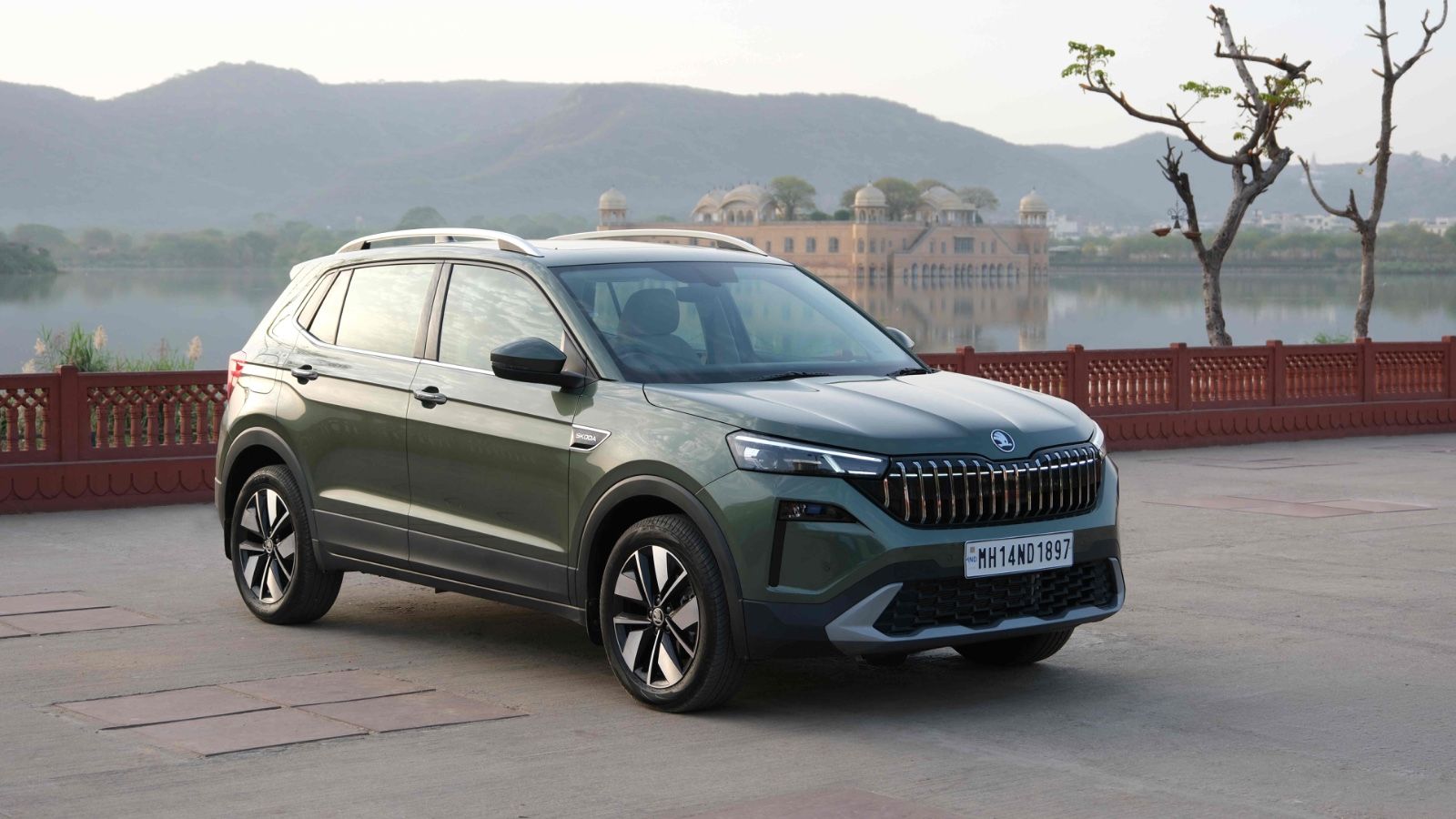
There's a stretch of road on the outskirts of Jaipur, near the highway exit toward Ajmer, where the tarmac gives up pretending. Craters, gravel patches, sections where you're driving on what is essentially compacted dirt with ambitions of being a road. I hit this stretch at about 60 km/h in the 2026 Skoda Kushaq facelift, the 1.0 TSI with the new 8-speed automatic, and braced for the kind of punishment that usually makes you question your career choices. The car thudded. It didn't crash. The suspension is still firm, still distinctly European in its refusal to wallow, but it absorbed the worst of it without rattling my fillings loose. The original Kushaq would have done roughly the same thing, if I'm honest. Skoda hasn't retuned the suspension for this facelift. But at 60km/h on broken ground, the car felt planted and composed, which is more than I can say for my co-driver's coffee.
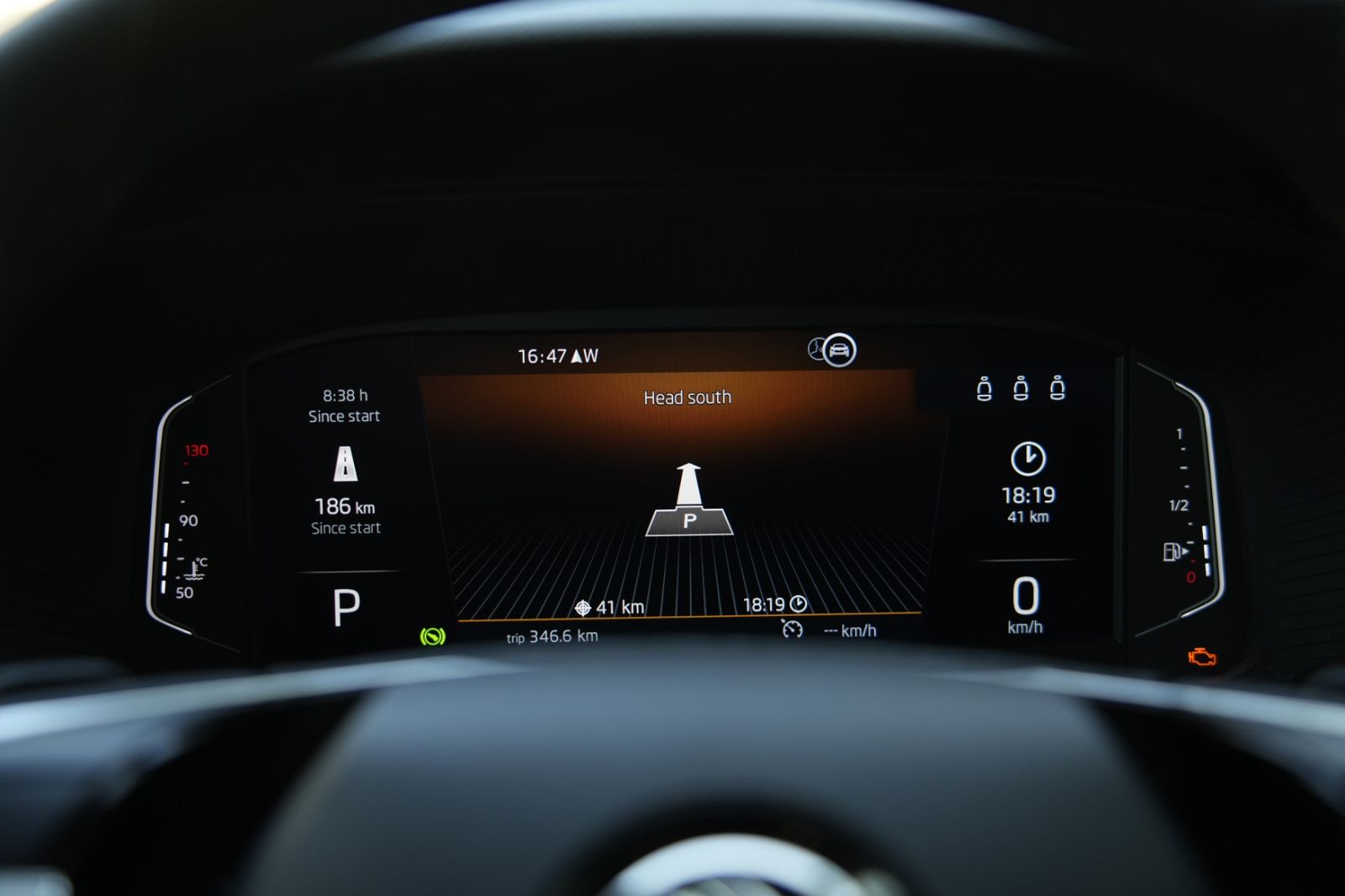
So what has changed? Quite a lot, actually, though you have to look in the right places. The headline is the gearbox. The old 6-speed torque converter automatic on the 1.0 TSI was always the Kushaq's weakest link, sluggish off the line, lurchy at standstill, and thirsty enough to make the fuel efficiency argument for a turbo-petrol feel hollow. Skoda has replaced it with an Aisin 8-speed unit, and the difference is immediate. The car feels quicker because it is according to multiple instrumented tests. But more importantly, it feels calmer. The shifts are smooth and well-timed in normal driving, the standstill creep is better controlled, and in manual mode the paddle shifts are surprisingly crisp, almost DSG-like in their response. ARAI claimed efficiency jumps from 15.78 to 19.09 km/l. On my test route, with a mix of highway cruising and broken-road crawling, the trip computer showed 11.7 km/l, which is a genuine improvement over the old car's real-world numbers.
And the 1.0 three-cylinder TSI itself remains the same 115 bhp, 178 Nm unit it always was, punchy enough in the mid-range, and surprisingly willing when you drop a couple of gears and commit. The ratios are all quite short, third gear tops out at about 102 km/h, and at highway speeds in eighth the engine sits around 2,000 rpm where you can hear the three-cylinder character start to assert itself. It's not unpleasant. It's present.
But the gearbox isn't the whole story. The cabin gets a 10.25-inch digital instrument cluster that replaces the old unit with its oversized bezels, and the difference in perceived quality is significant. It's crisp, configurable, and receives turn-by-turn navigation from your phone. The 10.1-inch infotainment runs updated software with a Google Gemini AI assistant, alongside wireless Apple CarPlay and Android Auto. There's a panoramic sunroof on the Prestige and Monte Carlo trims, ventilated front seats. Skoda has also added rear seat massage on the top trims. It's a single-mode vibration in the backrest that you'll demonstrate to your friends once for sure.
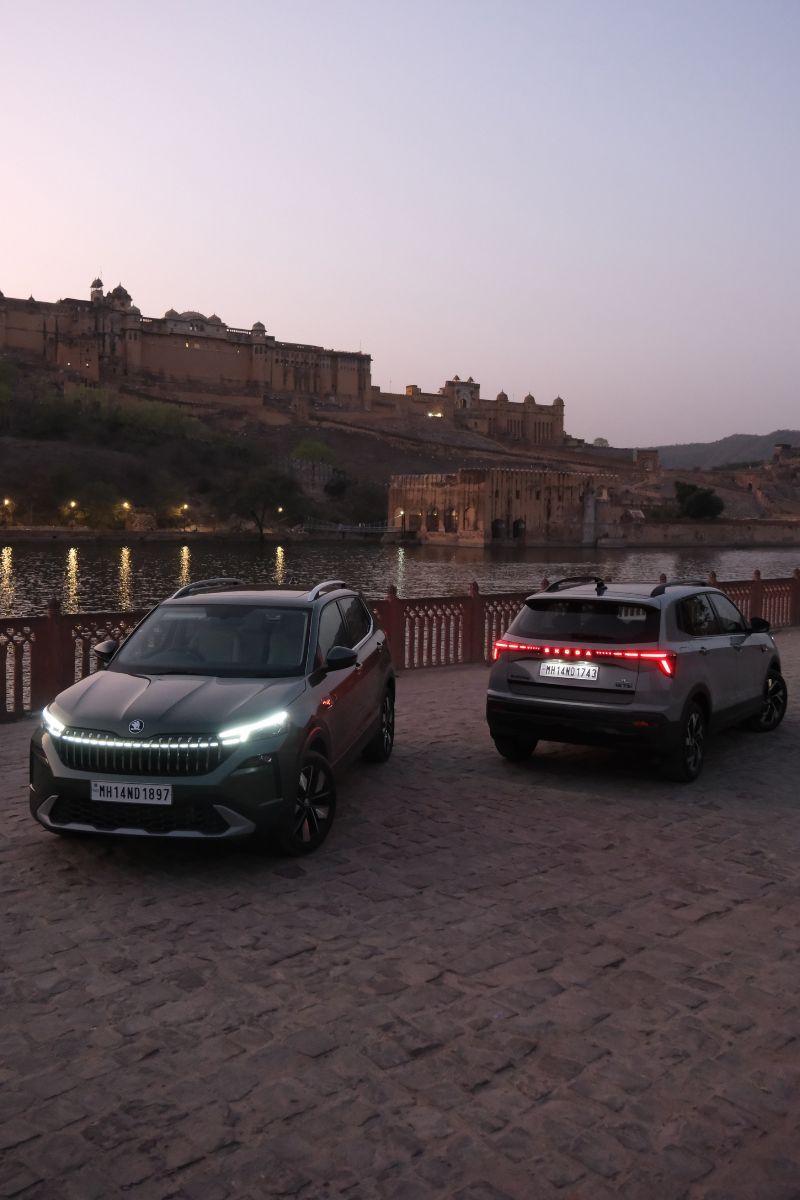
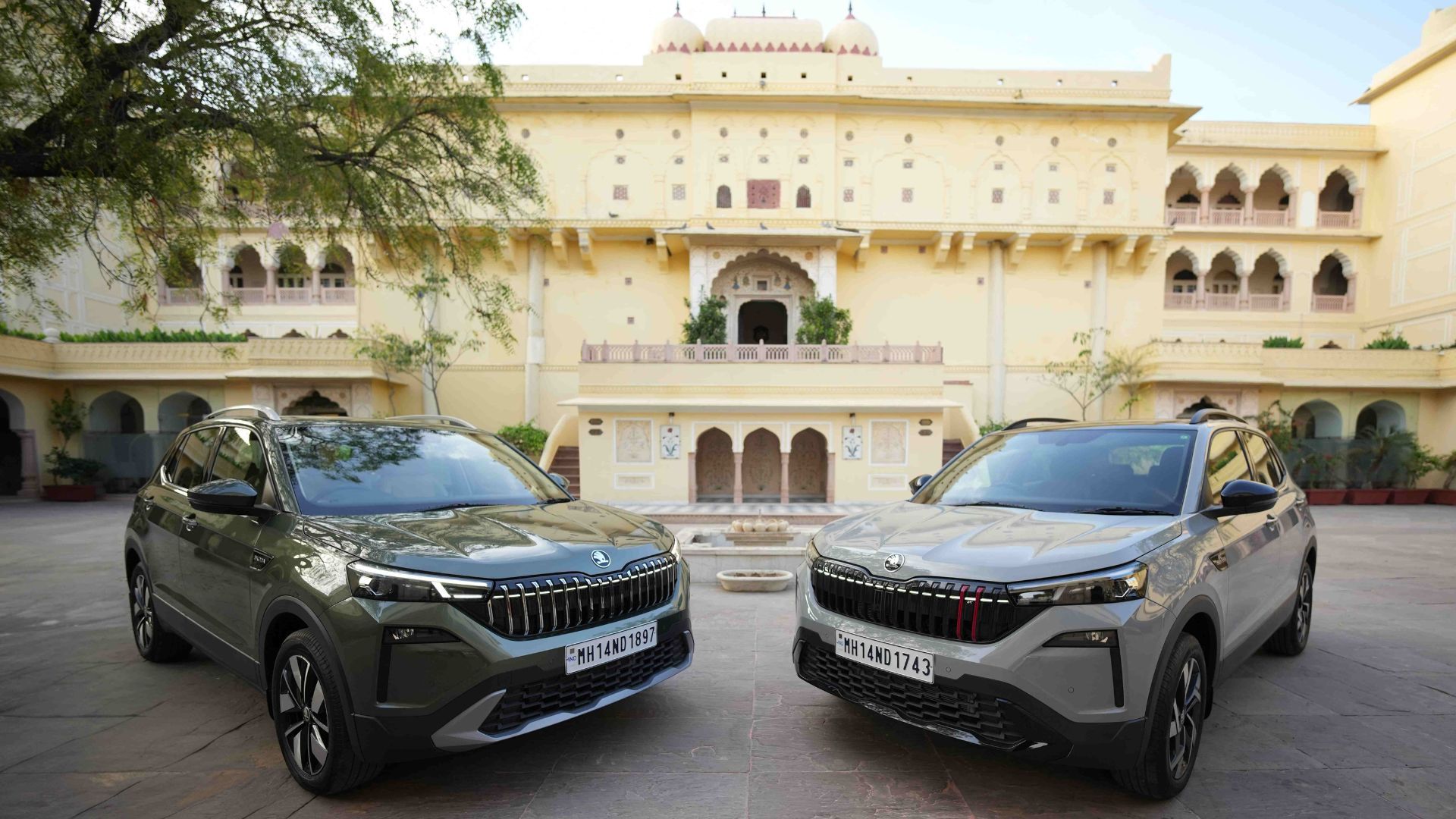
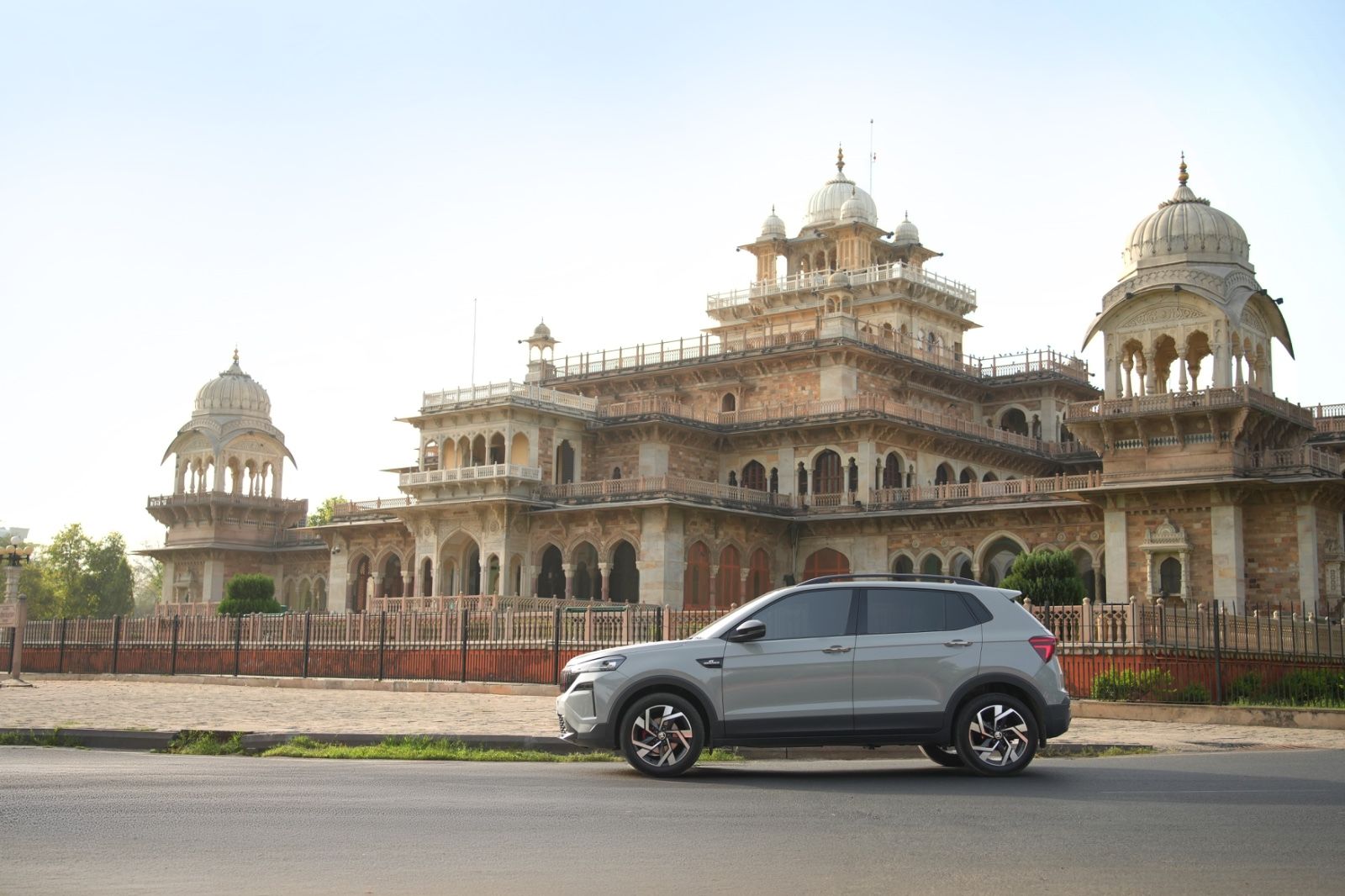
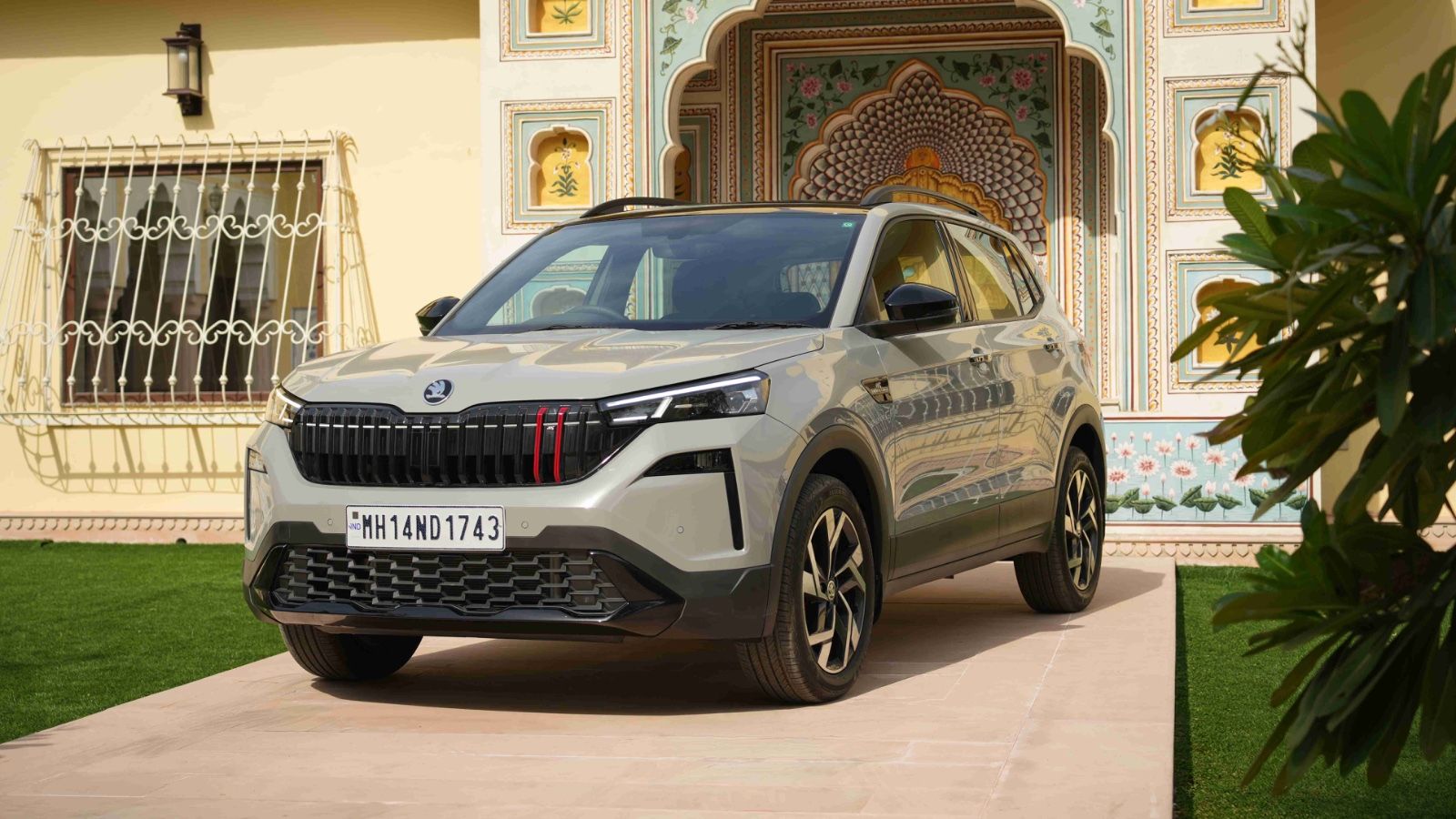
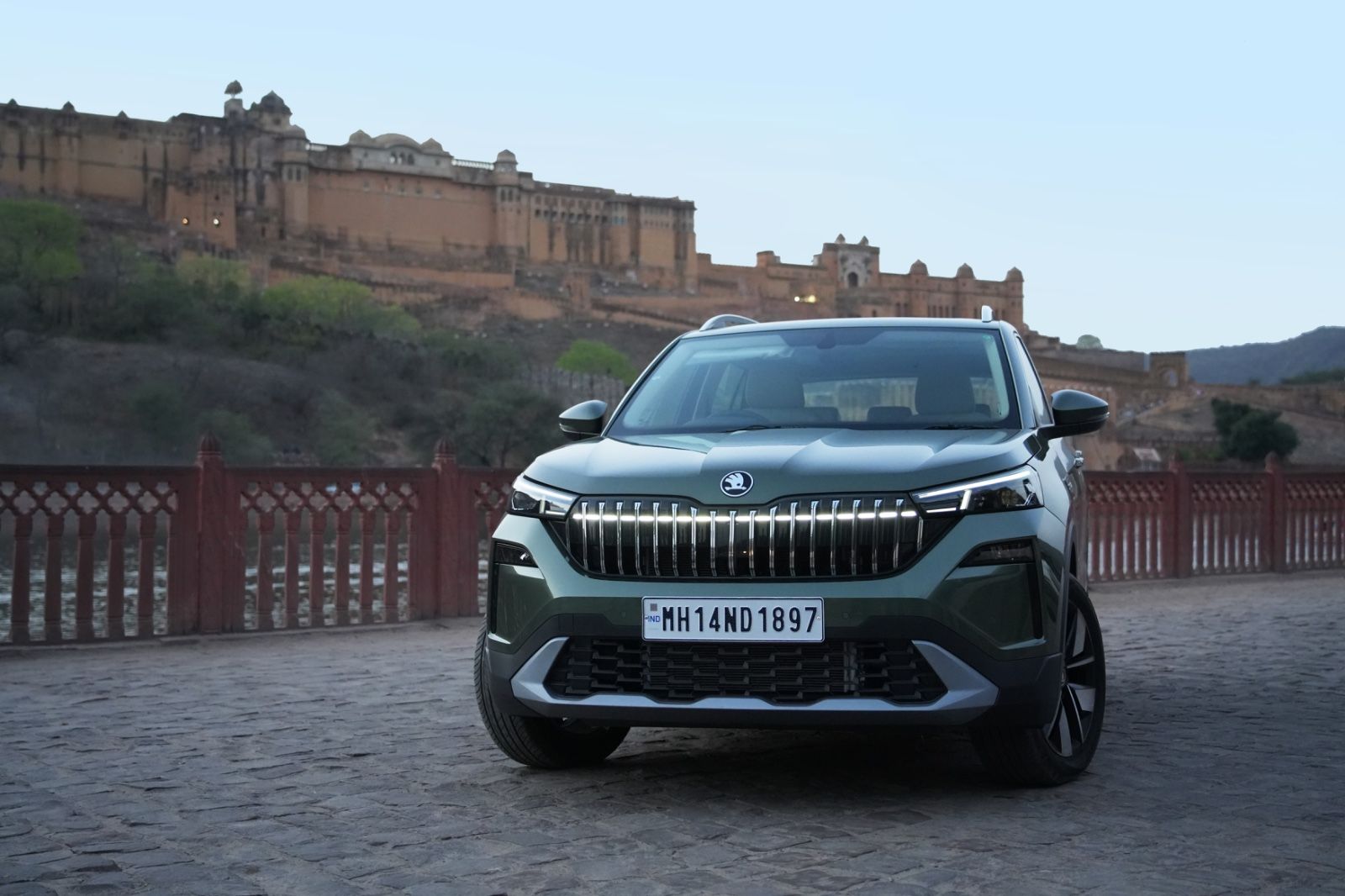
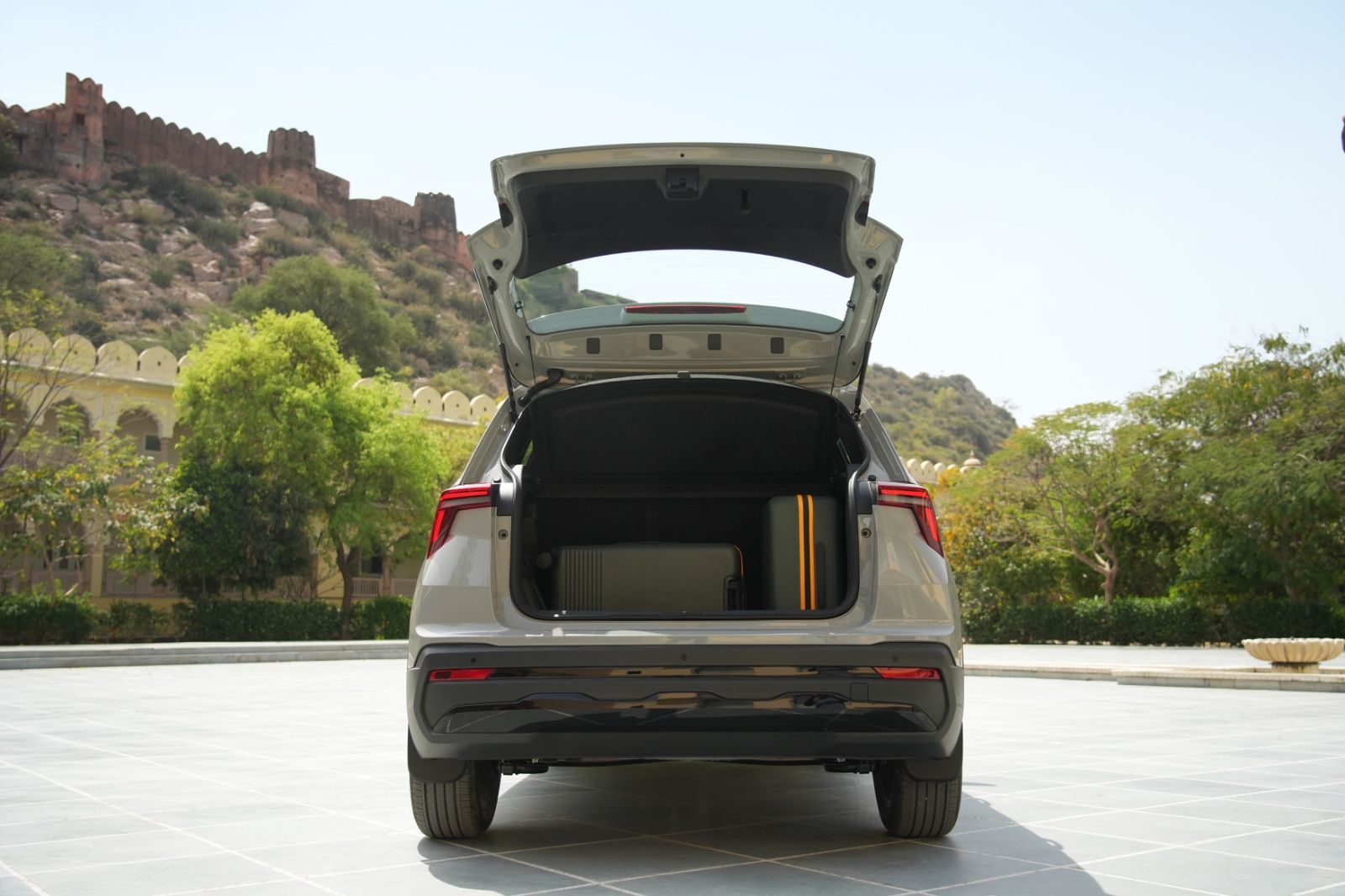
The exterior facelift lands well. A wider grille with vertical slats and a horizontal LED light strip connects segmented DRLs that borrow from the Kodiaq's design language. The rear is the bigger transformation, a full-width LED light bar with illuminated Skoda lettering and sequential indicators. The Monte Carlo variant, with gloss black accents and red brake calipers, looked genuinely sharp sitting in the Jaipur sun. From the side, though, the Kushaq's compact proportions still read smaller than a Creta or Seltos.
I drove the 1.5 TSI briefly, in city traffic on the way to the airport. The 150 bhp four-cylinder with the 7-speed DSG is still the engine-transmission combo to have. It's smoother, quieter, and has the kind of mid-range shove that makes the 1.0 feel like it's trying hard by comparison, which is obvious. The DSG shifts are snappier than the torque converter. The 1.5 now gets rear disc brakes across the board, replacing the old drums. My time with it was too short to form a complete opinion, but I'll say this: if you can stretch the budget to the 1.5 Prestige, you're buying a fundamentally different car. The only problem is Skoda has killed the manual option for this engine. DSG or nothing. Enthusiasts will grieve.
Now. The omissions. There is no ADAS. No lane-keep assist, no adaptive cruise, no autonomous emergency braking. There's no 360-degree camera on any variant. No electronic parking brake either. No driving modes. These are not really deal breakers for those who enjoy driving and are looking for an engaging machine. But in a 2026 market where the Tata Sierra, Kia Seltos, and Maruti Victoris all offer some form of driver assistance at similar prices, this is a conspicuous absence.
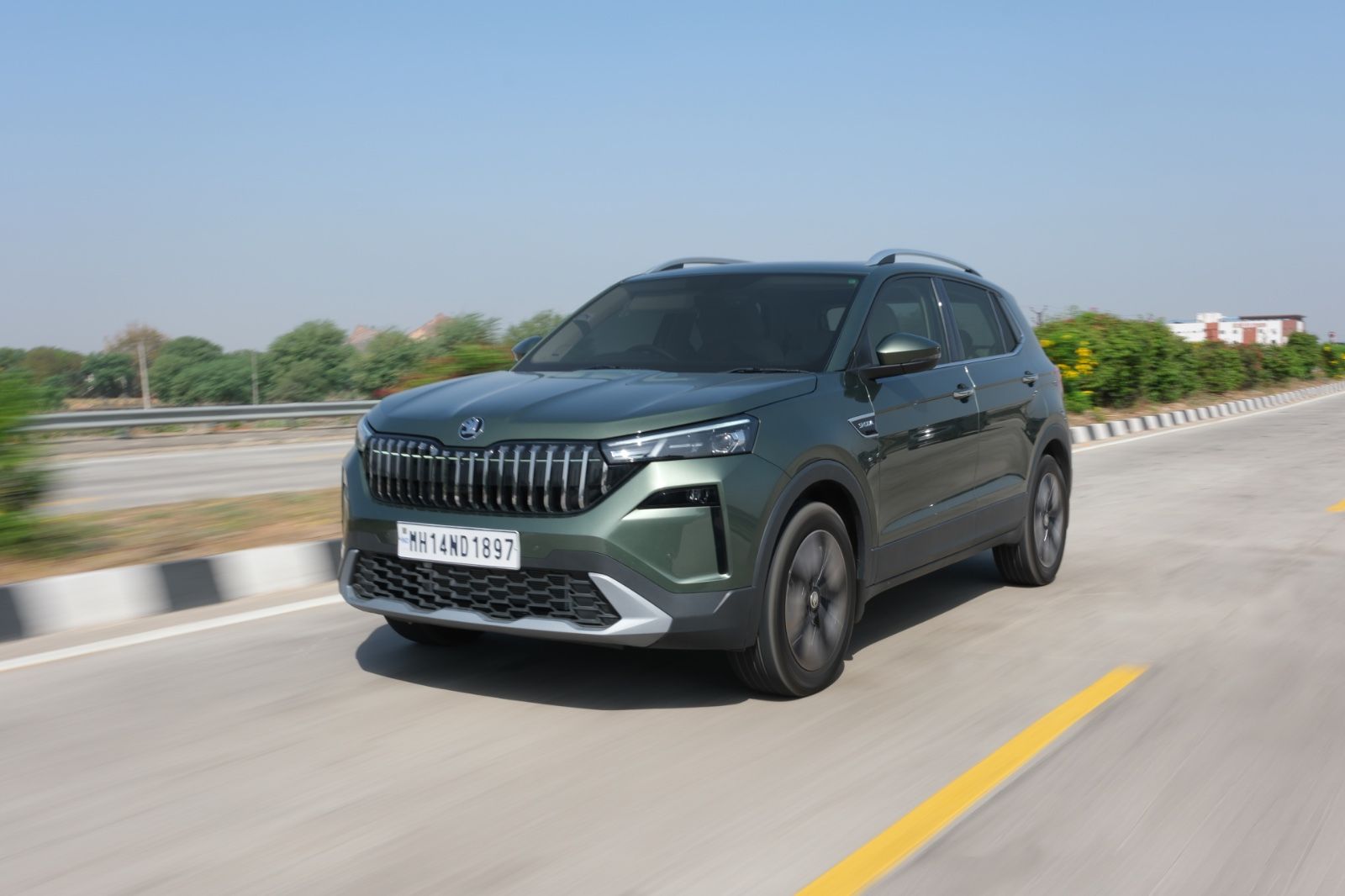
The Kushaq starts at Rs 10.69 lakh for the 1.0 manual Classic Plus and tops out at Rs 18.99 lakh for the 1.5 DSG Monte Carlo. That's competitive against the Creta and Seltos, and a good two lakhs cheaper than the Sierra at the top end. The base variant is unusually well equipped, with alloys, sunroof, auto climate control, LED lighting, and six airbags standard across the range. The five-star Global NCAP rating holds. And on the highway outside Jaipur, at 120 km/h, the Kushaq felt more settled and confident than anything else at this price.
Overall, the Kushaq facelift does enough to stay interesting. The 8-speed gearbox fixes the automatic's biggest problem. The digital cockpit and panoramic roof bring it closer to parity on the showroom floor. The driving experience remains the best in class for anyone who cares about how a car handles. That composure is real, and it's the reason Skoda loyalists keep coming back. It doesn't win new converts who are cross-shopping a Kushaq against a Sierra or new Seltos and are comparing feature sheets in a showroom, instead of handling dynamics.


