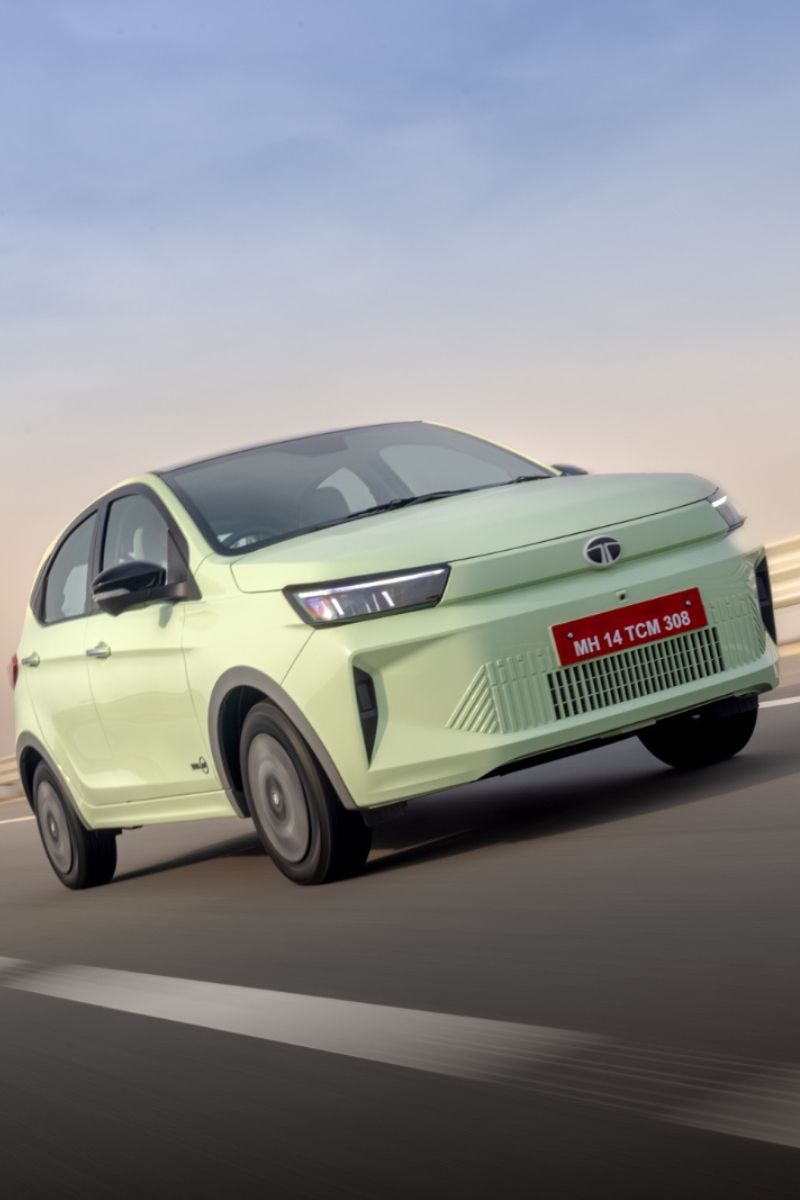
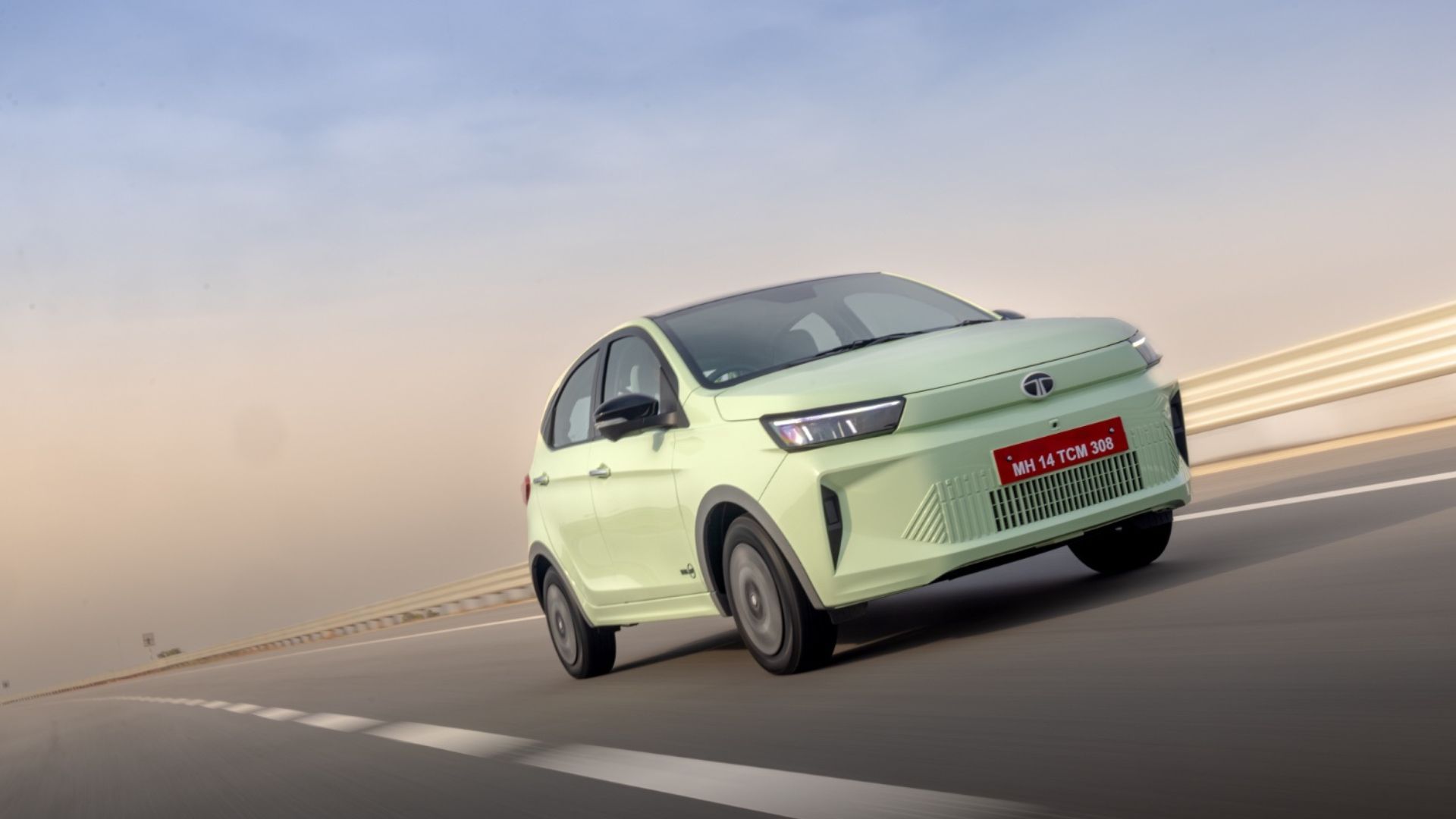
In Bengaluru, on a Tuesday morning, I turned the Tiago EV into a lane that had no business fitting a car. Two-wheelers parked on one side, a woman with groceries on the other, a dog with opinions about the whole situation. And the Tiago threaded through it with the casual ease of something that knows exactly where its corners are. That kind of confidence, in a car that starts at Rs 6.99 lakh, is not something you take for granted.
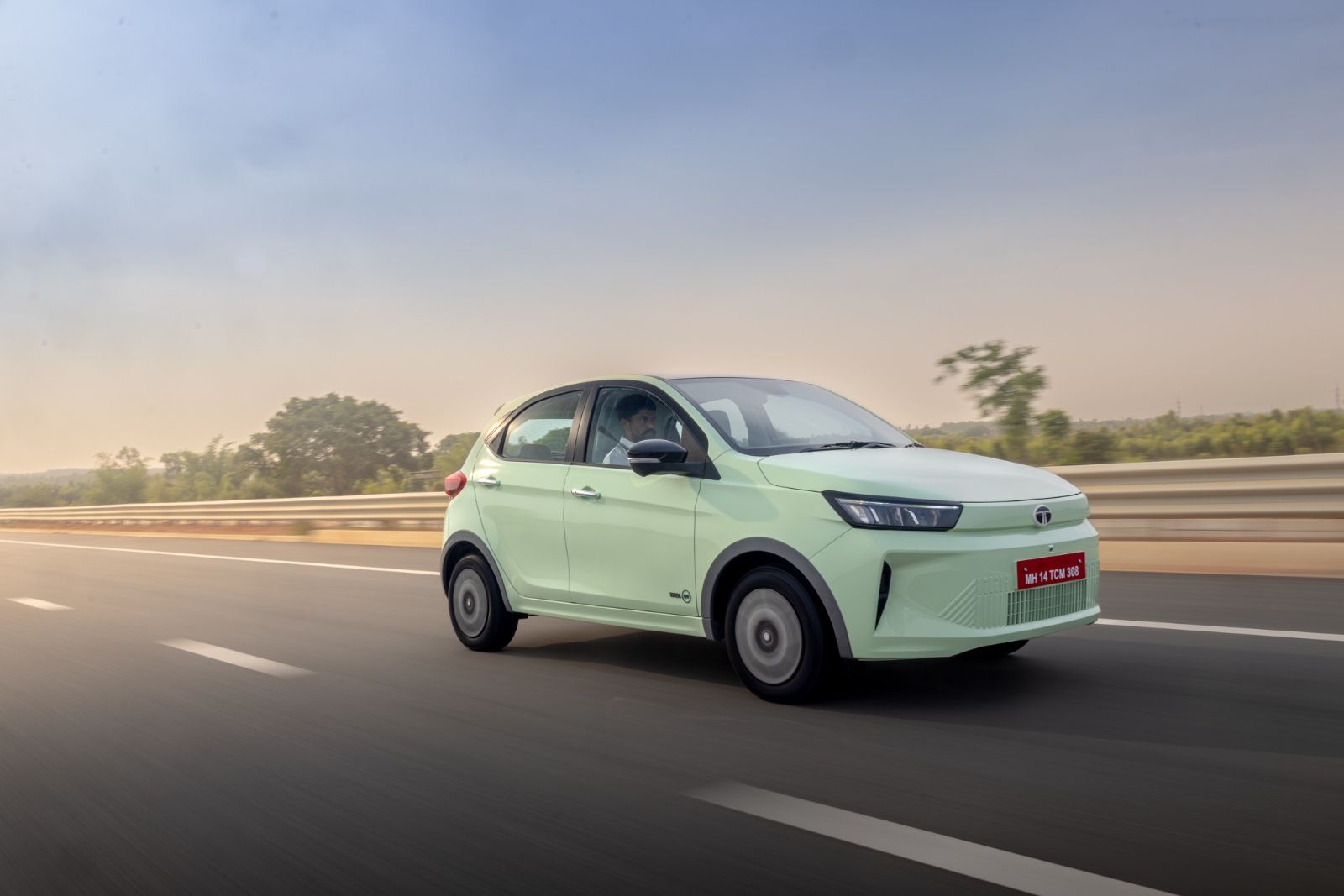
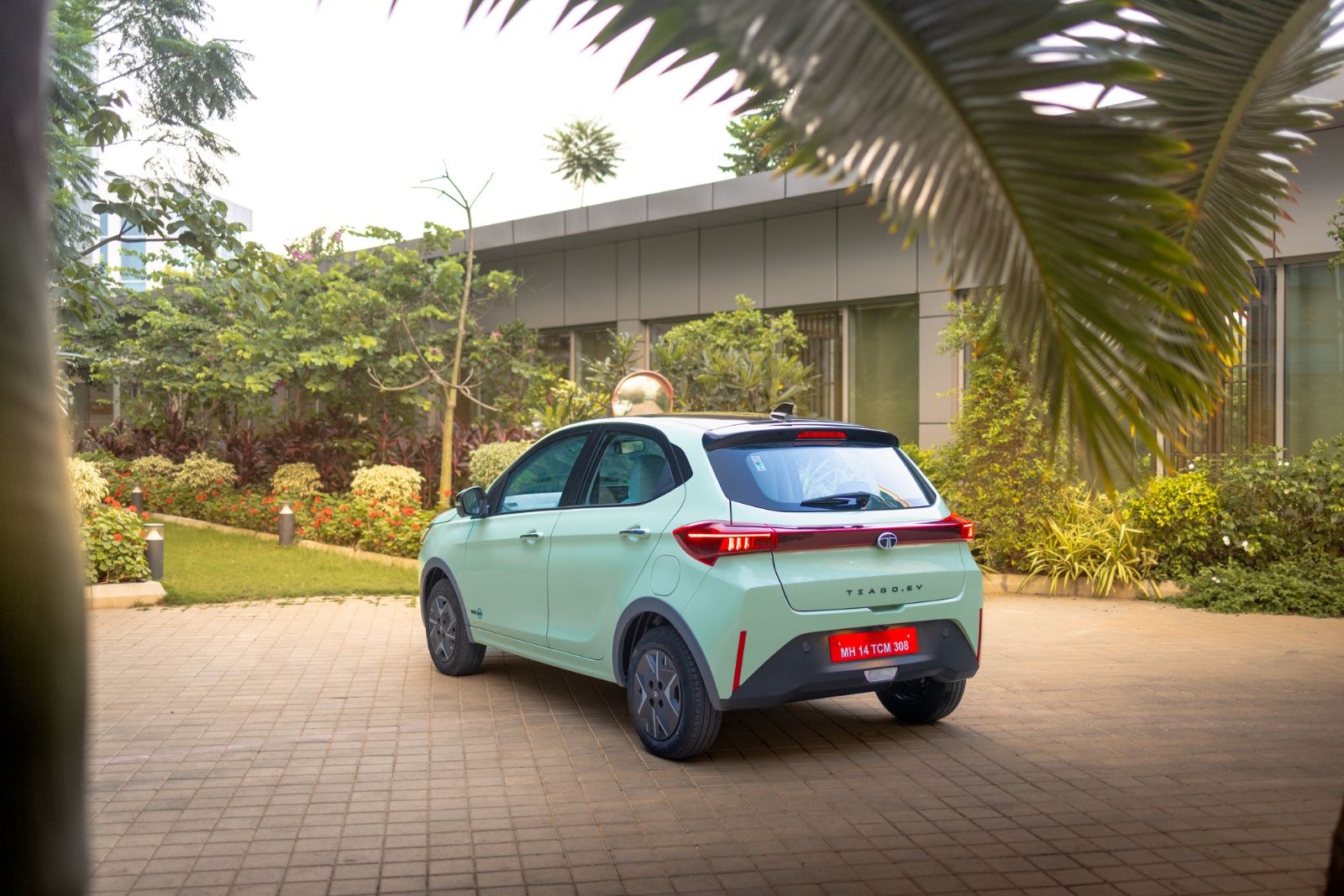
I should explain the colour first because it demands it. The Tiago EV I drove was finished in a bright green that stops people mid-stride. Three pedestrians turned to look as I pulled up to a signal. A biker craned his neck at the next crossing. Two people at a petrol pump, waiting for their own cars, walked over uninvited to peerinside. The Tiago has never been a car that draws this kind of attention. This version does, and the colour is doing about 40 per cent of that work. But the other 60 per cent is the car itself.
Because the 2026 Tiago's interior does not feel like a car that costs what it costs. The materials are soft where they should be. The screen is responsive. Ambient lighting. A 360-degree camera and blind-spot monitoring, features you'd expect at twice the price, and that many cars at twice the price still don't offer as standard. Tata has pushed genuinely hard here, and the result is a cabin that doesn't ask you to make peace with the price. If this is someone's first car (and for a lot of buyers, it will be) their first impression of what a modern interior feels like is going to be calibrated upward. That creates problems for competitors at this level.
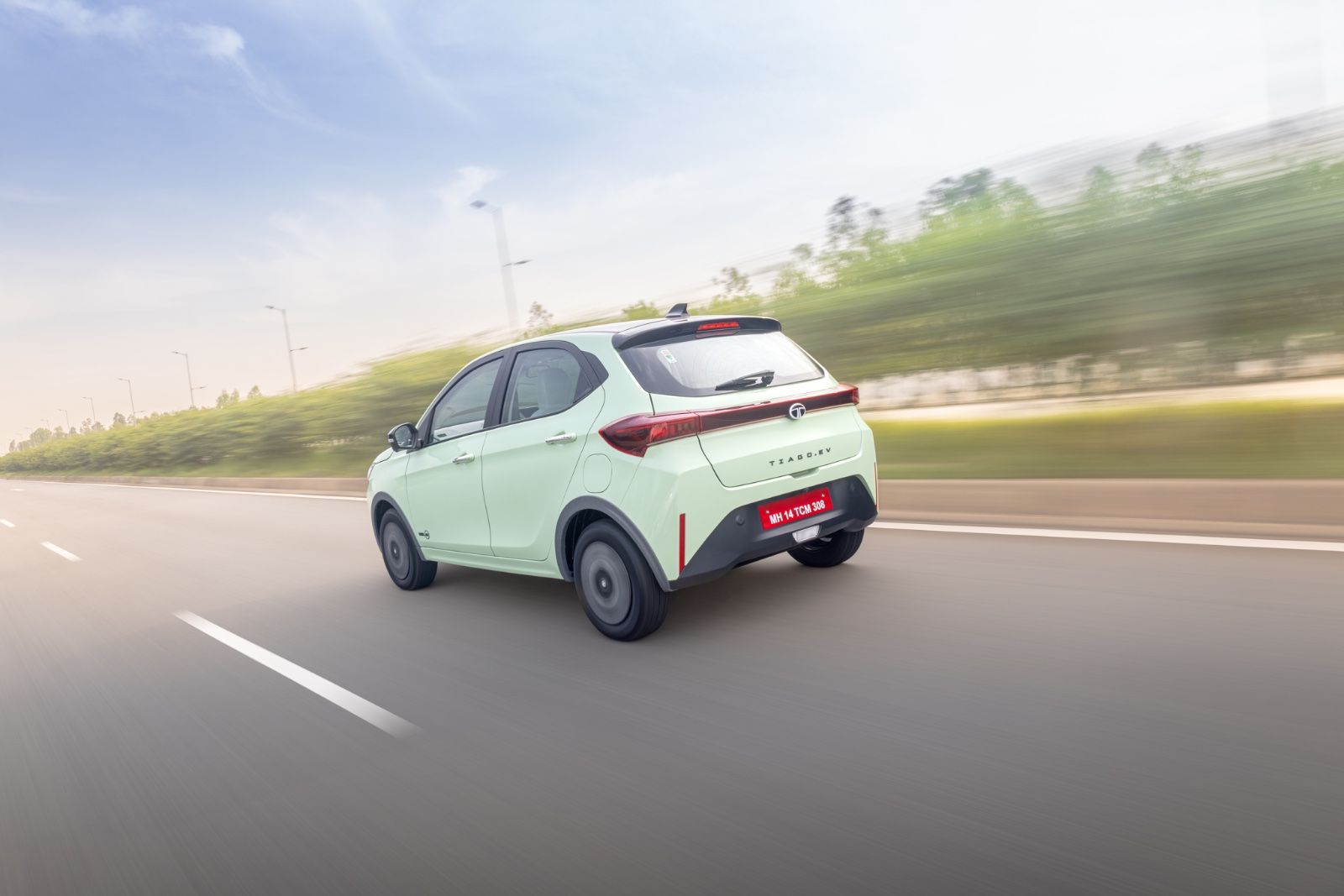
The EV day in the city was the right call. Bengaluru is precisely the environment the Tiago EV was designed for: stop-start traffic, the creative road surfaces of a city that expands faster than its civic infrastructure, the occasional lane that looks navigable on Maps and turns out to be an act of faith. The 24kWh battery pack puts out 75hp and 114Nm, and the torque delivery is what you'd expect from an EV in this class: immediate, linear, with none of the hesitation that smaller petrol engines show in slow traffic. You press the accelerator and the car moves smoothly, without drama. It's not fast. But it's responsive in exactly the way that matters most when you're threading between an auto-rickshaw and a delivery truck with only a few inches to spare.
Bengaluru's roads, outside the main arteries, are an ongoing negotiation between civic ambition and the monsoon. Speed breakers appear without warning. Patches of road surface appear and disappear with no apparent logic. The Tiago EV took everything I found without complaint. From broken stretches and sudden bumps to the kind of surfaces that make you instinctively slow down, the car handles them better than expected.
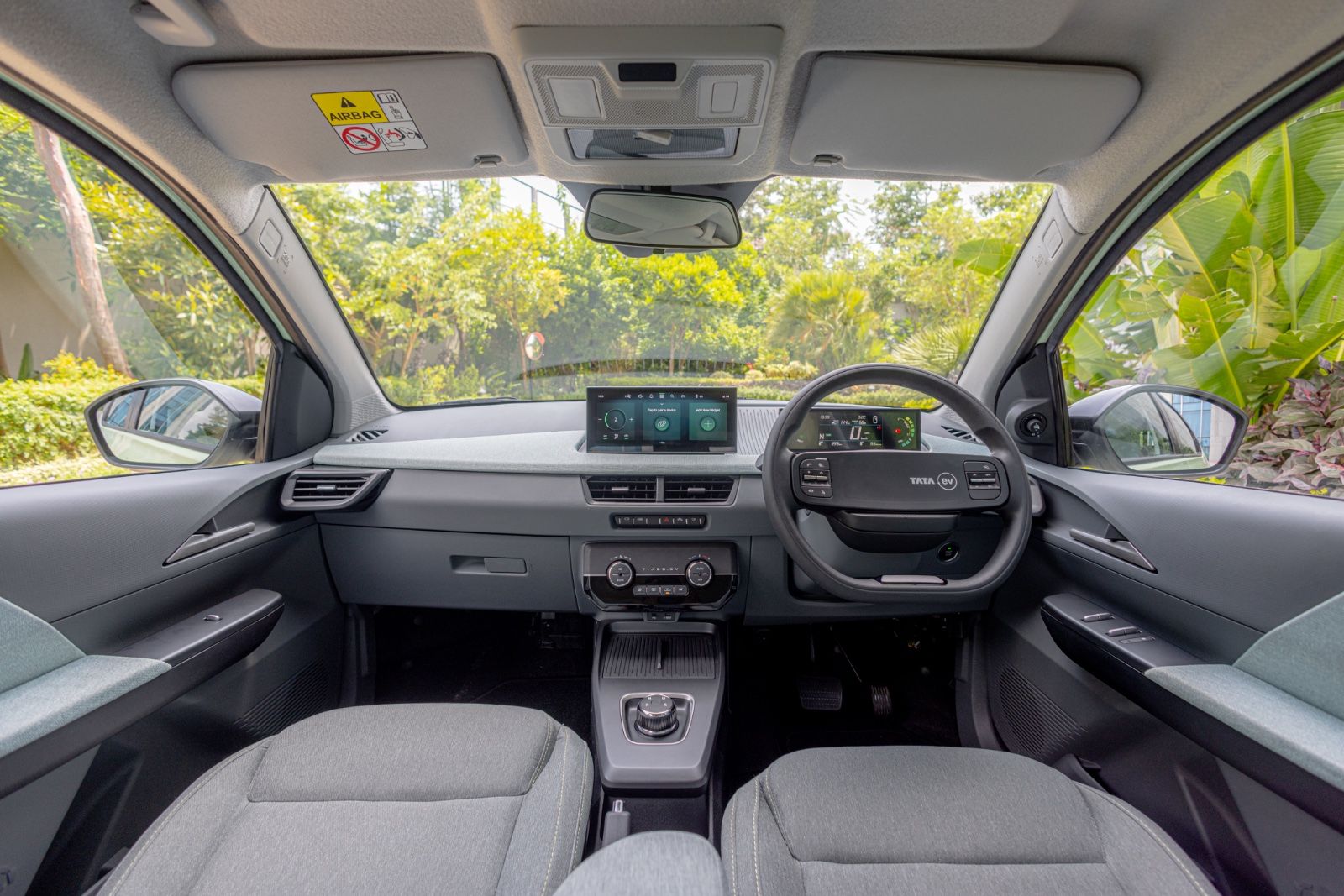
A real-world range of around 185km on the 24kWh pack, with air conditioning running and no attempt at hypermiling is acceptable if not praiseworthy. In the city, with regenerative braking quietly doing its work at every signal, the range felt entirely liveable. The new 30kW fast charging capability is a meaningful upgrade: it doesn'tmake the Tiago EV a highway car, but it does mean a useful top-up during lunch is now genuinely possible. For buyers who live in apartments without home chargers which in Bengaluru, and most Indian cities, is the majority, this matters more than any claimed range figure.
The smaller 19.2kWh pack, at 61hp and 226km MIDC, exists for buyers for whom the starting price of Rs 6.99 lakh is still the ceiling. It does its job in the city. But the 24kWh version at the top of the range is the one to get if the budget allows it.
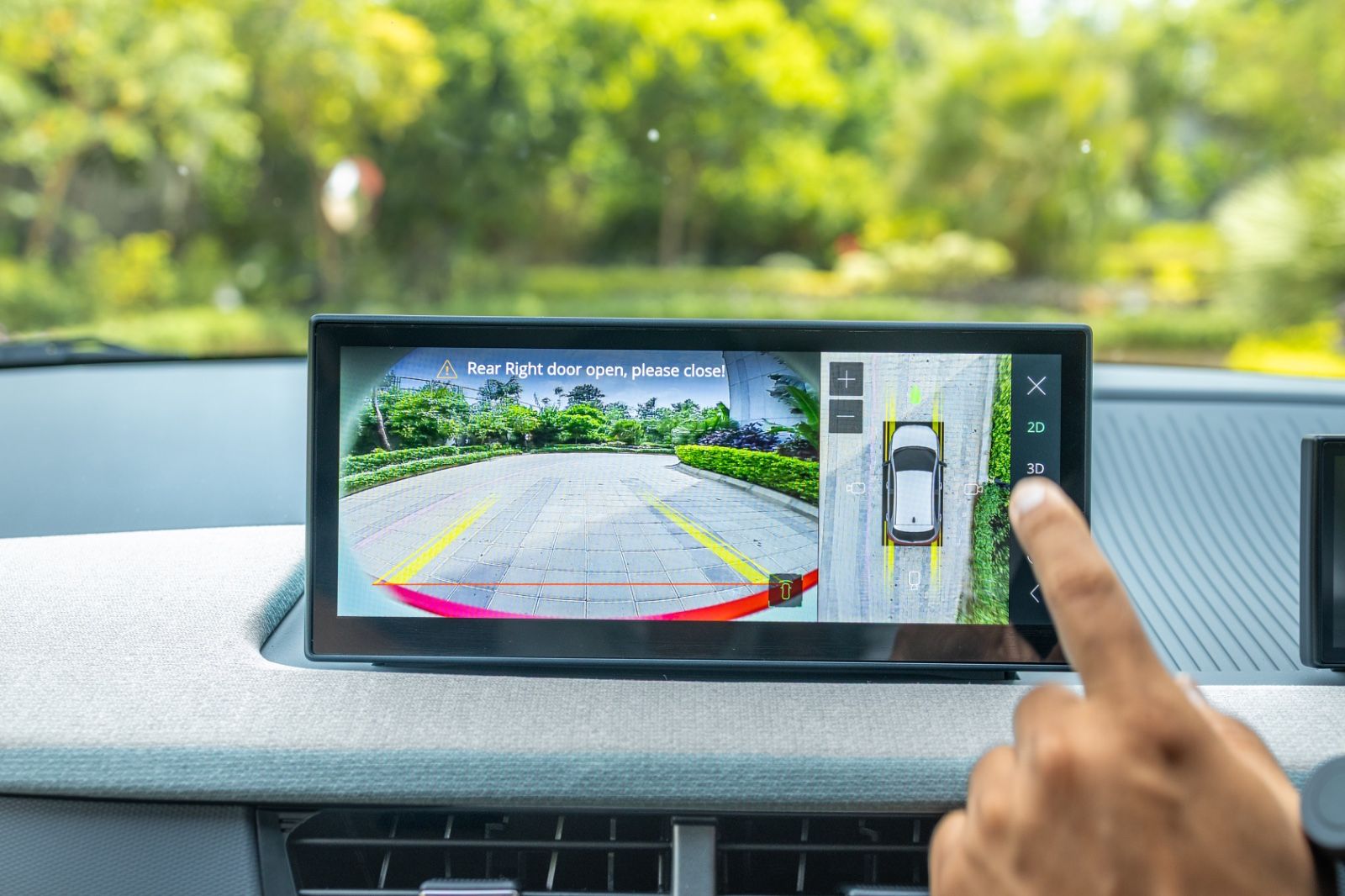
A word on the tech before moving on, because it's worth pausing on. The 360-degree camera works well — the resolution is adequate, the surround-view stitching competent. The blind-spot monitoring is genuinely useful in city traffic. Six airbags are standard across the range. That Tata has chosen to put them in a hatchback that starts under five lakh says something about where the entry-level bar is now being set and raises some uncomfortable questions for everyone else in this segment.
Day two was the petrol and CNG. And the 1.2-litre three-cylinder petrol, at its core, is still the engine it has always been which is simultaneously its limitation and its strength. Eighty-six horsepower, 113Nm, 5-speed manual or AMT. The new manual gearbox is a step forward: shifts are cleaner and more positive than before, the clutch is light enough to make Bengaluru traffic manageable rather than tiring. The AMT carries itself with reasonable competence in stop-and-go conditions, though the characteristic AMT hesitation at low speeds hasn't been entirely ironed out. That's not a Tiago problem specifically. That's the reality of the transmission type.
But the three-cylinder makes itself known. As the revs climb, a thrum enters the cabin that the new interior doesn't fully suppress. At highway speeds, held for extended periods, the engine's limitations announce themselves. This is not a refinement story. The Tiago ICE is a city car with weekend highway capability, and within those boundaries it is thoroughly competent. Ask it to be something else and it will remind you of its price tag.
The CNG variant deserves particular attention. It now comes with an AMT option, which is more significant than it might seem. CNG buyers are, almost by definition, buyers for whom running cost is the dominant concern. Adding an automatic transmission removes the last meaningful inconvenience from CNG ownership. The 75.5hp and 96.5Nm from the CNG motor are enough for urban use without the compromised, sluggish feeling that older CNG cars delivered. The Tiago CNG-AMT is not an exciting car. It is a practical, economical, and an easy car to live with in a city. Those are exactly its ambitions, and it meets them.
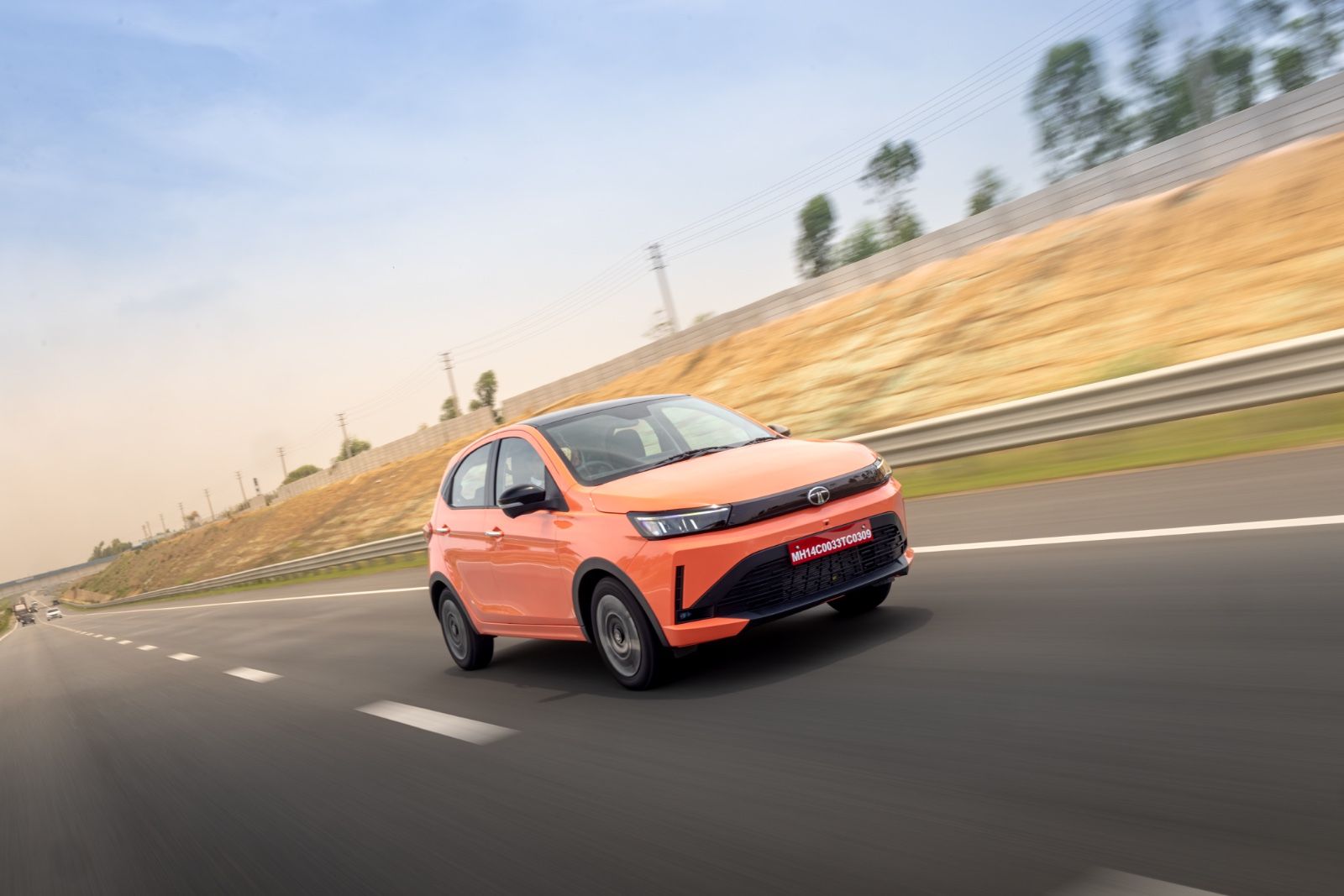
What carries across both days and both powertrains is the exterior update. The Tiago has always been a tidy car. But the 2026 revision gives it a visual presence it has never had before. The flat nose and revised geometry make it read as a larger car than it is — you notice it in the rearview of the car behind you. There are design details that feel borrowed from segments above, and that borrowing is deliberate.
So the inevitable question, the one that hangs over every new hatchback in a market that's largely decided it prefers SUVs: why not a Punch? The Punch starts at ₹6 lakh. There is obvious overlap in budget. And Tata knows this, and is unbothered by it, and is probably right to be. The Tiago and the Punch are different cars for different people. The Tiago buyer wants a smaller footprint, easier parking, the hatchback character and increasingly, someone who has worked out that a dense Indian city may not necessarily need a high-riding, wide-bodied crossover. The Tiago is excellent at being exactly what it is. In 2026, that is still a useful thing to be.
The EV version of that argument is especially persuasive right now. At ₹6.99 lakh ex-showroom, the Tiago EV is one of the most affordable electric cars in India. And it delivers more than its price has any obligation to suggest. The ride, the navigability, the interior quality, the fast charging update are not the characteristics of a cost-cutting exercise, but of a car that was thought about with some care.
Both versions of the 2026 Tiago get the job done. But the EV gets it done while turning heads on Old Airport Road, threading through lanes in Basavanagudi, and making its case quietly and without fuss.
The Tiago is ten years old and looks nothing like it. That's the best thing you can say about a facelift.
Tata Tiago ICE (2026) | Price: ₹4.69–8.55 lakh (ex-showroom) | Engine: 1.2L NA petrol, 86hp/113Nm | Gearbox: 5-speed MT / AMT | CNG also available: 75.5hp/96.5Nm
Tata Tiago EV (2026) | Price: ₹6.99–9.99 lakh (ex-showroom) | Battery: 19.2kWh (61hp, 226km MIDC) / 24kWh (75hp/114Nm, 285km MIDC) | Fast charging: up to 30kW | Autocar real-world range: 187km (24kWh)


