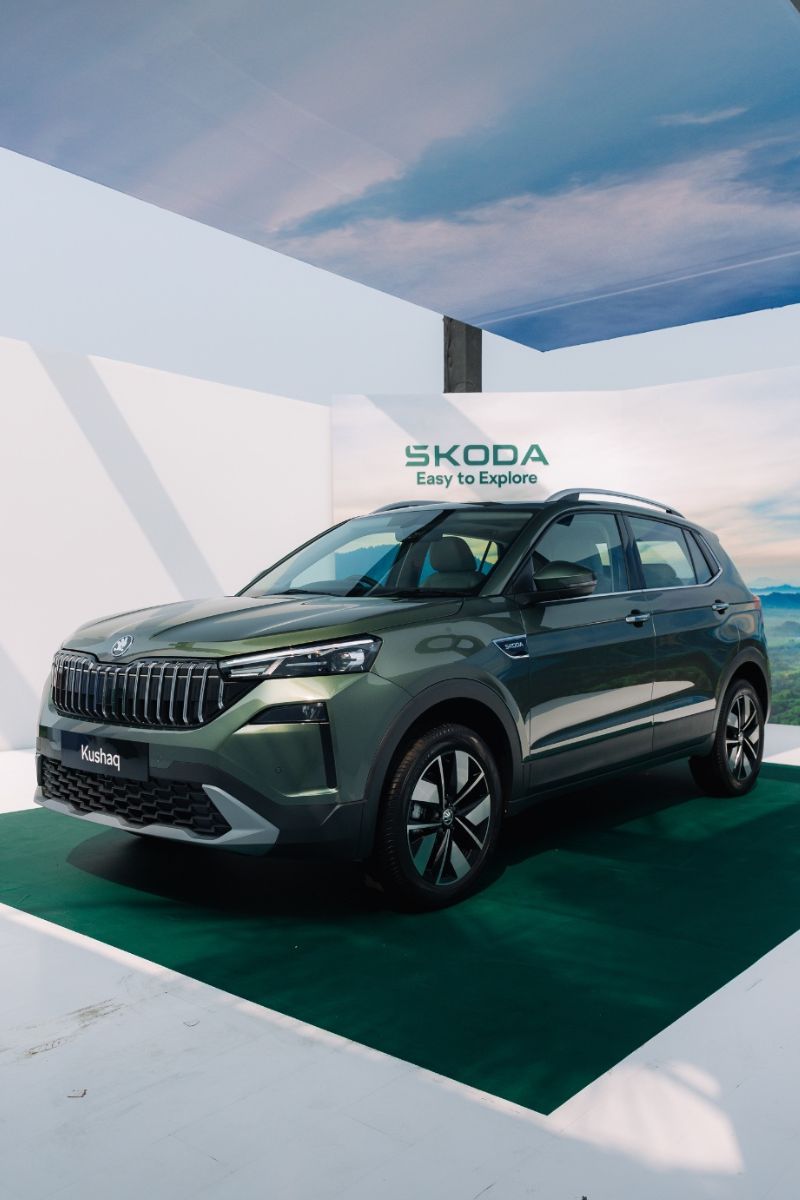
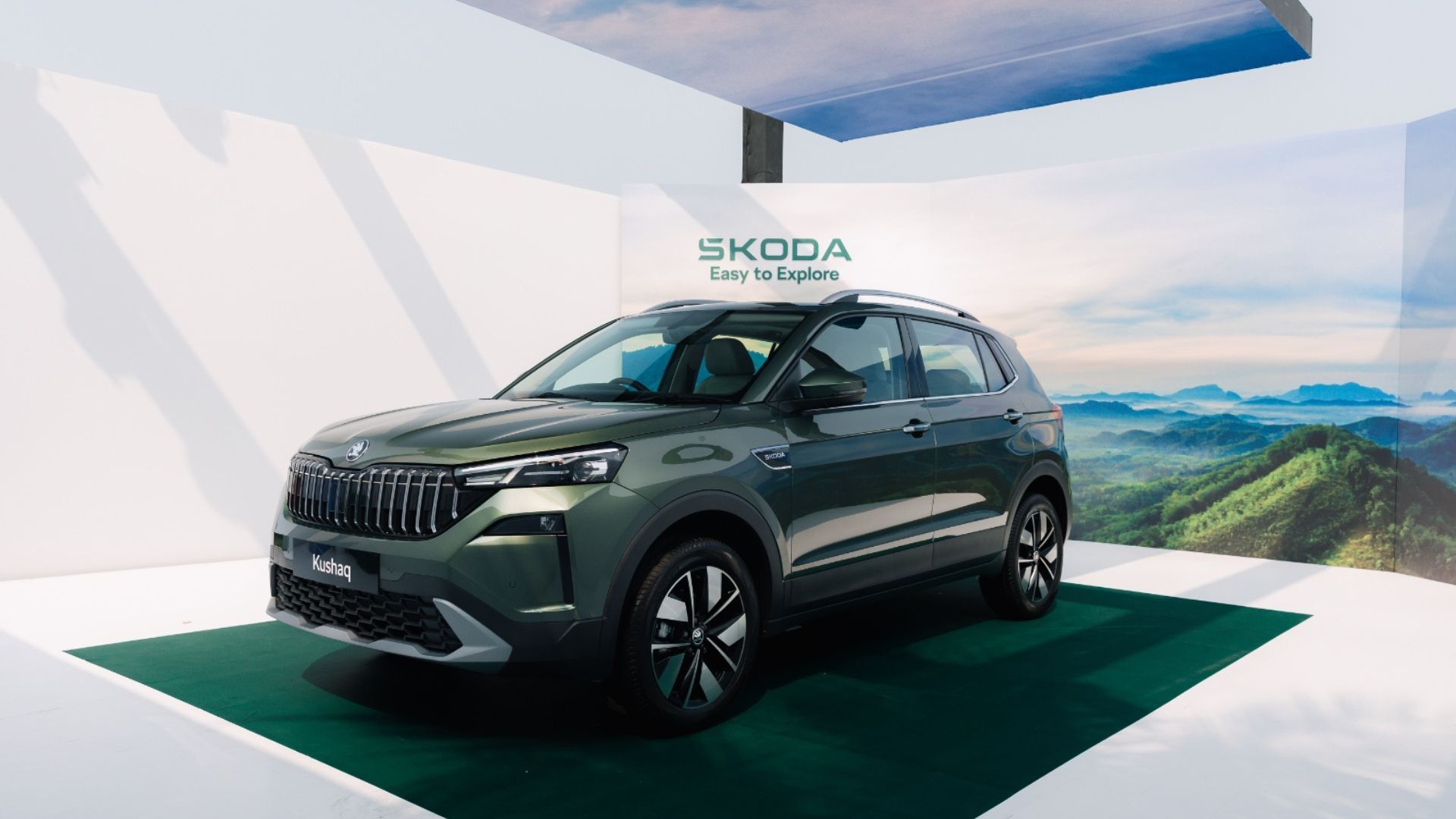
The facelifted Skoda Kushaq landed on January 20, 2026, at an unveiling in Kochi, and it delivers an impressive job—a proper 8-speed automatic, panoramic sunroof and rear disc brakes for the powerful 1.5 TSI. But here's the catch: Skoda skipped ADAS entirely, a gamble that could either prove genius or catastrophic in a segment where the Hyundai Creta and Kia Seltos have made Level 2 autonomy standard fare.
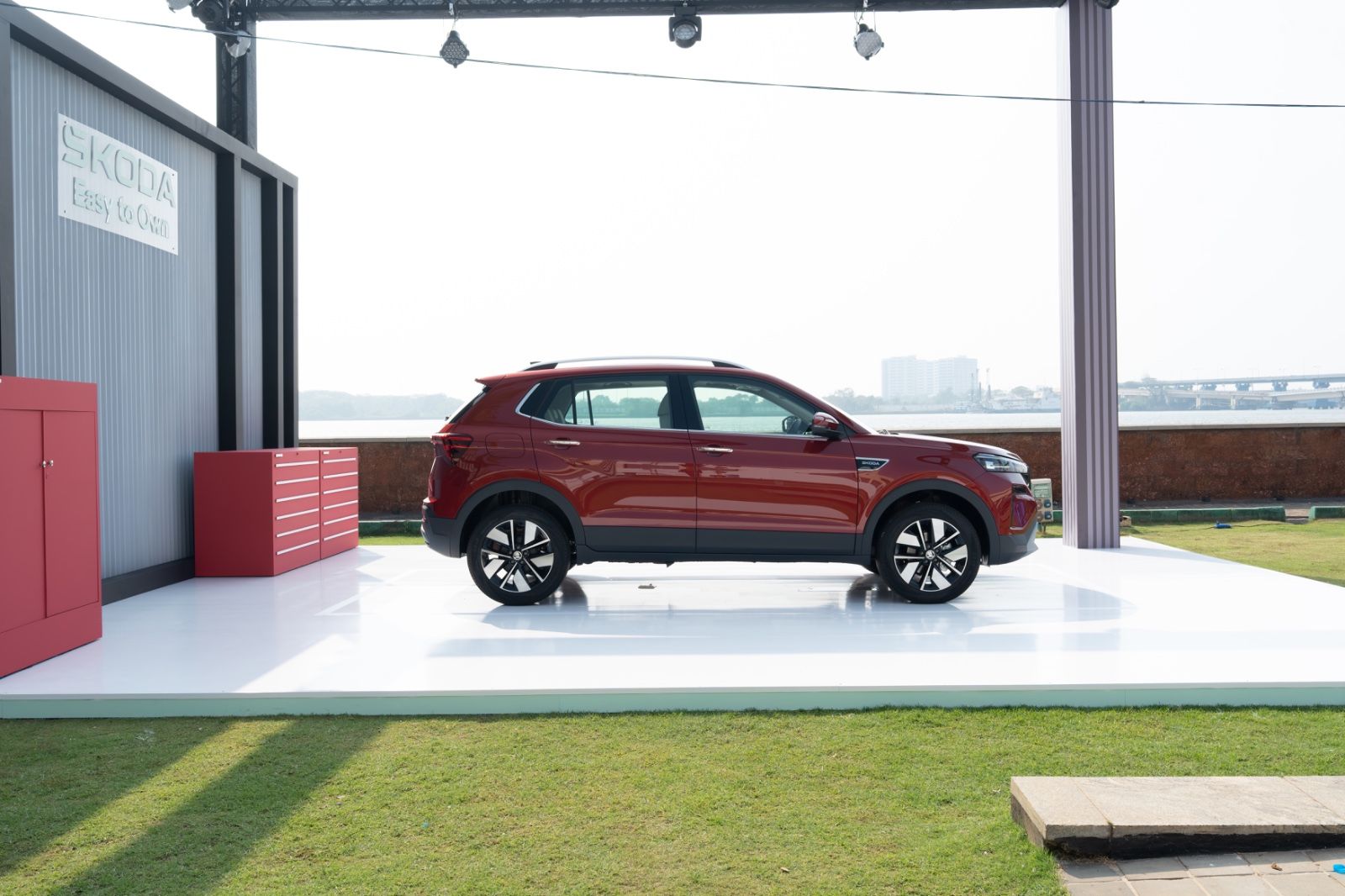
Pre-bookings are live at ₹15,000, with prices expected between ₹11-19 lakh when officially announced in March. If you're the sort who values a taut chassis and responsive turbo-petrol over gimmicky lane-keep assist, this refresh might just be your next garage resident.
Modern Solid design transforms the Kushaq's face
Skoda borrowed liberally from its flagship Kodiaq for this refresh, and the result is genuinely impressive. The front end now sports slimmer LED headlights with eyebrow-like DRLs connected by an illuminated light band that slices through a larger gloss-black "butterfly" grille. It's the kind of detail that makes the old Kushaq look positively dated.
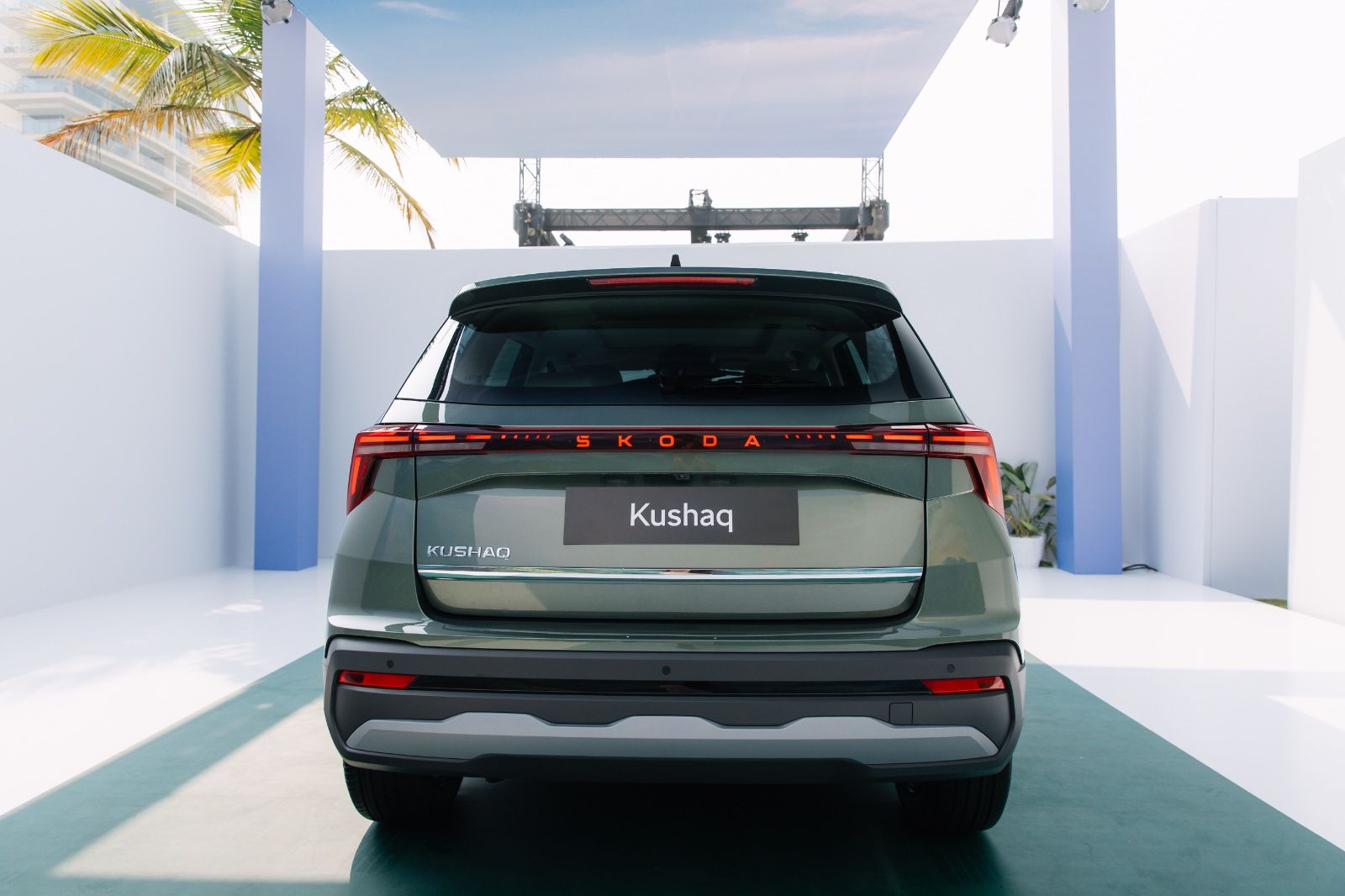
The rear receives an even more dramatic makeover. A full-width connected LED taillight cluster now features sequential turn indicators and—this is the showstopper—illuminated 'ŠKODA' lettering that bridges the two light units. This is the first Skoda globally to wear this particular piece of jewelry, and it photographs exceptionally well.
Three new colours join the palette: Shimla Green (a genuinely distinctive choice), Cherry Red, and Steel Grey. The Monte Carlo variant gets its traditional treatment—red accents on the grille, gloss black trim replacing chrome, and red brake calipers that look suitably aggressive against the Steel Grey paint option.
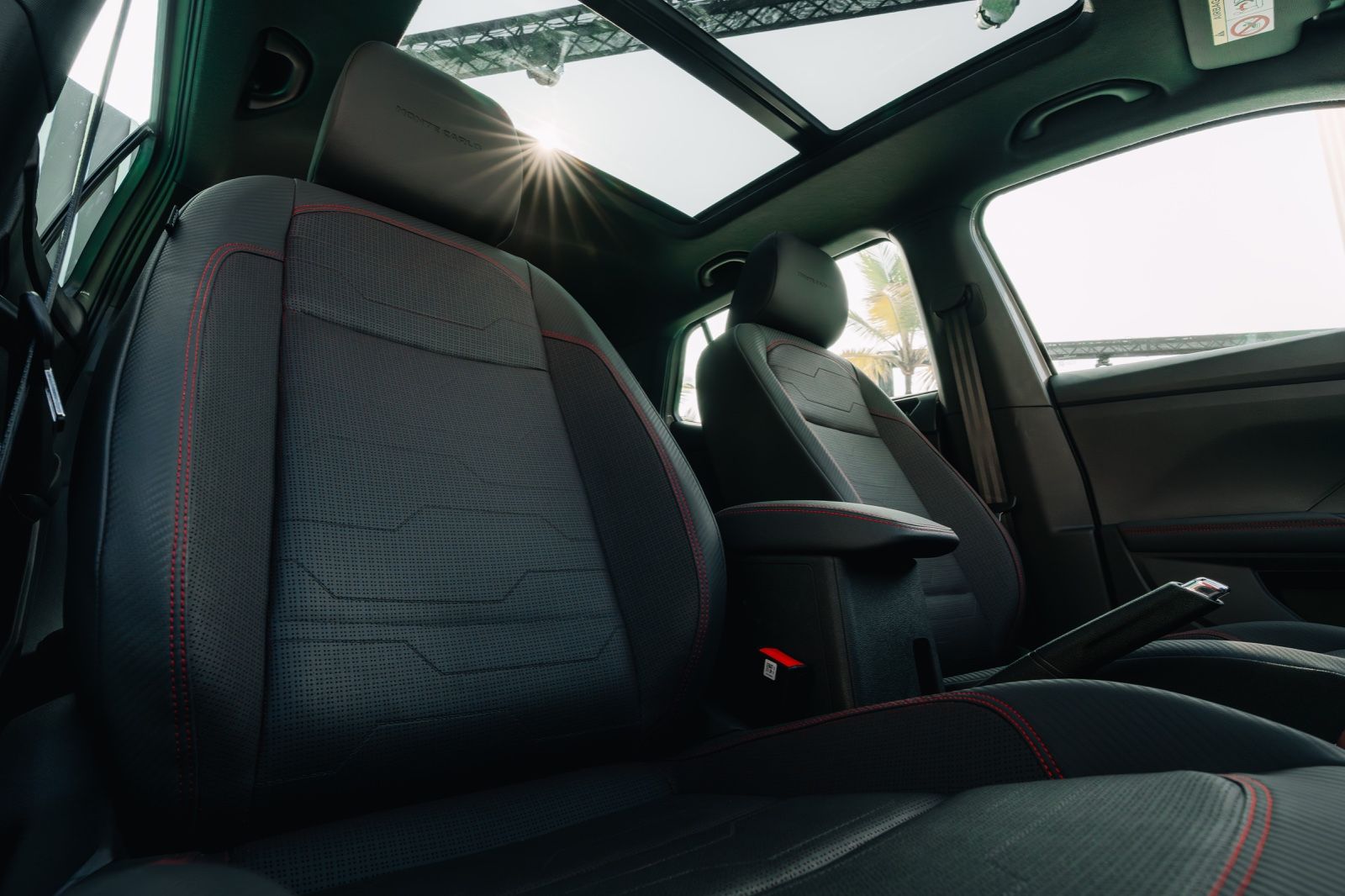
Skoda listened to Indian buyers who have been clamoring for a panoramic sunroof on the Kushaq since 2021. The new unit stretches across the entire roofline, transforming the cabin's ambience for rear passengers especially. Combined with the 491-litre boot (a substantial jump from the outgoing model's 385 litres), the practical appeal has improved markedly.
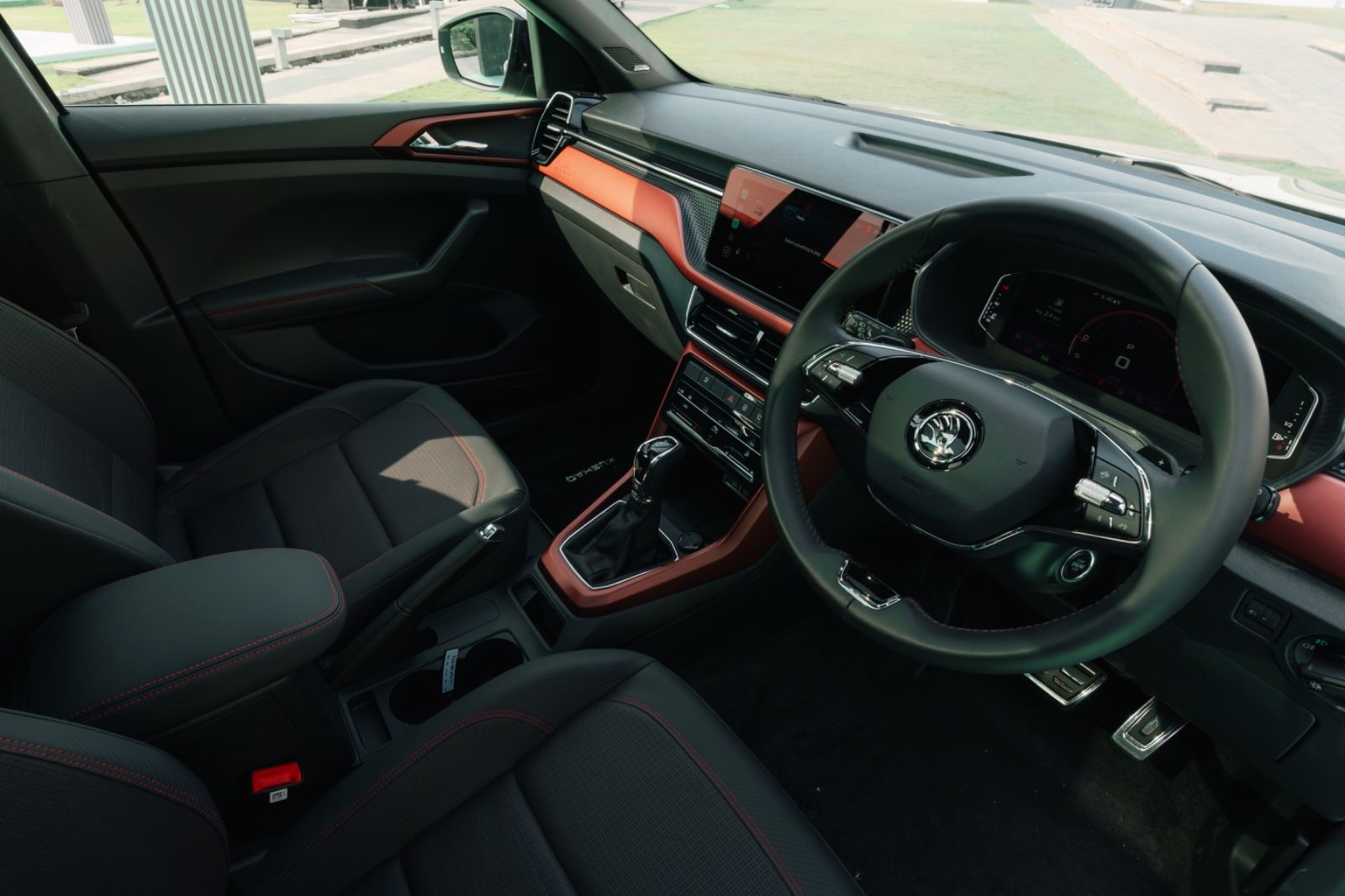
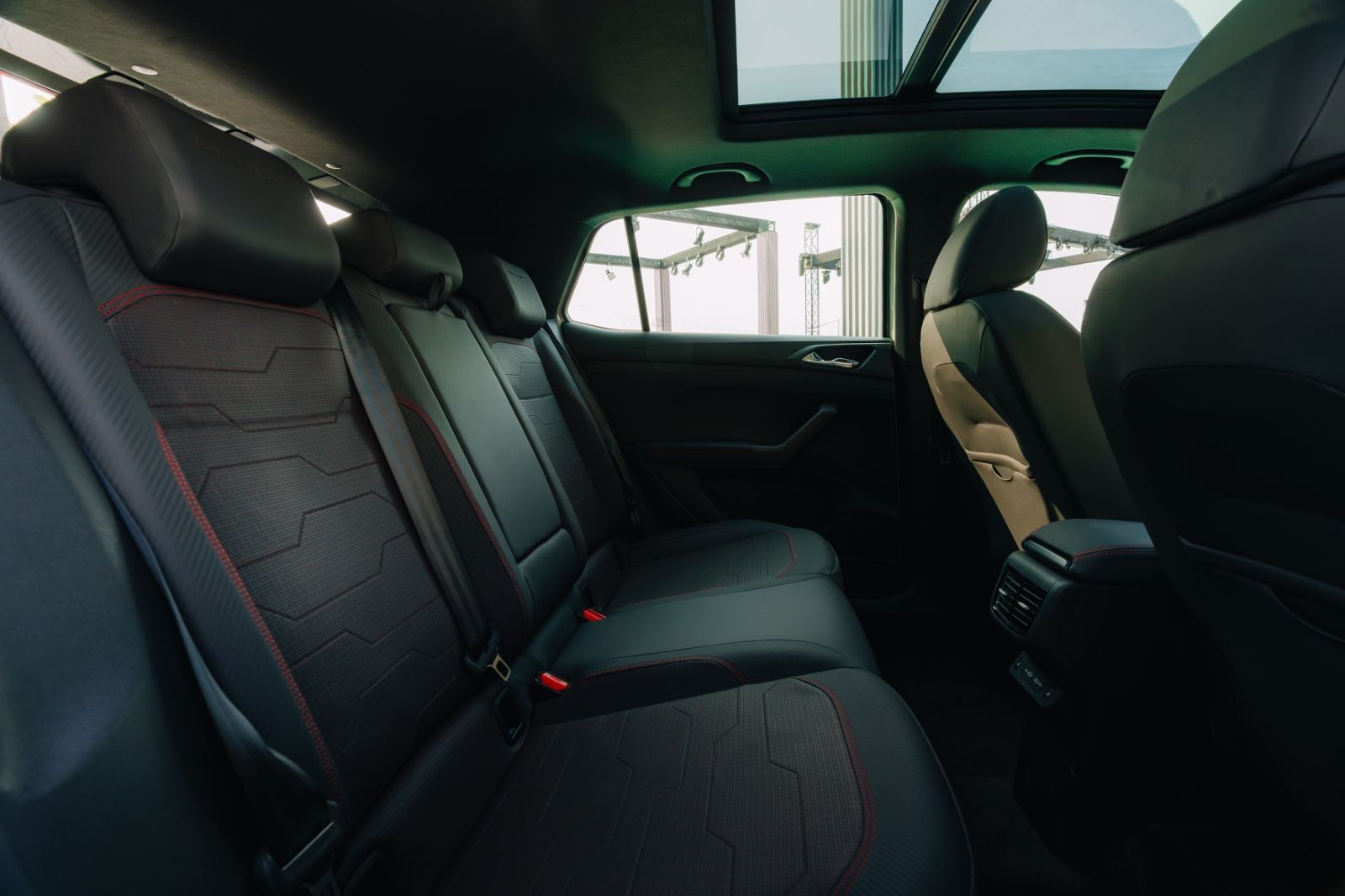
The dashboard architecture remains largely familiar—that layered design with the two-spoke steering wheel carries over—but material quality has improved noticeably. The Prestige variant offers a sophisticated black-and-beige dual-tone theme, while the Monte Carlo goes full throttle with crimson accents, red stitching, and carbon-look upholstery.
The Kushaq also flaunts segment-first rear seat massage function. Yes, you read that correctly. Your rear passengers can now enjoy a massage while you navigate traffic. It's kind of unexpected, but certainly earns brownie points.
The tech story
The good news: Skoda has fitted a 10.1-inch touchscreen running a modernised interface with wireless Android Auto and Apple CarPlay. More impressively, there's Google Gemini AI integration—context-aware voice assistance that recognises Indian English accents and handles hands-free operation of calls, climate control, and media.
The digital cockpit has grown to 10.25 inches on Prestige and Monte Carlo variants, with crisp new graphics that finally feel current. Lower variants receive an 8-inch unit—still a step up from before.
Ventilated front seats with 6-way electric adjustment and dual-colour ambient lighting round out the comfort tech. Wireless charging remains on the features list.
However, Skoda has inexplicably omitted ADAS entirely. No adaptive cruise control, no lane-keep assist, no autonomous emergency braking beyond basic systems. In a segment where the Creta, Seltos, Tata Sierra, and Maruti Victoris all offer Level 2 autonomy, this feels like a missed opportunity. Similarly absent: a 360-degree camera and electronic parking brake with auto-hold. These are features that have become expected at this price point, and their absence could frustrate tech-forward buyers.
Two turbo-petrols, no diesels, and a new gearbox
The 1.0-litre TSI continues with its 115hp and 178Nm, but the transmission options have been updated significantly. The six-speed manual remains for purists, but Skoda has replaced the previous 6-speed torque converter with a new 8-speed unit— a segment-first that promises smoother shifts and better fuel efficiency to meet incoming CAFE 3 norms.
There's also the 1.5-litre TSI: 150hp and 250Nm paired exclusively with a slick 7-speed DSG. The manual option has been discontinued for this engine—apparently demand was minimal—which is a shame for the three of us who appreciated the engagement. Crucially, all 1.5 TSI variants now receive rear disc brakes as standard, addressing a long-standing complaint from enthusiasts who felt the rear drums were inadequate for spirited driving.
Both engines ride on the MQB-A0-IN platform with 95% locally sourced components, which should translate to accessible service costs and parts availability.
Five variants, with Monte Carlo stealing the spotlight
The lineup spans Classic+, Signature, Sportline, Prestige, and Monte Carlo. Automatic air conditioning, rain-sensing wipers, auto-dimming interior mirror, and alloy wheels are now standard across the range—Skoda clearly listened to feedback about base variants feeling stripped.
The Monte Carlo deserves special mention: available from launch for the first time, exclusively with the 1.5 TSI DSG, it combines every sporty visual element with the full feature stack. If you're spending more than ₹20 lakh (expected top-end pricing), this is the variant to consider.
Safety remains a genuine strength
The 5-star Global NCAP rating carries over, with six airbags standard across all variants— no need to tick option boxes or choose higher trims. Skoda claims 25+ active and passive safety features as standard, including ESC, hill-hold assist, traction control, TPMS, and front-rear parking sensors.
The warranty package is competitive too: 4 years/1,00,000 km (extendable to 6 years), 4 years roadside assistance, and 4 free labour services within 2 years or 30,000 km.
What does it mean for the discerning buyer
Ashish Gupta, Skoda Auto India's Brand Director, framed it well at the unveiling: the mission is "democratising European technology for Indian roads." The Kushaq facelift delivers on that promise on paper, with its taut chassis, promising powertrain options, and genuinely premium cabin ambience.
The 94,900+ units sold since 2021 prove there's a market for this approach—buyers who prioritise driving dynamics over feature checkboxes. But if you're cross-shopping with a loaded Creta or Seltos, you'll need to decide whether European driving feel matters more than features that your family will flex.
Deliveries commence by end of March 2026. For the driver-focused buyer, the new Kushaq may make a compelling case. Just don't expect it to park itself.


