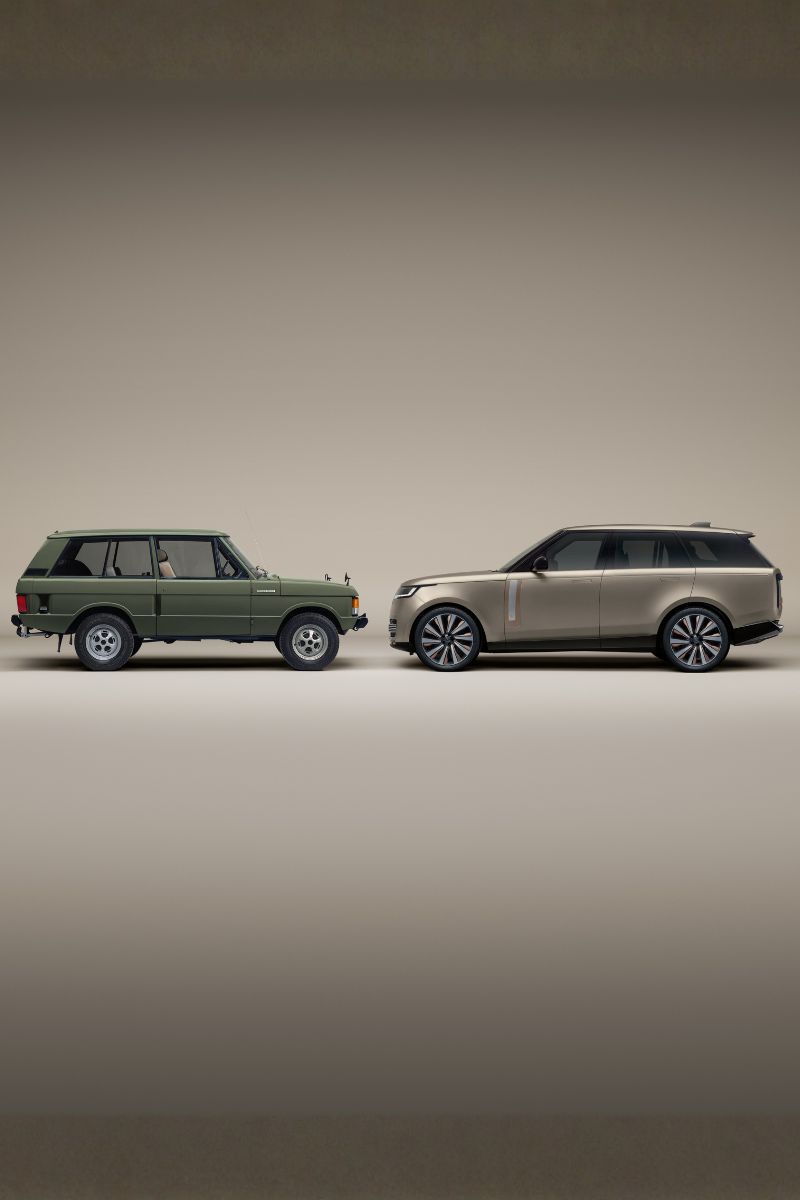
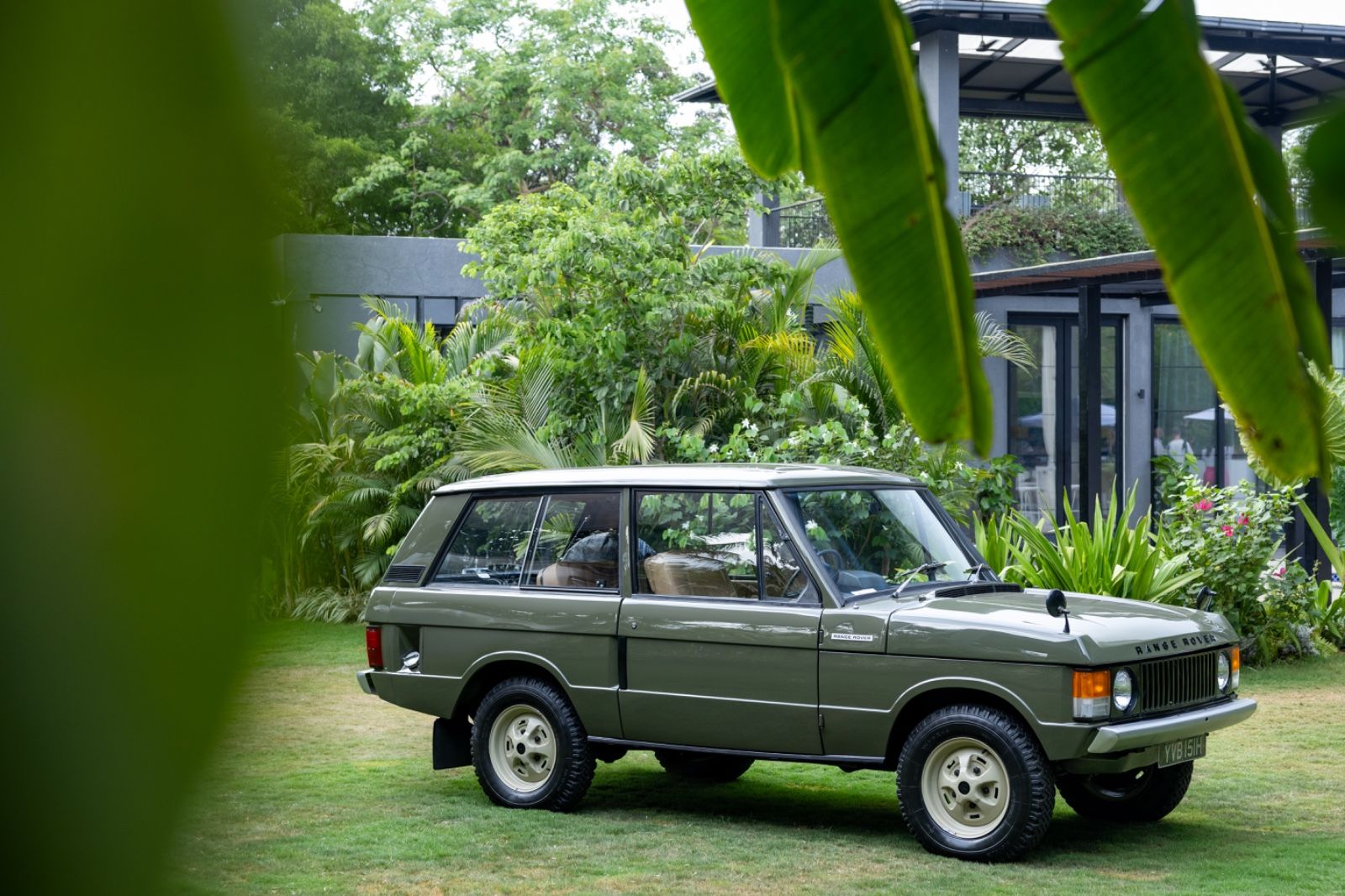
There are very few names in the automotive world that have managed to stay untouched by noise. Fifty-five years is long enough for trends to rise with swagger and fade without ceremony, for entire philosophies of luxury to expand, collapse and reinvent themselves. Yet Range Rover has lived through all of it with a kind of calm that feels almost contrarian today. It entered the world in 1970 as a machine built for purpose, not performance theatre, and that instinct for restraint has carried it through every decade since. The first model simply understood what comfort meant to people who moved between muddy estates and glass-and-steel cities long before that duality became a lifestyle trope.
Through the years, that clarity of intent quietly shaped its evolution. The silhouette sharpened, the cabin grew more considered, the engineering discovered new ways to deliver serenity on unpredictable terrain. Coil springs, disc brakes, four-wheel drive, the four-door body, the rise of craft inside the cabin, the slow progression toward tech that didn’t shout for attention but worked with a certain British politeness. Luxury elsewhere was getting louder. Range Rover never felt the need to participate.
Today the brand sits at an unusual intersection of heritage and modernity. Everyone wants to talk about electrification, but Range Rover’s relevance has never been tied to propulsion. It has always been tied to feeling. That moment when the door closes and the outside noise evaporates. The steadiness of the suspension. The instinctive sense that every switch and surface exists exactly where it should. In a world overflowing with screens, gimmicks and restless reinvention, Range Rover has stayed aspirational because it has refused to chase spectacle. It has chosen to perfect the sensorial instead.
Which is why, as the brand prepares for the next chapter with its fully electric iteration, the conversation becomes more interesting than ever. The stakes are high for any icon entering the EV arena, especially one whose identity is built on mechanical grace. But Range Rover seems determined to treat electricity not as a new costume, but as another material in its craft vocabulary. The engineering brief, we’re told, was simple to state but difficult to achieve: preserve the familiar Range Rover character and elevate its quietness even further.

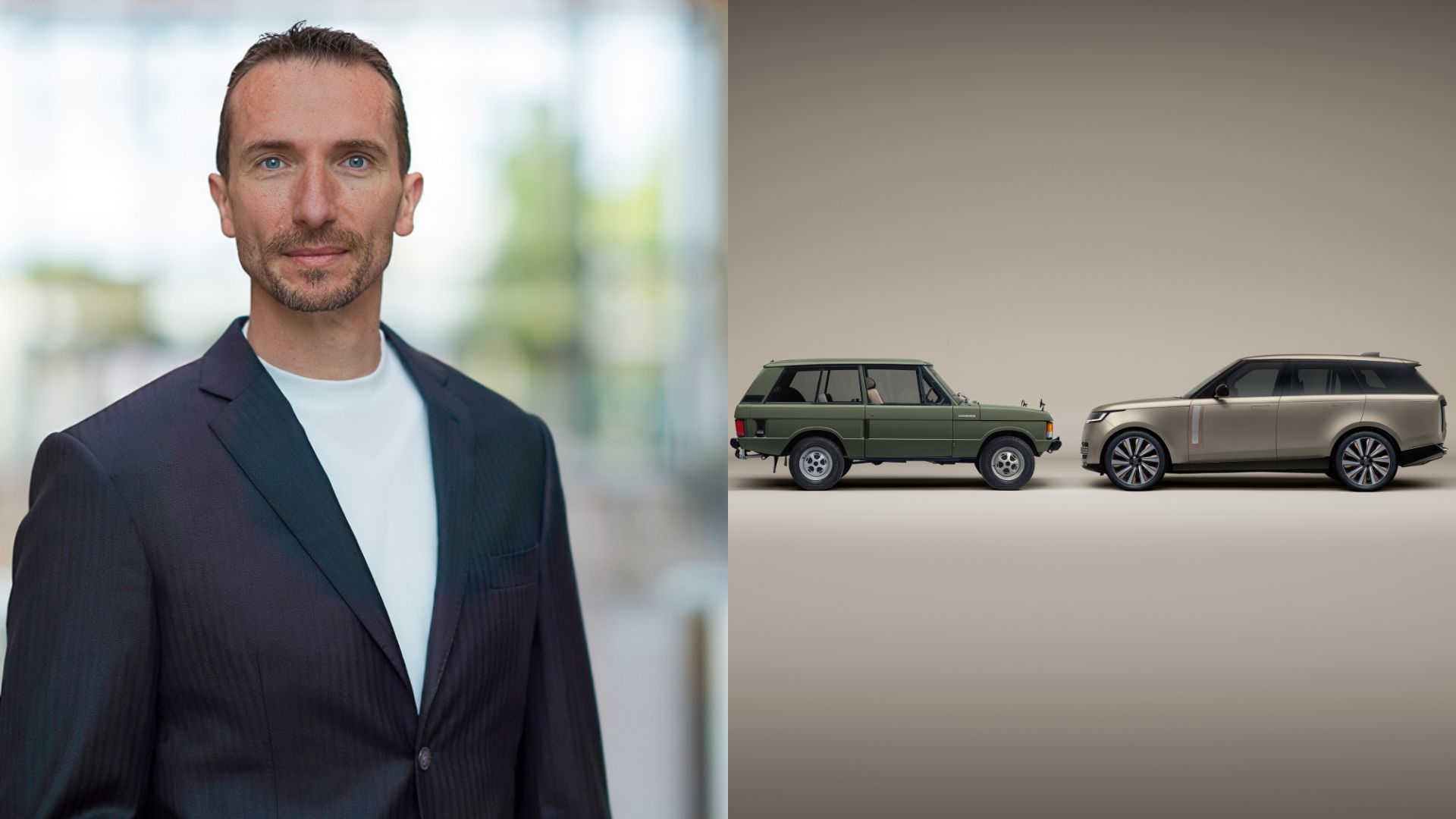
That’s where Martin Limpert comes in. As Global MD of Range Rover, he carries the task of steering a brand that is both deeply rooted and boldly future-facing. In this conversation, he speaks about timeless desirability, British sensibilities, the electric era, and maintaining the purity of a name that has outlived entire definitions of luxury. Here is our exchange.
Range Rover has defined calm, understated luxury for 55 years. How do you think the idea of ‘true luxury’ has evolved since 1970?
The idea of luxury in 1970 didn’t exist in the way it does today, particularly in motor vehicles. When the original Range Rover first launched in 1970, its interior was fairly basic by today’s standards – the magic was in its versatility and refinement. It was able to transport passengers from the countryside estate to the city with comfort that exceeded anything else on the market. Its design evolved over the years, with the addition of the four-door model in the early 1980s. During this time it pushed technological boundaries, with 4WD, coil suspension and 4-wheel disc brakes offering a car-like ride which was worlds away from other 4x4s. Since then, Range Rover has come to define luxury in automotive, with understated elegance and a timeless desirability. I also believe true luxury is in the things you don’t see. How you feel when you are in the vehicle – designed to be a calm sanctuary – through all of the senses. But that ability to still be a vehicle car for all purposes – the keys our clients always reach for, is down to that magic combination still present today.
If you had to describe Range Rover in just three words that capture its past, present, and future, what would they be?
Desirable, Refined, capable.
What do you think makes Range Rover still aspirational after five decades when other luxury trends have come and gone?
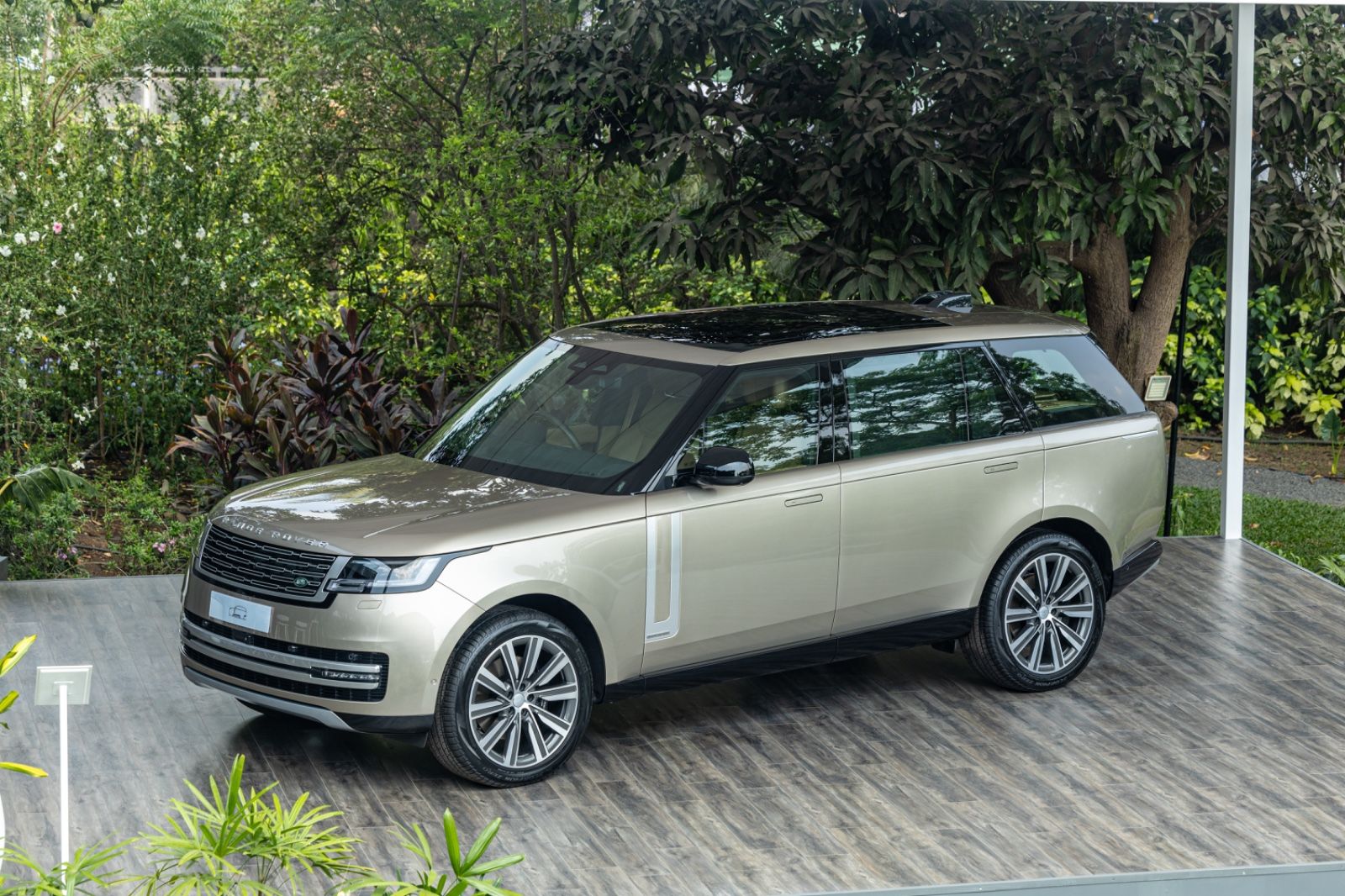
In today’s society, we see luxury trends constantly evolving, with the tides of cultural tastes and discourse. We are in the business of serving our clients’ desires; the life’s leaders, those with discerning tastes, trust in our services and quality, and at times, discretion. True luxury fulfils all of these requirements; acknowledging our clients’ preferences and understanding their incredibly busy lifestyles to offer a portfolio of luxury products and experiences. A huge part of our success is our unwavering commitment to delivering what I believe are the best vehicles, combining a peerless design with unique craftmanship and unmatched capability. True objects of desire. We have never strayed from our original intent with Range Rover which is remarkable for a brand with over five decades of history.
When you joined JLR, there were two distinct brands - Jaguar and Land Rover. How would you assess and rate yourself on the transition to the new House of Brands Strategy?
For me it has made perfect sense, particularly for Range Rover. Land Rover is still an important trust mark, but even before our House of Brands repositioning, our clients saw our family of Range Rover vehicles through a brand lens. We’ve now had the space in the last few years to really pull out what makes Range Rover unique within the JLR brands. This year, for the second year running, Range Rover was named in the Interbrand Top 100 Global Brands – a testament to the strength of the brand representing a personality on its own.
Do the recent reports of poor sales figures of an iconic SUV’s electric version make you sceptical/ cautious with your approach for Range Rover electric?
I think our approach is the right one for our global clients. Our strategy for Range Rover has always been around flexibility. Even back in 2021 when we announced the latest Range Rover model, we had committed to bringing to market a fully-electric version of the same vehicle in the future. Same design, same familiar interface, just all-electric – and built on the same MLA-Flex architecture. This at the time was bold; all new EV models were frequently coming to market. Since then, we have been working on testing and refining the upcoming Range Rover Electric to ensure it delivers on our promise of utmost quality and refinement for our clients ahead of it coming to market in 2026.
How do you gauge the interest and opportunity in electric SUVs in the top-segment where customers still want big, burly V8s?
The opportunity again lies in our flexibility. We sell vehicles in over 120 countries, all at varying stages of transition to electrification. We have markets like Scandinavia and Northern Europe where we see huge growth potential for our future Range Rover EVs, and other markets where more conventional hybrids will likely be in demand for the next few years. I think there is something remarkable about our ability to offer clients mild, plug-in, and full-electric vehicles, scaling as demand requires, with a vehicle that offers no compromise on design, capability or refinement regardless of engine choice.
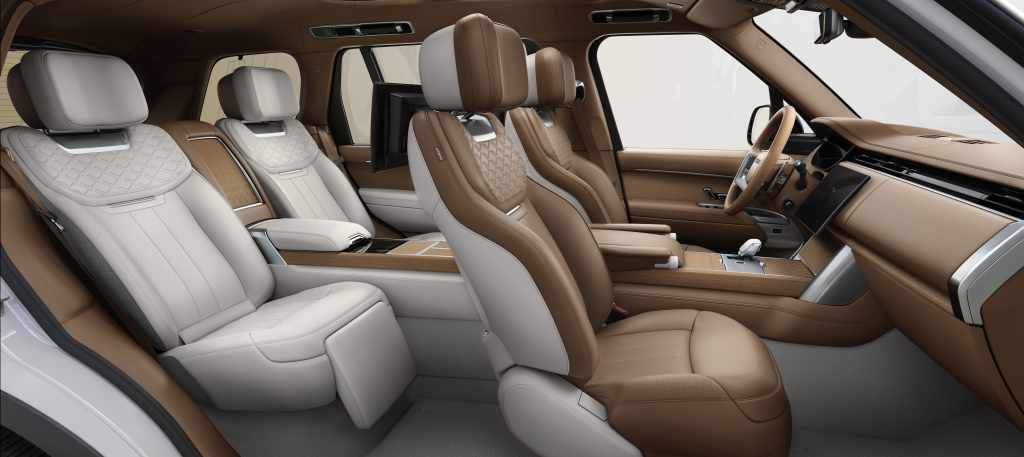
In the era of electric vehicles where the difference between cars is eventually coming down to gimmicks, what makes an electric Range Rover distinctly British?
Well of course like every Range Rover before, it has been designed and engineered here in Britain. But there is an almost intangible British essence within Range Rover; that sense of everything being in its place, refined, quietly confident, assured – that you will feel when you get inside Range Rover Electric.
Could you share any insights from the tests of the Range Rover Electric in Sweden? Any numbers or anecdotes that give us a glimpse into the future of Range Rover?
I’ve been lucky enough to get behind the wheel of Range Rover Electric a number of times. Our engineers have done a fantastic job in delivering that Range Rover feeling behind the wheel – from the suspension which delivers that refined, effortless, connected feel, to the sound design which is subtle but distinctly Range Rover. Their brief was to deliver a driving character akin to the Range Rover V8 – but with the added benefits of refinement that an EV offers. Sounds simple but it has been an incredibly challenging brief. It’s the most patented Range Rover we have ever created – all of which have been pursued in the interests of delivering a true Range Rover.
With Range Rover’s successful partnership with Wimbledon, will we see the brand collaborate with other sports, say Ashes or the premier league?
Our strategy is less about different verticals, but more considering relevance to our clients and a fit to our brand’s values. Wimbledon is an iconic cultural aspect of the British Summer Season, a relationship we have enjoyed for the last two years. We consider our brand activations very carefully; looking at where our clients, global leaders, spend time. You can see this in our strategy with our Range Rover Houses over the last two years; highly luxurious, temporary activations in alpine backdrops, nautical locations throughout the Summer, or cultural events such as Monterey Car Week.
What is your assessment of the India-UK FTA? How will that impact your import vs manufacturing strategy?
India is an important market for our British-built products and represents a significant future growth, so we welcome this free trade agreement between the UK and India.
We welcome this free trade agreement between the UK and India, which over time will deliver reduced tariff access to the Indian car market for JLR’s luxury vehicles.
What can you share about the impact of the cyberattack? What timelines are you looking at until the issues are completely resolved? Does it also affect the timelines of upcoming launches?
Since the 8th October, we have made progress at pace in resuming production in a safe and controlled manner, with global manufacturing of all models back up and running.
What’s the most unusual way you’ve seen a Range Rover being used?
Not necessarily unusual, but there’s something very gratifying about seeing people sitting on the rear tailgate event suite – the pinnacle of luxury lounging – at sporting or equestrian events.
What’s the most memorable celebrity or public figure request you’ve heard when it comes to their Range Rover?
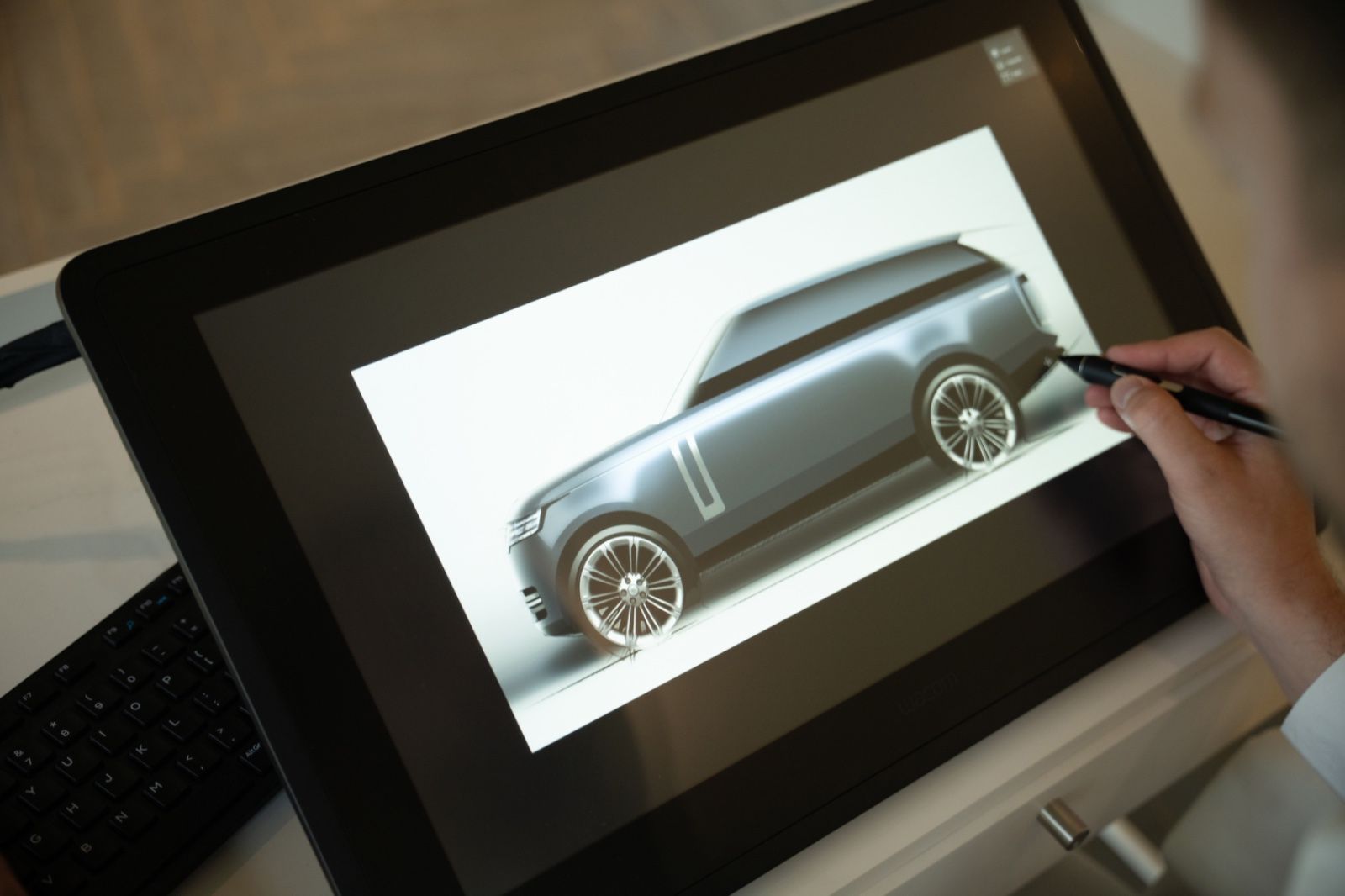
Our Range Rover SV Bespoke team deal with many unique requests as part of their one-of-one commissioning process – from very specific match-to-sample paint requests to embroidering family crests or even artwork. I couldn’t name one in particular but our ability to go above and beyond to match our clients’ exacting requirements is very special.


