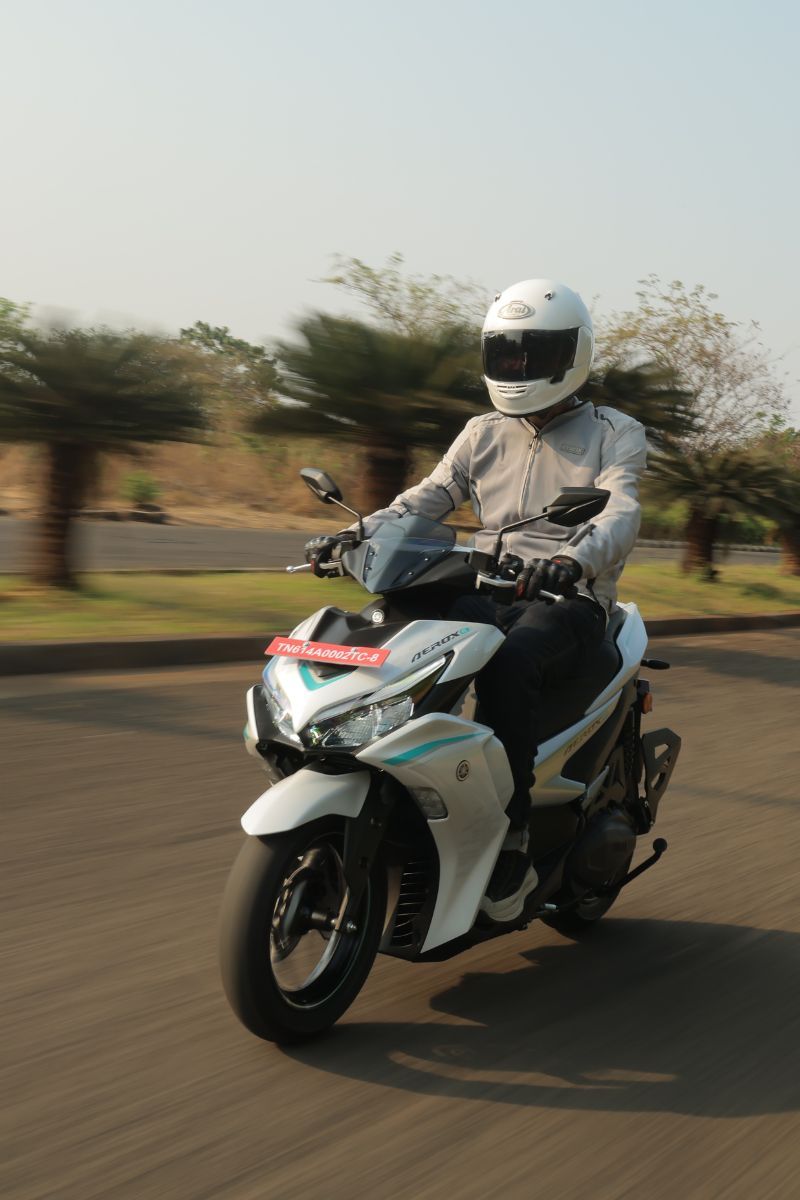
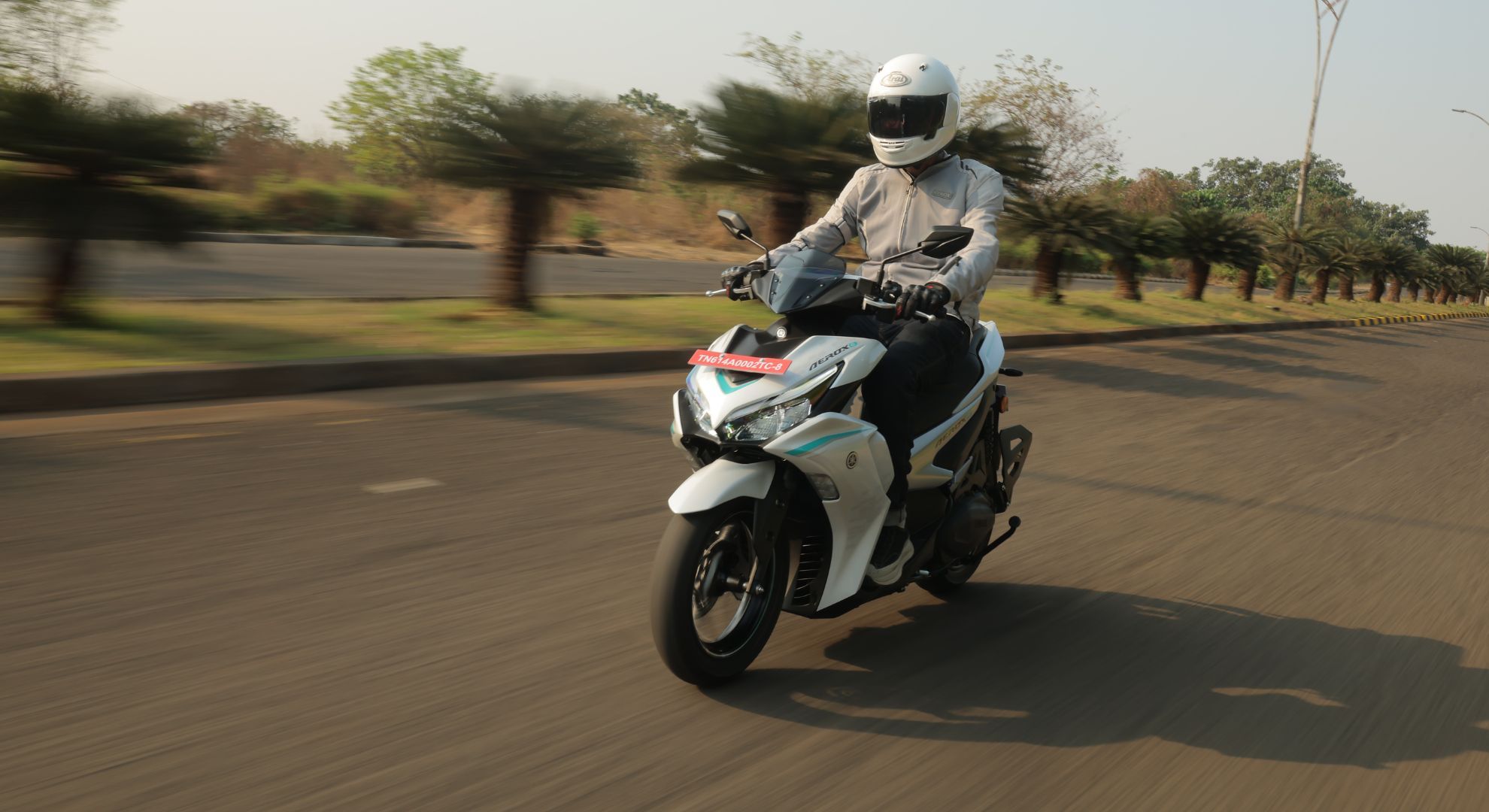
Picture India’s electric two-wheeler revolution as a train that left the station a decade ago, almost reluctantly. In 2026, it’s not just moving, it’s tearing ahead, leaving most markets with similar ambitions trying to keep up, when it comes to innovation, pricing and overall build quality.
A few, namely the Japanese big four, decided to stand around and see how far it would get. And now they’re playing catch-up, each with their own idea of a “unique” solution. Yamaha Motor Company, for its part, is trying something different with the River Indie-based EC-06 and the Aerox E.
We spent some time riding both in Lonavala’s Amby Valley to see what this “different” actually amounts to, and whether it’s enough to cut through India’s cut-throat EV scooter space, or just another late entry trying to sound clever. Here’s what we found.
A Familiar Badge
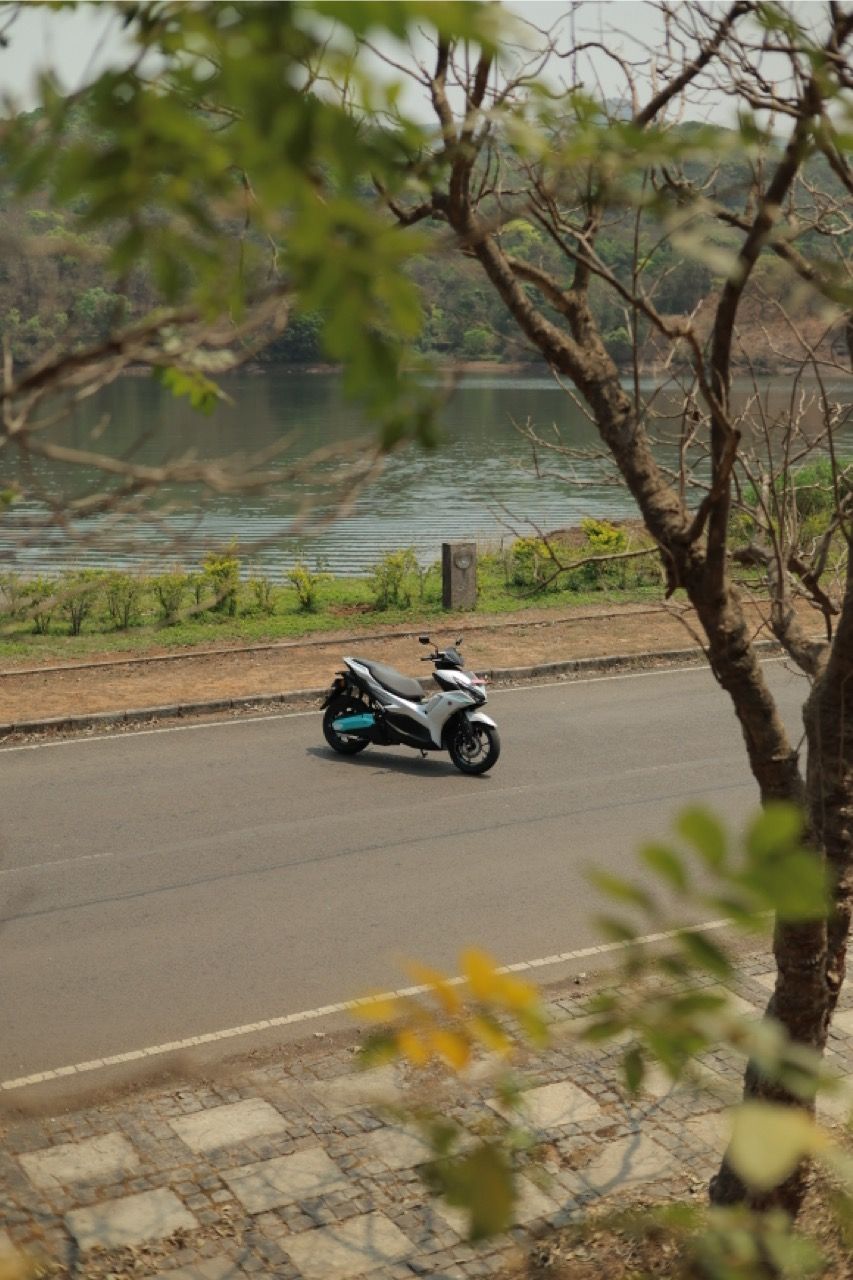
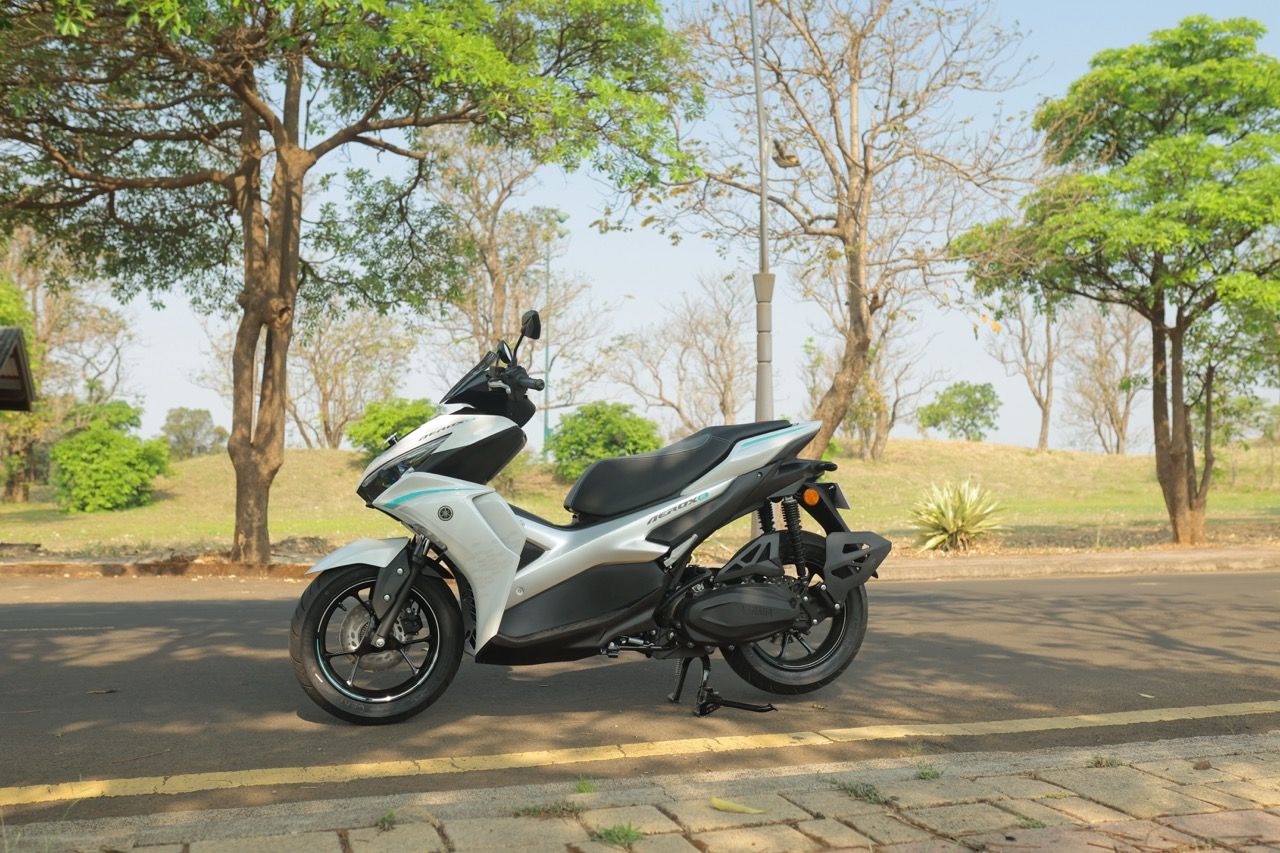
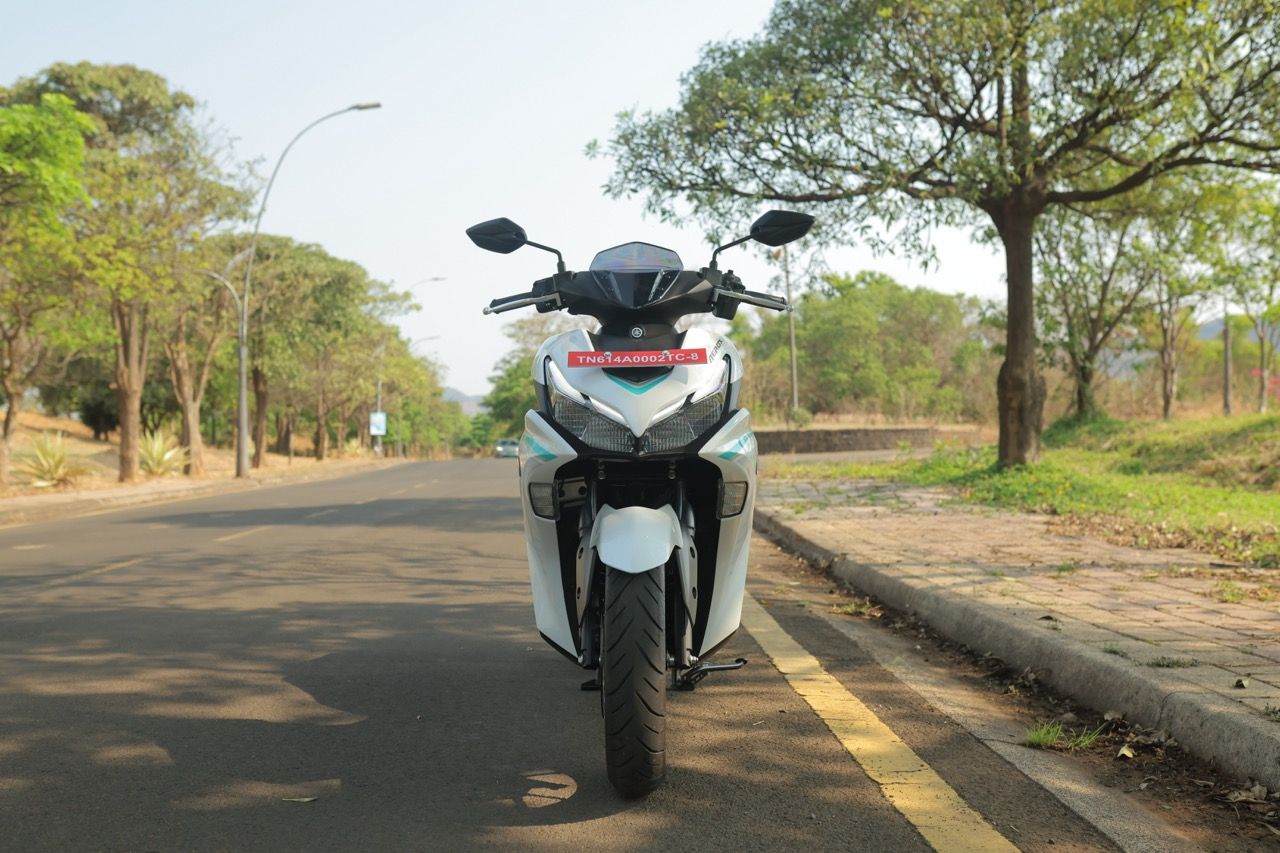
From a distance, telling the Aerox E apart from its ICE sibling is almost a guessing game. Same maxi-scooter stance, same busy, slightly over-styled bodywork that’ does keep the sporty aesthetics of its petrol sibling. It’s sharp, edgy, muscular, and unmistakably designed with a certain idea of “masculine” in mind.
Up front, you get those oversized LED lamps that demand attention. Move around to the side and there’s some restrained grey and white detailing over an otherwise all-white paint scheme. But the real giveaway sits at the rear: that blue, swingarm-mounted motor, which feels like Yamaha Motor Company’s way of saying, “Yes, this one’s electric,” just in case you missed it.
Things get more interesting once you actually get on it. At 183 cm, I kept finding my knees brushing against the bodywork. Not uncomfortable, nor annoying, just… there. Taller riders will notice it. Shorter riders probably won’t care.
The 5-inch colour TFT does its job on paper. Bluetooth, turn-by-turn navigation, all the expected bits are here. But in practice, it sits just far enough out of your natural line of sight. You don’t glance at it, you dip your head. And that’s the kind of thing you notice more, the longer you ride.
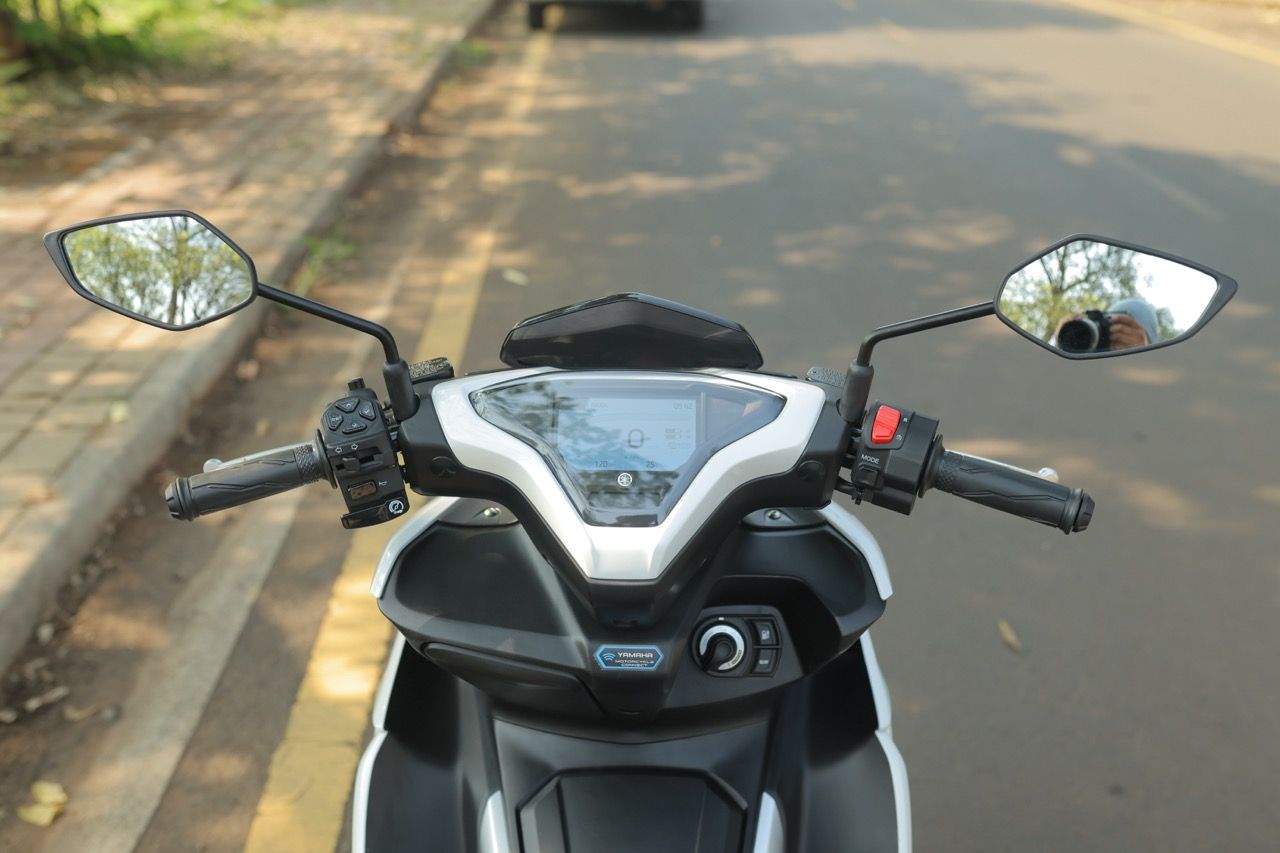
There’s also a smart key system, so you can leave the physical key in your pocket and just get going.
Then there’s the “boost” mode. It gets its own button, placed just beneath the horn, and offers a short burst of extra power for overtakes. It works for about 10 seconds, after which there’s a 30-second cooldown. Yamaha Motor Company says this is to keep things predictable and safe, which makes sense in everyday riding.
What’s less convincing is the placement of the button itself. Sitting right below the horn, it isn’t the most ergonomic of decisions, and takes a bit of getting used to before feeling natural.
On The Go
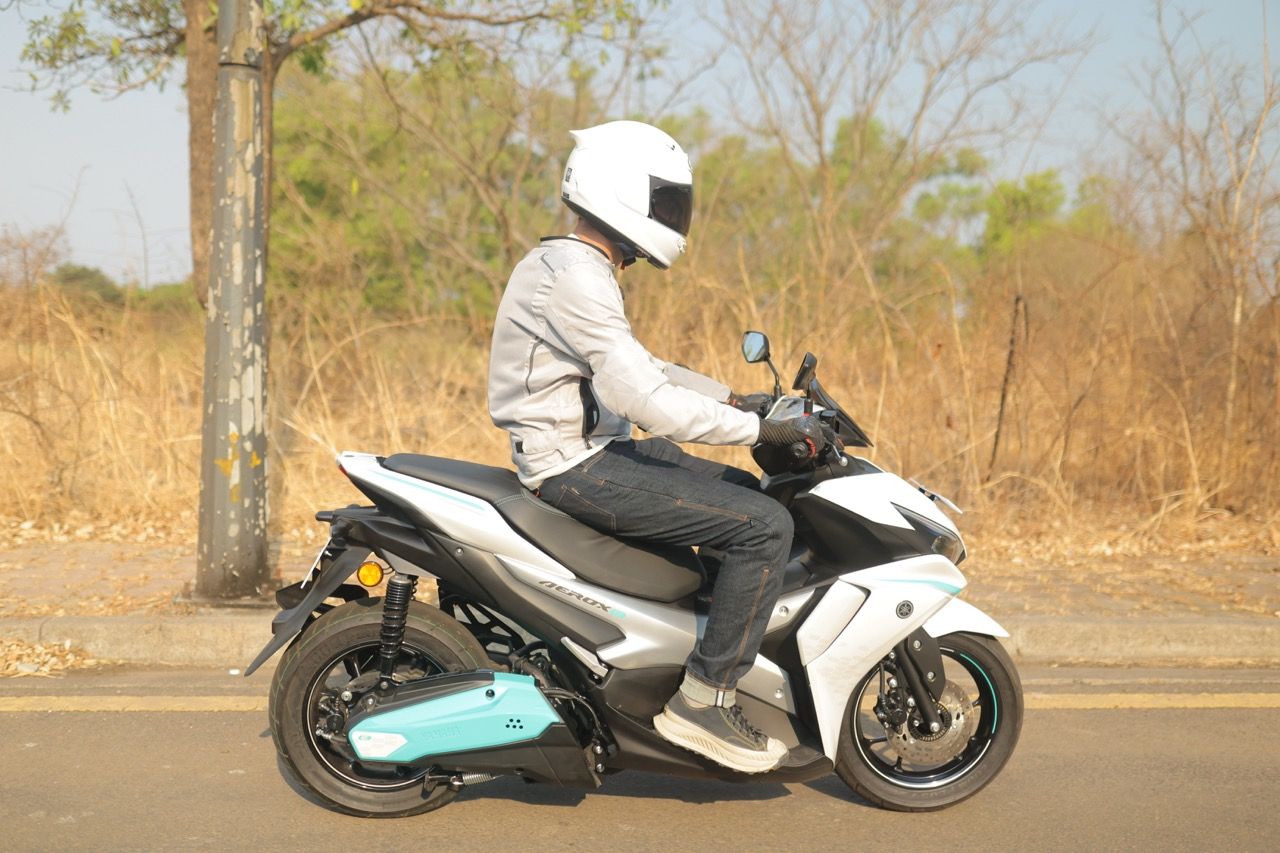
On paper, the electric Aerox weighs around 13 kg more than its ICE counterpart, although you’ll barely notice the difference once you’re on the move.
There are three modes on offer here: Eco, Standard and Power. Eco felt almost a little annoying to use, with barely any power on tap and a very slow, almost reluctant delivery. Power mode, on the other hand, is fun and zippy, but feels like it still needs a bit of sorting in the calibration department. The initial throttle response can be slightly jerky, which shows up in stop-and-go traffic or tight U-turns, especially if you forget to switch out of it. This can become a bit of a bother, however, nothing that cannot be fixed with some calibration from Yamaha’s end.
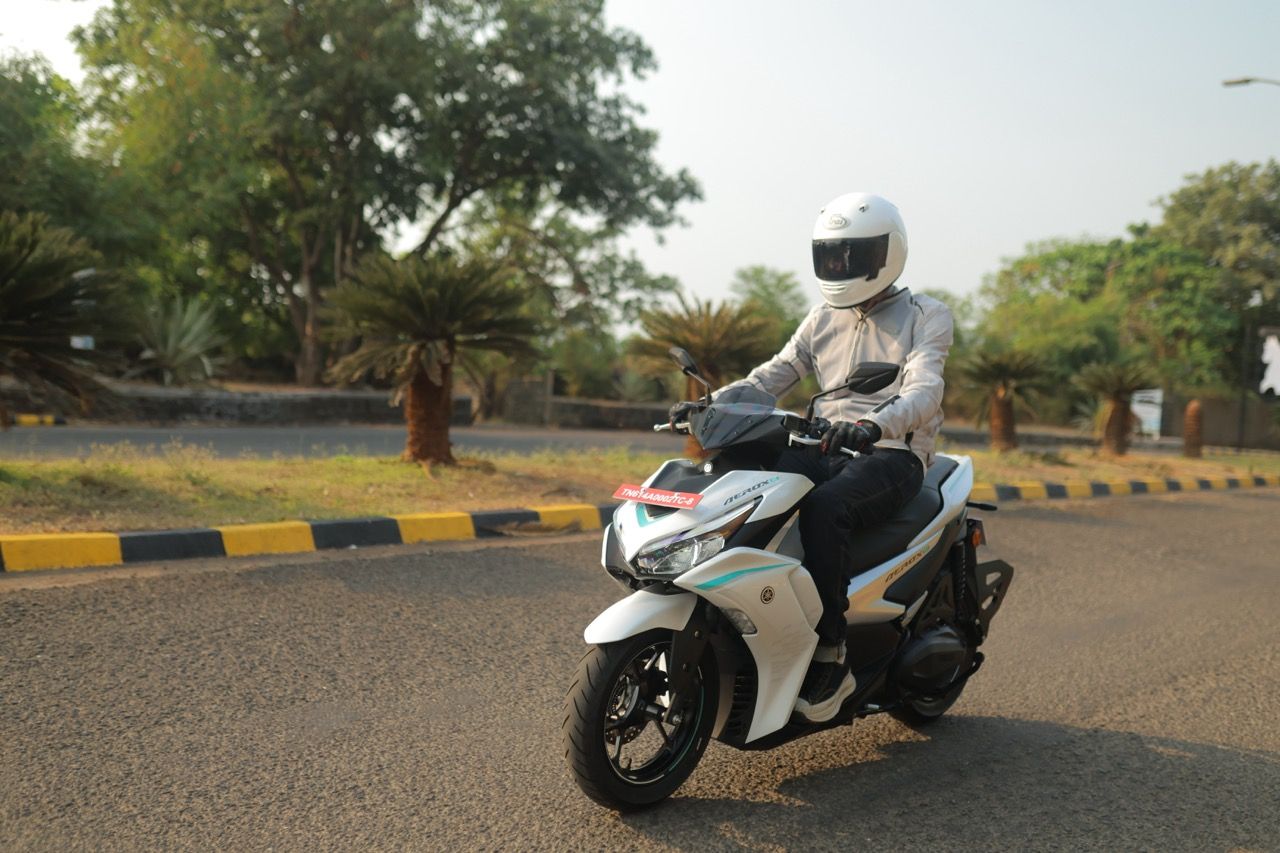
Standard, as expected, sits right in the middle and ends up being the one you keep going back to. It’s the most usable, the most predictable, and where I spent most of my time.
I’ve spent some time aboard the ICE Aerox, and the EV feels familiar in most ways. It tips into corners easily, feels well-balanced, and holds its line with a fair bit of confidence. You can carry decent speed through the twists of Amby Valley without it feeling out of its depth.
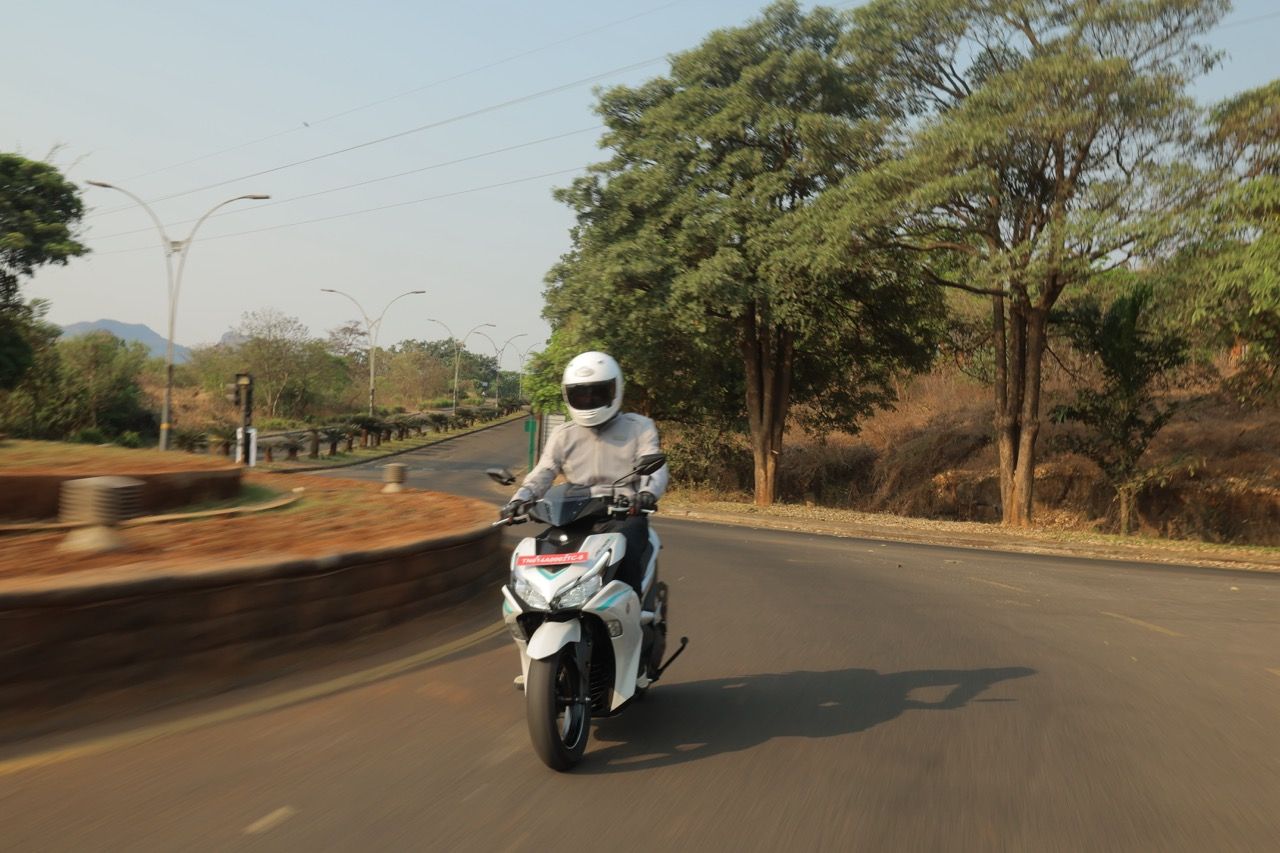
It’s not quite as fun as the ICE Aerox, and that’s hard to ignore. The suspension feels well judged, if slightly on the softer side, which should work well on Indian roads. The brakes, discs at both ends, are strong enough and get the job done without any fuss.
But that’s just it. You expect a bit of drama from an Aerox, and this one doesn’t quite get there.
Battery And Practicality Bits
The Aerox E comes with two 1.5 kWh removable battery packs, which together are claimed to deliver around 117 km of range (IDC). In the real world though, expect that number to settle closer to the 90 km mark.
The electric motor, for context, produces 12.6 bhp and 48 Nm of torque, which puts it almost on par with the Ather 450 Apex, at least on paper.
The trade-off is space. With the batteries taking up most of the underseat area, underseat storage drops to about 15 litres from 24.5-litres on the ICE Aerox, which is usable, but not exactly generous, and may not even be enough for a proper grocery run.
Yamaha also offers a 650W home charger as an optional extra, priced at ₹18,000. Charging itself is fairly straightforward, with a full top-up taking around 6 to 7 hours, so overnight charging is realistically how most owners will end up using it.
The bigger concern is the batteries themselves. Each unit weighs around 13 kg, which doesn’t sound like much until you have to carry them up to your apartment almost every other day. Given that the range isn’t particularly standout to begin with, this is one of those things that could get tiring fairly quickly.
Verdict
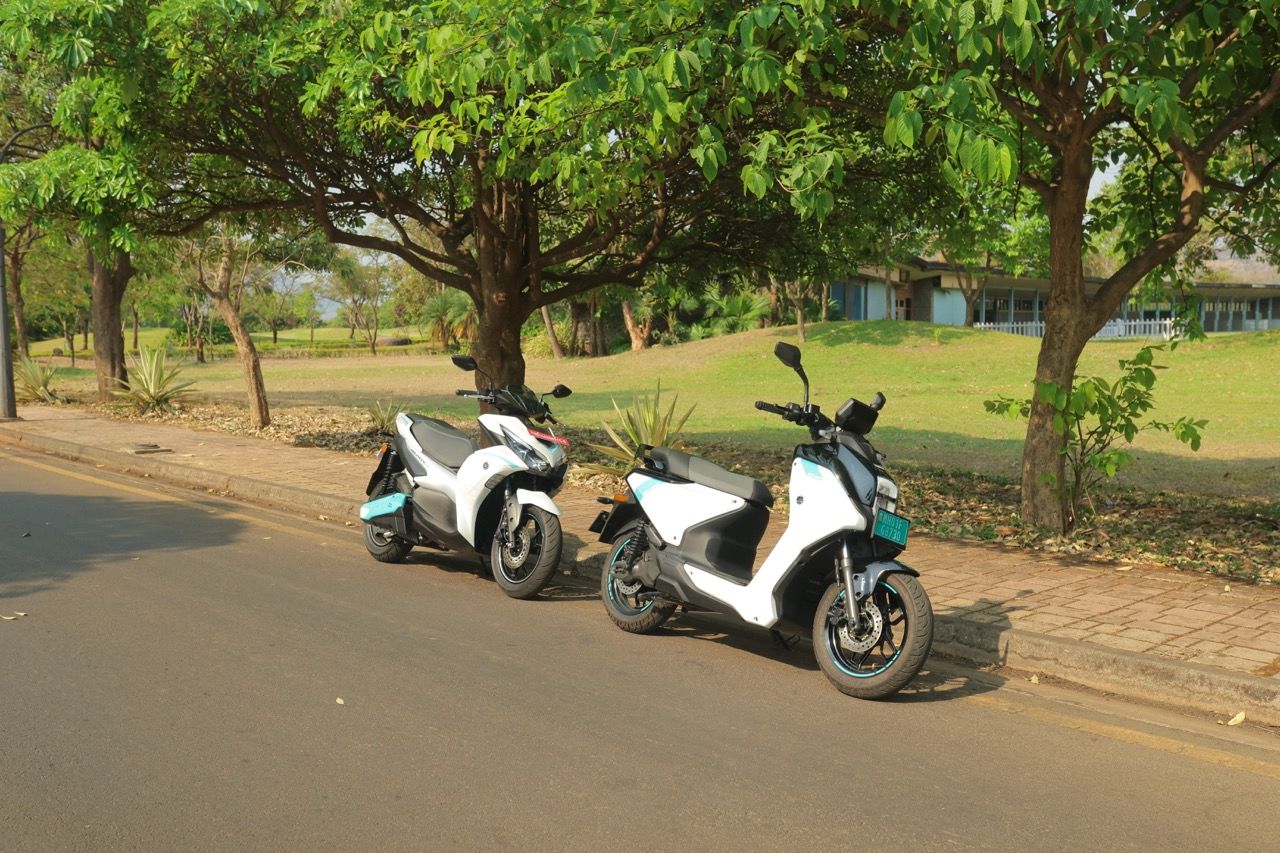
Going in for the ride, this felt like it would be the more exciting sibling, the one that actually digs deeper into what the Aerox badge stands for. But the more I rode it, the less I started expecting. Don’t get me wrong.
It does a lot of things right. It looks the part, rides well, and is easy enough to live with. But it never quite delivers that sense of occasion, that bit of drama that makes you want to keep riding just for the sake of it.
Pricing will play a big role here, but expect Yamaha Motor Company to position it at a premium. And at that point, it’s hard to figure out who exactly this is for. Because if you’re buying an Aerox, you’re probably not looking for something that just feels… fine.
Unless, of course, you’ve got a soft spot for the badge and a few Yamaha posters on your wall.


