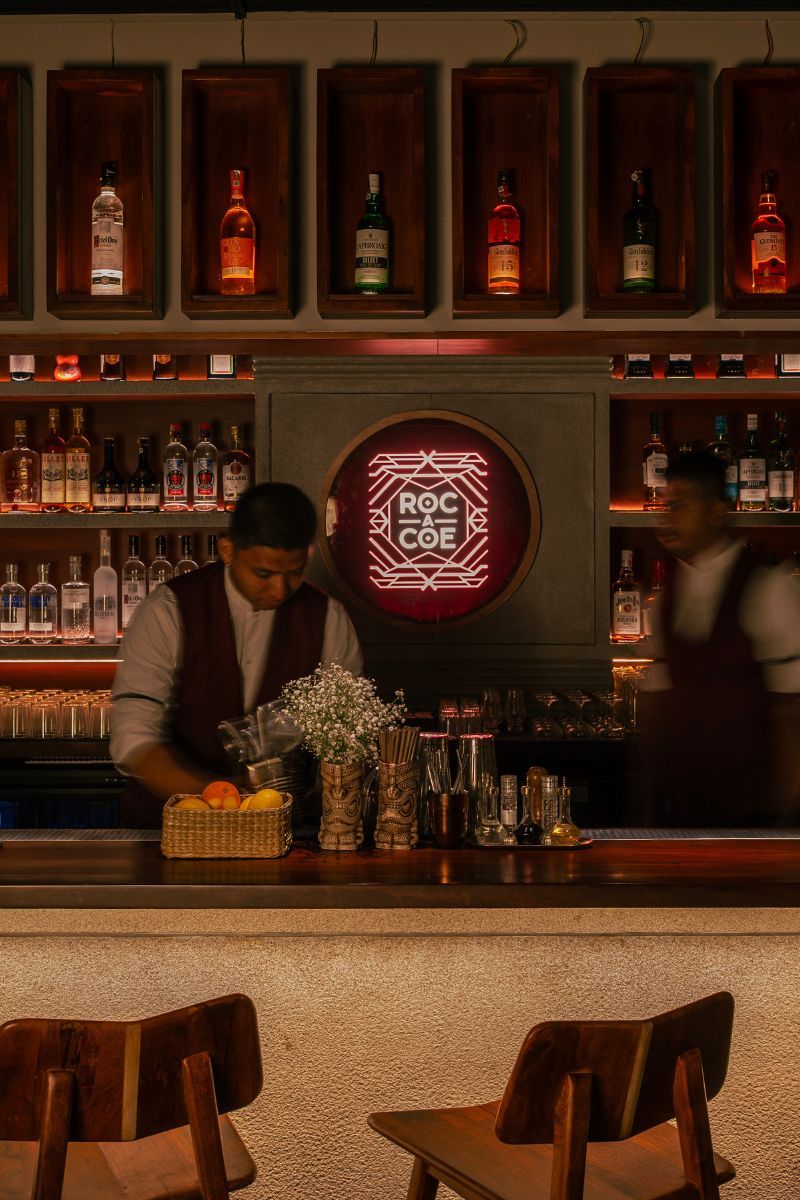
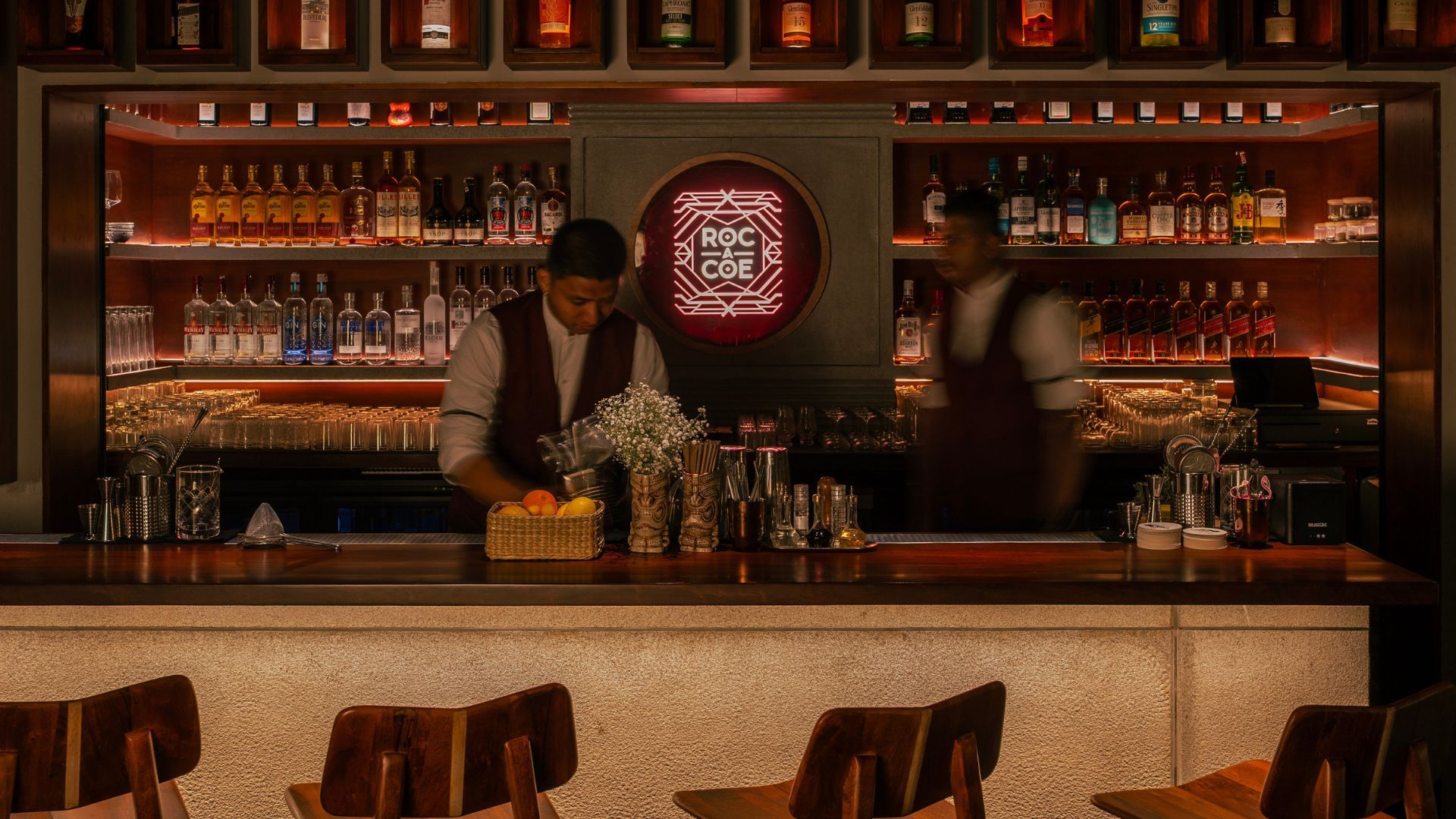
After one of the longest interviews I had conducted all year, Karl Fernandes still had a bar to prepare for the night. I stayed put. His bartenders let me behind the counter at Roc-A-Coe and taught me to make an Old Fashioned; delicious, though I am willing to attribute that mainly to supervision.
When Karl found a free minute, I asked about the other businesses lurking inside the drinks business: packaged cocktails, mixers and the rush towards anything promising fewer calories. He had once experimented with cocktails made using sugar substitutes; his test table was unimpressed.
Karl reached behind the bar and produced a glass jar. An acquaintance had brought him freeze-dried miracle fruit from abroad. He gave me a piece of lemon first. I tasted it and licked my lips. Then I chewed the fruit for a while and tried the lemon again.
It was sweet. Properly, confectionery sweet. Miracle fruit, the berry of the West African plant Synsepalum dulcificum, contains miraculin, a protein that makes our sweet receptors respond to acidic foods. I was completely bamboozled. For the rest of the night, I approached every cocktail with the suspicion that my tongue had joined Karl’s payroll.
This was a very Karl way of answering a business question: with an experiment he had already attempted, a strange object produced from storage and a practical joke. He has spent more than 16 years in the drinks trade, beginning in mainstream hotels before working as a liquor-brand ambassador, freelancer and consultant. Over the past five years, he says, he has consulted on more than 50 bars through Sip Savvy, the company he built to develop beverage programmes across India. Roc-A-Coe, on Chennai’s swanky Khader Nawaz Khan Road, brings those jobs together. Here he is bartender, researcher, recruiter, operator watching the numbers and enthusiast amused by the effect of a ‘magic’ berry on a visiting writer.
His career also contains, in miniature, much of the recent history of Indian bartending. Karl learned under men for whom hotels offered the surest route into serious bar work. He then took that training into the growth of independent bars across the country. The bartenders coming after him have inherited better access to knowledge and a much wider permission to play—but also a stronger desire for creative authority, visibility and eventually ownership.
Rules And Regulations
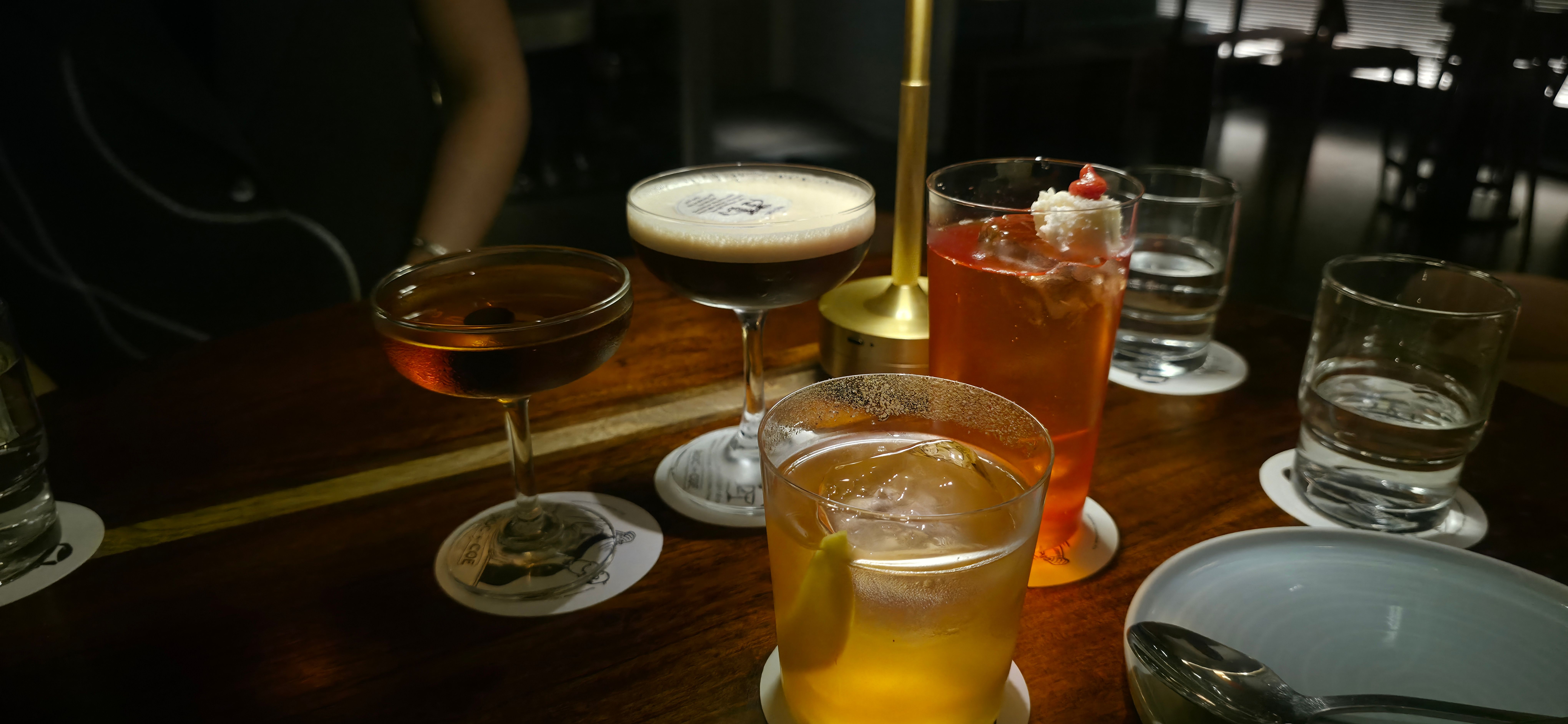
One Chennai morning, over a Singaporean breakfast at nearby Zhouyu, an otherwise anonymous businessman supplied the older lore. Chef Chindi Varadarajulu—who had lived in Singapore before taking its cuisine to Canada and eventually Chennai—sent out rice rolls, noodles, eggs and buns progressively enough to disguise the amount we were eating. I left the bakery downstairs carrying a sourdough loaf large enough to require its own seat belt.
Our companion remembered public drinking as overwhelmingly masculine and largely contained inside hotels. Unlike Mumbai or Delhi, Chennai never developed a visible constellation of dives where professions, generations and tolerances could collide cheaply. Its institutions belonged instead to properties: The Permit Room at Hotel Maris, Bamboo Bar at The Savera and Lady Connemara at Taj Connemara.
Prohibition began in Salem district in 1937 and spread across Madras State in 1948. It was suspended in 1971, followed by decades of reversals. In 1983, M.G. Ramachandran’s government created TASMAC to control wholesale liquor; in 2003, it gained exclusive retail privileges. Tamil Nadu had travelled from prohibition to monopoly without becoming philosophically relaxed about drinking. That monopoly has since contracted repeatedly: 1,000 outlets closed across 2016–17, thousands were affected by the highway-liquor ruling, and another 500 shut in 2023.
The contemporary cocktail bar sits on the thin, peculiar edge of this history. Tamil Nadu has no dedicated licence for a standalone resto-bar. FL2 licences were designed for non-proprietary clubs; FL3 licences attach to classified star hotels. In July 2026, the government was considering a new category for standalone restaurants, but no final decision had been announced. Meanwhile, clubs operating under FL2 licences must formally serve members, hotel bars retain their structural advantage, and police scrutiny—backed by new digital tools to instantly report offenders—helps make 11PM or midnight feel less like a suggestion than a red alert. My late-night Mumbai-drinking ass felt faintly absurd wrapping up at 11 on a Saturday, but nobody wanted to test the patience of the state apparatus. We gingerly made our way downstairs.
Building The Independent Bar
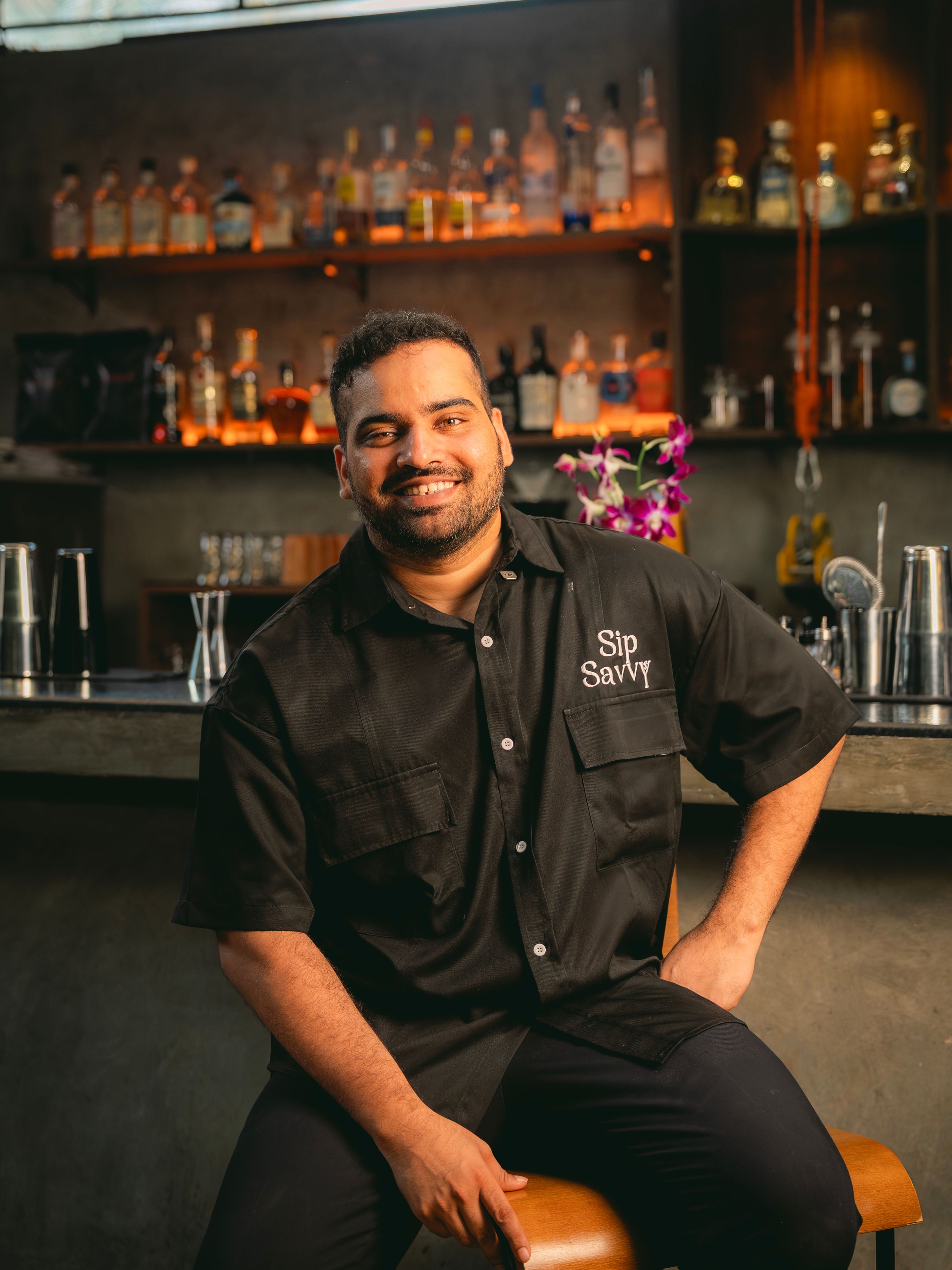
Karl’s escape from the hotel hierarchy was partly an escape from Mumbai geography. He grew up with the local-train hustle: reaching work on time, watching workplace politics shuffle opportunities around, and calculating every conversation against the final train home. A colleague living close to work could stay later, sleep better and network more easily. Karl might have possessed equal talent and still arrived at the race carrying a commute.
Even then, Mumbai simply had too much competition. “If there are too many people running the same race, your chances are much less,” he said. That realisation pushed him towards Goa roughly five years before the pandemic—not as a beach sabbatical, but as a professional calculation. The market was comparatively untouched. Instead of fighting hundreds of people at his level, he could enter a place actively searching for people like him.
Goa required another apprenticeship, this time in timing. Karl studied the market while working as a liquor-brand ambassador, then risked freelancing and juggling several jobs. He worked with a family brand, attached himself to a bar that entered the national lists and built his consultancy in parallel. His aim was blunt: when Goa reached its peak, he wanted to be reaching his own. Sip Savvy grew from those five years outside the security of a nine-hour job.
The move taught him to treat an emerging market as opportunity rather than deficiency. “You have the chance to build, or be a part of a community that will build,” he said. The timing might be wrong; the market might not mature on schedule. But the alternative was remaining comfortable inside an established race whose rules and winners were already visible.
His pitch to bartenders and hospitality staff considering Chennai echoes the one that once drew him to Goa. Leave the established city and help build the next one. “You get a chance to build your name and be a face for a brand,” he tells them.
The offer is not uncomplicated. It asks the bartender to move away from family, learn an unfamiliar city and wager years of a young career on somebody else’s forecast. At Roc-A-Coe, Karl recruited much of the bar team from Bombay. Getting them here was only the first job. A bar programme, as he describes it, resembles a football team. It needs the technically minded people who handle stock, systems and the tedious backstage labour; the forward-facing people who can talk, recommend and turn a first-time customer into a regular; and somebody above them studying revenue, reputation and the wellbeing of the whole machine. A great bartender without a functioning business is a short-lived performance.
That is the real portfolio behind ‘beverage consultant.’ Karl is not simply flown in to invent twelve drinks and name them after neighbourhoods. He studies liquor laws, rents, supply, staffing, food, audience size and how many cocktails a room must sell before an investor stops admiring the garnish. “At the end of it, we are still in the booze business,” he said, after discussing cocktails as a culinary experience.
Chennai made that pragmatism unavoidable. A city with a flourishing dining culture still does not reliably reward specialisation at the bar; premium spirits or ingredients such as Vermouth can be maddeningly difficult to procure, even for customers accustomed to drinking them abroad. Each financial year can introduce fresh disruptions to supply.
“I feel like I’m in Bombay in 2010,” Karl said of Chennai’s palate. Fruity, floral, colourful drinks still turn heads. Savoury drinks perform especially well; Roc-A-Coe’s raw-mango-brine Esplanade is among its bestsellers. None of this means the city’s drinkers are primitive, only that a bar cannot import the aesthetics of a mature market and demand immediate obedience. “Evolution will come only when it takes small steps in building it,” Karl said. “If you don’t take those small steps in building the community and the palate of that community, you may lose the race.”
Roc-A-Coe’s local references therefore have to function at several levels: taste good, survive Saturday service and offer a story that does not require a lecture. Misha Jain, the public relations professional who helped Karl—who happens to be her husband—conceptualise the bar, went digging through old drinking manuals and the city’s histories, primarily Madras’s largely forgotten punch-house culture. On our first night in Chennai, she produced The Savoy Cocktail Book and flipped to page 135. There it was: the Roc-A-Coe Cocktail, equal parts dry gin and sherry, stirred and finished with a cherry. The 1930s recipe is comically severe besides the warm bar it eventually named.
Misha has seen part of that community forming among women. Cocktails have become a social activity and a form of self-expression, apart from the growing number of women pursuing nightlife careers. At Karl’s workshops in Chennai, women often bring their partners along to learn. Karl’s own reading is that men can feel conspicuous participating in this sort of public activity in their home city, while women are actively searching for engaging spaces in which to socialise. “They’re not necessarily interested in learning bartending,” he said of most workshop attendees. “It’s just like, I found it cool. I thought it was nice. And I wanted to bring my people along.”
Across the weekend, I repeatedly saw groups of women occupying cocktail bars much as they might cafés: studying the menu, ordering rounds and talking among themselves. In a city whose public drinking history had largely been arranged as a boys’ room, their comfort felt like evidence that the room itself was changing.
Who Owns The Future?
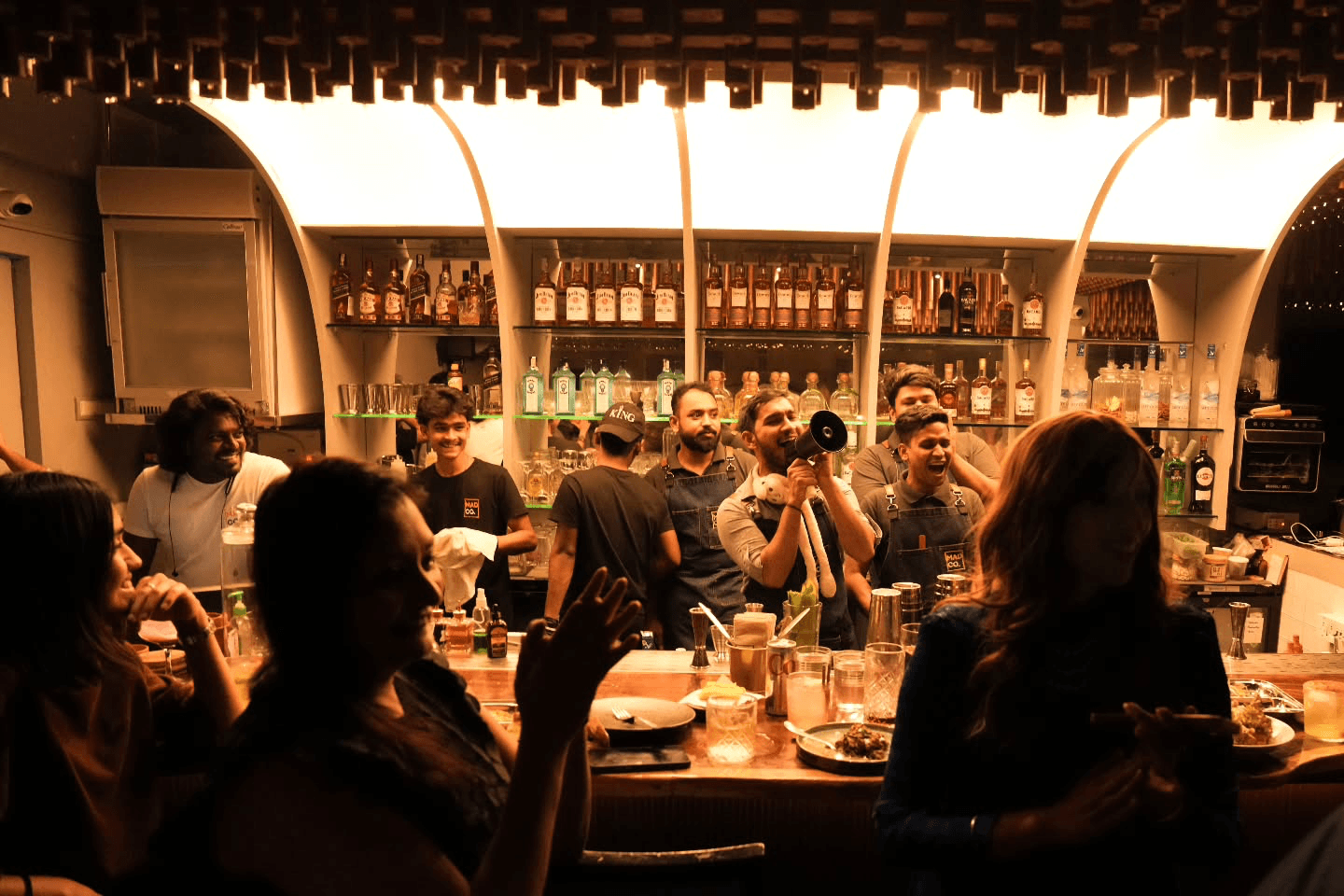
Unlike Roc-A-Coe, Madras Cocktail Company AKA MadCo reveals little from the street. Reservations begin with a DM on Instagram; directions and a password follow. Inside, a ceiling pricked with warm lights hangs over a moody room designed for conversation. Santhosh Zachariah Abraham, Karl’s old friend and one of the people behind the establishment, described its secretive nature as intentional; the mild rigmarole asks customers to arrive with some intention of their own.
MadCo occupies the afterlife of Zara, once a Chennai institution, and reportedly uses the older bar’s liquor licence. The arrangement is a useful picture of the city’s transition: a contemporary independent cocktail bar growing inside the legal skeleton of an earlier kind of nightlife.
Behind the counter that afternoon was Rohit Rajput, young, bright-eyed and possessed of the calm cheer of a bartender who knows where everything is kept. I asked for a boozy whiskey drink suitable for day drinking. He returned with something fresh and Lynchburg Lemonade-adjacent in a ceramic rubber-duck bowl. Cute as hell. Later came a whiskey-and-Suleimani-chai riff that landed with the force of personal nostalgia. Neither drink strained to advertise its intelligence; Rohit listened to the brief and made things that pleased me.
He had come to Chennai after working at SoGo in Varca, Goa. At MadCo, he tried to build the sort of workplace younger bartenders wanted rather than the hierarchy many had inherited. “There was no seniority between us,” he said. Team members could work separately on ideas, bring them back and decide together. Talent was not to be allowed to sit unused merely because its owner was junior.
Rohit had also learned that creative freedom requires translation. When customers tried one of his clarified cocktails, some wondered why its colour and obvious alcoholic heft had disappeared. He went from table to table explaining the process. The exchange could be sigh-inducing, but it also created the relationship he found missing in Goa. Goa’s visitors often arrived to party and leave; in Chennai, the same customers returned every weekend, sometimes again on a Monday or Tuesday. They waited to see what he would do next.
This is the creative edge made possible by the earlier generations: classical knowledge is now the floor, not the ceiling. Karl remembers a time when simply knowing the right spec could distinguish a bartender. Rohit is expected to clarify, ferment, pre-batch, improvise and still explain the missing colour to table four. He must possess technique, but also opinions, stories, social fluency and something new for next weekend.
Retaining young bartenders presents its own challenge. Karl, who has recruited much of his Roc-A-Coe team from Mumbai, is pragmatic about the possibility of people eventually moving on. “I’m very open to losing people,” he admits. “They may leave overnight, after a month or even after everything is good.” His rule is that the emotional response should never be allowed to close the professional relationship. If somebody moves towards a better job, or merely a job they later discover is worse, the decision should remain theirs. Chennai’s cocktail culture has spent years borrowing licences, techniques, mentors and momentum. Its next round will be decided by what—and whom—it manages to keep.


