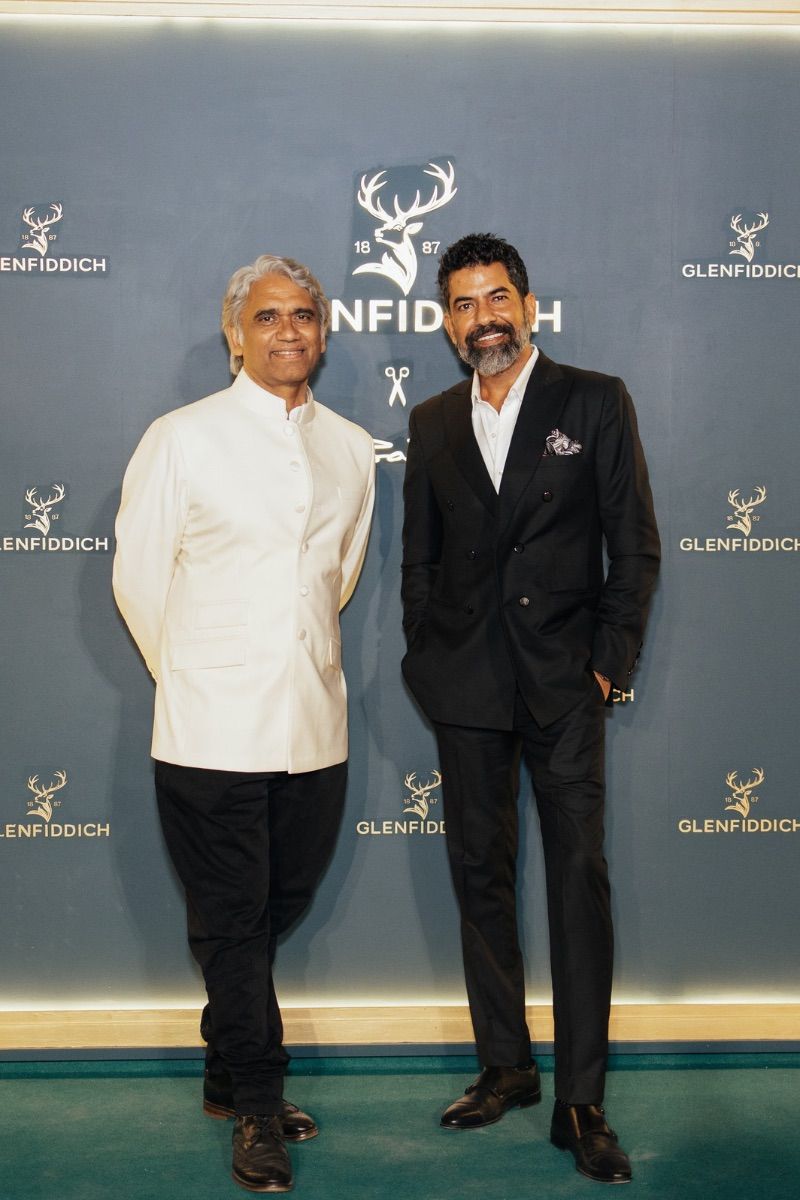
India's appetite for whisky is showing few signs of slowing down. According to the Scotch Whisky Association, India remained the world's largest export market for Scotch by volume in 2025, receiving the equivalent of 220 million bottles, a 15 per cent increase over the previous year. Meanwhile, homegrown single malts are having quite the moment themselves, with sales growing approximately 22 per cent to five lakh cases in 2025, according to the Confederation of Indian Alcoholic Beverage Companies (CIABC). Clearly, Indians are developing a taste for something beyond their usual tipple. And with consumers increasingly willing to experiment, trade up and explore the stories behind their favourite spirits, the country's whisky culture is becoming considerably more interesting.
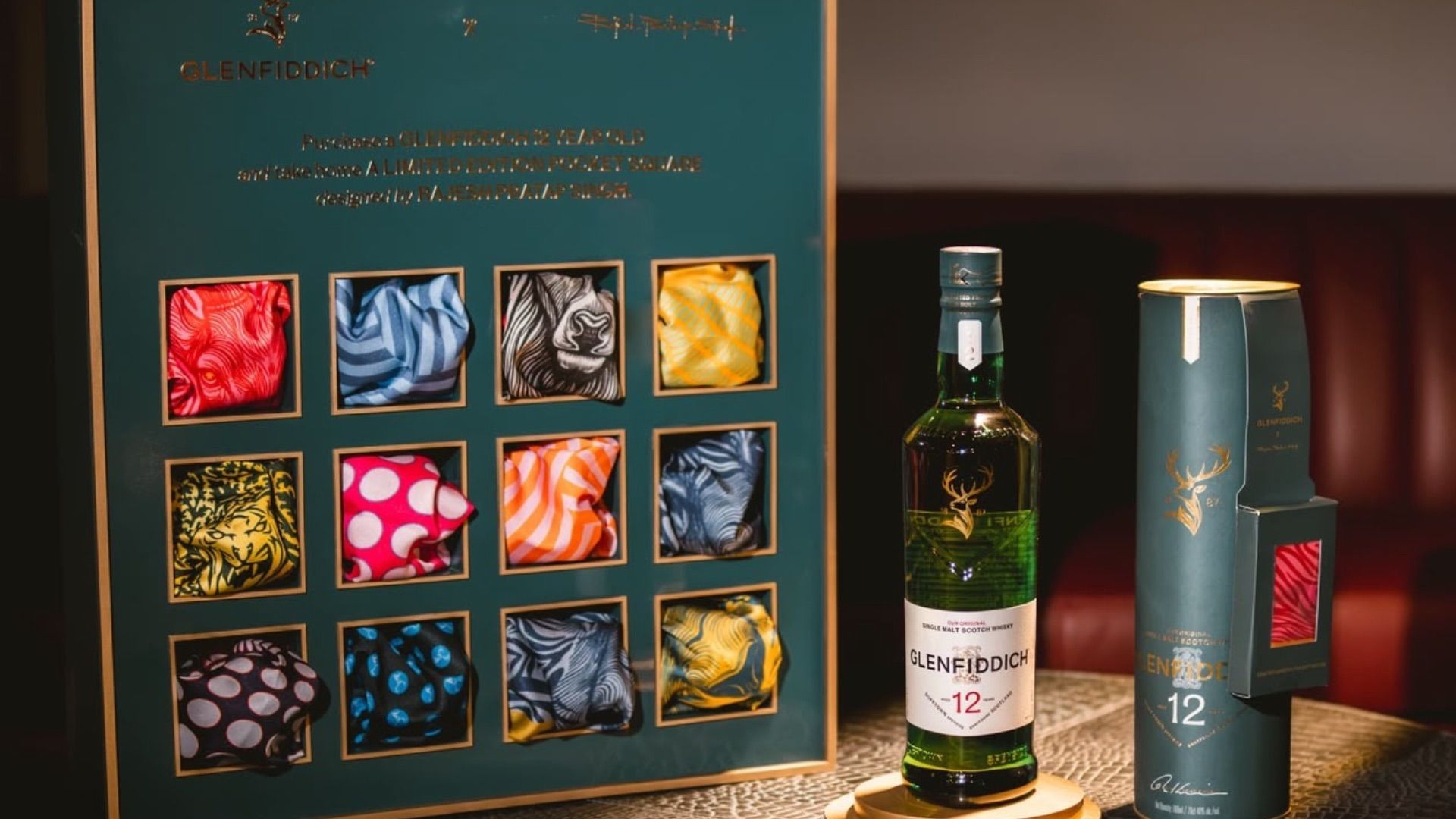
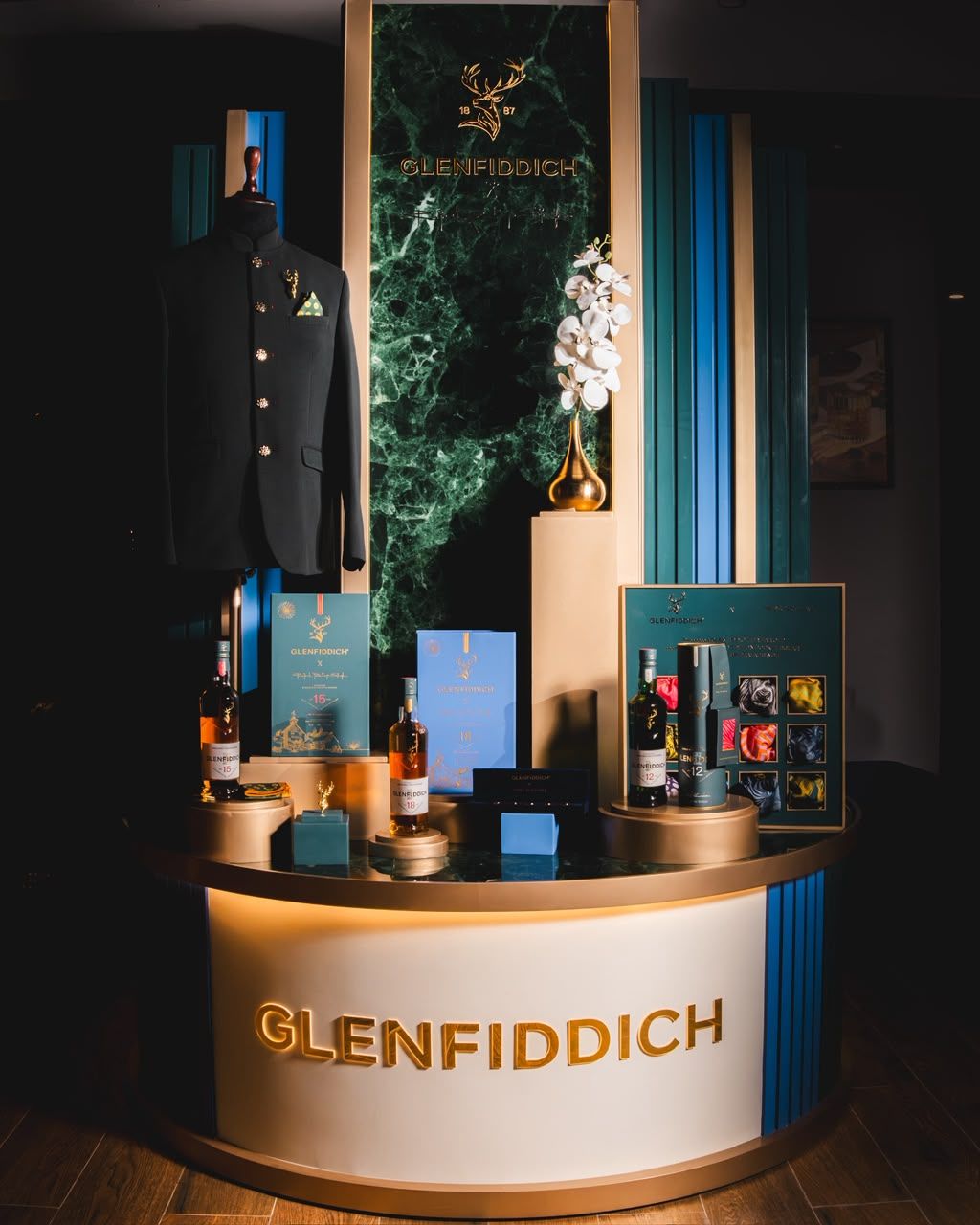
Take Glenfiddich's latest collaboration with Indian designer Rajesh Pratap Singh, for instance. The Scottish single malt maker has introduced a limited-edition festive collection across its 12, 15 and 18-Year-Old expressions, bringing Singh's contemporary Indian design sensibility to the brand's packaging and accompanying accessories. Rather than stopping at a decorative presentation box, the collection includes specially designed pocket squares for the 12-Year-Old, a pocket square and stag brooch for the 15-Year-Old, and a button set for the 18-Year-Old. The bottles are presented in festive packaging that combines Glenfiddich's familiar stag and distillery imagery with gold motifs, effectively bringing a little Indian sartorial flair to a Scottish whisky. It's an interesting marriage of cultures, particularly when you consider Singh's longstanding relationship with Indian textiles, traditional weaving techniques and understated tailoring.
For Kartik Mohindra, Managing Director of William Grant & Sons India, the collaboration is part of a much larger shift in how Indian consumers approach luxury. Having spent over 26 years in the spirits industry, including a substantial stint at Pernod Ricard India, Mohindra has witnessed the country's premium spirits market evolve from one driven largely by established loyalties and familiar drinking occasions to something considerably more varied. Today's consumers are experimenting across categories, demanding more from the brands they buy and increasingly treating luxury purchases as expressions of personal taste. We caught up with him to discuss the thinking behind the Rajesh Pratap Singh collaboration, the changing culture of festive gifting, the emergence of Indian single malts and why India's smaller cities could play an increasingly important role in the future of premium whisky.
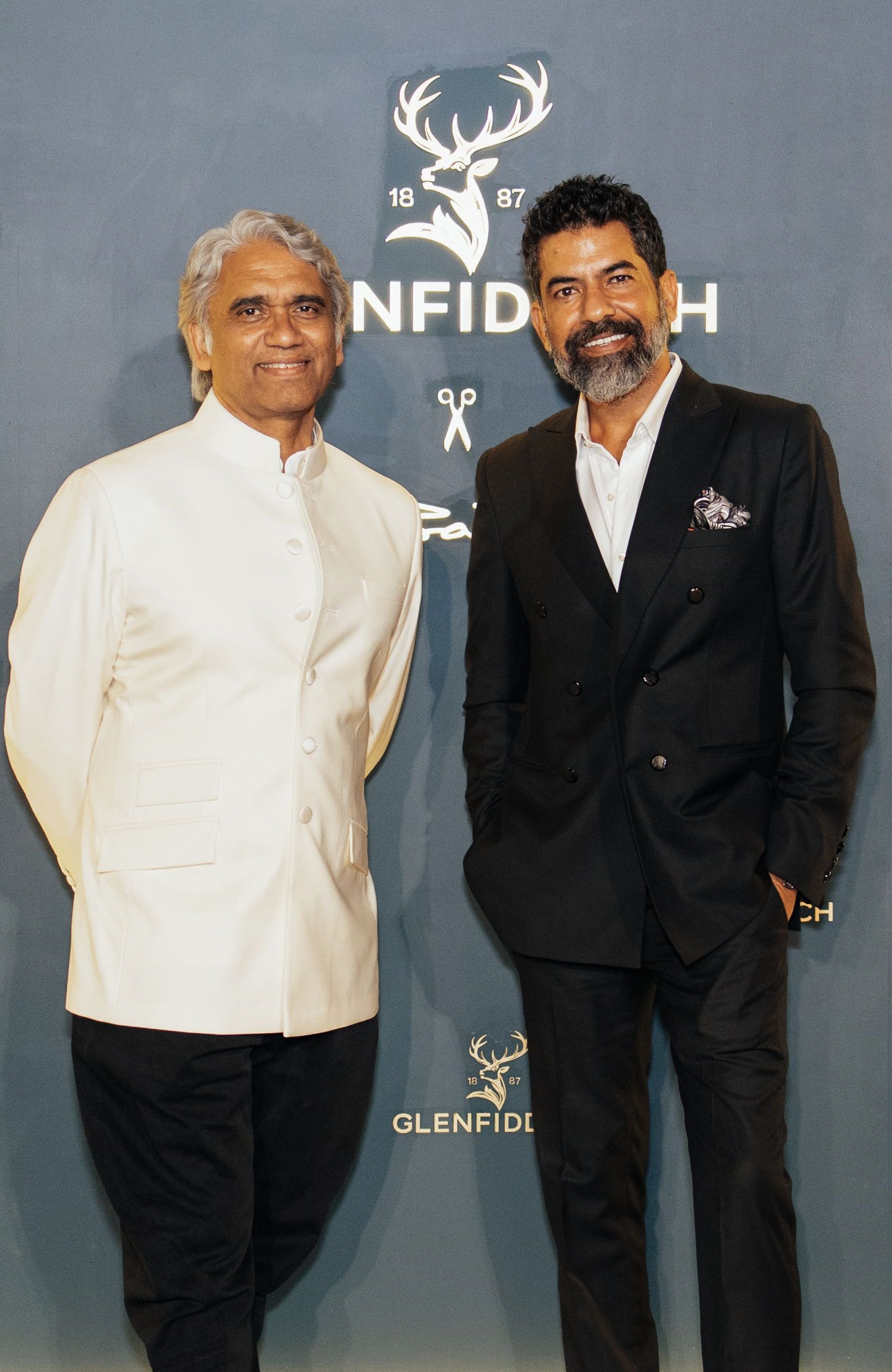
You've spent nearly three decades in the spirits industry. How has India's relationship with premium whisky changed over the last ten years? Are we drinking differently, or are we simply spending more?
I think the last ten years have probably been the most definitive as far as the alcohol landscape is concerned, and there are several factors behind that. India's economic growth has allowed for significantly more disposable income. Indians are doing well, and they want to indulge. Earlier, because of certain taboos, consumption tended to be more about quantity. Now, it has shifted towards indulgence. It's about which brand one chooses, what that brand says about them as a consumer and what aspects of its story or production process resonate with them. There are many dimensions to this change, and I think we're seeing them come together in a very interesting way.
Then COVID came along, and households that were traditionally conservative began to change. A lot of those barriers came down because people were spending more time at home and experimenting with things they might not have considered previously, such as enjoying wine with meals. Media has played an equally important role. The world is no longer defined by borders in quite the same way. What's happening among young consumers in New York is accessible to us almost instantly, and trends are no longer restricted to individual markets. Earlier generations might have found a whisky they liked and stuck to it, whereas today's consumers are far more willing to experiment across categories.
We're seeing much more repertoire consumption, particularly at the premium end of the market. A Glenfiddich loyalist might enjoy a glass of wine with a meal or gravitate towards tequila or cocktails when catching up with friends. The occasion increasingly determines the choice of drink, rather than a lifelong attachment to one particular category. I think it's a great time for the industry, and we've only just started scratching the surface. With all these favourable developments, we're going to see much more interesting times ahead.
Festive gifting has become an increasingly important occasion for spirits brands. How has the approach changed over the years, and where does the Rajesh Pratap Singh collaboration fit into that evolution?
In all fairness, there have always been collaborations, especially during the festive season. Traditionally, consumers tended to premiumise during these occasions, whether for a party at home, a Diwali celebration or another special event. What's become much more prominent in recent years, however, is gifting. What might once have been a box of sweets is now, on many occasions, becoming a bottle of alcohol, depending on what your budget allows. That's increasingly become an occasion for brands, particularly for us, to explore. But we didn't want to approach it in the usual way, where you have a box signed by a celebrity or collaborator, or perhaps a glass being gifted alongside a bottle. That's fairly standard.
We wanted to stand out for what our brand represents, which is luxury, craftsmanship, process and aesthetics. When you give someone a gift, you're making a statement about yourself as much as you're thinking about what the recipient would appreciate. You're trying to elevate both the giver and the receiver, and that's a rather interesting balance. With that insight, we felt we needed to move away from the expected gifting formats and create something more definitive for the brand. What better way to do that than collaborate with one of the country's leading luxury fashion designers, Rajesh Pratap Singh? We worked together, developed the ideas and eventually arrived at this collection.
Singh has a particularly strong relationship with textile design and Indian craftsmanship. Was he always the first choice, or were other designers considered?
As a team, we were very clear that we wanted to work with a designer who represented luxury but also had a connection with festive, bridal and Diwali couture. There are, of course, many great designers in India, but we eventually honed in on Rajesh. Because the collaboration extends across our 12, 15 and 18-Year-Old expressions, our choice was also influenced by the consumer cohorts associated with those whiskies. We had to consider which designer and which design sensibility would resonate with someone buying a 15 or 18-Year-Old Scotch. When you look at it from that perspective, Rajesh became an obvious choice.
When a collaboration stretches across different expressions and price points, how do you balance the designer's creative vision with the identity of the brand? How much back and forth goes into that process?
There's definitely a back-and-forth process. Ultimately, the best collaborations happen when they're genuine collaborations, where the core identity of the brand and the collaborator are in sync. That's one of the most important considerations when identifying the right person, and it doesn't necessarily have to be someone from fashion. It could be an artist. The question is whether their creative style aligns with what the brand stands for. There are two parts to the process. First, you develop an overall design that keeps the brand's identity in mind while allowing the collaborator to express themselves. That's where you create harmony between the two.
I like to think of it as a Venn diagram. The greater the intersection between the two circles, the better the collaboration. When that overlap is small, the brand and the collaborator aren't really in sync. As a team, we try to make sure those two circles overlap as much as possible because that's when you get something special. Once you've established that common design language, you translate it across the various expressions. Then you work with the designer to determine what gift accompanies each bottle and how it contributes to the overall experience. For the 12-Year-Old, you might have one kind of gift. For the 15-Year-Old, that changes into something more luxurious, and so on for the 18-Year-Old. That's how the collaboration develops across the range.
Stepping away from the collaboration for a moment, we've seen Indian single malts emerge as serious competitors to established Scotch brands, particularly over the last few years. How has that changed the competitive landscape for Glenfiddich?
There's no doubt that we've seen an explosion of Indian single malts in recent times. Some of them have done exceedingly well, not only in India but also on the global stage, and we welcome that success. Equally, there have been others that haven't managed to create quite the same impact. The simple way we look at it is that there are consumers for both. We certainly keep a close eye on what's happening in the category, but at the end of the day, we have a luxury product with years and years of proven legacy. Consumers might go out and sample other products along their journey, but many eventually gravitate towards us.
Indian single malts have created an interesting niche for themselves, and I wish them continued success. It's always great to see a provenance-led product emerging from India, particularly one that can hold its own on the international stage. Ultimately, I think we operate in different spheres with different consumer cohorts, so it's fascinating to watch how the category develops.
Glenfiddich is fundamentally a Scottish product, yet collaborations like this one are designed to connect with Indian consumers through familiar cultural and design references. What do you think international spirits brands need to understand about the Indian luxury consumer?
I think being a market leader in the single malt category by a fair distance reflects an understanding of the Indian consumer that has been developed over many years. India is the largest whisky-consuming nation in the world, and we're rapidly becoming one of the biggest single malt-consuming countries as well. As a result, nobody can ignore the Indian consumer anymore. Not that they necessarily did in the past, but India has become a definitive part of every single malt brand's strategy. If we look ahead to the next decade, Indian consumers are premiumising at a tremendously accelerated pace, and this isn't limited to entry-level single malts.
We're seeing particularly strong growth in 15 and 18-Year-Old expressions, and the responsibility then comes back to brands like ours. How do we educate consumers? How do we create advocacy sessions? How do we communicate the uniqueness of our processes, our legacy and our products? These are all important considerations because luxury consumers increasingly want to understand what makes a particular product worth investing in. Understanding the psychology of the Indian luxury consumer is an incredibly important part of that journey, and it's something we've worked towards over many years.
India is a vast market, and consumer behaviour can vary considerably between metros and smaller cities. Are you noticing any interesting differences in how people approach luxury spirits across these markets?
They're very different, and I don't mean that in terms of right or wrong, or good or bad. Consumers in different parts of the country are simply at different stages in their behaviour. We know that tier-three cities tend to have more social taboos than our metropolitan centres, and that influences consumer behaviour across categories, whether it's food, apparel or alcohol. But what's equally true is that the world has become much smaller, thanks to media, digital platforms and social trends. Earlier, something might have started in a metro, taken some time to reach tier-two cities and then eventually made its way into tier-three markets. That process has become considerably faster.
Our trade partners are contributing to this change as well. Gone are the days when retail in smaller cities was limited to stores with metal grilles. We're seeing more walk-in retail environments, including spaces where women feel more comfortable shopping, which wasn't always the case earlier. The retail experience is changing, and so are bars and restaurants. Speakeasies, for example, are becoming increasingly popular, while fine dining and premium hospitality experiences are spreading into smaller cities. What's particularly fascinating is that these establishments aren't necessarily approaching things differently from their metropolitan counterparts. They're trying to offer the same level of experience.
There will always be differences between markets, but the gap is shrinking rapidly. We're seeing strong growth among luxury consumers across both metropolitan and emerging cities, and the pace is increasingly similar. That's a significant change from how the market operated even a few years ago, and it makes the opportunities ahead particularly interesting.
Finally, you've probably encountered more single malts than most people will in their lifetimes. When you're choosing a bottle for yourself, what tends to influence that decision? And what do you find yourself returning to?
Choosing a single malt is usually quite a personal journey. Consumers who have been interacting with luxury single malts for years tend to have more evolved palates. They've experimented with various brands and eventually settled on a range of preferences. That's one of the differences between single malts and blends. When someone chooses a single malt, they understand that they're paying more, but they also want to know what they're paying for. What makes one brand different from another? What is its history, its legacy or its approach to production? Which aspects of that story resonate with you personally? Those questions become increasingly important as you spend more time exploring the category.
I'm fortunate to be rather spoilt for choice within the William Grant & Sons portfolio. I tend to oscillate between Glenfiddich 18 and The Balvenie 14. The latter has a Caribbean cask finish that imparts an interesting flavour, and there are occasions when that's precisely what I'm in the mood for. Sometimes, after a particularly hard day's work, I enjoy a little quiet time with a Balvenie 14. That tends to do it for me. On other occasions, when I'm sitting with friends and we've found an excuse to celebrate something, Glenfiddich 18 is usually my regular tipple. It really depends on the mood.


