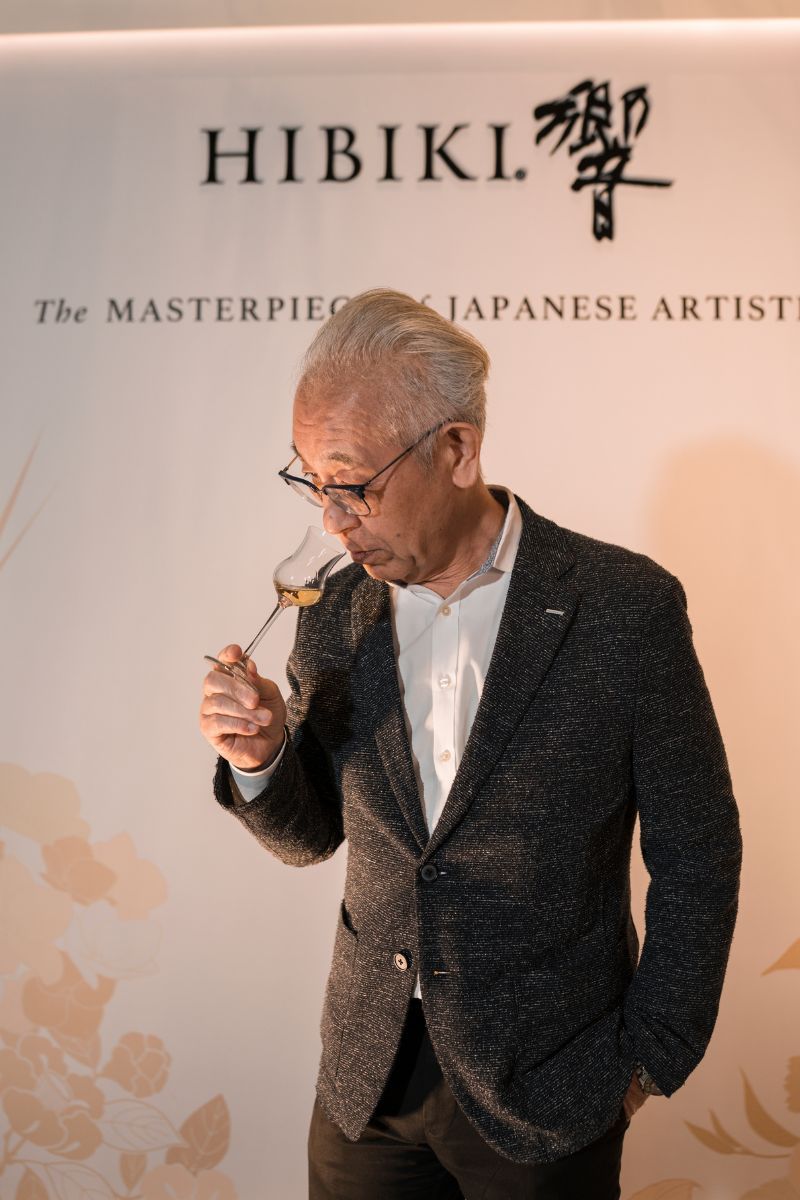
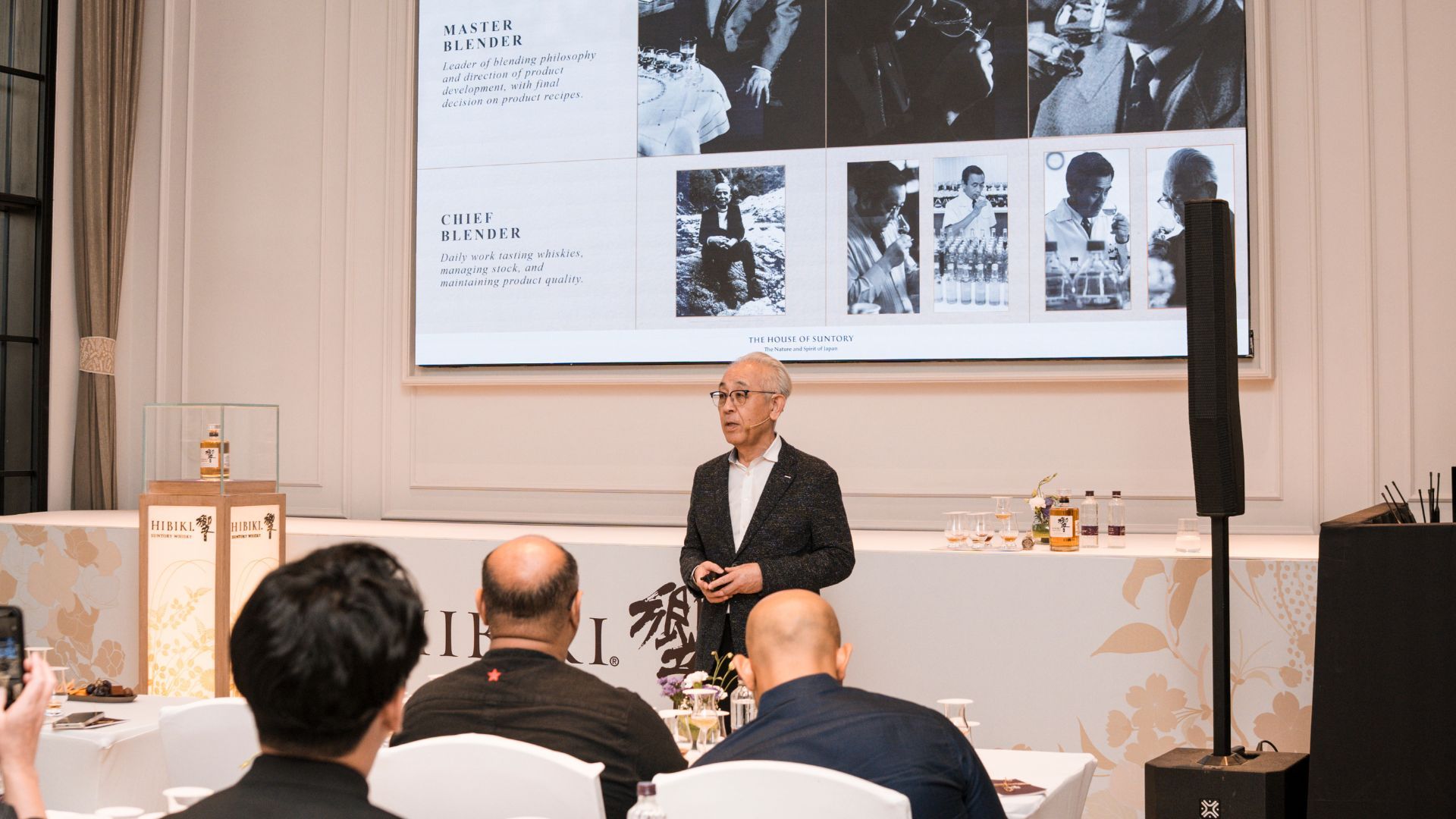
Three years after The House of Suntory marked a century of whisky-making at the historic Yamazaki Distillery, the company is still thinking deeply about what the next hundred years might look like. That future involves everything from new yeast cultivation programmes to experimental hydrogen-powered distillation projects. But when speaking to Shinji Fukuyo, Suntory Global Spirits' Chief Blender and one of the most influential figures in modern Japanese whisky, it becomes clear that the philosophy behind the whisky itself has remained remarkably stable.
Fukuyo has spent more than four decades at Suntory, helping shape whiskies like Hibiki, Yamazaki, and India-focused blends like Oaksmith. While Oaksmith was built around extensive research into Indian drinking habits and preferences, Hibiki occupies a very different space in the company’s portfolio. “For premium whiskies, we don’t think about markets first,” Fukuyo explains during his Mumbai visit. “We focus on quality.”
That distinction matters. Oaksmith was designed after studying how Indian consumers drank whisky — with soda, water, snacks, and in large social settings. Hibiki, meanwhile, has gradually evolved into one of the defining luxury whiskies of the modern era, prized less for singular intensity and more for its sense of refinement. For Fukuyo, the word most closely associated with Hibiki remains the same one that has followed the blend for decades: harmony.
You joined Suntory in the 1980s and have now spent over four decades working with whisky. How has your understanding of blending evolved over time?
Fundamentally, our philosophy has not changed. But the way we approach different products has evolved. For brands like Oaksmith, for example, we studied the market very carefully — the consumers, their lifestyle, how they drink whisky, what kind of flavours suit the culture. In India, whisky is often enjoyed with soda, water, ice, and food in social settings. That influenced the blend.
But for premium whiskies like Hibiki, the approach is different. We focus on quality first. If the whisky is truly excellent, it can be appreciated by people everywhere — younger people, older people, men, women, across different countries. That idea has become stronger over time.
Hibiki is constantly described as a whisky built around harmony and balance. What does that actually mean to you as a blender?
Many Scotch whiskies are built around a very strong identity. Some are extremely smoky, some are very sweet, some are very spicy. Those are beautiful whiskies.
But Hibiki is different. We focus on elegance and balance. Not too smoky, not too woody, not too sweet. We always think about how every element works together. The harmony is very important.
It is actually much more difficult to create balance than to create a very strong singular character.
Did people understand that philosophy immediately when Hibiki first launched?
When Hibiki was launched in 1989, we believed it needed to achieve a globally high standard while still expressing Japanese taste and sensibility. Over the decades, fortunately, it has become recognised as a very high-quality whisky around the world.
At the same time, whisky culture itself has changed. Today people enjoy whisky in many ways — neat, on the rocks, in cocktails. In markets like the United States, for example, bartenders create very interesting cocktails using Hibiki. I appreciate that because they are finding new ways to express the whisky’s character.
You mentioned cocktails. Once a whisky leaves the distillery, does it almost take on a life of its own?
Yes, exactly. I am always happy when people enjoy the whisky in different ways — neat, on the rocks, or in cocktails. Sometimes people combine whisky with ingredients I would never have imagined myself. But if it creates enjoyment, that is a good thing.
Mizunara oak has become almost mythical among whisky enthusiasts. How important is it to Hibiki’s identity?
Mizunara became important partly because of history. During the 1940s and World War II, it became difficult for Japan to import casks from abroad, so we had to experiment with domestic woods for cask-making.
Many woods were tested, but Mizunara was selected because it produced very unique aromas. The challenge is that Mizunara is very difficult to manage. The flavour is extremely powerful and can easily dominate a whisky.
Earlier generations of blenders used Mizunara only for short maturations because the flavour became too strong over time. But when Hibiki was developed, our blenders realised that long-aged Mizunara whisky could create something very special.
That is why Mizunara became one of the key elements of Hibiki. It gives a unique texture, a gentle sweetness almost like coconut, and a distinctive spicy character. Especially in older Hibiki expressions, you can feel those layers through the top notes, mid-palate, and finish.
India has become one of the world’s most dynamic whisky markets. What have you learned about Indian drinkers over the years?
India is very unique because consumers here enjoy many different styles of whisky — Indian whisky, Scotch whisky, bourbon, Japanese whisky, and now even Indian single malts. There are so many options available today compared to when I first visited many years ago.
The market has become much more sophisticated. People are exploring whisky more seriously now, especially in bars and premium spaces.
When we created Oaksmith, we spent a long time studying Indian drinking habits and flavour preferences. But with Hibiki and the House of Suntory portfolio, we hope to offer Indian consumers another perspective on whisky — something elegant, balanced, and uniquely Japanese.
After tasting whisky professionally for decades, what still surprises you when you nose a glass today?
Whisky can still surprise me because every cask evolves differently. Even after many years, nature always has some influence that we cannot fully control. That is one of the reasons whisky remains interesting for me.
Finally, if somebody is trying Hibiki for the very first time, what do you hope they notice most?
I hope they notice that it is very smooth and subtle, but also very complex at the same time.


