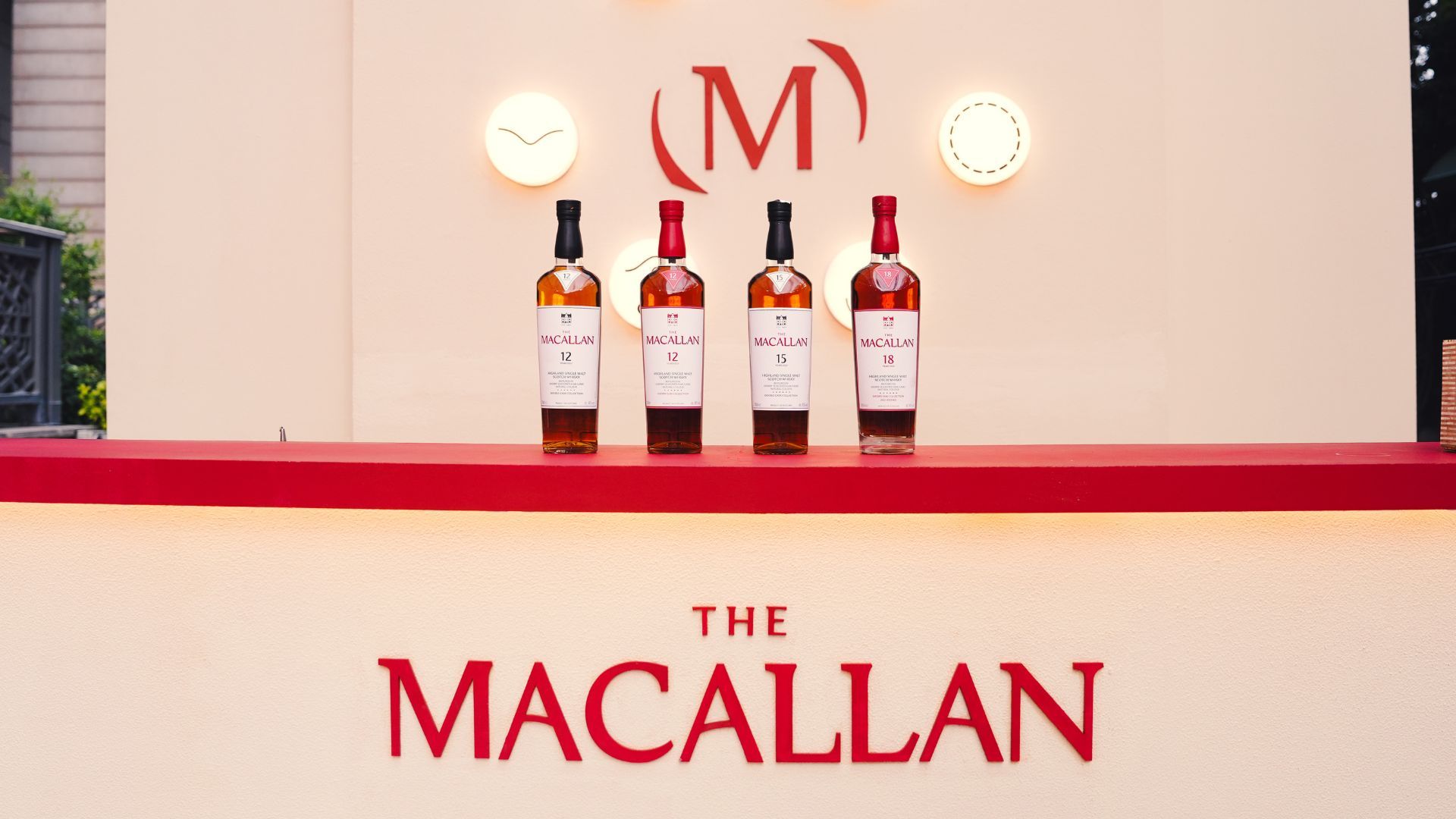
Over the past year, The Macallan has been busy celebrating a milestone most luxury brands can only dream of reaching with genuine credibility: 200 years of whiskey making. But rather than leaning solely on nostalgia, the Speyside distillery has used the bicentenary as a launchpad for reinvention. From ambitious anniversary releases like the Time:Space Mastery series to increasingly immersive global showcases and a noticeable shift in design-led storytelling, Macallan has spent the past twelve months tightening its grip on both heritage and modern luxury appeal. The house style remains firmly rooted in its signature sherry-seasoned cask profile, yet the brand’s recent output suggests a growing interest in cultural narratives, experiential tastings, and city-inspired projects that position whiskey as something to be explored as much as consumed.
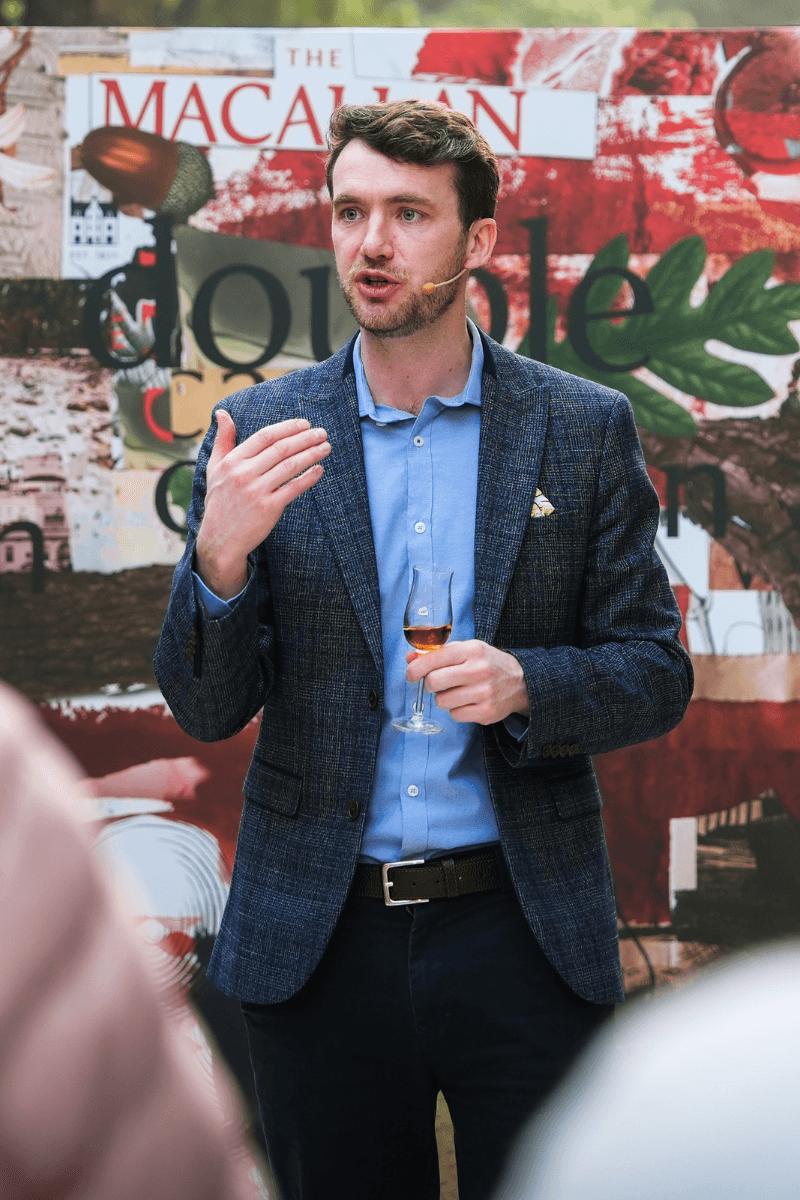
Helping steer this balancing act between legacy and evolution is Euan Kennedy, one of the brand’s key creative voices shaping Macallan’s liquid identity today. Kennedy’s journey into whiskey began on the technical side, studying brewing and distilling at the University of Stirling before spending years understanding flavour construction and Scotch production at a granular level. Since joining Macallan in the run-up to its bicentenary, he has stepped into a role that blends laboratory precision with creative interpretation. His day-to-day work ranges from hand-selecting individual casks to contributing to complex limited editions that often draw inspiration from travel, food, and local cultures.
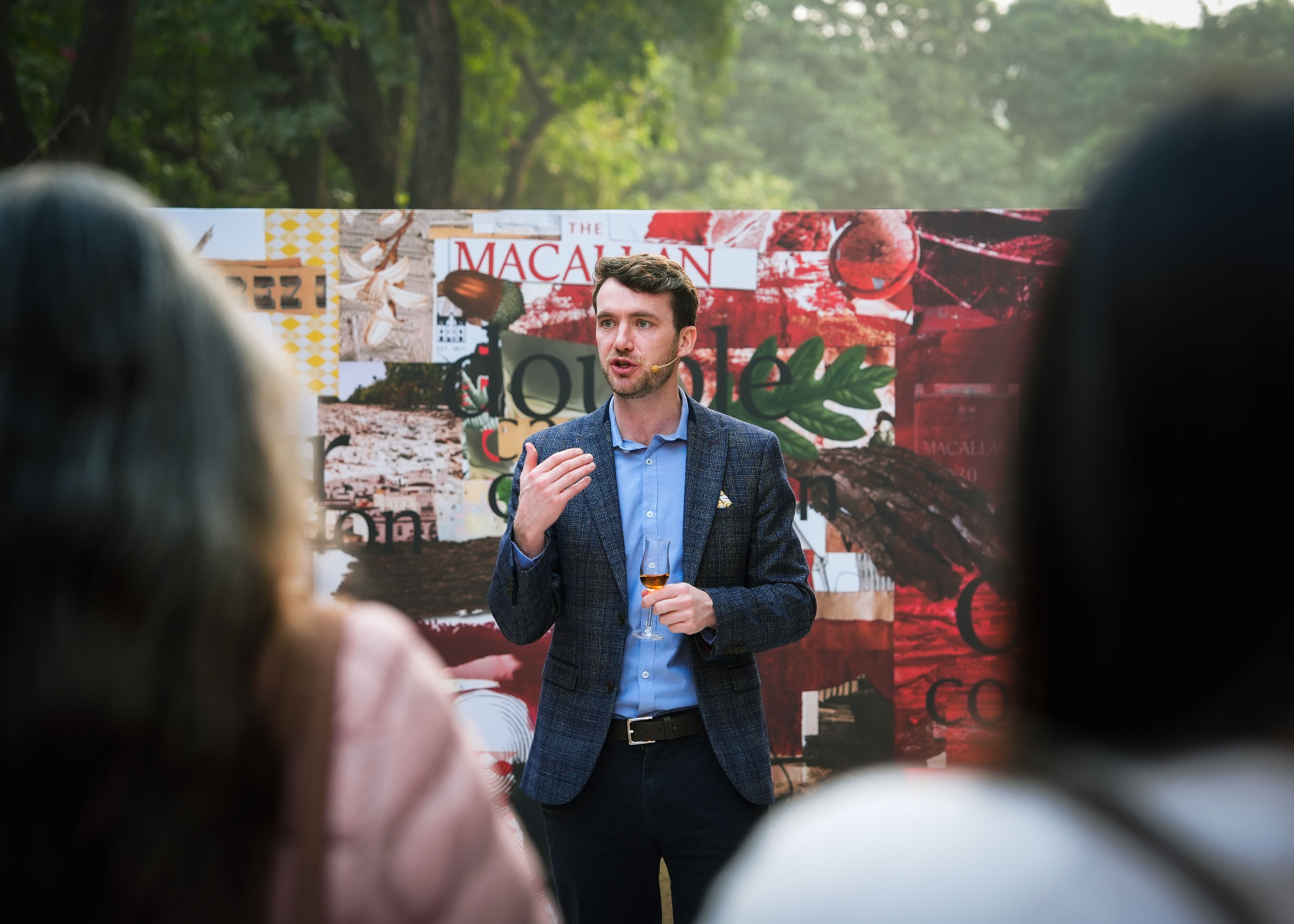
During his recent India visit, Kennedy spoke about Macallan’s evolving design language, his creative approach to milestone releases, and why emerging whiskey markets are starting to shape the brand’s global storytelling. Excerpts:
What brings you to India this time, and what has the visit been about?
We’ve done some hard work over the last couple of years since our 200th anniversary to reimagine, I suppose, the design and look and feel of The Macallan. We’ll talk about that over the next couple of nights here in Mumbai. Bringing myself out to India wasn’t so much to talk about that, but to talk about the whiskey itself and that reassurance that the whiskey has not changed at all. It’s the whiskey that we all know and love. It’s just been really good to see the engagement with The Macallan and the level of knowledge that people in the market have. It’s been brilliant conversations and great fun.
What did the 200th anniversary mean creatively and philosophically for the brand?
We talked a lot at that time about the idea of time travel. Whiskey has that ability not just to be about flavour in the glass, but to convey and communicate ideas and emotion as well. We reflected a lot on the past, the present, and the future. Of course, we stepped into and embraced that past and released the oldest whiskey that we’ve ever released. But more importantly, we really wanted to talk about the future as well — that idea that we are 200 years young and just getting started. It’s been really nice coming out here to India because it feels exactly where we are at. There’s that huge opportunity to learn and understand and get into the world of The Macallan, and helping others on that journey is really special.
If you had to break down the ethos of the whiskey into technical pillars, what would they be?
Of course, we’ve got our foundational six pillars, but if I was explaining The Macallan to someone new, we start at the beginning. All of our whiskey is made in our curiously small stills. That gives us that really beautiful, rich spirit from the distillery in Speyside, and that gives texture and richness that people absolutely love. Then, of course, the world of The Macallan is really all about sherry-seasoned oak casks. That means American oak from North America giving lovely vanilla and citrus brightness, and European oak from Spain giving rich dried fruit and toffee notes. We work with dealers in that region to sherry season those casks, which gives everything that added layer of complexity. Beyond that, every whiskey we make is entirely natural colour. All of the colour comes from what I’ve just described. We don’t add anything to our whiskey and it’s about celebrating that authenticity and craft.
How collaborative is your role within the whiskey-making process?
Honestly, it’s massively a team effort. It has to be. We have eight people in the whiskey-making team. My manager, Kirsteen Campbell, is the Master Whiskey Maker and provides that strategic direction and collaborative relationship. I lead the team based at the distillery itself and we are there every day hand-selecting casks for every single batch. Any whiskey in your glass has been selected by myself and the wider team. My role is to support, encourage, and engage not just with my team, but across the breadth of The Macallan. It’s hugely varied and about supporting each other to make it happen.
How did you approach creating Time:Space Mastery, especially with so many cask types involved?
I was privileged enough to lead on that particular whiskey. It was released as part of our 200th anniversary celebrations. Rather than starting with 14 cask types, I actually set out to embrace the breadth of flavour within our inventory. I wanted to include as many different styles and flavours as possible and only once we reached the final result did I tally up and realise how many cask types were involved. European sherry-seasoned oak was the backbone, giving dried fruit richness and complexity. We then used American oak for creaminess and vanilla balance, and also some well-aged casks that previously held bourbon, which is quite unusual for us, but added lovely tropical top notes. It was about bringing all of that complexity together.
Do creative boundaries change when working with limited releases?
Yes, absolutely. Boundaries can actually be helpful. It gives you a framework to express creativity. For me, whiskey making always starts with the story. In this case, it was about bringing to life that moment in time around our 200th anniversary. Of course, there are practical limitations, like evaporation — the angel’s share — which makes older whiskey rarer over time. You need to work within those boundaries in a really creative way, and that’s something I really embrace.
How do you feel about rare bottles being collected rather than opened?
For me personally, I’m always thinking about how the whiskey tastes and how it will be enjoyed. I make whiskey to be drunk and enjoyed. I have huge respect for collectors, but flavour always has to come first. People often save bottles for special moments, but sometimes those moments can pass us by. I encourage people to create those occasions, invite friends or family, and let the whiskey start a conversation. That ability to connect people is hugely important.
What inspired the Hong Kong edition in your city-inspired projects?
That was an incredible experience. We collaborated with the Roca Brothers and travelled to Hong Kong together. What struck me most was the boldness of the city — how it rises straight up from the sea with that incredible structure, contrasted with the greenery and mountains behind. I tried to convey that boldness through richness in the whiskey. Walking through markets, seeing spices, tasting Hong Kong egg tarts and desserts — all of those experiences shaped flavour nuances. The aim was to create a whiskey that Hong Kong residents could recognise as their own.
Could India inspire a similar project in the future?
It’s a difficult question because India is so diverse and I’ve only just begun exploring it. What has been hugely exciting is seeing how bartenders and whiskey communities here interpret The Macallan in their own way. I recently tasted an Old Fashioned using Double Cask 15 Year Old with sandalwood bitters, which was brilliant. Whether it’s Mumbai or Delhi or somewhere else, I’d need to explore more before committing, but the inspiration is definitely there.
How do you balance heritage with innovation?
Sherry casks are absolutely central to our identity. Historically, figures like Roderick Kemp strengthened that commitment. Over the last few decades, those relationships have become incredibly close. Now we’ve taken ownership stakes in cooperages and work closely with Spanish sherry producer Valdespino. That shows our long-term commitment to sherry casks while also allowing us to explore flavour possibilities in new ways.
Looking ahead, what do you hope people say about whiskies created during your time with the brand?
I would hope they feel a sense of timelessness. When people open these bottles years from now, they should recognise the richness of spirit, the natural colour, and the complexity and depth of flavour that define the brand. If people take those reflections away, I would be really proud.
What are you looking forward to in the year ahead?
I was really looking forward to this trip, and I’m sure there will be opportunities to travel more and continue these conversations around the world. I’m also planning a trip to Spain to visit vineyards and cooperages and continue developing our relationships around sherry casks, which I’m really looking forward to.


