The new year always brings a familiar question: what will men be wearing next? Before ‘fashion month’ officially kicks off in February, the Milan Men’s Fashion Week is a cornerstone for global menswear and sets the rhythm for the season ahead. The Fall/Winter 2026 edition, which took place in late January, showcased how Italian fashion continues to shape the language of modern masculinity. Known historically for its mastery of tailoring and luxury manufacturing, Milan’s menswear week has increasingly become a site of experimentation—where tradition is not discarded, but reimagined.
But before Milan, the action begins in Florence at Pitti Uomo – the industry’s most important menswear trade fair and a launchpad for emerging voices. Among its standout moments was the international runway debut of Japanese designer Soshi Otsuki (2025 LVMH Prize Winner) , whose label Soshiotsuki brought his cult-favourite tailoring into physical space for the first time. Known for reinterpreting Japan’s bubble-era salaryman archetypes, Otsuki’s show fused exaggerated Armani-esque tailoring with unexpected fabrications, marking a decisive evolution beyond nostalgia into something entirely his own.
As the shows moved from Florence to Milan, clear patterns began to emerge. ’70s-style tailoring made a strong return, with softer shoulders, wider lapels, and comfortable proportions replacing rigidity. Preppy dressing surfaced with a refreshed spirit, where blazers, knitwear, and denim mixed effortlessly. And in a nod to the season’s location and timing, a few designers drew inspiration from the upcoming Winter Olympics in Milan and Cortina, infusing sport references, ski-inspired layers, and adrenaline-driven energy into their runway narratives.
Designers also moved away from the idea of “quiet luxury,” favouring clothing that feels lasting, emotional, and rooted in context. Sportswear influences, heritage fabrics, and softened silhouettes appeared across collections, while carefully-styled proportions and layering reminded us that menswear is still evolving in wearable ways.
Here’s a brand-by-brand look at the key shows that defined Men’s Fall/Winter 2026 collections and what they tell us about the menswear trends of 2026:
Zegna
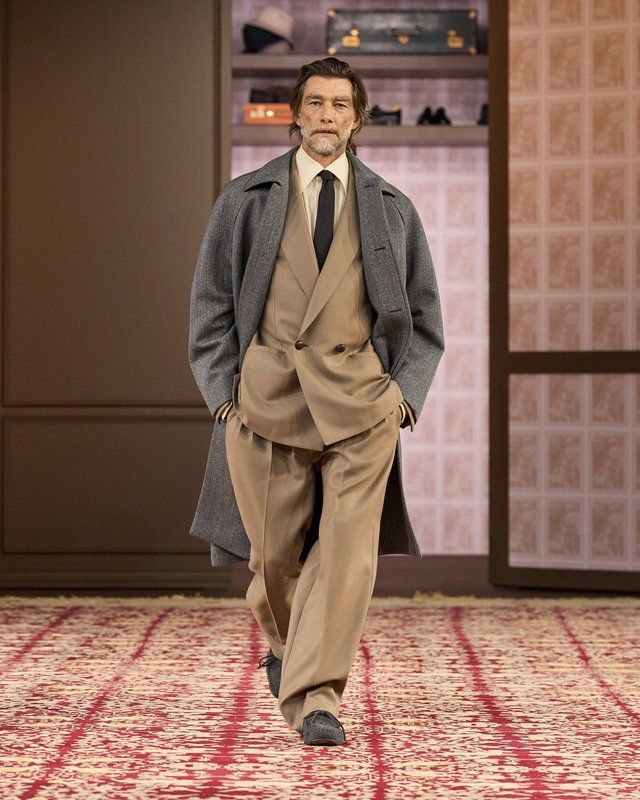
Themes of inheritance defined Zegna this season, both literally and symbolically. The show unfolded inside Milan’s Palazzo del Ghiaccio, transformed into a sprawling dressing room filled with garments from the real wardrobes of Gildo and Paolo Zegna. Under artistic director Alessandro Sartori, silhouettes were relaxed yet precise and described as dégagé—generous tailoring in tweeds, Shetland wools, and mohair gabardine in earthy browns, greys and blacks, punctuated by sapphire blue and mustard yellow.
Outerwear led the narrative: boxy overcoats with pared-back double-breasted closures, suede utility jackets with a ’70s sensibility, and layered looks that felt instinctively styled rather than constructed. The collection framed luxury as lived-in, inherited and deeply personal—an idea that resonated across the season.
Paul Smith
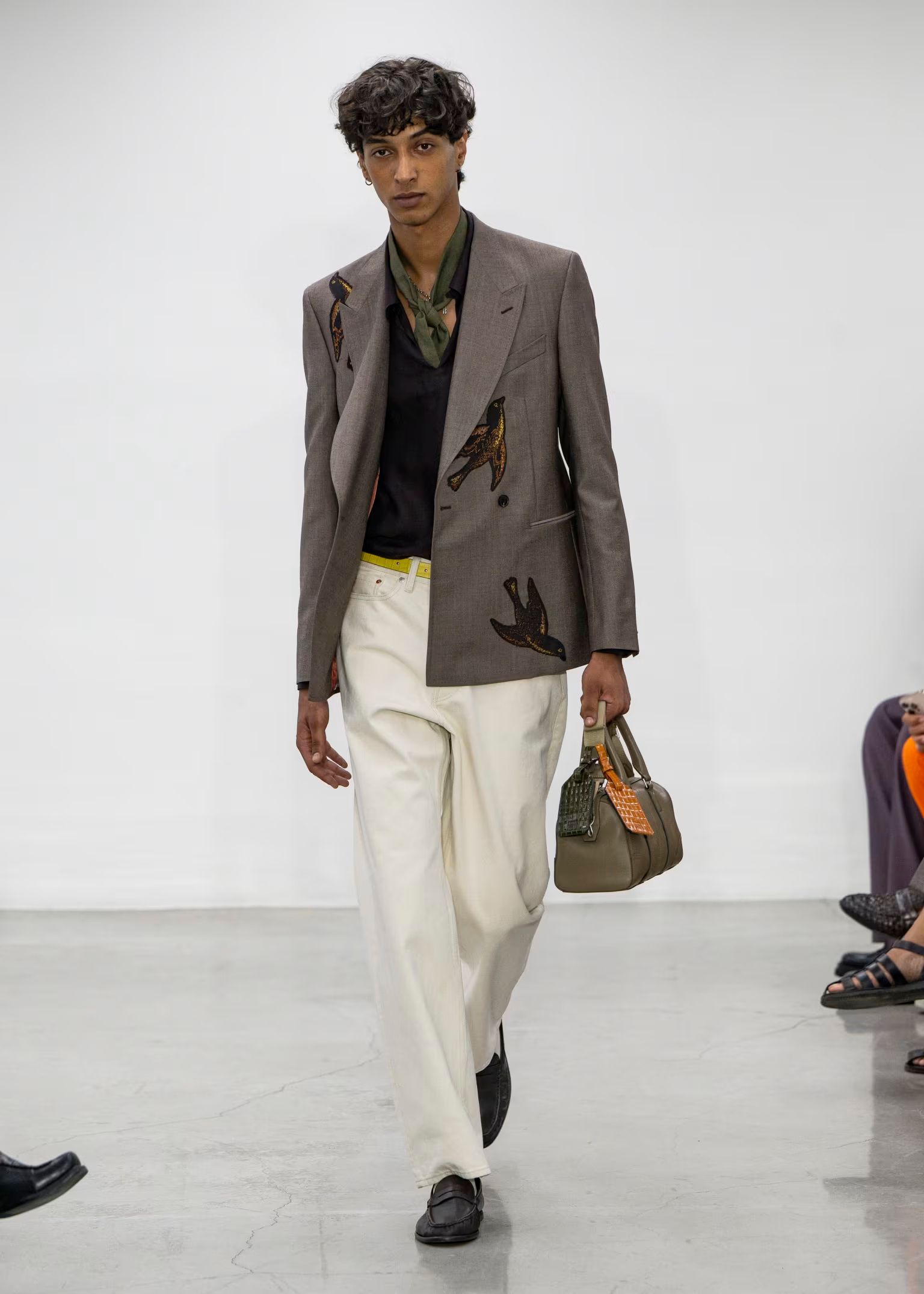
Paul Smith delivered one of the most approachable collections of the season. Designed by newly appointed menswear head Sam Cotton, the collection dipped into the brand’s extensive archive but filtered it through a modern lens.
Classic Paul Smith elements—tailoring, knits, playful details—were mixed with relaxed pieces like Henleys and soft sweaters. There were nods to different decades, from bold ’80s shoulders to inside-out tailoring inspired by the late ’90s. Accessories and prints added personality without feeling forced. It was menswear that felt thoughtful, creative, and genuinely wearable.
Setchu
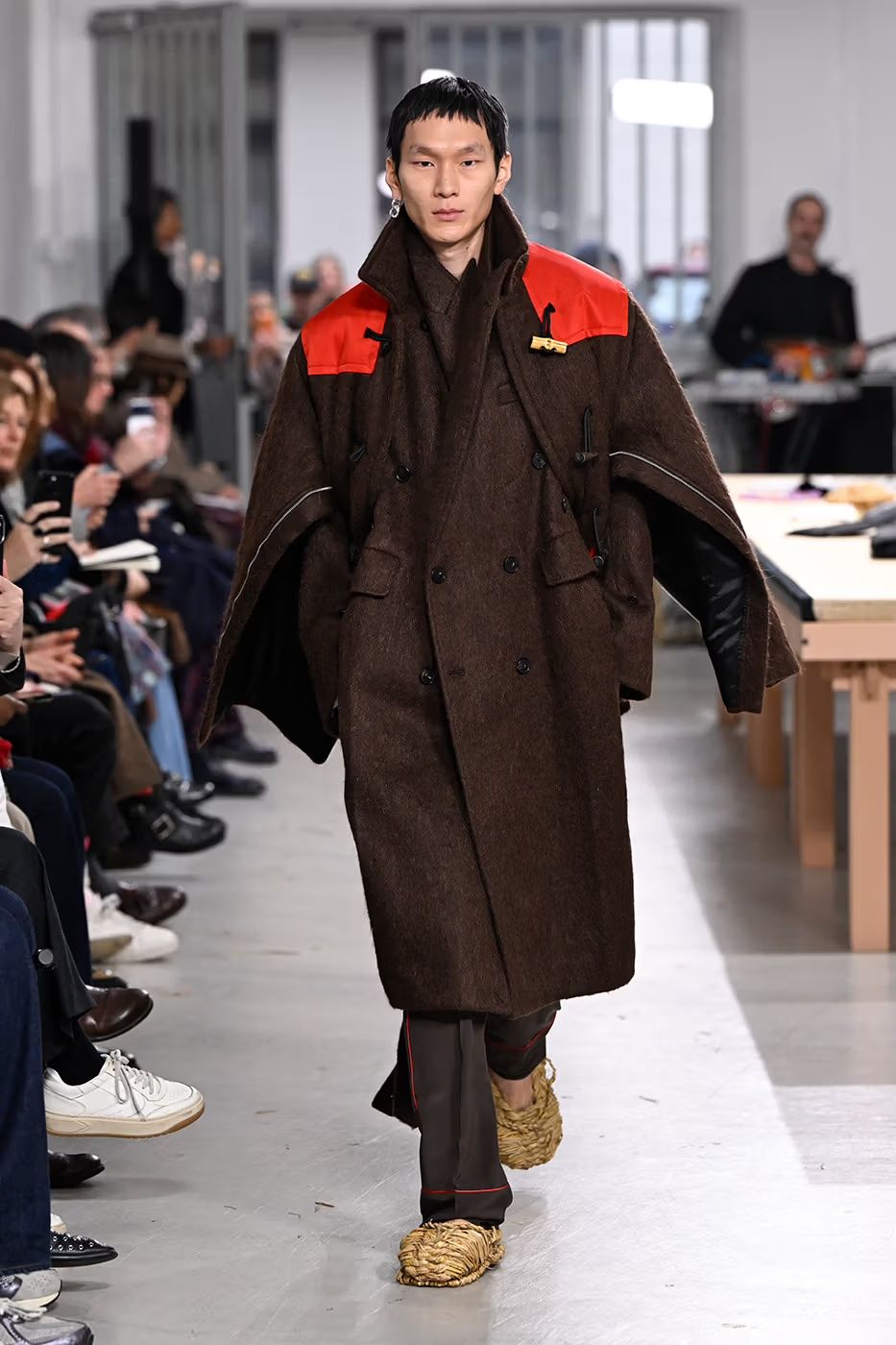
For Fall/Winter 2026, Setchu designer Satoshi Kuwata (2023 LVMH Prize Winner) looked to nature and survival. Inspired by his fishing trips to Greenland, the collection focused on protection, adaptability and function.
Many garments could transform—bags zipped into jackets, coats wrapped around the body in unexpected ways. The silhouettes felt cocooning, with curved sleeves and padded layers designed to shield from the cold in style. Soft, fur-like textures referenced traditional clothing used in extreme climates. The result was clothing that felt deeply considered, practical and poetic all at once.
Prada
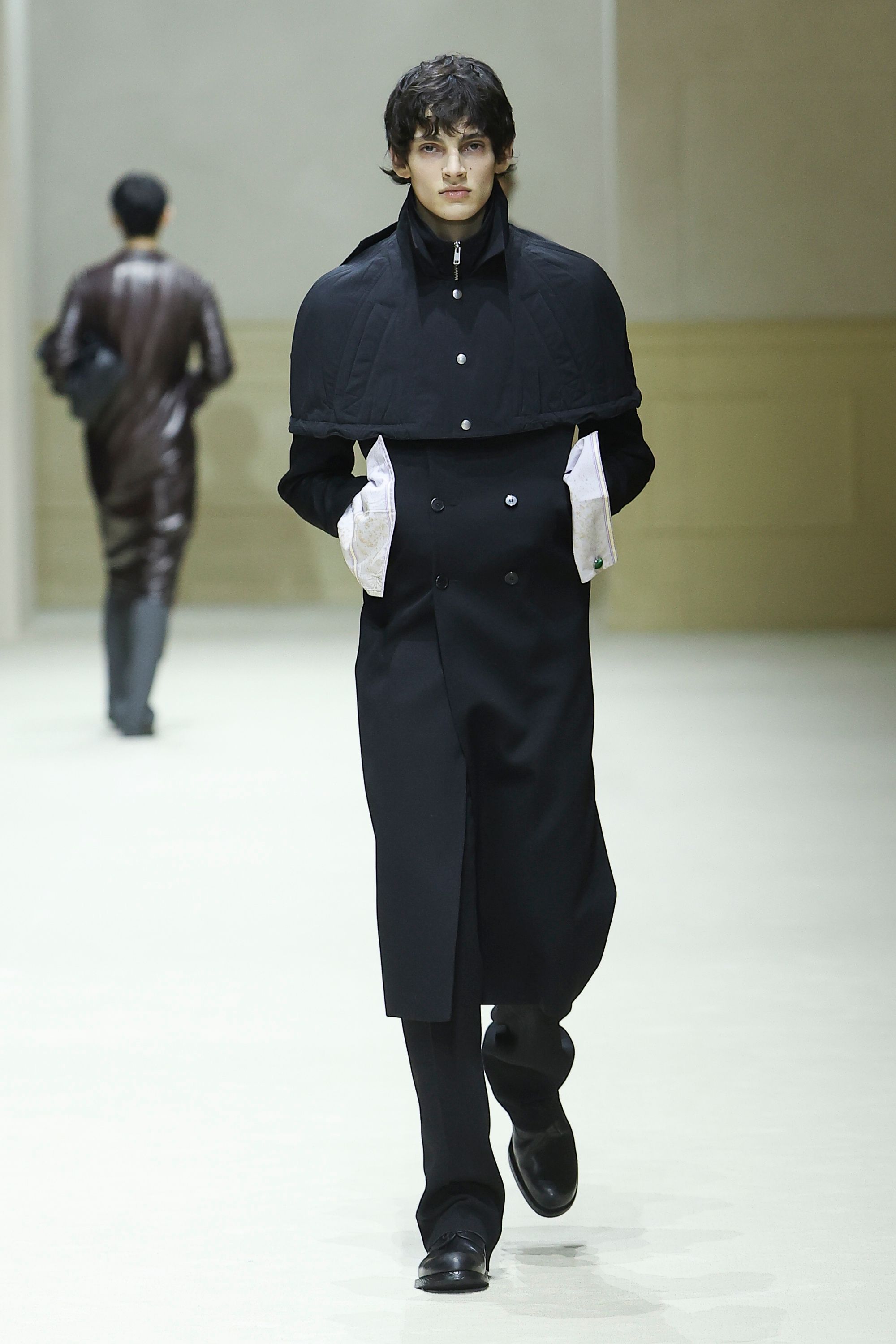
At Prada, co-creative directors Miuccia Prada and Raf Simons framed their Fall/Winter 2026 collection as “evolution, not erasure.” Classic menswear archetypes—the businessman’s shirt, the raincoat, the double-breasted suit—were stretched, skewed, and layered into unfamiliar proportions.
Supersized shirt cuffs spilled from narrow tailoring, mackintoshes gained vibrant overlays, and sou’wester hats added an almost surreal note. The collection balanced restraint and experimentation, reinforcing Prada’s ongoing dialogue between past and future. Here, tradition wasn’t dismantled—it was deliberately distorted.
Giorgio Armani
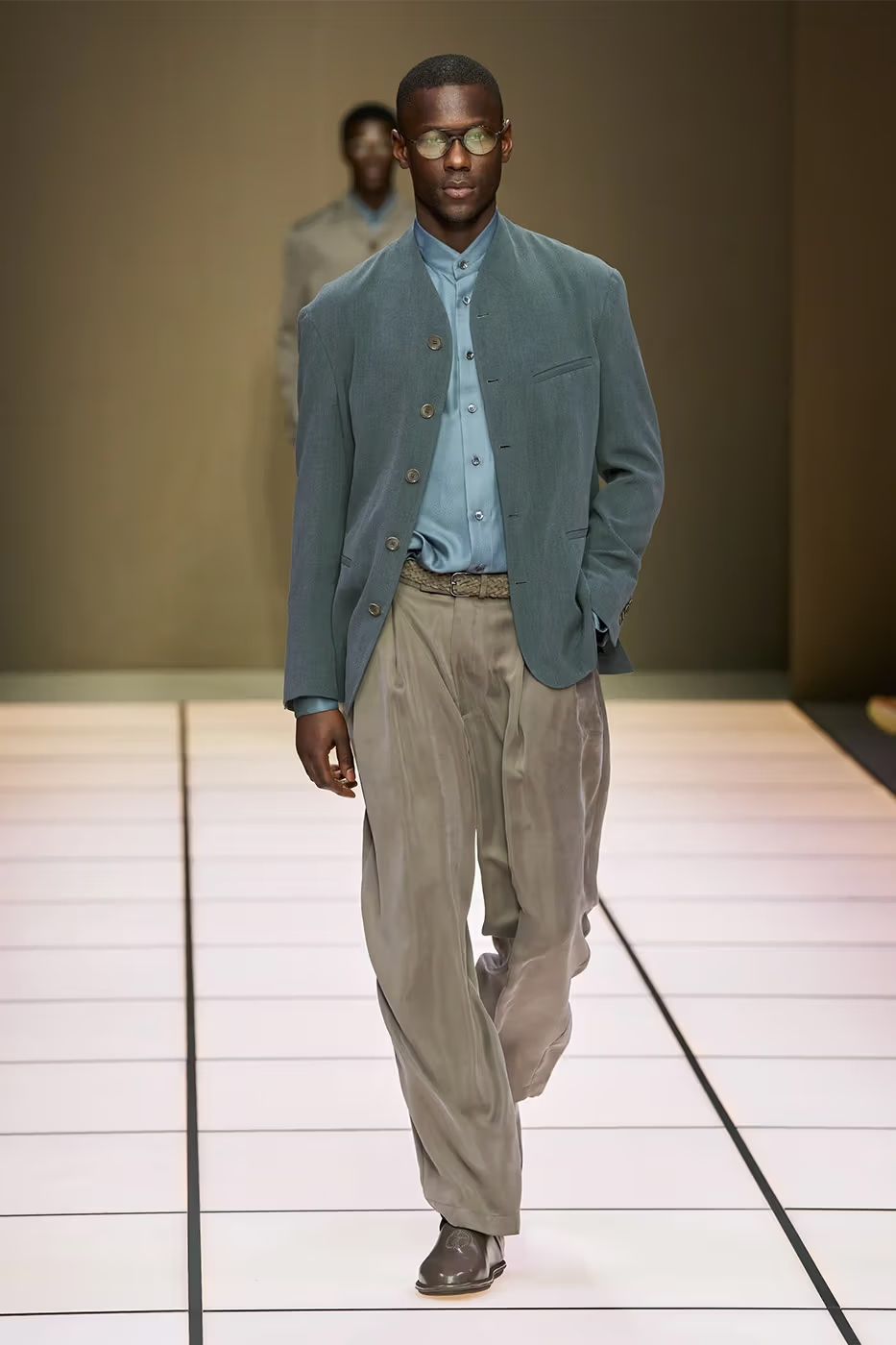
The most emotional show of the season came from Giorgio Armani, marking its first menswear collection since the passing of Giorgio Armani. The show also served as the solo debut of Leo Dell'Orco, longtime head of the men’s style office.
Rather than radical change, the collection offered continuity and honouring the founder’s signature style: fluid tuxedos, oversized trenches, collarless silk suiting in iridescent cangiante fabrics, and softly tailored leather flight jackets reminiscent of the 1980s archive. Crystal brooches and lustrous textures added quiet drama. The standing ovation underscored how enduring and contemporary Armani’s vision remains.
Ralph Lauren
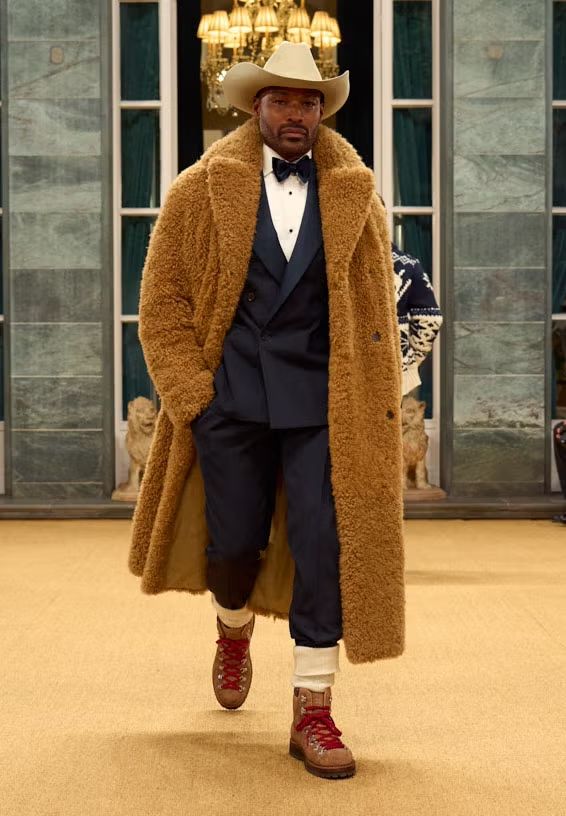
Returning to Milan after two decades, Ralph Lauren staged an intimate salon-style presentation inside Palazzo Ralph Lauren. Shown back-to-back, Polo Ralph Lauren and Ralph Lauren Purple Label spanned preppy uniforms, ranch-inspired Americana, old Hollywood glamour, and expertly worn denim.
The looks were styled eclectically—cowboy hats with tuxedos, patched jeans with formal coats—reflecting Lauren’s idea of dressing for “the different ways men live.” Closed by Tyson Beckford, the show leaned into nostalgia while reaffirming Lauren’s enduring influence on how masculinity is dressed globally.
DSquared2
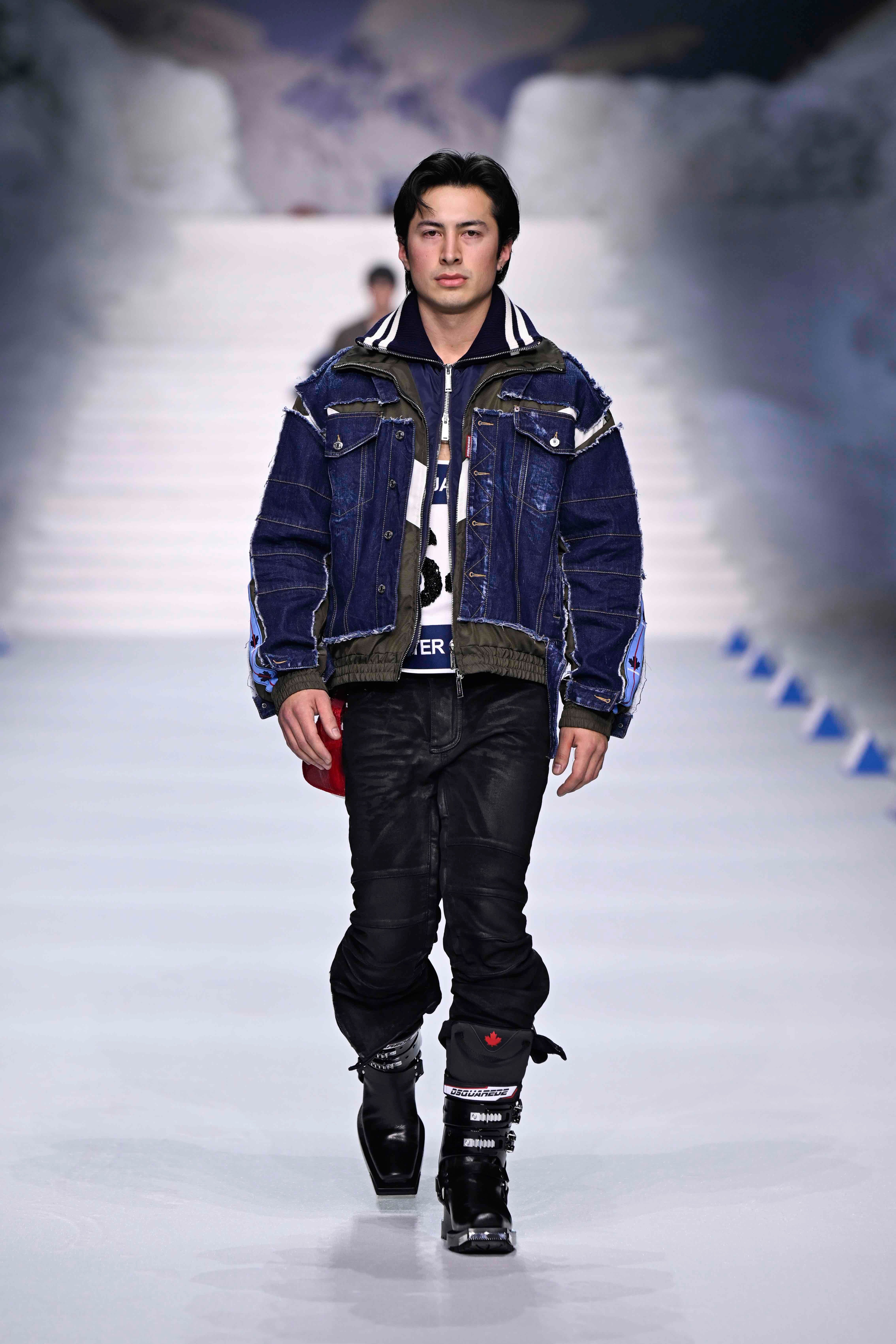
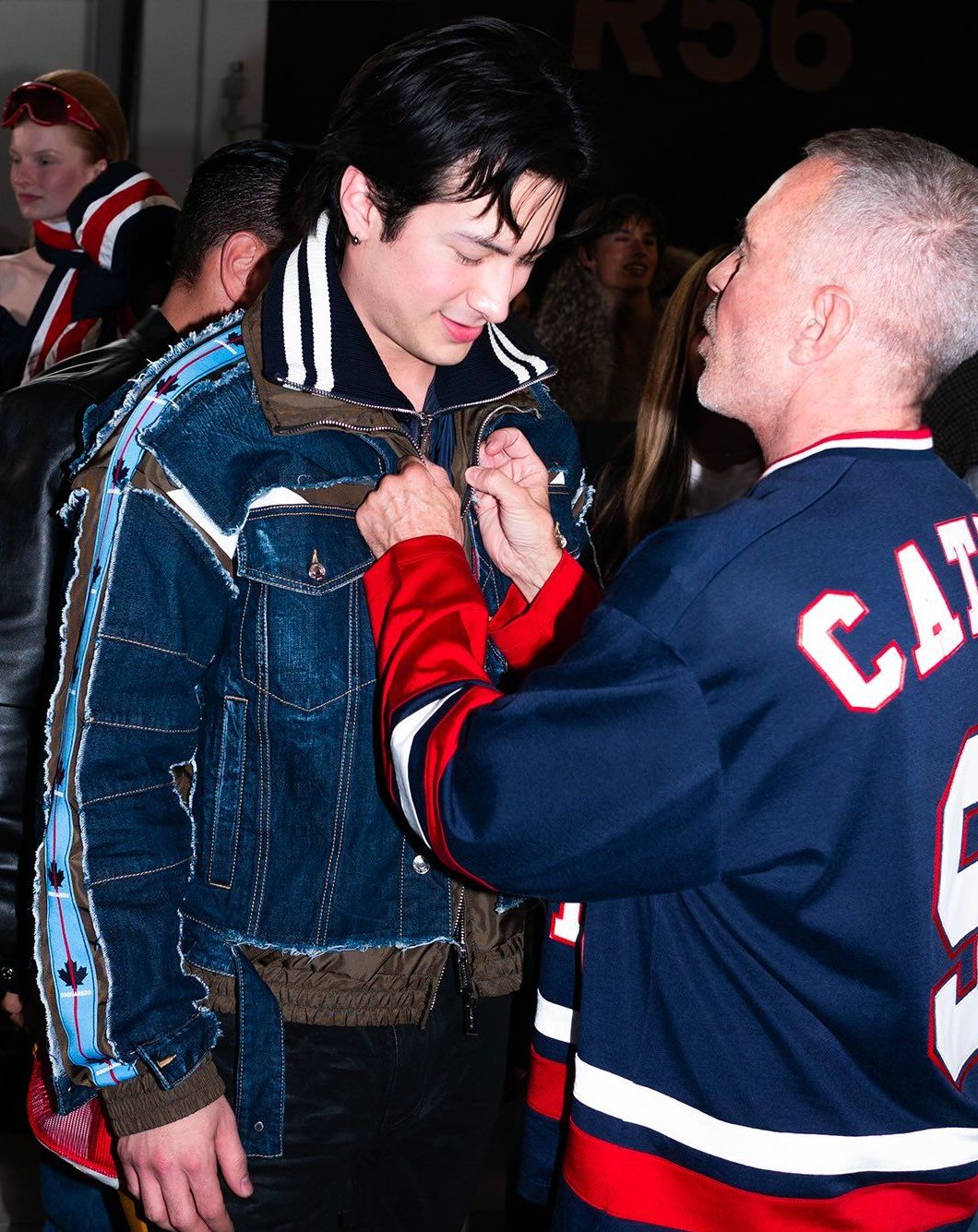
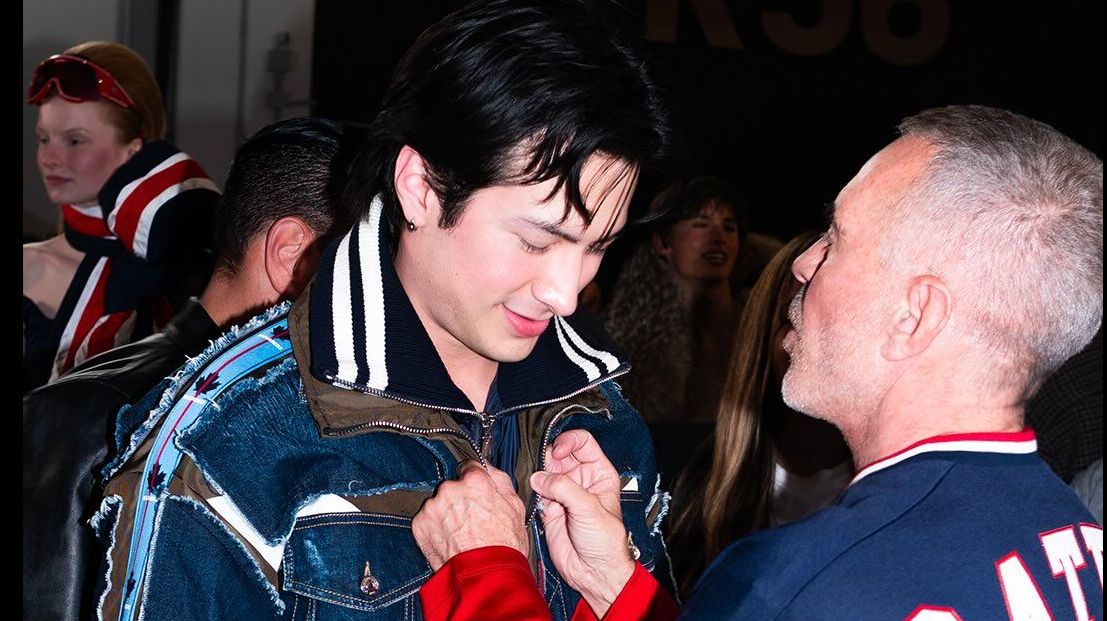
With theatrical confidence, Dsquared2 leaned into sport, spectacle, and seduction. Canadian founders Dean Caten and Dan Caten themed the co-ed show around winter sports ahead of the 2026 Milano Cortina Olympics, set to be held in early February.
And for this celebrity power, this Canadian brand tapped the man of the moment, Heated Rivalry actor Hudson Williams. The collection was heavy on padded outerwear, parkas, and puffers layered over tailoring and ski basics. Patchworked nylon, sequined denim, crystal-encrusted jackets, latex looks, and campy après-ski silhouettes pushed Dsquared2’s signature excess to new heights—unapologetic, provocative, and built for spectacle.
Dolce & Gabbana
Titled The Portrait of Man, Dolce & Gabbana sparked controversy by casting exclusively white models across nearly 100 looks. Beyond casting, the collection explored individuality through sharply styled, mix-and-match ensembles: faux-fur trench coats, salt-and-pepper wool suits, retro trousers, velvet robes, distressed denim, and sculptural tuxedos cinched with corset-like cummerbunds.
The designers framed the show as a rejection of rigid masculine ideals, favouring emotional complexity and personal expression. While the message resonated, the optics ensured the show remained one of the most debated moments of the week.
Canali
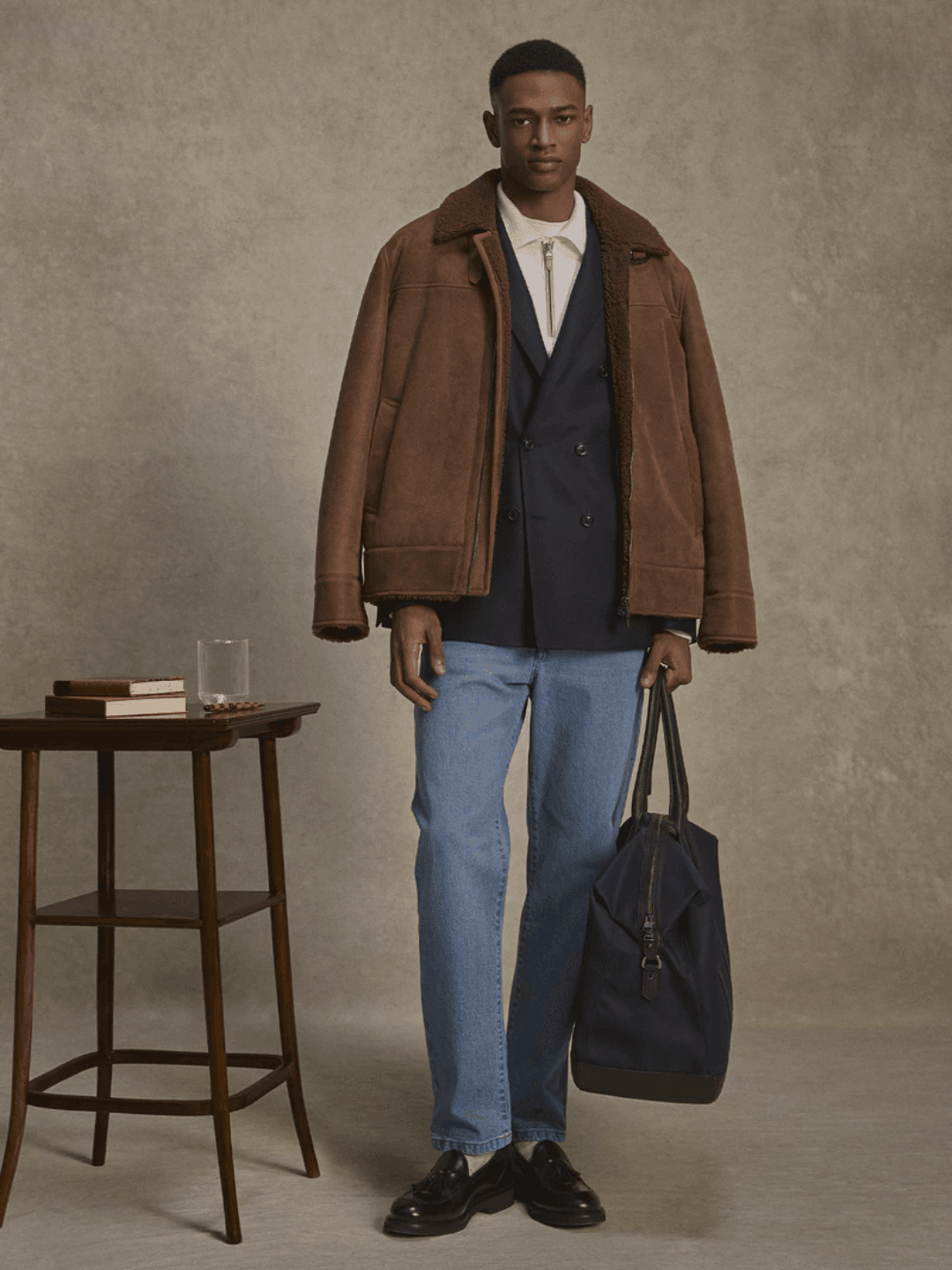
For Fall 2026, Canali staged its presentation inside a curtained Milanese hall styled as an elegant private club. Titled Sartorial Cocktail, the collection reaffirmed the brand’s tailoring heritage while softening its edges.
Louche suits, cashmere knits, and refined leather outerwear appeared alongside more approachable staples in navy, camel, slate, and ivory. Voluminous shearling and relaxed silhouettes suggested a strategic shift toward lifestyle dressing—without sacrificing Italian precision. It was tailoring designed to be lived in, not preserved.
Biggest Trends That Will Define Menswear In 2026 Spotted:
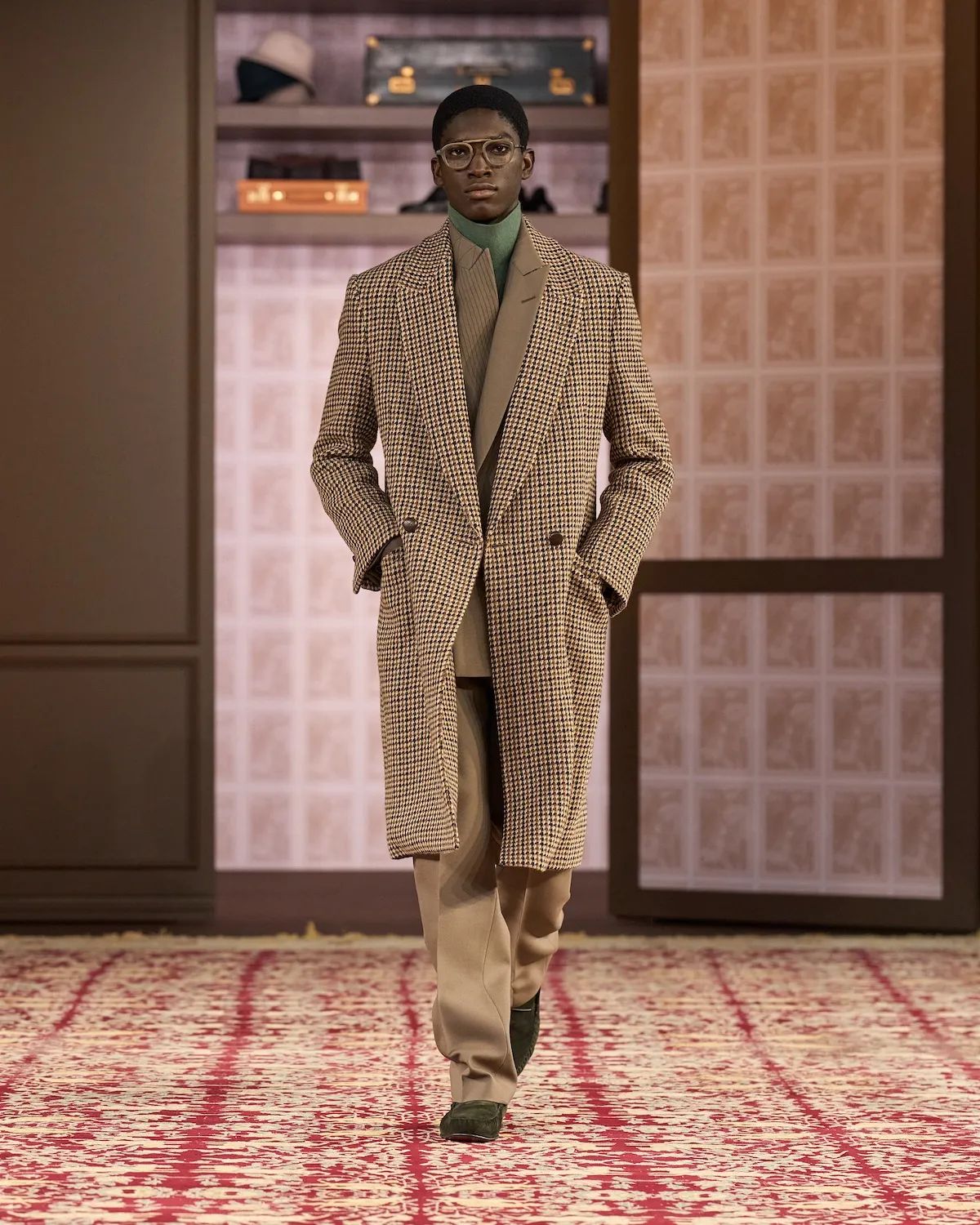
’70s Tailoring Returns
Soft shoulders, wider lapels, and relaxed trousers signal a move away from rigid suits. Tailoring in 2026 is about ease, movement, and confidence—not stiffness.
Preppy, Reworked
Preppy dressing is back, but less polished. Blazers are layered with knits and denim, rugby shirts and cable sweaters feel lived-in, and classic pieces are styled in more personal ways.
Heritage Over Hype
Designers leaned into archives, family histories, and traditional fabrics. Luxury this season is framed as something lasting—meant to be worn, kept, and invested in.
Designed for Real Life
Formal pieces were mixed with sporty and functional elements. Think suits with puffers, technical fabrics hidden inside classic coats, and clothes designed to move between work and real life. Wrinkle-resistant suits, adaptable layers, and versatile outerwear dominated.
Proportion Play
Instead of loud prints, designers experimented with shape like longer sleeves, fuller trousers and cropped jackets.


