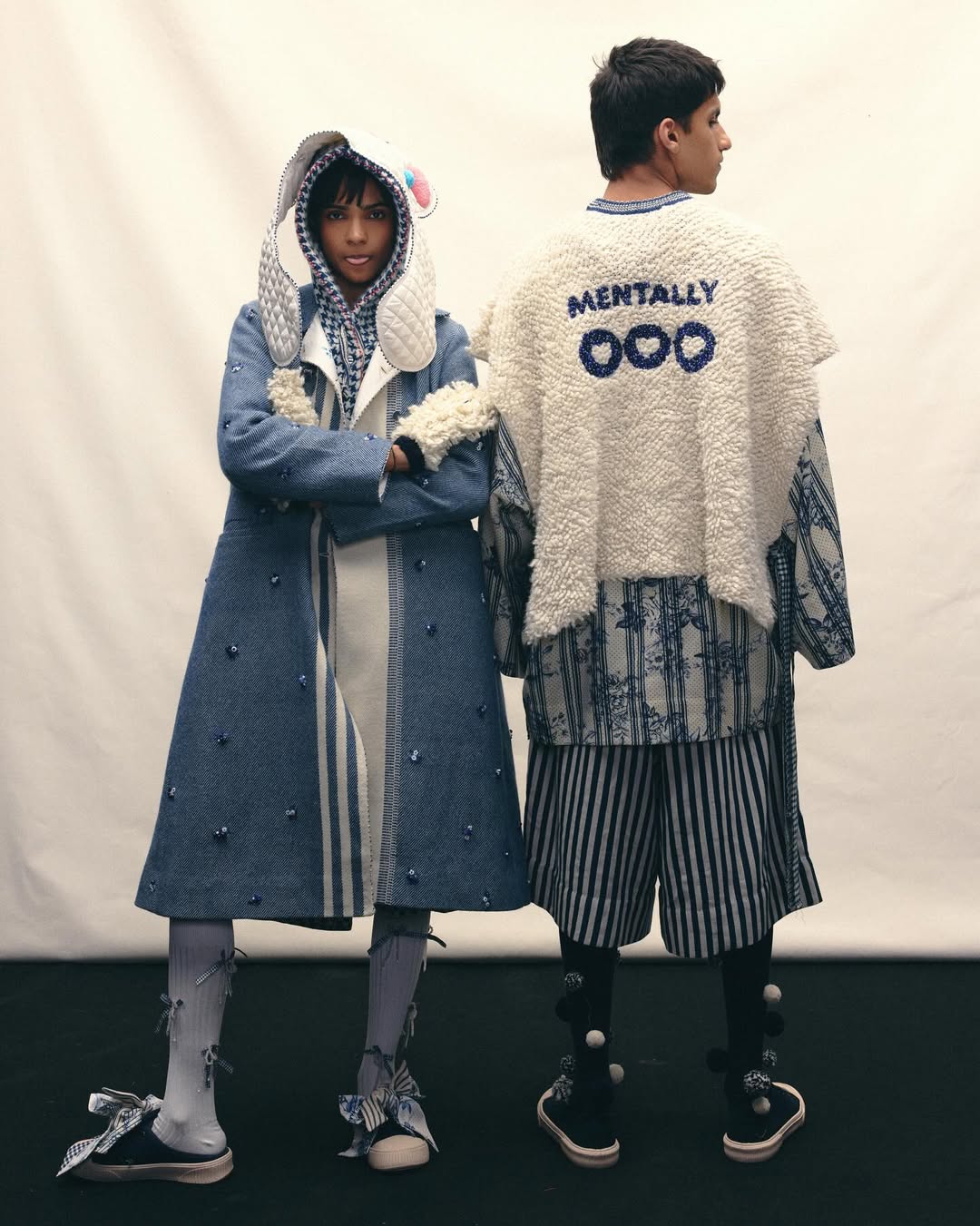
For nearly two decades, p é r o has existed in a world entirely of its own. Since launching the label in 2009, founder Aneeth Arora has quietly built one of India’s most distinctive fashion success stories—one rooted in slow fashion, deeply researched Indian textile traditions and an unwavering commitment to the handmade. Long before “craft-led luxury” became a global conversation, p é r o was already championing handwoven textiles, indigenous techniques and artisanal collaborations across India, while steadily building an international retail presence through independent boutiques and showcases like Pitti Uomo. Over the years, Arora’s work has earned recognition from the British Fashion Council and a place on the BoF 500 list, but the designer herself has remained deliberately private—allowing the clothes, and the stories stitched into them, to take centre stage.
What makes p é r o stand apart, however, is that despite the seriousness of its craftsmanship, the brand has never taken itself too seriously. There’s always been a sense of childlike wonder running through its collections–whether through the campy nostalgia of its Hello Kitty collaboration, the emotional intimacy of the p é r o is home showcase or collections that transform everyday memories into wearable fantasy.
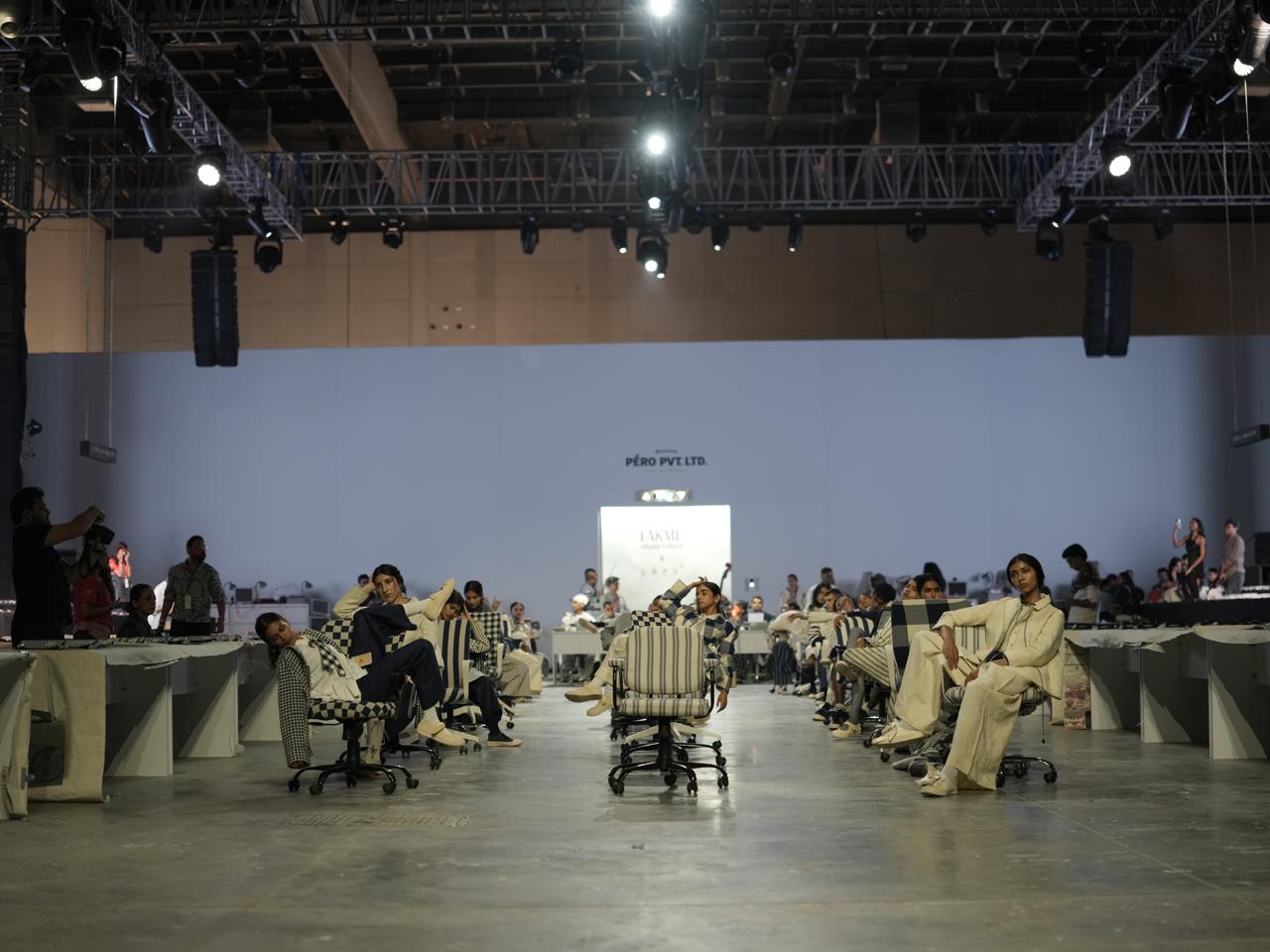
That spirit reached its fullest expression at Lakmé Fashion Week this season, where p é r o closed the week with “Out Of Office”, a blue-and-white striped fantasy complete with interpretive performance, oversized office objects and a runway that transformed mundane work culture into something joyful and escapist. The showcase earned the only standing ovation of the week—proof that Arora’s immersive approach to storytelling continues to resonate as strongly as ever.
We caught up with the notoriously low-profile designer to talk about the emotional language of nostalgia, the challenge of making traditional craft feel exciting to modern audiences, why whimsy can sometimes communicate heritage more effectively than academia, and the conscious decision to keep p é r o a faceless brand in an increasingly personality-driven industry. Here’s an insightful excerpt from our chat:
Q. You closed Lakmé Fashion Week to a standing ovation—the only one received all week. What did that moment feel like for you?
Aneeth Arora: It was a very, very overwhelming feeling because, I always say that before the show is the time when we work very hard and during the show is the time when we are just unwinding and having fun. And when it was being received that well, it was a very overwhelming moment, it was almost like everybody’s hard work paid off in the end. And the fact that the audience understood what we were trying to express was the biggest reward.
Q. The show felt immersive, almost like performance art, with interpretive dance, live office sounds, and a Sunday-night finale when most of us were still “working”. Are you increasingly thinking of fashion shows as experiences rather than presentations?
AA: Yeah, I think for p é r o, it had always been the case where we wanted showcases to be more of an experience… where the whole idea is to kind of transport people to another world, at least for those 25-30 minutes, and we like them to immerse themselves into that experience. It's almost like inviting them into our little world or our minds and what we were thinking when we were creating that collection. We always go by this rule that it should be an all factory experience where all senses are tickled through showcases–whether it's sound, touch, sight. I think that’s been the underlying idea for the experiences we create for people.
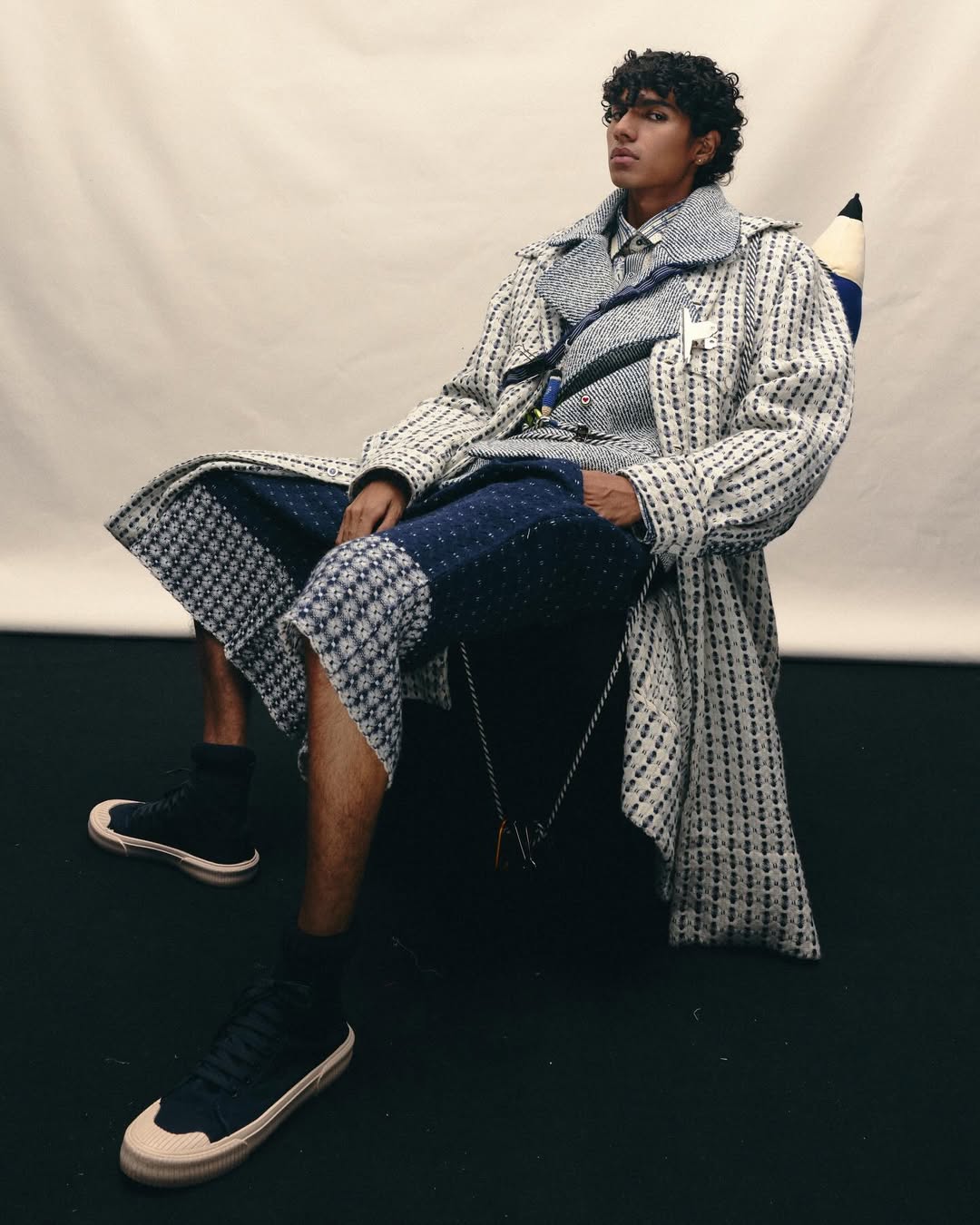
Q. “Out of Office” was rendered entirely in blue and white. What drew you to those two colours, and what did that limitation allow you to explore?
AA: Usually, I begin a season just by deciding the colour or a theme that drives it and this time, ‘cloud white’ had become the talking point of the industry And when I was looking at the previous winters that we've done, I felt that we've been very, very colourful and I thought it was time to practice some restraint, given that it was the focus of the season. And I thought let’s just add another classic colour, and the only one I believed would complement white in the same zone was blue. And so we said, okay, let's do a winter (collection) which is only blue and white. Then one thing led to the other–it was just a simple incident where I saw someone wearing a blue and white stripe on a beach where it was almost camouflaging with those classic blue and white Frech Riviera-style stripes on that towel and the umbrella. And just a few days later, I saw somebody else wearing the similar kind of stripe to work. And I just felt that, you know, it is so versatile–that whole idea of the simplicity of blue and white.
Q. The larger-than-life knit pencil bags caught my attention and really spoke to my inner child! What made you want to create something like that for an ‘Out-Of-Office’ collection?
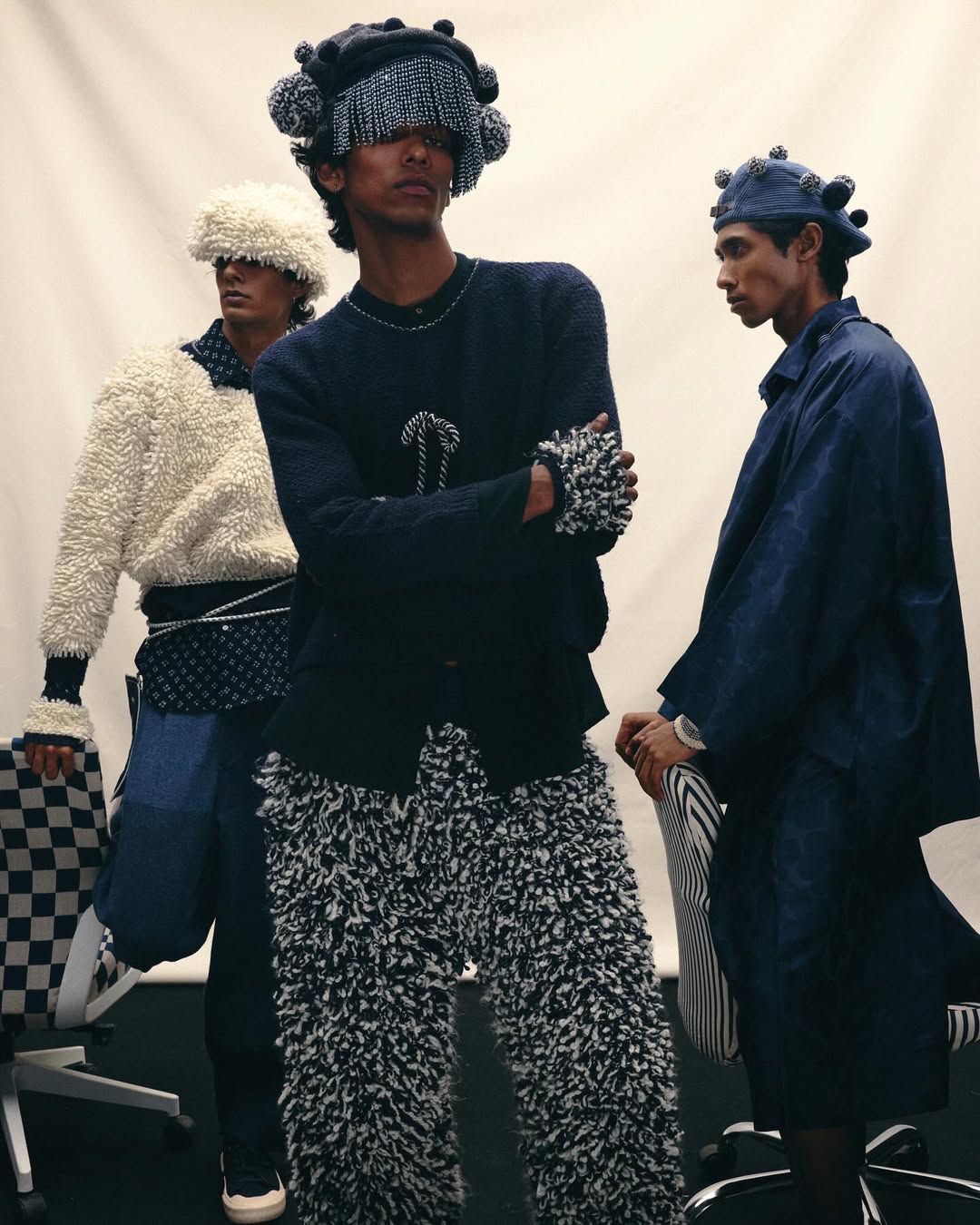
AA: You know, we have a very childlike approach when we are doing these presentations because there is one thing that is common between us and the viewer–childhood and the nostalgia it brings along. And, this gives us a great opportunity to connect with them. You must have seen Apsara pencils growing up. And you know how sometimes, when we are in office on a boring day and we start fantasising and imagining things like what if these pencils were larger than life or what if the calculators became really big and, you know, if they could almost become like keyboards to play with. We played with all the things that one sees in offices very often, so there were a lot of metaphors there. Even the office chairs were made of the same fabrics as the clothes as a metaphor for how we almost become our chair when sitting in the office through the day. Another example was hairpins shaped like pencils to act as a metaphor for how many people tend to mindlessly tuck pens and pencils behind their ears or to hold their hair together. So these were just childlike interpretations of what one sees on a daily basis in an office.
Q. Your last few collections: the Hello Kitty collab, the ‘p é r o is home’ line, and now “Out of Office”—all feel very different but also connected. Each of them taps into something familiar—childhood, home, work—but in a very p é r o way. What draws you to these everyday themes and turn them into couture?
AA: I think there's a lot of layering in what we do from the process of making textiles, to then converting it into clothing and then imagining a theme for the show. It's amazing how beautifully it all comes together in the end. Whenever we are approaching a theme, we feel that it should be something that people should relate to, therefore the names that we give to our seasons also are not very difficult to understand, they’re usually very common words that we use in our daily lives. ‘Out Of Office (OOO)’ is very common–not just the feeling, but also the word itself–you know the happiness that it gives to people when they write that out of office email.
That’s just our way of connecting with people. Although there’s a lot of seriousness in the princess of creating those textiles, there’s some hardcore research involved in ensuring that we are doing justice to the crafts we’re using. But in the end, we become like a child who just wants to express in the way we want and through our presentations, we want people to come into our world and enjoy it with us.
Q. How do you balance whimsy with wearability? Where do you find audiences more receptive to it, home or abroad? Do you think whimsy is sometimes misunderstood as being less “serious” within fashion?
AA: We were all kids at some point in our lives and all of us still have that child within us. But I think, it’s just different for different people. Some people suppress that child, some don’t. So, whether it's India or abroad, people are very receptive to the idea of a little bit of joy, nostalgia, happiness and whimsy. The transition from that seriousness of creating something to going into a very whimsical way of presenting it is helpful. It's almost like you're educating a kid through a very fun movie or activity. If we were to tell them very seriously about the textiles and their history, I don't think it will leave that kind of memory with them after the show. But if you are, to say, instance, making these giant pencils out of that wool fabric–you narrated the serious element in a way that stays with them. For example, the tape used on the cards of the lanyards that were distributed to people was a handwoven Kulu tape, which is a traditional technique with our take on it. So they took a little bit of that knowledge in a very playful manner.
And I've learned over the years that if you want people to take your craft seriously, then you have to narrate it to them in a fun way so that they remember. If I make it a very academic, serious exercise, where there is a long write-up about where and how it was made, I don’t think it will work. I think people have a very short attention span and through this way of storytelling, they earn also and they have fun with us.
Q. You launched p é r o in 2009, long before “craft-led fashion” became a global talking point. Today, Indian craftsmanship and textiles are getting a lot of international attention. Do you think these ancient Indian techniques and artisans are getting their due credit now? If not, in your opinion, how can we bridge that gap?
AA: I think it's a very good time for Indian traditional techniques and crafts in the world of fashion and clothing. Although for us, it was the centre stage even in 2009 when we started so much so that season after season, we were taking the same techniques overseas. It took us almost five years before people could even identify and name techniques like a bandhani or ikkat. And when that happened, it was a very fulfilling feeling, we felt that our craftspeople and weavers were getting their due.
The fact that Indian craft is now visible on a global platform, not just through Indian designers, but also through, global luxury houses – like Prada with the Kolhapuri chappals. Even though the Saari was being used long back, but now it's back… people are talking about how Saari, as a silhouette, has also been interpreted globally. So I feel the visibility on a global platform is a very good validation for Indian craft and I don't think it requires a special mention–you know, how there’s a conflict that they were not credited. I think, the fact that they are on a global platform is credit enough for them to take pride in their craft that, you know, now not just Indians, but international designers are also looking towards India for their craft and skill.
Q. How did you approach translating the p é r o aesthetic into menswear today—does designing for men change the way you think about things like proportion, detail, or even storytelling?
The storytelling doesn't differ but proportions and designing does. We've been doing men's wear from our first season. In fact, we've been showcasing at Pitti Uomo since 2009. But now, it’s also that the line between the two genders are blurring more and more with gender fluidity and unisex clothing becoming the norm, we don’t even have to change the silhouette that much. Of course, proportions change because body types are different. But in terms of silhouette, we were anyway doing a lot of unisex clothing so it seamlessly translates into men's wear.
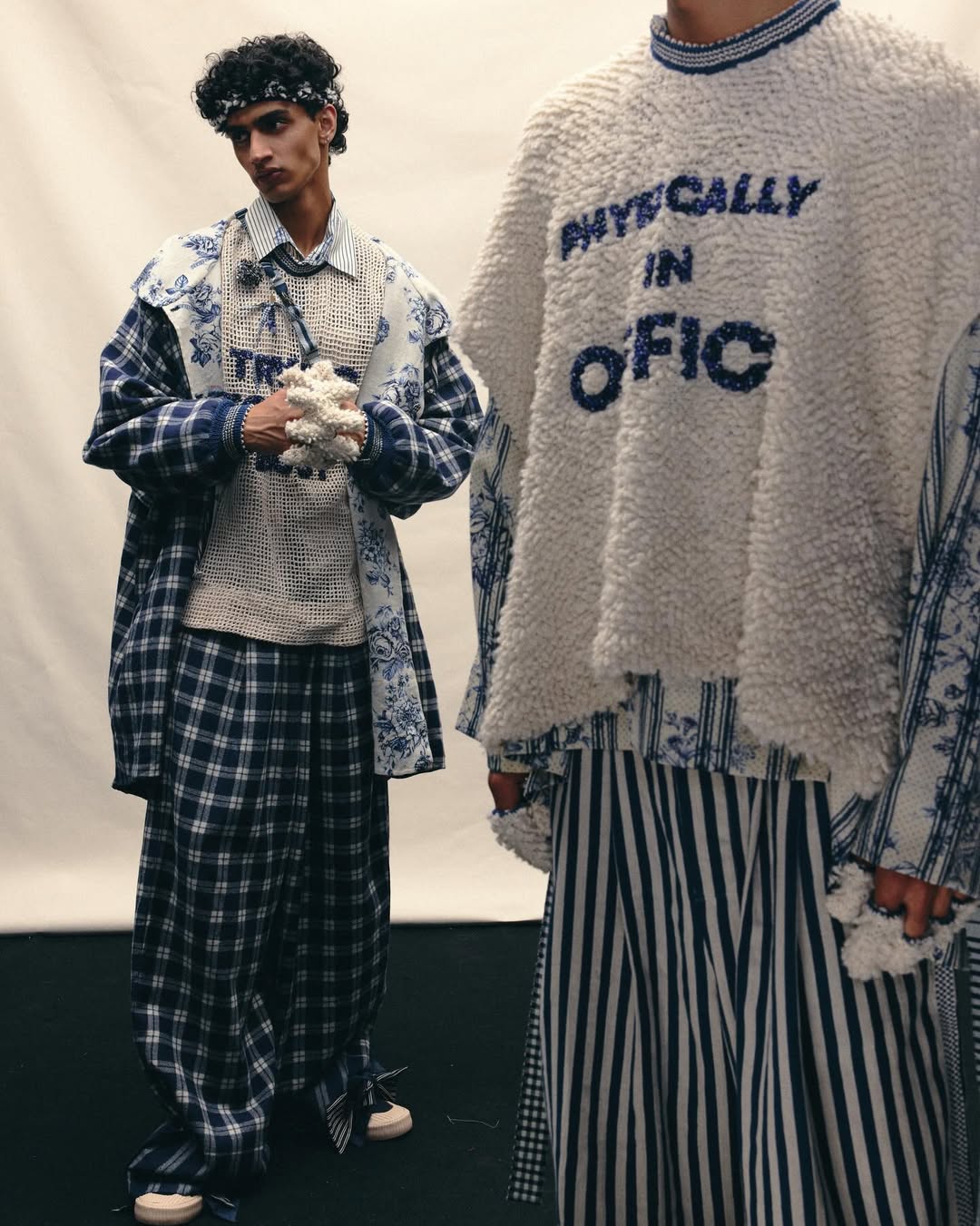
Q. What are your reasons behind keeping p é r o a faceless brand? Will we see more celebrity associations in the future? I saw that you didn't come out for the traditional designer walk after the show and p é r o doesn't necessarily have any associations with celebrities, like a lot of other designer brands do. Is that something that you're doing consciously? And if so, why?
I think it has all been very organic. So, if you see somebody wear p é r o, it's not through endorsements, it is organic because maybe they relate to the brand or they like it, that's why they're wearing it. And the ones who are not wearing it is because may be they don't relate to relate with the brand.
And coming to your question of faceless brand, that has also been something that we've been working towards for quite a few years now where, I personally feel that it's not for one person to take the credit of what we are doing because,it's been 17 years now that we're doing p é r o and every day I realise that it is a lot of teamwork. It is not about just me doing what I want to do and I would not be able to do it without the support and help of the entire team. Therefore, I feel that it should be about the work and the brand itself rather than one person being the face. And I do believe in the fact that there has to be a voice to the brand and I am happy being the voice for the brand because I love narrating the story of the brand to people. And one person has to take that charge where the story is being told in the right way.
Q. What's next for better?
You mentioned the ‘p é r o is home’ showcase in one of your questions. So, the show happened but the collection hasn’t been launched in India yet. It’s already there in our stores overseas, but we are waiting for the right opportunity to launch it in the Indian retail market. Apart from that, there is always excitement about the new collaborations after Hello Kitty. We have many potential collaborations in our kitty. A lot of people have approached us and we're looking forward to doing one of those in the recent future. And yeah, there's always the next season that we're working on. And hopefully, another retail outlet that we want to work on soon.
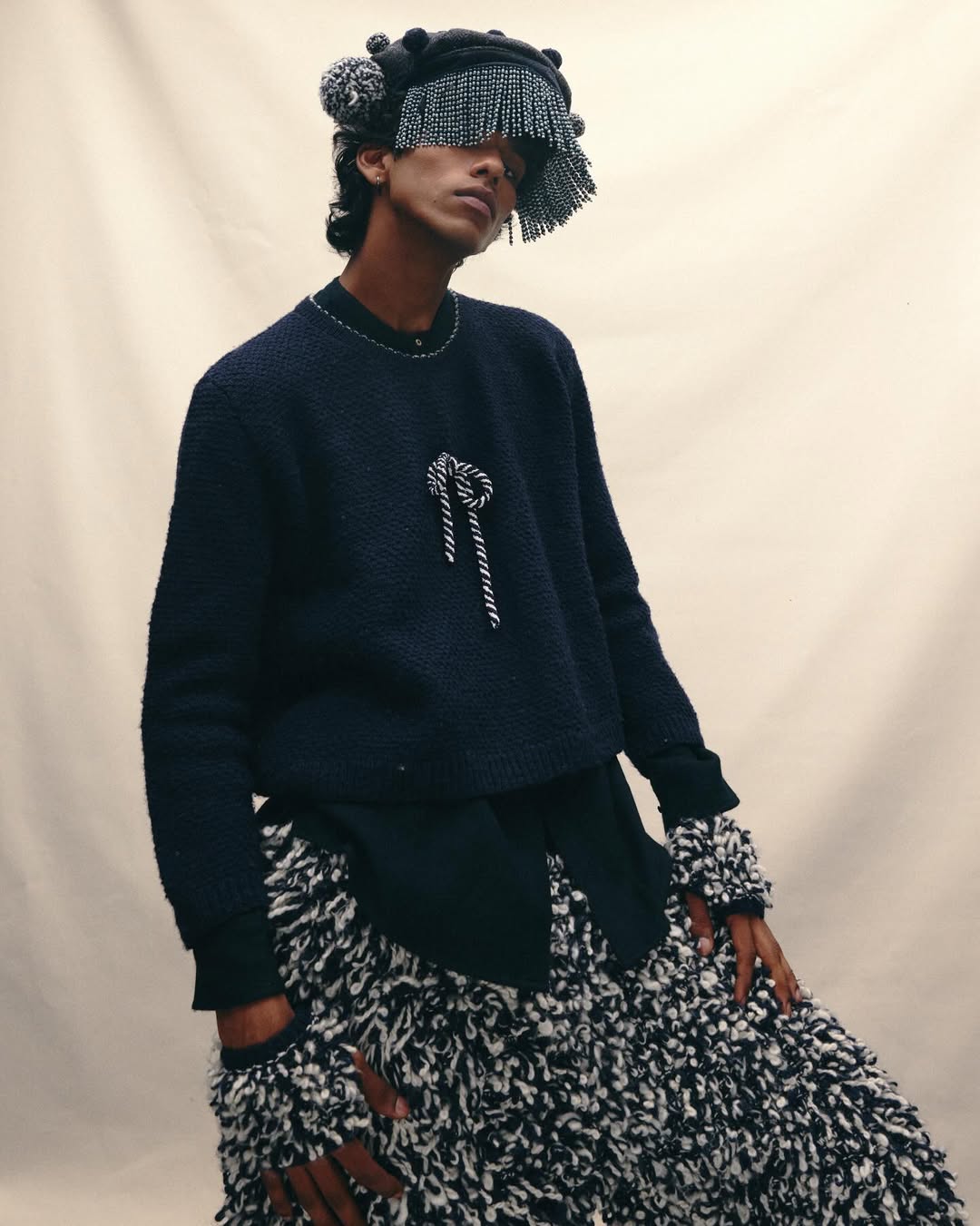
Q. And what does an out-of-office day look like for you?
An out of office day for me. I'm rarely out of office because when I'm in office also I don't feel like I'm working. So, you know, that feeling that I was able to portray in my show for people is something that I've not felt myself. Even if I’m away, I'm in some remote village looking at their craft. But if on a day, I'm very lazy, then an out of office day would be not answering any phone calls and Netflix and chill, as they say!


