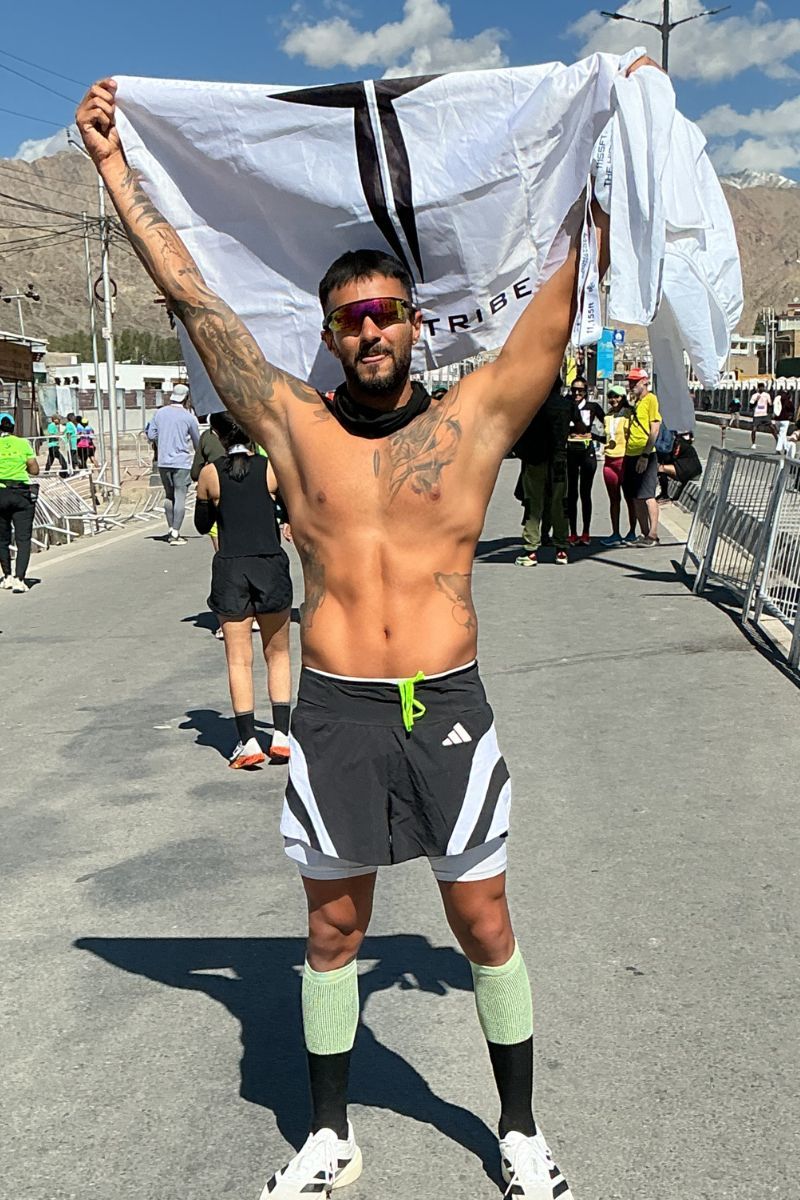
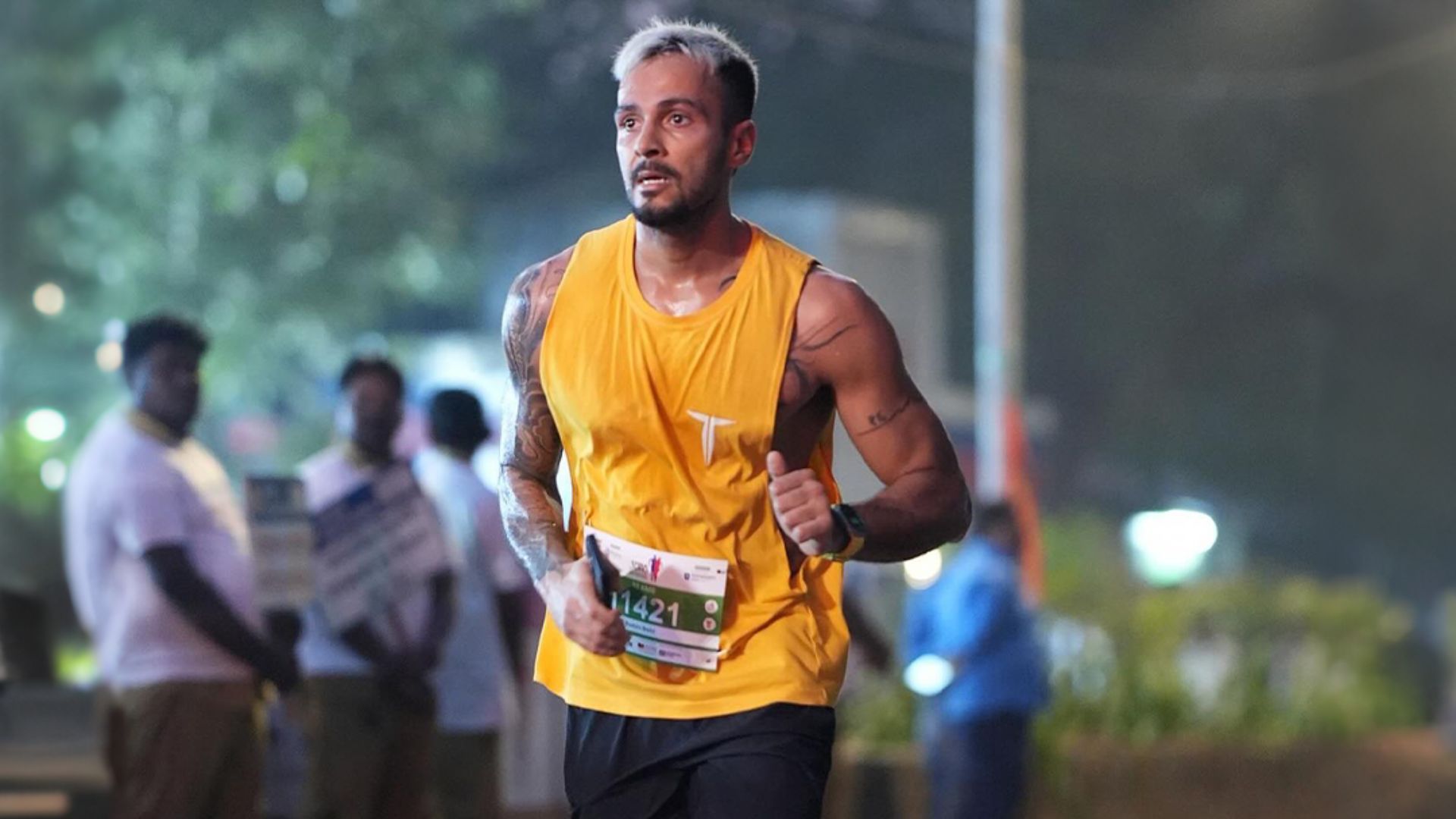
The Mumbai-based trainer and athlete—known for pushing himself with the same intensity he brings to clients like Ibrahim Ali Khan, Adarsh Gourav and more—briefly considered Everest as his next frontier, before realising the toll that two months of high-risk climbing places on everyone around him. Antarctica, oddly, felt more sensible. A friend sent him a link to the world’s southernmost marathon; and within hours, Behl was deep into research, logistics, and the possibility of becoming the fastest Indian to ever run on the frozen continent.
Since June, he has trained with monastic discipline: long runs at dawn, jiu-jitsu strength rewired into endurance, nutrition rebuilt around fuel rather than weight cuts, and a recovery schedule strict enough to make injury an unacceptable variable. Ahead of his departure in the middle of December, Behl broke down the mental rewiring, the techniques needed to survive temperatures of up to -40º, the sponsorship hustle, and the sheer will required to run 42.195 kilometres on a slab of Antarctic ice. Excerpts:

When did the idea of running the Antarctica Ice Marathon come to you?
I climbed one of the most dangerous mountains in the world last year in September, and it took me some time to recover mentally and physically. Post-recovery, I was a little empty. You’re standing on top of the world one moment and then the next moment...you’re in Bombay.
It was a super-emptying feeling. I initially decided that I’m going to do Everest this spring–summer. I made up my mind and started setting out to collect funds and sponsors because it’s super expensive—it takes 50 to 60 lakhs to mount an expedition. But when I spoke to my family and my girlfriend, I realised it’s a little selfish. I’m not doing this alone; there are people who stress with me. It didn’t feel right. So, I took a step back. I went back to Mexico last December.
Eventually, one of my friends shared an article about the Ice Marathon with me, and I couldn’t stop thinking about it. It’s been my dream to stand on the continent. Just being in Antarctica is beautiful and thrilling—and racing on it? There’s a possibility I can be the fastest Indian on the continent. I did my research, the logistics, the timeline, and I realised I had time to start training for this.
When did you get into running?
I can run, sure, but I was never a ‘runner’. I’ve only run to gather my thoughts or break a sweat, never with structure or purpose. Till the start of this year, I had only run one half marathon—very random, no preparation.
Through the first half of this year, I was fighting jiu-jitsu professionally. I got my India number one rank in my category at the Abu Dhabi Tour. By the time I was done, my body type was completely different; it was focused on explosive strength, not endurance. Till June, I’d only run whenever I got time, and I’d be sprinting, doing quick bursts rather than long-distance sessions.
I told myself I’d give it till July–August. If I felt ready, I’d do it. I signed up for the Ladakh Half Marathon as prep. It’s super challenging, but I honestly did way better than I planned. I enjoyed it. It gave me confidence that I can probably beat the time set by an Indian, maybe even by a nation. By then, I’d already paid the deposit for Antarctica and blocked my spot.
When you committed to this race, did you speak to anyone who’d done it before?
I wish, bro...I wish! [laughs] I approached it right from scratch.
Right now my problem—actually a good problem to have—is that I don’t know the right shoes. I don’t know the suit. There’s so much trial and error because I can’t test anything on actual ice! Everyone in the competitors’ Whatsapp group has different views. Some people are stressed about very small things, and sometimes it makes you think, am I not doing enough? Should I be worrying about this?
But I know myself. I know what suits me. I’m a guy who can live in shorts. But now, because it’s going to be –40 degrees, I need to be well-equipped. So I’m keeping it basic—base layers, face gear, a full suit, and then run.
What does fuelling for endurance look like versus fuelling for jiu-jitsu and your regular training?
For jiu-jitsu, I usually fight under 69 kilos. My everyday weight is 73, so I cut to 69. But the last time I fought at 69, I was weak. It didn’t feel right. My coach told me to fight under 77 because he believed in my strength, but the guys there are much stronger. Still, it worked — I won gold at the AGP Nationals.
At that time, it was very high protein. Right now, I’m not as high on protein but super high on carbs. Heavy carbs. It makes a world of difference. This let me hold on to muscle. I didn’t cut creatine because if I did, I’d lose water and lose muscle with it. I’m at around 74 now; before the race I’ll be 72.5–73. I’ll cut the extra 1.5 closer to the race.
Food-wise, I always keep it simple: oats, sourdough, bananas, quinoa, brown rice, dal, vegetables, chicken—all from home. A vegetable juice in the morning. Dry fruits. Electrolytes. At night, I have bone broth because it keeps the joints strong—I’ve had surgeries on both knees, so it helps to keep joint health in mind.

Did your past injuries complicate your training ?
I have to be mindful of them. I can’t ignore anything. With the amount I’m running right now, if I don’t make sure my mobility and prehab are on point—knees, ankles, hips—I’m inviting injury. I don’t have the tools I had before surgery, so I have to put in that extra work to maintain my mobility. Even if it’s 20 minutes more at the end of a workout, I have to do it.
What does a week of recovery look like for you?
One deep-tissue massage a week, on the weekend, with at least 12–18 hours of rest after. It’s not a relaxing massage—it’s painful—and the body needs to recalibrate.
Then contrast therapy, using a sauna and ice bath, at least twice a week. If I’m feeling inflammation, the ice settles it. I do a heat-rest-cold-rest cycle. Fifteen minutes in the sauna, three to five minutes in the ice, two or three rounds.
How are you preparing for the extreme cold?
Breathing. That’s my number one tool. Proper breath control during the run will keep my heart rate low and also generates internal heat. When I’m running, my body will be warm, but beyond certain conditions body stops responding. That’s where breathing comes in.
I can’t take rest and fuelling for granted. If I get lazy, I’m inviting hypothermia or frostbite. It’s brick by brick—my rest, my recovery, my fuelling from now. Even during my travel, I’m planning it so I’m not too compressed or tight. The cold is going to make my body and my joints more rigid.
I live by the five Ps: ‘Proper preparation prevents poor performance’. As long as I prepare, I won’t have regrets. That’s the thing that really daunts me; even if I fail, I want to fail knowing that I had prepared as much as I could. Having regrets at the finish line really sucks.


